Tai Mei Ti A P P

Search documents
14个月4倍股价神话,汇绿生态“四步走”豪赌光通信棋局|并购一线
Tai Mei Ti A P P· 2025-07-23 02:37
Core Viewpoint - Huilv Ecological plans to acquire 49% equity of Wuhan Junheng Technology, aiming to fully own the company, which has significantly boosted its stock price in the past 14 months, but the high acquisition cost poses financial risks [2][8]. Group 1: Acquisition Strategy - The acquisition of Wuhan Junheng is structured in four steps, starting with a 30% stake purchase for 195 million yuan, followed by incremental increases in ownership through additional capital injections [3][4]. - Huilv Ecological's strategy has been questioned by the Shenzhen Stock Exchange regarding whether the series of transactions constitutes a "package deal," but the company has firmly denied this [4]. Group 2: Financial Implications - The total cost for acquiring 100% of Wuhan Junheng could exceed 800 million yuan, based on previous valuations and the anticipated price for the remaining stake [5]. - Huilv Ecological's financial health is under pressure, with a cash balance of 399 million yuan against short-term borrowings of 650 million yuan and long-term borrowings of 168 million yuan, indicating a potential liquidity issue [9]. Group 3: Market Performance - Huilv Ecological's stock price has surged nearly 300% since the initial announcement of the acquisition, reflecting market optimism about the deal and the future performance of Wuhan Junheng [8]. - The financial performance of Wuhan Junheng has shown improvement, with revenues increasing from 245 million yuan in 2022 to 667 million yuan in 2024, and net profits turning positive in 2023 [8].


华大九天:看得更远一点
Tai Mei Ti A P P· 2025-07-23 02:10
Core Viewpoint - The article discusses the evolution and current state of the EDA (Electronic Design Automation) industry in China, highlighting the significant progress made by domestic companies like Huada Jiutian, while also acknowledging the ongoing challenges and competition from international giants [2][5][12]. Group 1: Historical Context and Development - In the 1980s, China's EDA development was hindered by foreign technology restrictions, prompting a national effort to create domestic EDA systems, leading to the launch of the first self-developed EDA system, "Panda System," in 1993 [3][4]. - After the dissolution of the Paris Coordinating Committee in 1994, foreign EDA companies entered the Chinese market, which negatively impacted the growth of domestic EDA products [3][4]. - Huada Jiutian was established in 2009, inheriting the technology of the "Panda System" and focusing on EDA tool development, despite facing significant challenges and financial difficulties in its early years [4][5]. Group 2: Current Market Position - By 2019, the importance of domestic EDA became evident as major international EDA providers ceased collaboration with Huawei, marking the beginning of a golden era for domestic EDA companies [5][6]. - Currently, domestic EDA can meet approximately 70% to 80% of local industry needs, up from 30% to 40% in 2019, with Huada Jiutian capturing about 20% of the domestic market [5][6]. - Huada Jiutian has become the only company in China capable of providing a full range of EDA tools for analog circuit design, achieving global advanced levels in circuit simulation tools [6][7]. Group 3: Competitive Landscape and Challenges - The top three international EDA companies—Synopsys, Cadence, and Siemens EDA—hold over 70% of the domestic market, creating a significant competitive challenge for local firms [8][9]. - The reliance on foreign EDA tools is partly due to their early integration into educational institutions, which has led to a workforce that is accustomed to these tools [8][9]. Group 4: Future Directions and Innovations - The future of EDA is expected to be influenced by AI technology, which can enhance automation, optimize computational efficiency, and provide technical support [11][12]. - Huada Jiutian is actively developing a one-stop automated generation platform for analog circuit design, aiming to improve efficiency and automation in EDA tools [11][12]. - The company is focused on talent development, recognizing the need for skilled professionals who can utilize and develop domestic EDA tools, and has established partnerships with over 400 universities to foster this talent [10][9].

阿里开源最强AI编程模型Qwen3-Coder,性能比肩Claude4 | 钛快讯
Tai Mei Ti A P P· 2025-07-23 00:01
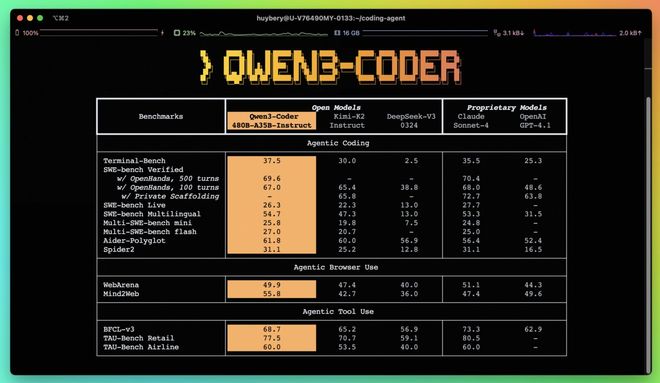
Core Insights - Alibaba has launched the Qwen3-Coder AI programming model, which is now the leading open-source model globally, surpassing proprietary models like GPT-4.1 and competing with Claude4 [1][3]. Model Specifications - Qwen3-Coder utilizes a mixture of experts (MoE) architecture with a total of 480 billion parameters, activating 35 billion parameters, and supports a context length of 256K tokens, expandable to 1 million [2][3]. Performance Metrics - The model was pre-trained on 7.5 trillion data points, with 70% of the data focused on coding tasks. It has shown superior performance in agent capabilities, surpassing GPT-4.1 in benchmarks like WebArena and BFCL [3]. - In the SWE-Bench evaluation, Qwen3-Coder achieved the best results among open-source models, comparable to Claude4 [3]. Practical Applications - Qwen3-Coder significantly enhances programming efficiency, reducing the time for tasks like code writing, completion, and bug fixing from hours to minutes. It also lowers the entry barrier for non-programmers, enabling "Vibe Coding" where complex simulations can be generated with simple commands [4]. - The model is available on platforms like MagicDock and HuggingFace, with over 20 million downloads, making it the most popular open-source programming model globally [4]. Industry Adoption - Major companies such as FAW Group, China Petroleum, China Construction Bank, Ping An Group, China Southern Airlines, and Xiaopeng Motors have integrated the Qwen AI programming model into their operations [4].

爱美客“收权”童颜针,*ST苏吴危机加重
Tai Mei Ti A P P· 2025-07-22 15:24
Core Viewpoint - The termination of the exclusive distribution agreement for the AestheFill product between *ST Suwu and Aimeike significantly impacts *ST Suwu's financial stability, as this product accounts for a substantial portion of its revenue and profit [2][6]. Group 1: Company Actions and Reactions - *ST Suwu received a termination notice from Aimeike regarding the exclusive distribution rights for AestheFill, which is critical to its revenue stream [2][3]. - Aimeike's acquisition of Regen and subsequent actions to reclaim distribution rights indicate a strategic move to consolidate control over high-margin products [2][4]. - In response to the termination, *ST Suwu's subsidiary, Datou Medical, is pursuing legal action to contest the termination and is considering reporting Aimeike's actions to regulatory authorities [3][4]. Group 2: Financial Implications - AestheFill contributed approximately 3.26 billion yuan to *ST Suwu's revenue in 2024, accounting for about 20% of total revenue, and over 2.69 billion yuan in gross profit, representing more than one-third of the company's profits [5][6]. - In the first quarter of 2025, AestheFill generated 1.13 billion yuan in sales and 0.92 billion yuan in gross profit, making up 35.55% and 45.77% of the company's respective totals [5][6]. - The loss of exclusive distribution rights is expected to lead to a significant decline in *ST Suwu's medical aesthetics segment revenue and profit in the latter half of the year [6]. Group 3: Market Dynamics - The competitive landscape for aesthetic products in China includes seven licensed products, with AestheFill being a key player among both imported and domestic offerings [5]. - Aimeike and *ST Suwu are both targeting the regenerative injection market, indicating a direct competition for market share in high-growth segments [4][5]. - The market for AestheFill is particularly strong in China, where it has achieved record sales, highlighting the importance of maintaining distribution rights for both companies [6].



科创第五套上市公司市值表现如何?解构标准重启隐含的价值导向
Tai Mei Ti A P P· 2025-07-22 12:16
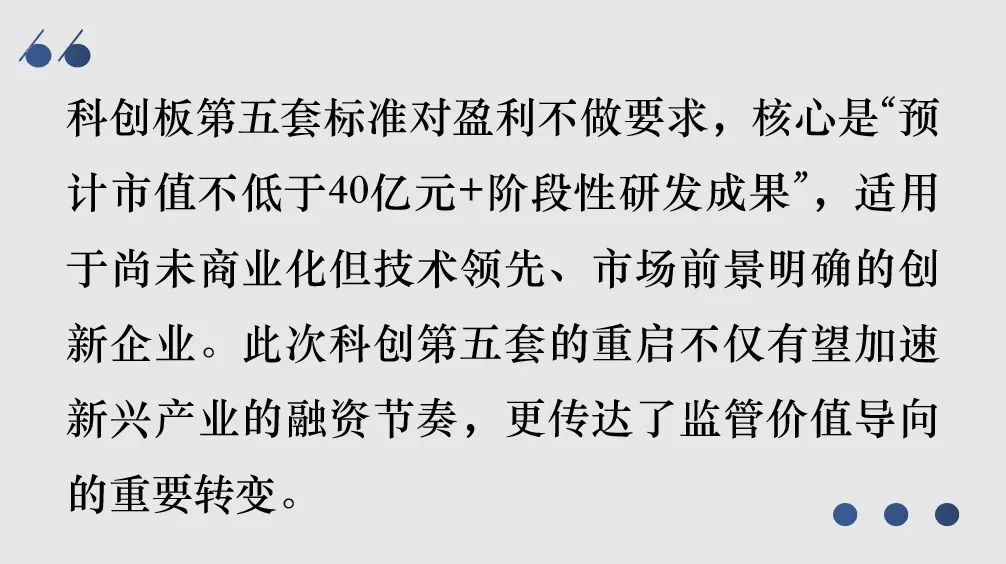
Core Insights - The reactivation of the fifth listing standard on the Sci-Tech Innovation Board (STAR Market) aims to support high-growth technology companies, particularly in the biopharmaceutical sector, by allowing companies without profits to list based on expected market capitalization and R&D achievements [1][19] - The biopharmaceutical industry, especially innovative drug companies, faces longer investment periods and higher uncertainty due to strict regulatory requirements for product approval, making them highly reliant on capital [1][19] - Since the reactivation in June 2025, companies like He Yuan Bio and Bei Xin Life have made significant progress, signaling a positive outlook for other biopharmaceutical firms still in clinical stages [2] Market Performance - The innovative drug sector has seen a remarkable stock performance in 2025, driven by favorable policy changes, relaxed procurement policies, and the growth of commercial health insurance, which enhances market expectations for innovative drugs [3] - The 20 companies that successfully listed under the fifth standard have achieved a total market capitalization of 364.12 billion, with an average increase of 79.10% since the beginning of 2025 [3][7] Financial Performance - In 2024, the 20 companies reported a combined revenue exceeding 14.3 billion, a year-on-year growth of 45%, with 16 companies generating over 1 billion in revenue [12][16] - The total R&D expenses for these companies accounted for 67% of their total revenue, indicating a high dependency on external financing for continued innovation [16][18] R&D and Innovation - The 20 companies listed under the fifth standard have collectively developed 45 drug varieties, with 22 classified as first-class new drugs or innovative biological products, covering various advanced therapeutic areas [8][10] - The number of candidate products in the R&D pipeline for these companies has exceeded 200, showcasing their commitment to innovation and market expansion [8] Regulatory Environment - The reactivation of the fifth standard reflects a shift in regulatory focus towards recognizing the inherent risks and long timelines associated with technology innovation, moving away from traditional financial metrics [19][20] - The introduction of a "Sci-Tech Growth Tier" aims to enhance information disclosure and regulatory oversight for companies listed under the fifth standard, ensuring a balance between support and supervision [22]


东盟中国自贸区3.0版将于年内签署;阿里速卖通推即时零售;京东“半托管”招商;Temu巴西半托管7月底上线|一周「出海参考」
Tai Mei Ti A P P· 2025-07-22 08:58
Group 1 - ASEAN-China Free Trade Area 3.0 negotiations are completed and the protocol is expected to be signed within the year, promoting regional economic integration [1] - The new tax incentives in Vietnam aim to support automotive companies, particularly in the production of electric vehicles, by modifying minimum production conditions for tax benefits [2] - Indonesia plans to fully transition to renewable energy by 2035, five years earlier than previously scheduled, with 75% of new power capacity coming from renewable sources in the next nine years [3] Group 2 - Saudi Arabia will open its real estate market to foreign buyers starting January 2026, allowing non-Saudis to purchase property in designated areas [4][5] - Amazon's Prime Day in 2025 set records for sales and participation, with third-party sellers also achieving significant sales growth [5][6] - The launch of Amazon's Pan-EU plan requires sellers to list products in five European countries, reflecting the potential of the Dutch e-commerce market [7] Group 3 - AliExpress has introduced "one-hour delivery" services in several countries, enhancing its logistics capabilities [8] - Lazada and Daraz have integrated their platforms, allowing sellers to operate across eight countries with a single click [9] - TikTok is enforcing a new GMV Max advertising tool to optimize seller promotions and reduce operational costs [10] Group 4 - Temu is launching a semi-managed model in Brazil, providing small and medium-sized sellers with a low-risk entry into the Latin American market [12] - Temu has introduced a "tax-inclusive" policy in Canada, which covers various taxes and aims to enhance pricing competitiveness for sellers [13] - SHEIN has opened a semi-managed business model in Canada and the Middle East, targeting cross-border sellers [14] Group 5 - eBay has implemented a new policy requiring sellers of automotive parts to offer at least 30 days of free returns, aimed at improving buyer confidence [11] - JD Global Sales has initiated a semi-managed recruitment plan, allowing sellers to focus on product fulfillment while the platform handles marketing [15] Group 6 - Global PC shipments increased by 7.4% year-on-year in Q2 2025, driven by commercial PC deployments ahead of Windows 10 service termination [16] - In June 2025, 33 Chinese companies entered the global mobile game publisher revenue ranking, collectively earning $1.76 billion [17] - China's high-tech product exports grew by 9.2% in the first half of 2025, with significant contributions from advanced machinery and instruments [18] Group 7 - China's cross-border e-commerce imports and exports reached approximately 1.32 trillion yuan in the first half of 2025, marking a 5.7% year-on-year increase [19] - SF International has launched a new warehouse in Thailand, enabling 48-hour delivery across the country, enhancing logistics for cross-border e-commerce [20] - Cainiao has upgraded its Asia-Pacific overseas warehouses, achieving a 99.9% order fulfillment rate for same-day dispatch [21] Group 8 - Alibaba Cloud plans to invest over 400 million yuan to enhance its international ecosystem and accelerate AI innovation [22] - Lianlian Digital is promoting the application of blockchain technology in cross-border payments, indicating a trend towards innovative financial solutions [23] Group 9 - Vietnam has imposed anti-dumping duties on certain hot-rolled steel products imported from China, with rates ranging from 23.1% to 27.83% [24] - The U.S. has announced a 50% tariff on imported copper, leading to a significant spike in copper futures prices [25] - The U.S. is set to impose new tariffs on various countries, including a 30% tariff on imports from the EU and Mexico, effective August 1 [26]

李开复:零一万物AI Agent可接入任何开源模型,不要低估DeepSeek的强大能力
Tai Mei Ti A P P· 2025-07-22 08:58
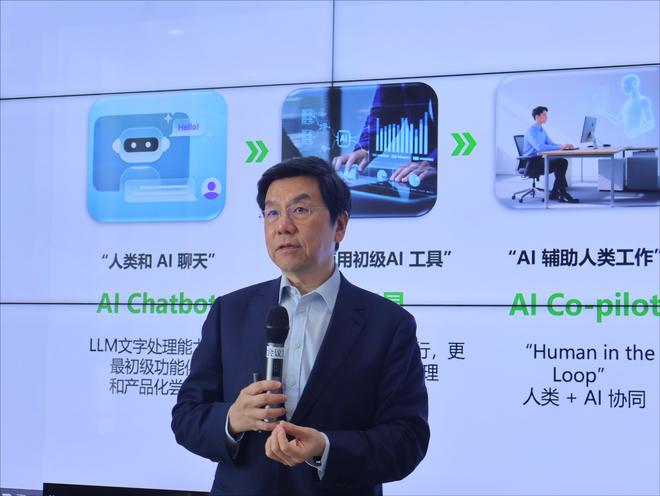
Core Insights - The company has launched the upgraded enterprise model platform "Wanzhi" 2.0 and introduced the enterprise-level AI Agent product, positioning it as a "super employee" capable of deep thinking and task planning [2] - The enterprise-level Agent has reached the L2 reasoning Agent stage, comparable to OpenAI's latest ChatGPT Agent, enabling it to autonomously determine task steps and coordinate various tools to achieve complex goals [2][6] - The company is shifting focus towards application development, with plans to establish a joint laboratory with Alibaba Cloud and a model base in Suzhou, emphasizing lightweight models for commercial applications [4][5] Company Strategy - The company aims to leverage open-source models and has expressed willingness to utilize high-quality models from other companies [2][3] - The business model is centered around a "Top Down" strategy, driven by CEO engagement to ensure alignment between AI initiatives and business needs [9][11] - The company has reported significant growth in domestic B-end revenue, surpassing the total revenue of the previous year within the first quarter of the current year [4] Market Outlook - The AI Agent market is projected to grow significantly, with Morgan Stanley estimating a market size increase from $52 billion to $102 billion by 2028 [12] - Gartner predicts that by 2028, 33% of enterprise software applications will integrate AI Agents, with 15% of daily tasks becoming fully autonomous [12] - The company believes that the AI 2.0 revolution will accelerate commercial applications and reshape business processes and value creation [12]

新加坡力推无人驾驶巴士;中东成上半年汽车出口主要增量源;欧盟通过取消150欧元进口免税的政策;TikTok Shop墨西哥8月开放跨境店|一周「出海参考」
Tai Mei Ti A P P· 2025-07-22 03:21
Group 1 - Southeast Asia's first fully autonomous bus, Robobus, has commenced operations in Singapore, with plans to expand to 16 vehicles by next year [1] - Singapore's Ministry of Transport announced plans to integrate autonomous shuttle buses into the national public transport system by the end of 2025, starting trials in Punggol in Q4 of this year [1] - The current state of autonomous driving technology is deemed sufficient for large-scale deployment [1] Group 2 - Dubai is advancing its cashless strategy through a memorandum of understanding between the Dubai Digital Economy Chamber and the Dubai Finance Department, focusing on governance, innovation, and transitioning to a cashless society [2] Group 3 - Saudi Arabia is set to develop renewable energy projects with a total investment of $8.3 billion, achieving a record capacity of 15GW, including 12GW from solar and 3GW from wind [3] - These projects are expected to begin operations in the second half of 2027 and the first half of 2028 [3] Group 4 - Amazon plans to expand its same-day and next-day delivery services to over 4,000 small towns and rural areas in the U.S. by the end of 2025, benefiting millions of customers [4] - The number of items eligible for same-day or next-day delivery in the U.S. has increased by over 30% compared to the same period last year [4] Group 5 - TikTok Shop has launched the Q3 Southeast Asia Cross-Border Merchant Flywheel Plan PLUS, lowering entry barriers and offering incentives such as commission waivers for new merchants [5] - TikTok Shop will open a cross-border self-operation model in Mexico in mid-August, providing Chinese sellers with 90 days of commission-free sales [6] Group 6 - Temu aims to increase the proportion of local orders in the UK to 50% by the end of 2025, enhancing opportunities for local retailers [7] - Temu has opened its local seller program in Australia, allowing local businesses to join its global platform [8] Group 7 - Ozon has relaxed advertising restrictions, allowing sellers to promote individual products and choose billing methods [12] - eBay has introduced the "Durchstarter Plan," offering new sellers three months of zero commission to support their online business growth [14] Group 8 - China's automobile exports exceeded 3 million units in the first half of 2025, with the Middle East being a significant growth area [15] - China's cross-border e-commerce imports and exports reached approximately 1.32 trillion yuan in the first half of 2025, marking a 5.7% year-on-year increase [16] Group 9 - The global furniture e-commerce market has surpassed $260 billion and is expected to exceed $350 billion by 2027, with many brands shifting to independent sites [17] - The global smartphone market saw a 1% decline in shipments in Q2 2025, marking the first drop after six consecutive quarters of growth [18] Group 10 - PingPong has obtained a payment license in the UAE and is now providing payment services for SHEIN in Canada and the Middle East [19] - New cross-border e-commerce export channels have been opened by Southern Airlines Logistics, enhancing logistics efficiency [21]
悄悄大撤退,Manus带走了哪些秘密?
Tai Mei Ti A P P· 2025-07-22 00:47
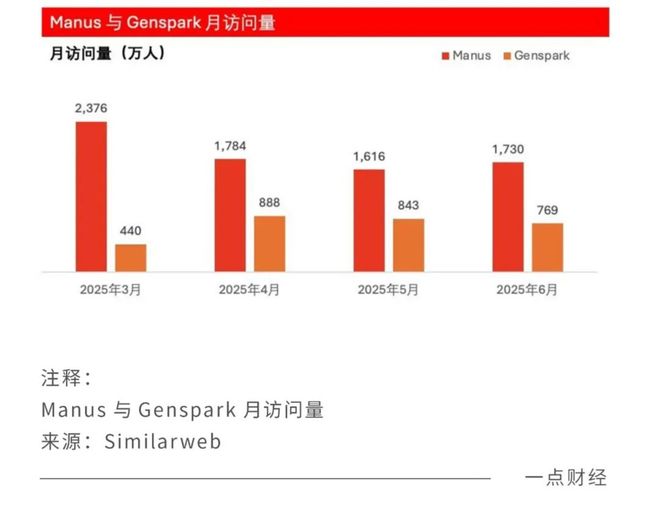
Core Viewpoint - Manus, an AI company, abruptly left the Chinese market for Singapore after a brief period of hype, raising questions about its motivations and the implications for the AI industry in China [1][2][4]. Group 1: Company Background and Initial Hype - Manus was launched in March 2023 and was quickly dubbed a "national-level product," with its internal testing invitation codes being sold for as much as 100,000 yuan, surpassing the price of concert tickets [1][5]. - The company was initially celebrated for its innovative capabilities, being compared to DeepSeek, but faced a rapid decline in reputation and user engagement shortly after its launch [1][4][12]. Group 2: Departure and Reactions - The founder, Xiao Hong, and key team members left China without prior notice, leading to a wave of criticism and speculation about the reasons behind this decision [1][8]. - Reactions to Manus's departure were mixed, with some accusing the company of exploiting users for profit before fleeing, while others expressed sympathy for the challenges it faced [1][2]. Group 3: Financial and Operational Context - Manus's parent company, Butterfly Effect, secured $75 million in Series B funding in April 2023, with a valuation reaching $500 million, indicating significant investor interest despite the company's subsequent exit [6][8]. - The departure to Singapore coincided with increasing regulatory scrutiny from the U.S. on Chinese tech companies, particularly in the AI sector, which may have influenced Manus's decision to relocate [8][9]. Group 4: User Experience and Market Performance - Despite initial excitement, Manus experienced a significant drop in user engagement, with monthly visits peaking at 23.76 million in March and falling to 16.16 million by May, attributed to poor user experience and unmet expectations [12]. - The company relied heavily on integrating external technologies rather than developing its own core models, leading to questions about its long-term viability and competitive edge in the market [12][13]. Group 5: Broader Implications for the Industry - Manus's situation reflects a broader trend among Chinese tech startups facing difficult choices between global expansion and domestic challenges amid geopolitical tensions [14][20]. - The narrative surrounding Manus raises critical questions about the sustainability of companies that prioritize rapid growth and market entry over building solid technological foundations [22][23].
酒鬼酒傍上胖东来“大腿”,能否挽救颓势?|焦点
Tai Mei Ti A P P· 2025-07-21 13:42
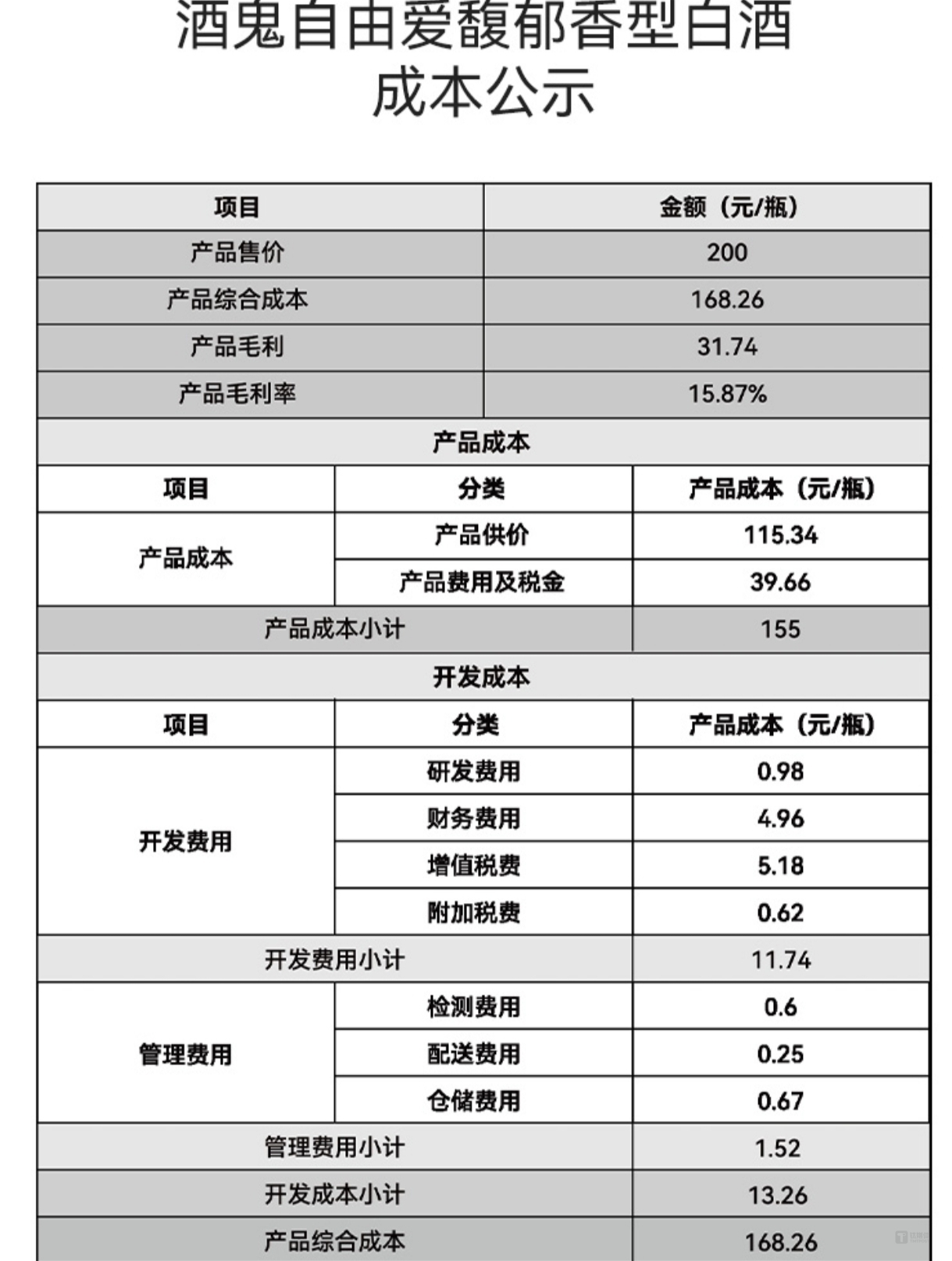
Core Viewpoint - The collaboration between the supermarket chain "胖东来" and the liquor brand "酒鬼酒" has generated significant market interest, particularly with the launch of their new product "酒鬼·自由爱," which sold out quickly. However, the impact on 酒鬼酒's overall performance remains uncertain due to its low profit margins compared to its traditional products [2][3][6]. Group 1: Product Launch and Market Response - The new product "酒鬼·自由爱" was launched on July 19, 2023, and sold out within two days on the 东来优选 supermarket platform, indicating strong initial demand [2][3]. - 酒鬼酒's stock price increased by over 19% from June 30 to July 18, 2023, following the pre-launch announcement by 于东来, but experienced a slight decline after the product launch [2][3]. - The product is priced at 200 yuan per bottle, with a reported gross profit margin of 15.87%, significantly lower than 酒鬼酒's overall gross margin of 71.37% [3][4][5]. Group 2: Financial Performance and Challenges - 酒鬼酒's revenue for the first half of 2025 is projected to be around 5.6 billion yuan, a decrease of approximately 43% year-on-year, with net profit expected to drop by 90.08% to 93.39% [7][8]. - The company has faced continuous declines in net profit for four consecutive years during the second quarter, marking the first loss in a decade for the company in this period [7][8]. - The collaboration with 胖东来 is seen as a strategic move to counteract declining performance, with plans for further cooperation in retail channel expansion and product innovation [8][9]. Group 3: Market Position and Future Outlook - 胖东来 has previously achieved success with its own white liquor product "宝丰·自由爱," which generated significant sales, indicating its potential to drive sales for "酒鬼·自由爱" as well [9]. - However, the market remains skeptical about whether the collaboration can reverse 酒鬼酒's fundamental issues, such as price discrepancies and inventory buildup among distributors [9]. - The success of "酒鬼·自由爱" may depend on its market acceptance, as it lacks the local brand recognition that contributed to the success of "宝丰·自由爱" [9].