晚点LatePost

Search documents
打破外资品牌垄断,问界 M9 的同级销冠之路
晚点LatePost· 2025-09-24 15:28
Core Viewpoint - The article discusses the expansion of the luxury car market in China, highlighting the significant rise of domestic brands like the AITO M9, which has captured over 20% market share in the high-end segment previously dominated by foreign brands [2][15]. Market Dynamics - Until 2022, the high-end luxury car market in China was stable, with traditional German brands (Mercedes-Benz, BMW, Audi) and others like Porsche and Land Rover holding over 90% market share. However, domestic brands have begun to penetrate this market due to the electric and intelligent transformation, achieving over 20% market share by May 2024 [2][15]. - The AITO M9 has been particularly successful, with over 240,000 units delivered since its launch at the end of 2023, making it the best-selling model in the 500,000 yuan and above segment, surpassing similar models like the BMW X5 and Mercedes GLC [2][19]. Consumer Insights - Luxury cars serve as a significant tool for consumers to express their identity. Younger, higher-income consumers show increasing recognition of emerging Chinese brands, influenced by their exposure to the internet and smart devices [4][12]. - The average age of high-net-worth individuals in China is 38, with a trend towards younger consumers who prioritize product performance and alignment with personal needs over traditional luxury branding [4][12]. Product Features and Innovations - The AITO M9 stands out due to its focus on space comfort, family entertainment, and intelligent design, appealing to practical consumer psychology [5][6]. - The vehicle's intelligent features, such as advanced driver assistance systems and smart cockpit technology, are key reasons for consumer preference for Chinese high-end electric vehicles [6][8]. - The M9 has achieved high user satisfaction, with a net promoter score (NPS) ranking first among all new energy vehicles, and it has maintained the highest resale value in the large SUV category for eight consecutive months [8][9]. Competitive Landscape - The success of the AITO M9 is attributed to its precise pricing strategy, filling a gap in the market for SUVs priced between 450,000 and 550,000 yuan, where competition was previously limited [9][15]. - The luxury car market is undergoing a transformation, with domestic brands beginning to capture significant market share in the 500,000 yuan and above segment, challenging the dominance of traditional luxury brands [15][18]. Trends and Future Outlook - The trend of consumers being less willing to pay a premium for foreign brands is growing, with leading intelligent features driving preference for Chinese high-end electric vehicles [19]. - The AITO M9 has consistently maintained sales of over 10,000 units per month, solidifying its position in the luxury SUV market despite the influx of new models [19].


阿里饱和式投入 AI,目标超级智能
晚点LatePost· 2025-09-24 15:28
Core Viewpoint - Alibaba plans to invest 380 billion in AI infrastructure over the next three years, positioning itself as a leader in AI development and cloud computing [2][5][23]. Group 1: AI Development Stages - The evolution towards Artificial Superintelligence (ASI) will occur in three stages: "Intelligent Emergence," "Autonomous Action," and "Self-Iteration" [3][9][12]. - The first stage, "Intelligent Emergence," involves AI learning from vast human knowledge to develop generalized intelligence [9][10]. - The second stage, "Autonomous Action," allows AI to assist humans by performing complex tasks in the real world [10][11]. - The final stage, "Self-Iteration," will enable AI to surpass human intelligence through continuous learning and interaction with the physical world [12][15]. Group 2: AI Infrastructure and Investment - Alibaba's investment of 380 billion in AI infrastructure is aimed at meeting the growing demand for AI capabilities and energy requirements, with a projected tenfold increase in energy consumption by 2032 compared to 2022 [5][23]. - The company is building a "super AI cloud" to support the next generation of computing, which will require significant resources and infrastructure [21][22]. - Alibaba's cloud platform, with over 300 open-source models and a global download count exceeding 600 million, is positioned as a leading provider of AI capabilities [4][22][23]. Group 3: Market Position and Strategy - Alibaba aims to create an open-source ecosystem, likening its model to "Android of the AI era," to foster developer engagement and accelerate market demand [4][19]. - The transition from CPU-based to GPU-based AI computing is essential for meeting the demands of modern AI applications, necessitating a shift in cloud computing paradigms [21][22]. - The company anticipates that only a few super cloud computing platforms will dominate the market, with Alibaba aiming to be one of them [21][22]. Group 4: Future Implications of AI - The emergence of ASI is expected to revolutionize human productivity, allowing individuals to achieve results exponentially greater than current capabilities [24][25]. - AI will redefine the relationship between humans and technology, with numerous agents and robots working collaboratively across various sectors [24][25]. - The ongoing AI revolution is projected to reshape the entire infrastructure, software, and application landscape, driving new demands and opportunities [25][26].

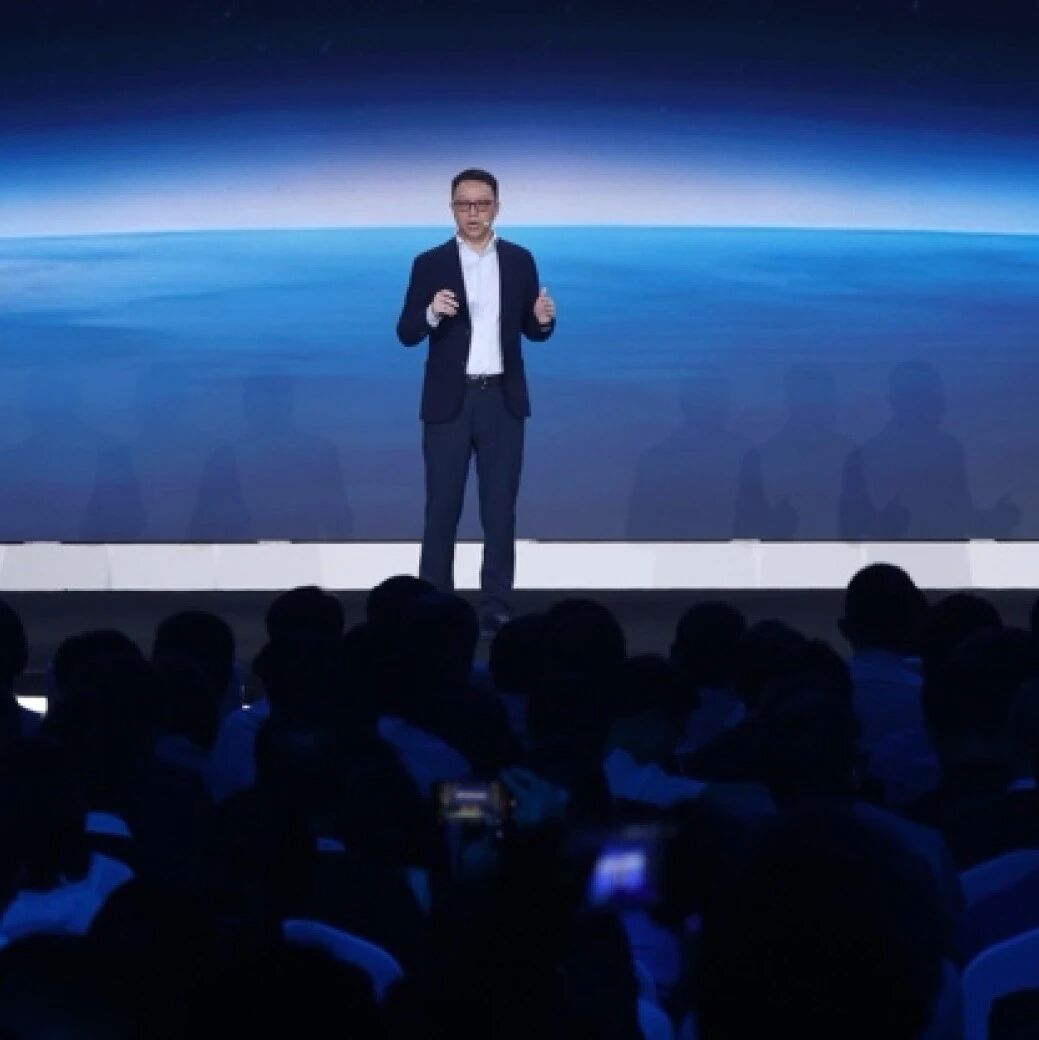
Meta AI 人才动荡,上亿美元为何留不住人?丨晚点聊
晚点LatePost· 2025-09-24 15:18
Core Viewpoint - The article discusses the recent talent shifts within Meta and the implications for its organizational structure and strategy in the AI sector, highlighting the challenges and opportunities faced by the company in the competitive landscape of AI development [4][6][21]. Group 1: Meta's Talent Acquisition and Loss - In June 2025, Meta acquired a 49% stake in Scale AI for $14.3 billion and recruited Alexander Wang, the 28-year-old founder of Scale AI, to lead the newly formed Meta Superintelligence Labs [4]. - Following the acquisition, Meta experienced a wave of talent departures, including long-term employees and new recruits returning to OpenAI, indicating dissatisfaction with the company's environment [4][8]. - The rapid turnover of talent is attributed to an increasingly bureaucratic structure and internal political struggles, which have made the work environment less appealing for top-tier AI talent [8][9]. Group 2: Organizational Structure and Culture - Meta's organizational structure has become more cumbersome, with an increase in VP levels leading to slower decision-making processes, which contrasts with the company's previously agile culture [8][9]. - The lack of clear ownership in model training and the presence of overlapping responsibilities among teams have created inefficiencies and internal competition, hindering productivity [10][11]. - The article suggests that a smaller, more focused team of 150 to 250 individuals would be more effective for achieving breakthroughs in AI models compared to a larger team of 5,000 [9][10]. Group 3: Comparison with Other AI Companies - Other AI companies like OpenAI and Anthropic have a more mission-driven approach, which helps align their teams towards common goals, reducing internal conflicts and enhancing productivity [12][21]. - Google employs a top-down approach with clear authority figures guiding research, which contrasts with Meta's bottom-up culture that can lead to disorganization [10][12]. - The article highlights that while Meta has a strong social network, its organizational inefficiencies may hinder its ability to compete effectively with companies like OpenAI and Anthropic, which are currently attracting top talent [23][24]. Group 4: Future of AI Organizations - The article discusses the potential for new organizational structures in AI startups, emphasizing the importance of decentralization and trust within teams to enhance efficiency [26][27]. - It suggests that AI can significantly improve organizational productivity, allowing for a shift away from traditional hierarchical structures towards more agile, networked teams [26][27]. - The future of talent competition in Silicon Valley is expected to cool down as market expectations are reassessed, impacting the recruitment of top AI talent [34][35].

当 AI 从试点进入规模化,华为数字金融的长期选择
晚点LatePost· 2025-09-23 13:58
Core Insights - The article discusses the rapid adoption of AI technologies in the financial sector, highlighting a significant increase in the application of large models and intelligent agents within industrial enterprises, projected to rise from 9.6% in 2024 to 47.5% by 2025 [3] - Companies are shifting their focus from technology validation to measuring the return on investment (ROI) from AI implementations, with over 70% of surveyed executives reporting returns within the first year of deployment [3][4] - Huawei's FinAgent Booster (FAB) is introduced as a solution to help financial institutions accelerate their AI integration, emphasizing the need for a systematic approach to meet evolving client demands [4][6] Industry Transformation - The financial industry is transitioning from manual processes to digitalization, with significant milestones marked by the introduction of automated systems in the late 20th century [7][8] - The current phase is characterized by the integration of AI technologies, with banks embedding AI in over 100 business processes, leading to improved operational efficiency and financial returns [8][9] - The average annual growth rate of shareholder returns for digitally advanced banks is 8.2%, compared to 4.9% for less advanced institutions, indicating the financial benefits of AI adoption [8] Huawei's Role - Huawei has evolved from providing basic IT infrastructure to offering comprehensive solutions that include hardware, software, cloud services, and AI capabilities, establishing a strong market position [10][11] - The company has built a robust ecosystem with over 150 financial solution partners and serves more than 5,600 financial clients globally [10] - Huawei's strategy focuses on enhancing infrastructure resilience, modernizing applications, and fostering innovation in business scenarios to support AI transformation [11][19] FAB Features and Benefits - The FAB platform is designed to lower the barriers for clients to develop their AI capabilities, enabling faster deployment of intelligent agents [12][14] - Key features of FAB include pre-built workflows for over 50 specific scenarios, a knowledge base for easy customization, and optimization tools to enhance model accuracy [13][15] - Huawei emphasizes the importance of data management and knowledge integration to improve AI decision-making processes [15] Ecosystem Collaboration - The financial sector's reliance on collaboration necessitates a multi-faceted approach to meet diverse regulatory and operational needs [16] - Huawei's "融海计划" (Ronghai Plan) aims to strengthen partnerships between Chinese financial institutions and global software developers, enhancing the ecosystem's capabilities [17] - The plan includes initiatives for market expansion, system integration, and innovation in AI applications, demonstrating Huawei's commitment to fostering a collaborative environment [17][18] Talent Development - Huawei has initiated training programs for over 2,000 AI professionals across more than 30 financial institutions, with plans to expand this to 5,000 domestically and internationally [18][19] - The company recognizes the importance of building a skilled workforce to support the ongoing digital transformation in the financial sector [19]

晚点独家丨阿里速卖通转移战略重心,要和亚马逊在全球抢夺头部品牌
晚点LatePost· 2025-09-23 13:58
Core Viewpoint - The article discusses the competitive landscape of the "Four Little Dragons" of overseas e-commerce, namely Shein, Temu, TikTok Shop, and Alibaba's AliExpress, highlighting their strategic shifts and focus on brand differentiation in response to market challenges [4][6]. Group 1: Strategic Shifts - The "Four Little Dragons" have refocused on their core strengths: AliExpress aims to learn from Amazon and enhance brand offerings, Temu emphasizes low prices, Shein focuses on deep fashion, and TikTok Shop continues to leverage short video and live streaming content [4]. - AliExpress plans to launch a Brand+ section featuring over 2,000 competitively priced quality brands, providing increased exposure and price protection services in key markets like the US, Germany, and France [5][6]. Group 2: Market Positioning - AliExpress's initial goal is to surpass Amazon in transaction volume for top brands in specific markets, although no clear timeline has been set for this objective [5]. - Temu has set a GMV growth target of over 30% by 2025, focusing on expanding into European markets and resuming marketing efforts in the US [6][8]. Group 3: Competitive Challenges - The global tariff increases have prompted a reevaluation of low-price strategies, with AliExpress recognizing the need for differentiation to avoid price wars [6][7]. - Shein is concentrating on more profitable fashion categories, while both AliExpress and Shein are adopting localized strategies to collaborate with local businesses [7]. Group 4: Brand Development - AliExpress is targeting top Chinese brands on Amazon, inviting them to shift their focus to its platform, with a strategy to offer lower operational costs and better service experiences compared to Amazon [7][8]. - The platform has seen significant growth in brand partnerships, with a reported 70% increase in brand entries by mid-2025, indicating a strong focus on brand development [8][9]. Group 5: Success Stories - Several Chinese brands on AliExpress have shown impressive sales growth, such as Laresar vacuum cleaners with 250,000 units sold, and Magcubic projectors with over 2 million units shipped annually [9].


晚点年度招聘丨招 AI、消费、人物作者
晚点LatePost· 2025-09-23 04:38
Core Viewpoint - The company aims to be a leading business media outlet in China, focusing on technology, AGI, and societal evolution while providing reliable information and insights to help readers understand complex changes in the world [4][5]. Group 1: Company Overview - The company, established on April 1, 2019, has a team of 49 members with an average age of 31.8 years, and has documented significant companies, figures, and business events in China over the past six years [2]. - The company emphasizes professionalism and believes in the power of written content to engage human curiosity and rationality [6]. Group 2: Content and Audience Engagement - The company seeks to create content that prompts readers to reflect and understand the complexities of the world, aiming to provide reliable information and highlight overlooked voices [5]. - The company aspires to host the best interviews with contemporary Chinese entrepreneurs [5]. Group 3: Recruitment and Work Environment - The company is looking for writers with a deep understanding of business, technology, and social change, who can tell stories, conduct interviews, and analyze complex systems [7]. - The company values quality over quantity in reporting, with a KPI of one long report per month, allowing ample time for investigation and revision [8]. Group 4: Compensation and Resources - The company offers competitive salaries within the industry [9]. - The company provides excellent interview resources and a supportive team environment, with offices located in Beijing and Shanghai [11].

君乐宝的 2 万亩 “试验”:用极致工业化,重构乳业逻辑
晚点LatePost· 2025-09-22 17:28
Core Viewpoint - The Chinese dairy industry has transitioned from merely meeting supply to ensuring high quality, with a focus on integrated supply chains and innovation in production processes [3][10]. Industry Overview - The quality of fresh milk in China has significantly improved, with a testing pass rate of 99.96% in 2024 and an average annual milk yield of 9.9 tons per cow [3]. - The proportion of large-scale dairy farming (over 100 cows) has reached 78%, indicating a shift towards more efficient production methods [3]. - The penetration rate of low-temperature fresh milk has increased from 23% in 2020 to 41% in 2024, reflecting changing consumer preferences towards higher quality dairy products [3]. Company Strategy - Junlebao Dairy has developed a unique "zero-distance integration" model that connects grass planting, cow breeding, manure recycling, and milk powder processing into a closed-loop system [6][9]. - This model allows for fresh milk to enter the factory within 98 seconds and be processed within 2 hours, significantly reducing quality loss and ensuring superior product standards compared to international benchmarks [6][9]. - The company has invested approximately 10 billion yuan in the upstream dairy supply chain over the past decade, focusing on full-process quality control [8]. Innovation and Research - Junlebao has undertaken 77 research projects and filed 414 patents, collaborating with global research institutions to enhance its technological capabilities [10]. - The company has introduced a "brain and body dual excellence" infant formula model, which has been recognized as internationally leading in its field [10]. - The results of these innovations are reflected in the company's growth, with double-digit increases in sales and leading market shares in various dairy segments [10]. Societal Impact - The dairy industry is interconnected with agriculture, manufacturing, and consumer health, playing a crucial role in national strategies such as "Healthy China" and "fertility-friendly society" [11]. - Junlebao has initiated a 1.6 billion yuan childcare subsidy plan, aligning its business objectives with public welfare and societal needs [11]. - The company's integrated approach serves as a model for sustainable industry upgrades, emphasizing the importance of collaboration and innovation in the dairy sector [11].

禾赛科技 CEO 李一帆:“每天早上起来,我都在想昨天的自己的傻”
晚点LatePost· 2025-09-22 17:28
Core Viewpoint - The article discusses the journey of Hesai Technology, highlighting the importance of adapting to market needs and the evolution of its CEO, Li Yifan, from a technology-focused entrepreneur to a savvy business leader who understands the significance of sales and marketing in the tech industry [4][10]. Group 1: Company Background and Evolution - Hesai Technology was founded by Li Yifan, Sun Kai, and Xiang Shaoqing, who have impressive academic backgrounds and experience in technology [6]. - The company initially focused on detecting hazardous gases using lidar technology but pivoted to the automotive lidar market, where it has become a leader with a market share of over 100% in China [6][10]. - The first product was designed to be high-performance and cost-effective, significantly undercutting competitors like Velodyne [6][10]. Group 2: Market Challenges and Strategies - Since 2016, lidar prices have plummeted by 99.5%, leading to intense price competition [7]. - Li Yifan learned the importance of understanding customer needs and effectively communicating the value of lidar technology, especially in the face of skepticism from industry leaders like Elon Musk [7][10]. - The company emphasizes the need for a strong brand identity and product differentiation rather than merely competing on price [21][25]. Group 3: Leadership and Management Philosophy - Li Yifan's leadership style evolved from a technical focus to a more holistic approach that includes understanding market dynamics and customer relationships [11][14]. - The company values a culture of ownership among employees, encouraging them to think beyond their immediate roles [33]. - Li Yifan believes that maintaining a balance between innovation and operational efficiency is crucial for long-term success [18][31]. Group 4: Future Outlook and Market Position - Hesai Technology aims to maintain a competitive edge by investing at least 30% more in R&D compared to its closest competitor [26]. - The company recognizes the importance of the Chinese automotive market while also exploring opportunities in higher-margin sectors like robotics [25][26]. - The focus remains on delivering high-quality, high-performance products while ensuring that pricing remains reasonable to avoid losing customers to competitors [25][26].

当奶茶店变成快消工厂:现制茶饮的效率算法丨晚点小数据
晚点LatePost· 2025-09-20 15:40
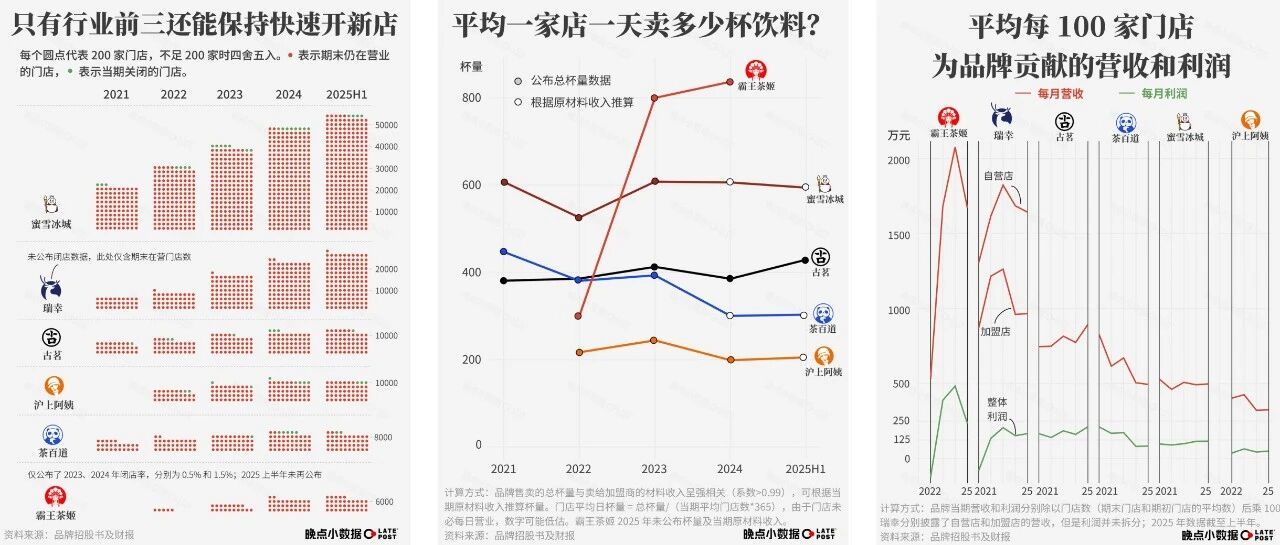
Core Viewpoint - The tea beverage industry has shifted from a brand-centric model to a fast-moving consumer goods (FMCG) approach, emphasizing scale and efficiency over brand loyalty and innovation [1][9][26] Group 1: Industry Trends - The competition in the tea beverage market has intensified, with brands focusing on price and convenience rather than unique offerings [1][9] - The trend of fast consumerization in tea beverages continues, with brands like Gu Ming and Mi Xue Bing Cheng engaging in aggressive pricing strategies [1][4] - The number of stores and operational efficiency have become the core competitive advantages for leading companies in the industry [1][3] Group 2: Franchise and Store Operations - Most major tea brands operate primarily through franchise models, with Luckin Coffee being an exception with a significant number of direct stores [3][4] - Mi Xue Bing Cheng has opened over 6,500 stores in six months, indicating a rapid expansion that could exceed 10,000 stores for the year [7][8] - The average number of stores per franchisee for Mi Xue Bing Cheng is 2.4, compared to less than two for other brands, highlighting its appeal to franchisees [8] Group 3: Financial Performance and Efficiency - The financial performance of leading brands varies significantly, with Ba Wang Cha Ji showing a sharp decline in revenue and profit despite having the highest average revenue per store [15][16] - Mi Xue Bing Cheng and Gu Ming have maintained stable revenue while expanding, while other brands have seen declines [16] - The cost structure for franchisees is heavily influenced by the operational efficiency of the brand, with Mi Xue Bing Cheng having the lowest employee-to-store ratio [19] Group 4: Marketing and Brand Strategy - Marketing expenditures vary widely among brands, with Ba Wang Cha Ji historically spending more on marketing per unit of revenue compared to others [19][22] - The proliferation of stores serves as a form of advertising, with brands like Mi Xue Bing Cheng leveraging their extensive network for promotional activities [22][23] - The boundaries between tea and coffee brands are blurring, as companies diversify their product offerings to capture more market share [26]

手机厂商下场造屏,意味着什么?
晚点LatePost· 2025-09-20 15:40
Core Viewpoint - OPPO has taken a significant step upstream by establishing its own screen manufacturing lines, aiming to enhance display technology and user experience in the smartphone industry [2][4]. Group 1: Industry Context - As smartphone component performance approaches physical limits, the evolution of core hardware like screens, imaging, and batteries is shifting from reliance on upstream suppliers to active involvement from terminal brands [2]. - Many smartphone brands are now opting for collaborative R&D to tackle technical bottlenecks in various scenarios [2]. Group 2: OPPO's Initiative - On September 19, OPPO announced the establishment of China's first self-researched screen "dual production line," marking it as the first smartphone brand in the country to directly engage in screen manufacturing [2][3]. - OPPO's initiative aims to overcome common technical bottlenecks in the industry and create the next generation of foundational user experiences [2][4]. Group 3: Technical Challenges - The "Mura" issue, characterized by uneven brightness and color on OLED screens, has long plagued the industry, affecting user experience [3]. - OPPO's dual production lines include a custom line with top-tier screen manufacturer Tianma and a self-researched display science production line, costing 1 billion yuan, to address these challenges [3]. Group 4: Technological Advancements - OPPO has achieved breakthroughs in screen uniformity and display performance, particularly in low-light environments, allowing for clear display and eye protection [4]. - The company has developed a "dark light color model" to compensate for color perception at extremely low brightness levels, stabilizing the minimum brightness to a comfortable "1 nit" [4]. Group 5: Industry Impact - OPPO's advancements provide an opportunity for other screen manufacturers and terminal brands to improve display uniformity and advance technologies like higher refresh rates and under-display cameras [5]. - By investing in screen manufacturing, OPPO aims to enhance industry capabilities and establish new standards that benefit the entire sector [5]. - The initiative represents a shift from merely reducing costs to empowering the entire industry through foundational innovation [5].