半导体行业观察

Search documents
台积电,挑战一万亿
半导体行业观察· 2025-09-06 03:23
Core Viewpoint - The semiconductor industry is experiencing significant growth, with TSMC leading in advanced process nodes like 3nm and 2nm, showcasing strong financial performance and strategic expansion plans [2][3][4]. Financial Performance - TSMC reported record revenue of $30.1 billion in Q2 2025, a 44% year-over-year increase, with a gross margin of 59%, reflecting strong pricing power and efficiency improvements [3]. - The total revenue for the first half of 2025 reached $60.5 billion, a 40% increase year-over-year, prompting TSMC to raise its full-year revenue growth guidance from 25% to approximately 30% [3]. - The company anticipates AI-related demand to drive significant revenue growth, with AI accelerator revenue expected to double in 2025 [3]. Technological Advancements - TSMC plans to start mass production of its N2 process in Q4 2025, ahead of schedule, indicating better-than-expected yield rates [4]. - The company is also constructing a 1.4nm fab in Taiwan, expected to enhance performance by 15% and reduce power consumption by 30% [4]. - Advanced packaging capacity has been doubled to 75,000 wafers per month, benefiting from collaborations with partners [4]. Strategic Expansion - TSMC's Arizona subsidiary achieved profitability in H1 2025, with a net profit of $150.1 million, reversing previous losses [4]. - New factories in Europe and Japan are under development to enhance supply chain resilience [4]. - Recent regulations in Taiwan mandate that advanced processes remain on the island, limiting overseas factories to N-1 processes, addressing trade tensions and potential tariff risks [5]. Workforce and Recruitment - TSMC plans to recruit over 10,000 new employees in 2024, with a significant portion in Taiwan, reflecting its ongoing expansion needs [7]. - The company has seen a nearly 10% increase in global employee count, reaching 84,512 by the end of 2024 [10]. - The gender ratio among employees is approximately 66.3% male to 33.7% female, with a significant portion of employees holding master's degrees [11][13]. Employee Compensation and Retention - TSMC's median salary for non-supervisory employees is approximately NT$2.645 million, ranking it among the top in Taiwan [16]. - In 2024, TSMC allocated NT$140.6 billion for employee bonuses, with an average payout exceeding NT$2 million per employee [17]. - The company aims to maintain a turnover rate below 10% by 2030, with a current turnover rate of 3.5% [14].


土耳其,也要自研芯片
半导体行业观察· 2025-09-06 03:23
Core Viewpoint - Turkey is preparing to initiate large-scale domestic chip production to reduce reliance on foreign technology [2][3] Group 1: Domestic Chip Production Plans - Yongatek Microelectronics, a Turkish chip design company, has been working since 2014 to become a national chip design and production center [2] - The company is collaborating with Turkish appliance manufacturer Beko to develop microcontrollers (MCUs) as part of the HIT-30 funding program, with prototype production expected by the end of this year and mass production starting next year [2] - Beko alone is projected to use 30 million MCUs annually, with potential demand in defense, robotics, and IoT reaching 50 million units [2] Group 2: Global Chip Market Context - The ongoing US-China tech and chip trade war poses a threat to other countries' development of autonomous chip capabilities [2] - Major US companies like Nvidia, Qualcomm, Broadcom, and Apple are relocating chip production back to the US, which could create new fronts in the "chip war" [3] - Chips are expected to become a decisive resource of the century, with AI emerging as a key competitive arena [3] Group 3: Investment and Infrastructure - Turkey plans to provide approximately $5 billion in support to attract international tech companies to establish production facilities in the country [3] - Currently, Turkey relies almost entirely on imported chips, with limited domestic production of sensors [3] Group 4: Initial Production Focus - The first chips produced in Turkey will focus on home appliances, with potential for 28nm or 40nm chips, and possibly 22nm chips for the automotive sector in the future [4][5] - Establishing chip production lines may take up to three years, and collaboration with institutions like Aselsan and TÜBITAK is encouraged [5] Group 5: Defense and Advanced Technology - The defense industry faces chip supply bottlenecks, particularly with field-programmable gate arrays (FPGAs), which are widely used [5] - Yongatek is working with foreign companies to develop autonomous FPGAs and is also developing AI chips for smart cameras and smart city security applications [5] - The AI camera chip is expected to enter mass production by 2027-2028, while FPGA development is ongoing through the European Union [5] Group 6: Talent and Knowledge Retention - To end reliance on foreign technology, Turkey needs to establish more chip design centers and encourage Turkish engineers working abroad to return and contribute to national development [6]

DRAM,生变
半导体行业观察· 2025-09-06 03:23
Core Viewpoint - The storage market is undergoing significant changes, with HBM technology becoming a strategic focal point for leading companies like SK Hynix, Samsung, and Micron, as they compete for future revenue growth [3][4][18]. Group 1: DRAM Market Dynamics - SK Hynix has maintained its position as the global leader in the DRAM market, increasing its market share from 36.9% in Q1 to 39.5% in Q2, while Samsung's share decreased from 34.4% to 33.3% [2]. - In terms of revenue, SK Hynix reported $12.226 billion in Q2, surpassing Samsung's $10.3 billion by over $1.9 billion, marking a significant shift in the competitive landscape [2]. - The ongoing transition in the DRAM market is characterized by a focus on HBM technology, which is expected to drive future growth [3][10]. Group 2: HBM Technology and Customization - HBM has evolved into a critical component for high-performance AI chips, with SK Hynix and Micron entering the final testing phase for the sixth generation of HBM (HBM4), set to supply NVIDIA [3][4]. - SK Hynix is positioned as the primary supplier for NVIDIA's HBM4, with expectations to finalize supply contracts by September [4]. - Customization of HBM products is becoming increasingly important, with SK Hynix already engaging with major clients like NVIDIA and Microsoft to develop tailored solutions [5][6]. Group 3: DDR4 Market Resurgence - The unexpected resurgence of DDR4 memory prices is attributed to supply shortages following announcements from major manufacturers to halt production by the end of 2025 [7][8]. - Current market prices for DDR4 have surged, with the average spot price for DDR4 16Gb reaching $16, significantly higher than DDR5 prices [7]. - Both Samsung and SK Hynix are reconsidering their plans to phase out DDR4, extending production timelines due to the profitability of older chips [8]. Group 4: Equipment and Technological Advancements - The introduction of High NA EUV equipment by SK Hynix is set to enhance DRAM production capabilities, allowing for finer circuit patterns and increased integration [13][14]. - The competition in the semiconductor equipment sector is intensifying, particularly with the development of hybrid bonding technology, which promises to improve performance and efficiency in HBM production [14][15]. - Companies like BESI and Applied Materials are leading the charge in hybrid bonding technology, which is expected to reshape the semiconductor equipment landscape [15][16]. Group 5: Future Outlook - The competition in the DRAM market is expected to escalate, particularly as companies adapt to the evolving demands of the AI era [18]. - The integration of various technologies and collaborative efforts among industry players will be crucial for success in the increasingly complex semiconductor ecosystem [18].
TI发出预警,股价下跌
半导体行业观察· 2025-09-05 01:07
Core Viewpoint - The recovery in chip demand is not as strong as some investors hoped, leading to a decline in Texas Instruments' stock price by nearly 4% following cautious remarks from the company's CFO [2][3]. Group 1: Chip Demand and Market Dynamics - Texas Instruments (TI) experienced a surge in chip demand from January to April due to pre-announcement order rushes related to tariffs, but this demand has since cooled off [2]. - The automotive sector is facing challenges that are dampening expectations for a rapid market rebound, as acknowledged by TI's management [2][3]. - The company has not received any discussions or communications regarding equity as incentives under the CHIPS Act [2][3]. Group 2: Financial Performance and Projections - TI's quarterly profit forecast in July did not impress investors, as demand for its analog chips fell below expectations [3]. - Despite four out of five end markets showing signs of recovery, the automotive market continues to struggle due to demand slowdowns and broader economic uncertainties [3]. Group 3: Pricing Strategy and Market Sentiment - Bernstein's research report indicates that TI plans to raise prices on 10,000 to 20,000 products by 20% to 50% to improve profit margins, rather than as a reaction to market conditions [4]. - The U.S. government's exemption of TI and other domestic manufacturers from potential semiconductor tariffs has alleviated significant uncertainty for investors, boosting confidence in the industry [4]. - TI's stock price has increased by 0.5% since the beginning of the year, currently at $187.83 per share, which is still 15.1% lower than its 52-week high of $221.25 [4].


刚刚,Cadence又宣布一桩收购
半导体行业观察· 2025-09-05 01:07
Core Viewpoint - Cadence has announced the acquisition of Hexagon AB's Design & Engineering (D&E) business, including its MSC software, to enhance its "Intelligent System Design™" strategy and expand its system design and analysis product portfolio [2][4]. Group 1: Acquisition Details - The acquisition involves a payment of approximately €2.7 billion, with 70% in cash and 30% in Cadence common stock [2]. - The deal is expected to close in the first quarter of 2026, pending regulatory approvals and customary closing conditions [5]. Group 2: Strategic Implications - The integration of Hexagon's D&E technology will strengthen Cadence's position in the multi-billion dollar structural analysis market, following its 2024 acquisition of Beta CAE [2][5]. - The acquisition will enable Cadence to provide a comprehensive, unified, end-to-end multiphysics platform, addressing the growing demand for early-stage multiphysics simulations in design cycles [3][4]. Group 3: Market Impact - The combined business is projected to generate approximately $280 million in revenue in 2024 and will employ over 1,100 staff globally [5]. - The acquisition will broaden Cadence's customer base, including major aerospace and automotive OEMs such as Volkswagen, BMW, Toyota, Lockheed Martin, BAE, and Boeing, who rely on Hexagon's D&E solutions for critical simulation workflows [4][5].


两年暴涨261%,博通一路狂飙
半导体行业观察· 2025-09-05 01:07
Core Viewpoint - Broadcom has experienced significant stock price growth, increasing over 100% since April, with a market capitalization of approximately $1.4 trillion, making it the second-largest semiconductor company globally, trailing only Nvidia [2][8]. Financial Performance - Broadcom's Q3 earnings per share were $1.69, slightly above Wall Street's expectation of $1.65, with revenue reaching $15.96 billion, a 22% increase year-over-year [8]. - The company reported a net profit of $4.14 billion for the quarter, a significant recovery from a loss of $1.88 billion in the same period last year, which was attributed to a one-time tax provision [8]. - AI revenue grew by 63% year-over-year, reaching $5.2 billion, exceeding previous forecasts [10]. Market Position and Strategy - Broadcom is positioned as a major beneficiary of the generative AI trend, providing customized chips for large-scale data center clients seeking alternatives to Nvidia's products [4][6]. - The company has launched new AI-focused networking chips, such as the Tomahawk Ultra and Jericho, to compete with Nvidia in the AI semiconductor market [6][12]. - Broadcom's semiconductor solutions business saw a 57% revenue increase, reaching $9.17 billion, while its infrastructure solutions business grew by 43% to $6.79 billion [9]. Future Outlook - Broadcom has secured a $10 billion order for custom AI chips from a major client, leading to an upward revision of its AI revenue forecast for fiscal year 2026 [10]. - The company anticipates Q4 sales to reach $17.4 billion, surpassing Wall Street's expectation of $17.02 billion [8]. - Analysts express optimism about Broadcom's potential to capture market share in the AI chip sector, especially as cloud operators increasingly adopt its solutions [9][16]. Competitive Landscape - Broadcom faces the challenge of competing against Nvidia, which has a stronghold in the AI GPU market, and must navigate the complexities of the AI ASIC design market [12][14]. - Nvidia's proprietary technologies, such as NVLink, are seen as significant competitive advantages, complicating Broadcom's efforts to penetrate the market [14]. - Despite the competitive landscape, Broadcom's recent performance and strategic initiatives position it as a strong contender in the AI semiconductor space [17].

重磅,谷歌TPU,对外销售了
半导体行业观察· 2025-09-05 01:07
Core Viewpoint - Google is challenging Nvidia's dominance in the AI semiconductor market by supplying its Tensor Processing Units (TPUs) to external data centers, marking a significant shift in its strategy from solely using Nvidia GPUs to offering its own AI chips [2][3][5]. Group 1: Google's TPU Strategy - Google has begun to supply TPUs to external cloud computing companies, indicating a potential expansion of its customer base beyond its own data centers [2]. - The company has signed a contract with Floydstack to set up TPUs in a new data center in New York, which will be its first deployment outside its own facilities [2]. - Analysts interpret this move as either a response to increasing demand that outpaces Google's own data center expansion or as a strategic effort to compete directly with Nvidia [2]. Group 2: TPU Development and Market Growth - The TPU, launched in 2016, is designed specifically for AI computations, offering advantages in power efficiency and speed compared to traditional GPUs [3]. - Recent reports indicate a 96% increase in developer activity around Google Cloud TPUs over the past six months, reflecting growing interest in the technology [4]. - The upcoming release of the seventh-generation Ironwood TPU is expected to further drive demand, with significant enhancements in performance and memory capacity compared to the previous generation [8]. Group 3: Market Dynamics and Competition - Nvidia currently holds an 80-90% market share in the AI training GPU market, with a staggering 92% share in the data center market as of March this year [5]. - As Google begins to supply TPUs externally, the competitive landscape in the data center semiconductor market may shift, reducing reliance on Nvidia's products [5]. - DA Davidson analysts suggest that Google's TPU business could be valued at $900 billion, significantly higher than earlier estimates, indicating strong market potential [7]. Group 4: Technical Specifications of Ironwood TPU - The Ironwood TPU is expected to deliver 4,614 TFLOPS of computing power, with a memory capacity of 192GB, which is six times that of the previous generation [8]. - The chip will also feature a bandwidth of 7.2 Tbps, enhancing its ability to handle larger models and datasets [8]. - The efficiency of the Ironwood TPU is projected to be double that of the Trillium TPU, providing more computational power per watt for AI workloads [8].



这颗芯片,还有机会吗?
半导体行业观察· 2025-09-05 01:07
Core Viewpoint - The article discusses the evolution and significance of high-performance computing (HPC) and AI accelerators, particularly focusing on Pezy Computing's advancements in mathematical accelerators that rival GPUs in performance and energy efficiency [1][2][32]. Group 1: High-Performance Computing and AI Accelerators - The global system expenditure is now dominated by AI servers filled with accelerators, with GPUs being the preferred choice due to their design for high-throughput vector processing and support for various workloads [1]. - Pezy Computing has developed a series of mathematical accelerators over 15 years, aiming to maximize energy efficiency while performing similar tasks as GPUs [2][8]. - The Pezy-SC series of accelerators has shown significant performance improvements over the years, with the latest Pezy-SC4s expected to deliver 24.9% higher floating-point throughput compared to its predecessor [7][8]. Group 2: Technical Specifications and Performance Metrics - The Pezy-SC4s chip, set to launch in 2026, will feature 2,048 cores, a clock speed of 1.5 GHz, and 96 GB of HBM3 memory with a bandwidth of 3.2 TB/s [8][30]. - The performance metrics of Pezy chips have improved significantly, with the Pezy-SC3 achieving 19.7 TFLOPS in double precision and the upcoming SC4s expected to reach 24.6 TFLOPS [4][8]. - The architecture of Pezy chips allows for efficient memory usage and high throughput, with the SC4s chip designed to support multiple precision formats including FP64, FP32, and FP16 [8][12]. Group 3: Market Position and Future Outlook - Pezy Computing's advancements position it as a competitive alternative to Nvidia GPUs, particularly in high-precision floating-point operations, which are crucial for HPC and AI workloads [30][31]. - The Japanese government’s investment in Pezy Computing is seen as a strategic move to maintain expertise in mathematical accelerator design, ensuring a backup option in case of GPU supply constraints [32]. - The anticipated performance of the Pezy-SC4 in genomic analysis tasks suggests it could outperform Nvidia's H100 GPUs, indicating a strong potential for market adoption [29][30].
从周期波动到全面进阶:AI浪潮下的存储新机遇——GMIF2025邀您共探破局之道!
半导体行业观察· 2025-09-05 01:07
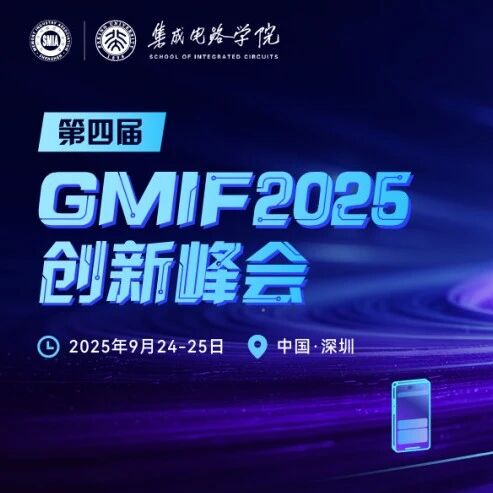
Core Viewpoint - The storage industry is undergoing a significant transformation from "cyclical drivers" to "structural growth" due to the acceleration of AI applications, massive data, and edge intelligence, leading to a new growth cycle in the storage sector driven by structural demand [4]. Group 1: Industry Overview - The global semiconductor market is projected to reach $346 billion in the first half of 2025, with a year-on-year growth of 18.9%, and the semiconductor storage segment is expected to grow by 20% [4]. - The storage market is shifting from "capacity expansion" to "higher performance, higher energy efficiency, and system collaboration" [4]. Group 2: Upcoming Event - The 4th GMIF2025 Global Storage Industry Innovation Summit will be held on September 24-25, 2025, in Shenzhen, focusing on breakthroughs in storage driven by AI technology [6]. - The summit aims to create a collaborative hub that connects technology and market, gathering key forces in the global storage ecosystem [6]. Group 3: Key Topics of the Summit - **Storage Technology Trends and Iteration Paths**: New architectures like CXL, Chiplet, and near-storage computing are accelerating the transition from point optimization to system collaboration [9]. - **AI Application Innovation and Implementation Practices**: Trends in AI servers, AI smartphones, AIPC, and smart vehicles highlight the innovative storage demands [10]. - **Collaborative Win-Win in the Industry Chain**: Collaboration among manufacturers, storage solution providers, packaging and testing, materials, and equipment companies is essential for building a dual-engine of technology and market [11]. - **Global Ecosystem Interaction and New Pattern Reconstruction**: The summit will address how to reshape supply chains, standard building, and cross-border collaboration in the post-globalization era [12]. Group 4: Summit Highlights - GMIF serves as a high-end global platform for technology exchange, showcasing technological achievements and expanding upstream and downstream cooperation [21]. - It provides an important venue for industry professionals to grasp trends, link resources, and seek new opportunities [21]. - The summit is also a key platform for media and academia to access first-hand information and influence industry discourse [22].
瑞萨投资了一家芯片公司:英伟达挑战者
半导体行业观察· 2025-09-05 01:07
Core Viewpoint - A Japanese startup, EdgeCortix, is developing cost-effective AI chips to compete with Nvidia, aiming for significant sales growth next year and preparing for an IPO by 2028 [2][5]. Group 1: Company Overview - EdgeCortix is headquartered in Tokyo and focuses on efficient AI chips that can process workloads directly on devices like satellites and smartphones, reducing reliance on expensive data centers [2]. - The company has raised nearly $100 million through equity and government funding, with investments from Japanese semiconductor manufacturer Renesas Electronics and SBI Holdings [5]. Group 2: Market Position and Strategy - The CEO, Sakyasingha Dasgupta, believes that the edge market is open for competition, stating that Nvidia does not dominate this space [2]. - EdgeCortix has signed a prototype contract with the U.S. Department of Defense's Defense Innovation Unit, marking a significant entry into the defense sector [3]. Group 3: Product Development - The first mass-produced AI chip, Sakura-II, boasts four times the energy efficiency of Nvidia's flagship H100 while focusing on specific AI deployment processes [5]. - The design of Sakura chips minimizes memory access during data processing, addressing energy consumption and performance issues associated with traditional AI chips [6]. Group 4: Future Prospects - The company anticipates business expansion starting in 2026, particularly in robotics and aerospace applications, which have previously seen limited chip demand [4]. - Plans for an IPO in the U.S. are being considered due to better liquidity compared to Japan, although specific details have not been disclosed [5].