半导体行业观察

Search documents
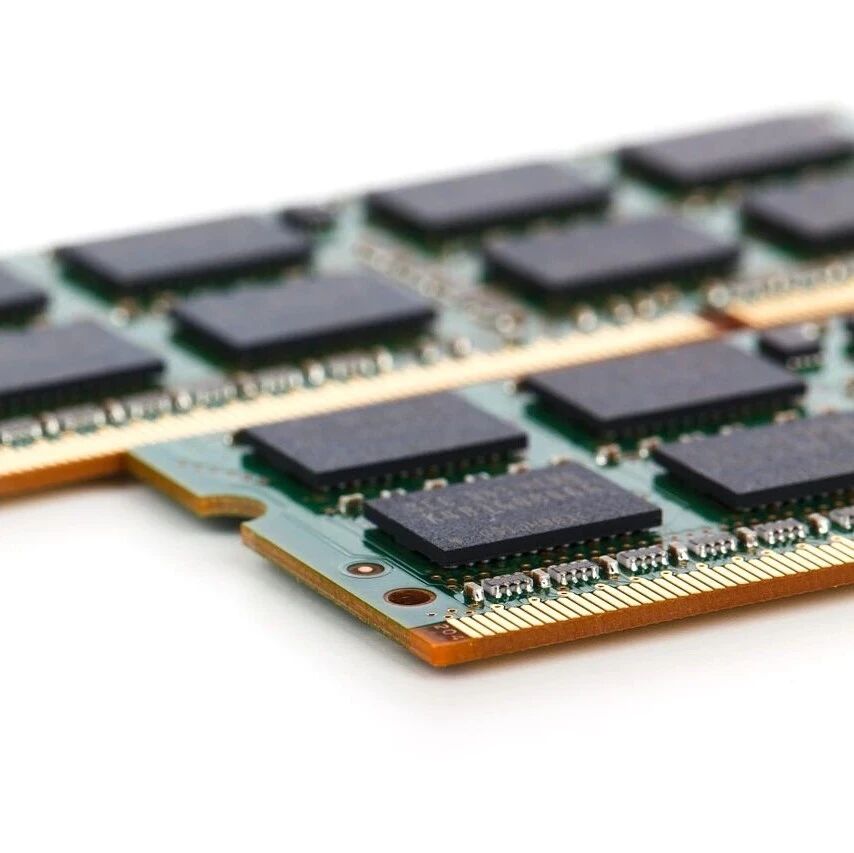
DDR5内存价格,高得离谱
半导体行业观察· 2026-01-13 01:34
Core Viewpoint - The price of DDR5 memory is continuously rising, driven by increasing demand in the artificial intelligence sector, with prices in the Korean market reaching up to $500 for a single memory stick and even higher for entry-level kits [1][2]. Group 1: Memory Price Trends - In the Korean market, a 16GB DDR5-5600 memory stick is priced around 270-300 USD, while a 32GB DDR5-5600 kit ranges from 450-500 USD [1]. - Entry-level memory kits supporting Intel XMP and AMD EXPO are priced between 500 to 650 USD, significantly higher than a few months ago when similar kits could be purchased for much less [2]. - The U.S. market is expected to see a significant price increase, with an average rise of 30% anticipated within a month, aligning with industry expectations [2]. Group 2: Impact on Smartphone Manufacturing - The BOM cost for smartphones is projected to increase by 25% by 2026 due to skyrocketing DRAM prices, with mobile LPDDR RAM prices rising over 70% and NAND flash prices doubling [5]. - Memory costs have risen from 10-15% of total smartphone manufacturing costs to 20%, impacting manufacturers who may need to reduce specifications or pass costs onto consumers [6][7]. - Major companies, including Apple, are facing challenges due to DRAM shortages, with reports of executives negotiating directly with manufacturers to secure supplies [5][7]. Group 3: Long-term Outlook - The memory shortage is expected to persist until at least Q4 2027, indicating a prolonged period of high prices and supply constraints [7].

台积电在美国,再建5座晶圆厂
半导体行业观察· 2026-01-13 01:34
Core Viewpoint - The Trump administration is finalizing a trade agreement with Taiwan that aims to reduce tariffs on Taiwanese exports and encourage significant investments from Taiwan's largest chip manufacturer, TSMC, in the U.S. [1][2] Group 1: Trade Agreement Details - The agreement is expected to lower U.S. tariffs on Taiwanese goods to 15%, aligning with the tariff rates agreed upon with Japan and South Korea [1]. - TSMC has committed to building at least five additional semiconductor factories in Arizona, effectively doubling its presence in the state [1][2]. - The negotiations have been ongoing for several months and are currently undergoing legal review, with an announcement anticipated this month [1]. Group 2: TSMC's Investment Plans - TSMC has already established one factory in Arizona since 2020, with a second factory under construction set to begin operations in 2028, and plans for four more factories in the coming years [2]. - The total investment by TSMC in the U.S. is projected to reach $165 billion, including a previously announced $100 billion investment [5][6]. Group 3: U.S.-Taiwan Trade Relations - The trade negotiations have faced challenges, particularly regarding tariff disputes, with Taiwan's products currently subject to a 20% tariff on imports to the U.S. [2][3]. - The U.S. government has exempted semiconductors and many electronic products from tariffs under national security provisions [2][3]. - Taiwan's government has reached a broad consensus on the trade agreement, which includes tariff reductions and favorable treatment under Section 232 of U.S. trade law [3].

恒玄公告:创始人减持
半导体行业观察· 2026-01-13 01:34
公众号记得加星标⭐️,第一时间看推送不会错过。 昨夜晚间,恒玄发布公告称,截至本公告披露日,恒玄科技(上海)股份有限公司(以下简称"公 司")控股股东之一致行动人股东宁波梅山保税港区百碧富创业投资合伙企业(有限合伙)(以下简 称"宁波百碧富")、宁波梅山保税港区千碧富创业投资合伙企业(有限合伙)(以下简称"宁波千碧 富")和宁波梅山保税港区亿碧富创业投资合伙企业(有限合伙)(以下简称"宁波亿碧富")合计持 有公司股份10,373,706 股,持股比例 6.15%。上述股份均为公司首次公开发行前取得的股份,已于 2023 年12月18 日解除限售并上市流通。 公司持股 5%以上股东 Run Yuan Capital I Limited(以下简称"Run Yuan I")和一致行动人 Run Yuan Capital II Limited(以下简称"Run Yuan II")合计持有公司股份 13,435,030 股,合计占公司 总股本 7.96%。上述股份均为公司首次公开发行前取得的股份,已于 2021 年 12 月 16 日解除限售 并上市流通。 公告指出,因自身资金需求,公司控股股东之一致行动人宁波百碧富、 ...
英伟达,筑起新高墙
半导体行业观察· 2026-01-13 01:34
Core Viewpoint - The article discusses NVIDIA's strategic acquisition of Groq, highlighting its implications for the AI chip market and NVIDIA's competitive positioning in the evolving landscape of AI inference technology [1][2][4]. Group 1: NVIDIA's Acquisition of Groq - NVIDIA's acquisition of Groq is characterized as a "recruitment-style acquisition," where key personnel and technology are absorbed without a formal takeover, allowing NVIDIA to mitigate potential competition [1][2]. - The timing of this acquisition is critical as the AI chip competition shifts from training to inference, with Groq's technology being particularly relevant for low-latency and performance certainty in inference tasks [2][4]. - Groq's founder, Jonathan Ross, is recognized for his pivotal role in developing Google's TPU, making Groq a significant player in the AI chip space [5]. Group 2: Shift in AI Focus - The focus of the AI industry is transitioning from sheer computational power (FLOPS) to efficiency and predictability in delivering inference results, which Groq's architecture emphasizes [4][7]. - Groq's LPU architecture, which utilizes deterministic design principles, contrasts with the dynamic scheduling typical in GPU architectures, highlighting a shift in system philosophy [5][6]. Group 3: Broader Strategic Implications - NVIDIA's acquisition strategy reflects a broader goal of consolidating control over the AI computing ecosystem, moving beyond hardware to encompass system-level capabilities [23][24]. - The integration of Groq, along with previous acquisitions like Bright Computing and SchedMD, illustrates NVIDIA's intent to dominate the entire AI computing stack, from resource scheduling to workload management [23][24]. - By controlling the execution paths and system complexity, NVIDIA aims to create a high barrier to entry for competitors, making it difficult for customers to switch to alternative solutions [24][25].

苹果将彻底抛弃高通基带,芯片巨头遇劫
半导体行业观察· 2026-01-13 01:34
Core Viewpoint - Qualcomm's stock price dropped 4.8% to $169.27 after Mizuho Securities downgraded its rating and target price, citing challenges in mobile shipments and components for Apple [1][2] Group 1: Market Challenges - Mizuho Securities predicts a potential 7% reduction in Qualcomm's expectations for 2026 due to anticipated declines in mobile shipments and Apple's in-house modem development [1] - The smartphone market remains weak, with major clients shifting more work in-house, which poses a significant challenge for Qualcomm's growth [1][2] - Investors are preparing for Apple's gradual transition to in-house 5G technology, which could lead to Qualcomm losing its market share with Apple [2] Group 2: Product Performance - Qualcomm's Snapdragon X2 Plus processor, launched at CES 2026, claims to outperform Intel and AMD chips, but benchmark tests show it lags behind Apple's M4 chip [3][4] - In single-core tests, Snapdragon X2 Plus outperformed several Intel and AMD processors but fell short of the Apple M4 [4][7] - The Snapdragon X2 Plus shows a performance increase of 15% to 50% over its predecessor, yet it still struggles against Apple and x86 chips in the laptop market [10][13]

SK海力士将投资900亿,建设封装厂
半导体行业观察· 2026-01-13 01:34
Core Viewpoint - SK Hynix plans to invest 19 trillion KRW (approximately 90 billion RMB) in building its seventh semiconductor backend factory, P&T7, in Cheongju, South Korea, to enhance supply chain efficiency and future competitiveness while responding to government policies for regional balanced development [1][2]. Investment Details - The P&T7 factory will be constructed on a 70,000 pyeong site in the Cheongju Technopolis Industrial Park, with construction starting in April this year and expected completion by the end of next year [1]. - The total investment for the P&T7 factory is 19 trillion KRW, following the demolition of the old LG No. 2 factory on the site, which SK Hynix previously acquired [1]. Importance of Advanced Packaging - Advanced packaging is crucial for connecting frontend processes, logistics, and operational stability, especially for high bandwidth memory (HBM) products, which require effective packaging technology to address heat dissipation and warping issues [2]. - The investment will contribute to developing a comprehensive semiconductor industry cluster in Cheongju, integrating semiconductor production (including NAND flash, HBM, and DRAM) and advanced packaging [2]. Strategic Goals - The investment in the Cheongju P&T7 factory aims to strengthen the national long-term industrial foundation and create a structure for joint development between the capital region and provinces, moving beyond short-term efficiency considerations [3]. - The company is also focused on conditions that can alleviate investment burdens and enhance the government's capacity for executing large-scale long-term investments [3].
数据中心芯片,要求很高
半导体行业观察· 2026-01-13 01:34
Core Viewpoint - The article emphasizes the critical importance of reliability in data centers, automotive, and aerospace industries, highlighting that failures can lead to significant economic impacts and potential loss of life [1]. Data Center Reliability Standards and Strategies - Cloud service providers operate hundreds of large data centers interconnected by thousands of miles of fiber optics, designed for high reliability with uptime ranging from 99.9% (43 minutes downtime monthly) to 99.999% (26 seconds downtime monthly) [2]. - Redundancy is key in data center design, with systems in place for load transfer and backup components to ensure continuous operation even during failures [2]. - Data centers utilize redundant cooling and power distribution systems to maintain operations during outages, with automatic switches to backup power sources [2]. Semiconductor Reliability Strategies - Data center chips must be designed for high reliability, employing fault-tolerant architectures to mitigate failures [3]. - Error-Correcting Code (ECC) memory is used in CPUs to enhance reliability, with advanced memory types like HBM3 incorporating stronger error correction methods [3]. - NVLink technology allows for low-latency communication between GPUs, with redundancy built into the system to maintain performance during component failures [5]. Component Design for High Reliability - Components are designed to detect early signs of failure and prioritize repairs, with redundancy to quickly identify and address issues [4]. - Modular and hot-swappable designs are encouraged to minimize downtime during component replacements [8]. Mechanical Engineering and Reliability - Mechanical engineering plays a crucial role in data center reliability, with the integration of multiple chips on a substrate posing risks of physical connection failures due to thermal and material differences [9]. - The operational temperature limits for data center components are significantly lower than those for automotive applications, with GPUs and processors designed to operate efficiently within these constraints [10]. Lifespan and Reliability Data - Data centers typically have a shorter lifespan of 5 to 6 years compared to automotive components, necessitating rapid deployment of new technologies [11]. - Extensive reliability data and stress testing are required before deploying new semiconductor components in data centers to ensure low failure rates [11]. Conclusion - High reliability in semiconductor architecture, firmware, and design is essential for success in the data center market, which is currently the largest segment for semiconductors [12].
这个男人,力挽三星芯片狂澜
半导体行业观察· 2026-01-12 01:31
Core Viewpoint - The article discusses the increasing importance of key figures in managing large South Korean companies, particularly in the context of Samsung Electronics, as they face challenges in global markets and seek to improve performance and competitiveness [1][2]. Group 1: Key Figures in Samsung - Young-hyun, the head of Samsung Electronics' semiconductor division, publicly apologized for the company's poor performance and management mistakes, promising to lead a turnaround [1][2]. - Lee Jae-yong, the vice chairman of Samsung Group, acknowledged management failures and committed to reforms, indicating a significant shift in leadership responsibility [2]. - Young-hyun is recognized as a pivotal figure in Samsung's semiconductor success during the early 2010s, having previously served as the head of the memory division [3]. Group 2: Management Style and Challenges - Young-hyun's management style is characterized by decisiveness and a focus on addressing deep-rooted issues within the company, contrasting with previous leaders [4][5]. - He has initiated a comprehensive reform of the semiconductor division, acknowledging past mistakes and emphasizing the need for improved communication and accountability [6][7]. - Under his leadership, the semiconductor division has shown signs of recovery, with a focus on empowering key personnel and enhancing operational efficiency [7][8]. Group 3: Future Prospects and Concerns - Despite recent successes, there are concerns about the long-term sustainability of Young-hyun's leadership and the lack of a clear successor [9]. - The semiconductor division faces the challenge of adapting to the rapidly changing landscape driven by artificial intelligence and the need for innovative solutions [10].

中国台湾,疯狂补贴芯片设计
半导体行业观察· 2026-01-12 01:31
Core Viewpoint - The Taiwanese authorities are promoting the "Chip Innovation Taiwan Plan" to enhance the IC design and R&D capabilities in Taiwan, aiming to increase the global market share of advanced IC design to 80% within 10 years [1][4]. Group 1: IC Design Top Plan - The "IC Design Top Subsidy Program" is managed by the Ministry of Economic Affairs, focusing on supporting local IC designers to invest in internationally competitive chip and system development, with a budget of NT$2.7 billion for this year [1][2]. - The program emphasizes forward-looking technology layouts, particularly in satellite communication, multifunctional robots, and drones, encouraging proposals that meet or exceed international benchmarks [1][2]. - The program allows applications from individual companies or collaborations, with a maximum duration of 2 years for the subsidy [2]. Group 2: Driving IC Design Plan - The "Driving IC Design Program" prioritizes support for key development areas such as drones, robots, and satellite communications, with maximum subsidies of NT$200 million for individual projects and NT$300 million for collaborative projects [4][5]. - The program aims to boost Taiwan's IC design market share from 19% to 40% globally within 10 years, with advanced processes expected to grow to 80% [4][5]. - In the previous year, the program approved 28 projects involving 33 companies, with a total subsidy amount of NT$1.3 billion, projected to create nearly NT$36 billion in value [5].
SRAM,取代HBM?
半导体行业观察· 2026-01-12 01:31
Core Viewpoint - The strategic acquisition of AI inference startup Groq by Nvidia has sparked significant discussions in the tech industry regarding whether SRAM will replace HBM in data storage solutions for AI applications [1][22]. SRAM and HBM - SRAM (Static Random Access Memory) is one of the fastest storage mediums, directly integrated next to CPU/GPU cores, offering low latency but limited capacity [2][4]. - HBM (High Bandwidth Memory) is essentially DRAM, designed for high capacity and bandwidth, but with higher latency compared to SRAM [2][4]. Challenge to HBM - The AI chip landscape has traditionally focused on training, where capacity is prioritized over latency, making HBM the preferred choice [4][10]. - In the inference phase, particularly in real-time applications, latency becomes critical, revealing the limitations of HBM [4][10]. SRAM as Main Memory - Groq's approach utilizes SRAM as the main memory for inference, capitalizing on its speed and predictability, which is crucial for low-latency applications [9][10]. - Groq's architecture allows for high bandwidth (up to 80TB/s) and significantly reduces access latency compared to HBM [10][16]. Deterministic Performance - The deterministic nature of SRAM provides consistent performance, which is vital for applications in industrial control, autonomous driving, and financial risk management [16][22]. - Groq's architecture has demonstrated superior performance in specific benchmarks, achieving 19.3 million inferences per second, significantly outperforming traditional GPU architectures [16][18]. Nvidia's Perspective - Nvidia's CEO Jensen Huang acknowledged the advantages of SRAM but highlighted its limitations in terms of space and cost, suggesting that SRAM cannot fully replace HBM for large models [19][20]. - The flexibility of architecture is emphasized as crucial for optimizing total cost of ownership (TCO) in data centers, rather than solely focusing on low-latency inference [20][22]. Conclusion - SRAM's emergence as a main memory in AI inference is not about replacing HBM but rather about optimizing performance for specific applications [22][23]. - The industry should focus on the opportunities presented by a hierarchical storage approach, balancing the high costs of SRAM with the advantages of HBM [23].