吴晓波频道

Search documents
2025年谈出海,一线实战派们总结了九大关键词丨出海峰会
吴晓波频道· 2025-06-02 15:27
Core Viewpoint - The article discusses the evolving landscape of Chinese companies going global, emphasizing the shift from merely exporting products to a more integrated approach that focuses on deep localization and sustainable globalization in response to challenges such as trade protectionism and compliance risks [2][10]. Summary by Sections Current Trends in Globalization - In the first quarter of 2025, China's "new three samples" (new energy vehicles, lithium batteries, and photovoltaic products) exported over $47.7 billion [2] - The global short drama market saw nearly $700 million in in-app purchases in Q1 2025 [2] - Chinese innovative pharmaceuticals achieved a total export transaction amount of $45.5 billion from the beginning of the year [2] - Various sectors, including smart manufacturing, cross-border e-commerce, gaming, patents, and business travel services, are expanding their global presence [2] Challenges and Opportunities - Companies face challenges such as trade protectionism, compliance risks, and cross-cultural management as they navigate the complexities of international markets [2] - The article highlights the need for companies to adapt to a new phase of "all-factor going global," which involves re-learning and integrating compliance, supply chains, organization, and branding [5][6] Insights from Industry Experts - Wu Xiaobo emphasizes the importance of "all-factor going global" as a significant opportunity for Chinese entrepreneurs over the next 20 years [4][5] - Tsunemi Junya points out the necessity for companies to integrate into local communities, drawing from Japan's historical experiences in overseas expansion [6] - Qin Shuo focuses on the balance between exports and overseas markets, advocating for resilience and flexibility in navigating the U.S. and non-U.S. markets [7] - Yang Yudong calls for a high-quality era of going global, where companies prioritize local market needs and value creation [7] - Shen Jin stresses the importance of innovation, craftsmanship, and humility as key factors for success in uncertain international environments [8] - Huang Zhaohua notes a shift in the annual keyword for overseas expansion from "persistence" to "breakthrough," indicating readiness for new challenges and opportunities [10][11] Upcoming Global Summit - The second Global Summit on Going Global will take place in Singapore on June 19-20, 2025, focusing on collaborative strategies for Chinese companies to navigate globalization [2][11] - The summit aims to explore how to innovate overseas models, achieve deep localization, and build supply chain advantages [11]


“以旧换新”带货1万亿,中国何时能步入“消费者社会”?
吴晓波频道· 2025-06-01 17:52
Core Viewpoint - The article discusses the contrasting aspirations of the United States and China regarding their economic identities, with the U.S. aiming to bring manufacturing back and become a "producer society," while China seeks to expand consumption and evolve into a "consumer society" [4][5]. Group 1: U.S. Manufacturing and Consumer Society - Trump's rally in Pennsylvania emphasizes the push to keep manufacturing jobs in the U.S. by increasing tariffs on imported steel and aluminum from 25% to 50% [4][3]. - Pittsburgh, once a steel hub, symbolizes the U.S. manufacturing revival, transitioning from a deindustrialized "rust belt" to a center for healthcare and high-tech industries [3][4]. - The U.S. consumer society emerged in the early 20th century, driven by industrial productivity, with personal consumption contributing to 70% of GDP growth since 1953 [24][18]. Group 2: Characteristics of Consumer Societies - The transition from a producer society to a consumer society is marked by a shift in identity from labor-based to consumption-based, where consumerism becomes a core value [10][12]. - Key features of a consumer society include brand-oriented consumption, flexible employment, and a focus on immediate gratification [11][14]. - The U.S. consumer society is characterized by a high dependency on credit systems and installment payments, allowing broader access to goods [19][22]. Group 3: Comparison of U.S. and China's Consumer Societies - The article highlights that while the U.S. has a mature consumer society, China's transition is still in progress, maintaining a strong manufacturing base [39][40]. - In 2024, U.S. final consumption expenditure is projected to reach $17.8 trillion, significantly higher than China's $10.3 trillion, indicating a substantial gap in consumer spending [26][24]. - China's consumer market is evolving, with policies promoting consumption, such as the "old-for-new" program, which has already generated over 1 trillion yuan in sales this year [4][40]. Group 4: Economic Implications and Future Outlook - The article suggests that China's path to becoming a consumer society will depend on industrial upgrades and maintaining social stability, leveraging its large population and manufacturing capabilities [41][40]. - The potential for a unique Chinese consumer society model exists, integrating a vast market, technological empowerment, and a solid manufacturing foundation [41][40].

出去旅游,怎么感觉吃得都差不多?
吴晓波频道· 2025-05-31 16:41
Core Viewpoint - The article discusses the evolving landscape of the restaurant industry in China, highlighting the tension between consumer desire for unique dining experiences and the increasing prevalence of standardized chain restaurants. It suggests that as consumers become more discerning, there is a growing demand for quality and authenticity in dining options, which may lead to a resurgence of local, non-chain establishments [1][41][44]. Group 1: Consumer Behavior and Trends - During the recent Dragon Boat Festival and Children's Day, many restaurants, especially those near tourist attractions, saw high demand, with special "family packages" introduced to attract customers [2][4]. - A report from Deep Blue Think Tank revealed that 28.2% of consumers prioritize product quality over brand, while 20.6% prefer well-known brands, indicating a complex relationship with brand loyalty [5][7]. - Consumers exhibit a mix of loyalty and curiosity, with 32.2% often choosing familiar restaurants, while 29.6% are willing to try new places if the price is right [10][12]. Group 2: Market Dynamics and Competition - The share of chain restaurants in China has increased from 15% in 2019 to 22% in 2024, with projections suggesting it could reach 24% by 2025 [16]. - Major global brands like McDonald's and Starbucks dominate the market, with McDonald's alone purchasing 35 billion pounds of potatoes annually, showcasing the scale and purchasing power of these giants [21][22]. - Chinese brands like Mixue Ice City and Luckin Coffee are also expanding rapidly, with Mixue boasting 46,000 stores, primarily in Asia [20]. Group 3: Standardization vs. Local Flavor - The article notes that many traditional dishes are becoming standardized, with some brands achieving 60%-70% standardization in their offerings [32]. - The rise of "internet celebrity" restaurants, which create unique dining experiences, is highlighted as a response to consumer fatigue with uniformity [33][36]. - The future of the restaurant ecosystem in China may not mirror the U.S. model of dominance by a few giants, but rather a coexistence of large chains and small, unique establishments [49]. Group 4: Future Outlook - As consumer preferences shift towards quality and authenticity, the article suggests that brands must refine their offerings to meet these expectations, focusing on product quality, service, and brand culture [44][50]. - The article concludes that the competition will increasingly hinge on the ability to provide unique experiences and maintain a connection to local culture, as consumers seek out authenticity in their dining choices [52].




在宁波港,抢不到去美国的船丨一线
吴晓波频道· 2025-05-30 17:03
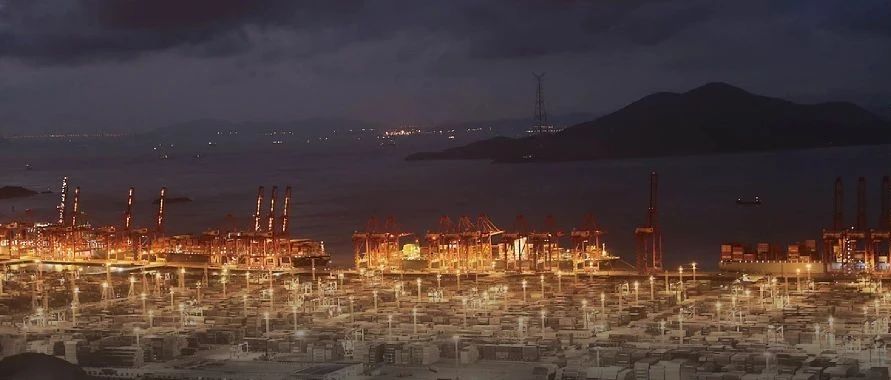
点击图片▲立即报名 编者按:5月12日以来 ,中美关税战暂缓。我们策划了"中国外贸城市观察"专 题,寻找外贸走向的答案切片。第一站义乌,第二站重庆, 第三站则是宁波。 宁波舟山港货运吞吐量连续16年位居全球第一。据宁波口岸数据,2024年上半 年,美国是其最大贸易国家,占比17.3%。 我们主要从国际货代行业切入,它介于海运与外贸行业,掌握外贸链条的核心环 节,有着对行业形势十分敏感的群体。 文 / 巴九灵(微信公众号:吴晓波频道) 夜幕下的宁波舟山港 核心港区 —— 北仑港区,成了大卡车的海洋。 离港一两公里的地带,集装箱卡车如接了锁链一般,一车接一车,驶在 坑洼的路面,发出一声声巨响。 一座座如小山般的集装箱码头,仿佛一个个积木城,以每一两分钟的频率进出重卡。 直到凌晨时分,港区依然灯火通明,发出阵阵作业时的钢铁之声。 北仑港区灯火通明 图源:小巴拍摄 一切似乎 都在 预料之中。 5月12日《中美日内瓦经贸会谈联合声明》 发 布 之后的 90天左右,美国对华关税从145%降至10%。 由此,对美出口重归火热。据证券时报近日多方调研: 5月底的舱位已基本售罄,运价上涨幅度超过40%。 5月中下旬,小巴走访了 ...
上海4月进出口规模创新高,德国或对美征收数字税 | 财经日日评
吴晓波频道· 2025-05-30 17:03
Group 1: Computing Power Interconnection Action Plan - The Ministry of Industry and Information Technology issued the "Computing Power Interconnection Action Plan," aiming to establish a comprehensive standard and rule system for computing power interconnection by 2026 and achieve nationwide public computing power standardization by 2028 [1] - The plan emphasizes the need for leading server companies to drive the development and application of new high-speed interconnection protocols, enhancing compatibility across various transmission protocols [1] - The initiative aims to optimize the allocation of computing resources, particularly facilitating the "East Data West Computing" strategy, which involves sending data from energy-scarce eastern cities to the resource-rich western regions for processing [1] Group 2: Digital Tax in Germany - Germany is considering a 10% digital services tax on major online platforms like Google and Meta, citing concerns over tax avoidance and monopolistic structures that threaten competition and free speech [3] - This move is seen as a pressure tactic in ongoing US-EU trade negotiations, with several European countries already implementing similar taxes [3][4] - The proposal highlights the need for a fair discussion on tax laws rather than using them as negotiation tools, which could harm the business environment [4] Group 3: Shanghai Foreign Trade Performance - Shanghai's foreign trade in the first four months of the year reached 1.4 trillion yuan, a 1% year-on-year increase, with exports growing by 13.8% [5] - The city has shown resilience in foreign trade despite tariff challenges, with significant growth in exports to non-US regions, particularly Africa, which saw a 96.5% increase [5][6] - The strong performance is attributed to Shanghai's robust high-end manufacturing and electronics sectors, as well as the flexibility and innovation of private enterprises [5] Group 4: Hotel Investment Market - The hotel investment market in China is experiencing increased activity, with 313 new hotels opening in April, a 41.6% month-on-month increase [7] - Major transactions are concentrated in first-tier and new first-tier cities, with the East China region accounting for 55% of hotel investment deals [8] - Despite a competitive environment, the demand for hotel assets is rising, driven by increased travel during holidays, although overall hotel performance remains mixed [8] Group 5: Li Auto's Financial Performance - Li Auto reported a 1.1% year-on-year revenue increase to 25.9 billion yuan in Q1 2025, with a net profit of 647 million yuan, marking a 9.4% increase [9] - The company expects Q2 deliveries to reach between 123,000 and 128,000 units, reflecting a year-on-year growth of 13.3% to 17.9% [9] - Li Auto's performance is stable, but it faces increasing competition from other new energy vehicle manufacturers [10] Group 6: Luckin Coffee's Pricing Strategy - Luckin Coffee has introduced promotional pricing, with some drinks priced as low as 6.9 yuan, amid intense competition in the coffee market [11] - The company emphasizes that these discounts are temporary promotional activities rather than a shift to a lower pricing strategy [11][12] - Despite rising coffee bean prices globally, domestic price competition remains fierce, with competitors offering significantly lower prices [11] Group 7: ETF Market Growth - The ETF market in China has surpassed 4 trillion yuan, with significant inflows of new capital and an increase in the number of ETF products [13] - The growth is partly driven by state-owned entities entering the market, focusing on index ETFs rather than individual stocks [13] - The rise in ETF trading activity reflects a shift in investor preference towards diversified investment strategies [13] Group 8: Stock Market Overview - The stock market experienced fluctuations, with the Shanghai Composite Index closing down 0.47% on May 30, amid a total trading volume of 1.14 trillion yuan [14] - Defensive sectors like pharmaceuticals showed strength, while high-flying stocks faced declines [14] - Market sentiment remains cautious, with expectations of policy support in June potentially stabilizing the market [15]


特朗普“学术锁国”升级,全球顶尖科学家加速“东迁”中国
吴晓波频道· 2025-05-30 01:08
Core Viewpoint - The article discusses the implications of the Trump administration's policies on international students, particularly from China, and how these actions may lead to a talent drain from the U.S. to other countries, including China, which is positioning itself to attract top talent [1][5][23]. Group 1: U.S. Policy Changes - The U.S. government has begun to revoke visas for certain Chinese students, collaborating with the Department of Homeland Security to cancel the Student and Exchange Visitor Program (SEVP) certification, which is essential for international students to obtain visas [1][3]. - A recent ruling by the U.S. International Trade Court deemed Trump's tariffs imposed under the International Emergency Economic Powers Act illegal, potentially reducing tariffs on Chinese goods from 34% to around 12% [3][5]. - Trump's administration has targeted Harvard University, freezing $2.2 billion in research funding and threatening to limit its participation in U.S. research projects, which has led to significant backlash from educational organizations [19][20]. Group 2: Impact on Talent and Research - The policies are expected to diminish trust in the U.S. government and may deter international talent from coming to the U.S., as evidenced by a survey indicating that over 75% of U.S. researchers are considering leaving the country [5][20]. - The U.S. is experiencing a significant reduction in federal funding for science, technology, engineering, and mathematics (STEM) fields, with cuts amounting to $23 billion, which could halt many related projects [20][21]. - The article highlights that over half of the billion-dollar startups in the U.S. are founded by immigrants, with a quarter of those founders being international students [7][10]. Group 3: China's Competitive Advantages - China is leveraging its favorable research environment and policies aimed at attracting top-tier talent, including good working conditions and competitive salaries [28][32]. - China's R&D investment is rapidly increasing, projected to exceed 3.6 trillion yuan in 2024, which is double the amount from 2017, and represents 2.6% of its GDP [32][36]. - The country has become a hub for talent, with a total of 7.24 million R&D personnel, the highest in the world, and has surpassed 4 million valid invention patents [38][40]. Group 4: Global Talent Dynamics - The article suggests that the U.S. is losing its status as a talent magnet, with countries like Europe, Japan, and Singapore ready to welcome displaced U.S. students, initiating a new global talent competition [23][25]. - China's strong manufacturing base and complete industrial system provide opportunities for talent to apply their research practically, contrasting with the U.S. focus on theoretical research [41][50]. - The article concludes that the current global landscape favors countries that can attract and retain talent, with China poised to benefit significantly from the U.S.'s restrictive policies [49][52].

2万亿置换债发行超八成,英伟达一季度营收增69% | 财经日日评
吴晓波频道· 2025-05-30 01:08
Group 1: Debt Issuance and Local Government Financing - In 2023, 33 regions in China have initiated the issuance of refinancing special bonds, with a total issuance of 1.629 trillion yuan, achieving 81.45% of the 2 trillion yuan quota [1] - The issuance of refinancing bonds has slowed down significantly, with only 21.1 billion yuan issued in May, compared to previous months' issuance in the hundreds of billions [1] - New special bonds have started to increase, with 443.2 billion yuan issued in May, bringing the total for the first five months to 1.63 trillion yuan, which is 37% of the annual quota of 4.4 trillion yuan [1][2] Group 2: U.S. Trade Policies and Legal Challenges - The U.S. International Trade Court ruled that former President Trump's tariff measures are invalid, stating that the President does not have the authority to impose such tariffs without Congressional approval [3] - This ruling is seen as a significant legal challenge to Trump's trade policies, although the White House plans to appeal, indicating that the ruling may not have immediate effects [3][4] - The ruling disrupts ongoing trade negotiations and may lead to increased pressure on the U.S. government as more lawsuits against tariff policies are anticipated [3] Group 3: Federal Reserve's Economic Outlook - The Federal Reserve's latest meeting minutes indicate a cautious approach towards interest rate cuts, with decision-makers concerned about economic uncertainties, particularly regarding the impact of tariffs [5] - Fed officials expressed worries about tariffs potentially driving inflation, complicating the balance between controlling inflation and maintaining employment [5] Group 4: Nvidia's Financial Performance - Nvidia reported a 69% year-over-year revenue increase for Q1 of fiscal year 2026, reaching 44.062 billion USD, surpassing market expectations [8] - The company anticipates Q2 sales to be around 45 billion USD, slightly below market expectations, primarily due to losses from export restrictions on H20 chips [8][9] - Nvidia's strong performance is attributed to high demand for AI chips, with the gaming segment becoming a smaller part of its overall revenue [8] Group 5: Airline Fuel Surcharge Adjustments - Starting June 5, 2025, domestic flights under 800 kilometers will no longer charge a fuel surcharge, while flights over that distance will incur a 10 yuan fee [10][11] - This adjustment reflects a decrease in fuel surcharge rates, which had previously reached a high of 100 yuan [10][11] Group 6: Trends in Public Hospital Mergers - There has been a notable trend of public hospital mergers in China, with at least ten cases reported in the past three years, primarily due to operational inefficiencies [12][13] - The mergers are seen as a response to declining patient numbers and increased competition, leading to a need for consolidation in the healthcare sector [12][13]


前4月国企利润下降1.7%,美国暂停留学生新签证面谈 | 财经日日评
吴晓波频道· 2025-05-28 16:26
Group 1: State-Owned Enterprises Performance - In the first four months of 2025, state-owned enterprises (SOEs) reported total revenue of 262,755 billion yuan, remaining flat year-on-year, while total profit decreased by 1.7% to 13,491.4 billion yuan [1] - Tax payments from SOEs increased by 0.1% to 20,380 billion yuan, indicating that despite profit declines, tax contributions remained stable [1] - The asset-liability ratio for SOEs rose to 65.1%, up by 0.2 percentage points year-on-year, reflecting ongoing financial pressures [1] Group 2: Market Environment and Internal Challenges - The complex market environment has led to internal management issues within SOEs, resulting in a lack of flexibility and delayed decision-making, which affects resource allocation efficiency [2] - To achieve industrial upgrades, SOEs need to increase investment and shift management thinking towards market-oriented practices while optimizing internal operations [2] Group 3: Xiaomi's Financial Performance - Xiaomi reported a record total revenue of 111.3 billion yuan for Q1 2025, a 47.4% increase year-on-year, with adjusted net profit reaching 10.7 billion yuan, up 64.5% [5] - The smartphone and AIoT segment generated 92.7 billion yuan, growing by 22.8%, while the electric vehicle and AI segment contributed 18.6 billion yuan [5] - Despite strong domestic performance, Xiaomi faces challenges in overseas markets, particularly in India, which has affected overall smartphone sales [5] Group 4: Kuaishou's Revenue Growth - Kuaishou's total revenue for Q1 2025 was 32.6 billion yuan, reflecting a 10.9% year-on-year increase, although net profit decreased by 3.4% [6] - The platform's average daily active users reached 408 million, with a monthly active user count of 712 million, indicating stable user engagement [6] - The online marketing services segment grew by 8%, while live streaming revenue increased by 14.4%, showcasing diverse revenue streams [7] Group 5: BYD's Dealer Network Issues - BYD addressed rumors regarding the financial troubles of its dealer in Shandong, clarifying that the issues stemmed from the dealer's rapid expansion and leverage rather than company policy [8] - The dealer group, which operates 25 BYD outlets, faced challenges due to aggressive growth strategies that did not align with market conditions [8] Group 6: Coal Price Decline - The price of thermal coal in China has dropped to approximately 610 yuan per ton, the lowest in five years, with a year-on-year decrease of 30% [12] - High domestic coal production and elevated port inventories are significant factors preventing price recovery [12] - The demand for coal remains stable, but the overall market is facing supply-demand imbalances, leading to a prolonged period of low prices [13] Group 7: Stock Market Overview - The stock market experienced narrow fluctuations with the Shanghai Composite Index closing at 3,339.93 points, down 0.02% [14] - New consumption stocks showed resilience, while traditional sectors faced declines, indicating a divergence in market performance [14] - Investor sentiment remains cautious amid ongoing market adjustments, reflecting a broader trend of consolidation [15]



林雪萍:世界供应链大分流,中国企业“走向深海、重塑基因” | 出海峰会
吴晓波频道· 2025-05-28 16:26
Core Viewpoint - The article discusses the evolving landscape of global supply chains and the opportunities and challenges faced by Chinese enterprises as they expand internationally, particularly in the context of changing U.S. tariff policies and the emergence of parallel supply chains [1][3]. Group 1: Parallel Supply Chains - The transition from globalization 1.0 to 2.0 has led to the establishment of "parallel supply chains" that seek to replace Chinese supply chains, with production moving to countries like Mexico, Vietnam, and India [4]. - The ideal scenario is for China to maintain its position as the main supply chain hub while having secondary chains overseas, which would be beneficial for China under the "China +1" strategy [4][5]. - The rapid development of parallel supply chains could lead to a decrease in production costs overseas, making it challenging for Chinese supply chains to compete [5]. Group 2: Key Capabilities in Supply Chain Defense - The "Three Forces Model" identifies control power, connection power, and design power as essential elements for navigating complex supply chains [6]. - Control power involves managing critical nodes in the supply chain, which is crucial for maintaining domestic production and employment [6][7]. - Connection power highlights the strength of relationships between enterprises, which is a significant advantage for Chinese manufacturing [7][8]. - Design power refers to the ability to strategically plan and design supply chains, which is increasingly important as companies face tariffs and export controls [9]. Group 3: Role of Chain Leaders - Chain leaders play a vital role in protecting upstream suppliers and small enterprises, especially in challenging international markets [10]. - Companies like Samsung, with substantial investments in regions like Vietnam, can negotiate effectively with local governments to ensure operational stability [10][11]. - Chinese enterprises often lack the brand power and negotiation skills that chain leaders possess, making it difficult for them to secure favorable conditions for their suppliers [11][12]. Group 4: Global Supply Chain Dynamics - The current global supply chain landscape is characterized by a significant shift towards distributed manufacturing, with Southeast Asia emerging as a key investment area [13]. - The competition between the U.S. and China is fundamentally a competition over supply chains, necessitating that Chinese enterprises gain control over their supply chains to become global value leaders [13][14]. - The upcoming summit will focus on the reconstruction and innovation of global supply chains, featuring insights from various industry leaders [14].

年轻人大迁徙:不是北上广租不起,是西安成都更有性价比
吴晓波频道· 2025-05-28 16:26
Core Viewpoint - The rental market is becoming increasingly competitive for graduates, with many opting for second-tier cities due to lower rental costs compared to first-tier cities like Beijing and Shanghai [1][10]. Rental Market Trends - In major cities, the average rental price as a percentage of monthly income is significantly lower in second-tier cities, with less than 20% in cities like Suzhou and Nanjing, compared to 28% in Beijing and 26% in Shanghai [10]. - Graduates are adopting a "20% rule," where they aim to keep their rent below 20% of their monthly salary, reflecting a more pragmatic approach to housing costs [4][9]. Graduate Preferences - Many graduates are considering moving to lower-rent cities like Suzhou or Nanjing to avoid high rental costs in first-tier cities [4][7]. - The demand for rental properties in first-tier cities is declining, while cities like Chongqing and Xi'an are seeing increased rental demand [9][10]. Rental Price Dynamics - Recent data shows that rental prices in first-tier cities have decreased, with Shenzhen experiencing a drop of over 10%, while cities like Xi'an and Chengdu have seen increases of 2.6% and 6.6% respectively [10][11]. - The demand for rental properties priced between 1001 and 2500 yuan per month has increased significantly, accounting for 35%-40% of the market demand [10]. Government Initiatives - Local governments are responding to the rental market challenges by increasing the supply of affordable housing options, such as the "Qinghe Station" initiative in Hangzhou, which provides temporary accommodation for job-seeking youth [12][13]. - The government's focus on affordable rental housing is aimed at stabilizing rental prices and ensuring a balanced rental market [20][21]. Economic Implications - Rental price trends serve as indicators of economic vitality and consumer purchasing power, with a close correlation to GDP growth [19][25]. - The shift in rental demand from first-tier to second-tier cities reflects broader economic conditions and the challenges faced by graduates in securing employment in high-cost urban areas [18][25].