美股研究社

Search documents
从登月计划到工业落地:谷歌机器人战略的收缩与反击
美股研究社· 2026-02-26 12:34
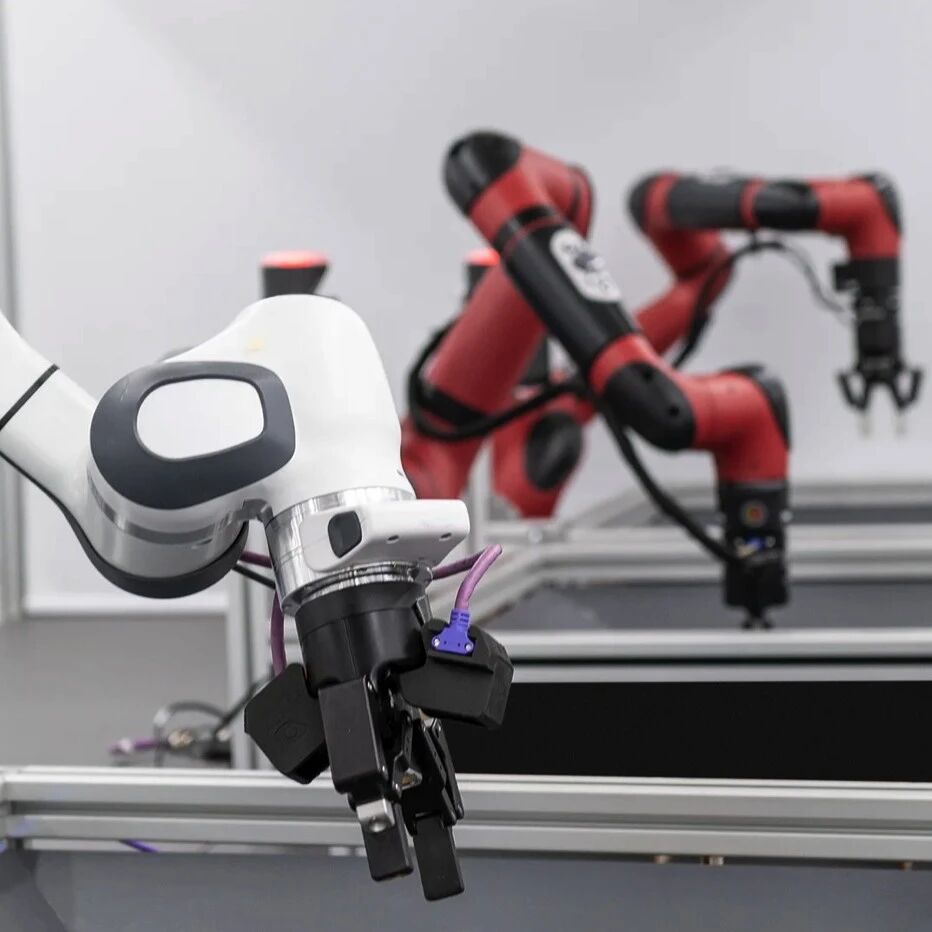
Core Viewpoint - The article discusses Google's strategic decision to reintegrate its robotics software company, Intrinsic, back into its core operations, marking a shift from an experimental approach to a focus on core strategic capabilities in robotics and AI [1][6][15]. Group 1: Strategic Shift - Google's reintegration of Intrinsic signifies a strategic contraction and resource reallocation, responding to the need for a more focused approach in the competitive landscape of AI and robotics [12][15]. - The move reflects a recognition that merely relying on cloud-based algorithms is insufficient for establishing dominance; physical integration of AI capabilities is essential [3][10]. Group 2: Competitive Landscape - In the robotics sector, Amazon and Tesla have established significant commercial scale, with Amazon leveraging warehouse robots for logistics efficiency and Tesla focusing on humanoid robots for manufacturing and service industries [8][9]. - Google's previous strategy was fragmented, lacking a clear commercial path, but the reintegration of Intrinsic indicates a shift towards viewing robotics as a practical application of AI capabilities rather than a distant goal [8][12]. Group 3: Technological Integration - Intrinsic's core product, Flowstate, aims to simplify programming complexities in robotics, allowing users to create applications without extensive coding, positioning it as a potential "Android system" for robotics [5][6]. - By reintegrating Intrinsic, Google can leverage its advanced AI models, enhancing the capabilities of robots to understand natural language and perform complex tasks, thus transforming the competitive landscape [6][13]. Group 4: Future Opportunities - The integration of Flowstate with Google's AI models could enable robots to evolve from mere executors of tasks to intelligent agents capable of understanding and planning actions based on natural language instructions [13][15]. - The article emphasizes that the next phase of AI competition will occur in physical environments, where the ability to integrate AI with real-world applications will be crucial for success [9][10].


比最乐观还乐观:英伟达把AI泡沫论按在地上摩擦
美股研究社· 2026-02-26 12:34
Core Viewpoint - The article emphasizes that NVIDIA's recent Q4 FY2026 earnings report exceeded even the most optimistic expectations, indicating a strong demand for AI computing power and challenging the narrative of a peak in AI investment [1][3]. Financial Performance - NVIDIA reported a quarterly revenue of $681 billion, with data center revenue accounting for $623 billion and a gross margin returning to over 75% [3]. - The guidance for Q1 is set at a median of $780 billion, surpassing the most aggressive models by 4% [3]. - Year-over-year growth in data center revenue reached 75%, defying traditional semiconductor industry expectations of slowing growth due to high base effects [5]. Demand Dynamics - The demand for AI computing is not stagnating but accelerating, driven by a shift from one-time training to ongoing inference and "agent-based applications" [6]. - The underlying logic of demand is changing, with AI computing becoming a necessity for business operations rather than just experimental purchases [6]. - The potential long-term market for chips is now viewed as exceeding $500 billion, with demand expanding beyond major tech companies to include sovereign AI and vertical industry applications [7]. Market Characteristics - The increase in gross margin indicates that supply-side efficiency improvements have not diminished pricing power, suggesting that demand growth is outpacing supply expansion [8]. - The current market is characterized by a significant supply-demand imbalance, with NVIDIA's offerings evolving from mere chips to comprehensive platforms that enhance customer stickiness [8][9]. - The focus of the market has shifted from competition to delivery certainty, as customers prioritize reliable supply over alternative options [9]. Structural Risks - While the earnings report suggests a delay in concerns about a peak in AI investment, risks remain due to the concentration of AI computing capital expenditures among a few large cloud providers [11]. - The competitive landscape is evolving, with companies viewing computing power as a strategic asset rather than a cost, leading to a "arms race" among major players [11]. Valuation Perspective - NVIDIA is transitioning from a cyclical hardware supplier to a foundational infrastructure operator in the digital economy, which may enhance its resilience against economic cycles [12]. - The valuation logic for NVIDIA is shifting towards that of infrastructure giants, characterized by stable cash flows and monopolistic pricing power, rather than traditional semiconductor frameworks [12]. Conclusion - The article concludes that the recent earnings report has postponed the AI bubble narrative, providing the market with a valuable opportunity to validate application-level developments before potential risks materialize [14].

当AI让GDP狂飙、就业塌陷:美联储正在走向一场失控实验
美股研究社· 2026-02-26 12:34
Core Viewpoint - The emergence of AI, particularly with the launch of ChatGPT by OpenAI, signifies a profound structural transformation in the macroeconomic landscape, leading to a disconnection between asset prices and labor demand, which poses significant implications for the economy [1][3]. Group 1: Economic Growth and Employment Decoupling - The traditional economic growth cycle in the U.S. has been disrupted by generative AI, which directly replaces cognitive labor rather than just physical labor, leading to a decline in high-value white-collar jobs [5][6]. - The introduction of AI in businesses allows for profit improvement without the need for simultaneous hiring, resulting in a structural pressure on consumer spending, which constitutes nearly 70% of U.S. GDP [6][10]. - The decoupling of asset prices from employment indicates a fundamental separation between capital gains and labor income, threatening the sustainability of consumer-driven economic growth [6][10]. Group 2: Monetary Policy Challenges - The traditional response of lowering interest rates to combat rising unemployment may become ineffective in an AI-driven economy, potentially leading to a self-reinforcing cycle of job replacement and further unemployment [7][8]. - Lower interest rates may primarily benefit large tech companies and infrastructure operators, exacerbating the trend of automation and job displacement rather than stimulating employment in small and medium enterprises [8][10]. - The risk exists that monetary policy could inadvertently amplify the effects of technological displacement, leading to a scenario of strong growth but weak employment, which could mislead policymakers into maintaining loose monetary conditions [8][10]. Group 3: Structural Risks to Society and Economy - AI acts as a redistributive mechanism that increases profits for capital owners while diminishing the bargaining power of labor, leading to a concentration of wealth that suppresses overall demand [10][11]. - The potential for large-scale structural unemployment due to AI may necessitate discussions around previously fringe policy tools such as Universal Basic Income (UBI) and robot taxes, indicating a need for a re-evaluation of fiscal and monetary policy boundaries [10][11]. - If policy responses are delayed, the U.S. economy may settle into a new normal characterized by high profits, low employment, and weak consumption, which could exacerbate social divides and undermine long-term growth potential [10][11][12].

免费用户高达95%,谁来为AI的推理成本买单?
美股研究社· 2026-02-26 12:34
Core Viewpoint - The article highlights the challenges faced by AI large model companies, revealing a stark contrast between soaring user growth and declining profit margins, questioning whether these models are high-margin software or capital-intensive infrastructure [1][2]. Group 1: Financial Performance - OpenAI's gross margin dropped from 40% to 33%, significantly below the market expectation of over 60% [2]. - OpenAI's inference costs surged to $8.4 billion due to increased demand, indicating a structural conflict between growth and profitability [5][6]. - The high percentage of free users, at 95%, leads to substantial costs without direct revenue, complicating the financial landscape for large model companies [8][9]. Group 2: Cost Structure and User Dynamics - The economic logic of large models resembles utilities rather than traditional software, with each user interaction incurring significant backend costs [5]. - The demand for more complex and longer context reasoning from users has led to increased operational costs, challenging the traditional growth-profit relationship [6][10]. - The reliance on free users, who consume considerable computational resources, creates a financial burden that the small percentage of paying users cannot offset [8][9]. Group 3: Strategic Considerations - To achieve a gross margin of over 60%, companies must enhance inference efficiency and improve monetization strategies, shifting focus from consumer products to enterprise solutions [10][11]. - The competition from open-source models and local deployment options threatens pricing power and could lead to a price war, further compressing margins [10][11]. - Companies like OpenAI and Anthropic face a critical decision: prioritize market share through free strategies or shift towards profitability by reducing free user access and increasing subscription costs [11][14]. Group 4: Future Outlook - The AI industry is undergoing a significant pressure test, where the focus will shift from potential to certainty in terms of profitability [14]. - Effective cost management and pricing strategies will be essential for long-term sustainability, as reliance on funding alone is not viable [14]. - The ultimate determinant of success in the AI sector may hinge on cash flow quality rather than just technological advancements [14].
AI日报丨2026年将成为AI从演示走向大规模部署之年;MiniMax推出“MaxClaw”;黄仁勋希望五角大楼与Anthropic能和解
美股研究社· 2026-02-26 12:34
Group 1 - The article emphasizes the rapid development of artificial intelligence (AI) technology, presenting significant opportunities for various industries [3] - Ravi Mhatre, co-founder of Lightspeed Venture Partners, predicts that 2026 will mark the year AI transitions from demonstration to large-scale deployment, fundamentally changing how businesses operate [5] - SK Hynix and SanDisk have initiated a global standardization process for the next-generation memory solution, High Bandwidth Flash (HBF), aimed at the AI inference era [6] Group 2 - MiniMax has introduced an upgrade to its MiniMax Agent Expert, named MaxClaw, which simplifies the creation of expert agents by allowing users to describe tasks in natural language [7][8] - A hacker exploited Anthropic's AI chatbot, Claude, to conduct attacks on Mexican government agencies, resulting in the theft of sensitive tax and voter information [10] - NVIDIA's CEO Jensen Huang expressed hope for a resolution between the Pentagon and Anthropic regarding the use of AI technology, noting that both parties have valid perspectives [11] - Microsoft is under investigation by Japanese antitrust regulators for potentially hindering customers from using other cloud services, with on-site inspections conducted at its Tokyo office [12]

从软件泡沫到实体王者:华尔街为什么突然迷上HALO?
美股研究社· 2026-02-26 12:34
Core Viewpoint - The article discusses the shift in investment focus from "light" assets, driven by software and digital technologies, to "heavy" assets that provide physical infrastructure, highlighting the emergence of the HALO (Heavy Asset, Low Obsolescence) strategy as a response to the evolving AI landscape [6][10][18]. Group 1: Market Trends - Over the past two years, the U.S. stock market has been characterized by a focus on "light" assets, such as software and cloud services, which have low marginal costs [2][3]. - The rise of generative AI has led to a belief that software will dominate, but a subtle shift is occurring where heavy asset companies are regaining institutional interest [6][7]. - The HALO strategy emphasizes tangible assets like land, energy infrastructure, and manufacturing, which are becoming increasingly valuable as AI technology evolves [7][8]. Group 2: HALO Strategy Insights - The HALO strategy represents a profound redefinition of value, moving away from abstract software models to the importance of physical assets that cannot be easily replicated [7][10]. - The demand for physical resources is highlighted by the increasing energy and infrastructure needs driven by AI, which cannot be satisfied by virtual solutions alone [11][12]. - Companies in the HALO category, such as Deere & Company and FedEx, possess unique physical networks and control over essential resources, making them critical players in the modern economy [12][13]. Group 3: Investment Implications - The performance of HALO companies has outpaced high-valuation software stocks, indicating a strategic shift in capital allocation towards firms that are essential for AI operations [14][19]. - Heavy asset companies are transitioning from being viewed as defensive investments to offensive assets, leveraging AI to enhance operational efficiency and productivity [16][19]. - The article suggests that the true winners in the AI era will be those companies that combine physical resources with digital capabilities, creating a dual barrier to competition [16][19].

博通第一季度业绩前瞻:科技股轮动或引发新一轮非理性抛售
美股研究社· 2026-02-26 12:34
作者 Deep Value ,内容为转载编译,仅为呈现不同市场观点与研究视角,并不意味着本公众 号对文中观点结论认可。 在博通公司(AVGO)即将发布 2026 财年第一季度财报之际,分析师将下调对该股的评级, 原因是 自去年 12 月覆盖以来,科技板块(尤其是人工智能领域)的市场情绪并未改善 。 自那时起,尽管公司增长逻辑基本完好,股价却基本横盘震荡。公司给出的 2026 财年一季度 指引显示,人工智能相关收入将再度实现三位数同比增幅,管理层预计 AI 半导体收入将达到 82 亿美元。事实上, 一季度总营收指引为191 亿美元,显著高于上一季度财报发布前的市场 一致预期(182.7 亿美元)。 整体来看,分析师认为公司营收将超出预期,且在今年全球超大规模云厂商资本开支(6700 亿美元)的加持下,业绩指引同样会十分亮眼。 分析师此次下调评级,主要与XPU 产品放量带来的利润端压力,以及半导体业务中非 AI 收入 增长乏力有关。 坦率地说,下调评级的核心原因其实是资金正在撤出科技股,这使得投资者开 始揪着最微小的细节恐慌性抛售股票。下图可以直观看到科技股的资金轮动情况: 【如需和我们交流可扫码添加进社群】 分 ...


AI没能拯救软件股:Zoom和赛富时的“转型代价”
美股研究社· 2026-02-26 12:34
Core Viewpoint - The article discusses the challenges faced by software companies in the context of the AI revolution, highlighting that while hardware companies benefit from increased valuations, software firms are experiencing rising costs and pressure on profit margins due to AI integration [1][2]. Group 1: Financial Performance of Software Companies - Zoom Video Communications and Salesforce both reported disappointing financial results, leading to stock price declines. Zoom's profit guidance for FY2027 was significantly below analyst expectations, while Salesforce's organic subscription revenue growth forecast of only 8% fell short of market expectations [2][6]. - Zoom's projected earnings per share for the new fiscal year is between $5.77 and $5.81, lower than the anticipated $6.06, indicating profit margin pressure rather than a collapse in demand [5]. - Salesforce's quarterly revenue reached $11.1 billion, a 12% year-over-year increase, but the low organic subscription growth forecast raised concerns about the sustainability of its growth [6]. Group 2: Cost Implications of AI Integration - The integration of AI is not merely a profit booster for software companies; it is leading to increased costs. As companies like Zoom expand their product offerings with AI capabilities, the associated costs for cloud services and computational power rise, impacting profit margins [5]. - The traditional SaaS model, which previously enjoyed low marginal costs after development, is now facing structural challenges due to the added costs of AI integration [5]. Group 3: Market Revaluation of Software Companies - The capital market is reassessing the value of software companies, with a shift in focus from revenue growth to profit quality and cash flow. This change reflects a broader market sentiment that prioritizes certainty in earnings over potential future growth [12]. - The erosion of traditional competitive advantages, or "moats," in the software industry is evident as AI platforms can replicate functionalities that once required complex coding, leading businesses to reconsider the value of high subscription fees [8][9]. Group 4: Shift in Investor Preferences - Investors are increasingly favoring companies that provide essential infrastructure over those in the application layer, as the first wave of profits in the AI era is concentrated in hardware and computational resources [11]. - The software sector is experiencing a decline in stock prices, with Salesforce's stock down 25% this year, as the market demands tangible profits and growth rather than speculative narratives [12]. Group 5: Future Outlook for Software Companies - The article concludes that software companies must demonstrate that AI not only enhances functionality but also leads to sustainable revenue growth. Failure to manage the rising costs associated with AI could result in a cycle where increased AI capabilities lead to higher costs and stagnant growth [14].



一边650亿神话,一边SaaS崩塌:AI牛市的终极审判夜
美股研究社· 2026-02-25 11:33
Core Viewpoint - The upcoming earnings reports from NVIDIA and Salesforce represent a critical moment in the AI era, highlighting a clash between infrastructure (NVIDIA) and application (Salesforce) business models [1][3]. Group 1: NVIDIA Insights - NVIDIA is expected to report quarterly revenue approaching or challenging $65 billion, driven by its data center business and significant investments in computing power from cloud providers and sovereign funds [5]. - The growth of NVIDIA's revenue is heavily reliant on a few tech giants, and any signals of a slowdown in capital expenditure or order delivery could shift market sentiment from "supply shortage" to "peak cycle" concerns [5][6]. - The valuation of NVIDIA is based on two assumptions: sustained long-term growth in AI inference and training demand, and the ability to maintain high gross margins due to technological barriers [5]. Group 2: Salesforce Insights - Salesforce has faced significant declines this year, driven by investor fears that AI could replace traditional software functions, threatening the value of SaaS models [7]. - The emergence of AI as an "orchestration layer" suggests that rather than replacing SaaS, AI may force it to evolve, as existing systems' data and processes are essential for AI to generate accurate outputs [7][9]. - If Salesforce's earnings report shows stable orders and that AI products enhance average revenue per user (ARPU), it could alleviate fears of a "software apocalypse" and lead to a technical rebound in the sector [8][9]. Group 3: Market Dynamics - The current market split reflects the varying stages of the AI industry chain, with the first phase focused on infrastructure and the second on application and business model validation [10]. - If NVIDIA continues to grow while SaaS shows a slowdown, it indicates that AI remains in the infrastructure expansion phase, potentially leading to concerns about a "hardware bubble" due to a lack of cash flow from applications [10][11]. - The performance of both companies will be crucial in determining the future direction of the market, with NVIDIA representing "the height of belief" and Salesforce embodying "the depth of reality" [14].

轻资产神话终结?HALO逻辑背后的资本迁徙
美股研究社· 2026-02-25 11:33
Core Viewpoint - The article discusses a shift in investment logic from traditional light-asset models to a focus on heavy assets with low obsolescence risk, termed HALO (Heavy Assets, Low Obsolescence) [1][2]. Group 1: Shift in Investment Focus - The emergence of AI as a highly efficient "copy machine" is leading to a reevaluation of profit distribution expectations, with traditional light-asset business models losing their premium [2][6]. - Investors are increasingly concerned with which companies are least likely to be replaced by AI, shifting the focus from "who understands AI best" to "who is hardest to replace" [2][10]. Group 2: Impact of AI on Asset Valuation - The valuation of technology companies has historically been based on light-asset models, with giants like Microsoft and Amazon thriving under this paradigm [4]. - The introduction of generative AI is changing the narrative, as it can automate tasks traditionally performed by software, leading to a potential compression of pricing power for single-function software [6][7]. Group 3: Heavy Asset Investment Opportunities - AI is not merely a software revolution but a transformation of foundational infrastructure, with significant investments projected in AI infrastructure by major cloud providers, estimated at nearly $1.5 trillion from 2023 to 2026 [9]. - The physical constraints of AI development, such as power supply and cooling systems, are becoming critical bottlenecks, making companies that can address these issues central to the AI economy [10][12]. Group 4: Long-term vs. Short-term Trends - The HALO strategy may represent a long-term trend rather than a temporary shift, as the demand for energy and computing power driven by AI is expected to be sustained [12][13]. - However, there are risks associated with potential overcapacity in computing power investments, which could lead to a reassessment of heavy asset valuations if AI monetization does not meet expectations [12][14]. Group 5: Broader Implications of HALO - The HALO logic emphasizes the importance of physical infrastructure in the AI era, suggesting that the future flow of profits may increasingly favor those involved in building and maintaining this infrastructure rather than just software developers [14]. - The article concludes that understanding this shift is crucial for investors, as it reflects a fundamental change in wealth distribution and the underlying logic of the economy in the AI age [14].