虎嗅APP

Search documents
警惕你身边的李一舟
虎嗅APP· 2026-03-14 08:35
Core Viewpoint - The article emphasizes that the current AI trend is not primarily about technological advancement but rather about exploiting people's anxieties related to the trend, leading to a market for quick-fix solutions and courses [5][6][12]. Group 1: AI Trend and Market Dynamics - The initial response to the AI boom has been dominated by those selling courses and concepts rather than actual applications or industry upgrades [6][7]. - Advertisements promoting quick mastery of AI skills are prevalent, creating a sense of urgency and fear of missing out among individuals [8][9]. - The article suggests that the fear of being left behind drives many to invest in these courses, often without a clear understanding of their value [9][12]. Group 2: Business Model Analysis - The article outlines a business model that capitalizes on fear and anxiety, starting with defining fears related to AI and then creating a sense of shame for not keeping up [19][24]. - This model involves selling shortcuts and simplifying complex issues into easy-to-digest solutions, which can mislead consumers into thinking they are prepared for the future [28][34]. - Ultimately, the focus is on managing emotions rather than providing substantial knowledge or solutions [37][38]. Group 3: Consumer Behavior and Decision-Making - Many consumers are driven by a desire to act rather than a genuine interest in learning, often purchasing courses for psychological comfort rather than educational value [41][42]. - The article highlights that entrepreneurs often confuse surface-level actions with meaningful progress, leading to a lack of real change in their businesses [45][48]. - The tendency to seek quick answers can result in superficial engagement with complex issues, which is detrimental to long-term success [49][73]. Group 4: Entrepreneurial Weaknesses - The article identifies three key weaknesses among entrepreneurs: urgency, superficiality, and laziness, which can lead to poor decision-making in the face of new trends [60][72]. - Entrepreneurs often rush to adopt new trends without fully understanding their implications for their businesses, resulting in wasted resources [62][69]. - The desire for quick solutions can prevent meaningful organizational change, as true progress requires addressing deeper issues within the business [73][75]. Group 5: Importance of Judgment - The article stresses the need for entrepreneurs to develop judgment skills to differentiate between genuine opportunities and those that exploit anxiety [78][85]. - It suggests that the ability to critically assess information and make informed decisions is more valuable than simply acquiring knowledge through courses [86][90]. - Ultimately, maintaining clarity and judgment in a chaotic environment is essential for long-term success in the face of technological change [97][102].

中东战争的代价,跟我们普通人有什么关系?
虎嗅APP· 2026-03-14 08:35
Core Viewpoint - The article discusses the economic impact of the recent conflict in the Middle East, highlighting how local conflicts can have far-reaching effects on global markets due to the interconnectedness of modern supply chains [2]. Group 1: Economic Costs of the Conflict - Israel's economy is particularly vulnerable due to its reliance on high-tech industries, which contribute over 50% to its GDP, and defense technology exports, which account for nearly a quarter of total exports [4]. - Following the recent conflict, Israel's GDP contracted nearly 20% in a single quarter, with the current conflict expected to result in even deeper economic shrinkage [5]. - The cost of intercepting missiles using Israel's defense systems is substantial, with each Iron Dome interception costing around $50,000 and Arrow-3 interceptions costing between $3 million to $5 million [5]. - Iran's economy is heavily dependent on oil exports, which account for 40% to 50% of government revenue, and the conflict has severely impacted its ability to export oil through the Strait of Hormuz [6]. - Gulf Arab nations face a paradox where rising oil prices do not translate into increased revenue due to the blockade of oil exports through the Strait of Hormuz [6]. Group 2: Global Transmission Effects - The conflict disrupts three critical supply chains: energy, agriculture, and logistics, which are foundational to the modern economy [8]. - The closure of the Strait of Hormuz, which handles about 20% of global oil trade and 30% of LNG trade, leads to a significant revaluation of oil prices globally [9]. - The conflict is expected to push fertilizer prices higher, which in turn will affect food prices, as the cost of fertilizers is closely linked to agricultural output [10]. - Rising oil prices will increase costs across all industrial goods and services, with a $10 increase in Brent crude oil potentially raising global inflation by 0.3% to 0.5% [11]. Group 3: Distribution of Economic Burden - The economic costs of the conflict are not evenly distributed, with energy-exporting countries benefiting from rising prices while energy-importing countries face increased manufacturing costs [14]. - Low-income households are disproportionately affected by rising food and energy prices, while high-net-worth individuals may benefit from inflationary environments [15]. - The long-term costs of the conflict will likely be borne by future generations through increased national debt, as military expenditures are often financed through borrowing [16][17]. Group 4: Long-term Implications - The conflict's impact on global supply chains may lead to a permanent shift towards shorter, more expensive supply chains, undermining the benefits of globalization [20]. - The interconnectedness of modern economies means that the costs of conflict will ultimately be passed down to consumers, affecting everyday prices [20]. - The article emphasizes the need for countries to maintain diverse energy sources and robust domestic supply chains to mitigate the economic impacts of geopolitical conflicts [20][21].

中国何以撼动“苹果税”?
虎嗅APP· 2026-03-14 03:34
Core Viewpoint - Apple announced a historic reduction in commission rates for the App Store in mainland China, lowering the standard rate from 30% to 25% and the rate for small developers and subscription services from 15% to 12% starting March 15, 2026 [5][6][19]. Group 1: Historical Context and Market Dynamics - Since the launch of the App Store in 2008, Apple maintained a 30% commission rate, known as the "Apple Tax," despite numerous legal challenges and industry protests [8][11]. - The 30% commission was justified by Apple as necessary for covering high costs associated with platform maintenance, security, and customer service, with CEO Tim Cook stating it was a reasonable return on investment [12][13]. - The App Store has been a stable cash cow for Apple, with service revenue surpassing $30 billion in Q1 2026, accounting for 20.88% of total revenue [16][15]. Group 2: Regulatory Pressure and Market Forces - The recent commission reduction is seen as a response to regulatory pressures in China, where the government has been enforcing antitrust measures and tightening regulations on platform economies [22][23]. - The Chinese gaming market is significant, with major companies like Tencent and NetEase contributing hundreds of billions in commission revenue to Apple annually. The new commission structure could result in an additional $50 million for Chinese developers in the first year [24][26]. - The unique ecosystem of super apps in China, such as WeChat, has prompted Apple to adapt its policies to maintain relevance and competitiveness in this market [29][27]. Group 3: Implications and Limitations - Despite the reduction in commission rates, Apple has not opened its ecosystem to third-party payment systems or app stores, maintaining its monopoly over distribution and payment channels [30][32]. - The fee adjustments primarily benefit developers already integrated into Apple's payment system, with limited impact on those who have not adopted Apple's payment methods [32]. - The changes reflect a broader trend in the industry, as competitors like Google also adjust their commission structures, indicating a shift away from the long-standing 30% model [31].


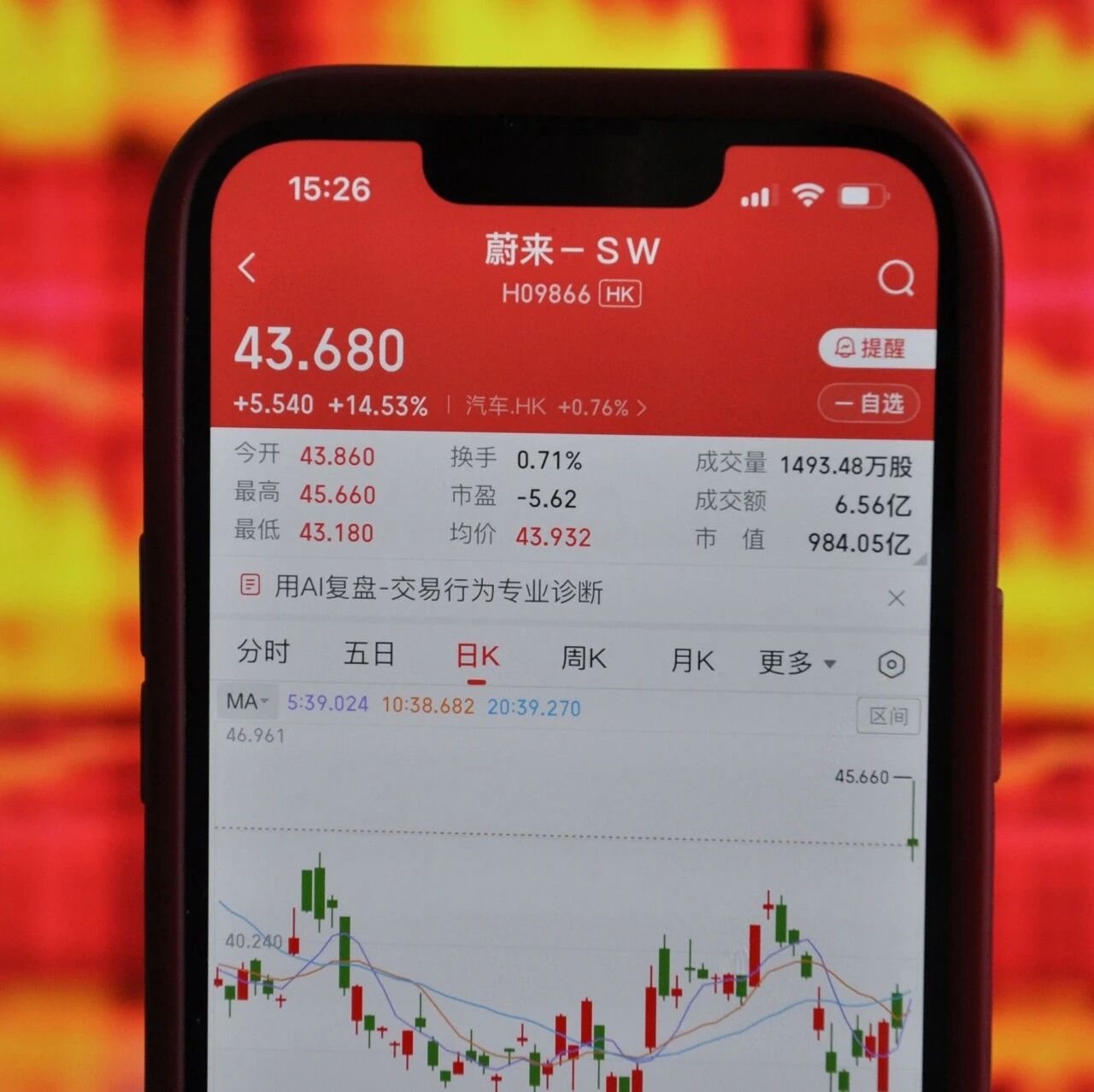
蔚来穿过“生死线”,盈利模型还有待检验
虎嗅APP· 2026-03-14 03:34
Core Viewpoint - NIO has achieved a significant milestone by reporting a net profit of 283 million yuan for the first time in Q4 2025, prompting a reevaluation of its market position and future prospects [2][3]. Financial Performance - In Q4 2025, NIO delivered 124,800 vehicles, a year-on-year increase of 71.7%, with revenue reaching 34.65 billion yuan, up 75.9%, and achieving a net profit of 283 million yuan [8][9]. - The profitability was driven by the introduction of high-margin models like the new ES8, which contributed nearly one-third of total deliveries and had a gross margin close to 25% [11]. - Cost control measures were effective, with R&D expenses down 44.3% to 2.026 billion yuan and sales and management expenses down 27.5% to 3.537 billion yuan, saving nearly 3 billion yuan compared to the same period in 2024 [12]. Operational Improvements - NIO has demonstrated improved cash flow, with positive operating cash flow for two consecutive quarters and cash reserves increasing from 36.7 billion yuan in Q3 to 45.9 billion yuan in Q4 [15]. - The company’s service system is transitioning from a cost center to a profit center, with other sales revenue reaching 3.044 billion yuan, a 36.6% increase year-on-year [18]. - The multi-brand strategy is showing results, with record deliveries across NIO, Ladao, and Firefly brands, indicating effective market coverage and product optimization [18]. Challenges Ahead - NIO faces cost pressures due to rising prices in chips and raw materials, with potential increases in vehicle costs by 6,000 to 10,000 yuan, although the company plans to absorb these costs without passing them to consumers [20][22]. - The competitive landscape is intensifying, particularly in the large SUV market, with competitors like Li Auto and BYD entering the fray, necessitating careful brand management and resource allocation [22]. - The company must balance its multi-brand expansion while maintaining brand identity and profitability amidst fluctuating costs and market competition [28].
如何在短期内拉开与99%同龄人的差距
虎嗅APP· 2026-03-14 03:34
Core Viewpoint - The article emphasizes the importance of creating an "Anti-Vision" list to drive personal growth and transformation, suggesting that fear of a negative future can be a more powerful motivator than the desire for a positive one [6][15][47]. Group 1: Awakening and Reflection - Most individuals live in a delusion of "positive energy," focusing on success without confronting the harsh reality of their current trajectory [8][9]. - True awakening begins with recognizing what one absolutely does not want and understanding the consequences of inaction [10][11]. Group 2: Creating the Anti-Vision - The process of creating an "Anti-Vision" involves visualizing a future where bad habits persist, leading to undesirable outcomes in health, finances, career, relationships, and mental state [22][23][47]. - Specific examples of negative outcomes include health deterioration, financial instability, career stagnation, social isolation, and a sense of regret [25][33][37][40]. Group 3: Strategic Disappearance - To achieve goals, individuals must strategically "disappear" from distractions, including unnecessary social interactions, negative influences, and bad habits [50][53][54]. - This disappearance allows for the conservation of mental energy, which can then be redirected towards core objectives [52][55]. Group 4: Embracing Repetition - Success is achieved through consistent, repetitive actions that may seem mundane but are essential for mastery [60][71]. - The article encourages breaking down larger goals into daily tasks, fostering a habit of execution that builds a strong foundation for future success [72][76].

博鳌首发,蒙牛集团如何用科研实力重构乳业新标准?
虎嗅APP· 2026-03-13 13:25
Core Viewpoint - The article emphasizes the rapid advancement of China's dairy industry, particularly highlighting the innovations by Mengniu in milk powder production, which are set to redefine industry standards and consumer experiences [5][12][35]. Group 1: Historical Context and Industry Evolution - In 2000, China's dairy industry was significantly behind developed countries, with annual milk yield per cow being less than one-third of that in the U.S. [2] - By 2024, China's large-scale dairy farms have achieved milk yield levels comparable to the U.S., with some key indicators even surpassing EU standards [3]. - The industry has transitioned from a focus on basic nutrition to "precision nutrition," reflecting the diverse health needs of the population [4]. Group 2: Innovations by Mengniu - At the Boao Health Food Science Conference, Mengniu introduced two significant innovations: the "active freshness locking technology" and the "Chinese core" probiotic strains [7][9]. - The "active freshness locking technology" addresses the long-standing challenge of maintaining nutritional integrity during milk powder processing, achieving a breakthrough in preserving key nutrients [14][18]. - The "Chinese core" probiotic strains, including the self-developed Lc19 strain, have gained recognition in top academic journals, indicating a commitment to high-quality research and development [9][25]. Group 3: Market Trends and Consumer Needs - The demand for milk powder in China is growing, particularly in the adult segment, which has not seen a decline in market size from 2020 to 2024 [14]. - There is a rising consumer awareness of the nutritional value of dairy products, with a reported 13% increase in recognition scores [23]. - The market is increasingly focused on health-enhancing products, with specific needs such as sugar control becoming prominent due to the growing number of diabetes patients [23]. Group 4: Future Outlook and Strategic Positioning - The year 2026 marks a critical period for China's dairy industry, coinciding with the start of the "14th Five-Year Plan," emphasizing quality and efficiency over mere expansion [12]. - Mengniu's advancements signal a shift from following international standards to setting them, showcasing the industry's potential to lead [12][35]. - The company's focus on consumer-centric innovations aims to provide accessible and high-quality nutrition solutions for various demographics, reinforcing its competitive edge in the market [30][32].


空调行业的底牌,早就被换掉了
虎嗅APP· 2026-03-13 13:25
Core Viewpoint - The article emphasizes the transformative impact of AI technology on the air conditioning industry, highlighting a shift from traditional cooling solutions to integrated systems that manage air quality and comfort more effectively [2][40]. Group 1: Industry Changes - The AWE2026 showcased a significant shift in the air conditioning sector, with Chinese brands like Midea gaining prominence over traditional Japanese brands, which have historically dominated the market [3][30]. - Midea's innovative product, the "Air Machine," represents a new direction for the air conditioning industry, moving beyond merely improving existing technologies to redefining the entire air conditioning experience [5][34]. - The air conditioning industry has been characterized by a lack of innovation, with products focusing on incremental improvements rather than addressing broader user needs [6][7]. Group 2: Evolution of Air Conditioning - The evolution of air conditioning can be categorized into three eras: the functional machine era, the platform machine era, and the current shift towards an integrated system that collaborates across functions [8][9]. - Traditional air conditioning units have been limited to executing specific functions without the ability to adapt or learn from user behavior, leading to a disjointed user experience [8][17]. - The introduction of Midea's "Universal Air Architecture" signifies a move towards a more intelligent system that can proactively manage air quality and comfort, akin to a conductor coordinating an orchestra [11][21]. Group 3: Technological Advancements - Midea's air conditioning system incorporates advanced features such as real-time monitoring of air quality, humidity control, and the ability to learn user preferences, marking a significant leap in technology [22][23]. - The system's AI capabilities allow it to integrate with other smart home devices, creating a cohesive ecosystem that enhances user experience and convenience [25][34]. - The shift from focusing solely on compressor efficiency to a broader understanding of air management reflects a fundamental change in competitive dynamics within the industry [31][32]. Group 4: Market Implications - The success of Midea's air machine, with sales reaching 1.2 million units, indicates a strong consumer preference for enhanced user experiences over mere technical specifications [26][28]. - The article suggests that the air conditioning market is entering a new phase of "architecture competition," where the ability to create integrated systems will define future leaders in the industry [33][34]. - As Chinese brands continue to innovate and redefine air conditioning technology, they are positioned to lead the global market, leveraging extensive user data and diverse environmental conditions [34][36].


科研精英“去美潮”:美国不欢迎,他们去了哪里?
虎嗅APP· 2026-03-13 10:18
Core Viewpoint - The article discusses the impact of the U.S. government's restrictive immigration policies on foreign researchers and international students, highlighting a potential talent exodus from the U.S. and questioning the sustainability of America's technological superiority in the long term [4][24]. Group 1: U.S. Immigration Policies and Their Effects - The U.S. National Institute of Standards and Technology (NIST) has implemented a risk classification policy for foreign researchers, categorizing individuals from countries like China, Russia, and Iran as "high-risk," leading to restricted access to sensitive research areas [4][8]. - The U.S. Department of Education issued a memorandum requiring universities to limit international undergraduate students to no more than 15% and those from any single country to 5%, which signals a shift in the U.S. stance towards international talent [5][6]. - The number of international students in the U.S. dropped by 17% in the fall of 2025 compared to the previous year, resulting in an economic loss of at least $1.1 billion and the loss of 23,000 jobs [6][10]. Group 2: Impact on Young Researchers - Young researchers, particularly those in STEM fields, are facing significant challenges due to funding cuts and hiring freezes at major research institutions like the NIH, with over 10,000 Ph.D. holders leaving the federal research system [13][14]. - The article highlights individual stories of young scientists who have chosen to leave the U.S. for better opportunities abroad, reflecting a broader trend of talent migration away from the U.S. [15][16]. Group 3: International Response and Talent Migration - European countries are actively seeking to attract talent from the U.S., with initiatives like Austria's APART-USA program and the EU's €500 million "Choose Europe" plan aimed at luring international researchers [18][19]. - The article notes that the tightening of immigration policies has led to a reverse migration trend, with more individuals, including U.S. citizens, considering relocation abroad due to factors like violence and political instability [20][22].

宁德时代为何难以替代?
虎嗅APP· 2026-03-13 10:18
Core Viewpoint - The article emphasizes that despite the challenging environment in the battery industry, CATL (Contemporary Amperex Technology Co., Limited) has demonstrated remarkable resilience and performance, highlighted by its impressive capacity utilization rate and customer trust through advanced contracts [2][16]. Group 1: Industry Context - In 2025, major South Korean battery companies like SK On and Samsung SDI faced significant financial losses, while LG Energy maintained minimal profitability, primarily due to U.S. subsidies [4]. - The Chinese battery market is experiencing intense competition, with prices dropping to 0.3 yuan/Wh, leading to low capacity utilization rates for many second and third-tier battery manufacturers [4]. Group 2: CATL's Performance - CATL achieved a capacity utilization rate of 96.9% in 2025, a significant increase from 95.0% in 2021, despite expanding its production capacity from 170 GWh to 772 GWh, a 3.5-fold increase [5]. - The company's contract liabilities reached 49.233 billion yuan in 2025, an increase of nearly 21.4 billion yuan from the previous year, indicating strong customer commitment to securing future capacity [5]. Group 3: Competitive Advantage - The article argues that the perceived "overcapacity" in the industry primarily affects less competitive firms, while advanced capacity remains scarce and valuable [6]. - The success of CATL is attributed to its deep understanding of technology and production processes, which allows it to maintain high quality and efficiency in production [8][10]. Group 4: Innovation and R&D - CATL's introduction of the "Shenxing" battery, which supports ultra-fast charging, exemplifies its innovative approach to overcoming material limitations through system-level optimizations rather than changing materials [9]. - The company has invested over 20 billion yuan in R&D in 2025, with cumulative investments nearing 100 billion yuan, and employs a research team of approximately 23,000 people, holding nearly 55,000 patents [10]. Group 5: Strategic Initiatives - CATL's entry into the battery swapping market with its EVOGO brand is seen as a strategic move to transition from a battery manufacturer to a zero-carbon platform enterprise, maximizing battery lifecycle and enhancing user experience [14][15]. - The battery swapping system allows for the integration of various battery technologies, enabling rapid adaptation to market demands and technological advancements [15][16]. Group 6: Market Positioning - The article concludes that CATL is not merely a leading battery manufacturer but has evolved into a foundational enterprise for the global zero-carbon industry, characterized by its irreplaceable core capabilities developed over time [17].


3年砸12亿,这家女版“茅台”图什么?
虎嗅APP· 2026-03-13 10:18
Core Viewpoint - The article discusses the dual nature of AI in the collagen protein industry, highlighting both opportunities and challenges for companies like Jinbo Biological, which is heavily investing in AI to enhance product development and maintain competitive advantage [15]. Group 1: Company Overview - Jinbo Biological is recognized as an "invisible champion" in China's recombinant collagen protein industry, with annual revenues exceeding 1 billion yuan and a market capitalization that once reached 50 billion yuan [3]. - The company has achieved over 100% net profit growth for four consecutive years, but recently reported a decline in net profit for the first time since 2015, indicating a significant shift in performance [6][12]. Group 2: Market Dynamics - The collagen protein market is experiencing a cooling period after years of rapid growth, with projections indicating that the global collagen raw material market could reach $3.815 billion by 2030, with recombinant type III collagen accounting for 41.6% of that market [4]. - Jinbo Biological's product development advantages are notable, having three products certified as Class III medical devices, including the innovative "Wei Yimei" injection [5][6]. Group 3: Financial Performance - Jinbo Biological's revenue for 2025 was reported at 1.595 billion yuan, a year-on-year increase of 10.57%, but net profit fell by 10.09%, marking a stark contrast to previous years of growth [6][12]. - The company is under pressure to find new blockbuster products, as its flagship product "Wei Yimei" has seen a slowdown in growth, necessitating a shift in focus towards new product development [9][10]. Group 4: AI Investment and R&D - Jinbo Biological plans to invest 1.15 billion yuan in AI-related platform construction, which is expected to enhance the efficiency of product development and reduce research and development cycles [2][13]. - The integration of AI has reportedly reduced the R&D cycle from 18 months to 12 months, indicating a 33% increase in efficiency [13]. Group 5: Competitive Landscape - The competitive landscape for recombinant collagen protein is intensifying, with at least 18 products having obtained Class III medical device certification, making it harder for any single product to dominate the market [16]. - The article notes that the marketing and consumer expectations have shifted, with visible results becoming increasingly important for product success [16][19]. Group 6: Future Directions - Jinbo Biological is exploring applications of recombinant human collagen beyond aesthetic medicine, including wound care and orthopedic implants, which could redefine the industry [14][22]. - The company aims to leverage the current market cooling period to focus on research and product refinement, potentially leading to innovations that extend beyond traditional cosmetic applications [22].