虎嗅APP

Search documents
8天暴涨400万粉丝后塌房,蛋神是保质期最短的网红嘛?
虎嗅APP· 2026-01-02 13:24
Core Viewpoint - The article discusses the rapid rise and fall of internet celebrities, highlighting the intense competition and challenges in maintaining popularity in the digital content creation space [5][7][29]. Group 1: Rise of Internet Celebrities - The internet has seen a surge of influencers, with some achieving fame quickly, such as a user named "Egg God," who gained over 4 million followers in just a week by sharing egg cooking tips [8][10]. - The simplicity and relatability of cooking eggs made it accessible for many, leading to viral content and widespread engagement [12][21]. Group 2: Challenges and Controversies - The rapid rise of influencers often leads to scrutiny and controversy, as seen with "Egg God," who faced backlash for unrealistic claims about egg consumption [14][15]. - The pressure to maintain a public persona can lead to a quick downfall, as influencers are subjected to public judgment and criticism [27][29]. Group 3: Content Creation and Sustainability - Many aspiring content creators struggle with consistent content output, often facing creative blocks after initial success [21][24]. - The need for continuous innovation and audience engagement is critical, as many creators find it challenging to sustain interest over time [20][22]. Group 4: Commercialization and Financial Viability - While successful influencers can achieve significant income, the path to monetization is fraught with challenges, including fluctuating brand partnerships and the need for strategic content planning [26][27]. - The article emphasizes that the journey of content creation is not a guaranteed path to easy earnings, as many face periods of low engagement and income instability [25][28].


AI,成了人类亲密关系中最大的“雷”
虎嗅APP· 2026-01-02 09:36
以下文章来源于极客公园 ,作者Moonshot 极客公园 . 用极客视角,追踪你最不可错过的科技圈。欢迎同步关注极客公园视频号 本文来自微信公众号: 极客公园 ,作者:Moonshot,编辑:靖宇,题图来自:AI生成 如果说这个世界上有什么事比"被分手"更惨,那大概就是"被 AI 分手",或者说关系里的"第三者"竟 然是 AI。 最近,《Futurism》的一篇报道揭开了一个正在硅谷蔓延的魔幻现实:ChatGPT 正在深度介入人类 的亲密关 系,从让它评评理,到代写分手信,从做伴侣咨询,到写离婚协议。 而且这并不是像电影《Her》那样,人类爱上了操作系统;而是两个大活人,因为过度依赖这个"第 三方"来评理、沟通,最终把关系搞砸了。 最魔幻的案例莫过于 AI 界的泰斗、图灵奖得主,"AI 教父"杰弗里·辛顿也是"受害者"之一。作为深 度学习之父,辛顿大概没想到,有一天深度学习会反噬到他的私生活上。据他在《金融时报》的采访 里表示,他的前女友曾用 ChatGPT 生成了一篇檄文,专门用来指责他。 在这篇采访里,辛顿提到了前女友分手时拿出 的"控诉信"|图源:FT "她让 ChatGPT 来告诉我,我是一只什么样的 ...

2026消费前瞻:为“活人感”买单
虎嗅APP· 2026-01-02 09:36
Core Viewpoint - The consumption market in 2025 cannot be simply categorized as "recovery" or "weakness," as it reflects a transformation in consumer behavior, emphasizing "human feeling" as a core element of consumption [4][24]. Group 1: Eating - A Fine Calculation of Experience - The offline dining industry faces significant challenges, with a decline in foot traffic, as evidenced by a 0.66% decrease in average monthly customer visits in the first eight months of 2025, which worsened to a 4.1% decline after June [6][12]. - To attract customers, many dining brands are resorting to price reductions, with self-service hot pot and street food becoming representative categories of this strategy [7]. - A new approach to finding growth is the "dining + performance" model, which enhances the dining experience through entertainment, creating a compelling reason for customers to visit [8][12]. - Street vending has gained popularity since July 2025, with well-known brands setting up stalls, offering affordable home-style dishes priced between 10 to 30 yuan, thus broadening revenue channels [9][10][12]. Group 2: Drinking - Adding More Sweetness to Life - The new tea beverage market in 2025 is stabilizing, with a market size of 374.93 billion yuan, reflecting a growth rate of 5.7%, down from 6.4% in 2024 [14]. - The total number of tea beverage stores exceeded 415,000, but the net number of new openings was lower than closures, resulting in a decrease of 39,000 stores [14]. - The market is witnessing a shift in consumer preferences towards healthier options, with products like fresh fruit teas gaining popularity [15][17]. - The competition in the new tea beverage sector will increasingly focus on creating perceived value for consumers, as loyalty to specific brands diminishes [17][24]. Group 3: Entertainment - Experience Over Arrival - The cultural tourism market is thriving, with domestic travel reaching 4.998 billion trips in the first three quarters of 2025, a year-on-year increase of 18% [19]. - This surge in travel has stimulated significant consumer spending, with total expenditures reaching 4.85 trillion yuan, up 11.5% from the previous year [19]. - Innovative experiential offerings, such as city walks and interactive theme parks, are emerging to attract tourists, emphasizing engagement and participation [20][21]. Group 4: Summary - The overall consumption market in 2025 is stable, with retail sales expected to exceed 50 trillion yuan, maintaining a contribution rate of around 60% to GDP growth [23]. - Consumers are increasingly selective, rejecting products that lack emotional resonance, indicating a shift from accumulating assets to seeking meaningful experiences [24][25]. - The focus on "human feeling" reflects a collective return to valuing real experiences and immediate feedback in an uncertain economic environment [26].

美的、海尔、海信、TCL,一场决定未来十年命运的战争
虎嗅APP· 2026-01-02 09:36
Core Viewpoint - The Chinese home appliance industry is at a critical juncture, with the focus shifting towards international expansion as domestic markets reach saturation. The theme for 2026 is "going abroad," which represents a significant opportunity for companies like Haier, Midea, Hisense, and TCL to explore new markets and alleviate overcapacity issues [7]. Group 1: Overseas Market Potential - The global home appliance market is valued at nearly 4.5 trillion yuan, indicating substantial overseas market potential. In 2024, Midea and Haier are projected to generate approximately 270 billion yuan each in appliance revenue, translating to a global market share of only about 6% [9]. - Domestic brands have low market shares in most overseas regions, with Midea and Haier struggling to exceed 10% in many markets. In contrast, their competitors like Samsung and LG dominate the market [11]. - The growth strategy for domestic brands hinges on increasing their market share abroad, transitioning from competing with regional brands to facing established global giants [13]. Group 2: Challenges of Past Success - Historically, Chinese home appliance companies have relied on capacity expansion and brand acquisitions for international growth. However, this simplistic growth model is becoming unsustainable, as evidenced by the significant gap between global manufacturing share (over 45%) and retail share (less than 20%) [17]. - The stagnation in overseas revenue for leading companies like Haier and Midea, which has remained around 50% and 42% respectively for the past five years, highlights the need for a shift in strategy [18]. Group 3: Brand and Channel Development - The success of domestic brands in China was due to a strong competitive edge in product, brand, and channel management. However, these strengths have not yet translated effectively to international markets, where brand recognition and channel control remain challenges [23]. - Building brand recognition in mature markets is particularly difficult, as Chinese brands face trust issues despite offering lower prices compared to Japanese and Korean brands [25]. - The reliance on traditional retail channels in overseas markets poses significant barriers, as these channels are often fragmented and dominated by established players [30]. Group 4: Opportunities for Breakthrough - Technological innovation is seen as a key pathway to overcoming brand premium challenges and building core competitiveness. Chinese companies have increased R&D investments, achieving breakthroughs in areas like robotic vacuum navigation technology [33]. - Emerging markets such as Southeast Asia and Latin America present significant growth opportunities due to low penetration rates and a favorable demographic profile. These markets are less saturated, allowing for greater brand establishment potential [43]. - The rise of e-commerce in overseas markets offers a new avenue for brand penetration, enabling companies to reach consumers without the need for extensive physical retail investments [45].



AI养宠神器,收割年轻人
虎嗅APP· 2026-01-02 03:16
Core Viewpoint - The article discusses the rise of "smart pet products" in China, highlighting the willingness of young pet owners to spend significantly on these items despite skepticism about their actual effectiveness and value [4][19]. Market Overview - The smart pet products market in China is projected to reach approximately 10.2 billion yuan in 2024, accounting for 20% of the pet supplies market, with an expected growth to 11 billion yuan by 2025 [4]. Consumer Experience - Young pet owners, such as Zhu Ying, have invested in high-priced smart products like AI litter boxes, believing they would provide health monitoring for their pets, only to find the products underperforming and often malfunctioning [6][8]. - Zhu Ying's experience with the AI litter box revealed that its health monitoring features were inaccurate, leading to unnecessary vet visits and ultimately disappointment with the product [8][9]. - Another consumer, Zhang Cheng, faced similar issues with an AI smart collar, which provided inconsistent health metrics and failed to deliver on its promises, leading to frustration and a loss of trust in such products [12][14]. Product Quality Concerns - Many smart pet products, including AI litter boxes and collars, have been criticized for poor quality and functionality, with reports of malfunctions and inadequate customer service [9][17]. - The article suggests that the actual production cost of these AI products is significantly lower than their retail prices, raising questions about their value proposition [11][18]. Shift in Consumer Attitudes - Following negative experiences, consumers like Zhu Ying and Zhang Cheng have reverted to traditional pet care methods, relying on direct observation and professional veterinary services rather than AI technology [20][21]. - The article concludes that young pet owners are becoming increasingly skeptical of AI claims in pet products, indicating a potential shift away from reliance on technology in pet care [19][22].

中国小伙儿杀进日本千年刀剑产业
虎嗅APP· 2026-01-02 03:16
那个NG . 以下文章来源于那个NG ,作者渣渣郡 用关注决定视界|复杂世界的策展人 出品 | 虎嗅青年文化组 作者 | 渣渣郡 本文首发于虎嗅年轻内容公众号"那個NG"(ID:huxiu4youth)。在这里,我们呈现当下年轻人的面 貌、故事和态度。 "日本美术刀剑收藏是一个充满朝气的夕阳行业。" 这是あやかし堂 - 株式会社妖府制作所社长@成实对日本美术刀剑行业的看法。 作为一位从2001年赴日生活的中国刀剑爱好者,他用19年时间把爱好变成了事业。在扎进了有着千 年历史 (10世纪日本的《延喜式》第34卷内容对太刀的所需材料、规格和使用等级作出了规定) 的 日本刀剑行业之后,他站稳了脚跟。 不但在东京建立了自己的实体店,还在今年夏天,上了北野武的朋友所乔治主持的节目《所さんお届 けモノです!》。 而在中国,妖府制作所凭借硬核的刀剑鉴赏知识和有趣的刀商故事,在抖音上收获了5.9万粉丝。在 每个精心制作的作品结尾,都有日本唯一华人刀剑实体店的文案,被关注日本美术刀剑的爱好者视为 百科书式的存在。 在妖府刀剑稳定发展的同一时期,日本美术刀剑市场也正在稳步扩张。多篇报告指出,随着《鬼灭之 刃》、《幕府将军》、《对 ...

土耳其,突然对中国免签了
虎嗅APP· 2026-01-02 03:16
Core Viewpoint - Turkey has announced visa-free entry for Chinese passport holders starting January 2, 2026, which is expected to significantly boost Chinese tourism to Turkey, a popular destination for Chinese travelers due to its rich cultural heritage and scenic beauty [4][9]. Tourism Growth - In the first five months of 2024, over 150,000 Chinese tourists visited Turkey, marking a 125% year-on-year increase. This growth is a recovery from a drastic drop during the pandemic, where the number of Chinese tourists fell by 90% to just over 40,000 in 2020 [8][10]. - The total number of Chinese tourists in Turkey is projected to reach 187,000 in the first half of 2024, with expectations to return to pre-pandemic levels of over 420,000 tourists annually [8][10]. - Turkey aims to attract 1 million Chinese tourists annually, with optimistic projections suggesting that this number could reach 2 million by 2030 [14][15]. Market Potential - Turkey's tourism market is currently dominated by visitors from Russia, the UK, and Germany, indicating significant untapped potential for Chinese tourists [13]. - The Turkish government and tourism officials are actively working to increase the number of flights from major Chinese cities to Istanbul, with a reported 22% increase in flight capacity compared to pre-pandemic levels [13]. Economic Context - Turkey's GDP in 2023 was approximately $1.1 trillion, ranking 18th globally, and it is considered a quasi-developed country with a large domestic market [24]. - The trade volume between China and Turkey reached $48 billion in 2023, with Turkey serving as a strategic gateway for Chinese products entering the European market [26][28]. Cultural and Economic Relations - Turkey is seen as a bridge between Europe and Asia, with historical significance and a rich cultural heritage that appeals to Chinese tourists [28]. - The increasing presence of Chinese businesses in Turkey, including investments from major companies like BYD, highlights the growing economic ties between the two countries [29].

火箭坠落,股价飞天
虎嗅APP· 2026-01-01 13:19
Core Viewpoint - The article discusses the recent failures of China's new rockets, Zhuque-3 and Chang Zheng-12A, in achieving successful recovery, yet highlights a paradoxical surge in the aerospace sector, particularly in commercial space stocks, indicating a rational revaluation of value under new rules and clear expectations [5][6][7]. Group 1: Market Dynamics - Despite the failures of rocket recovery, the aerospace sector, especially commercial space stocks, experienced significant price increases, with some stocks doubling in a matter of days [6]. - The market is not irrationally reacting; rather, it is undergoing a rational revaluation based on a new understanding of "engineering iteration certainty" [7][10]. - The introduction of commercial space and private capital has shifted the traditional failure-averse culture to a "rapid trial and error" approach, allowing for faster technological iterations [12]. Group 2: Supply Chain Implications - The focus should shift from the success or failure of rocket recovery to the thousands of components that make up a rocket, revealing a broader picture of the industry's supply chain [17]. - The reusable rocket technology leads to increased demand for high-end manufacturing components, creating a "continuous consumption demand" for the aerospace supply chain [20]. - The dual validation from both state-owned and private companies pursuing similar technological goals provides a "technical path insurance" for supply chain enterprises [21]. Group 3: IPO and Market Opportunities - The release of guidelines by the Shanghai Stock Exchange for commercial rocket companies to list on the Sci-Tech Innovation Board has created a clear path for capital market participation [24][25]. - The new listing criteria focus on successful payload delivery to orbit rather than recovery, encouraging investment in companies that demonstrate strong launch capabilities [26]. - The market is actively seeking and trading stocks related to leading commercial space companies, indicating a preemptive investment strategy in the emerging aerospace ecosystem [28]. Group 4: Data Utilization and Industry Growth - The commercial space sector has made failure data transparent and marketable, turning each failed attempt into a valuable resource for industry learning and advancement [30]. - The accumulation of failure data is seen as a unique advantage for China's commercial space industry, allowing for rapid engineering experience accumulation [31]. - The current enthusiasm in the market reflects a collective bet on the potential for significant cost reductions in space access, driven by China's robust industrial capabilities [36].

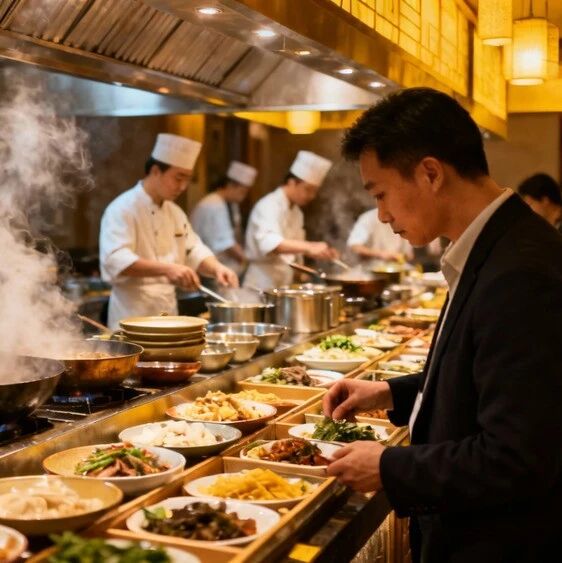
经营承压,分化加剧,2026年餐饮该怎么干才能赚钱?
虎嗅APP· 2026-01-01 13:19
Core Viewpoint - The restaurant industry faced unprecedented challenges in 2025, with significant pressure on operators due to rising costs, declining customer traffic, and a sharp drop in profits, leading to a survival struggle for many entrepreneurs [4][5]. Group 1: Consumer Behavior Changes - Consumer behavior has fundamentally changed, with increased price sensitivity and a heightened demand for quality and experience, forcing restaurants to optimize their "value-for-money" proposition [5]. - The controversy surrounding pre-prepared meals has intensified industry differentiation, impacting cost structures, service models, and consumer trust [5]. Group 2: Successful Business Models - Brands that successfully navigate the challenges have adopted new operational models, focusing on either extreme cost-effectiveness or unique customer experiences [7]. - For example, "南城香" has implemented a model of "fresh stir-fry + self-service weighing," offering competitive pricing with a focus on quality [8]. - The brand "椿芽·鲜牛肉杭州拌川" has differentiated itself through fresh preparation and a unique aesthetic, achieving significant market presence [8]. Group 3: Regional Cuisine and Consumer Preferences - Regional cuisines, such as Jiangxi cuisine, have gained popularity, with a notable increase in the number of related establishments and consumer preference for authentic local flavors [9]. - Data indicates that the importance of "regional characteristics" in restaurant selection has risen from 18% in 2024 to 29% in 2025, reflecting a shift towards unique and authentic dining experiences [9]. Group 4: Social Media and Brand Engagement - Building genuine brand engagement through social media has become crucial, with brands leveraging authenticity and transparency to connect with consumers [10]. - For instance, the founder of Big Pizza has cultivated a personal brand that resonates with consumers by sharing real experiences and addressing operational issues openly [10]. Group 5: Operational Adjustments - Smaller store formats have emerged as a strategy to reduce costs and adapt to the dual demands of dine-in and delivery services [12]. - Brands like "麻小六" and "小菜园" have successfully reduced store sizes and simplified their offerings to enhance operational efficiency and profitability [12]. Group 6: Strategic Recommendations for 2026 - Moving into 2026, the industry must shift focus from merely expanding store numbers to creating unique value for customers and ensuring brand memorability [14]. - Operators are advised to optimize their menu, enhance space efficiency, prioritize delivery channels without becoming overly reliant on platforms, and maintain product quality [14][15]. - Emphasizing team cohesion and employee well-being is critical for navigating challenging times, as a strong team can significantly impact business resilience [15].
新生儿跌破900万,毕业生却冲上1300万:一代人的错配人生
虎嗅APP· 2026-01-01 13:19
Group 1 - The core viewpoint of the article highlights a significant demographic shift in China, with a predicted decline in newborns to around 8.71 million by 2025, dropping below 7% of the global total births [4][7] - The number of high school graduates is expected to reach a historical high of 13.35 million in 2025, while college graduates will also peak at 12.22 million, indicating a mismatch between the declining birth rate and the increasing number of graduates [8][19] - The article discusses the reasons behind the declining birth rate, attributing it to high living costs, particularly housing and education, as well as changing societal values among younger generations [13][15][17] Group 2 - The article notes that the expansion of higher education has led to a situation where many graduates are forced to take jobs that do not require a college degree, resulting in a phenomenon of "high education, low employment" [21][22] - There is a growing mismatch between the skills taught in universities and the actual demands of the job market, particularly in emerging fields like AI and renewable energy [22][23] - The rise of AI is expected to impact over 75% of jobs in the next two decades, particularly affecting roles that involve repetitive tasks, while also creating new job opportunities that did not exist before [25][27] Group 3 - The article emphasizes the need for individuals to adapt to the changing job landscape by focusing on continuous learning and developing skills that AI cannot easily replicate, such as critical thinking and interpersonal communication [28][30] - It suggests that the future career paths may involve a combination of primary and secondary jobs, requiring individuals to be versatile and capable of quickly learning new skills [33][34] - The overall sentiment reflects a shift towards a more stable and balanced approach to life, where personal fulfillment and adaptability are prioritized over traditional measures of success [36][37]