材料汇

Search documents
技术主权与产能博弈:2025年全球晶圆厂格局重构(附国内产能清单)
材料汇· 2025-08-29 13:38
Core Viewpoint - The global semiconductor industry is undergoing unprecedented capacity restructuring, with a significant disparity between advanced and mature processes driven by geopolitical dynamics, technological divergence, and changing market demands [2][4]. Group 1: Advanced Process Competition - TSMC, Samsung, and Intel are fiercely competing in the advanced process segment, particularly in the 3nm and below category, with TSMC's 2nm process expected to start mass production in late 2025 [6][7]. - TSMC's 2nm process will have a monthly capacity of 50,000 wafers, primarily supplying Apple and Nvidia, with a projected ramp-up to 120,000 wafers per month by the end of 2026 [6]. - Samsung's 3nm GAA process has achieved an 80% yield and secured a $16.5 billion contract with Tesla, while its 2nm process is set for trial production in Q2 2025 [6][7]. - Intel's 18A process, utilizing Power Via technology, aims for a monthly capacity of 15,000 wafers by the end of 2025, targeting AI and autonomous driving applications [7]. Group 2: Mature Process Landscape - The global capacity for mature processes (8nm to 45nm) has surpassed 15 million wafers per month, with significant contributions from Chinese manufacturers [9][11]. - SMIC, as a leading Chinese foundry, has a monthly capacity of 50,000 wafers for 28nm and 30,000 wafers for 14nm processes, focusing on automotive electronics and IoT applications [9][11]. - UMC plans to reach a quarterly capacity of 128,000 12-inch equivalent wafers by Q4 2025, with strong demand for 22nm and 28nm processes [9][11]. - GlobalFoundries operates six fabs with a focus on 14nm, 12nm, and 22FDX processes, maintaining over 80% utilization in niche markets [10][11]. Group 3: Regional Capacity Dynamics - The construction of new fabs is increasingly regionalized, with 18 new fabs expected to start in 2025, reflecting a "chip sovereignty" strategy [38][39]. - The U.S. CHIPS Act incentivizes local production, while the EU's Chip Act supports expansion in Germany, and China continues to enhance its mature process capabilities [39]. - The trend towards "Local for Local" is evident, with Intel's Arizona fab prioritizing U.S. AI chip needs and TSMC's Kumamoto fab focusing on automotive chips for Japanese clients [39][40]. Group 4: Capacity and Process Overview in China - By 2025, China's wafer production capacity is projected to reach 4.49 million wafers per month, with a 14% year-on-year growth, particularly in the 28nm segment [11][17]. - Major Chinese foundries like SMIC and Hua Hong Semiconductor are expanding their capacities significantly, with SMIC's various fabs contributing to a diverse range of processes [18][19][20]. - The domestic semiconductor industry is forming a matrix centered around logic, memory, and specialty processes, with 12-inch lines accounting for 62% of the total capacity [17][41].


超高性能纤维行业分析框架(碳纤维/超高分子量聚乙烯纤维/芳纶纤维)(附74页PPT)
材料汇· 2025-08-29 13:38
Core Viewpoint - The article emphasizes the significance of high-performance fibers, particularly carbon fiber, aramid fiber, and ultra-high molecular weight polyethylene fiber, in various industries such as aerospace, defense, and transportation, highlighting their superior mechanical properties and applications in advanced materials [6][10][12]. Industry Overview - The carbon fiber industry is characterized by a concentration of production capacity among a few key players, with significant contributions from companies like Jilin Carbon Valley, Zhongfu Shenying, and Guangwei Composite [43][46]. - The global carbon fiber market is experiencing a trend of capacity expansion, driven by increasing demand in sectors like wind energy and military equipment [46][49]. Carbon Fiber Characteristics - Carbon fiber exhibits exceptional mechanical properties, including tensile strength exceeding 3500 MPa, which is 7-9 times stronger than steel, and a density that is one-fourth that of steel [8][10]. - The material is resistant to high temperatures (up to 2000°C in non-oxidizing atmospheres) and low temperatures (-180°C), making it suitable for a wide range of applications [8][10]. Production Process - The production of carbon fiber involves several stages, including the synthesis of polyacrylonitrile (PAN) fibers, oxidation, carbonization, and surface treatment to create carbon fiber products [17][23]. - Different production methods, such as wet spinning and dry-jet wet spinning, are employed to optimize the quality and characteristics of the final product [30][24]. Market Dynamics - The domestic carbon fiber market is expected to see significant growth, with projections indicating an increase in production capacity to 15.3 million tons per year by the end of 2023, and potentially reaching 26 million tons by 2025 [46][48]. - The supply of acrylonitrile, a key raw material for carbon fiber production, is also on the rise, with domestic production capacity expected to improve significantly [38][31]. Competitive Landscape - Major manufacturers in the carbon fiber sector are expanding their production capabilities, with significant investments planned for new facilities and technology upgrades [46][44]. - The competitive landscape is marked by a few dominant players, with Jilin Chemical Fiber leading in production capacity, followed by Zhongfu Shenying and Guangwei Composite [45][39].



2025晶圆代工产业格局、技术突破与中国力量
材料汇· 2025-08-28 15:29
Core Viewpoint - The wafer foundry industry is a crucial segment of the semiconductor sector, characterized by its capital and technology intensity, and is experiencing significant growth driven by AI and automotive electronics demand [1][11]. Group 1: What is Wafer Foundry? - Wafer foundry refers to the specialized manufacturing of semiconductor wafers, accepting orders from integrated circuit (IC) design companies without engaging in design itself [1][14]. - The wafer foundry industry consists of an upstream segment involving semiconductor materials and equipment, a midstream segment for wafer processing services, and a downstream segment for packaging and testing [1][18]. - Manufacturing processes are categorized into advanced logic processes and specialty processes, with advanced processes defined as those below 14nm and mature processes as those at 28nm and above [1][27]. Group 2: Advantages and Challenges of Wafer Foundry - The wafer foundry industry shows a clear trend towards domestic production, with increasing market demand and government support for the semiconductor industry [2][37]. - Challenges include geopolitical instability, significant first-mover advantages held by leading companies, reliance on key materials, and yield issues [2][42]. Group 3: Current Market Status - The semiconductor industry is currently in a favorable economic cycle, with global wafer production capacity expected to grow from 31.5 million wafers per month in 2024 to 33.7 million in 2025, representing growth rates of 6% and 7% respectively [3][47]. - Global semiconductor sales are projected to exceed $1 trillion by 2030, with a compound annual growth rate (CAGR) of 9% from 2025 to 2030 [4][50]. - The competitive landscape is characterized by a "one strong, many strong" structure, with TSMC holding a 60% market share, while China is expected to dominate mature processes by 2027 [4][54]. Group 4: Major Companies in Mainland China - Major players in China's wafer foundry sector include SMIC, Hua Hong Semiconductor, and Jinghe Integrated [5][60]. - SMIC is recognized as a leading integrated circuit wafer foundry in China, achieving significant revenue growth and technological advancements in logic and specialty processes [6][62]. - Hua Hong Semiconductor is noted for its comprehensive specialty process platform and has consistently expanded its revenue, ranking fifth globally among pure wafer foundry companies [7][64]. - Jinghe Integrated has achieved the top market share in the liquid crystal panel driver chip foundry sector and has shown substantial revenue growth [8][67]. Group 5: Technology Development Trends - The global wafer foundry capacity is expanding, with advanced processes like 3nm and 2nm becoming increasingly competitive, driven by the rise of AI and high-performance computing (HPC) demands [10][29]. - The investment required for advanced processes has significantly increased, with estimates suggesting that 2nm technology may require close to $28 billion in investment [30][30]. - The concept of "Wafer Foundry 2.0" has emerged, encompassing not only wafer manufacturing but also packaging, testing, and other integrated services [32][32].


为何需要先进封装?为何需要面板级封装?为何在高端市场基板如此重要?
材料汇· 2025-08-27 12:52
Market Overview - In 2024, the overall packaging market is expected to grow by 16% year-on-year to reach $105.5 billion, with the advanced packaging market growing by 20.6% to $51.3 billion, accounting for nearly 50% of the total [2][14]. - By 2030, the overall packaging market is projected to reach $160.9 billion, with advanced packaging expected to grow to $91.1 billion, resulting in a compound annual growth rate (CAGR) of 10% from 2024 to 2039 [2][14]. - The high-end market share is anticipated to increase from 8% in 2023 to 33% by 2029, driven by the demand from generative AI, edge computing, and intelligent driving ADAS [2][16]. Need for Advanced Packaging - The end of Moore's Law for advanced processes marks the beginning of the packaging Moore's Law, focusing on achieving higher performance at lower costs through system-level packaging techniques [3][30]. - The increasing demand for diverse functionalities leads to more frequent interactions between functional devices, necessitating efficient high-speed interconnections between chips to enhance overall system performance [3][30]. Need for Panel-Level Packaging (PLP) - PLP technology offers higher cost-effectiveness, greater design flexibility, and superior thermal and electrical performance, with significant potential to replace traditional packaging methods [4][42]. - The traditional packaging market is projected to reach $54.2 billion in 2024 and $69.8 billion by 2030, indicating a broad space for PLP to replace existing solutions [4][42]. - The wafer-level packaging market is expected to be $2.1 billion in 2024, with the FO/2.5D organic interposer market at $1.8 billion, potentially reaching $8.4 billion by 2030 [4][42]. Importance of Substrates in High-End Markets - Packaging substrates play a crucial role in signal transmission, heat dissipation, protection, and functional integration, with low-loss transmission being a key property [5][36]. - The increasing I/O density requirements driven by trends in mobile devices, 5G, data centers, and high-performance computing necessitate advancements in substrate technology to meet higher resolution demands [5][36]. COWOP and Substrate-Less Concepts - The Chip on Wafer on PCB (COWOP) concept blurs the definitions between PCB and substrate, focusing on transferring substrate functions to PCB while maintaining compatibility with existing technologies [6][36]. - Current PCB wiring density and I/O density are insufficient to match interposer requirements, necessitating the development of materials that can achieve high-density I/O [6][36]. Related Companies - Key players in the packaging substrate and materials sector include companies like Unimicron, BOE, and Corning, which are diversifying their businesses to capture opportunities in PLP and glass substrate applications [45].



工信部:生物医用材料创新任务揭榜挂帅(第二批)入围揭榜单位名单
材料汇· 2025-08-27 12:52
Core Viewpoint - The article discusses the announcement of the second batch of selected units for the "Innovation Task of Biomedical Materials" by the Ministry of Industry and Information Technology, highlighting various innovative materials and their respective companies involved in their development [2][3]. Group 1: Polymer Materials - Key materials include Polyethylene Terephthalate, Phosphorylcholine-based Polymers, High Purity Acrylic Monomers, and High Oxygen Permeability Silicones [3][4]. - Companies involved in these materials include China Petrochemical Corporation, Weigao Group, and Jiangsu New Vision Advanced Functional Fiber Innovation Center [4][5]. - Other notable materials are Dendritic Light-sensitive Smart Materials and Anti-thrombus New Materials, with companies like Jiangsu Baisei Biotechnology and BoHui (Zhejiang) Biotechnology [3][6]. Group 2: Metal Materials - Key materials in this category include Ultra-fine Crystal Titanium Rod Wire, Porous Tantalum, Zirconium Niobium Alloys, and High-end Stainless Steel Wire [7][8]. - Companies such as Baoji Xinnuo Special Materials and Shenzhen Shigesaisi Medical Technology are involved in the production of these materials [9]. Group 3: Inorganic Non-metallic Materials - Important materials include Degradable Semi-hydrated Calcium Sulfate, Silicon Nitride Ceramics, and 3D Printing Zirconia Ceramic Inks [10][11]. - Companies like Zhongding Kairui Technology and Beijing Bansai Technology are engaged in the development of these materials [11].






高性能膜材料产业图谱:谁说中国造不出好膜?这些企业正在改写全球格局
材料汇· 2025-08-26 12:43
Core Viewpoint - The article emphasizes the rapid growth and competitive landscape of high-performance membrane materials, particularly in lithium battery separators, hydrogen energy, photovoltaics, and semiconductors, with Chinese companies making significant advancements against long-standing dominance by Japanese and American firms [2]. Group 1: Overview of High-Performance Membrane Materials - High-performance membrane materials are critical for new separation technologies, characterized by energy efficiency and environmental friendliness, playing a vital role in addressing water, energy, and environmental issues [8]. - Membrane materials can be categorized into thick membranes (over 1 micron) and thin membranes (under 1 micron), with applications in water treatment, special separation, gas separation, biomedical, and battery membranes [8][11]. Group 2: Current Development Status of the Membrane Industry - The global membrane materials industry is growing at an annual rate of approximately 15%, with water treatment membranes reaching a mature stage, while special separation membranes are experiencing rapid development [11]. - By 2019, the membrane industry in China had nearly reached a scale of 200 billion yuan, with significant advancements in water treatment, special separation, and gas separation membranes [11]. Group 3: Market Situation of High-Performance Separation Membranes - In 2022, China's membrane industry total output value is expected to exceed 860 billion yuan, with a compound annual growth rate of about 10% from 2022 to 2027 [20]. - The market structure of membrane products in China shows that reverse osmosis and nanofiltration membranes account for 50%, while ultrafiltration and microfiltration membranes each account for 10% [20]. Group 4: Competitive Landscape of the Membrane Industry - The membrane industry value chain includes research and development of membrane materials, production of membrane components, manufacturing of membrane equipment, and system integration, with the highest value contribution from upstream material development [21]. - The competitive landscape features a mix of domestic and international players, with significant market shares held by companies like Shanghai Thinker and Xingyuan Material in the lithium battery separator market [47]. Group 5: Optical Membranes - Optical membranes are widely used in various applications, including precision optical devices, displays, and anti-counterfeiting technologies, with significant growth driven by demand in the LCD and OLED markets [24][37]. - The optical membrane market in China is projected to grow, with a market size of approximately 327.23 billion yuan in 2022, driven by technological upgrades and strong demand from local manufacturers [37]. Group 6: Lithium Battery Separators - The lithium battery separator market is rapidly expanding, with China's output volume reaching 133.2 billion square meters in 2022, accounting for over 80% of the global market share [47]. - Major players in the lithium battery separator market include Shanghai Thinker and Xingyuan Material, with significant growth in both wet and dry separator production [47]. Group 7: Aluminum-Plastic Film - The aluminum-plastic film market is expected to grow at a compound annual growth rate of 16.09%, reaching a market size of 57 billion yuan in 2022 [53]. - The supply of aluminum-plastic films is currently unable to meet domestic demand, leading to a push for domestic production to replace imports [61].


专家报告:5G通讯用低介电材料研究开发(附52页PPT)
材料汇· 2025-08-25 13:17
Group 1 - The article discusses the characteristics and requirements of 5G communication technology, emphasizing the need for high-frequency electromagnetic waves to meet the increasing data transmission demands [4][5][6]. - It highlights the Shannon theorem, which relates signal transmission capacity to bandwidth and signal-to-noise ratio, indicating that higher frequencies can enhance data transmission rates [5][6]. - The article outlines the specific material requirements for circuit substrates used in high-frequency communication, including low dielectric constant and low dielectric loss to minimize signal attenuation [7][8][10]. Group 2 - The preparation and performance study of fluorinated thermosetting polyphenylene ether (PPO) is presented, focusing on the effects of physical and chemical modifications on its dielectric properties [11][12][14]. - The article details the synthesis methods for modified PPO, including physical blending and chemical modification, and their impact on the material's thermal and dielectric performance [12][13][14]. - It discusses the dielectric constant and loss of various modified PPO samples, indicating that the introduction of fluorinated groups can enhance dielectric performance [22][38]. Group 3 - The article examines the preparation and performance of hydrocarbon-based thermosetting polyphenylene ether, detailing the structural characterization and curing studies [25][30][31]. - It presents the thermal properties of different hydrocarbon-modified PPOs, noting the influence of curing conditions on their thermal stability and mechanical properties [31][35]. - The dielectric performance of hydrocarbon-modified PPOs is analyzed, showing variations in dielectric constant and loss based on the type of hydrocarbon modification [37][38]. Group 4 - The article explores the application of modified boron nitride/thermosetting polyphenylene ether composites in circuit boards, emphasizing their thermal and dielectric properties [40][58]. - It discusses the impact of filler content on the thermal conductivity and mechanical strength of the composites, indicating that optimal filler levels can enhance performance [54][63]. - The study highlights the microstructural characteristics of the composites, demonstrating effective dispersion of boron nitride within the polymer matrix [61][62].

投资者指南:科技自主浪潮下,如何布局通信与硬科技核心赛道?(附111页PPT)
材料汇· 2025-08-25 13:17
Core Viewpoints - The article emphasizes the advancement of China's technology across the entire supply chain, driven by external pressures and domestic policies supporting innovation and self-reliance [1][3]. Group 1: Technology Competition - The U.S. has imposed export controls on Chinese companies, leading to unexpected growth in certain sectors as companies adapt to these challenges [3][8]. - The "Entity List" has expanded, with 586 Chinese companies affected, indicating a long-term strategy by the U.S. to restrict access to advanced technologies [8][9]. - China's semiconductor industry has made significant strides, with domestic production capabilities for lithography machines being announced, suggesting a failure of U.S. containment strategies [8][9]. Group 2: Investment Strategies - The article suggests that investment strategies should focus on domestic technology development, particularly in high-elasticity sectors that can provide significant returns [1][9]. - The communication sector has seen a notable increase in fund holdings, with a 1.09 percentage point year-on-year increase in heavy holdings in the communication industry [5][7]. - The performance of AI-related companies is improving, with the communication sector's revenue and net profit showing positive growth, indicating a favorable investment environment [5][6]. Group 3: Mergers and Acquisitions - The regulatory environment is becoming more favorable for mergers and acquisitions, particularly in the technology sector, with new policies aimed at facilitating these processes [9][13]. - The number of merger events in the communication sector has decreased in recent years, but the expectation is for an increase in 2025 as policies take effect [9][13]. - State-owned enterprises are expected to drive value through mergers and acquisitions, particularly in the context of market management and optimization [9][13]. Group 4: Funding Support - The Chinese government is set to issue long-term bonds to support strategic industries, with an initial issuance of 1 trillion yuan planned for 2024 [19][23]. - A 100 billion yuan fund has been established to support the satellite internet industry, indicating strong governmental backing for technological advancements [23][24]. - The government's focus on "new quality productivity" highlights a commitment to fostering innovation and technological self-sufficiency [19][22]. Group 5: Industry Opportunities - The article identifies significant opportunities in hard technology sectors, particularly in satellite internet and computing power, as domestic capabilities improve [1][30]. - The demand for domestic chips is increasing, with initial orders for Huawei's new AI chips valued at approximately 2 billion USD, reflecting a growing market for local technology [53][54]. - The overall computing power in China is expected to continue its upward trajectory, with projections indicating a substantial increase in capacity by 2024 [54][75].


显示材料全景图:从LCD到柔性屏的国产化机遇与挑战
材料汇· 2025-08-24 14:36
Core Viewpoint - The article discusses the current landscape and future strategies of China's display materials industry, emphasizing the dual mainstream technologies of LCD and OLED, the rise of new technologies, and the critical need for domestic material innovation to overcome reliance on foreign imports [2][3][5]. Group 1: Display Technology Overview - The main display technologies currently dominating the market are TFT-LCD and OLED, with TFT-LCD holding a 40% market share due to its low cost and high durability [7][11]. - OLED technology is preferred for small to medium-sized high-end displays, with significant advancements in flexible display materials [11][15]. - The demand for new display technologies such as QLED, Micro-LED, and electrochromic displays is increasing, driven by the need for energy efficiency and improved user experience [4][42]. Group 2: Material Challenges - The high-end materials required for display technologies are predominantly imported, with 90% of high-purity OLED materials and key components like PI films being sourced from foreign suppliers [5][7][23]. - The industry faces significant challenges, including reliance on foreign patents for liquid crystal and OLED materials, and the dominance of a few companies in the glass substrate and target material markets [7][8][63]. Group 3: Strategic Solutions - A multi-faceted strategy is proposed to address these challenges, including the establishment of national platforms for material sharing, leading enterprises focusing on key technological breakthroughs, and fostering talent through collaboration between academia and industry [6][8]. - Key areas of focus include the development of high-purity OLED materials, ultra-thin flexible glass, and rare earth-doped target materials [6][8]. Group 4: Future Material Innovations - Emerging materials such as quantum dots and micro-LEDs are highlighted for their potential to enhance display technology, with ongoing research aimed at overcoming stability issues and improving performance [4][42]. - The article emphasizes the importance of developing domestic capabilities in producing critical materials to reduce dependency on foreign technology and ensure the sustainability of the display industry [5][63].

揭秘芯片光刻背后的材料之战:SOC、光刻胶与抗反射涂层的突围
材料汇· 2025-08-24 14:36
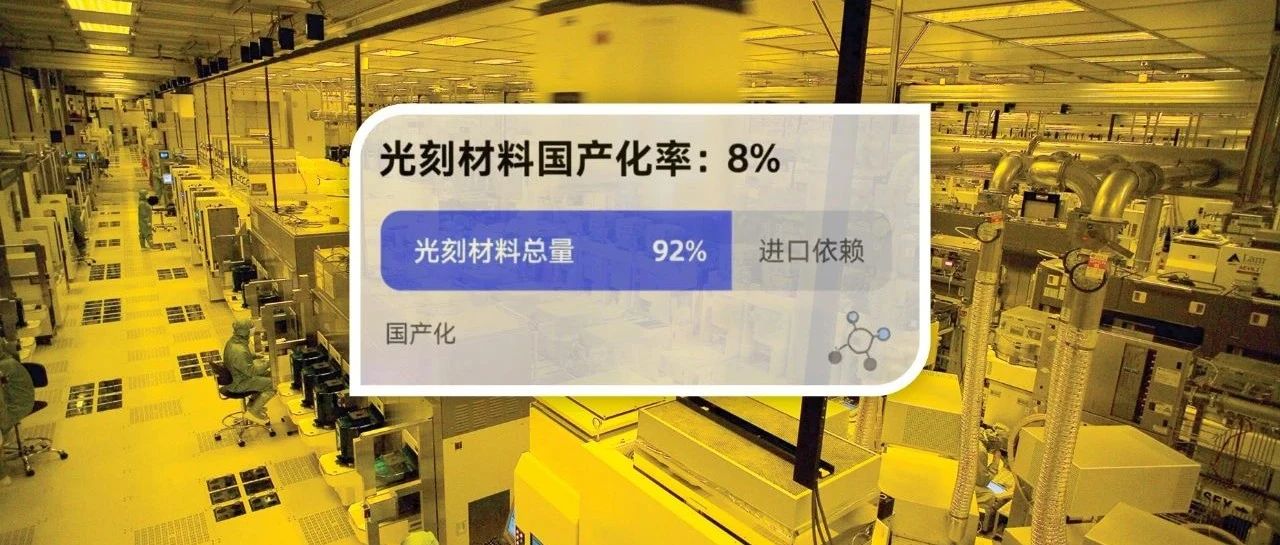
Core Position - Photolithography materials are crucial for chip manufacturing, directly affecting chip performance, yield, and cost, accounting for approximately one-third of the total manufacturing cost [2][10]. Key Materials - The three key materials in photolithography are SOC (Spin On Carbon), anti-reflective coatings (BARC/TARC), and photoresists, each playing a vital role in the photolithography process [10][14]. Market Drivers - The demand for materials is surging due to advanced logic and storage chips (like 3D NAND) requiring more photolithography steps, with domestic reliance on multiple exposure technologies further increasing material consumption [3][44]. Domestic Production Rate - The domestic production rate of photolithography materials is extremely low, with the market dominated by Japanese and American companies such as JSR, Shin-Etsu, and DuPont. The domestic market share for ArF photoresists is less than 2%, KrF photoresists is less than 5%, and EUV photoresists is at 0% [3][10]. Future Key Developments - The only path to achieving domestic substitution and technological catch-up is through breakthroughs in higher precision and stronger performance materials [4]. Domestic Company List - Key domestic companies include: - SOC: Xiamen Hengkang, Shanghai Xinyang Semiconductor, and Zhejiang Paibang New Materials [6]. - Anti-reflective coatings: Xiamen Hengkang, Fujian Hongguang, and Shanghai Xinkewai [7]. - Photoresists: Beijing Kehua, Suzhou Ruihong, and Shanghai Xinyang [7]. - Raw materials for photoresists: Xuzhou Bokan, Shengquan Group, and Qiangli New Materials [8]. - Adhesive materials: No mature domestic companies, primarily relying on imports [9]. Market Size and Growth - The domestic photolithography materials market is projected to grow from 53.7 billion yuan in 2019 to 121.9 billion yuan in 2023, with a compound annual growth rate (CAGR) of 22.7%, expected to reach 319.2 billion yuan by 2028 [48]. Photolithography Material Market Demand - The demand for photolithography materials is closely tied to the development of integrated circuit processes, with increasing exposure steps in advanced processes and the ongoing evolution of storage and logic chips driving the need for innovative materials [44][45]. Global Competitive Landscape - The global photolithography materials market is dominated by companies from the US and Japan, such as DuPont and Shin-Etsu, which have significant technological advantages and market shares [65].