
GEELY AUTO(00175)

Search documents
零跑D19开启盲订、零跑D99亮相!极氪完成退市回归吉利!魏牌蓝山进阶版、极石ADAMAS上市!丨一周大事件
电动车公社· 2025-12-28 17:52
Core Viewpoint - The article highlights the recent developments in the electric vehicle (EV) industry, focusing on new car launches, company dynamics, and regulatory changes that are shaping the market landscape. Group 1: New Car Launches - The Weipai Lanshan Intelligent Advanced Edition has been launched with a limited-time price range of 275,800 to 302,800 yuan, featuring three models and advanced smart driving capabilities [2][4][6] - The Jishi ADAMAS has been introduced at a limited-time price of 334,900 to 344,900 yuan, positioned as a luxury version of the Jishi 01, with enhanced interior and exterior features [11][13][19] - The Leap D19 has opened for blind orders, while the Leap D99 has been unveiled, both showcasing advanced technology and flexible seating arrangements [20][22][23] Group 2: Company Dynamics - Geely has completed the privatization and merger of Zeekr, making it a wholly-owned subsidiary, which is expected to streamline operations and enhance market competitiveness [24][25][29] - Harman International is entering the advanced driver assistance systems (ADAS) market by acquiring ZF's ADAS business for 1.5 billion euros, aiming to leverage existing technologies for growth [30][31][33] - Leap Motor has set an ambitious target of achieving annual sales of 4 million vehicles, reflecting its growth trajectory and commitment to self-research and development [27] Group 3: Industry Trends and Regulations - Toyota's global sales fell by 2% in November, with a significant 12% drop in China, indicating challenges in maintaining growth amid increasing competition in the EV sector [47][48] - Dongfeng Motor has surpassed 1 million units in annual sales of new energy vehicles, marking its entry into the "million club" and showcasing its successful transition to electric mobility [49][51] - New regulations for electric vehicles, including mandatory energy consumption limits and safety standards, will take effect in 2026, pushing manufacturers towards technological upgrades [62][66][69]






汽车行业周报(20251222-20251228):多元催化有望带动板块预期修复,建议提前布局明年机会-20251228
Huachuang Securities· 2025-12-28 11:46
Investment Rating - The report maintains a "Buy" recommendation for the automotive sector, indicating a positive outlook for the upcoming year [1]. Core Insights - The automotive sector is expected to see a recovery in market expectations driven by three potential catalysts: the implementation of subsidy policies, better-than-expected export figures in Q1 (with November exports increasing by 45%), and stronger-than-expected retail sales post-Spring Festival [1]. - Retail sales for Q4 2025 have been revised downwards due to previous expectations of demand being pulled forward, with a forecast of a 14% decline in retail sales for Q4 2025, followed by a slight growth of 0.3% in 2025 [2]. - The report highlights the performance of key automotive companies, recommending Geely and JAC Motors due to their strong product cycles and potential for significant profit increases [5]. Data Tracking - In early December, discount rates slightly decreased, with an average discount amount of 22,156 yuan, reflecting a 0.4 percentage point decrease from the previous month [4]. - In October, wholesale vehicle sales reached 2.96 million units, a year-on-year increase of 7.5%, while retail sales fell by 9.2% year-on-year [4]. - The report provides detailed sales figures for new energy vehicle manufacturers, with BYD delivering 480,186 units in November, a 5.3% year-on-year decline but an 8.7% increase from the previous month [6]. Market Performance - The automotive sector index increased by 2.66% this week, ranking 12th out of 29 sectors [9]. - The report notes that the automotive sector's performance is improving, with a significant number of stocks showing positive growth [31]. - The average price-to-earnings (PE) ratio for the automotive sector is reported at 33, indicating a relatively high valuation compared to historical averages [31].




又一电车冬季续航测试发布,小米YU7达成率超Model Y,小鹏P7全场最高
Jin Rong Jie· 2025-12-28 09:29
Core Insights - The latest winter testing results for electric vehicles were released by Auto Home, conducted in Yakeshi, Inner Mongolia, under extreme cold conditions of around -20°C, showcasing unexpected performances from various models [1] Electric Vehicle Performance Rankings - In the "Advanced Family 5-Seater Electric SUVs" category, the 2026 Wanjie M7 Pure Electric Itra Four-Wheel Drive version achieved a 44.4% range completion rate with an actual range of 282 km, ranking first [7] - The 2025 Xiaopeng P7 750 Four-Wheel Drive High-Performance Ultra version led the "Advanced Family Electric Cars" category with a 53.9% range completion rate and an actual range of 366.7 km [10] - The 2025 Nissan N7 625 Max topped the "Mainstream Family Electric Cars" category with a 47.4% range completion rate and an actual range of 296.3 km [16] - In the "Essential Commuter Electric Small Cars" category, the 2025 BYD Seagull Intelligent Driving version achieved a 43.8% range completion rate with an actual range of 177.2 km, ranking first [18] - The 2025 BYD Ti3 501 km Four-Wheel Drive Ultra version led the "Personalized Electric SUVs" category with a 44.9% range completion rate and an actual range of 224.7 km [19] Overall Rankings - The overall testing results indicated that the Xiaopeng P7 had the highest range completion rate among all tested models, while the Ideal i8 2025 Standard version had the lowest at 34.8% with an actual range of 250.3 km [21] - Among joint venture electric vehicles, the Nissan N7 had the highest range completion rate, ranking fifth overall [21]




极氪完成私有化并入吉利 行业整合深化引关注
Ren Min Wang· 2025-12-28 08:16
Core Viewpoint - Geely Automobile Holdings Limited has completed the privatization and merger of Zeekr Intelligent Technology, making Zeekr a wholly-owned subsidiary of Geely, which is seen as a significant step in Geely's "One Geely" strategy and highlights the trend of consolidation in the new energy vehicle industry [1][2] Group 1: Company Developments - The integration of Zeekr into Geely is expected to impact Geely's overall brand structure and technology layout, especially as the competition in the new energy vehicle market shifts from growth to consolidation [1] - Zeekr has focused on the high-end pure electric market since its establishment, with cumulative deliveries exceeding 600,000 units and an average vehicle price close to 300,000 yuan [1] - The advanced technologies developed by Zeekr, including the Haohan architecture and related hybrid, intelligent chassis, and assisted driving technologies, are anticipated to be gradually applied to more models under the Geely brand [1] Group 2: Market Position and Strategy - Zeekr has entered over 40 countries and regions in the overseas market, with some models gaining market attention after their launch abroad, supported by Geely's extensive global service network and production bases [1] - Following the merger, Zeekr's positioning within the Geely system has become clearer, with initiatives aimed at standardizing services and enhancing communication transparency [2] - The privatization allows Zeekr to reduce short-term financial pressure and focus more on product development and long-term brand building, reflecting a shift in the Chinese automotive industry towards systematic collaboration [2]
市场变了!多家巨头从美国私有化退市,中概股加速回归!
Zheng Quan Shi Bao Wang· 2025-12-28 06:49
Core Viewpoint - The Chinese concept stock market is undergoing significant changes in 2025, characterized by a wave of privatizations and delistings from U.S. exchanges, while a number of small and medium enterprises continue to seek global financing opportunities, reflecting a complex interplay of withdrawal and entry in the global capital market landscape [1]. Group 1: Privatization and Delisting - Geely Automobile has completed the privatization of Zeekr, which is now a wholly-owned subsidiary, and has delisted from the NYSE, with 70.8% of Zeekr shareholders opting for shares and 29.2% for cash, totaling $701 million [2]. - Dada Group, part of the JD ecosystem, was privatized at a valuation of $520 million, with the acquisition price set at $2.0 per ADS, allowing for strategic adjustments and deeper collaboration with JD in the instant retail market [3]. - Fintech company OneConnect has pioneered dual delisting, having been listed on both the NYSE and HKEX, and has now completed its delisting from both exchanges, privatized for approximately HKD 1.69 billion due to long-term low stock prices and liquidity issues [3]. Group 2: Trends in U.S. Listings - In 2025, 63 Chinese companies went public in the U.S., raising approximately $1.12 billion, marking a 41% decrease in total financing compared to 2024, despite a 7% increase in the number of new listings [4]. - The largest IPOs this year were from consumer company Bawang Chaji, raising $411 million, and pharmaceutical company Ascentage Pharma, raising $126 million, indicating a shift towards smaller enterprises in the U.S. market [4][5]. - Ascentage Pharma, which focuses on developing new small molecule drugs, became the first Chinese biotech company to list in 2025, with its stock price rising by 61.62% post-IPO [5]. Group 3: Return to Hong Kong - The trend of Chinese companies returning to Hong Kong is evident, with companies like Pony.ai and Hesai achieving dual primary listings, reflecting a shift towards this model as a means to better integrate into the Hong Kong market [6]. - Hesai's IPO in September 2025 was the largest in the global lidar industry to date, raising over HKD 4.16 billion (approximately $533 million) [6]. - Other companies, such as Tianjing Biopharma, are also planning to pursue dual listings in Hong Kong, indicating a broader trend of returning to Asian markets [6]. Group 4: Future Outlook - Some analysts suggest that certain Chinese companies may pursue privatization and then re-list in Hong Kong or A-shares to escape U.S. regulatory pressures, potentially leading to better valuations and diversified financing channels [7].

又一家新势力破产!观致汽车超350亿元股权被冻结;华杉回应蜜雪冰城红色设计被指为“LOW”;马斯克评论宇树机器人测试视频丨邦早报
创业邦· 2025-12-28 01:08
Core Viewpoint - The article discusses various significant events in the financial and automotive sectors, highlighting investment opportunities and challenges faced by companies in these industries. Group 1: Investment and Financial News - Renowned private equity manager Li Bei announced a new investment course priced at 12,888 yuan, clarifying that the initiative is not aimed at generating significant income as she is financially secure [2] - The global M&A market reached a record high of $4.5 trillion in 2025, marking a nearly 50% increase from 2024, with significant contributions from U.S. companies [23] - The wealth of the top ten tech billionaires in the U.S. increased by over $550 billion in 2025, driven by advancements in artificial intelligence [23] Group 2: Automotive Industry Developments - Geely's subsidiary, Xiwanda, is involved in a lawsuit claiming quality issues with battery cells, seeking over 2.3 billion yuan in damages [3] - Qoros Auto has entered bankruptcy review due to long-term debt issues, with total frozen equity exceeding 35 billion yuan [3] - Lantu Motors announced the launch of its flagship SUV, priced between 379,900 and 509,900 yuan, with the first deliveries set for December 29 [14] Group 3: Company Financing and Growth - Weinan completed nearly 1 billion yuan in Series C financing, with funds allocated for battery asset investments and technology development [12] - Huaihe Medical secured several hundred million yuan in Series D financing, aimed at expanding its cardiovascular medical device offerings [12] - Blood Crystal Biotechnology raised over 100 million yuan in Series B1 financing to advance research in stem cell therapies [12]

汽车行业周报:2026 年"两新"政策有望优化延续,带动需求稳步向上-20251227
SINOLINK SECURITIES· 2025-12-27 15:38
Investment Rating - The report suggests a focus on companies such as BYD, Geely Automobile, and others in the automotive sector, as well as companies like Li Auto-W, Xpeng Motors-W, and others in the smart technology and robotics sectors [2]. Core Insights - The Central Economic Work Conference has outlined six key tasks related to the automotive industry, emphasizing domestic demand, innovation, reform, openness, coordinated development, and green transformation, which are expected to stabilize and boost automotive demand [12][13]. - The report highlights that passenger car exports have maintained a year-on-year growth rate of over 20% for six consecutive months, with expectations for double-digit growth in wholesale exports by 2026 due to recovering demand in markets like Russia and the increasing export of new energy vehicles [14]. - The report notes that the smart driving experience is expected to improve significantly with advancements in new architectures and high-performance chips, leading to increased consumer acceptance and sales for leading companies in smart driving technology [17][20]. Industry Data Tracking Market and Sector Performance - The Shanghai and Shenzhen 300 Index increased by 1.95%, while the Shenwan Automotive Index rose by 2.74% [21]. - The top five stocks with the highest gains this week included Chaojie Co. (+41.6%), Longji Machinery (+33.7%), and others, while the top five stocks with the largest declines included Meidong Automotive (-6.5%) and others [28]. Passenger Car Sales Data - In December 2025, the wholesale sales of passenger cars reached 568,000 units, a year-on-year decrease of 9%, while the retail sales were 536,000 units, also down 11% year-on-year [4][32]. - For November 2025, wholesale sales were 2.991 million units, a year-on-year increase of 1.7%, with new energy vehicle wholesale sales at 1.694 million units, up 17.6% year-on-year [5][35]. - The report indicates that the export of passenger cars in November was 594,000 units, reflecting a 50% year-on-year increase, with new energy vehicle exports reaching 273,000 units, up 244.1% year-on-year [51][57]. Industry Dynamics - The report discusses the rapid development of smart technology and robotics, with significant advancements in autonomous driving and AI integration in vehicles, indicating a shift towards a more intelligent automotive market [17][19]. - The report also mentions the increasing focus on new energy vehicles and the expansion of charging infrastructure, which has reached 19.322 million charging points, marking a 52% year-on-year growth [73].


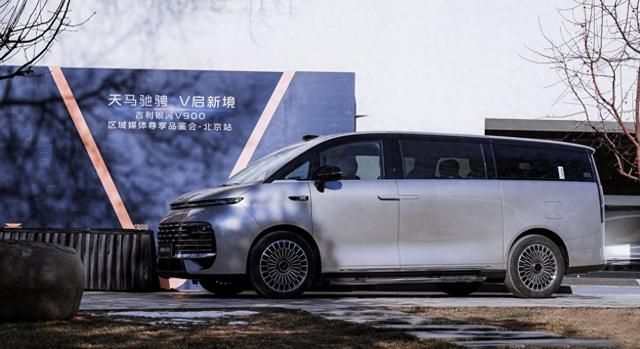
主打“三排平权”,配云感SPA座椅,吉利银河V900家庭MPV新选择
Xin Lang Cai Jing· 2025-12-27 12:30
Core Viewpoint - The MPV market is shifting from a business-exclusive segment to a family-oriented necessity, driven by the increase in three-child families and diverse consumer usage scenarios, presenting a new opportunity for automakers [1] Group 1: Product Features - The Geely Galaxy V900 is positioned as a strategic product for the Geely Galaxy brand, addressing the pain points of family travel with three core advantages: space, comfort, and safety [3] - The vehicle boasts a high space utilization rate and flexible layout, making it adaptable to various family structures [3] - The V900 features an ultra-large trunk that can easily accommodate camping gear and children's items, with ample storage space throughout the vehicle [5] Group 2: Comfort and Safety - The vehicle includes Nappa leather seats with heating, ventilation, and massage functions, ensuring comfort for elderly passengers during long trips [6] - The air suspension system, tuned by the Lotus team, effectively filters road bumps, reducing motion sickness for children and elderly [6] - Safety features include a comprehensive airbag system that extends to the third row, a full metal seat back to prevent rear-end penetration, and advanced driver assistance systems to mitigate sudden risks [6] Group 3: Market Positioning - The Galaxy V900 represents Geely's commitment to intelligent and high-quality vehicles, breaking traditional MPV limitations and focusing on user needs [8] - The vehicle is part of Geely's "Smart Boutique Car" strategy, showcasing the company's technological advancements in new energy and intelligence [8] - The V900 is positioned to lead in the competitive MPV market, offering innovative concepts like "three-row equality" and comprehensive adaptability for family travel [8][9]
吉利汽车旗下公司起诉知名电池企业“交付的电芯存在质量问题”,索赔超23亿元!法院已立案受理
Mei Ri Jing Ji Xin Wen· 2025-12-27 06:57
Core Viewpoint - Xiwanda's subsidiary, Xiwanda Power Technology Co., Ltd., is involved in a lawsuit amounting to 2.314 billion yuan due to alleged quality issues with battery cells delivered to Weirui Electric Vehicle Technology Co., Ltd. [1][2] Group 1: Lawsuit Details - Weirui Electric claims that the battery cells delivered by Xiwanda Power from June 2021 to December 2023 have quality problems, leading to financial losses and is seeking compensation of 2.314 billion yuan plus interest [2][3] - The lawsuit has been accepted by the Ningbo Intermediate People's Court in Zhejiang Province [1][2] Group 2: Financial Performance - Xiwanda Power has reported revenues exceeding 10 billion yuan in the past two years but has also incurred significant losses, with projected losses of 1.56 billion yuan in 2023 and 1.87 billion yuan in 2024 [1][2] - Xiwanda's total revenue for 2024 is expected to be 56.021 billion yuan, with a net profit of 1.605 billion yuan, indicating that the net profit could cover the lawsuit amount [2] Group 3: Business Relationship - Xiwanda Power became a designated supplier for Weirui Electric in April 2021, which is a wholly-owned subsidiary of Geely Automobile [2][3] - The PMA platform project, developed jointly by Geely and Volvo, utilizes battery cells from Xiwanda Power in various vehicle brands, including Zeekr and Smart [3] Group 4: Listing Plans - Xiwanda had plans to spin off Xiwanda Power for an IPO on the Shenzhen Stock Exchange's Growth Enterprise Market, but no progress has been made to date [4] - The company reported significant revenue growth from under 500 million yuan in 2020 to nearly 13 billion yuan in 2022, despite ongoing losses [4] Group 5: Investment Projects - In February 2022, Xiwanda announced a planned investment of 12 billion yuan for a project in Zhuhai, but this project has not progressed and was terminated in April 2023 [5]


索赔超23亿!吉利系公司指控欣旺达电芯存在质量问题
Di Yi Cai Jing· 2025-12-27 04:56
Core Viewpoint - The lawsuit filed by Weirui Power against Xiwanda Power for over 2.3 billion yuan highlights significant quality issues with battery cells supplied from June 2021 to December 2023, which could impact Xiwanda's financial performance and reputation in the electric vehicle battery market [1][2]. Group 1: Lawsuit Details - Weirui Power is suing Xiwanda Power for over 2.3 billion yuan due to quality issues with battery cells delivered during the specified period [1]. - Weirui Power, established in 2017, is primarily owned by Geely-related companies, with its major shareholder being Zeekr Automotive [1]. - The collaboration between Geely and Xiwanda Power began in 2021, focusing on supplying battery cells for the PMA platform project [1]. Group 2: Product Issues - The Zeekr 001, which utilizes Xiwanda battery cells, has faced complaints from users regarding slow charging speeds and inaccurate battery level readings [1]. - In December 2024, Zeekr announced a battery health monitoring initiative, revealing that some Zeekr 001 WE86 models exhibited charging speed issues and abnormal battery capacity degradation [2]. - Although the battery issues did not meet warranty replacement standards, Zeekr offered free battery replacements to affected users, leading to speculation that Xiwanda batteries were being replaced with those from CATL [2]. Group 3: Financial Implications - The total net profit attributable to shareholders for Xiwanda in 2023 and 2024 is reported to be 2.544 billion yuan, which is nearly equivalent to the amount being claimed in the lawsuit [2]. - Xiwanda has stated that the lawsuit has not yet gone to trial, and the outcome remains uncertain, making it difficult to assess the impact on current or future profits [2]. - The company is actively seeking a reasonable resolution to the lawsuit and is enhancing communication with relevant parties [2].