
MEITUAN(03690)

Search documents
南向资金今日净卖出38.45亿港元 盈富基金净卖出16.12亿港元
Zheng Quan Shi Bao Wang· 2025-12-30 14:51
Group 1 - The Hang Seng Index rose by 0.86% on December 30, with a total turnover of southbound funds amounting to HKD 923.00 billion, including buy transactions of HKD 442.28 billion and sell transactions of HKD 480.72 billion, resulting in a net sell of HKD 38.45 billion [1] - The southbound trading through Stock Connect (Shenzhen) had a total turnover of HKD 331.61 billion, with buy transactions of HKD 153.22 billion and sell transactions of HKD 178.40 billion, leading to a net sell of HKD 25.18 billion [1] - The southbound trading through Stock Connect (Shanghai) recorded a total turnover of HKD 591.38 billion, with buy transactions of HKD 289.06 billion and sell transactions of HKD 302.33 billion, resulting in a net sell of HKD 13.27 billion [1] Group 2 - Among the actively traded stocks, SMIC had the highest turnover with a total of HKD 60.49 billion and a net buy of HKD 7.59 billion, closing with a price increase of 4.24% [1][2] - CNOOC had a total turnover of HKD 21.87 billion with a net buy of HKD 4.61 billion, while ICBC recorded a net buy of HKD 3.57 billion [2] - Tencent Holdings had a total turnover of HKD 38.81 billion with a net sell of HKD 12.79 billion, and Alibaba-W had a turnover of HKD 53.79 billion with a net sell of HKD 4.93 billion [2] Group 3 - The stock with the longest consecutive net buy from southbound funds was Huahong Semiconductor, with a total net buy of HKD 5.45 billion over three days [2] - The stocks with the highest consecutive net sell included China Mobile, Tencent Holdings, and Alibaba-W, with total net sells of HKD 96.46 billion, HKD 32.97 billion, and HKD 18.05 billion respectively [2]





元旦“开门红” 南京统筹百余场活动打造全域促消费矩阵
Yang Zi Wan Bao Wang· 2025-12-30 14:48
Group 1 - The core focus is on promoting consumption during the New Year period through various activities and events across the province and city, aiming to integrate culture, commerce, tourism, and sports [1] - Over 110 consumption promotion activities will be organized during the New Year holiday, creating a comprehensive consumption activity matrix [1] - Key consumption activities will be centered around major shopping districts, cultural tourism spots, and online platforms, enhancing immersive and experiential shopping scenes [1] Group 2 - Various cultural and tourism events will be held, such as the "Sakyamuni Relic Ceremony" at Niushou Mountain Cultural Tourism Area and the "Thousand Lanterns" event at the Daboen Temple Ruins Museum [2] - A diverse range of food offerings will be promoted, including winter delicacies and New Year banquets, with 135 landmark dishes being recommended citywide [2] - The "I Am Chef" food carnival will take place at the Nanjing International Expo Center, featuring culinary competitions and local food exhibitions [2] Group 3 - Collaboration with major e-commerce platforms will drive online promotions, creating a dual-driven consumption ecosystem combining offline experiences and online traffic [3] - Various promotional campaigns will be launched, including discounts and coupon packages for dining, accommodation, and entertainment [3] - The "2026 Online New Year Goods Festival" will kick off on New Year's Day, with a special event in Nanjing aimed at invigorating new spring consumption [3]


港股风向标|恒指短线维持震荡格局 AI主线再度活跃聚集人气
Xin Lang Cai Jing· 2025-12-30 13:56
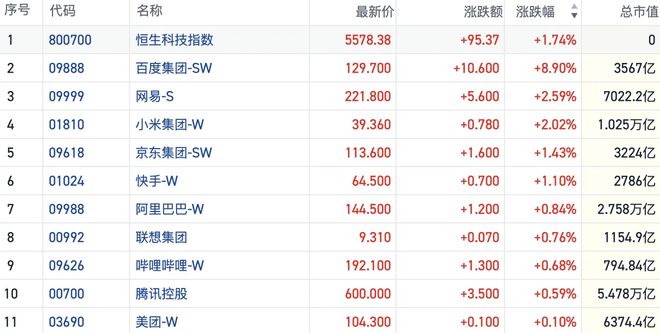
Group 1 - The core viewpoint of the article highlights a strong performance in the Hong Kong stock market, driven by large technology stocks, with the Hang Seng Index and the Hang Seng Tech Index rising by 0.86% and 1.74% respectively [1] - Major tech stocks such as Baidu, NetEase, and Xiaomi saw significant gains, with Baidu increasing by nearly 9% and NetEase and Xiaomi rising over 2% [1][2] - The AI sector is experiencing renewed interest, with semiconductor and AI infrastructure stocks showing strength, and various AI application stocks also rising [2][4] Group 2 - The overall market sentiment remains mixed, with some sectors like nuclear power, aviation, and construction materials experiencing declines, while resource stocks such as oil and aluminum rebounded [3][4] - Short selling activity remains low, with total short selling amounting to 22.754 billion HKD, representing 11.39% of the Hang Seng Index's trading volume [4] - The market is witnessing a resurgence of interest in AI technology, with Meta's acquisition of AI company Manus for potentially billions of dollars being a significant event [4][6] Group 3 - The A-share market is also performing well, with the Shanghai Composite Index achieving ten consecutive days of gains, driven by similar technology trends [6][8] - Analysts predict that the Hong Kong stock market will benefit from a combination of new economic growth and high dividend yields, with expectations of continued net inflows from foreign and southbound capital [8] - The overall outlook for the Hong Kong market suggests a potential upward trend in both earnings and valuations, supported by favorable policies and economic recovery [8]




元旦临近休闲玩乐消费迎旺季 美团:上海、北京、深圳、成都、杭州交易规模位居TOP5
Xin Lang Cai Jing· 2025-12-30 12:57
Core Insights - The service consumption sector is experiencing a significant surge as the New Year approaches, driven by festive atmosphere and winter weather conditions [1][2][5] Group 1: Trends in Leisure Consumption - The demand for leisure experiences among young consumers is evolving, with a notable increase in searches for services like hairdressing and beauty treatments, which saw a doubling in search volume [1] - KTV bookings have increased significantly, with a year-on-year growth of over 44% in transaction volume as new entertainment formats like AI-assisted singing gain popularity [1][7] - The bathing industry is projected to see substantial growth by 2025, with a 6-fold increase in searches for 24-hour bathing centers noted in the week leading up to New Year [2] Group 2: Regional Highlights - Major cities such as Shanghai, Beijing, and Shenzhen are leading in leisure transaction volumes, with a notable increase in the popularity of bathing centers during the winter season [1][2] - Harbin has emerged as a standout city, with a transaction volume growth rate exceeding 211%, the highest in the country, driven by winter tourism and local attractions [2][3] Group 3: Consumer Behavior and Preferences - Young consumers, particularly those aged 20-35, are increasingly investing in beauty services, with a nearly 100% year-on-year increase in income for beauty professionals during the holiday season [5] - The KTV industry has transformed into a comprehensive entertainment space, appealing to younger audiences, especially those born after 2000, who have shown a transaction growth rate of over 57% [7] Group 4: Company Initiatives - To capitalize on the holiday consumption trend, the company has launched various promotional activities aimed at enhancing consumer engagement and boosting city-wide consumption [10]
美团闪购:元旦前一周平板电脑销量增超2倍,智能手表销量涨6倍
Xin Jing Bao· 2025-12-30 12:24
Group 1 - The core viewpoint of the article highlights a significant increase in sales of trendy digital products and beverages on Meituan's platform ahead of the New Year, indicating a shift in consumer preferences towards health-conscious and innovative products [1] Group 2 - Smartwatch sales on Meituan increased by 610% year-on-year, while tablet sales grew by over 210% [1] - Various trendy alcoholic beverages gained popularity among young consumers, with craft beer and white wine sales increasing by over 100%, and brandy sales rising by over 230% [1] - The search volume for hot wine sets surged by 212% compared to the previous week, while searches for Xinjiang milk skin beer increased by nearly 30% and fruit-flavored beer searches rose by 38% [1] - New and creative fruit and flower products became popular among young people for New Year celebrations, with related product searches on Meituan increasing 13 times compared to the previous week [1]
26年港股策略展望:日积跬步,水涨船高
GF SECURITIES· 2025-12-30 10:43
Core Insights - The current rise in Hong Kong stocks is supported by fundamentals, with signs of structural recovery in profitability starting from the second half of 2024, driven by stabilization in both domestic and external demand and macroeconomic policies [3][10] - The growth in high-end manufacturing and technology is transitioning from "single-point breakthroughs" to "multi-point explosions," with Hong Kong stocks shifting focus from traditional economic cycles to hard technology sectors like AI applications, new energy, and semiconductors [3][9] - The Hang Seng Index's earnings growth is expected to rebound to 10.8% in 2026, indicating a potential shift from liquidity-driven growth to a combination of profitability and liquidity support [3][11] Group 1: Fundamental Support for Hong Kong Stocks - Historical correlation exists between the Hang Seng Index's performance and earnings growth, with the current strength primarily driven by net inflows from southbound funds and foreign capital [10] - The structural recovery in profitability is evident, particularly in sectors less affected by traditional economic pressures, with emerging industries like pharmaceuticals and technology showing significant growth [20][19] - The impact of external factors, such as the recent food delivery subsidy war, has temporarily disrupted earnings expectations but is not indicative of a fundamental downturn [10][11] Group 2: Market Sentiment and Liquidity - Current market sentiment may have adjusted, and a potential liquidity improvement could lead to a new upward trend in Hong Kong stocks [3][31] - The Hang Seng Technology Index has experienced volatility due to external liquidity pressures, but the peak of lock-up share releases has passed, reducing market sentiment pressure [33][32] - Factors such as the potential for a dovish shift in the next Federal Reserve chair's policies and the stabilization of the Hong Kong dollar could alleviate liquidity constraints [50][52] Group 3: Sector Allocation Strategies - Focus on growth sectors, particularly those related to AI applications, energy storage, and innovative pharmaceuticals, as they are expected to catalyze earnings improvements [3][9] - Economic cycle-related assets should be monitored for potential supply-demand mismatches, particularly in chemicals and metals [3][19] - Stable value assets may still provide absolute returns, but the cost-effectiveness may decline compared to previous years, necessitating a focus on sectors with supply barriers and pricing power [3][30]
疯狂烧钱之后,2026年电商行业打响“全面战争”丨力见
2 1 Shi Ji Jing Ji Bao Dao· 2025-12-30 10:24
Core Insights - The essence of the e-commerce business is "traffic," and the competitive landscape is evolving with significant investments in subsidies and strategic maneuvers by major players like JD.com, Alibaba, and Meituan [1][6] Group 1: Market Dynamics - In 2025, the competition in the e-commerce sector intensified with JD.com launching a major offensive in the food delivery market, disrupting the status quo [1] - The financial data indicates that the increased subsidies for food delivery services have led to significant losses for platforms, with Meituan, Alibaba, and JD.com collectively spending an additional 614 billion yuan on sales and marketing in Q3 2025 [1] - The competition is no longer a zero-sum game; it has transformed into a "full-scale war" involving traditional giants and emerging platforms like Douyin and Xiaohongshu, all seeking differentiated advantages [2] Group 2: Strategic Moves - JD.com and Alibaba's actions are seen as strategic defenses against Meituan's encroachment into the e-commerce space, with both companies aiming to prevent Meituan from gaining a foothold in physical goods transactions [1][3] - Alibaba's recent restructuring, which includes integrating Ele.me into its broader e-commerce strategy, highlights its intent to leverage Ele.me's local supply and delivery capabilities to expand into various consumer goods [3][5] - The rapid expansion of Alibaba's instant retail business, which reported a 60% year-on-year revenue increase to 229.06 billion yuan, underscores the importance of this segment for the company's future growth [5] Group 3: Industry Trends - The industry is witnessing a shift from a focus on scale to efficiency and resilience in supply chains, driven by changing consumer habits and technological advancements [2][8] - The competition is characterized by a blend of opportunities and challenges, with companies needing to adapt to a more refined and localized operational approach [2][8] - The ongoing "delivery war" reflects a complex interplay of market forces, with platforms like Xiaohongshu also attempting to enter the local lifestyle market despite the dominance of established players [7]
疯狂烧钱之后,2026年电商行业打响“全面战争”
2 1 Shi Ji Jing Ji Bao Dao· 2025-12-30 10:12
格局未定。 电商生意的本质是"流量"。 2025年,当人们以为电商巨头的格局已定时,刘强东在2月打响了外卖大战的第一枪,市场的平静彻底被打破。凭借数百亿补贴,从美团的主 营业务"外卖"下手,京东和阿里巴巴撕开了一道流量的口子。 规律总是相似的,从千团大战到社区团购再到生鲜配送到家、特价电商……每一个火起来的电商形态背后,都是阿里巴巴、京东、拼多多、美 团等头部玩家们的身影。随之而来的是熟悉的烧钱补贴、薅羊毛的用户、被"卷"下场的对手以及监管部门发声。 从财务数据来看,外卖业务补贴给平台带来了亏损,公司整体盈利水平下降。2025年三季报显示,仅在第三季度,美团、阿里、京东三家平台 的销售和市场费用就分别增加了163亿元、111亿元和340亿元,一共多花了614亿,而增加的原因多与外卖业务补贴有关。 除了美团属于被动"卷"入之外,京东和阿里巴巴的举动意在战略性防御,他们并不希望美团借闪购杀入到电商实物交易领域。只不过,在经历 了流量红利、直播爆发、价格竞争等多个发展阶段后,2025年的电商版图,正呈现出更加复杂而多维的图景。 技术、消费习惯、供应链、全球化等因素相互交织,构成了行业发展的全新切面。因此,这场竞争不 ...
北水动向|北水成交净卖出38.45亿 芯片及机器人概念获加仓 盈富基金(02800)遭内资抛售
智通财经网· 2025-12-30 09:58
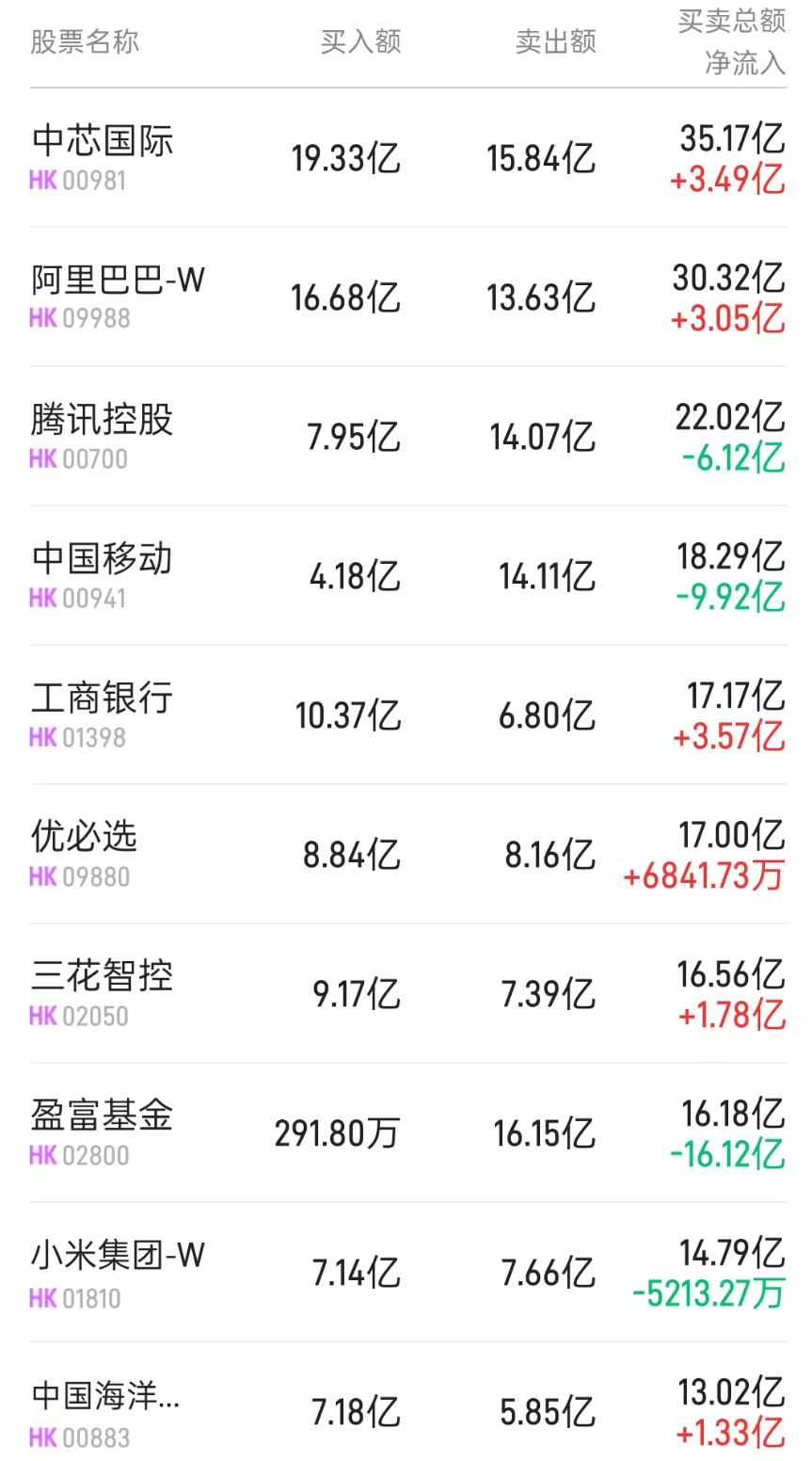
Core Viewpoint - The Hong Kong stock market experienced significant net selling from northbound capital, totaling HKD 38.45 billion, with notable net selling in major stocks like Tencent and China Mobile, while stocks like SMIC and CNOOC saw net buying [1][5]. Group 1: Northbound Capital Flow - Northbound capital had a net selling of HKD 38.45 billion on December 30, with HKD 13.27 billion from the Shanghai Stock Connect and HKD 25.18 billion from the Shenzhen Stock Connect [1]. - The stocks with the highest net buying included SMIC (00981), CNOOC (00883), and ICBC (01398) [1]. - The stocks with the highest net selling included the Tracker Fund of Hong Kong (02800), Tencent (00700), and China Mobile (00941) [1]. Group 2: Individual Stock Performance - SMIC saw a net inflow of HKD 3.49 billion, with a total transaction volume of HKD 35.17 billion [2]. - CNOOC received a net buying of HKD 4.6 billion, with analysts noting a potential stabilization in oil prices due to seasonal demand and OPEC+ production adjustments [5]. - ICBC had a net inflow of HKD 3.56 billion, supported by expectations of stable credit growth in 2026 [5]. Group 3: Sector Trends - The semiconductor sector is gaining attention, with SMIC and Hua Hong Semiconductor receiving significant net buying, driven by positive market sentiment and government support [4]. - The robotics sector is also attracting investment, with stocks like Sihai Intelligent Control and UBTECH Robotics seeing net inflows, amid expectations of upcoming projects in North America [5]. - The technology sector showed mixed results, with Meituan (03690) experiencing net buying, while Alibaba (09988) and Tencent faced substantial net selling [6]. Group 4: Market Sentiment - The market sentiment remains cautious, with analysts suggesting that while there may be short-term opportunities, the overall environment is still under pressure, particularly for the Hong Kong market [7]. - The Tracker Fund of Hong Kong faced significant net selling, indicating a potential lack of confidence in the broader market [7].


新年前夕“悦己”消费升温 美团闪购:精酿啤酒销量翻倍,智能手表销量涨6倍
Zheng Quan Shi Bao Wang· 2025-12-30 09:47
Core Insights - Meituan Flash Sales reported a surge in sales of products catering to young consumers' desires for self-indulgence and ritualistic experiences as the New Year approaches [1] Group 1: Alcohol Consumption - Alcohol consumption saw significant growth, with craft beer and white wine sales both increasing by over 100% year-on-year [1] - Brandy sales experienced a remarkable increase of 230% [1] - Fruit-flavored beer sales rose by 70% [1] Group 2: Digital Products - Demand for digital products surged, with smart watch sales increasing by 610% year-on-year [1] - Tablet computer sales also saw a substantial growth of 210% [1]