XPENG-W(09868)

Search documents
小鹏汽车发布消息称,新款小鹏P7+和G7正式开启一车双能时代,1月8日将在中国正式上市,1月9日正式在欧洲上市。
Jin Rong Jie· 2026-01-04 01:50
小鹏汽车发布消息称,新款小鹏P7+和G7正式开启一车双能时代,1月8日将在中国正式上市,1月9日正 式在欧洲上市。 ...
小鹏汽车:1月8日新款小鹏P7+和G7将在中国正式上市
Di Yi Cai Jing· 2026-01-04 01:10
Core Viewpoint - Xiaopeng Motors announces the launch of the new P7+ and G7 models, marking the beginning of a dual-energy era for the company, with a formal release in China on January 8 and in Europe on January 9 [1] Group 1 - Xiaopeng Motors is set to officially launch the new P7+ and G7 models in China on January 8 [1] - The European launch of the new models is scheduled for January 9 [1]
智驾的2025:辞旧迎新的一年
自动驾驶之心· 2026-01-04 01:04
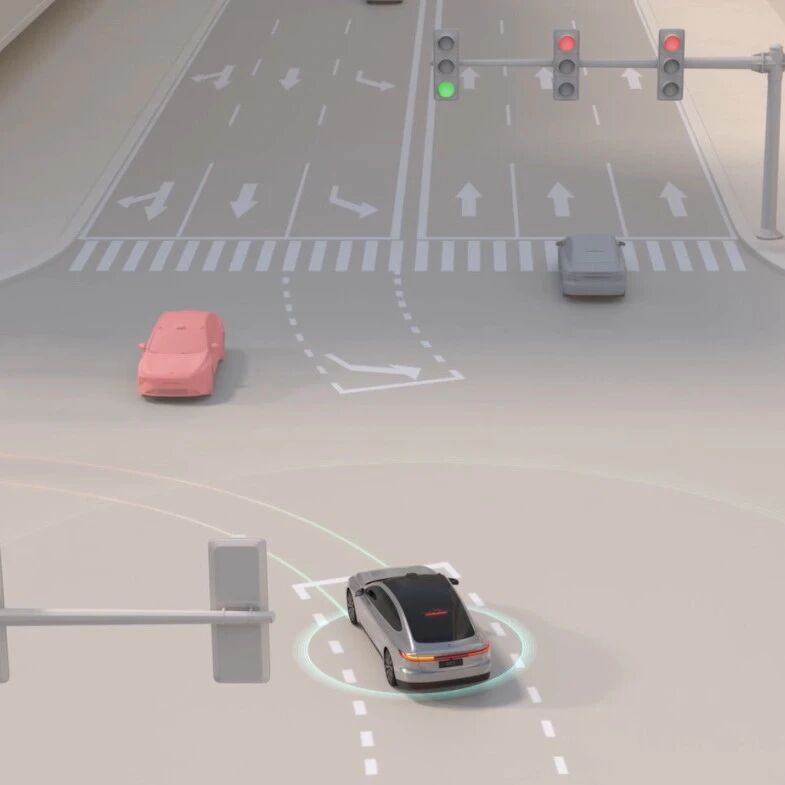
Core Viewpoint - The article discusses the evolution of the autonomous driving industry in 2025, highlighting the dual focus on technology proliferation and technical challenges, with traditional automakers pushing for accessibility and new players striving for technological advancements [4][5]. Group 1: Industry Trends - In 2025, traditional automakers like BYD, Geely, and Chery are leading the charge in making autonomous driving technology more accessible by integrating mid-level highway NOA features into vehicles priced over 100,000 yuan [4]. - New entrants and leading autonomous driving suppliers are focused on pushing the limits of technology, adhering to a model of annual technological iteration [4][5]. - The industry is witnessing a bifurcation, with one camp focused on accessibility and the other on technological challenges, particularly in the realm of algorithm development [4]. Group 2: Technological Advancements - The transition from "passive perception" to "active cognition" is marked by the introduction of world models, which represent a significant paradigm shift in autonomous driving technology [5][6]. - 2025 is characterized as a year of significant technological transition, with the widespread adoption of end-to-end systems and the emergence of world models and VLA (Vision-Language-Action) technologies [6][9]. - NIO is highlighted as a pioneer in the world model space, having launched its world model in 2024, transitioning from "perception-driven" to "cognition-driven" systems [5][6]. Group 3: Data Infrastructure and Chip Development - The importance of data infrastructure is emphasized, with companies like NIO benefiting from early investments in data collection and model training capabilities [7][8]. - The year 2025 is noted as a pivotal year for integrated hardware and software solutions, with companies like NIO and XPeng achieving self-developed chip integration [7][8]. - The article warns of the risks associated with outsourced chip development, contrasting it with NIO's genuine self-development efforts, which involve significant technical team investments [8]. Group 4: Regulatory and Market Dynamics - The issuance of L3 licenses is seen as a significant step towards the next phase of autonomous driving, indicating a shift from L2+ mass production to L3 and L4 capabilities [8][9]. - While traditional automakers have secured initial L3 licenses, their capabilities are questioned, suggesting that true advancements will come from new players and those with strong model capabilities [9][10]. - The ultimate value of autonomous driving technology is framed around enhancing driver convenience and significantly reducing traffic accidents, with a focus on safety as a primary goal [9].


瞄准5万亿美元市场:跨界布局机器人,时代的新共识
3 6 Ke· 2026-01-04 00:26
Core Insights - The Chinese robotics industry is poised for significant growth by the end of 2025, with humanoid robots transitioning from experimental concepts to practical applications, achieving over 50% growth and indicating a trillion-yuan industry on the horizon [1] - The entry of major players from various sectors such as automotive, electronics, and the internet into the robotics field marks a shift from niche exploration to widespread competition, creating a unique trend of "cross-industry integration" [1] Group 1: Market Dynamics - In the first eight months of 2025, the primary market financing in the robotics sector reached 38.624 billion yuan, 1.8 times the total for 2024, highlighting the blue ocean effect attracting significant investment [2] - The global industrial robot sales are projected to reach 542,000 units in 2024, with China accounting for 295,000 units, representing 54% of the global market [2] - By 2025, the Chinese robotics market is expected to exceed 150 billion yuan, capturing 35% of the global market share, with predictions suggesting the market for embodied intelligence could reach 400 billion yuan by 2030 and over a trillion yuan by 2035 [2] Group 2: Industry Trends - At least 20 automotive companies have entered the humanoid robot market by the end of 2025, with notable developments including Chery's humanoid robot Mocha and BYD's production line for core robot components [3] - The automotive industry's supply chain overlaps significantly with robotics, with a 60% compatibility rate, driving car manufacturers to invest in robotics as they view vehicles as "mobile intelligent robots" [3] - Home appliance manufacturers are transitioning from traditional manufacturing to smart ecosystems, with companies like Midea establishing dedicated innovation centers for humanoid robots and developing comprehensive R&D systems [7] Group 3: Strategic Shifts - The automotive sector is seen as a key player in the transition to robotics, with companies like Geely planning to invest 5 billion yuan over three years to develop critical components and establish an ecosystem covering all robotics applications [6] - Internet giants are leveraging their technological and capital advantages to enter the robotics space, with ByteDance and Huawei making significant investments in developing advanced robotic models and systems [8] - The competition in the robotics sector is viewed as a strategic restructuring driven by technological advancements, with companies aiming to activate existing technological capabilities and build new ecosystems [9] Group 4: Challenges Ahead - Despite the enthusiasm for entering the robotics market, cross-industry players face challenges such as adapting core competencies to the robotics field, where technology paths are still being defined [10] - The high precision and stability required for industrial applications pose significant challenges for companies transitioning from other sectors, as they may struggle to meet the diverse demands of various operational environments [11] - Cost remains a critical issue, with companies like BYD and GAC aiming to reduce the production cost of humanoid robots to below 200,000 yuan, which requires overcoming substantial supply chain and process optimization challenges [11]





新造车2025年复盘:零跑登顶,小鹏逆袭,理想遇挫
创业邦· 2026-01-03 10:22
Core Viewpoint - The 2025 sales data reveals a significant shift in the Chinese electric vehicle (EV) market, with new players like Leap Motor, Huawei's Homologous Intelligent Driving, and Xiaomi emerging as strong competitors against established brands like BYD and Geely [6][12]. Group 1: 2025 Sales Performance - BYD led the market with 4.6024 million units sold, achieving 100% of its target [7]. - Geely surpassed 3 million units, reaching 3.0246 million with a 39% year-on-year growth [7]. - Leap Motor emerged as the top new force with nearly 600,000 units sold, marking a 103% increase [8][12]. - Homologous Intelligent Driving ranked second among new forces with 589,100 units delivered, primarily driven by the Wanjie brand [8]. - Xiaomi entered the top five with over 400,000 units sold, leveraging its ecosystem and brand loyalty [17]. Group 2: Competitive Landscape - The competition among new forces has intensified, with Leap Motor, Homologous Intelligent Driving, and Xiaomi leading the charge, while traditional players like BYD and Geely maintain their dominance [10][12]. - The market is shifting from a focus on capturing the fuel vehicle market to a more competitive landscape where companies vie for each other's market share [10]. - The new forces are increasingly focusing on systemic capabilities rather than just product features or pricing [18]. Group 3: Strategic Insights - Leap Motor's success is attributed to its cost control and high component sharing rate, which allows it to offer competitive pricing while maintaining quality [15][18]. - Xiaomi's approach combines its consumer electronics experience with automotive production, achieving a gross margin of 26.4% in Q3 2025 [17]. - The high-end players like Ideal, Homologous Intelligent Driving, and NIO face challenges as the market shifts towards technology competition rather than just configuration [19][23]. Group 4: Future Outlook - The penetration rate of new energy vehicles is expected to exceed 60% in 2026, leading to intensified competition [10]. - Companies are setting ambitious sales targets for 2026, with Homologous Intelligent Driving aiming for 1 to 1.3 million units and Leap Motor targeting 1 million [10]. - The competition will evolve into a "value war," focusing on better battery performance, intelligent features, and overall vehicle quality [29][30].




【环球财经】中国插电式车型登顶以色列2025年汽车销量榜
Xin Hua Cai Jing· 2026-01-03 02:47
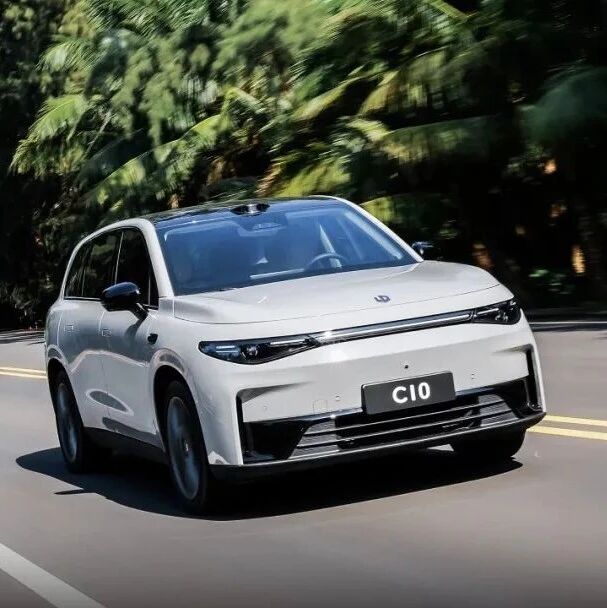
Core Insights - The Chery-produced plug-in hybrid compact crossover SUV, Jetour 7, is projected to be the best-selling vehicle in Israel for 2025, with total sales of 13,166 units, surpassing all gasoline, hybrid, and electric vehicle models [1] Group 1: Market Performance - Chinese automotive brands dominated the Israeli market in 2025, selling a total of 101,346 vehicles, significantly outpacing Korean brands, which sold 52,468 units, and Japanese brands, which sold 41,120 units [1] - In the pure electric vehicle segment, Chinese brands captured a remarkable 79.2% market share, with total sales of 46,075 units [1] Group 2: Leading Brands - BYD led the sales in the pure electric vehicle category with 8,134 units across 8 models, followed by Chery with 6,620 units and Xpeng with 6,114 units [1] - Other Chinese automotive companies, including Geely, Lynk & Co, Dongfeng, and Deep Blue, also achieved strong sales performance in the Israeli market [1]
小鹏汽车2025年全年交付量达42.94万台,同比增126%
Xin Jing Bao· 2026-01-02 13:43
Core Insights - Xiaopeng Motors reported a total delivery of 429,445 new vehicles in 2025, marking a year-on-year increase of 126% [2] - In December 2025, the company delivered 37,508 new vehicles, achieving both month-on-month and year-on-year growth [2] - The total carbon reduction from the vehicles delivered in 2025 is estimated to exceed 6.61 million tons, equivalent to the carbon absorption of 110 million medium-sized trees over a decade [2]
智通港股解盘 | 科技引领港股开门红 商业火箭第一股申请上市推波助澜
Zhi Tong Cai Jing· 2026-01-02 12:56
Market Overview - The Hong Kong stock market opened positively in 2026, with the index breaking through the 26,000-point mark and closing up by 2.76% [1] - The offshore RMB strengthened, surpassing 6.97 against the USD, reaching a new high since May 2023 [1] - Aluminum prices hit $3,000, the highest since 2022, driven by supply tightening and long-term demand expectations [1] Technology Sector - Baidu announced that Kunlun Chip has submitted a listing application to the Hong Kong Stock Exchange, aiming for a valuation between $3 billion and $11 billion for Baidu's 59% stake [2] - Baidu's stock rose over 9%, positively impacting other tech giants like Alibaba and Tencent, which also saw gains of over 4% [2] Semiconductor Industry - Wall Street's first GPU stock, Birun Technology, saw a subscription rate of 1,583.50 times, with an opening price of HKD 35.7, reflecting an 82% premium [3] - Semiconductor stocks like TSMC and Hua Hong Semiconductor also experienced gains, with Hua Hong's stock rising over 9% [3] Aerospace Sector - The commercial aerospace sector saw a surge, with Blue Arrow Aerospace's IPO application accepted, leading to a stock price increase of over 20% for Goldwind Technology [4] Satellite Industry - SpaceX announced a reduction in the orbital height of thousands of Starlink satellites to mitigate collision risks, leading to significant stock increases for Chinese satellite companies [5] - Companies like China Technology Group and Asia Pacific Satellite saw stock increases of nearly 43% and over 34%, respectively [5] Renewable Energy - Skyworth Group's stock rose over 10% following the signing of a 10MW distributed solar power project in Italy, marking significant progress in the European market [6] - The Chinese government is enhancing regulatory measures in the solar industry to ensure fair competition and sustainable development [6] Consumer Electronics - The home appliance sector saw a boost, with major companies like Midea and Haier rising over 4% due to positive market sentiment [7] Automotive Industry - Chinese brands captured a record 12.8% market share in the European electric vehicle market, with significant sales growth reported by companies like BYD and Geely [8] - New energy vehicle sales in Europe doubled compared to the previous year, indicating strong demand for Chinese automotive brands [8] Aluminum Industry - China Aluminum's stock is expected to benefit from rising aluminum prices, which have reached a new high, with a projected revenue increase due to strong demand from the electric vehicle and solar sectors [10][11] - The company reported a 90.31% year-on-year increase in net profit for Q3 2025, driven by cost control and resource optimization [11]


小鹏汽车2025年全年总交付量达42.94万辆 较前一年增长126%
Xin Lang Cai Jing· 2026-01-02 07:09
Core Viewpoint - Xpeng Motors reported a total vehicle delivery of 37,508 smart electric vehicles in December 2025, representing a year-on-year growth of 2%. The total annual delivery for 2025 reached 429,445 vehicles, an increase of 126% compared to the previous year [1] Group 1: Delivery Performance - In December 2025, Xpeng Motors delivered 37,508 smart electric vehicles, marking a 2% increase year-on-year [1] - The total vehicle delivery for the entire year of 2025 was 429,445 units, which is a 126% growth from the previous year [1] - Xpeng Motors delivered 45,008 smart electric vehicles in overseas markets in 2025, showing a 96% year-on-year increase [1] Group 2: Environmental Impact - The vehicles delivered by Xpeng Motors in 2025 are expected to reduce lifecycle greenhouse gas emissions by over 6.61 million tons, equivalent to the carbon absorption of 110 million trees over ten years [1] Group 3: Infrastructure Expansion - In 2025, Xpeng Motors accelerated the expansion of its self-operated charging network, adding over 1,100 charging stations, bringing the total number of charging stations to 3,000 [1] - By the end of 2025, Xpeng Motors expanded its global presence to 60 countries and regions [1]
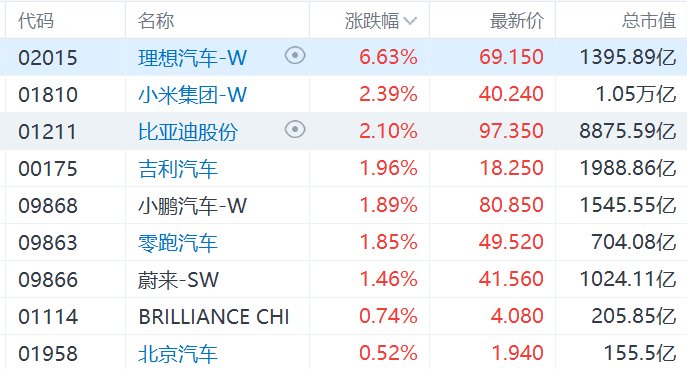
港股新能源汽车股集体上涨,理想汽车涨超6%领涨
Xin Lang Cai Jing· 2026-01-02 03:04
Group 1 - The core viewpoint of the article highlights a collective rise in the Hong Kong stock market for new energy vehicle stocks, with Li Auto leading the gains at over 6% [1] Group 2 - Li Auto (02015) increased by 6.63%, reaching a latest price of 69.150 with a total market capitalization of 139.89 billion [2] - Xiaomi Group (01810) rose by 2.39%, with a latest price of 40.240 and a market cap of 1.05 trillion [2] - BYD Company (01211) saw a 2.10% increase, with a latest price of 97.350 and a market cap of 887.56 billion [2] - Geely Automobile (00175) increased by 1.96%, with a latest price of 18.250 and a market cap of 198.89 billion [2] - Xpeng Motors (09868) rose by 1.89%, with a latest price of 80.850 and a market cap of 154.56 billion [2] - Leap Motor (09863) increased by 1.85%, with a latest price of 49.520 and a market cap of 70.41 billion [2] - NIO Inc. (09866) saw a 1.46% increase, with a latest price of 41.560 and a market cap of 102.41 billion [2] - Brilliance China Automotive (01114) rose by 0.74%, with a latest price of 4.080 and a market cap of 20.59 billion [2] - Beijing Automotive (01958) increased by 0.52%, with a latest price of 1.940 and a market cap of 1.56 billion [2] - The formation of a MACD golden cross signal indicates a positive trend for these stocks [1]