SCSF(600779)
Search documents
白酒板块9月5日涨0.81%,水井坊领涨,主力资金净流出7746.05万元
Zheng Xing Xing Ye Ri Bao· 2025-09-05 08:56
Group 1 - The liquor sector experienced a rise of 0.81% on September 5, with Shuijingfang leading the gains [1] - The Shanghai Composite Index closed at 3812.51, up 1.24%, while the Shenzhen Component Index closed at 12590.56, up 3.89% [1] - Key stocks in the liquor sector showed the following closing prices and percentage changes: Shuijingfang at 46.39 (+1.42%), Shanxi Fenjiu at 200.03 (+1.40%), and Luzhou Laojiao at 135.90 (+1.35%) [1] Group 2 - The liquor sector saw a net outflow of 77.46 million yuan from institutional investors, while retail investors experienced a net outflow of 67.44 million yuan [2] - Notable net inflows from speculative funds included Wuliangye with 12.8 million yuan, while it faced a net outflow of 101 million yuan from retail investors [2] - Other stocks like Shuijingfang and Luzhou Laojiao also experienced mixed fund flows, with Shuijingfang seeing a net inflow of 1.36 million yuan from institutional investors [2]
行业“深水区”:除了控量稳价,酒企还能做什么?|财报解读②
Sou Hu Cai Jing· 2025-09-03 16:05
Core Insights - The overall performance of the liquor industry is under pressure, with 20 listed liquor companies reporting a total revenue of 241.28 billion yuan in the first half of 2025, a slight decrease of 1.59% year-on-year, and net profits also facing challenges [1] - The industry is experiencing a significant divergence, with only 6 companies achieving both revenue and net profit growth, and only 4 companies maintaining positive revenue growth in the second quarter [1][2] - Major liquor companies are proactively adjusting strategies and innovating to strengthen core competitiveness and market share amid the industry's complex environment [1][4] Industry Performance - The liquor industry is currently in a "deep water zone" characterized by reduced volume, falling prices, and high inventory levels, leading to a cautious approach among companies [1][2] - Companies like Moutai and Gujing Gongjiu have acknowledged the industry's deep adjustment and the need for structural optimization to navigate the current cycle [1][2] Strategic Adjustments - "Proactive deceleration, controlling volume and stabilizing prices" has become a common strategy among liquor companies, with a focus on stability in their 2025 targets [2][4] - Nine companies have reduced contract liabilities to alleviate pressure on traditional channels, indicating a flexible market operation strategy [4] Inventory Management - The current "suspension of sales" trend is a significant market adjustment tool, with a broader product coverage and increased participation from both major and regional brands [5][7] - As of June 2025, the total inventory of 20 listed liquor companies reached approximately 170 billion yuan, reflecting a growing trend [7] Low-Alcohol Trend - The low-alcohol trend is gaining momentum, with companies like Wuliangye and Gujing Gongjiu launching new low-alcohol products to meet changing consumer preferences [8][10] - The low-alcohol market is projected to grow at a compound annual growth rate of 30%, with expectations to exceed 74 billion yuan by 2025 [11] Cross-Industry Innovations - Liquor companies are actively pursuing cross-industry innovations to expand their market reach and appeal to diverse consumer groups [14][18] - Collaborations with retail giants and the introduction of new product lines are strategies employed to enhance market penetration and operational efficiency [15][20]
高度酒库存积压,低度酒预售秒空!白酒企业要靠“降度”突围?
Sou Hu Cai Jing· 2025-09-03 13:40
Core Insights - The keyword "lower degree" has become the most popular term in the Chinese liquor industry for 2025, indicating a significant shift towards low-alcohol products [2][3] Industry Trends - The low-alcohol liquor market in China is rapidly expanding, with market size projected to grow from approximately 20 billion yuan in 2020 to 57 billion yuan by 2024, and expected to exceed 74.2 billion yuan in 2025, reflecting a compound annual growth rate (CAGR) of 30% [4] - The shift towards low-alcohol products is driven by generational changes in consumer preferences, particularly among younger consumers born in the 1990s and 2000s, who show a strong preference for low-alcohol beverages over traditional high-alcohol options [5][6] Company Strategies - Major liquor companies are actively launching low-alcohol products to capture the young consumer market. For instance, Wuliangye's 29-degree "Yi Jian Qing Xin" product has gained significant attention and sold out quickly during a live-stream event [3][7] - Luzhou Laojiao has developed a 28-degree version of its popular Guojiao 1573, while Yanghe and other companies are also introducing various low-alcohol products to diversify their offerings [11][12] - Moutai is expanding into the low-alcohol market with its Yumi brand, launching multiple new products, including a 33.8-degree liquor [6] Market Dynamics - The potential market for young drinkers in China is estimated at 490 million, supporting a market size of 400 billion yuan, which presents a significant opportunity for low-alcohol liquor [15] - Despite the promising growth, the low-alcohol market faces challenges such as product homogenization and the need for differentiation among brands [18] - Companies must innovate not only in product offerings but also in marketing strategies to cultivate a suitable consumption environment for low-alcohol beverages [20]
白酒板块9月3日跌0.98%,伊力特领跌,主力资金净流出7.26亿元
Zheng Xing Xing Ye Ri Bao· 2025-09-03 08:40
Market Overview - The liquor sector experienced a decline of 0.98% on September 3, with Yili Te leading the drop [1] - The Shanghai Composite Index closed at 3813.56, down 1.16%, while the Shenzhen Component Index closed at 12472.0, down 0.65% [1] Individual Stock Performance - Key stocks in the liquor sector showed varied performance, with the following notable changes: - Shede Liquor: Closed at 67.25, up 0.13% [1] - Kweichow Moutai: Closed at 1480.55, down 0.72% with a trading volume of 45,000 shares and a transaction value of 6.656 billion [1] - Wuliangye: Closed at 126.62, down 1.51% with a trading volume of 302,900 shares and a transaction value of 3.883 billion [1] - Yili Te: Closed at 15.56, down 3.35% with a trading volume of 78,800 shares and a transaction value of 1.25 billion [2] Capital Flow Analysis - The liquor sector saw a net outflow of 726 million from institutional investors, while retail investors contributed a net inflow of 479 million [2] - The following stocks had significant capital flow: - Shede Liquor: Net inflow from institutional investors was 59.79 million, while retail investors had a net outflow of 17.44 million [3] - Kweichow Moutai: Experienced a net outflow of 14 million from institutional investors [3] - Yili Te: Had a net outflow of 2.68 million from institutional investors [3]
名酒保住增长,白酒业即将穿越周期?
2 1 Shi Ji Jing Ji Bao Dao· 2025-09-03 08:05
Core Viewpoint - The Chinese liquor industry, particularly the baijiu sector, is currently experiencing a downturn, with many companies reporting declining performance. However, some analysts believe this could signal a bottoming out and potential recovery in the future [1][12]. Industry Performance - In the first half of the year, 15 out of 21 listed baijiu companies reported declining performance, with only 6 companies, including Kweichow Moutai and Wuliangye, showing positive growth [1][4]. - The overall industry is facing significant challenges, with many companies returning to average performance levels after years of high growth [4][11]. Company-Specific Insights - Leading companies like Kweichow Moutai and Wuliangye continue to show resilience, maintaining their positions despite a slowdown in growth [5][9]. - Companies such as Yingjia Gongjiu and Jiuzi Jiu have reported significant declines, with Yingjia Gongjiu's revenue dropping by 24% and net profit by 35% in Q2 [2][8]. - The performance of Shanxi Fenjiu has slowed, with growth rates returning to single digits after years of double-digit increases [2][6]. Market Dynamics - The competitive landscape is shifting, with a clear trend of market share concentrating among top brands, while smaller and regional brands struggle to maintain their positions [10][11]. - The number of regulated baijiu companies has decreased, indicating a consolidation trend within the industry [11]. Future Outlook - Analysts suggest that the second half of the year may see a potential rebound, particularly during the Mid-Autumn Festival and National Day, which could provide a window for price stabilization and recovery [12][13]. - Despite recent stock price increases, the overall sentiment remains cautious, with many expecting that a full recovery may take until late 2025 or beyond [13][14].
A股白酒股普跌,酒鬼酒、老白干酒领跌
Ge Long Hui A P P· 2025-09-03 06:14
Group 1 - The A-share market saw a broad decline in liquor stocks, with notable drops in companies such as Jiu Gui Jiu, Lao Bai Gan Jiu, Yi Li Te, Jin Zhong Zi Jiu, Shui Jing Fang, and Gu Jing Gong Jiu, all falling over 2% [1] - Specific stock performance includes Jiu Gui Jiu down 2.79% with a market cap of 21.2 billion and a year-to-date increase of 18.57%, Lao Bai Gan Jiu down 2.72% with a market cap of 16.4 billion and a year-to-date decrease of 11.80%, and Yi Li Te down 2.48% with a market cap of 7.429 billion and a year-to-date decrease of 6.18% [2] - Other companies experiencing declines include Jin Zhong Zi Jiu down 2.22%, Shui Jing Fang down 2.16%, and Gu Jing Gong Jiu down 2.02%, with respective market caps of 7.229 billion, 22.1 billion, and 88.1 billion [2] Group 2 - The overall trend indicates a challenging environment for the liquor sector, as several companies have reported negative year-to-date performance, with Jin Zhong Zi Jiu showing a significant decline of 17.37% [2] - The market capitalization of major players in the sector varies significantly, with Lu Zhou Lao Jiao leading at 198.1 billion, despite a decline of 1.78% [2] - The performance of these stocks reflects broader market sentiments and potential challenges facing the liquor industry in the current economic climate [1][2]
频推低度酒 白酒企业拥抱“消费驱动”
Bei Jing Shang Bao· 2025-09-02 16:30
Core Insights - The Chinese liquor industry is undergoing a deep adjustment, influenced by changing consumer habits and market competition, leading to a divergence in performance among companies [1][5] - Major companies like Kweichow Moutai and Wuliangye have shown steady growth in revenue and net profit, while many others are experiencing declines [3][5] - The shift towards consumer-driven strategies is crucial for companies to adapt to market demands, with a focus on low-alcohol products to attract younger consumers [1][6][7] Industry Performance - In the first half of the year, the number of large-scale liquor companies decreased to 887, indicating a contraction in the industry [5] - The liquor production volume was 1.9159 million kiloliters, down 5.8% year-on-year, while sales revenue slightly increased by 0.19% to 330.42 billion yuan [5] - Profit for the industry fell by 10.93% to 87.687 billion yuan, reflecting a challenging market environment [5] Market Trends - The average inventory turnover days for the industry increased by 10% to 900 days, with 60% of companies experiencing price inversions, particularly in the 800-1500 yuan price range [3] - The low-end and light bottle liquor segments are performing relatively well, with the main consumer price range being 50-200 yuan [3][4] - High-end liquor products in the 500-800 yuan range are facing significant price inversions due to oversupply and reduced demand for gift and business consumption [4][5] Consumer Behavior - There is a notable shift in consumer purchasing behavior towards online channels, with many consumers preferring to buy liquor online rather than in physical stores [6] - Companies are responding to changing consumer preferences by launching low-alcohol products, with several brands introducing new offerings aimed at younger demographics [6][7] - The trend towards health-conscious consumption is driving the demand for low-alcohol options, which helps companies expand their market reach and adapt to evolving consumer needs [7]
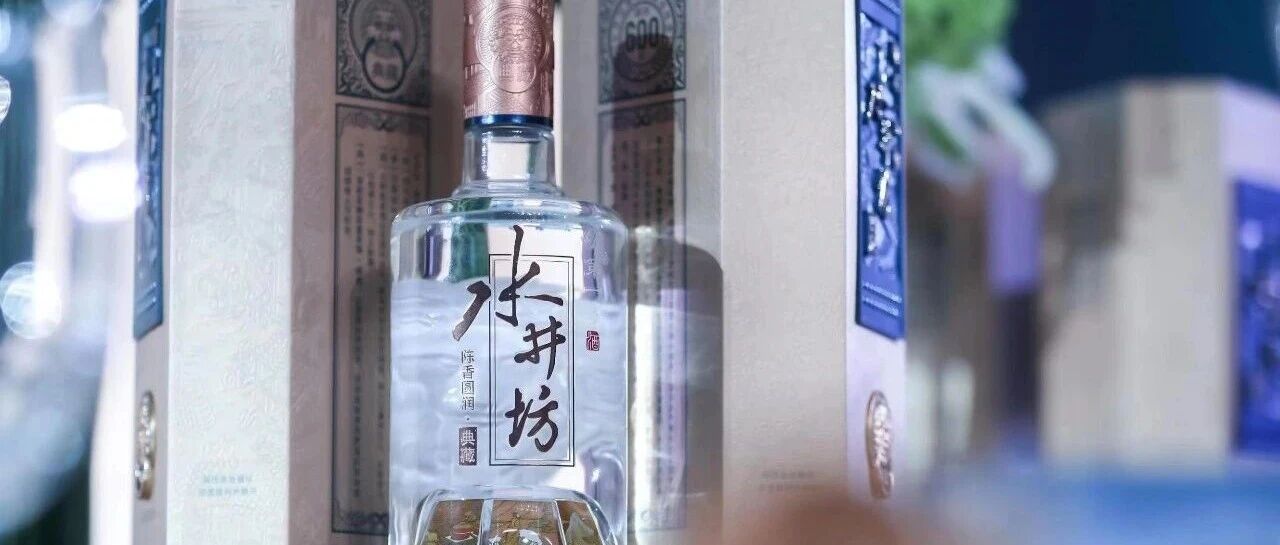
中秋庆团圆,月聚越有福,水井坊携微信礼物开启“聚福”传递
Bei Ke Cai Jing· 2025-09-02 14:13
Core Viewpoint - The article emphasizes the cultural significance of wine in Chinese traditions, particularly during the Mid-Autumn Festival, where it symbolizes reunion and blessings, and highlights the historical roots of this practice dating back 3000 years [1][5][20]. Group 1: Cultural Significance of Wine - Wine has been a traditional medium for conveying blessings and celebrating reunions in Chinese culture, deeply embedded in the Mid-Autumn Festival [1][6][20]. - The historical connection between wine and blessings is illustrated through the evolution of the character "福" (blessing), which is linked to wine offerings in ancient rituals [5][7][20]. - The practice of using wine to celebrate significant life events, such as weddings and festivals, has expanded over time, enriching the cultural connotation of "福酒" (blessing wine) [5][6][10]. Group 2: Water Well Square's Role - Water Well Square, known as "China's first wine workshop," has a legacy of over 600 years in producing wine that embodies the cultural essence of blessings and reunions [10][13][24]. - The brand continues to promote the concept of "聚福" (gathering blessings) through its products, emphasizing quality and cultural heritage in its offerings [13][24]. - The upcoming "聚福节" (Gathering Blessings Festival) on September 19 aims to engage consumers in celebrating the Mid-Autumn Festival through interactive activities and the distribution of blessing cards [2][19][21]. Group 3: Marketing and Consumer Engagement - The "聚福节" will feature both online and offline activities, encouraging consumers to participate in the celebration and share blessings with friends and family [2][19]. - The initiative includes the creation of "聚福街" (Blessing Streets) in nearly 20 cities, providing immersive experiences that connect consumers with the brand's rich history [2][19][20]. - The use of blessing cards during the festival allows consumers to convey various positive wishes, enhancing the emotional connection between the brand and its customers [16][19][21].
2025白酒中报深度变革:浓酱加速萎缩,清香强化引领……
Sou Hu Cai Jing· 2025-09-02 10:40
Core Viewpoint - The Chinese liquor industry is entering a deep adjustment period characterized by policy adjustments, consumption structure transformation, and intensified competition, leading to a slowdown or negative growth in the revenue of listed liquor companies in 2025 [1][5][14] Group 1: Industry Performance - In the first half of 2025, only five out of 17 liquor companies reported revenue growth, with Moutai, Wuliangye, Gujing, Jinhui, and Fenjiu showing positive growth, while 12 companies, including Jiu Gui, experienced negative growth, with Jiu Gui's revenue declining by 43% [2][3] - The overall revenue of the liquor industry is expected to face a slowdown, with a significant number of companies reporting negative profit growth, including a staggering 750.54% decline for Jinzizi [2][3] Group 2: Market Dynamics - The liquor industry is undergoing structural changes, with a notable decline in government and business consumption, leading to a shift in consumer behavior towards lower-priced products [5][10] - The market for strong aroma liquor is projected to grow to over 300 billion yuan by 2025, but with a low compound annual growth rate of only 3%, indicating a challenging environment for regional liquor companies [7][10] Group 3: Product Segmentation - The introduction of new national standards for sauce-flavored liquor is expected to accelerate industry reshuffling, imposing significant cost pressures on small and medium-sized distilleries [8][10] - Clear aroma liquor is gaining traction among younger consumers, with its market share increasing significantly, reflecting a shift in consumer preferences towards lighter and more affordable options [11][12] Group 4: Future Outlook - The liquor industry is anticipated to continue facing challenges, with a projected 7.2% decline in production in the first half of 2025, marking the eighth consecutive year of decline [5][10] - The market is expected to transition from "barbaric expansion" to "structural growth," with leading companies likely to increase their market share as weaker players exit [10][14]
食品饮料2025年白酒板块中报总结:出清开启,加速寻底
CMS· 2025-09-02 03:05
Investment Rating - The report maintains a strong buy recommendation for leading companies in the liquor sector, including Guizhou Moutai, Wuliangye, and Luzhou Laojiao, while suggesting a hold for Yingjia Gongjiu and Jinhuijiu [10][9]. Core Insights - The liquor industry is undergoing a significant clearing phase due to the impact of the "ban on alcohol" policy, with second and third-tier companies facing substantial challenges, while leading firms show resilience [1][9]. - The report anticipates that the financial statements of leading liquor companies will signal an industry turning point, potentially reshaping market expectations and indicating a gradual emergence of the industry bottom [9][1]. - The demand for liquor is expected to continue recovering, driven by a positive price index in 2026, which may lead to inflation and increased corporate profitability [1][9]. Revenue and Net Profit - In Q2 2025, the liquor industry reported revenues of 881 billion yuan, a year-on-year decrease of 5.0%, and a net profit of 312 billion yuan, down 7.5% [2][13]. - For the first half of 2025, the industry generated revenues of 2,415 billion yuan, with a slight year-on-year decline of 0.9% in revenue and 1.2% in net profit [2][13]. - Excluding Moutai, the industry's revenue in Q2 2025 was 484 billion yuan, reflecting a more significant decline of 13.1% [2][13]. Profitability - The overall gross margin of the liquor sector is under pressure due to declining prices and structural changes, with high-end liquor experiencing a slight decrease in gross margin [4][28]. - Many companies have increased their expense ratios to cope with price declines and intensified competition, although some have managed to reduce costs through digitalization and refined channel management [4][28]. Investment Recommendations - The report suggests focusing on strong leading companies and those that have cleared their market burdens first, such as Shanxi Fenjiu and Luzhou Laojiao, while also monitoring companies like Yingjia Gongjiu and Jinhuijiu for potential growth contributions in the second half of 2025 [9][10]. - The anticipated recovery in liquor demand and the potential for improved profitability in 2026 present a favorable investment landscape for the sector [9][1].