
Industrial Securities(601377)

Search documents
“春季躁动”启动?沪指涨超1%再创十年新高,“行情旗手”强势回归,华林证券涨停,证券ETF龙头(560090)持续冲高大涨3%!
Sou Hu Cai Jing· 2026-01-06 06:38
Core Viewpoint - The A-share market is experiencing a strong upward trend, with the Shanghai Composite Index surpassing a nearly 10-year high, indicating a bullish sentiment in the market and a potential for continued growth in the securities sector [1][2]. Group 1: Market Performance - On January 6, the A-share market showed a strong performance, with the Shanghai Composite Index rising over 1%, marking a new high not seen since July 2015, and aiming for a 13-day winning streak [1][2]. - The securities ETF (560090) saw a significant increase of over 3%, with trading volume exceeding 300 million yuan, indicating strong investor interest [1]. - Major securities firms such as Huayin Securities and Huatai Securities experienced substantial gains, with some stocks hitting the daily limit [1][2]. Group 2: Industry Outlook for 2026 - The securities sector is expected to see a "Davis Double" effect in 2026, with a projected overall profit growth of 12%, although there will be increased differentiation among individual firms [3][4]. - Policy support is anticipated to catalyze growth, with a focus on normalizing IPO issuances and expanding product offerings, which could enhance market liquidity [3][4]. - The trading environment is expected to provide a safety net, with improved institutional holdings and valuation levels, suggesting a favorable outlook for the securities industry [3][4]. Group 3: Investment Strategy - The securities ETF (560090) is highlighted as an efficient investment tool for gaining exposure to the securities sector, tracking the CSI All Share Securities Companies Index [4]. - The market is characterized by high trading activity and supportive policies, creating multiple catalysts for the securities sector [4].






彭博绿金2026值得关注榜成功发布
Sou Hu Wang· 2026-01-06 04:57
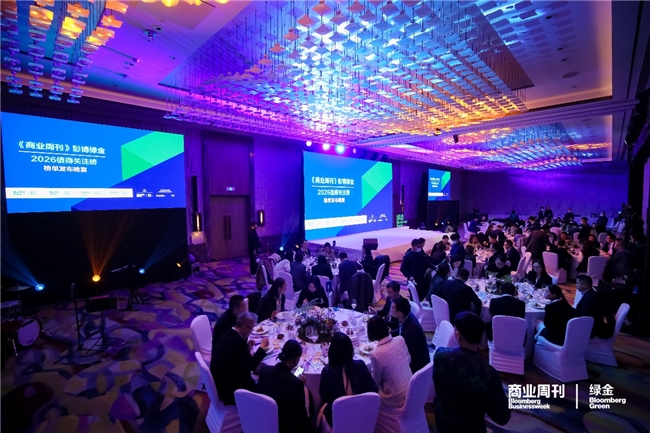
Core Insights - The 2026 Bloomberg Green Finance Awards ceremony was successfully held at the MGM Hotel in Shanghai, emphasizing the importance of aligning with China's "dual carbon" goals and the evolving global business landscape [2] - The event introduced two new evaluation systems: the "Green Finance List" and the "ESG Potential Enterprises" list, alongside existing categories for "ESG Leading Enterprises" and "Outstanding ESG Projects" [2] Green Finance List - The Green Finance List focuses on the green development and innovation within China's financial sector, developed in collaboration with the Central University of Finance and Economics [3] - It aims to respond to national green finance policies and promote the green transformation of financial institutions and enterprises [3] ESG Potential Enterprises - The ESG Potential Enterprises list is based on Bloomberg's proprietary analysis of corporate data, utilizing a comprehensive ESG matrix covering four dimensions, 16 core issues, and 41 sub-issues [4] - The matrix addresses nine major themes, including climate action, energy and ecological management, product safety, employee health, and social responsibility, to identify companies with long-term value and industry leadership potential [4] Complete Lists Released - The ESG Leading Enterprises include CHINT Group Co., Ltd., Tingyi Holding Corp. (Master Kong), Trina Solar Co., Ltd., and several others [5][6][7] - Outstanding ESG Projects feature initiatives from Beijing Fuping Social Venture Capital Co., Ltd., Envision Energy, LONGi Green Energy Technology Co., Ltd., and others [7][8] Green Financial Institutions - The Green Financial Institutions recognized include Bank of China (Hong Kong) Limited, Guotai Junan International Holdings Limited, Industrial Bank Co., Ltd., and others [9][10] Innovation Drivers - The ESG Innovation Drivers include organizations such as the Alliance for Water Stewardship, Climate Bonds Initiative, and Shanghai Advanced Institute of Finance [10] ESG Advocates - The ESG Advocates list features companies like Hydrowell (Taicang) Energy Technologies Co., Ltd., Ningbo Joyson Electronics Corp., and Skyworth Group Limited [11] Future Outlook - Bloomberg Green Finance aims to collaborate with more practitioners to explore core trends and future pathways for sustainable development, accumulating cross-disciplinary wisdom and solutions [13]



刚刚,沪指再创10年新高!
证券时报· 2026-01-06 02:26
1 月 6 日,上证指数早盘走势强劲,突破 2025 年 11 月的高点,再创 10 年新高。 上证指数再创10年新高 1月6日开盘后不久,上证指数突破2025年11月的高点,再创10年新高。 | 指标 叠加 事件 统计 画线 标记 +自选 返回 G = 上证指数 999999 | 15秒 多周期 更多 > | रे। | > | 4049.40 | ▲25.98 | 0.65% | 4050 | | | --- | --- | --- | --- | --- | --- | --- | --- | --- | | 4055.02- | 2 | 4026.02 | 今日开盘 | 3. | 4000 | | | | | 昨日收盘 | 4023.42 | 4. | 3950 | 指数振幅 | 29.93/0.74% | 5. | | | | 总成交额 | 3612.46亿 | 3900 | 总成交量 | 20680.0万 | 令如 | | | | | 3850 | 指数量比 | 2.93 | 财批 | 0.43% | 上证换手 | | 3800 | | | A股 涨停 | 增发 | 3750 | 涨幅 > 7% ...





兴业证券:“年关”已过 港股新一轮攻势有望启动
智通财经网· 2026-01-05 10:58
第一,在年初保险"开门红"资金季节性流入的短期驱动,与2026年非上市险企切换IFRS9会计准则带来 的中长期配置逻辑共同作用下,港股仍是保险资金阶段性及中期配置的重要受益方向。第二,不用过分 担忧内地公募基金投资向业绩基准回归带来的影响,核心仍是梧桐树自引金凤凰,港股拥有越来有多的 优质资产,将推动基金增加港股在基准中的比例并吸引更多类型的资金流入港股。 智通财经APP获悉,兴业证券发布研报称,11月下旬以来,港股受到临近年末港股南下资金流入放缓的 影响走弱。港股市场情绪回落至低位,风险收益比显著改善,大型科技股的卖空资金悄然出现平仓迹 象。年末内资流入放缓带来的扰动过去,内地低利率环境下,港股优质资产继续受益于内地财富再配 置。 兴业证券主要观点如下: 一、回顾:11月下旬以来,港股受到临近年末港股南下资金流入放缓的影响走弱。南下资金流入减少的 情况下,港股资金层面短期产生一定的合成谬误或者说"鬼故事",进一步影响市场风险偏好。前期最流 行的三个担忧是,第一,外资在圣诞长假前的降仓、获利了结;第二,对冲基金利用年底的各种不确定 性和消费、投资、地产等欠佳的数据而做空;第三,市场担忧内地基金新规即投资向业绩 ...
【兴证宏观|经济脉搏】海外周报2025.12.29-2026.1.4:关注黑天鹅事件对商品价格的扰动-20260105
INDUSTRIAL SECURITIES· 2026-01-05 02:18
Commodity Market Insights - Gold prices experienced a significant decline of 4.4% after reaching a historical high, influenced by profit-taking and a stronger dollar[3] - Silver prices saw increased volatility, with fluctuations exceeding 5% in the first three trading days of the week, leading to an 8.4% drop due to margin increases by the CME[3] - WTI crude oil prices fell by 0.7% amid expectations of oversupply in the global market[3] Geopolitical Events - Notable geopolitical "black swan" events occurred, including an attack on Putin's residence, escalating protests in Iran due to high inflation, and a U.S. airstrike in Venezuela resulting in the arrest of President Maduro[3] - The impact of these geopolitical uncertainties on commodity prices remains to be observed, with ongoing monitoring of global geopolitical developments[3] U.S. Economic Indicators - The December FOMC meeting minutes revealed significant internal disagreements on future monetary policy, with some officials advocating for rate cuts if inflation decreases as expected[4] - U.S. existing home sales in November fell by 0.3% year-on-year, indicating continued weakness in the real estate market[4] - The Dallas Fed's business activity index dropped to -10.9, reflecting a further decline of 0.5 percentage points from the previous month[4] Eurozone Economic Performance - Eurozone manufacturing PMI for December was revised down to 48.8, indicating accelerated contraction and falling below market expectations[5] - The euro depreciated by 0.4% against the dollar, influenced by weak manufacturing data[5] - Major stock indices in Europe saw modest gains, with the Stoxx 50, DAX, and CAC indices rising by 1.8%, 0.8%, and 1.1% respectively[5]
非银金融行业周报:公募费率改革收官,非银板块向上突破动能充盈-20260105
Shenwan Hongyuan Securities· 2026-01-05 02:05
Investment Rating - The report maintains a "Positive" outlook on the non-bank financial sector for 2026, indicating strong upward momentum for the industry [3][4]. Core Insights - The brokerage sector is expected to experience a significant upward breakthrough in 2026, driven by improved chip structure, reduced turnover rates, and a favorable valuation environment. The sector is currently undervalued compared to its earnings potential [4]. - The insurance sector shows signs of stabilization post the interest rate switch, with premium growth expected to improve in 2026, particularly in the life insurance segment [4]. - Regulatory changes, including the completion of public fund fee reforms, are anticipated to benefit the non-bank financial sector by reducing costs for investors and enhancing market participation [4][22]. Summary by Sections Market Review - The Shanghai Composite Index closed at 4,629.94 with a decline of 0.59% over the week. The non-bank index fell by 1.84%, with brokerages and insurance indices declining by 1.37% and 3.33%, respectively [8][10]. Non-Bank Financial Insights - The brokerage sector's index underperformed the Shanghai Composite Index by 0.78 percentage points in 2025, with a total decline of 2.05% for the year. In contrast, major A-share indices saw significant gains [4]. - The insurance sector's original premium income reached 5.76 trillion yuan from January to November 2025, reflecting a year-on-year growth of 7.6%. The life insurance segment grew by 9.2% during the same period [4][31]. Investment Analysis - For brokerages, the report recommends focusing on leading firms with strong competitive advantages, such as Guotai Junan and CITIC Securities, as well as those with high earnings elasticity like Huatai Securities [4]. - In the insurance sector, companies like China Life and Ping An are highlighted for their potential in the upcoming market revaluation, with a focus on the growth of new business premiums [4]. Regulatory Developments - The China Securities Regulatory Commission (CSRC) has implemented new rules for public real estate investment trusts (REITs), expanding financing options for commercial properties [21]. - The completion of the public fund fee reform is expected to lower overall fund costs by approximately 20%, saving investors around 51 billion yuan annually [22].



收藏!十大券商首席解码2026投资策略!
Zheng Quan Shi Bao Wang· 2026-01-04 23:39
Group 1 - The core viewpoint is that 2026 will be a crucial year for China's economic work, marking the beginning of the "15th Five-Year Plan" and the transition to a period of solid foundation and comprehensive efforts [1] - Analysts from ten major securities firms provide insights on market trends, industry allocations, and major investment opportunities for 2026, aiming to clarify the investment landscape for investors [1] Group 2 - CITIC Securities predicts that A-share company profit growth will show a trend of low growth initially followed by a recovery [2] - The market is expected to be influenced by the US-China trade agreement and the US midterm elections, with three phases of market performance anticipated [4] - Key investment themes include global pricing power in manufacturing, the expansion of Chinese companies overseas, the continuation of the tech trend with AI, and the potential recovery of domestic demand [4] Group 3 - CICC highlights that the restructuring of international order and China's industrial innovation will support A-share performance, with a market trend of initial growth followed by stabilization [5] - Analysts suggest focusing on growth sectors such as AI applications, industries benefiting from external demand, and cyclical sectors nearing recovery [7] Group 4 - GF Securities indicates that the A-share market is likely to maintain a "slow bull" pattern, with corporate profit structures undergoing significant changes [8][10] - The expected nominal GDP growth for China in 2026 is projected to reach 6.45%, significantly higher than in 2025, supporting the overall improvement in corporate profits [21] Group 5 - Analysts from various firms suggest that the market will shift from valuation-driven to profit-driven dynamics, with traditional and emerging industries contributing to profit recovery [15][17] - The focus on new production capabilities and the impact of policies like "anti-involution" are expected to improve competition in traditional industries and boost domestic demand [17] Group 6 - Analysts predict that more industries will enter a profit recovery phase in 2026, with nominal economic recovery and price increases being the most evident trends [18][20] - UBS forecasts that A-share company profit growth could rise to 8% due to improved nominal GDP growth and the narrowing of PPI declines [32] Group 7 - Analysts recommend focusing on four main investment themes: technological self-reliance, consumer sector recovery, "anti-involution" related sectors, and the global competitiveness of Chinese companies [34] - The market is expected to maintain a balanced style between growth and value, with cyclical sectors likely to outperform defensive sectors as the economy recovers [34]

收藏!十大券商首席,解码2026投资策略!
Xin Lang Cai Jing· 2026-01-04 23:35
Core Viewpoint - The analysis highlights the expected trends and investment opportunities in the A-share market for 2026, emphasizing a shift towards profitability-driven growth amid a recovering economy and evolving global dynamics [1][28]. Group 1: Economic Outlook - 2026 marks the beginning of the "15th Five-Year Plan," focusing on solidifying foundations and comprehensive efforts for economic modernization [1][28]. - The A-share market is anticipated to experience a recovery in corporate profitability, with a projected increase in earnings growth to 8% driven by improved nominal GDP growth and narrowing PPI declines [53][52]. Group 2: Market Phases - The market is expected to be segmented into three phases influenced by U.S.-China trade agreements and U.S. midterm elections, with a potential for sustained growth in a stable external environment [3][30]. - Analysts predict a "slow bull" market pattern, with corporate profitability stabilizing and the return of investment interest from insurance and high-net-worth individuals [7][34]. Group 3: Investment Themes - Key investment themes include: - The manufacturing sector's pursuit of global pricing power, particularly in non-ferrous metals, chemicals, and new energy [3][30]. - The globalization of Chinese enterprises, opening up new market opportunities in machinery, innovative pharmaceuticals, and military industries [3][30]. - Continued growth in the AI sector, with a focus on semiconductors, computing power, and AI applications [3][30]. - Recovery opportunities in domestic demand, particularly in sectors with potential for valuation elasticity [3][30]. Group 4: Sector Focus - Analysts suggest focusing on sectors with clear growth trends, such as AI, where capital expenditure is expected to expand, and cyclical industries like chemicals and renewable energy that may benefit from policy support [5][38]. - The technology sector is projected to maintain high profit growth, although the valuation gap with traditional sectors may pose challenges [40][42]. Group 5: Policy and Market Dynamics - The market is expected to transition from valuation-driven to profitability-driven dynamics, supported by fiscal policies aimed at boosting domestic demand and improving competition in traditional industries [38][40]. - Analysts emphasize the importance of capital market reforms to enhance flexibility and attract long-term investments, particularly in emerging industries [45][48].

收藏!十大券商首席,解码2026投资策略!
券商中国· 2026-01-04 23:34
Core Viewpoint - The article discusses the outlook for the A-share market in 2026, emphasizing the importance of economic work and investment strategies as China enters a critical period of its "14th Five-Year Plan" [1][2]. Group 1: Market Trends and Economic Outlook - A-share company profit growth is expected to show a "low first, high later" trend in 2026, influenced by the US-China trade dynamics and the upcoming US midterm elections [3][5]. - The international order's restructuring and China's industrial innovation are anticipated to support A-share performance, with a market trend of initial growth followed by stabilization [6][8]. - The nominal GDP growth in China is projected to reach 6.45% in 2026, significantly higher than in 2025, indicating a recovery in corporate earnings [21]. Group 2: Investment Opportunities and Sector Focus - Key investment themes include the global pricing power in manufacturing, the expansion of Chinese companies overseas, the continuation of the tech trend with AI, and the potential recovery in domestic demand [5][8][19]. - Analysts suggest focusing on sectors with clear growth trends, such as AI applications, machinery, innovative pharmaceuticals, and energy equipment [5][8][19]. - The A-share market is expected to maintain a "slow bull" pattern, with a focus on industries experiencing supply constraints and clear growth trends, such as AI and energy storage [11][25]. Group 3: Policy and Structural Changes - The article highlights the need for policies that support long-term market stability and the development of new industries, particularly in technology and innovation [6][17][24]. - The "anti-involution" policies are expected to improve competition in traditional industries and stimulate domestic demand, contributing to overall market recovery [15][17]. - The capital market is anticipated to transition from valuation-driven to profit-driven dynamics, with a focus on sectors that can benefit from both traditional and emerging growth drivers [15][19].

兴业证券张启尧:更多行业步入盈利复苏通道
Zheng Quan Shi Bao· 2026-01-04 17:40
Core Viewpoint - The chief strategist of Industrial Securities, Zhang Qiyao, indicates that the recovery of fundamentals is expected to support further market growth by 2026 [1] Group 1: Market Performance - By analyzing the performance of listed companies in the first three quarters of 2025, it is observed that revenue has stabilized, but gross margins are still declining, indicating that pricing remains a major drag on profitability [1] - Since the second half of 2025, policies promoting "de-involution" have led to a rebound in prices in resource sectors, which has improved gross margins [1] Group 2: Economic Outlook - For 2026, nominal economic recovery and price increases are projected to be the most evident trends in the market [1] - According to the latest IMF forecast, China's nominal GDP growth rate in USD terms is expected to reach 6.45% in 2026, significantly higher than in 2025, with continued improvement in listed company profits [1] - The ongoing global liquidity easing is likely to result in a sustained upward trend in the A-share market in 2026 [1] Group 3: Industry Configuration - The market is currently in a structural recovery phase in 2025, with significant differentiation in industry prosperity, leading to a focus on eliminating weaker sectors [1] - As more industries enter the profitability recovery phase in 2026, the market allocation logic may shift from internal competition within sectors to identifying leading industries [1] - Key areas of focus include trends in the AI industry, the "price increase chain," the "overseas expansion chain," and the structural recovery of domestic demand [1]