CCB(601939)

Search documents
8100亿元!年内A股定增大涨
Shen Zhen Shang Bao· 2025-11-06 13:53
Core Viewpoint - The fundraising amount through private placements in the A-share market has significantly increased this year, with financial stocks leading the way in terms of capital raised [2]. Group 1: Fundraising Statistics - As of November 3, 2023, 140 companies have raised a total of 812.37 billion yuan through private placements, marking a 23% increase in the number of companies and a 5.4 times increase in the amount raised compared to the previous year [2]. - Among the top 10 companies by fundraising amount, 6 are financial institutions, highlighting the dominance of this sector in the private placement market [2]. - Four major state-owned banks, including China Bank, Postal Savings Bank, and others, have raised over 100 billion yuan each through private placements, contributing significantly to the overall market size [2]. Group 2: Specific Company Fundraising - China Bank raised 165 billion yuan, Postal Savings Bank 130 billion yuan, Traffic Bank 120 billion yuan, and Construction Bank 105 billion yuan through private placements [2]. - The successful completion of fundraising by these banks indicates a substantial breakthrough in their plans to supplement core Tier 1 capital through the capital market [2]. Group 3: Use of Funds - Companies are utilizing the funds raised through private placements for various purposes, including asset acquisitions and operational funding [3]. - For instance, AVIC Chengfei raised 17.439 billion yuan for acquiring 100% equity of AVIC Chengfei, while Sairisi raised 8.164 billion yuan for a new factory and operational funds [3]. - Guolian Securities raised 29.492 billion yuan to acquire 99.26% of Minsheng Securities [3]. Group 4: Policy Support and Market Dynamics - The revival of the private placement market is supported by policy initiatives, including the China Securities Regulatory Commission's new merger and acquisition guidelines [3]. - Local governments have also introduced measures to support corporate mergers and acquisitions, further stimulating the market [3]. Group 5: Notable Cases and Challenges - Some companies have seen significant participation from major shareholders in their private placements, such as Nanfang Electric, which plans to raise up to 2 billion yuan with substantial backing from its controlling shareholder [3]. - However, not all private placements have been successful; for example, GCL-Poly announced the termination of its nearly three-year fundraising plan, originally aimed at raising 4.842 billion yuan, due to market adjustments in the photovoltaic industry [4].






“专业团队+数字员工”双加持 建行以综合金融服务赋能第八届进博会
Zhong Guo Jin Rong Xin Xi Wang· 2025-11-06 13:32
Core Viewpoint - China Construction Bank (CCB) is enhancing its global financial service capabilities during the China International Import Expo (CIIE), leveraging advanced technologies to provide comprehensive financial services to support the real economy and high-quality development [1][5]. Group 1: Service Innovations - CCB's Hongqiao Exhibition Branch is recognized as the "Most Beautiful Service Window" at the first CIIE, showcasing its commitment to innovative and efficient banking services [1]. - The branch offers a wide range of banking services, including both domestic and foreign currency transactions, ensuring that all customer financial needs are met efficiently [2]. - A new "self-service cash exchange machine" has been introduced to enhance customer experience by facilitating easy cash transactions [2]. Group 2: Professional Support Team - CCB has assembled a team of over 50 young employees with expertise in cross-border financial services to provide on-site support during the CIIE [2]. - This team is trained to assist exhibitors with financial policy explanations, product promotions, and various banking services, ensuring a seamless experience for participants [2]. Group 3: Digital Innovations - The introduction of the AI-powered humanoid robot GR2 at the branch aims to enhance customer interaction through intelligent Q&A and reception services [3]. - CCB is optimizing its service processes by integrating online and offline channels, improving customer service efficiency and experience [3]. Group 4: New Financial Products - CCB plans to launch a new comprehensive financial service product for enterprises engaged in cross-border trade and overseas investment during a special event on November 7 [4]. - The event will facilitate discussions on financial collaboration and opportunities for Chinese enterprises going global, highlighting the bank's commitment to supporting internationalization [4]. Group 5: Global Financial Service Center - CCB has established the "CCB Shanghai Global Financial Service Center" to serve as a hub for cross-border financial services, enhancing its global service network [5]. - The center aims to integrate domestic and international resources to provide tailored financial solutions for enterprises at different stages of development [5].
固定收益点评:银行配债有哪些指标约束
GOLDEN SUN SECURITIES· 2025-11-06 12:22
1. Report Industry Investment Rating No relevant content provided. 2. Core View of the Report In recent years, the mismatch between the duration of banks' assets and liabilities has intensified, with the duration of the asset side lengthening and that of the liability side shortening. This has put pressure on some liquidity indicators and constrained banks' asset allocation behavior. The increase in long - term bond holdings has also increased the pressure on interest rate risk indicators. The report analyzes the current indicator constraints on banks' bond allocation and the prospects of these indicator pressures [1]. 3. Summary by Related Catalogs 3.1 Liability - side Duration Reduction and Asset - side Duration Extension - **Net Interest Margin Pressure**: Since 2022, the net interest margin of commercial banks has continued to decline, from 2.08% at the end of December 2021 to 1.42% at the end of June 2025, compressing banks' profit margins [9]. - **Liability - side Duration Reduction**: - **Deposit**: Since 2023, the duration of new deposits has significantly shortened. High - cost, long - term deposits have been significantly reduced due to the expiration of high - interest fixed deposits in 2025 - 2026 and the suspension of "manual interest compensation" in 2024. Banks tend to guide customers to transfer to short - term deposits, and customers are less attracted to long - term deposits. New deposits are concentrated within 1 year [10]. - **Inter - bank Liabilities**: In 2025, banks mostly reduced the issuance of 9M and 1Y certificates of deposit (CDs) and increased the issuance of 3M and 6M CDs [15]. - **Asset - side Duration Extension**: Since 2019, the loan growth rate of listed banks has continued to decline, and financial investment has become an important alternative asset on the asset side. Bond investment is a major part of financial investment, with government bonds accounting for a relatively high proportion. From 2023 - 2025, the average duration of local government bonds has lengthened from 12.39 years to 15.62 years, and it is expected that the duration of the asset side of national and joint - stock banks will lengthen [17]. 3.2 What Indicator Constraints Do Banks Face in Bond Allocation? 3.2.1 Liquidity Risk: Low NSFR Index for Joint - stock Banks - **Liquidity Regulatory Indicators**: Chinese banks need to meet five liquidity regulatory indicators, including LMR, LR, NSFR, LCR, and HQLAAR. The report mainly analyzes LR, NSFR, and LCR. In mid - 2025, the LR and LCR of listed banks generally had sufficient safety margins, while the NSFR safety cushions of joint - stock banks (except China Merchants Bank) and some city commercial banks were relatively thin [3][22]. - **Reasons for Low NSFR in Joint - stock Banks**: The core reason lies in the liability side. Retail deposits are not advantageous, the proportion of inter - bank liabilities is high, and deposits tend to be short - term. This leads to a low Available Stable Funds (ASF) [41]. - **Measures to Deal with NSFR Pressure**: - **Increase the Numerator**: In October, joint - stock banks significantly increased the issuance of 1Y CDs. The net financing of joint - stock bank CDs in October reached 62.44 billion yuan, and the issuance scale of 1Y CDs was significantly increased [45]. - **Reduce the Denominator**: From January to September this year, joint - stock banks basically maintained a monthly net reduction of CDs and increased the allocation of interest - rate bonds, which is conducive to reducing the Required Stable Funds (RSF) and improving the NSFR [48]. 3.2.2 Interest Rate Risk: The ΔEVE/First - tier Capital of Some State - owned Banks Approaches the Upper Limit - **Regulatory Requirements**: According to the "Administrative Measures for the Interest Rate Risk of Commercial Banks' Banking Books (Revised)", when the economic value change of state - owned large commercial banks exceeds 15% of their first - tier capital, the banking regulatory authority should pay attention and conduct follow - up evaluations [53]. - **Interest Rate Risk of Banking Books**: In 2024, under six standardized interest rate shock scenarios, the maximum economic value change losses of Agricultural Bank of China (- 14.31%), Industrial and Commercial Bank of China (- 14.71%), and China Construction Bank (- 14.73%) as a percentage of their first - tier capital were close to - 15%. This has objectively constrained bond - allocation behavior and will affect the volume and duration of state - owned banks' bond investments [55].





零售风险专题:风险缓释,资产质量局部趋稳
Western Securities· 2025-11-06 11:45
Investment Rating - The industry rating is "Overweight" and has been maintained from the previous rating [5]. Core Viewpoints - The retail loan quality is under pressure, with growth slowing down, and the overall retail loan bad debt ratio has been on the rise since 2022, reaching 1.29% in Q2 2025, an increase of 13 basis points from Q4 2024 [2][12]. - Retail loan growth is weak, with a year-on-year increase of only 3.5% in Q2 2025, which is a further slowdown compared to 2024 [20]. - Banks are increasing efforts to dispose of retail bad debts, which is expected to mitigate the impact of retail loan risk exposure on overall asset quality [3][33]. Summary by Sections 1. Retail Loan Asset Quality Under Pressure, Growth Slowing - As of Q2 2025, the total retail loan amount of listed banks reached 63.3 trillion yuan, accounting for 34.3% of total loans [2][11]. - The retail loan bad debt ratio has continued to rise, with the overall bad debt ratio for listed banks at 1.23% [12][19]. - The increase in retail bad debts is attributed to weak consumer demand and a decline in repayment capacity, with the retail bad loan balance growing by 28.7% year-on-year [20][21]. 2. Retail Loan Risk Exposure Easing, Credit Cost Pressure Marginally Reduced - The bad debt generation rate for retail loans in H1 2025 was 1.18%, slightly up from 2024, but the increase is less pronounced compared to previous years [34][35]. - The marginal easing of credit cost pressure is reflected in the credit cost for retail loans, which increased by only 1 basis point to 1.02% in H1 2025 [35][41]. - The overall retail loan risk exposure is expected to remain manageable due to banks' proactive measures in bad debt disposal [33]. 3. Retail Asset Quality Outlook: Policy Support, Risks Expected to Continue Easing - The overall credit risk of retail loans is expected to continue easing under supportive policies, particularly in consumer credit [4]. - The asset quality of consumer credit, including housing loans, is anticipated to stabilize marginally, while the asset quality in the small and micro-enterprise sector may continue to face pressure [4].
银行永续债补位 优先股“性价比”低遭集中赎回
2 1 Shi Ji Jing Ji Bao Dao· 2025-11-06 11:12
Core Viewpoint - Recent announcements from multiple banks indicate a trend of redeeming preferred shares, driven by cost optimization and capital structure adjustments in response to regulatory requirements [4][6]. Group 1: Redemption of Preferred Shares - Ningbo Bank plans to fully redeem 100 million preferred shares issued on November 7, 2018, with a total scale of 10 billion RMB, at a redemption price of 104.5 RMB per share, scheduled for November 7, 2025 [1]. - Hangzhou Bank, Shanghai Bank, and Changsha Bank also announced plans to redeem their preferred shares in December 2025, with similar redemption structures [2]. - The total amount of preferred shares redeemed by banks this year is significant, with a focus on optimizing costs and reducing liabilities [1][2]. Group 2: Issuance of Perpetual Bonds - In conjunction with the redemption of high-cost preferred shares, banks are increasingly issuing perpetual bonds as a replacement, with 51 perpetual bonds issued this year totaling 675.4 billion RMB, surpassing last year's figures [1][6]. - Perpetual bonds are seen as a more flexible and lower-cost capital tool compared to preferred shares, which typically have higher dividend rates [4][6]. Group 3: Market Trends and Regulatory Environment - The trend of redeeming preferred shares and issuing perpetual bonds reflects a broader market shift, where banks are adapting to lower interest rates and tighter regulatory requirements [4][7]. - The issuance of perpetual bonds is particularly crucial for smaller banks facing capital adequacy pressures, as they seek to enhance their capital structure and meet regulatory demands [7].



上市银行哪家强?齐鲁银行净利增16.14%,常熟银行净息差2.57%保持领先
Mei Ri Jing Ji Xin Wen· 2025-11-06 10:23
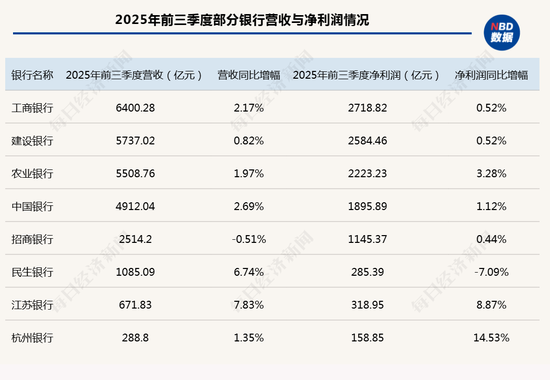
Core Insights - The overall performance of A-share listed banks in the first three quarters of 2025 reflects a stable total, improved structure, and significant differentiation amid a gradually recovering macroeconomic environment [1][10] - Revenue growth remains robust, with over 60% of listed banks reporting year-on-year increases, driven by optimized asset structures and a focus on non-interest income [2][10] - The net interest margin (NIM), a key profitability driver, is under pressure, posing challenges to the banking industry's profit model [1][7] Revenue Growth Resilience - More than 60% of A-share listed banks achieved positive year-on-year revenue growth in the first three quarters of 2025, indicating effective support for the real economy [2][4] - There is a clear structural differentiation in growth dynamics among banks of different sizes, with larger banks showing stable revenue while some smaller banks exhibit stronger growth [4][10] Bank Performance Data - Key performance metrics for selected banks in the first three quarters of 2025 include: - Industrial and Commercial Bank of China: Revenue of 6400.28 billion, 2.17% growth; Net profit of 2718.82 billion, 0.52% growth - Agricultural Bank of China: Revenue of 5508.76 billion, 1.97% growth; Net profit of 2223.23 billion, 3.28% growth - Minsheng Bank: Revenue of 1085.09 billion, 6.74% decline; Net profit of 285.39 billion, 7.09% decline - Jiangsu Bank: Revenue of 671.83 billion, 7.83% growth; Net profit of 318.95 billion, 8.87% growth [3][4] Performance of State-Owned Banks - State-owned banks maintain a leading position in revenue due to their large asset scale and extensive customer base, with revenue growth rates above 1.5% for major banks [4][6] - Despite a stable net profit growth, the overall growth rates are moderate, reflecting the challenges of achieving high growth from a large base [4][6] Performance of Smaller Banks - Some smaller banks and regional banks demonstrate significant growth potential, with Minsheng Bank and Jiangsu Bank showing revenue growth rates of 6.74% and 7.83%, respectively [4][6] - The ability of these banks to achieve rapid profit growth is attributed to precise customer targeting, effective cost management, and supplementary income from non-interest sources [6][10] Net Interest Margin Challenges - The net interest margin for listed banks is generally declining, primarily due to factors such as the decrease in loan market quotation rates and adjustments in existing mortgage rates [7][8] - State-owned banks and some joint-stock banks experience a decline in NIM by approximately 15 basis points, while Postal Savings Bank sees a more significant drop of 21 basis points [8][9] Resilience in NIM - Some banks, like Minsheng Bank, show resilience with a slight increase in NIM, indicating effective business structure management in response to interest rate fluctuations [9][10] - Regional banks like Ningbo Bank exhibit smaller declines in NIM compared to the industry average, showcasing the effectiveness of their localized service models [9][10] Future Outlook - The banking sector's operating environment is expected to gradually improve with the continued effectiveness of macroeconomic policies, although differentiation among institutions is likely to persist [10] - Large banks need to leverage technology to enhance their comprehensive service advantages, while smaller banks must focus on deepening their niche markets to establish competitive strengths [10]



银行差异化应对“黄金征税”新政,黄金理财风向有变
Sou Hu Cai Jing· 2025-11-06 10:02
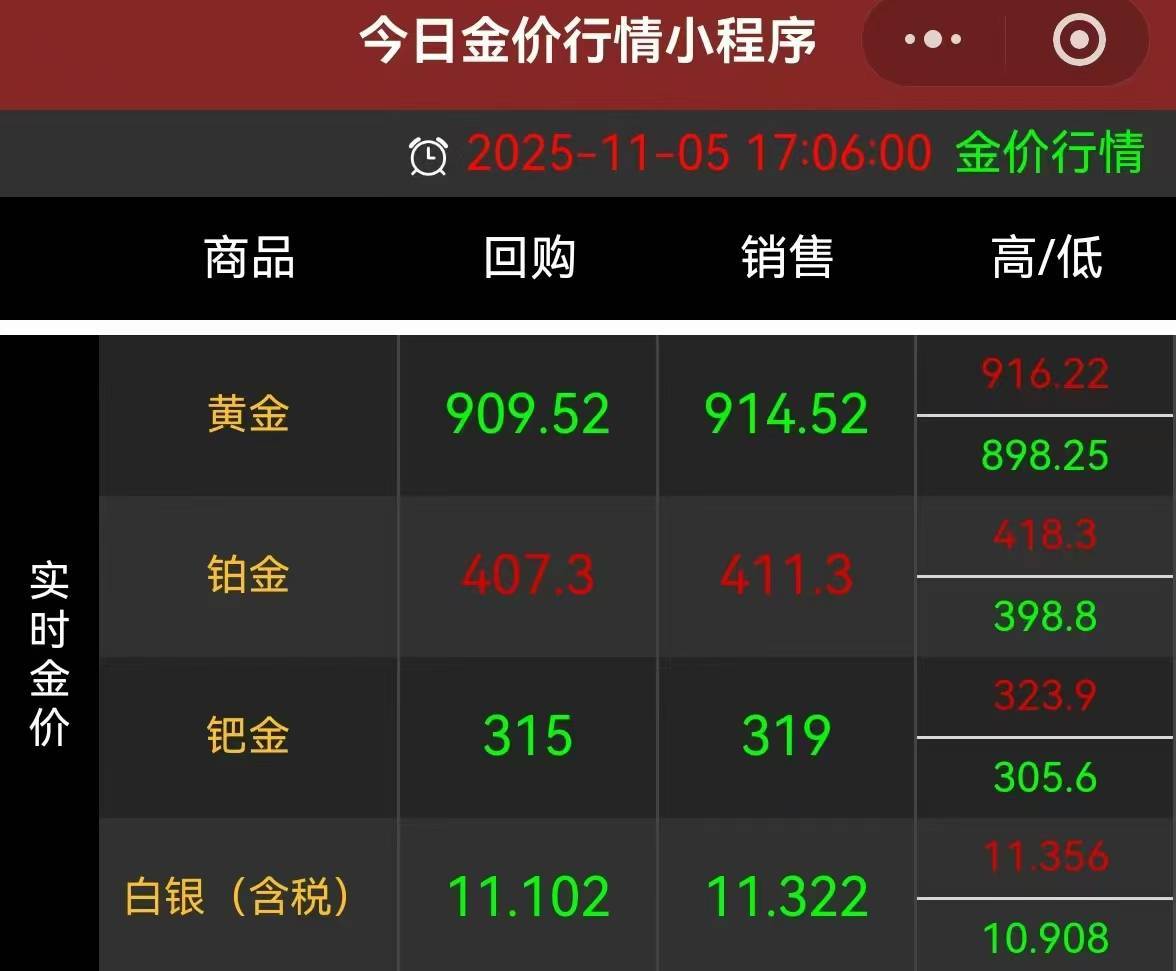
Core Viewpoint - The new gold tax policy, effective from November 1, 2025, distinguishes between "investment" and "non-investment" uses of gold, leading to significant adjustments in banking operations and investor behavior [1][2]. Group 1: Impact on Banking Operations - Major banks have temporarily suspended certain gold-related services, such as招商银行's "金生利" and工商银行's gold accumulation services, in response to the new tax policy [1][3]. - The new tax policy allows for VAT exemption on standard gold transactions through designated exchanges, while non-investment uses will incur a reduced VAT of 6% [2]. Group 2: Changes in Investor Behavior - Investors are shifting towards more rational investment strategies, with banks advising clients to limit gold investments to about 10% of their portfolios and to adopt a long-term holding approach [4]. - The demand for gold has surged, leading to increased prices and longer delivery times for gold products, with some banks adjusting their pricing strategies accordingly [3][4]. Group 3: Alternative Investment Products - With restrictions on physical gold, banks are promoting "paper gold" products, which allow for virtual trading of gold without the need for physical delivery, providing a more flexible investment option [6][9]. - "Paper gold" includes various forms such as gold accounts, gold ETFs, and gold futures, which offer advantages like low transaction costs and high liquidity [9].
【好礼】遇“建”数币惊喜购 至高省215元
中国建设银行· 2025-11-06 09:54
Core Points - The article promotes various promotional activities related to digital currency, specifically targeting new and existing users of the platform, emphasizing discounts and benefits available during specific time frames [2][14][18]. Group 1: Promotional Offers - New users can receive a 20 yuan no-threshold red envelope, while both new and existing users can enjoy payment discounts ranging from 15 to 50 yuan [2]. - The promotional period for these offers is from November 1, 2025, to November 30, 2025 [2]. Group 2: Activity Participation - Users can participate in multiple promotional activities, with a limit of one red envelope per person during the promotional period [3]. - Users can enjoy up to two discounts during the promotional period [5]. Group 3: Specific Promotions - Various brands and services are included in the promotions, such as Luckin Coffee and Meituan, with specific promotional periods outlined [18][21]. - The digital currency wallet from the Bank of China is a prerequisite for participating in these promotions [7].

国有大型银行板块11月6日跌0.46%,邮储银行领跌,主力资金净流出6185.65万元
Zheng Xing Xing Ye Ri Bao· 2025-11-06 08:51
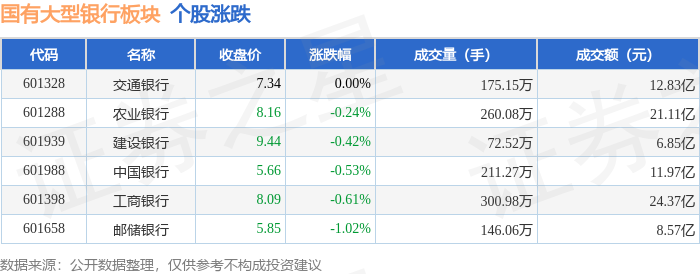
Core Insights - The state-owned large bank sector experienced a decline of 0.46% on November 6, with Postal Savings Bank leading the drop [1] - The Shanghai Composite Index closed at 4007.76, up 0.97%, while the Shenzhen Component Index closed at 13452.42, up 1.73% [1] Bank Performance Summary - **Bank of Communications (601328)**: Closed at 7.34, unchanged; trading volume of 1.75 million shares, total transaction value of 1.283 billion [1] - **Agricultural Bank of China (601288)**: Closed at 8.16, down 0.24%; trading volume of 2.6008 million shares, total transaction value of 2.111 billion [1] - **China Construction Bank (601939)**: Closed at 9.44, down 0.42%; trading volume of 725,200 shares, total transaction value of 685 million [1] - **Bank of China (601988)**: Closed at 5.66, down 0.53%; trading volume of 2.1127 million shares, total transaction value of 1.197 billion [1] - **Industrial and Commercial Bank of China (601398)**: Closed at 8.09, down 0.61%; trading volume of 3.0098 million shares, total transaction value of 2.4371 billion [1] - **Postal Savings Bank (601658)**: Closed at 5.85, down 1.02%; trading volume of 1.4606 million shares, total transaction value of 857.1 million [1] Fund Flow Analysis - The state-owned large bank sector saw a net outflow of 61.8565 million from institutional investors and a net outflow of 115 million from speculative funds, while retail investors had a net inflow of 177 million [1] - **Bank of Communications**: Net inflow from institutional investors of 44.968 million, net outflow from speculative funds of 1.25 billion, and net inflow from retail investors of 79.8107 million [2] - **Bank of China**: Net inflow from institutional investors of 16.3932 million, net outflow from speculative funds of 10.0614 million, and net outflow from retail investors of 6.3318 million [2] - **Industrial and Commercial Bank of China**: Net inflow from institutional investors of 7.3789 million, net inflow from speculative funds of 348.77 million, and net outflow from retail investors of 1.08666 million [2] - **Postal Savings Bank**: Net outflow from institutional investors of 5.412 million, net outflow from speculative funds of 342.014 million, and net inflow from retail investors of 39.6134 million [2] - **Agricultural Bank of China**: Net outflow from institutional investors of 100 million, net inflow from speculative funds of 53.8183 million, and net inflow from retail investors of 46.2417 million [2]
【优惠】锦绣龙卡信用卡 | 淘宝年终双欢庆 银联福利购不停
中国建设银行· 2025-11-06 08:16
Core Viewpoint - The article promotes a promotional event for users of the 62-starting Dragon Card credit card, offering discounts and interest-free installment options for purchases on Taobao and Tmall during specific periods [1][6]. Group 1: Promotion Details - The promotional period for 3C category products is from October 20, 2025, to November 30, 2025, while the full category runs from October 15, 2025, to December 31, 2025 [4]. - Users can enjoy discounts based on their spending: for full category purchases, discounts include 25 yuan for spending over 500 yuan, 75 yuan for over 1500 yuan, and 200 yuan for over 5000 yuan; for 3C category purchases, discounts are 200 yuan for over 3000 yuan and 400 yuan for over 6000 yuan [6]. - Users can also benefit from up to 24 months of interest-free installments, with an approximate annualized interest rate of 0% [6]. Group 2: User Eligibility and Limitations - The promotion is available to users holding the 62-starting Dragon Card credit card, excluding business and special installment cards [5]. - Each user can access three discount tiers for the full category and two for the 3C category each month, with no overlapping discounts allowed [7]. - The total number of discount slots is limited, with at least 85,000 slots for October and 60,000 for November in the full category, and at least 1,500 for October and 1,000 for November in the 3C category [7]. Group 3: Participation Requirements - Only users with real-name authentication on Alipay can participate, and they must bind their 62-starting Dragon Card credit card to their Alipay account [9]. - Users must complete real-name authentication and bind their phone numbers to be eligible for the promotion [9].