Roborock(688169)

Search documents
石头科技(688169) - 北京石头世纪科技股份有限公司关于以集中竞价交易方式回购公司股份的进展公告
2026-01-04 07:48
证券代码:688169 证券简称:石头科技 公告编号:2026-001 北京石头世纪科技股份有限公司 关于以集中竞价交易方式回购公司股份的进展公告 | 回购方案首次披露日 | 2025/4/4 | | | | | --- | --- | --- | --- | --- | | 回购方案实施期限 | 2025 年 4 月 2 4 月 1 | 日~2026 | 年 | 日 | | 预计回购金额 | 5,000万元~10,000万元 | | | | | 回购用途 | □减少注册资本 √用于员工持股计划或股权激励 □用于转换公司可转债 | | | | | | □为维护公司价值及股东权益 | | | | | 累计已回购股数 | 36.9036万股 | | | | | 累计已回购股数占总股本比例 | 0.1424% | | | | | 累计已回购金额 | 7,386.52万元 | | | | | 实际回购价格区间 | 175.01元/股~219.16元/股 | | | | 一、回购股份的基本情况 北京石头世纪科技股份有限公司(以下简称"公司")于 2025 年 4 月 2 日召 开第三届董事会第四次会议,会议审议通过了《 ...
CES 2026前瞻:黄仁勋到处赶场站台,中国军团角逐AI明日终端
Tai Mei Ti A P P· 2026-01-04 02:13
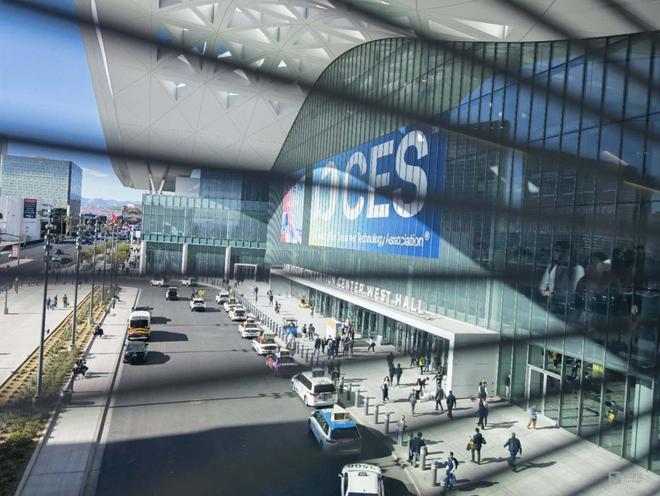
Group 1: CES 2026 Overview - CES 2026 will take place from January 6 to January 9, 2026, in Las Vegas, showcasing the latest innovations in technology and serving as a window to predict future trends in the tech industry [2] - A total of 4,112 companies will participate, with China and the US being the main players, despite Apple's absence [2] - The central theme of CES 2026 will revolve around AI, transitioning into the stage of practical applications and integration across various industries, including consumer electronics and automotive sectors [2] Group 2: Key Company Highlights - Nvidia, AMD, and Intel are expected to showcase significant advancements in AI technology, with AMD's stock having risen over 75% in the past year [5] - AMD will unveil its next-generation mobile processor, the Ryzen AI 400 series, featuring 12 Zen 5 cores and enhanced NPU capabilities [5] - Intel will introduce the third-generation Core Ultra series processors, boasting a 50% performance improvement over the previous generation [5] Group 3: AI Integration in Consumer Electronics - AI is increasingly embedded in consumer electronics, with major home appliance companies demonstrating deep applications of AI to enhance product efficiency [9] - Hisense will launch the world's first upgraded display technology featuring a "four-core architecture" and AI image processing capabilities [9] - TCL will present a wide range of display products, including the world's first printed OLED screen for automotive displays [10] Group 4: Robotics and Smart Home Innovations - The robotics sector is seeing a surge in companies showcasing products capable of complex tasks, with a significant presence from Chinese firms at CES 2026 [19] - New products include flying vacuum cleaners and stair-climbing robots, indicating advancements in smart home technology [14][16] - Companies like Ecovacs and Roborock are expected to unveil new models in the cleaning appliance category, with Ecovacs CEO scheduled to give a keynote speech [12] Group 5: AI-Driven New Devices - CES 2026 will feature a variety of AI-native devices, including AI glasses and headphones, with numerous companies participating in this emerging market [23] - XREAL will showcase its latest AI glasses, while other firms will present innovative AR products [25] - Lightwear AI, a new wearable device, will be introduced, aiming to redefine human-computer interaction in the AI era [26] Group 6: Industry Discussions and Networking - TiMedia will host multiple roundtable discussions on topics such as AI's impact on industries and the commercialization of embodied intelligence [31] - A high-end networking event, "China Innovation Night," will take place, bringing together leaders from global tech brands and AI ecosystems [31] - The event will also feature the release of the "2026 CES Innovation List," recognizing outstanding achievements in technology and design [31]





瞄准5万亿美元市场:跨界布局机器人,时代的新共识
3 6 Ke· 2026-01-04 00:26
Core Insights - The Chinese robotics industry is poised for significant growth by the end of 2025, with humanoid robots transitioning from experimental concepts to practical applications, achieving over 50% growth and indicating a trillion-yuan industry on the horizon [1] - The entry of major players from various sectors such as automotive, electronics, and the internet into the robotics field marks a shift from niche exploration to widespread competition, creating a unique trend of "cross-industry integration" [1] Group 1: Market Dynamics - In the first eight months of 2025, the primary market financing in the robotics sector reached 38.624 billion yuan, 1.8 times the total for 2024, highlighting the blue ocean effect attracting significant investment [2] - The global industrial robot sales are projected to reach 542,000 units in 2024, with China accounting for 295,000 units, representing 54% of the global market [2] - By 2025, the Chinese robotics market is expected to exceed 150 billion yuan, capturing 35% of the global market share, with predictions suggesting the market for embodied intelligence could reach 400 billion yuan by 2030 and over a trillion yuan by 2035 [2] Group 2: Industry Trends - At least 20 automotive companies have entered the humanoid robot market by the end of 2025, with notable developments including Chery's humanoid robot Mocha and BYD's production line for core robot components [3] - The automotive industry's supply chain overlaps significantly with robotics, with a 60% compatibility rate, driving car manufacturers to invest in robotics as they view vehicles as "mobile intelligent robots" [3] - Home appliance manufacturers are transitioning from traditional manufacturing to smart ecosystems, with companies like Midea establishing dedicated innovation centers for humanoid robots and developing comprehensive R&D systems [7] Group 3: Strategic Shifts - The automotive sector is seen as a key player in the transition to robotics, with companies like Geely planning to invest 5 billion yuan over three years to develop critical components and establish an ecosystem covering all robotics applications [6] - Internet giants are leveraging their technological and capital advantages to enter the robotics space, with ByteDance and Huawei making significant investments in developing advanced robotic models and systems [8] - The competition in the robotics sector is viewed as a strategic restructuring driven by technological advancements, with companies aiming to activate existing technological capabilities and build new ecosystems [9] Group 4: Challenges Ahead - Despite the enthusiasm for entering the robotics market, cross-industry players face challenges such as adapting core competencies to the robotics field, where technology paths are still being defined [10] - The high precision and stability required for industrial applications pose significant challenges for companies transitioning from other sectors, as they may struggle to meet the diverse demands of various operational environments [11] - Cost remains a critical issue, with companies like BYD and GAC aiming to reduce the production cost of humanoid robots to below 200,000 yuan, which requires overcoming substantial supply chain and process optimization challenges [11]





新股消息 | 石头科技递表港交所 已销售约2000万台智能扫地机器人
Zhi Tong Cai Jing· 2026-01-02 03:48
Company Overview - Roborock Technology Co., Ltd. is a global leader in the smart vacuum cleaner sector, with approximately 90% of its revenue derived from the sales of smart vacuum cleaners. The company is expanding its product range to include other smart home cleaning products such as floor washers and washer-dryer combos [2][3] - The global sales of Roborock's smart vacuum cleaners are projected to grow from approximately 2,246,000 units in 2022 to about 3,449,000 units in 2024, representing a compound annual growth rate (CAGR) of 23.9% [2] Market Position - According to data from Zhaoshang Consulting, Roborock is the number one brand in the global smart vacuum cleaner market by both gross merchandise value (GMV) and sales volume in 2024, with a market share of 23.4% by GMV and 16.7% by sales volume [3][9][10] - The smart home cleaning products market is experiencing rapid growth, with smart vacuum cleaners being the largest segment, expected to reach a market size of $25.2 billion by 2029, growing at a CAGR of 22.0% from 2024 to 2029 [3][6] Financial Performance - The company's revenue for the years 2022, 2023, 2024, and the nine months ending September 30, 2025, were approximately RMB 6.61 billion, RMB 8.64 billion, RMB 11.92 billion, and RMB 12.06 billion, respectively [4][5] - The net profit for the same periods was approximately RMB 1.18 billion, RMB 2.05 billion, RMB 1.98 billion, and RMB 1.04 billion [4][5] Industry Overview - The global smart vacuum cleaner market is projected to grow from $4.4 billion in 2020 to $9.3 billion in 2024, with a CAGR of 20.6%, and is expected to reach $25.2 billion by 2029, with a CAGR of 22.0% from 2024 to 2029 [6] - The top five markets for smart vacuum cleaners in 2024 are expected to be Mainland China, the United States, Japan, South Korea, and Germany [8] Competitive Landscape - The global smart vacuum cleaner market is relatively concentrated, with the top five brands accounting for 73.1% of the market by GMV and 61.5% by sales volume in 2024 [9][10]
新股消息 | 石头科技(688169.SH)递表港交所 已销售约2000万台智能扫地机器人
智通财经网· 2026-01-02 03:45
Company Overview - Roborock Technology (688169.SH) is a global leader in the smart vacuum cleaner sector, with approximately 90% of its revenue derived from the sales of smart vacuum cleaners. The company is expanding into new product categories, including floor washers and wash-dry machines [3] - The global sales of Roborock's smart vacuum cleaners are projected to grow from approximately 2,246,000 units in 2022 to about 3,449,000 units in 2024, representing a compound annual growth rate (CAGR) of 23.9%. From 2016 to 2024, the total sales are expected to reach around 20 million units [3] - According to data from Zhaoshang Consulting, Roborock is the number one brand in terms of gross merchandise value (GMV) and sales volume in the global smart vacuum cleaner market in 2024, with a market share of 23.4% by GMV [3][11] Financial Performance - The company reported revenues of approximately RMB 6.61 billion, RMB 8.64 billion, RMB 11.92 billion, and RMB 12.06 billion for the years 2022, 2023, 2024, and the nine months ending September 30, 2025, respectively [5] - The net profit for the same periods was approximately RMB 1.18 billion, RMB 2.05 billion, RMB 1.98 billion, and RMB 1.04 billion [6] Market Insights - The global smart vacuum cleaner market is expected to grow from USD 4.4 billion in 2020 to USD 9.3 billion in 2024, with a CAGR of 20.6%. By 2029, the market is projected to reach USD 25.2 billion, with a CAGR of 22.0% from 2024 to 2029 [8] - The smart vacuum cleaner segment is the largest within the smart home cleaning products category, indicating strong growth potential [8] - The top five markets for smart vacuum cleaners in 2024 are projected to be Mainland China, the United States, Japan, South Korea, and Germany [10] Competitive Landscape - The global smart vacuum cleaner market is relatively concentrated, with the top five brands accounting for 73.1% of the market by GMV and 61.5% by sales volume in 2024. Roborock holds the leading position with a market share of 23.4% by GMV and 16.7% by sales volume [11][12]
据港交所文件:北京石头世纪科技股份有限公司向港交所提交上市申请书

Guo Ji Jin Rong Bao· 2025-12-31 14:01
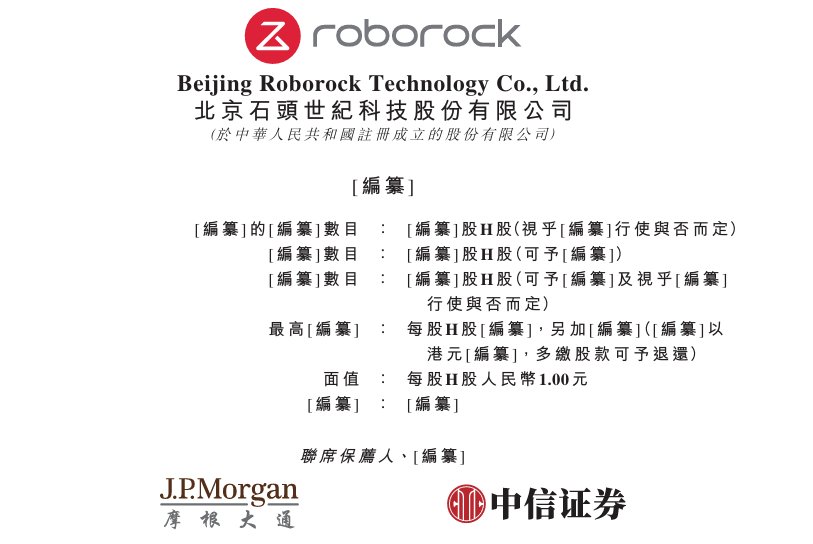
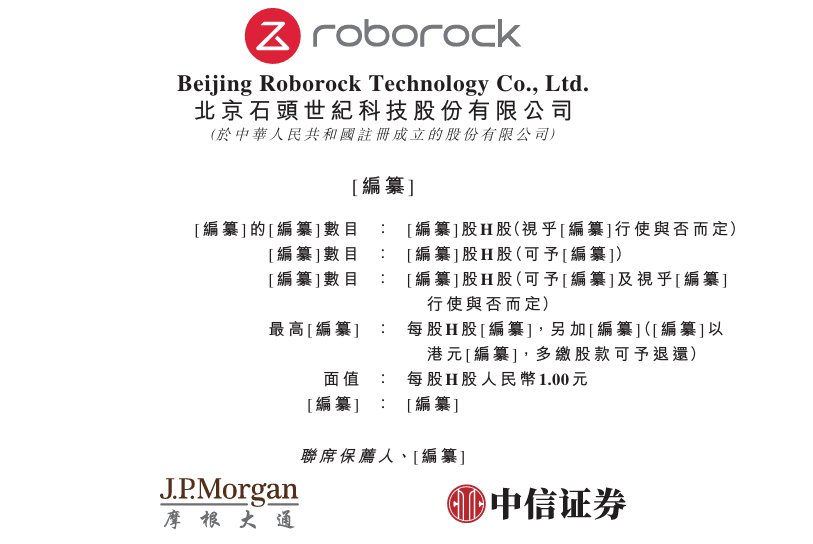
Group 1 - Beijing Stone Century Technology Co., Ltd. has submitted a listing application to the Hong Kong Stock Exchange [1]
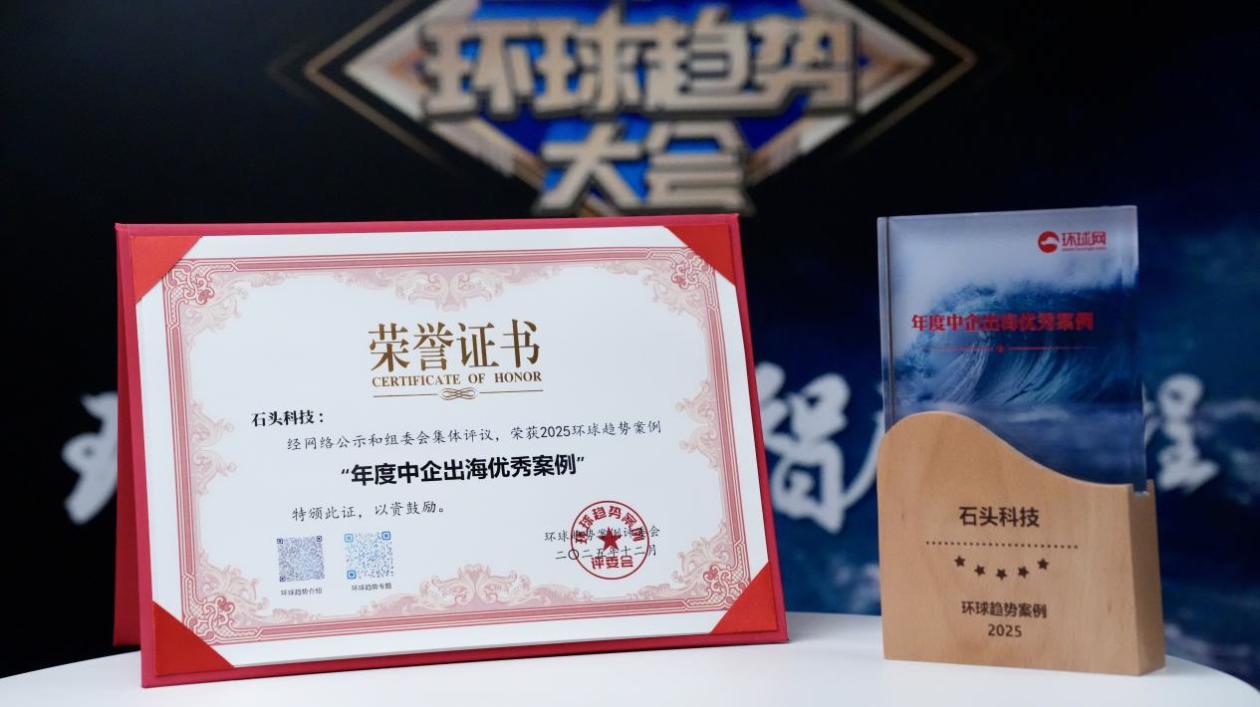
中企出海新篇:获全球超2000万家庭认可,石头科技以具身智能引领行业再进阶
Huan Qiu Wang· 2025-12-31 04:36
Core Insights - Stone Technology has been awarded the "Outstanding Case of Chinese Enterprises Going Global" for its exceptional global strategy and achievements, marking a significant recognition of its international market performance [1] - The award reflects the company's transition from "product export" to "brand export" and "value export," highlighting its commitment to high-quality and sustainable development [1] Group 1: Global Market Presence - Since its systematic overseas market layout began in 2018, Stone Technology has expanded its reach to over 170 countries and regions, serving more than 20 million households [2] - According to IDC, Stone Technology's smart vacuum robots ranked first in global shipments with a total of 3.788 million units shipped in the first three quarters of 2025, capturing a market share of 21.7% [2] Group 2: Product Development and Localization - The company has developed a mature localized operation system by deeply understanding user needs and market environments in different countries, focusing on "global layout and local deep cultivation" [5] - Stone Technology employs a "user feedback-driven R&D" strategy to quickly respond to regional demands, such as optimizing edge cleaning for the U.S. market and enhancing noise reduction for Japan [5] Group 3: Innovation and R&D Investment - From 2018 to the third quarter of 2025, Stone Technology's R&D investment as a percentage of revenue increased from 3.82% to 8.52%, significantly above the industry average [6] - The company holds 4,694 intellectual property rights as of June 2025, covering key areas such as navigation and obstacle avoidance [6] - The launch of the G30 Space exploration version vacuum cleaner in 2025 represents a significant innovation, featuring a five-axis folding bionic mechanical arm that enhances the robot's capabilities [6] Group 4: Future Outlook - Stone Technology aims to continue focusing on user needs, high-quality products, localized operations, and ongoing technological innovation to further its global brand development [8]
石头科技目标价涨幅近50% 三峡旅游评级被调低丨券商评级观察
2 1 Shi Ji Jing Ji Bao Dao· 2025-12-31 02:55
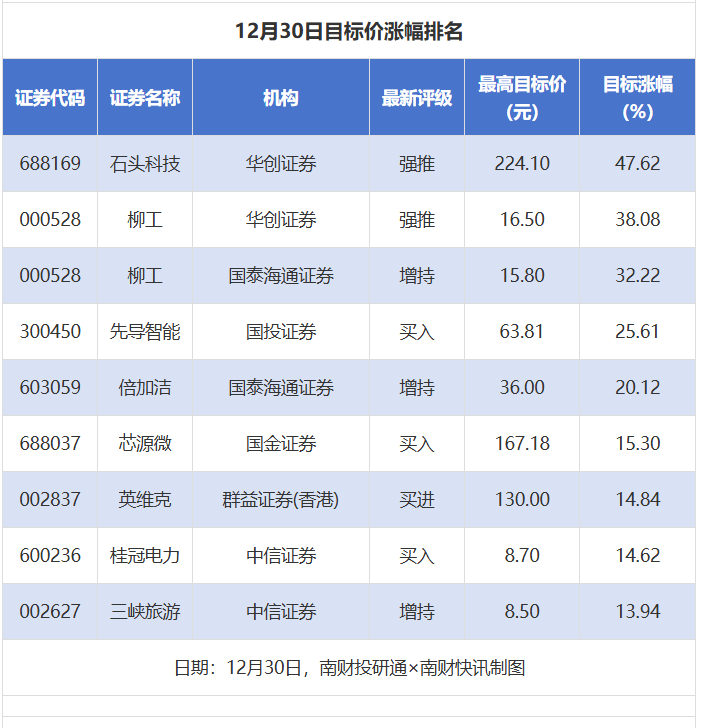
Group 1 - The core viewpoint of the article highlights the target price increases for listed companies, with notable mentions of Stone Technology and LiuGong, showing target price increases of 47.62% and 38.08% respectively, indicating strong bullish sentiment in the small home appliance and engineering machinery sectors [1][2]. - On December 30, a total of 29 listed companies received broker recommendations, with GuiGuan Electric and LiuGong each receiving recommendations from two brokers, while companies like Wanwei High New received one recommendation [3]. - The highest target price increase was for Stone Technology at 224.10 yuan, followed by LiuGong at 16.50 yuan, with other companies like XianDao Intelligent and BeiJiaJie also showing significant target price increases of 25.61% and 20.12% respectively [2][5]. Group 2 - On the downgrade side, only one company, Sanxia Tourism, had its rating lowered from "Buy" to "Hold" by CITIC Securities, indicating a cautious outlook in the tourism and scenic area sector [4]. - There were 11 instances of first-time coverage on December 30, with notable ratings including "Recommended" for Wanwei High New by China Galaxy Securities and "Buy" for XinZhu Co. by LianChuang Securities, reflecting a positive outlook for these companies in their respective industries [5].


机器人ETF鹏华(159278)盘中净申购5300万份,四部门推动智能机器人多环节规模化应用
Xin Lang Cai Jing· 2025-12-31 02:45
Group 1 - The National Robot Industry Index (980022) has shown a slight increase of 0.11% as of December 31, 2025, with notable gains from companies such as Boke Co., Ltd. (688160) up by 9.51% and iFlytek (002230) up by 2.68% [1] - The Ministry of Industry and Information Technology, along with three other departments, has issued the "Implementation Plan for Digital Transformation in the Automotive Industry," which aims to accelerate the application of artificial intelligence in key areas, promoting the large-scale use of intelligent robots in processes like welding, spraying, and assembly [1] - Huajin Securities indicates that by 2025, humanoid robots will enter a critical stage of industrialization, transitioning from the "0-1" phase to the "1-10" phase, with the demand for complex scene interactions driving an increase in component requirements [1] Group 2 - The top ten weighted stocks in the National Robot Industry Index (980022) as of November 28, 2025, include companies such as Double Ring Transmission (002472) and Ecovacs (603486), collectively accounting for 40.47% of the index [2] - The Robot ETF Penghua (159278) closely tracks the National Robot Industry Index, reflecting the price changes of listed companies related to the robot industry on the Shanghai and Shenzhen stock exchanges [1][3]




石头科技目标价涨幅近50%;三峡旅游评级被调低
2 1 Shi Ji Jing Ji Bao Dao· 2025-12-31 01:53
Group 1 - The core viewpoint of the article highlights the target price increases for listed companies, with notable gains for Stone Technology and LiuGong, showing increases of 47.62% and 38.08% respectively, indicating strong market confidence in these companies [1][2] - On December 30, a total of 29 listed companies received broker recommendations, with GuiGuan Electric and LiuGong each receiving two recommendations, reflecting their strong market positions in the electric power and engineering machinery sectors [3] Group 2 - On the downgrade side, only one company, Sanxia Tourism, had its rating lowered by CITIC Securities from "Buy" to "Hold," indicating a cautious outlook for this company in the tourism and scenic area [4][5] - A total of 11 companies received initial coverage from brokers on December 30, with notable mentions including Wanwei High-tech receiving a "Recommended" rating from China Galaxy Securities and LiuGong receiving a "Strong Buy" rating from Huachuang Securities, showcasing the interest in these sectors [6]