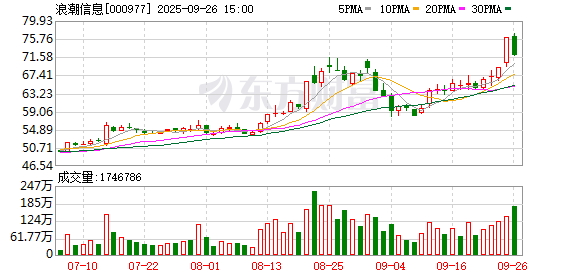
LCXX(000977)

Search documents
主力资金丨尾盘抢筹股出炉!
Zheng Quan Shi Bao Wang· 2025-09-26 11:13
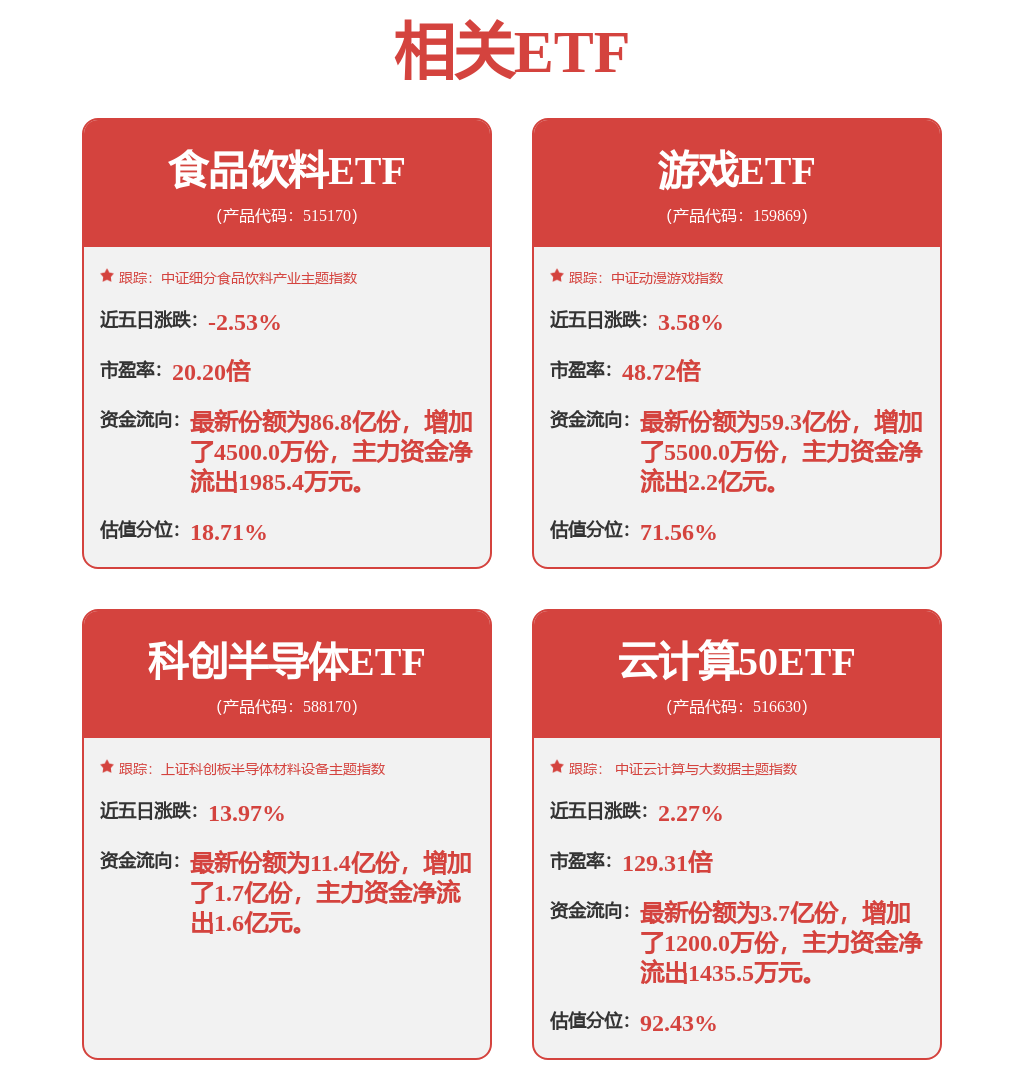
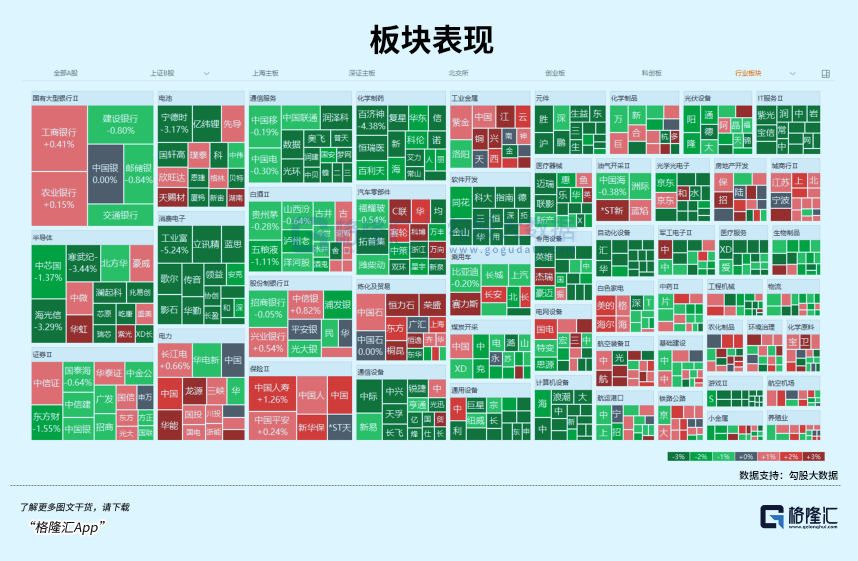
Group 1 - The main point of the news is that there has been a significant outflow of funds from the stock market, with a net outflow of 701.87 billion yuan on September 26, 2023, particularly affecting the ChiNext and CSI 300 indices [1] - Among the 10 sectors, the oil and petrochemical industry saw the highest increase of 1.17%, while the computer industry experienced the largest decline of 3.26% [1] - Five sectors received net inflows from major funds, with the automotive sector leading at 11.96 million yuan, followed by agriculture, beauty care, and food and beverage sectors, each with inflows exceeding 10 million yuan [1] Group 2 - In the automotive parts sector, Wanxiang Qianchao saw a net inflow of 5.7 billion yuan, marking a new high since May 16, 2025 [2] - Aerospace stocks like Chengfei Integration also attracted significant inflows, with 5.13 billion yuan, as some military stocks rebounded from low levels [2] - Tianji shares in the chemical sector experienced a net inflow of 4.81 billion yuan, with institutional investors contributing significantly to the buying [2] Group 3 - Over 200 stocks experienced net outflows exceeding 1 billion yuan, with leading stocks like Luxshare Precision and Shenghong Technology seeing outflows over 21 billion yuan [3] - Popular stocks such as Inspur Information, Dongshan Precision, and CATL also faced substantial outflows, each exceeding 13 billion yuan [4] Group 4 - In the last trading session, 16 stocks saw net inflows exceeding 40 million yuan, with Changchuan Technology leading at 2.3 billion yuan [6] - E-commerce concept stock Yaowang Technology experienced a net inflow of 1.73 billion yuan in the tail end of trading [7] Group 5 - Various ETFs tracked different sectors, with the Food and Beverage ETF seeing a net outflow of 198.54 million yuan despite an increase in shares [11] - The Gaming ETF had a net outflow of 220 million yuan, while the Semiconductor ETF experienced a net outflow of 160 million yuan [11][12]





中国AI 50概念下跌3.94%,24股主力资金净流出超亿元
Zheng Quan Shi Bao Wang· 2025-09-26 09:44
Group 1 - The China AI 50 concept index declined by 3.94%, ranking among the top declines in concept sectors, with Zhongheng Electric hitting the limit down, and companies like Megmeet, Rockchip, and Invidi also experiencing significant declines [1][2] - The main funds saw a net outflow of 10.794 billion yuan from the China AI 50 concept, with 45 stocks experiencing net outflows, and 24 stocks seeing outflows exceeding 100 million yuan [2][3] - The stock with the highest net outflow was Inspur Information, with a net outflow of 1.730 billion yuan, followed by SMIC, Zhongji Xuchuang, and Haiguang Information, with net outflows of 1.111 billion yuan, 759 million yuan, and 715 million yuan respectively [2][3] Group 2 - The top gainers in concept sectors included soybeans (+1.02%), while the AI PC sector and the China AI 50 concept were among the largest decliners, with declines of -4.01% and -3.94% respectively [2] - The stocks with the highest net outflows included Inspur Information (-5.34%), SMIC (-1.37%), and Zhongji Xuchuang (-4.81%), with respective net outflows of 1.729 billion yuan, 1.110 billion yuan, and 758 million yuan [2][3] - The stocks with the highest net inflows included Xinyi Technology (+0.53%), Northern Huachuang (-0.19%), and Hengxuan Technology (-0.77%), with respective net inflows of 98.282 million yuan, 78.617 million yuan, and 75.540 million yuan [4]




计算机行业资金流出榜:浪潮信息等36股净流出资金超亿元
Zheng Quan Shi Bao Wang· 2025-09-26 09:44
Market Overview - The Shanghai Composite Index fell by 0.65% on September 26, with 10 industries experiencing gains, led by the petroleum and petrochemical sector with a rise of 1.17% and the environmental sector with a 0.38% increase [2] - The computer and electronics sectors faced the largest declines, with drops of 3.26% and 2.75% respectively, making the computer industry the worst performer of the day [2] Capital Flow Analysis - The main capital outflow from the two markets totaled 83.579 billion yuan, with 5 industries seeing net inflows. The automotive sector led with a net inflow of 0.882 billion yuan despite a 0.56% decline in its stock price [2] - The banking sector also saw a slight increase of 0.08% with a net inflow of 0.0566 billion yuan [2] - A total of 26 industries experienced net capital outflows, with the electronics sector leading at 29.836 billion yuan, followed by the computer sector with an outflow of 13.807 billion yuan [2] Computer Industry Performance - The computer industry saw a decline of 3.26% with a net capital outflow of 13.807 billion yuan, out of 335 stocks in the sector, only 37 stocks rose, and 2 stocks hit the daily limit [3] - Among the stocks with net inflows, Huijin Co. topped the list with a net inflow of 1.41 billion yuan, followed by Meiri Interactive and Dazhihui with inflows of 1.03 billion yuan and 0.645 billion yuan respectively [3] - The stocks with the largest capital outflows included Inspur Information, with an outflow of 1.730 billion yuan, followed by Tuo Wei Information and Unisplendour with outflows of 0.672 billion yuan and 0.504 billion yuan respectively [3][5] Capital Inflow and Outflow Rankings - **Top Inflow Stocks**: - Huijin Co. (2.91% increase, 141.02 million yuan inflow) - Meiri Interactive (0.35% increase, 102.72 million yuan inflow) - Dazhihui (0.32% increase, 64.50 million yuan inflow) [4] - **Top Outflow Stocks**: - Inspur Information (-5.34% decrease, -1.729 billion yuan outflow) - Tuo Wei Information (-5.47% decrease, -671.74 million yuan outflow) - Unisplendour (-5.01% decrease, -503.98 million yuan outflow) [5]


缩量回调,节前扔不扔?
Ge Long Hui· 2025-09-26 09:38
Market Overview - The three major indices experienced a collective pullback, with the Shanghai Composite Index down 0.65%, the Shenzhen Component down 1.76%, and the ChiNext Index down 2.60% [1] - The trading volume in the Shanghai and Shenzhen markets exceeded 2.1 trillion, a decrease of over 200 billion compared to the previous day [2] - The market is showing increased divergence as the holiday approaches, with trading volume relatively dull compared to last week, but volatility is on the rise [3] Sector Performance - The market saw a broad adjustment, with most industry sectors declining. Wind power equipment, chemical fiber, fertilizer, and insurance sectors showed gains, while technology sectors such as gaming, consumer electronics, electronic components, internet services, communication equipment, and software development faced significant declines [6] - Technology stocks experienced a widespread retreat, particularly in computing power sectors, with companies like Zhongheng Electric, Lianang Micro, and Qingshan Paper hitting their daily limit down. Major stocks like Inspur Information and Industrial Fulian also saw substantial drops [8] - Copper-related stocks performed well against the trend, with companies like Jingyi Co. achieving three consecutive limit-up days, and Jiangxi Copper and Tongling Nonferrous Metals also rising. This was influenced by supply concerns following a landslide at the Grasberg mine in Indonesia, which announced "force majeure" due to production stoppage [9] Investment Sentiment - As the National Day holiday approaches, investors face a classic dilemma of whether to hold stocks or cash. The market is experiencing increased volatility and accelerated sector rotation [19] - The market's profitability is declining, with only 32% of stocks rising this week, marking a low point in the current uptrend [21] - Historical data indicates that the probability of index declines in the five trading days leading up to the National Day holiday is 60%, suggesting a cautious outlook for the near term [21] Future Outlook - The technology sector has been a major contributor to the recent index gains, but the current crowded positioning indicates a demand for adjustment. The TMT sector has contributed 42% to the overall A-share index increase since June 23, with a trading volume share of 37% [25] - Given the historical trend of poor performance before the National Day holiday, there is a likelihood of profit-taking, and sectors with strong bottom support signals, such as banking and insurance, may be more favorable [26] - The market is expected to remain in a downward trend with a solid base, and while the medium to long-term upward momentum is still sufficient, more definitive trends may emerge post-October [27]




计算机设备板块9月26日跌2.83%,旋极信息领跌,主力资金净流出36.33亿元
Zheng Xing Xing Ye Ri Bao· 2025-09-26 08:48
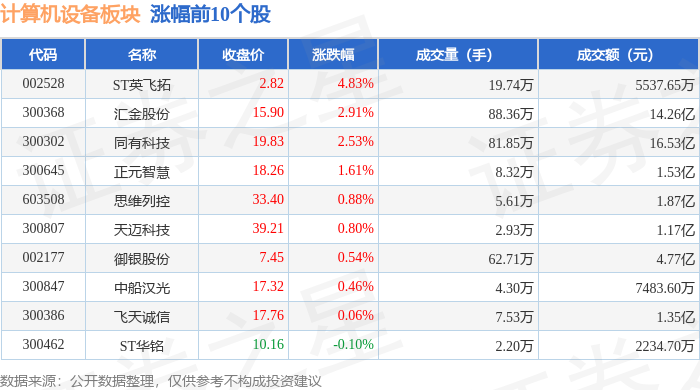
Market Overview - The computer equipment sector experienced a decline of 2.83% on September 26, with Xuanji Information leading the drop [1] - The Shanghai Composite Index closed at 3828.11, down 0.65%, while the Shenzhen Component Index closed at 13209.0, down 1.76% [1] Stock Performance - Notable gainers included: - ST Yingfituo: closed at 2.82, up 4.83% with a trading volume of 197,400 shares and a turnover of 55.38 million [1] - Huijin Co.: closed at 15.90, up 2.91% with a trading volume of 883,600 shares and a turnover of 142.6 million [1] - Major decliners included: - Xuanji Information: closed at 6.47, down 7.70% with a trading volume of 1,914,900 shares and a turnover of 127.5 million [2] - Yimikang: closed at 16.41, down 6.01% with a trading volume of 338,600 shares and a turnover of 56.9 million [2] Capital Flow - The computer equipment sector saw a net outflow of 3.633 billion in main funds, while retail investors contributed a net inflow of 2.477 billion [2] - The sector's capital flow indicates a mixed sentiment, with institutional investors pulling back while retail investors showed interest [2][3] Individual Stock Capital Flow - Huijin Co. had a main fund net inflow of 1.45 billion, but retail investors showed a net outflow of 984.26 million [3] - Xuanji Information experienced a significant net outflow of 1.27 billion from retail investors, indicating a lack of confidence [3]


AI驱动下服务器产业趋势解析
2025-09-26 02:28
Summary of AI Server Industry Conference Call Industry Overview - The AI server market is characterized by a "one leader, many strong" pattern, with Inspur Information leading the market, followed by Alibaba, Tencent, ByteDance, and others [1][4] - Major internet companies and AI server manufacturers primarily adopt an ODM collaboration model, where cloud providers propose solutions and server manufacturers participate in R&D and OEM [1][6] Key Insights - **Market Share**: Inspur Information holds approximately 35% to 40% market share among the three major cloud providers, with varying shares for other competitors like Huawei, ZTE, and H3C [4][5] - **Profit Margins**: AI servers have higher gross margins than traditional servers, but competition is fierce. Leading companies like Inspur have gross margins of about 5% to 6% and net profits of 2% to 3%, while second-tier companies have lower margins [1][7] - **Technological Evolution**: The rise of AI has significantly impacted server architecture, shifting from CPU-centric models to heterogeneous computing architectures that include GPUs, NPUs, FPGAs, and DPUs [3] - **Cooling Technologies**: Traditional air cooling is being replaced by liquid cooling solutions due to increased power and cooling demands from AI models [3][12] Competitive Landscape - **Core Advantages of Inspur**: Inspur possesses strong technical capabilities, delivery integration, and extensive industry experience, making it a competitive player in the cloud supply chain [8] - **Domestic GPU Alternatives**: Due to bilateral trade impacts, domestic manufacturers are seeking alternatives to NVIDIA GPUs, with companies like Ascend and Pingtouge emerging, although high-end computing still relies on NVIDIA [1][9] Future Trends - **Cloud Providers' Overseas Deployment**: Companies like ByteDance prioritize overseas deployment, with expectations that their domestic to overseas deployment ratio will shift from 8:2 to 6:4 by 2026 [9] - **Capital Expenditure**: Alibaba's projected capital expenditure for 2026 is approximately 150 billion yuan, with 60% allocated to AI servers and 45% specifically for high-end AI computing [16] Additional Insights - **Factors in GPU Selection**: Cloud providers prioritize performance, single-card computing power, energy efficiency, architecture flexibility, and price when selecting GPU solutions [11] - **Liquid Cooling Development**: Liquid cooling is primarily used in supercomputing nodes, with limited adoption among domestic server manufacturers [12] - **Emerging Supernode Solutions**: Major internet companies are developing supernode solutions, with Alibaba's Panjiu 128 node being the most powerful in the current market [13] Conclusion - The AI server industry is rapidly evolving, driven by technological advancements and competitive dynamics among major players. Companies must focus on enhancing their technological capabilities, optimizing cost structures, and adapting to market demands to maintain a competitive edge.
三大指数涨跌不一 创业板指涨1.58%
Chang Jiang Shang Bao· 2025-09-26 01:23
Market Performance - The three major stock indices opened lower but closed higher, with the Shanghai Composite Index at 3853.30 points, down 0.01%, the Shenzhen Component Index at 13445.90 points, up 0.67%, and the ChiNext Index at 3235.76 points, up 1.58% [1] - The total trading volume in the Shanghai and Shenzhen markets reached 2.37 trillion yuan [1] Sector Highlights - The AI sector continued to perform strongly, with companies like Inspur Information (000977), Cambridge Technology (603083), and Huagong Technology (000988) hitting their daily limit and reaching historical highs [1] - The energy storage sector saw fluctuations, with Sunshine Power (300274) and CATL (300750) also reaching historical highs [1] - The chip industry chain was notably active, with Zhangjiang Hi-Tech (600895), Tongfu Microelectronics (002156), and Kaimete Gas (002549) achieving historical highs during intraday trading [1] Declines - The port and shipping sector experienced a collective decline, with Nanjing Port (002040) dropping over 9% at one point [1] Investment Strategy - Pacific Securities indicated that market volatility has increased as the holiday approaches, with accelerated sector rotation [1] - Given the generally poor performance of A-shares before holidays, along with dual pressures from financing risks and interest rates, it is advised for investors to temporarily avoid sectors with high financing ratios [1] - The banking sector shows significant bottom support and may be worth monitoring [1]


特朗普宣布将对进口建材、家具及药品实施高额关税;广州:房企自持住房可入市销售|盘前情报
2 1 Shi Ji Jing Ji Bao Dao· 2025-09-26 00:41
Market Overview - On September 25, the A-share market experienced fluctuations, with the ChiNext Index rising over 2% at one point, reaching a three-year high. The Shanghai Composite Index closed down 0.01%, while the Shenzhen Component Index rose by 0.67% and the ChiNext Index increased by 1.58% [2][3] - The total trading volume in the Shanghai and Shenzhen markets was 2.37 trillion yuan, an increase of 44.3 billion yuan compared to the previous trading day [2] Sector Performance - The gaming, AI applications, and controllable nuclear fusion sectors saw significant gains, while the port shipping, precious metals, and oil and gas sectors experienced declines [2] International Market - The U.S. stock market indices collectively fell on September 25, with the Dow Jones Industrial Average down by 173.96 points (0.38%), closing at 45,947.32 points. The S&P 500 dropped by 33.25 points (0.50%) to 6,604.72 points, and the Nasdaq Composite fell by 113.16 points (0.50%) to 22,384.70 points [4][5] - European markets also saw declines, with the FTSE 100 down 0.39%, the CAC 40 down 0.41%, and the DAX down 0.56% [4][5] - International oil prices slightly decreased, with WTI crude oil closing at $64.98 per barrel (down 0.02%) and Brent crude oil at $69.42 per barrel (up 0.16%) [4][5] Digital Currency Development - The Digital Renminbi International Operation Center officially commenced operations, introducing three major business platforms aimed at enhancing cross-border payment systems and financial infrastructure [7] Copper Industry Insights - The China Nonferrous Metals Industry Association is accelerating research on how to strengthen the standardized management of copper smelting capacity, addressing issues of excessive competition and low processing fees in the copper industry [8][9][10] Policy Changes - Guangzhou has introduced new policies allowing real estate companies to sell self-held housing after paying the necessary fees, aimed at improving land utilization efficiency [13] - The Chinese Foreign Exchange Trading Center announced an increase in the daily net limit for the "Swap Connect" mechanism to 45 billion yuan starting October 13 [11] Company Announcements - Xiaomi launched its new Xiaomi 17 series smartphones, starting at a price of 4,499 yuan [12] - Several companies, including Shanghai Electric and Inspur Information, saw significant net inflows of capital, indicating strong market interest [18][20]



传媒、有色金属等行业走强 86股获主力资金净流入超1亿元
Zheng Quan Shi Bao Wang· 2025-09-26 00:27
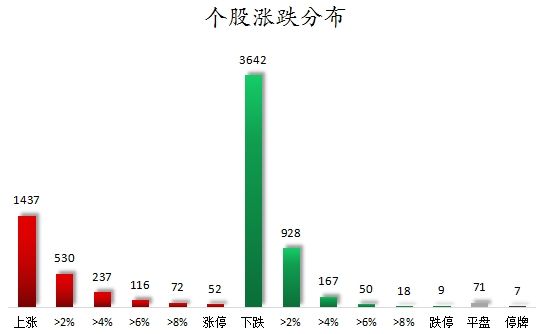
Market Overview - The Shanghai Composite Index closed at 3853.30 points, down 0.01%, with a trading volume of 1001.2 billion yuan [1] - The Shenzhen Component Index rose by 0.67% to 13445.90 points, with a trading volume of 1369.885 billion yuan [1] - The ChiNext Index increased by 1.58% to 3235.76 points, with a trading volume of 663.053 billion yuan [1] - The STAR 50 Index rose by 1.24% to 1474.49 points, with a trading volume of 102.9 billion yuan [1] - Total trading volume for both markets was 2371.085 billion yuan, an increase of 44.302 billion yuan from the previous trading day [1] Sector Performance - Strong sectors included Media, Non-ferrous Metals, Communication, Power Equipment, and Computer industries [2] - Weak sectors included Textiles, Precious Metals, Agriculture, Home Appliances, Transportation, Real Estate, Coal, and Banking [2] - A total of 1437 stocks rose while 3642 stocks fell, with 52 stocks hitting the daily limit up and 9 stocks hitting the limit down [2] Fund Flow Analysis - The net outflow of main funds from the Shanghai and Shenzhen markets was 23.6 billion yuan [5] - The ChiNext saw a net outflow of 8.927 billion yuan, while the CSI 300 experienced a net outflow of 0.627 billion yuan [5] - Eight sectors saw net inflows, with the Computer sector leading at 1.195 billion yuan, followed by Power Equipment, Media, and Communication [5] - The Electronics sector had the highest net outflow at 14.843 billion yuan, followed by Machinery, Chemicals, and Home Appliances [5] Individual Stock Performance - 86 stocks received net inflows exceeding 100 million yuan, with Inspur Information leading at 1.777 billion yuan [8] - Other notable stocks with significant inflows included NewEase Technology, Huagong Technology, and CATL [8] - 141 stocks experienced net outflows exceeding 100 million yuan, with Shenghong Technology leading at 1.62 billion yuan [11] - Other stocks with significant outflows included Heertai, XianDao Intelligent, and Longchuan Technology [11] Institutional Activity - Institutions had a net buy of 1.28 billion yuan, with Inspur Information being the top net buy at approximately 130 million yuan [14] - Other stocks with significant institutional net buying included Lixing Co., Hengerdai, and TCL Zhonghuan [14] - The most sold stock by institutions was Zhongheng Electric, with a net sell of approximately 144 million yuan [14]



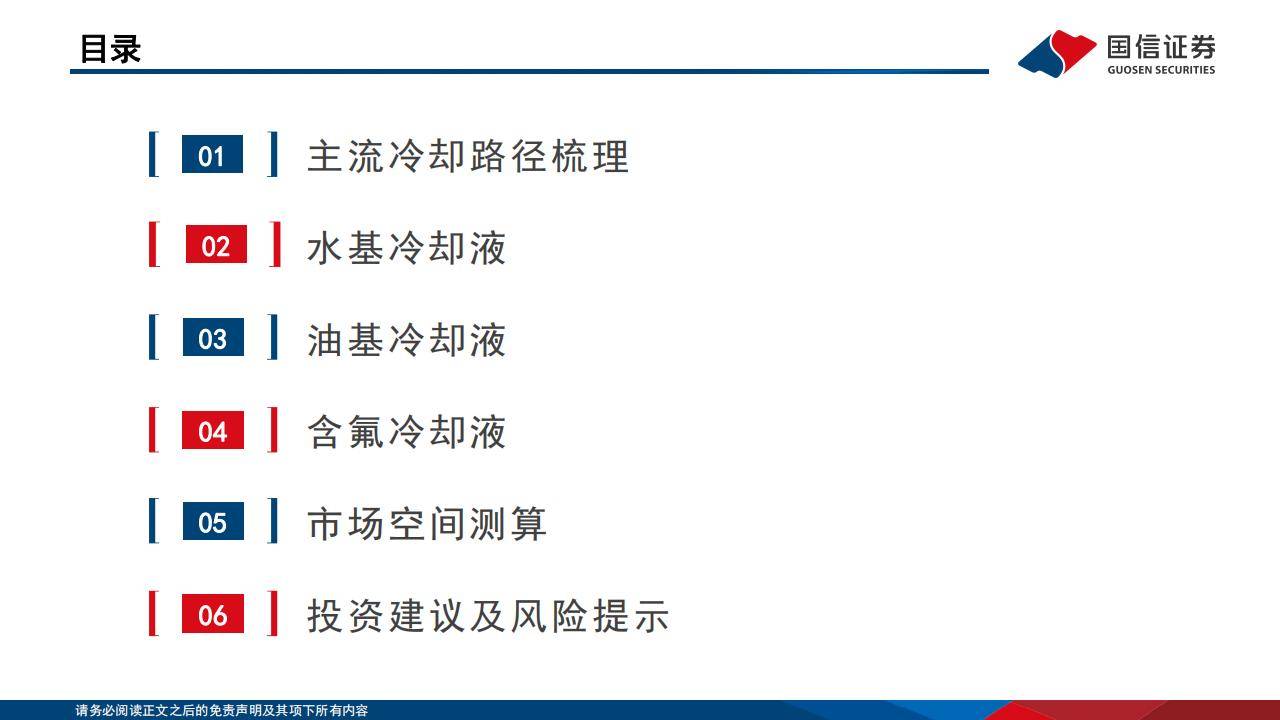
液冷冷却液+AI数据中心+氟化工,最全龙头公司产业链梳理(附名单)
Sou Hu Cai Jing· 2025-09-25 15:48
Core Viewpoint - The article discusses the growing importance of liquid cooling technology in data centers due to increasing power consumption and heat generation from AI server chips, highlighting the shift from traditional air cooling to liquid cooling solutions. Group 1: Liquid Cooling Technology Types - Liquid cooling technology is categorized into two main types: cold plate and immersion cooling, with cold plate cooling holding a 91% market share in 2022 due to its maturity and compatibility [3][31]. - Immersion cooling, while having the highest heat dissipation capability, accounts for about 8% of the market and is represented by companies like Shuguang Data and Guangdong He Yi [4][31]. - Cold plate cooling primarily uses water-based coolants, offering advantages such as low cost and fast heat dissipation [5]. Group 2: Cooling Liquid Material Systems - The main types of cooling liquids include water-based, oil-based, and fluorinated coolants [7]. - Water-based coolants are mainly used in single-phase cold plate cooling, supplied by companies like Compton and Unification [8]. - Oil-based coolants are used in single-phase immersion cooling, with suppliers like China Petroleum and Unification [8]. - Fluorinated coolants are crucial for high reliability and extreme physical conditions, with companies like Juhua and Dongyue Group achieving large-scale production [8]. Group 3: Microchannel Liquid Cooling Breakthroughs - Microchannel cold plate technology is becoming a focus for AI chip manufacturers, with companies like Nvidia and Microsoft pushing for MLCP standards [9]. - Domestic companies such as Highlan and Feirongda are gaining certifications and expanding their market share in this area [9]. Group 4: Market Size and Price Logic - By 2028, the global AI data center installation capacity is expected to reach 59 GW, corresponding to a cooling liquid demand exceeding 89,000 tons [10]. - The Chinese market for liquid-cooled data centers is projected to grow at a compound annual growth rate (CAGR) of 51.4%, with the industry scale expected to exceed 100 billion yuan by 2027 [10]. Group 5: Leading Projects - Major companies like Alibaba, Shuguang, Huawei, and Lenovo are implementing liquid-cooled data center demonstration projects, with Alibaba achieving a PUE of 1.12 in its 5A green liquid-cooled data center [14][15]. - Shuguang has realized the world's first large-scale commercial application of immersion phase change liquid cooling [15]. - Huawei's cloud data center in Ulanqab utilizes indirect evaporative cooling, achieving a PUE of 1.15 [16]. Group 6: Mainstream Cooling Pathways - The article outlines the mainstream cooling pathways, including water-based, oil-based, and fluorinated cooling liquids, emphasizing the rapid growth of the liquid cooling market [18][21].