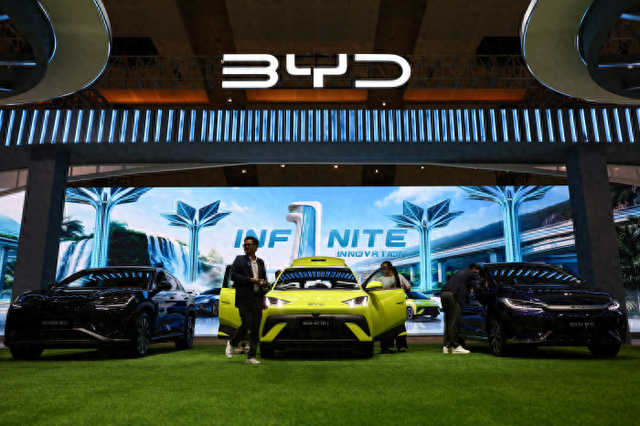
BYD(002594)

Search documents
松下、三星等动力电池巨头,为什么输给了中国人?
Sou Hu Cai Jing· 2026-02-26 02:28
Core Insights - The article discusses the evolution of the global lithium battery industry, highlighting the rise and fall of different players, particularly focusing on the dominance of Chinese companies in recent years [1][29]. Historical Context - In the 1990s, Japanese companies like Sony, Panasonic, and Sanyo dominated the lithium battery market, controlling nearly 90% of the global share [1]. - By the early 2000s, South Korean firms such as LG Chem, Samsung SDI, and SK On began to emerge, eventually surpassing Japan to become the largest lithium battery producers around 2011 [3]. Technological Shifts - The introduction of Tesla in 2003 marked a significant shift in battery technology, as the company sought high-performance batteries for electric vehicles, leading to a partnership with Panasonic for the 18650 cylindrical battery [5][7]. - Tesla's success propelled Panasonic's battery business, which at its peak held a 40% market share in the global battery market [9]. Emergence of Chinese Companies - The success of the 2008 Beijing Olympics and subsequent government initiatives, such as the "Ten Cities, Thousand Vehicles" program, catalyzed the growth of China's electric vehicle and battery industries [11][13]. - In 2011, CATL was established, focusing on power batteries, and began collaborations with major automakers like BMW, while BYD also entered the electric vehicle market [14][15]. Market Dynamics - By 2014, China's new energy vehicle sales surged by 320%, significantly increasing battery demand and allowing companies like CATL and BYD to scale production [15]. - The introduction of the "battery whitelist" policy in 2015 favored domestic manufacturers, providing a four-year period for local companies to strengthen their market position [17]. Competitive Landscape - In 2017, CATL surpassed Panasonic in battery shipments for the first time, achieving a 17% global market share, marking a pivotal moment in the battery industry's competitive landscape [17]. - By 2025, Chinese companies are projected to occupy six of the top ten positions in global battery installations, with a combined market share exceeding 70% [29]. Industry Structure - China has developed a comprehensive and competitive lithium battery supply chain, from raw materials to battery manufacturing, creating strong synergies [20]. - Chinese companies have significantly reduced battery costs to below 40 RMB per kWh, while South Korean and Japanese companies remain at higher costs, creating a competitive disadvantage [22]. Future Outlook - The article concludes that the shift in battery dominance is not only a result of technological competition but also reflects national strategies and industrial policies that have fostered innovation in China [30].





比亚迪近3年累计招录5万多名应届大学生—— 构建全链条人才生态体系
Jing Ji Ri Bao· 2026-02-26 02:23
Group 1 - Talent is the source of innovation and a valuable asset for companies, with BYD establishing a comprehensive talent ecosystem through large-scale campus recruitment, school-enterprise cooperation, and multi-faceted collaboration with the government [1] - Over the past three years, BYD has recruited more than 50,000 fresh graduates, with a high proportion of master's and doctoral candidates at 70%, and nearly 80% of these positions are in R&D [1] - BYD's chairman emphasizes that the company's 30-year journey is driven by talent, which has been crucial for technological innovation and achieving industrial dreams [1] Group 2 - BYD collaborates with government departments to enhance employment opportunities, utilizing local talent subsidies and support policies to broaden recruitment channels and reduce costs [2] - The company has established an emergency collaboration mechanism with government support to quickly respond to labor shortages during peak hiring times [2] - BYD actively engages with various universities through national project applications and joint laboratories, fostering deep collaborative training mechanisms and has trained over 1,600 master's, doctoral, and postdoctoral candidates in partnership with more than 10 universities [2] Group 3 - To retain talent, BYD has over 120,000 R&D personnel, with more than half coming from campus recruitment, and has developed a "Tomorrow Star" training program for fresh graduates [3] - The company employs a mentorship system to help new hires quickly adapt and improve their professional skills through various training methods [3] - BYD addresses the skills shortage by implementing a comprehensive talent selection, training, and retention process, with over 50% of its skilled labor needs met through internal training [3]
深圳2025年战略性新兴产业增加值达1.67万亿元 新能源汽车等8个集群实现两位数增长
Zhong Guo Fa Zhan Wang· 2026-02-26 01:52
Core Insights - Shenzhen's strategic emerging industries are projected to achieve a value-added output of 1.67 trillion yuan by 2025, accounting for 43.0% of the regional GDP, driven by sectors such as semiconductors, smart connected vehicles, and artificial intelligence [1] - BYD has become the sales champion of pure electric vehicles in 2025, with a total sales volume of 4.602 million units, marking its entry into the top five global automotive groups [2] - Shenzhen has over 1,400 smart driving companies, leading the nation, and has been approved as a pilot city for integrated smart connected vehicle applications [2] - The consumer electronics industry in Shenzhen is characterized by a diverse product range and a complete supply chain, with over 90% of core components available within a two-hour drive [3] - The humanoid robot sector has gained significant momentum since 2025, with strong collaboration between universities and industries enhancing Shenzhen's global competitiveness [4] - Shenzhen has 1,333 national-level specialized "little giant" enterprises, ranking first among cities in China, and 117 national manufacturing champions, ranking second [5] - The integration of open-source technologies like HarmonyOS is driving efficiency and industrial upgrades across various sectors in Shenzhen [6] - The "Moli Camp" AI ecosystem community in Nanshan has become a leading incubator for AI vertical fields, attracting nearly 200 companies with a total valuation exceeding 20 billion yuan [7] Group 1 - Strategic emerging industries in Shenzhen are expected to contribute significantly to economic growth by 2025 [1] - BYD's rapid ascent in global automotive sales highlights the strength of Shenzhen's new energy vehicle sector [2] - The city is a leader in smart driving technology, fostering innovation and collaboration among numerous companies [2] Group 2 - Shenzhen's consumer electronics industry benefits from a robust supply chain and diverse product offerings [3] - The humanoid robot industry is experiencing rapid commercialization, supported by strong academic and industrial partnerships [4] - The concentration of specialized enterprises and manufacturing champions underscores Shenzhen's industrial strength [5] Group 3 - The integration of open-source technologies is enhancing operational efficiency and driving industrial upgrades [6] - The establishment of the "Moli Camp" AI ecosystem is positioning Shenzhen as a hub for AI innovation and development [7]
小米首次进入全球新能源汽车销量榜前十,潘九堂:这是强大产品力的胜利
Xin Lang Cai Jing· 2026-02-26 01:30
2月25日消息,Clean Technica公布了2025年全球新能源汽车销量TOP20榜单。比亚迪以419.38万辆的销 量稳居榜首,特斯拉以163.6万辆位居第二,小米以41.2万辆首次进入全球前十。 小米产业投资部合伙人潘九堂转发该消息并发文:作为汽车领域的新品牌,小米汽车上市第二年就进入 全球前10,这是强大产品力的胜利(融合先进智能科技+高质量驾控/机械素质),也是广大用户+中国 汽车产业链+小米工程师们压强投入一起创造的奇迹。汽车是百年赛道,小米汽车继续加油。 | - | | | | | | | | --- | --- | --- | --- | --- | --- | --- | | Top Anion Branch In Warld in EW halles | | perceip : Cat an Stan 2001 | | | | | | 1. 8 m | | 4546 | | | | | | I T his | 1,48783 | | | | | | | · M time | 1000 | | | | | | | i V Maing | chapter | | | | | | | 1 ( ...

1月动力电池装车量稳步增长
Zhong Guo Neng Yuan Wang· 2026-02-26 01:13
Core Insights - The report indicates a steady growth in China's power battery installation volume, with January figures showing a total of 42 GWh, representing an 8% year-on-year increase [1] - The sales of new energy vehicles in January reached 945,000 units, a slight increase of 0.1% year-on-year, with a penetration rate of 40.3% [1] - Leading companies in the power battery sector, such as CATL and BYD, have shown varying performance, with CATL's installation volume increasing by 15% to 20.9 GWh, while BYD's decreased by 18% to 7.3 GWh [1] Industry Performance - The power equipment industry experienced a weekly increase of 1.13%, ranking 13th among 31 primary industries in the Shenwan index [2] - The industry outperformed the CSI 300 index, with the Shanghai Composite Index and CSI 300 both showing a 0.4% increase [2] - Sub-sectors such as electric motors and other power equipment saw gains of 2.4% and 6.0%, respectively, while photovoltaic and wind power equipment experienced declines [2] Investment Strategy - The report suggests focusing on companies within the power battery supply chain that are technologically advanced and hold significant market influence, particularly CATL [3]
传魅族手机停摆,3月正式退市,魅友刷屏:加油;苹果阴间Bug!网友称iPhone深夜自动拨打电话,官方回应;元宝AI除夕夜辱骂用户,回应来了
雷峰网· 2026-02-26 00:38
Key Points - Meizu's mobile business has reportedly come to a halt and is set to officially delist in March 2026, with many employees leaving the company and debts becoming bad debts [3][4] - Liu Qiangdong has received five orders for large yachts, each averaging €60 million, and plans to invest in yacht manufacturing in China [14][15] - BYD is promoting long-term low-interest loans for its vehicles, with over 20 automotive brands following suit [16][17] - Xiaomi's legal issues continue as a self-media account was ordered to pay ¥5 million for infringement, with connections to NIO's founder being clarified [17][18] - Apple CEO Tim Cook's annual salary exceeds $74 million, and there are ongoing speculations about the company's first foldable iPhone [38][39] - Nvidia reported a 73% year-over-year revenue increase in its fourth fiscal quarter, exceeding market expectations [40][41] - Aston Martin plans to cut 20% of its workforce due to declining sales and challenging tariff policies [46][48] - Ubisoft is undergoing a major restructuring, planning to lay off over 2,000 employees to achieve a cost reduction target of €200 million [50][51] - Unity Software is considering selling its Chinese operations, with a potential valuation exceeding $1 billion [53]


特斯拉、小鹏、奇瑞……车企扎堆跨界“造人”
Mei Ri Shang Bao· 2026-02-25 22:23
Core Viewpoint - The performance of humanoid robots during the Spring Festival Gala has shifted public perception, indicating that these robots are moving beyond mere demonstrations to potential real-world applications, with 2026 identified as a critical year for mass production [1][2][6] Group 1: Industry Developments - Several leading automotive companies are entering the humanoid robot sector, with 2026 set as a key milestone for mass production [2][6] - Xiaopeng Motors plans to start mass production of its IRON humanoid robot by the end of this year, aiming to be the first to achieve large-scale production of advanced humanoid robots [2] - Tesla announced that its third-generation Optimus robot will be released in the first quarter of this year, with plans for mass production by the end of the year [2] - BYD and Changan are also actively developing humanoid robots, with BYD focusing on production for its own factories and Changan planning to release a prototype by 2027 [3] Group 2: Application and Pricing - Current humanoid robots are primarily being developed for industrial applications, with plans to expand into consumer markets later [4] - Initial applications include factory work, automotive showrooms, and traffic assistance, with future potential for home care and cleaning [4] - The pricing of humanoid robots is expected to decrease significantly, with BYD targeting a price below 100,000 yuan and Tesla estimating around 140,000 yuan after scaling production [4] - The commonality of core components between humanoid robots and smart vehicles is over 60%, allowing for cost reductions and shorter development cycles [4]


构建全链条人才生态体系
Zhong Guo Jing Ji Wang· 2026-02-25 22:00
Core Viewpoint - Talent is the source of innovation and a valuable asset for companies, with BYD establishing a comprehensive talent ecosystem through large-scale campus recruitment, school-enterprise cooperation, and multi-faceted collaboration with the government [1][2]. Group 1: Talent Recruitment - In the past three years, BYD has recruited over 50,000 fresh graduates, with a high proportion of master's and doctoral candidates at 70%, and nearly 80% of these positions are in R&D [1]. - BYD collaborates with government departments to enhance recruitment precision and coverage, effectively broadening recruitment channels and reducing costs [2]. Group 2: Talent Development - BYD has over 120,000 R&D personnel, with more than half coming from campus recruitment, and has established a "Tomorrow's Stars" training camp for fresh graduates to support their career growth [3]. - The company employs a mentorship system for one-on-one guidance, helping new hires quickly adapt and improve their professional skills through various training methods [3]. Group 3: Talent Retention - To address the shortage of skilled workers, BYD has implemented a comprehensive talent selection, training, and retention process, including a "master-apprentice" model for critical skill positions [3]. - BYD has resolved over 50% of its skilled labor needs through internal training programs [3]. Group 4: Industry Impact - BYD's initiatives not only support its rapid growth but also contribute to the output of a large number of professionals in the new energy sector, highlighting the role of leading companies in stabilizing the job market and upgrading the industry [4].
比亚迪近3年累计招录5万多名应届大学生——构建全链条人才生态体系
Jing Ji Ri Bao· 2026-02-25 21:40
Core Insights - Talent is the source of innovation and a valuable asset for companies, with BYD establishing a comprehensive talent ecosystem through large-scale campus recruitment, school-enterprise cooperation, and diverse collaboration with the government [2][3] Group 1: Talent Recruitment and Development - Over the past three years, BYD has recruited more than 50,000 fresh graduates, with a high proportion of master's and doctoral candidates at 70%, and nearly 80% of these positions are in R&D [2] - BYD's chairman emphasized that half of the general managers directly under his supervision have grown from fresh graduates, highlighting the company's commitment to nurturing talent from within [2] - The company has developed a "Tomorrow Star" training camp for fresh graduates, utilizing a phased training mechanism and a mentorship system to enhance their professional skills [4] Group 2: Collaboration with Government and Educational Institutions - BYD collaborates with government departments to enhance recruitment precision and coverage, effectively broadening recruitment channels and reducing costs [3] - The company actively participates in government employment service platforms and has established an emergency collaboration mechanism for rapid workforce adjustment during peak hiring periods [3] - BYD has partnered with over 10 universities to jointly cultivate more than 1,600 master's, doctoral, and postdoctoral candidates through various collaborative models [3] Group 3: Addressing Skill Shortages - BYD has over 120,000 R&D personnel, with more than half coming from campus recruitment, and has implemented a comprehensive approach to address the shortage of skilled workers [4] - The company employs a mentorship model for critical skill positions and customized training programs for general skill roles, achieving over 50% of its skilled labor needs through internal training [4] - These initiatives not only support BYD's rapid growth but also contribute significantly to the stability of the employment market and the upgrading of the industry [4]
欧洲走向油电切换新拐点,比亚迪在欧增长翻两倍
Guan Cha Zhe Wang· 2026-02-25 11:40
Core Insights - BYD's new car registrations in Europe surged from 6,884 units in January 2025 to 18,242 units in January 2026, marking an almost twofold year-on-year increase [1][3] - The demand for electric and hybrid vehicles in the European market is on the rise, indicating a strong foundation for growth throughout the year [3][6] - The entry of Chinese electric vehicle manufacturers like BYD is enhancing the diversity of electric products in the European market and increasing competition [6] Market Trends - The overall passenger car registrations in Europe decreased by 3.5% year-on-year, with the EU market down by 3.9%, and fuel vehicle registrations plummeting by approximately 26% [5][6] - In contrast, pure electric vehicle sales in Europe grew by nearly 14% year-on-year, hybrid vehicle sales increased by 6.4%, and plug-in hybrid vehicle sales rose by 32% [5][6] Competitive Landscape - Tesla's new car registrations in Europe fell by 17% to 8,075 units in January 2026, highlighting the competitive pressure from BYD and other Chinese manufacturers [6] - BYD has recently overtaken Tesla to become the largest electric vehicle seller globally, further solidifying its position as a leader in the new energy sector [6] Strategic Developments - BYD is accelerating its localization efforts in Europe, including the construction of a factory in Hungary and plans for production bases in Turkey to enhance local supply capabilities and cost competitiveness [5][6] - The company views the European market as a key pillar of its global strategy and aims to improve its sales network and service system to enhance brand influence and local operational capabilities [5]