BYD(002594)

Search documents
无矿何以称王?金龙稀土北交所IPO:背靠厦钨,绑定比亚迪,专注精深加工
Xin Lang Cai Jing· 2026-02-26 10:22
Core Viewpoint - Jinlong Rare Earth has initiated IPO counseling for listing on the Beijing Stock Exchange, aiming to leverage capital for capacity expansion and technological enhancement, while focusing on high-purity rare earth oxides and deep processing [3][30][27]. Company Overview - Jinlong Rare Earth Co., Ltd. was established on March 3, 2000, with a registered capital of 247.5 million yuan. The controlling shareholder is Xiamen Tungsten Co., Ltd., holding 65.20% of the shares [4][31][34]. - The company has undergone multiple equity changes, with the actual controller being the Fujian State-owned Assets Supervision and Administration Commission [7][34]. Financial Performance - In the first half of 2025, Jinlong Rare Earth reported an operating income of 2.72 billion yuan, a year-on-year increase of 34%, and a net profit attributable to the parent company of 110 million yuan, representing a 110% increase [19][27]. - The company's gross profit margin was 10.5% in the first half of 2025, with a net profit margin of 4.4% [19][18]. Industry Position - Jinlong Rare Earth ranks among the top four companies in the A-share rare earth permanent magnet industry based on operating income and is in the top three for net profit [20][21]. - The company is recognized as the number one rare earth enterprise in Fujian Province, with a comprehensive competitive edge in the industry [22]. Business Model and Operations - Jinlong Rare Earth does not own rare earth mining resources and has transferred its rare earth ore smelting and separation business to a joint venture with China Rare Earth Group, focusing solely on downstream manufacturing of rare earth materials [11][15][43]. - The company primarily manufactures rare earth oxides, rare earth metals, magnetic materials, and luminescent materials, with a significant portion of revenue derived from the production of rare earth metals and magnetic materials [27][46]. Supply Chain and Procurement - Jinlong Rare Earth has historically procured rare earth ores from affiliated companies but shifted to third-party suppliers in 2024, indicating a change in its procurement strategy [39][42]. - The company’s procurement in 2023 included significant amounts from non-affiliated suppliers, reflecting a diversification of its supply chain [41][42]. Strategic Partnerships - The company has strategic investments from notable firms such as BYD and North Rare Earth, enhancing its market position and operational capabilities [9][37].



王力宏现身比亚迪总部多名高管作陪
Xin Lang Cai Jing· 2026-02-26 09:28
Group 1 - The core event involves singer Wang Leehom visiting BYD's global headquarters in Shenzhen to learn about the company's technology and products [1] - Wang Leehom interacted with employees and watched a performance of the Yangwang U9 vehicle [1] - BYD's Executive Vice President Li Ke personally welcomed Wang Leehom, with key managers from BYD's high-end brands present for the tour [1] Group 2 - Wang Leehom has a previous connection with BYD, having participated in the original electronic music variety show "The Greatest Hero" in 2016, which was sponsored by BYD [1]
全球十大车企揭晓,中企稳中有升
Zhong Guo Qi Che Bao Wang· 2026-02-26 09:23
Group 1: Global Automotive Sales Overview - Toyota remains the world's largest automaker with global sales of approximately 11.32 million units in 2025, a 4.6% increase year-on-year, marking its sixth consecutive year at the top [3][4] - Volkswagen Group's global sales reached about 8.98 million units in 2025, a slight decline of 0.5%, primarily due to a 4.9% drop in Q4 deliveries [5] - Hyundai Motor Group sold 7.27 million vehicles globally in 2025, a marginal increase from 2024, maintaining its position as the third-largest automaker [7] - BYD and Geely entered the top ten global automakers in 2024, with BYD ranking sixth and Geely eighth in 2025, driven by strong performance in the electric vehicle sector [2][21] Group 2: Performance of Major Automakers - Toyota's sales in North America reached 2.93 million units, a 7.3% increase, with hybrid vehicles accounting for nearly half of its sales [3][4] - Volkswagen's sales in China fell to 2.69 million units, an 8% decline, marking the second consecutive year of sales drop in this market [5] - Hyundai's U.S. sales increased by 8% to 901,700 units, supported by strong hybrid vehicle performance [7] - BYD's global sales reached 4.60 million units, a 7.7% increase, with pure electric vehicle sales surpassing Tesla for the first time [14][15] Group 3: Electric Vehicle Trends - Volkswagen's electric vehicle deliveries increased by 32% to 983,100 units in 2025, accounting for 10.9% of its total sales [5] - BYD's pure electric vehicle sales reached 2.26 million units, leading the global market and ending Tesla's long-standing dominance [15] - Geely's electric vehicle sales grew by 58% to 2.29 million units, making up 56% of its total sales [21] Group 4: Challenges and Strategic Adjustments - General Motors reported a 1.3% decline in total revenue to $185 billion in 2025, with a significant drop in net profit due to one-time restructuring costs [9] - Ford's electric vehicle division continued to incur losses, with a projected loss of $4.8 billion in 2025, leading to a strategic shift back towards fuel vehicles [18] - Stellantis announced a comprehensive restructuring of its electric vehicle strategy, with an estimated €22 billion in related expenses [13] Group 5: Regional Market Insights - In 2025, Honda's global sales fell by 7.5% to 3.52 million units, with significant declines in the Chinese market [23] - Suzuki's global sales reached 3.30 million units, a 1.4% increase, with India being its largest market [25][26] - Ford's U.S. sales increased by 6% to 2.20 million units, driven by strong demand for its F-series trucks [19]


【深度分析】2026年1月份全国新能源市场深度分析报告
乘联分会· 2026-02-26 08:36
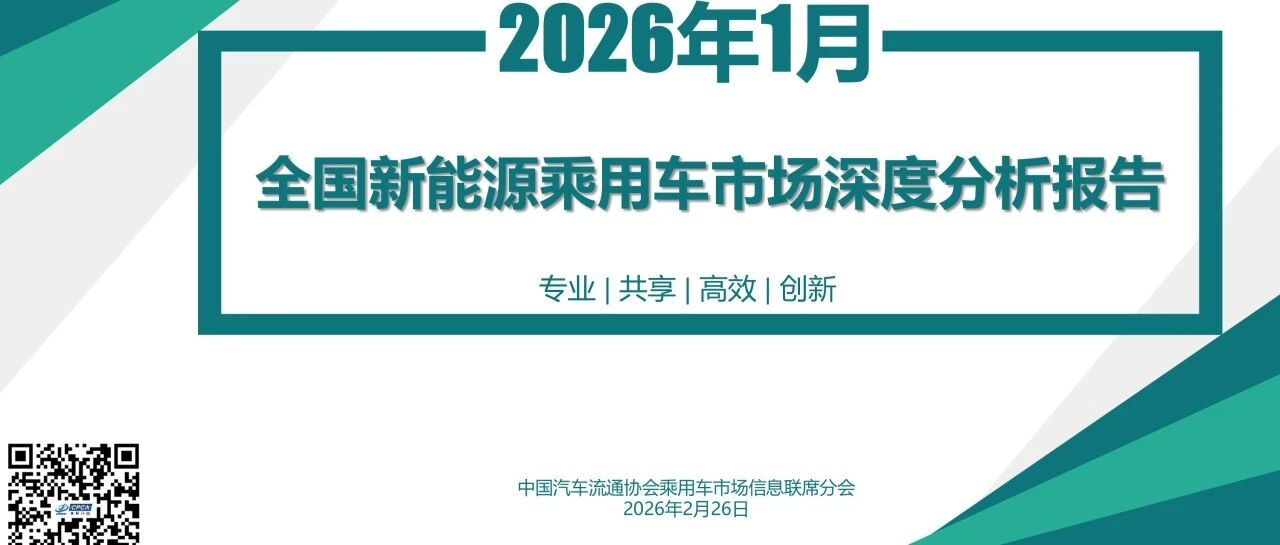
点 击 蓝 字 关 注 我 们 本文为中国汽车流通协会乘用车市场信息联席分会发布的权威深度市场分析报告,涵盖了: 一、整体总市场 二、 细分总市场 三、 出口市场 四、 厂商表现 五、 车型大类细分市场 六、 品牌定位细分市场 七、 国别定位细分市场 八、 价格定位细分市场 Contents 说明: 总市场 (轿车、MPV、SUV) : ICE+BEV+PHEV 新能源市场(轿车、MPV、SUV): BEV+PHEV 出口:整车+CKD NEV: 新能源 BEV: 纯电动 PHEV: 插电混动 ICE: 燃油车 NEV= BEV (含FCV) +PHEV (含EREV) 产销数据来源 ,能力的领 中国汽车流通协会乘用车市场信息联席分会月报表(零售表,狭义汇总) -终稿 未计入份额低于2%的细分市场 登录品牌 奔驰、宝马、奥迪 凯迪拉克、捷豹、路虎、沃尔沃、英菲尼迪、讴歌 特斯拉、仰望、尊界 价格: 以起步市场指导价划分 10-20 分为10万以下、10-20万、20-30万、30-40万、40万以上五档 3、出口市场 4、厂商表现 型 本点 | | | | 整体总市场产销情况 | | | | --- | -- ...




大出海时代“分水岭”:2026中国企业出海十二大趋势
3 6 Ke· 2026-02-26 08:27
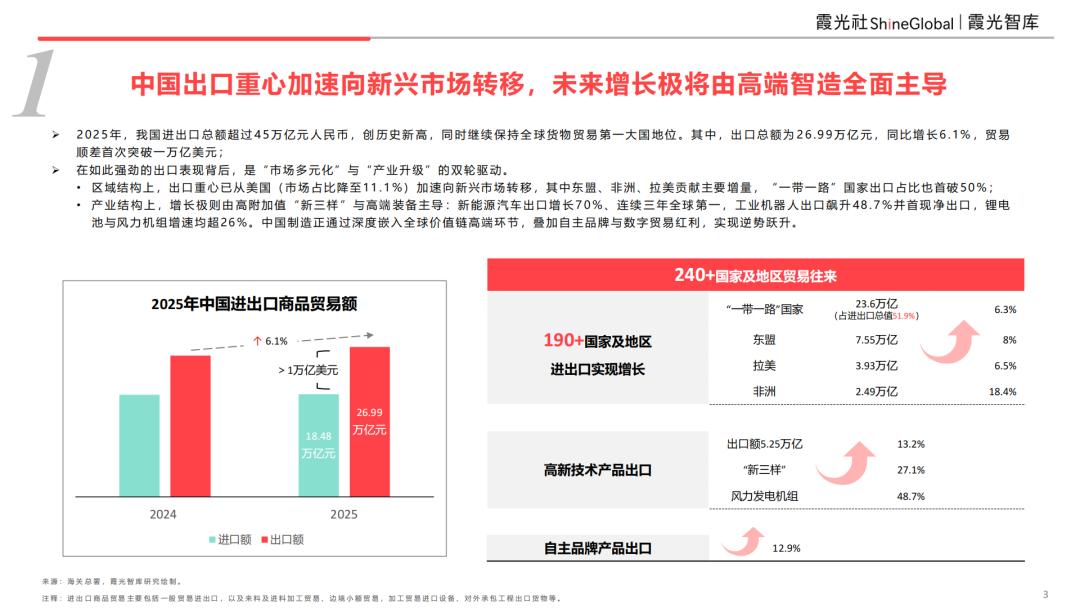
Core Insights - The narrative of Chinese companies going global has fundamentally changed in 2026, shifting from "exporting products" to "embedding brands" and from "single-point breakthroughs" to "systematic rooting" in foreign markets [1] Group 1: Trends in Chinese Companies Going Global - Trend 1: The focus of Chinese exports is rapidly shifting towards emerging markets, with high-end manufacturing expected to dominate future growth [2] - Trend 2: Due to increasing tariff uncertainties, the strategy has evolved from using "jumping boards" to establishing "satellite" factories directly in target markets [7][13] - Trend 3: Technological innovation is becoming the backbone, while emotional value is the soul, as Chinese brands capture the global Gen Z market [14][19] Group 2: Changes in Trade and E-commerce - Trend 4: The cross-border e-commerce landscape is undergoing a major reshuffle, with small sellers exiting the market and competition shifting from volume to value-driven strategies [20][23] - Trend 5: The AI era is redefining the landscape, with AI applications becoming a primary reason for consumer purchases, marking a shift from cost reduction to user experience enhancement [24][25] Group 3: Gaming and AI Developments - Trend 6: The Chinese gaming industry is expanding internationally with a dual strategy of producing high-quality games and lightweight casual games [26][29] - Trend 7: AI is transitioning from being a single-point technology tool to becoming an ecosystem player that empowers various industries [30][34] Group 4: Manufacturing and Supply Chain - Trend 8: Chinese overseas factories are leading the world in smart manufacturing, with a significant number of "lighthouse factories" recognized globally [35][38] - Trend 9: AI integration is set to ignite the next generation of traffic battles, reshaping how users interact with information and brands [41][44] Group 5: Market Dynamics and Regional Focus - Trend 10: The focus of Chinese companies is shifting from a "single-center" approach to a "multi-polar" strategy, with emerging markets like Southeast Asia and the Middle East becoming key growth areas [54][59] - The competitive landscape is evolving, with a shift from merely exporting products to embedding production and supply chains in local markets, emphasizing the importance of local adaptation and intelligent manufacturing capabilities [60]
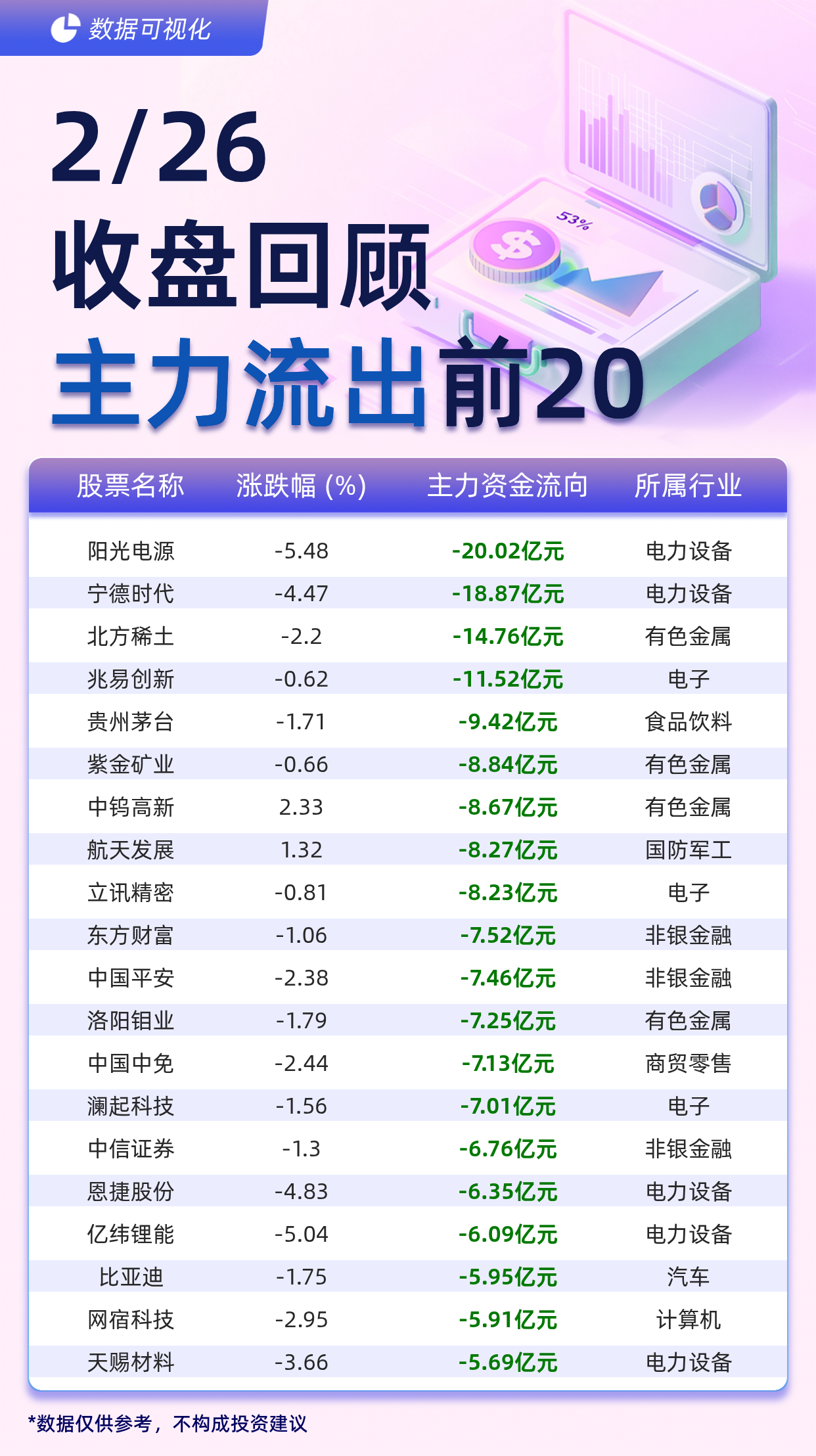
主力个股资金流出前20:阳光电源流出20.02亿元、宁德时代流出18.87亿元




Jin Rong Jie· 2026-02-26 07:11
Core Viewpoint - The data indicates significant outflows of main funds from various stocks, with notable amounts in the energy, materials, and financial sectors [1][2][3] Group 1: Stock Outflows - The stock with the highest outflow is 阳光电源, with a total of -20.02 billion yuan [1][2] - 宁德时代 follows closely with an outflow of -18.87 billion yuan [1][2] - Other significant outflows include 北方稀土 at -14.76 billion yuan and 兆易创新 at -11.52 billion yuan [1][2] Group 2: Sector Analysis - The electric equipment sector shows substantial outflows, with 阳光电源 and 宁德时代 leading [2] - The non-ferrous metals sector is also impacted, with 北方稀土 and 紫金矿业 experiencing notable outflows [2][3] - The financial sector, represented by 中国平安 and 中信证券, also shows significant fund outflows [2][3] Group 3: Additional Notable Stocks - 贵州茅台 has an outflow of -9.42 billion yuan, indicating a decline in investor interest [1][3] - 立讯精密 and 恩捷股份 also report outflows of -8.23 billion yuan and -6.35 billion yuan respectively, reflecting trends in the electronics and energy sectors [1][3] - 比亚迪, a key player in the automotive sector, shows an outflow of -5.95 billion yuan, suggesting potential shifts in market sentiment [1][3]
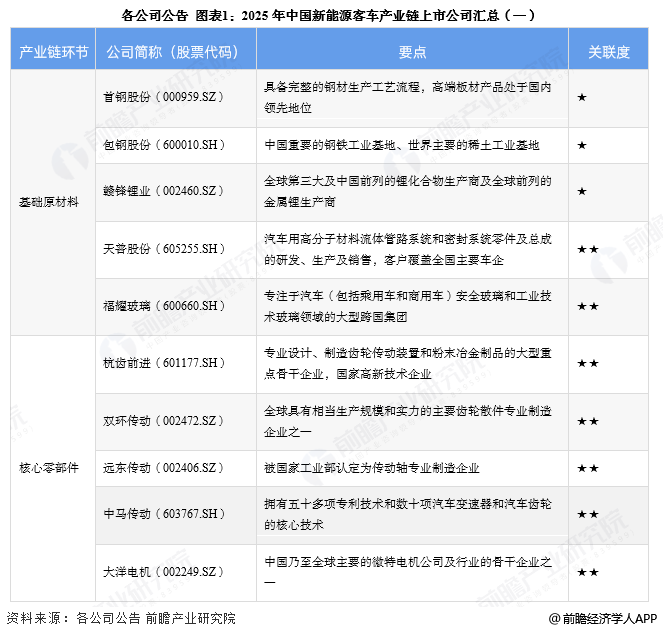
【全网最全】2025年新能源客车行业上市公司全方位对比(附业务布局汇总、业绩对比、业务规划等)
Qian Zhan Wang· 2026-02-26 06:09
Core Insights - The report highlights the rapid growth of the new energy bus market in China, driven by government policies supporting the development of new energy vehicles [1] - Key players in the new energy bus industry include Yutong Bus, Zhongtong Bus, CRRC, Ankai Bus, Foton Motor, King Long, BYD, Dongfeng Motor, and Changan Automobile [1] Industry Overview - The new energy bus sector is a focal point for research and production within China's automotive industry, with numerous listed companies involved across various segments of the supply chain [1] - The report provides a comprehensive summary of listed companies in the new energy bus industry, detailing their revenue, profit, and business structure [1] Company Summaries - Yutong Bus (600066.SH), Zhongtong Bus (000957.SZ), and CRRC (601766.SH) are identified as leading companies in the bus manufacturing sector, focusing on new energy commercial vehicles and core components [4] - Ankai Bus (000868.SZ) and Foton Motor (600166.SH) are also significant players, with a diversified product range that includes both traditional and new energy vehicles [4] Revenue Performance - The report includes detailed revenue figures for various companies, with notable performances such as: - BYD (002594.SH) reported a revenue of 566.26 billion [7] - Ningde Times (300750.SH) achieved a revenue of 2830.72 billion [6] - King Long (600686.SH) generated a revenue of 110.06 billion [11] Business Structure and Focus - Companies like Ankai Bus, Zhongtong Bus, and King Long have a high proportion of their business focused on new energy buses, while others like Foton Motor and Dongfeng Motor have a more diversified approach [9] - The majority of these companies have a global sales presence, indicating a trend towards international market expansion [9] Manufacturing and Technology - The report emphasizes the technological advancements in the industry, with companies focusing on electric drive systems, battery management, and energy efficiency [11] - Key technologies include high-energy batteries, electric control systems, and integrated vehicle designs, which are crucial for maintaining competitive advantages in the market [11] Future Outlook - The new energy bus industry is expected to continue its growth trajectory, with companies planning to enhance their international market presence and invest in smart technology innovations [12]


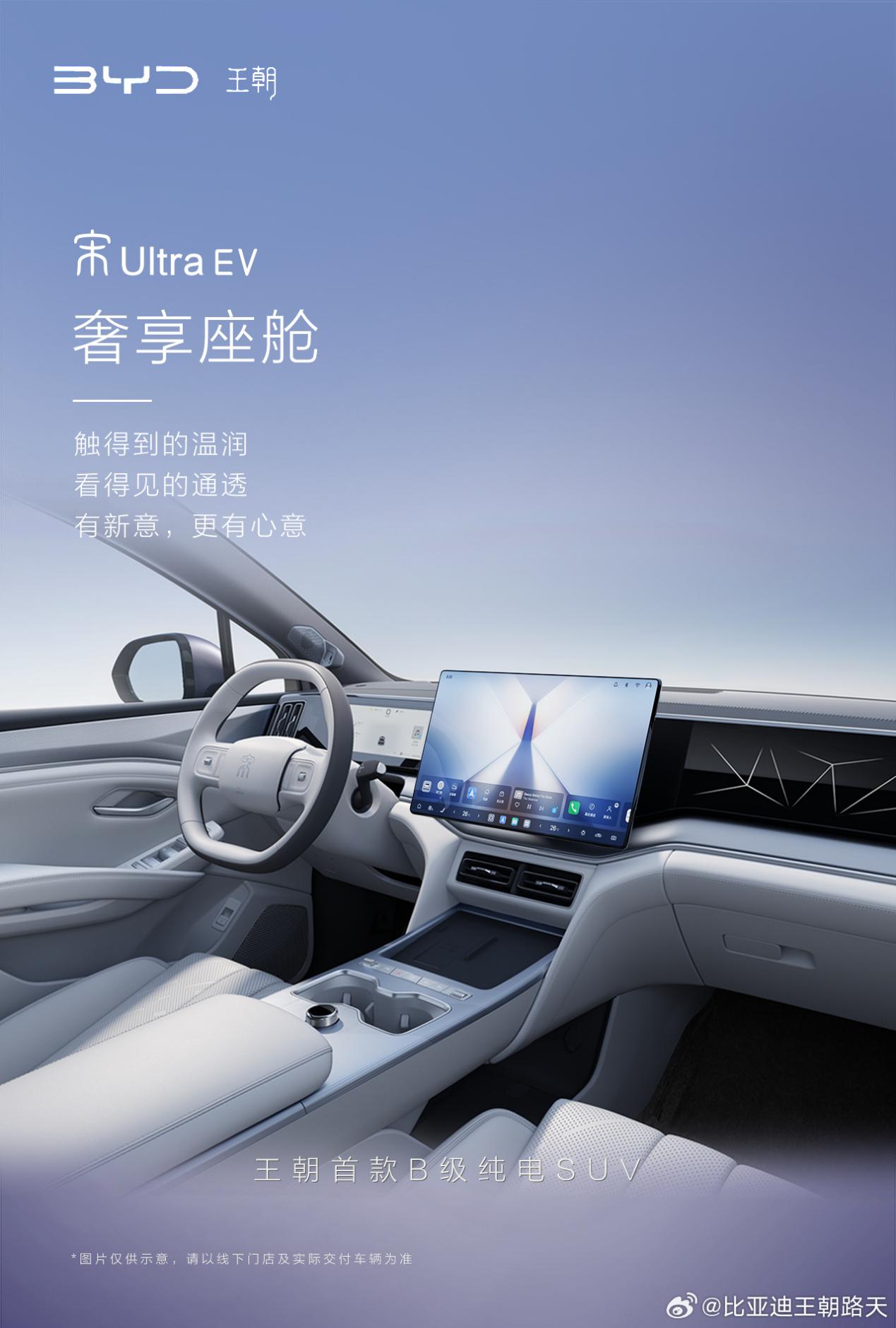
比亚迪全新B级纯电SUV 宋Ultra EV内饰亮相
Zhong Guo Zhi Liang Xin Wen Wang· 2026-02-26 04:43
Group 1 - The interior of the Song Ultra EV is designed to be simple and atmospheric, appealing to a younger demographic, featuring a straight-line design on the central console for a spacious visual effect [3] - The cabin includes a dual-spoke multifunction steering wheel, an embedded full LCD instrument panel, a large floating central control screen, wireless phone charging slot, dual cup holders, and multimedia knob [3] - The vehicle supports a "big bed mode" due to its 2840mm wheelbase, allowing the front and rear seats to connect, catering to various usage scenarios [6] Group 2 - The Song Ultra EV is powered by a single motor with a maximum power of 270kW, offering two battery capacities of 75.616kWh and 82.732kWh [6] - The CLTC range for the two battery options is 620km and 710km respectively, indicating a strong performance in terms of electric vehicle range [6]
沪深300ESGETF招商(561900)跌0.60%,半日成交额97.94万元
Xin Lang Cai Jing· 2026-02-26 03:39
Group 1 - The core viewpoint of the article highlights the performance of the HuShen 300 ESG ETF (561900), which experienced a decline of 0.60% to 0.990 yuan with a trading volume of 979,400 yuan as of the midday close [1] - Major holdings in the ETF include Kweichow Moutai, which fell by 1.23%, Contemporary Amperex Technology Co., Ltd. (CATL) down by 4.94%, and Ping An Insurance down by 2.03% [1] - The ETF's performance benchmark is the HuShen 300 ESG Index return, managed by China Merchants Fund Management Co., Ltd., with a return of -0.24% since its inception on July 6, 2021, and a return of 0.90% over the past month [1]




全网最全,这些春节撒钱的车企,你发现了几个?
3 6 Ke· 2026-02-26 02:51
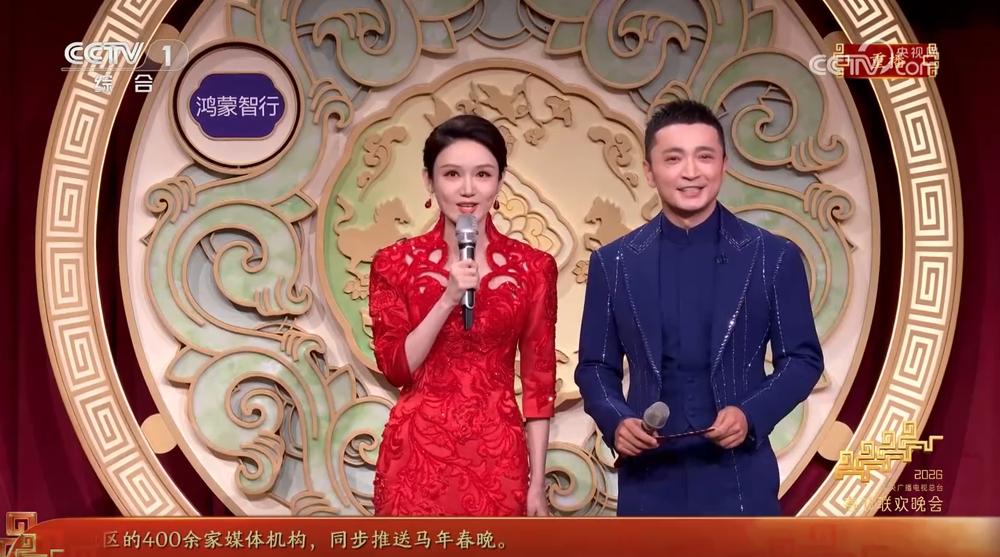
Core Insights - The automotive industry in China has launched an extensive marketing campaign during the 2026 Spring Festival, utilizing various platforms such as the Spring Festival Gala, movie placements, and self-produced short films to enhance brand visibility and engage consumers [1][40]. Group 1: Spring Festival Gala Marketing - Homong Zhixing's brand, Zun Jie S800, has been named the "Flagship Partner of the Smart Travel Era" for the Spring Festival Gala, marking its second consecutive year of collaboration [3][6]. - Multiple brands under Homong Zhixing, including Aito, have also participated in the Gala, showcasing their vehicles and promoting a festive message [10]. - Great Wall Motors' Wey brand was featured as the designated vehicle for new media during the Gala, increasing its visibility [12]. Group 2: Movie Marketing - The 2026 Spring Festival movie market has become a significant platform for automotive marketing, with nearly ten car companies participating in film placements, particularly in the movie "Fast and Furious 3" [18][20]. - Various models, including Lynk & Co Z20 and BYD's full range, were integrated into the film's narrative, enhancing their appeal through contextual relevance [23][26]. - Tank brand from Great Wall Motors took a unique approach by participating as a behind-the-scenes vehicle in the filming of "Fast and Furious 3" [20]. Group 3: Self-produced Short Films - Several car companies opted to create their own promotional videos, leveraging the Year of the Horse theme and the ongoing Winter Olympics to connect with audiences [29][33]. - BMW released a themed short film titled "Happy Year of the Horse," creatively linking its brand with New Year wishes [29]. - Volvo produced a creative video related to the Winter Olympics, emphasizing safety features in their vehicles [33]. Group 4: Marketing Strategy Insights - The three marketing strategies—Spring Festival Gala, movie placements, and self-produced short films—each offer unique advantages, such as broad reach, contextual integration, and creative flexibility [35][38]. - The Spring Festival Gala achieved a total media reach of 23.063 billion times, a 37.3% increase year-on-year, with a peak viewership of over 400 million [35]. - The focus has shifted from mere exposure to integrating brand value and product functionality with the emotional core of the Spring Festival, aiming for a combination of brand awareness, reputation, and conversion [40].