BYD(002594)

Search documents
比亚迪跟进7年低息超长贷政策,全系车型享3年0息
Bei Ke Cai Jing· 2026-02-25 10:30
Group 1 - BYD announced a financial policy offering 3-year interest-free and 7-year low-interest loans for all models, along with a maximum trade-in subsidy of 21,000 yuan, effective until March 31 [1] - The day before, BYD's subsidiary, Fangchengbao Automotive, also introduced a 7-year loan policy applicable to the Bao 5 long-range version and the entire Ti 7 model range [1] - Since Tesla first launched the "7-year low-interest" policy in January, over 10 automakers, including Xiaomi, NIO, and Geely, have followed suit [1]


汽车行业月报:政策托底稳增长,智驾政策加速落地
Zhongyuan Securities· 2026-02-25 10:25
Investment Rating - The report maintains an investment rating of "Outperform the Market" for the automotive industry [1]. Core Insights - The automotive industry index increased by 3.62% as of February 25, outperforming the Shanghai Composite Index by 3.0 percentage points, ranking 8th among 30 primary industries [7][12]. - In January 2026, automotive production and sales reached 2.45 million and 2.347 million units, respectively, with a month-on-month decline of 25.7% and 28.3%, but year-on-year figures remained stable [31]. - The report highlights a steady growth in the new energy vehicle (NEV) sector, with production and sales of 1.041 million and 945,000 units in January 2026, achieving a penetration rate of 40.26% [73][75]. - The report emphasizes the importance of policies supporting the automotive market, including the promotion of vehicle trade-in programs and the acceleration of autonomous driving regulations [7][97]. Summary by Sections Industry Performance Review - The automotive index outperformed the market, with a year-to-date increase of 3.97% [12]. - Nearly 70% of automotive stocks rose in February, with the top five performers being Tianrun Industrial, Yinlun Co., Xingmin Zhitong, Jingzhuang Technology, and Jinhongshun [19][20]. - The industry valuation metrics show a PE (TTM) of 33.99 times, ranking 14th among 30 primary industries [23]. Key Data Tracking - In January 2026, the passenger vehicle market saw production and sales of 2.062 million and 1.988 million units, respectively, with a year-on-year decline of 4.1% and 6.8% [46]. - The commercial vehicle market continued its positive trend, with production and sales of 388,000 and 359,000 units, respectively, reflecting year-on-year growth of 29.9% and 23.5% [64]. - NEV production and sales maintained robust growth, with a year-on-year increase of 2.6% and 0.1%, respectively [73]. Important Industry Company News - The report notes significant developments in the autonomous driving sector, including the release of safety requirements for L3 autonomous driving systems by the Ministry of Industry and Information Technology [97]. - Tesla's Cybercab, designed for autonomous driving, has begun production, marking a significant step towards the commercialization of fully autonomous vehicles [98].




比亚迪第二代兆瓦闪充设施大规模部署:2100KW功率,5分钟补能500公里
Feng Huang Wang· 2026-02-25 10:04
Core Viewpoint - BYD has officially launched the large-scale deployment of its second-generation megawatt fast charging facilities in China, enhancing its charging technology significantly [1] Group 1: Charging Technology - The second-generation megawatt fast charging facility has a maximum output power of 2100 kW, with a single gun capable of delivering up to 1500 kW [1] - The system supports a super-fast charging rate of 10C+, enabling a charging experience of "5 minutes for 500 kilometers" of range [1] Group 2: Infrastructure and Deployment - The upgraded fast charging system includes a built-in Battery Energy Storage System (BESS) to effectively manage peak power demands and alleviate pressure on the power grid [1] - The second-generation system has already been implemented at various highway entrances and BYD dealer parking lots across the country, with plans to extend to urban core areas, communities, and commercial districts [1] - BYD aims to establish over 15,000 second-generation charging stations by 2026 [1]

国企入局!百万吨磷酸铁锂扩产高峰来临
起点锂电· 2026-02-25 09:46
Core Viewpoint - The article discusses the rapid expansion of the lithium iron phosphate (LFP) industry in China, particularly focusing on the new production projects and the strategic positioning of companies like Hubei Xingyuan Technology Co., Ltd. in the renewable energy materials sector [5][10]. Industry Expansion - The lithium iron phosphate industry in China is experiencing a new wave of high-intensity expansion, with significant projects being announced, such as Hubei Xingyuan's plan to produce 150,000 tons of battery-grade lithium iron phosphate annually [3][4]. - By February 2026, the total planned capacity for new and expanded lithium iron phosphate projects across China has exceeded 4.1 million tons per year, marking the most concentrated period of industry expansion since 2020 [10]. Project Details - Hubei Xingyuan's project, with a total investment of 2.3 billion yuan, aims to establish a complete local supply chain from phosphate mining to lithium iron phosphate synthesis, addressing the historical issue of "phosphorus without materials" in Central China [4][6]. - The project is strategically located in Yichang, which benefits from abundant hydropower resources and lower industrial electricity prices, providing a significant cost advantage for energy-intensive production processes [7]. Market Dynamics - Major battery manufacturers, including CATL and EVE Energy, have signed long-term contracts for lithium iron phosphate supply, ensuring stable demand for the newly added production capacity [11][12]. - The industry is shifting from low-end capacity replication to technology-driven upgrades, with a focus on high-density and long-cycle lithium iron phosphate products to meet the growing demands of energy storage and power batteries [15]. Price Trends - Prices for lithium iron phosphate have rebounded significantly, with the price for power-type lithium iron phosphate reaching 57,300 yuan per ton by January 2026, reflecting an increase of over 87% from mid-2025 lows [15]. - The overall profitability of leading companies in the lithium iron phosphate sector is expected to improve, while smaller manufacturers may face greater challenges due to the competitive landscape [16].


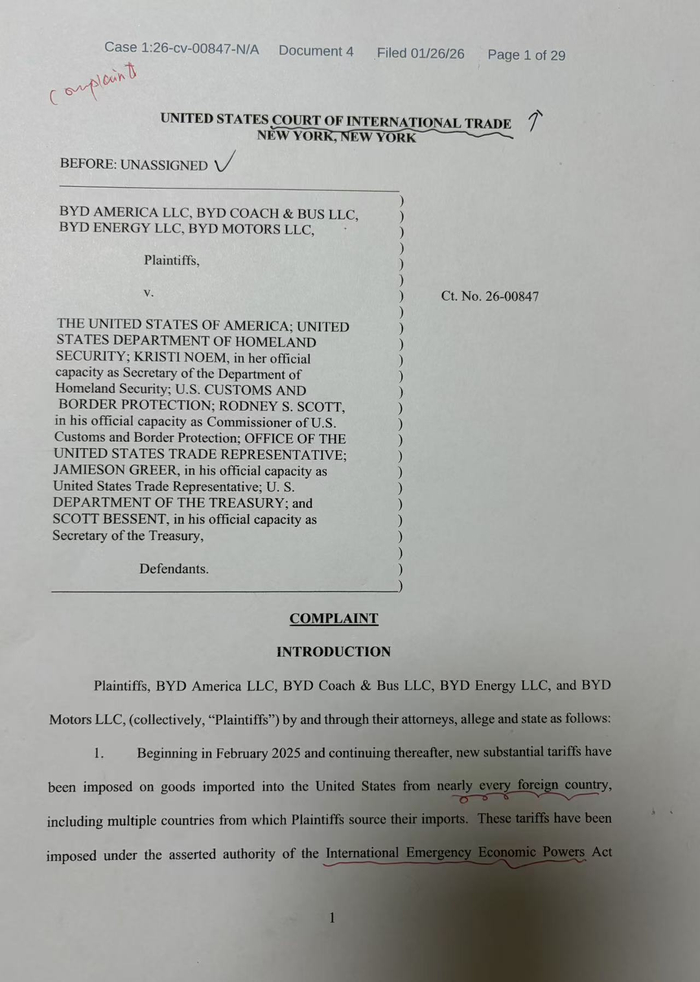
美最高法否定IEEPA征税权,比亚迪美国子公司此前起诉要求退税
Xin Lang Cai Jing· 2026-02-25 09:13
Core Viewpoint - The U.S. Supreme Court has ruled that the International Emergency Economic Powers Act (IEEPA) does not authorize the President to impose large-scale tariffs, impacting various companies, including BYD, which is seeking refunds for tariffs paid under this act [15][23]. Group 1: BYD's Legal Action - BYD has filed a lawsuit against the U.S. federal government through its four subsidiaries registered in the U.S., seeking refunds for IEEPA tariffs paid [6][10]. - The subsidiaries involved are BYD America LLC, BYD Coach & Bus LLC, BYD Energy LLC, and BYD Motors LLC, which have been affected by the tariffs imposed since February 2025 [6][10]. - The lawsuit claims that the President lacked the authority to impose tariffs under IEEPA, rendering the related executive orders illegal [10][11]. Group 2: Tariff Background and Legal Context - The tariffs in question were imposed under the assertion of a national emergency declared by the Trump administration, citing issues like border security and trade deficits [10][23]. - The Supreme Court's ruling indicates that any broad exercise of taxing power must have clear congressional authorization, which IEEPA does not provide [23]. - The total amount collected from IEEPA tariffs is reported to be approximately $133.5 billion as of December 14, 2025 [23]. Group 3: Implications for Refund Process - The Supreme Court did not provide specific arrangements for the refund process, leading to uncertainty about how refunds will be handled [23][24]. - The Customs and Border Protection agency has announced a halt to the collection of IEEPA tariffs but has not clarified the refund procedures for importers [13][23]. - BYD's lawsuit is part of a broader trend, with nearly a thousand companies seeking refunds through the U.S. International Trade Court, highlighting the complexities of institutional risks in mature markets [24].
超20家车企推七年低息贷款,比亚迪日供29元起
Cai Jing Wang· 2026-02-25 09:13
【#超20家车企力推七年低息贷款#】马年丙午新春以来,多家车企相继发布"七年低息贷"金融政策,参 与这场"金融战"的汽车品牌阵容愈发壮大。 据智通财经记者不完全统计,2月已有近十个汽车品牌推出"七年低息贷"金融政策,除前述品牌外,还 包括长安深蓝、长城哈弗、东风奕派、广汽埃安、蔚来及乐道等。若将统计周期拉长至1、2月份,这一 数字已增至二十余家。 除汽车金融政策外,马年春节后车市的其他促销方式亦层出不穷。2月22日,广汽本田推出雅阁50周年 回馈活动,雅阁e:PHEV插混版老客户复购价为13.88万元,直降10万元,相较官方指导价打5.8折,全国 限量1000辆。(智通财经) 2月25日,比亚迪针对海洋网发布"7年低息"政策,日供低至29元起。此前一日,智己汽车推出"7年0首 付3年0息"金融方案,新年现金红包至高2.3万元。更早些时候,奇瑞风云、捷途等品牌推出7年低息超 长贷,后者月供最低至1321元。 ...
固态电池——新能源电池新的万亿方向
格隆汇APP· 2026-02-25 09:01
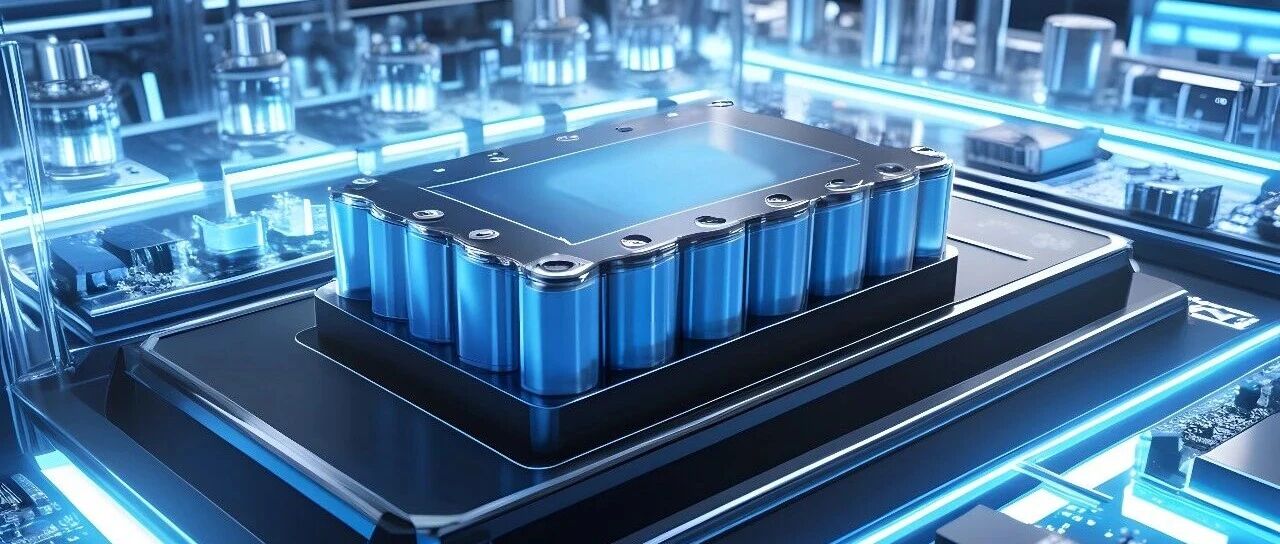
Core Viewpoint - The next five years in the new energy battery sector will be dominated by solid-state batteries, which are set to reshape the entire battery industry chain and present significant investment opportunities [5][6]. Industry Overview - Solid-state batteries are recognized as the only battery technology capable of achieving energy densities above 400Wh/kg, making them a focal point for global investment and policy support [6]. - China has established itself in the first tier of this global race, with a surge in patents and supportive policies since 2022, indicating a strong push towards commercialization between 2025 and 2027 [6][9]. Key Components of Solid-State Batteries - **Electrolytes**: Sulfide electrolytes are the mainstream choice due to their superior ionic conductivity, although stability remains a challenge. The production of lithium sulfide, a critical raw material, is currently limited and poses significant production and cost challenges [10][11]. - **Anode Materials**: The ultimate goal is to use pure lithium metal anodes, which can increase capacity nearly tenfold compared to traditional graphite anodes. Current production methods are evolving to improve efficiency and cost [12]. - **Cathode Materials**: The industry is exploring high nickel and lithium-rich manganese-based cathodes, which can enhance energy density without the issues faced in liquid batteries [13]. Investment Opportunities - **Material Sector**: Focus on disruptive segments such as sulfide electrolytes, lithium metal/silicon-carbon anodes, and specialty auxiliary materials. Key players include Shanghai Xiba, Tianqi Lithium, and companies like Ningde Times and BYD in the battery sector [17][20]. - **Equipment Sector**: Emphasis on dry process and isostatic pressing equipment, which are critical for solid-state battery production. Leading companies include Honggong Technology and Sichuan Lieneng [18][19]. - **Battery Sector**: Major players like Ningde Times and BYD are leading in R&D and industrialization, while differentiated companies like Jinlongyu and Zhuhai Guanyu are also making significant investments [20]. Conclusion - The industrialization of solid-state batteries will benefit the entire supply chain, with a focus on leading companies and those positioned strategically in technology. The period from 2025 to 2027 is crucial for companies to establish their positions and capitalize on the multi-trillion-dollar market potential [16].


车市打响“金融战”!比亚迪推7年低息贷,日供仅需29元
Nan Fang Du Shi Bao· 2026-02-25 09:00
Core Viewpoint - BYD has launched a 7-year low-interest financing policy for its Ocean Network models and some models from the Fangcheng Leopard brand, aiming to lower the financial burden on consumers and stimulate demand in the automotive market [1][4][7]. Group 1: Financing Policy Details - The financing options include a 7-year low-interest plan, a 3-year interest-free option, and a zero down payment choice, with daily payments starting as low as 29 yuan [1][4]. - The policy is applicable to various models, including the 2026 Sea Leopard series and the Fangcheng Leopard brand, with the financing terms varying based on model configuration and loan duration [3][4]. Group 2: Market Context and Implications - The trend of 7-year low-interest loans is being adopted by nearly 20 automotive companies, including Tesla, Xiaomi, and Geely, indicating a shift from traditional 1 to 5-year loan terms [7]. - The introduction of this financing strategy is seen as a response to rising consumer costs due to the reduction of tax incentives for electric vehicles, allowing manufacturers to stabilize pricing through financial subsidies [7]. - Analysts suggest that BYD's move signals a shift in the competitive landscape of the automotive market from price wars to financial service competition, with the potential for 7-year low-interest loans to become a standard offering in 2026 [7].
通达动力:在新能源汽车驱动电机铁芯配套业务方面与比亚迪进行长期合作
Ge Long Hui· 2026-02-25 08:49
Group 1 - The core point of the article is that Tongda Power (002576.SZ) has established a long-term partnership with BYD in the field of electric vehicle drive motor core components [1] Group 2 - As of now, the company is actively engaged in the supply chain for electric vehicle components, specifically focusing on drive motor cores [1]

【新能源周报】新能源汽车行业信息周报(2026年2月9日-2月22日)
乘联分会· 2026-02-25 08:38
Industry Information - In Dongguan, Guangdong, a total of 42 companies will receive subsidies amounting to 51.52 million yuan for electric vehicle charging infrastructure in 2023 [6] - The 2026 China All-Solid-State Battery Industry-Academia-Research Collaborative Innovation Platform annual meeting was held in Beijing, focusing on advancements and challenges in solid-state battery technology [6] - Shenzhen's industrial output of 39 types of products, including integrated circuits and industrial robots, accounts for over 10% of the national total [6] - CATL's subsidiary, Times Intelligent, has formed a strategic partnership with Horizon Robotics to enhance intelligent driving capabilities [7] - During the 14th Five-Year Plan period, Shenzhen has built over 1,098 supercharging stations and more than 530,000 charging piles [6] - The Ministry of Commerce held a meeting with automotive companies to optimize the implementation of trade-in policies and promote consumption reform [6] - In January, Shanghai South Port exported 82,000 vehicles, with a significant increase in new energy vehicle exports [6] - Wuhan signed an investment agreement for an 80GWh new energy battery production project with Chuangneng [6] - The National Energy Administration plans to implement a new energy system and sector-specific energy planning [6] Policy Information - Xi'an has released the implementation details for the 2026 automobile trade-in subsidy, providing financial support for consumers purchasing new vehicles [29] - Hubei has also published its 2026 automobile trade-in subsidy guidelines, similar to those in Xi'an [30] - The Ministry of Commerce aims to enhance the automotive consumption market through policy support and reform initiatives [10] Company Information - BYD has officially entered the Egyptian market with the launch of three models, including the Seagull [5] - NIO plans to build 1,000 battery swap stations this year, expanding its charging network [5] - Xiaomi's automotive division has received authorization for a new patent related to door opening technology [5] - Xpeng Motors has announced the successful issuance of a carbon-neutral green ABS worth 1.3 billion yuan [5] - CATL and Chery have established a joint venture to focus on battery manufacturing and sales [25] - Weilan has completed a C3 round financing of 1 billion yuan, bringing its total financing in this round to nearly 2 billion yuan [26]