
BYD(002594)

Search documents
时隔40年的历史呼应:中国汽车开启“技术换市场”时代
经济观察报· 2026-01-01 04:26
Core Viewpoint - The article discusses the challenges and opportunities for Chinese automotive companies as they expand into international markets, particularly Europe, emphasizing the need for compliance with stringent regulations and effective brand building [1][4]. Group 1: Export Performance and Trends - In 2025, China's automotive exports are projected to reach 8 million units, driven primarily by a 62% increase in new energy vehicle exports, totaling 3.01 million units [2]. - The export landscape is shifting, with Chinese automakers aggressively targeting Europe while also expanding into emerging markets [2][6]. - The growth engine for exports is transitioning from pure electric vehicles to hybrid models, which are gaining traction in response to high tariffs on electric vehicles [6]. Group 2: Strategic Shifts and Innovations - Chinese automotive companies are increasingly focusing on local production and resource integration in overseas markets, moving from merely exporting vehicles to establishing local manufacturing capabilities [6][8]. - The trend of "collaborative globalization" is emerging, with companies like BYD and CATL establishing production facilities abroad, indicating a shift towards a more integrated global supply chain [8]. - The automotive industry is witnessing a significant transformation, with a focus on technology output and the establishment of new standards in global markets [7][8]. Group 3: Future Challenges and Compliance - By 2026, the European market will present significant compliance challenges for Chinese automotive companies, with new regulations on materials, safety, and environmental standards set to be implemented [11][12]. - The need for brand reputation management will become critical as Chinese brands enter the European market, with a focus on sustainability and service continuity [12]. - Companies are exploring innovative models to mitigate risks associated with entering the European market, including partnerships with local suppliers and research institutions [12].



比亚迪12 万“工程师天团”,是如何炼成的?
2 1 Shi Ji Jing Ji Bao Dao· 2026-01-01 02:52
Core Viewpoint - BYD has recruited nearly 10,000 graduates in 2025, highlighting its commitment to engineering talent as a core driver of its success [1] Group 1: Engineering Talent - BYD's engineering team has reached 120,000 members, showcasing the company's emphasis on technical expertise [1] - Chairman Wang Chuanfu has repeatedly stressed the value of the technical team, stating that the company can recover as long as the engineers are retained [1] Group 2: Leadership Insights - The insights from key executives, including Li Yunfei (General Manager of Brand and Public Relations), Sun Huajun (CTO of the Battery Business Group), and Ye Zi (General Manager of Human Resources), provide a deep analysis of the role of engineering talent in BYD's rise [1]
比亚迪丰田取得车门限位结构专利,提高喷涂效率和喷涂质量
Jin Rong Jie· 2026-01-01 01:48
Group 1 - BYD Toyota Electric Vehicle Technology Co., Ltd. has obtained a patent for a "door limit structure," with the announcement number CN223733048U and an application date of December 2024 [1] - The patent involves a door limit structure that includes a first limit component fixed to the vehicle floor, a second limit component fixed to the vehicle door, and a connecting component that adjusts the distance between the first and second limit components, enhancing painting efficiency and quality during vehicle spraying [1] - The company was established in 2020 and is located in Shenzhen, primarily engaged in the automotive manufacturing industry, with a registered capital of 34.5 million RMB [1] Group 2 - According to Tianyancha data, BYD Toyota Electric Vehicle Technology Co., Ltd. has participated in one bidding project, holds 44 trademark information entries, and has 142 patent entries, along with 13 administrative licenses [1]
中国车企欧洲市场逆势扩张 电动化领域份额创新高
Huan Qiu Wang· 2026-01-01 00:47
Group 1 - Chinese automakers, led by MG, BYD, and Chery, are expected to surpass 200,000 new car sales in the UK by 2025, potentially capturing 10% of the local market share [2] - In Spain and Norway, 10% of new car sales come from Chinese brands, while the average in Western Europe is 6% [2] - China's leading position in the global electric vehicle industry is attributed to its dominance in the lithium-ion battery supply chain, which has driven the growth of Chinese car sales [2] Group 2 - Despite facing EU tariff pressures, Chinese automakers are expected to maintain strong expansion momentum in the European market by 2025, with a projected market share of 12.8% in the electric vehicle sector [2] - In the rapidly growing hybrid vehicle segment, Chinese brands have surpassed a 13% market share across the EU, EFTA countries, and the UK [2] - Chinese car manufacturers are adopting flexible strategies to counter the impact of additional tariffs, absorbing some costs while shifting focus to unaffected areas like hybrid models and non-EU markets [2] Group 3 - Brands such as BYD and SAIC, along with new entrants like Chery and Leap Motor, are intensifying their efforts in the European market by 2025 [3] - Leap Motor's electric vehicle sales in Europe have surged over 4000% by October 2025, supported by a joint venture with Stellantis NV [3] - Chery's Omoda brand has seen a 1100% increase in electric vehicle sales during the same period [3]


比亚迪申请单光子雪崩二极管及其制备方法专利,有利于改善时间抖动特性
Jin Rong Jie· 2026-01-01 00:44
Group 1 - BYD Company Limited has applied for a patent titled "Single Photon Avalanche Diode and Its Preparation Method, Array, and Image Sensor," with publication number CN121240561A, filed on August 2025 [1] - The patent application reveals a single photon avalanche diode design that includes an epitaxial layer with a first conductive type and a second conductive type contact region, aimed at improving photon detection efficiency and time jitter characteristics [1] - The structure of the diode includes a multiplication junction and a well region, which enhances the depletion region and optimizes performance [1] Group 2 - BYD Company Limited, established in 1995 and located in Shenzhen, primarily engages in the automotive manufacturing industry, with a registered capital of approximately 9117.20 million RMB [2] - The company has invested in 108 enterprises, participated in 1010 bidding projects, and holds 5000 patents along with 1820 trademark registrations [2] - BYD Semiconductor Co., Ltd., founded in 2004, focuses on research and development, with a registered capital of approximately 456.22 million RMB, and has invested in 9 enterprises and participated in 511 bidding projects [2]
车圈2025:价格战没赢家,但淘汰赛已有出局者
Ge Long Hui· 2025-12-31 20:53
Core Insights - The automotive industry is transitioning from price competition to a focus on systematic and ecological strategies [3][23] - In 2025, the penetration rate of new energy vehicles (NEVs) reached a historic high, indicating a significant shift in consumer acceptance and market dynamics [5][13] - Traditional fuel vehicle manufacturers are struggling to maintain their market position against the rising dominance of domestic brands [6][14] Group 1: Market Dynamics - The price war initiated by domestic brands has continued into 2025, impacting the average profit margins across the industry [8][6] - The penetration rate of NEVs reached 62.2% in early December 2025, marking a significant milestone in the market [13] - Domestic brands are leading the charge in the NEV sector, with a penetration rate of 79.6% for new energy passenger vehicles [13] Group 2: Company Performance - Leading new energy vehicle manufacturers like Xiaopeng and Leap Motor have exceeded their annual sales targets, showcasing strong market adaptability [18][19] - Traditional brands like Geely and BYD are also performing well, with Geely's NEV sales reaching 153.4 million units, a 97% year-on-year increase [19][20] - In contrast, some joint venture brands are struggling, with Nissan and Honda experiencing significant declines in sales [20][21] Group 3: Technological Advancements - The introduction of the new battery safety standard (GB38031-2025) is expected to drive technological upgrades across the industry [11][12] - The focus on intelligent driving technology has intensified, but recent incidents have raised concerns about safety and regulatory standards [9][10] - Companies are increasingly collaborating with tech firms to enhance their smart driving capabilities, as seen with Audi and BMW partnering with Huawei [28][29] Group 4: Strategic Shifts - The competition is evolving from price wars to a comprehensive battle over ecosystem capabilities and technological integration [23][24] - Companies are adjusting their strategies to focus on product-market fit, intelligent configurations, and supply chain efficiency [21][22] - The future of the automotive industry will depend on the ability to integrate diverse technological pathways and create unique value for consumers [30]



深圳多家风投创投机构上榜2025中国股权投资年度排名!
Xin Lang Cai Jing· 2025-12-31 16:02
Core Insights - The 2025 China Private Equity Investment Annual Rankings have been released by Qianlong, highlighting several venture capital and private equity firms from Shenzhen [1][12]. Group 1: Top Venture Capital Firms - Shenzhen has 12 firms listed in the top 50 venture capital institutions in China, with Shenzhen Capital Group ranked 2nd, Dachen Caizhi at 7th, and Tongchuang Weiye at 11th [3][15]. - Other notable firms include Songhe Capital (12th), Langmafeng Venture Capital (16th), and Dongfang Fuhai (18th) [3][16]. Group 2: Top Private Equity Firms - Six Shenzhen firms are recognized in the top 50 private equity institutions in China, with China Merchants International Capital at 5th, China Merchants Capital at 6th, and Cornerstone Capital at 8th [4][16]. - Other firms include Qianhai Ark (15th) and Tencent Investment (21st) [4][16]. Group 3: Top Early-Stage Investors - The top 10 early-stage investors in China include Qi Fu Capital at 3rd and Lihe Venture Capital at 21st [4][17]. - The top 10 private equity investors feature Zhou Kexiang from China Merchants International Capital and Zhang Wei from Cornerstone Capital [5][17]. Group 4: Specialized Investment Institutions - The rankings include a list of 50 specialized investment institutions, with Shenzhen Capital Group, Cornerstone Capital, and Dachen Caizhi among the top [7][19]. - The top 30 investment institutions in advanced manufacturing include Shenzhen Capital Group and Dachen Caizhi [8][21]. Group 5: Sector-Specific Investment Institutions - Shenzhen Capital Group is recognized in multiple sector-specific rankings, including the top 20 in new energy, semiconductor, and digital economy fields [10][22][23]. - Other firms like Donghai Investment and Songhe Capital are also noted in these specialized sectors [10][22].


五维度看2025中国乘用车发展之“术”
Xin Lang Cai Jing· 2025-12-31 16:01
Core Insights - The Chinese passenger car market is experiencing unprecedented vitality and resilience due to various transformative forces, with a focus on the industry's ability to identify and solve problems [1][2]. Group 1: New Energy Vehicle Market - The penetration rate of new energy vehicles (NEVs) in China reached 53.6% in the first 11 months of 2025, indicating a shift from policy-driven to market-driven growth [4]. - The number of new car models launched in 2025 exceeded 200, showcasing the industry's strength and providing diverse options for consumers [5]. - Major NEV manufacturers have established comprehensive product platforms, enabling rapid iteration and performance enhancement across various models [6]. Group 2: Technological Advancements - Significant advancements in foundational technologies, such as intelligent chassis systems, are enhancing the overall level of the NEV industry [7]. - The performance of pure electric vehicles has improved, with extended driving ranges and enhanced safety features, addressing consumer concerns [8]. - Range-extended vehicles have also seen performance improvements, with some models achieving over 1000 kilometers of range [9]. Group 3: Autonomous Driving and AI Integration - The first batch of Level 3 conditional autonomous driving vehicle licenses was issued, marking a new phase in the commercialization of autonomous driving in China [10]. - AI technology is being integrated into smart cockpit systems, enhancing user interaction and experience [11]. - The automotive industry is witnessing a shift towards cognitive intelligence, allowing vehicles to understand and respond to complex commands [23]. Group 4: Domestic Brand Performance - Domestic brands captured a market share of 69.6% in the first 11 months of 2025, reflecting their growing competitiveness [13]. - High-end NEV sales have been dominated by domestic brands, indicating their increasing strength in the premium segment [14]. - Domestic brands are expanding internationally, with significant export growth and market penetration in Europe and Southeast Asia [15]. Group 5: Brand Image and Communication - Automotive leaders are increasingly engaging with consumers through relatable narratives, moving away from traditional high-end marketing [39]. - The industry is addressing issues of "involution" and promoting high-quality development to avoid harmful price competition [40][41]. - Companies are adopting transparent communication strategies to build trust and address safety concerns following incidents involving autonomous driving technologies [44][46].


时隔40年的历史呼应:中国汽车开启“技术换市场”时代
Xin Lang Cai Jing· 2025-12-31 16:00
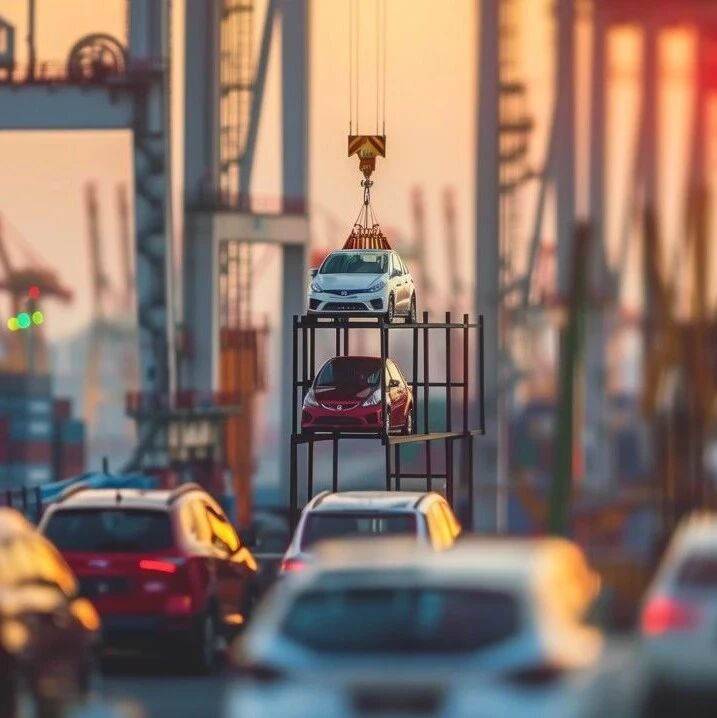
Core Insights - The Chinese automotive export sector has shown stronger-than-expected performance in 2025, with a cumulative export volume of 7.33 million vehicles from January to November, representing a year-on-year increase of 25.7%, primarily driven by a 62% increase in new energy vehicle exports to 3.01 million units [1][9] - The export forecast for 2025 is set at 8 million vehicles, surpassing earlier predictions of a mere 10% growth due to geopolitical pressures and tariff challenges [1][9] - A significant shift in export markets and innovative export models is emerging, with Chinese automakers aggressively targeting Europe while rapidly expanding into emerging markets [1][9] Export Trends - The growth engine for exports is shifting from pure electric vehicles to hybrid models, which are gaining momentum in response to high tariffs on electric vehicles [3][11] - Traditional markets are evolving, with emerging markets in Southeast Asia, Africa, the Middle East, and South America witnessing a rise in market share for Chinese vehicles, particularly in Mexico [3][11] - The localization of production is intensifying, with several Chinese automakers establishing overseas factories, marking a deepening of the "global manufacturing, global selling" model [4][12] Strategic Developments - The collective overseas expansion of the automotive supply chain is a key strategic trend, with major battery suppliers like CATL and Guoxuan High-Tech establishing global production and recycling systems [5][13] - The export model is transitioning from merely selling vehicles to a collaborative output of technology, standards, and supply chains, indicating a qualitative upgrade in exports [5][13] - By the end of the 14th Five-Year Plan, it is projected that China's overseas automotive production and sales will exceed 12 million units, increasing the global automotive products' "Chinese content" [5][13] Challenges Ahead - The automotive industry is entering a phase of deep global layout, driven by internal market pressures and external geopolitical dynamics, with a focus on deep localization strategies [6][14] - The year 2026 is anticipated to present high-level challenges, particularly in navigating stringent compliance requirements in the European market, which will be crucial for brand establishment [7][15] - New EU regulations on materials, recycling, safety, and carbon emissions will impose stricter standards on Chinese automakers, potentially increasing export costs [7][15] Innovation and Collaboration - Companies are adopting innovative models to mitigate risks associated with entering the European market, such as partnerships with leading global suppliers to facilitate collaboration with European automakers [8][16] - There is a growing trend of European countries negotiating "technology for market" agreements, recognizing the challenges in catching up with Chinese advancements in new energy and smart technologies [8][16] - Predictions indicate that Chinese automotive exports will continue to grow in volume and undergo structural changes, emphasizing the need for companies to convert technological advantages into sustainable business success and brand value [8][16]
追火箭、探隧道、访工厂,抖音创作者让“大国重器”燃起来了
Guan Cha Zhe Wang· 2025-12-31 14:32
Core Viewpoint - The article highlights the emergence of Douyin creators as key figures in bridging the gap between advanced technology and public understanding, showcasing China's major engineering projects and innovations through immersive storytelling and relatable content [5][10][20]. Group 1: Douyin Creators and Their Impact - Douyin creators are gaining access to previously restricted engineering sites, allowing them to document and share the stories behind China's major infrastructure projects, such as the world's longest underwater high-speed rail tunnel [5][10]. - The creators utilize a first-person narrative style to make complex engineering concepts relatable, transforming abstract ideas into tangible stories that resonate with the audience [10][12]. - The content produced by these creators has garnered significant engagement, with videos on topics like the underwater tunnel and wind energy achieving millions of views and likes, indicating a strong public interest in these subjects [23]. Group 2: Technological and Engineering Highlights - The article discusses various engineering feats, including the construction of the underwater tunnel and the development of China's first reusable commercial rocket, emphasizing the technical challenges and innovations involved [7][9]. - Creators explain complex technologies in simple terms, such as comparing wind energy generation to a "super-sized electric fan," making it easier for the public to grasp the significance of these advancements [12][16]. - The narrative also includes personal stories from engineers and workers, highlighting their dedication and the human element behind these technological achievements, which fosters a sense of national pride [18][20]. Group 3: Platform Support and Community Engagement - Douyin has launched initiatives like "Burning Up! Major National Equipment" to support creators in showcasing China's technological innovations, providing them with resources and access to critical sites [21][23]. - The platform's support has led to a significant increase in the visibility of these creators' content, with over 36.7 billion views on related topics, demonstrating the effectiveness of this approach in engaging the public [23]. - The creators' work not only informs but also inspires viewers, enhancing national confidence and encouraging interest in science and technology among younger audiences [23][25].
