BYD(002594)

Search documents
追火箭、探隧道、访工厂,抖音创作者让“大国重器”燃起来了
Guan Cha Zhe Wang· 2025-12-31 14:32
Core Viewpoint - The article highlights the emergence of Douyin creators as key figures in bridging the gap between advanced technology and public understanding, showcasing China's major engineering projects and innovations through immersive storytelling and relatable content [5][10][20]. Group 1: Douyin Creators and Their Impact - Douyin creators are gaining access to previously restricted engineering sites, allowing them to document and share the stories behind China's major infrastructure projects, such as the world's longest underwater high-speed rail tunnel [5][10]. - The creators utilize a first-person narrative style to make complex engineering concepts relatable, transforming abstract ideas into tangible stories that resonate with the audience [10][12]. - The content produced by these creators has garnered significant engagement, with videos on topics like the underwater tunnel and wind energy achieving millions of views and likes, indicating a strong public interest in these subjects [23]. Group 2: Technological and Engineering Highlights - The article discusses various engineering feats, including the construction of the underwater tunnel and the development of China's first reusable commercial rocket, emphasizing the technical challenges and innovations involved [7][9]. - Creators explain complex technologies in simple terms, such as comparing wind energy generation to a "super-sized electric fan," making it easier for the public to grasp the significance of these advancements [12][16]. - The narrative also includes personal stories from engineers and workers, highlighting their dedication and the human element behind these technological achievements, which fosters a sense of national pride [18][20]. Group 3: Platform Support and Community Engagement - Douyin has launched initiatives like "Burning Up! Major National Equipment" to support creators in showcasing China's technological innovations, providing them with resources and access to critical sites [21][23]. - The platform's support has led to a significant increase in the visibility of these creators' content, with over 36.7 billion views on related topics, demonstrating the effectiveness of this approach in engaging the public [23]. - The creators' work not only informs but also inspires viewers, enhancing national confidence and encouraging interest in science and technology among younger audiences [23][25].



车市告别顺风时代
2 1 Shi Ji Jing Ji Bao Dao· 2025-12-31 13:58
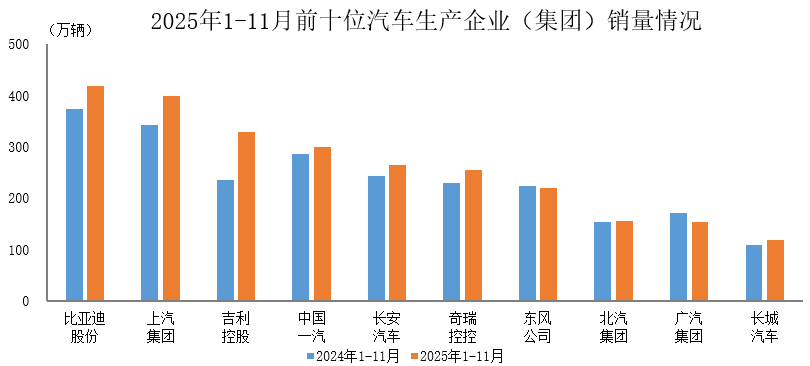
Core Insights - The Chinese automotive market is at a historic crossroads, with increasing penetration of new energy vehicles (NEVs) and a shift in market dominance, marking the end of the era of broad market growth and the beginning of a multi-dimensional competition focused on technology, ecology, and globalization [1] Market Performance - In November 2025, retail sales of passenger vehicles in China reached 2.225 million units, a year-on-year decline of 8.1% and a month-on-month decline of 1.1% [2] - The retail sales of fuel vehicles fell by 22% year-on-year, while pure electric models saw a 9.2% increase, pushing the NEV retail penetration rate to 59.3%, which further rose to 62.3% by mid-December [3] Competitive Landscape - The competition in the NEV sector has shifted from growth to a focus on existing market share, with companies now competing on technology iteration, ecosystem building, and organizational efficiency [5] - BYD's domestic sales in November 2025 were 348,300 units, down 26.81% year-on-year, indicating increased competitive pressure and a need for technological advancement [5] - Chery's wholesale sales in November 2025 reached the top three among NEV manufacturers, with a year-on-year growth of 54% and a market share of 6.5% [6] Export Dynamics - Chinese automotive exports surpassed 700,000 units in November 2025, marking a transition to a more localized production and ecosystem output model in the global market [4][10] - From January to November 2025, China exported 6.343 million vehicles, a year-on-year increase of 18.7%, with NEV exports doubling and becoming a key driver of overseas growth [9] Strategic Shifts - Companies are adopting diverse strategies for international expansion, with BYD focusing on localized production and ecosystem integration, while Chery emphasizes high-value market penetration through technology [10][11] - New entrants like NIO and Li Auto are facing challenges in their unique business models, while Leap Motor is validating its differentiated survival path through vertical integration and cost control [9] Policy Implications - The adjustment of the new energy vehicle purchase tax policy in 2026 is expected to compel companies to enhance cost control and supply chain optimization [14] - The automotive industry is anticipated to shift from a "policy-driven" growth model to a "value-driven" one, emphasizing high-quality transitions [15] Future Outlook - The market is expected to see a modest growth of around 3% in 2026, with NEV penetration continuing to rise but at a slower pace [15][16] - Companies are preparing for intensified competition by focusing on product iteration, technological implementation, and cost optimization in both domestic and international markets [17][18]


车市告别顺风时代
21世纪经济报道· 2025-12-31 13:52
Core Viewpoint - The Chinese automotive market is at a historic crossroads, transitioning from a growth phase to a competitive landscape characterized by technology, ecology, and globalization, as evidenced by the rising penetration of new energy vehicles (NEVs) and intensified competition among manufacturers [1][2]. Market Dynamics - The retail volume of fuel vehicles decreased by 22% year-on-year, while pure electric vehicles saw a 9.2% increase, pushing the NEV retail penetration rate to 59.3% in November 2025, further rising to 62.3% by mid-December [2]. - The market has shifted from a phase of broad growth to one of intense competition, where companies must focus on technological advancement, ecosystem development, and operational efficiency [4]. Competitive Landscape - BYD, once a dominant player, experienced a 26.81% decline in domestic sales in November 2025, highlighting the pressures from increased competition and the need for continuous technological innovation [4]. - Chery achieved significant growth, with a 54% year-on-year increase in NEV wholesale sales in November 2025, marking its entry into the top three NEV manufacturers [5]. - Traditional automakers like SAIC are rapidly transforming, narrowing the sales gap with BYD, indicating a shift in competitive dynamics [5]. Global Expansion - Chinese automotive exports reached 634.3 million units from January to November 2025, a year-on-year increase of 18.7%, with NEVs becoming a core driver of this growth [9]. - The export strategy has evolved from a trade-focused approach to a more integrated model involving localized production and ecosystem collaboration [9][10]. Policy Changes and Market Outlook - Key policy adjustments, including changes to the new energy vehicle purchase tax, are expected to drive companies to enhance cost control and supply chain optimization [15]. - The market is anticipated to see modest growth in 2026, with a focus on high-quality transitions rather than mere volume expansion, as companies adapt to new competitive realities [16]. Strategic Focus - Companies are expected to concentrate on product iteration, technological implementation, and cost optimization in the domestic market, while also enhancing localization and ecosystem output in overseas markets [17][18]. - The ability to establish a technological and ecological moat domestically, along with a sustainable operational framework internationally, will be crucial for companies navigating the upcoming competitive landscape [18].

大厂“抢人”战,从涨薪开始
创业邦· 2025-12-31 09:48
Core Viewpoint - The recent salary increase trend among major companies is a strategic response to the changing competitive landscape, rather than a mere act of generosity, as firms adapt to a new survival logic in a slowing growth environment [5][7][27]. Group 1: Salary Increases and Company Strategies - Major companies like JD and ByteDance have announced significant salary increases and bonuses, with JD's year-end bonus total investment increasing by over 70% year-on-year, and ByteDance's bonus total investment rising by 35% [5][19]. - The salary increase trend is not new; JD initiated a 20-salary upgrade plan last year, and other companies like Alibaba and ByteDance have also been increasing salaries since last year [7][13]. - The competitive pressure in the tech industry has intensified, leading to a shift from collective growth to fierce competition for talent, which is now viewed as the most scarce resource [18][25]. Group 2: Talent Acquisition and Retention - The current salary increase is part of a broader strategy to attract and retain top talent, especially in AI and technology sectors, where competition for skilled workers is fierce [25][27]. - Companies are not only increasing salaries but also restructuring their compensation systems to better reward high-performing employees, moving away from traditional seniority-based pay structures [22][23]. - The need for talent has led to aggressive recruitment strategies, with reports of companies offering double salaries to attract skilled workers from competitors [25][27]. Group 3: Future Investments and Technological Shifts - Major firms are shifting their investment focus towards AI and cloud infrastructure, with Alibaba planning to invest over 380 billion yuan in the next three years, and ByteDance allocating 160 billion yuan for AI development by 2026 [28][29]. - The transition from traditional business models to AI-driven strategies is redefining competitive advantages, with companies recognizing that controlling talent is crucial for future success [28][30]. - The importance of frontline employees is also emphasized, as companies like Ningde Times and JD are increasing base salaries for lower-level employees to ensure operational stability [29][30].




国内降温、国外火热,插混出口暴涨 跳板作用凸显
Zhong Guo Qi Che Bao Wang· 2025-12-31 09:33
Core Viewpoint - The demand for plug-in hybrid vehicles (PHEVs) is declining in the domestic market but is surging in overseas markets, driven by global automotive industry transformation, changes in trade environments, and technological advancements by Chinese automakers [2][16]. Group 1: Market Performance - In November, PHEV exports reached 124,000 units, a month-on-month increase of 37.3% and a year-on-year increase of 400%, significantly outpacing pure electric vehicle (EV) growth [2]. - From January to November, PHEV exports totaled 842,000 units, a year-on-year increase of 240%, compared to less than 300,000 units for the entire previous year [2]. - In Shanghai, the export value of hybrid vehicles reached 25.72 billion yuan, a substantial increase of 174.8% [2]. Group 2: Charging Infrastructure Disparities - The development of charging infrastructure is uneven globally, creating a natural market space for PHEVs, especially in regions like Europe and Southeast Asia where fast-charging facilities are lacking [3]. - As of the end of 2024, Europe is projected to have nearly 1 million public charging stations, but this growth is insufficient to meet the demand from the increasing number of EVs [3]. - In Germany, the ratio of electric vehicles to public charging stations is approximately 16.7:1, indicating a significant shortfall in charging infrastructure [4]. Group 3: Trade Policy Impacts - Trade policies favoring PHEVs have emerged as a significant driver for their export growth, as many countries impose high tariffs on pure EVs while exempting PHEVs [6][7]. - The EU has announced a 5-year anti-subsidy tax on Chinese pure EVs, while PHEVs remain exempt due to their classification as transitional technologies [7]. - Similar favorable policies exist in markets like Brazil and Indonesia, where PHEVs benefit from lower import tariffs compared to pure EVs [7][8]. Group 4: Domestic Market Trends - The domestic PHEV market is experiencing a slowdown, with a year-on-year growth of 16.4% from January to November, compared to 41.2% for pure EVs [9][11]. - The initial demand for PHEVs driven by license plate advantages is diminishing as cities adjust their policies, leading consumers to prefer pure EVs [9]. - The improvement of charging infrastructure in urban areas has reduced the appeal of PHEVs, as consumers find pure EVs more convenient [9]. Group 5: Competitive Landscape - The domestic PHEV market has become highly competitive, with over 150 models available, leading to price wars that have reduced prices by 10% to 15% [10]. - The increase in competition has pressured profit margins for manufacturers, prompting a more rational consumer choice [10]. Group 6: Technological and Cost Advantages - Chinese automakers have developed advanced PHEV technologies, such as the series-parallel hybrid system, which enhances energy efficiency and driving experience [13][14]. - The complete supply chain for PHEVs in China allows for lower production costs compared to European counterparts, making Chinese PHEVs more competitively priced in international markets [14]. - The cost advantage is evident, with Chinese PHEV SUVs starting at approximately 36,000 euros, significantly lower than similar models from European brands [14]. Group 7: Future Outlook - The growth of PHEVs in overseas markets provides a crucial support for the global expansion of Chinese automakers, allowing them to leverage their technological and cost advantages [15][16]. - As global charging infrastructure improves and pure EV technology advances, PHEVs may gradually exit mature markets but will continue to meet demand in emerging markets [15]. - The long-term vision remains focused on pure EVs as the ultimate goal, but PHEVs will play a vital role during the global energy transition [15].


钠离子电池概念下跌0.86%,主力资金净流出95股
Zheng Quan Shi Bao Wang· 2025-12-31 09:29
Group 1 - The sodium-ion battery concept sector declined by 0.86%, ranking among the top declines in concept sectors, with Evergrande High-tech hitting the limit down [1] - Major stocks in the sodium-ion battery sector that saw significant declines include HaiKe New Energy, ZhengTong Electronics, and XinTe Electric, while stocks like KeXiang Co., Quzhou Dongfeng, and Xiamen Tungsten New Energy experienced gains [1] - The top gainers in the concept sector included KeXiang Co. with a rise of 5.99%, Quzhou Dongfeng with 3.86%, and Xiamen Tungsten New Energy with 2.94% [1] Group 2 - The sodium-ion battery sector experienced a net outflow of 2.348 billion yuan, with 95 stocks seeing net outflows, and 8 stocks with outflows exceeding 100 million yuan [1] - The stock with the highest net outflow was Yiwei Lithium Energy, with a net outflow of 544 million yuan, followed by BYD and Huayou Cobalt with outflows of 443 million yuan and 224 million yuan respectively [1] - Stocks with the highest net inflows included Tianqi Materials, Tianji Co., and KeXiang Co., with inflows of 705 million yuan, 215 million yuan, and 80 million yuan respectively [1] Group 3 - The top decliners in the sodium-ion battery sector included Yiwei Lithium Energy at -2.87%, BYD at -2.04%, and Huayou Cobalt at 0.34% [2] - Other notable decliners included XINWANDA at -3.82%, Penghui Energy at -3.76%, and Ningde Times at -0.53% [2] - The overall trading activity in the sector showed a significant turnover rate, with stocks like Evergrande High-tech reaching a turnover rate of 18.98% [1][2]



12款新车展望2026:中国汽车市场开启“耐力赛” | 界面预言家⑧
Xin Lang Cai Jing· 2025-12-31 09:15
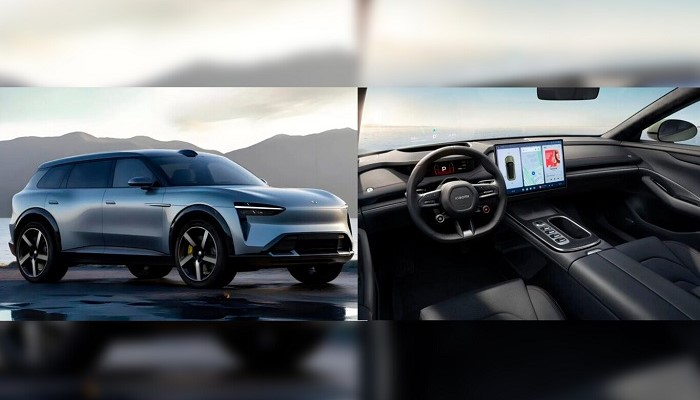
Group 1 - The automotive market is transitioning from a high-intensity "sprint" to a "marathon" mode by 2026, with electric vehicle (EV) growth slowing and consumers becoming more cautious about value and reliability [1] - Consumers are increasingly embracing hybrid and plug-in hybrid vehicles as a "bridge solution" to reduce range anxiety and stabilize purchasing decisions [1] - The supply side is experiencing compressed model development cycles, with a shift towards rapid iteration similar to the Chinese model, making "annual updates" and "mid-cycle facelifts" essential [1] Group 2 - The focus for 2026 is shifting towards addressing "problems" rather than just introducing "new cars," including questions about brand coherence and the ability to maintain consumer trust [2] - The success of the SU7 indicates that a clear product positioning and ongoing conversation can mitigate the disadvantages of late market entry, but the YU9 faces a crowded high-end SUV segment [3][7] Group 3 - The YU9 is expected to target the family flagship market with a three-row layout and reduced range anxiety, but it must adapt its sporty narrative to emphasize comfort and long-distance experience [7] - The Z model from Tengshi aims to rebrand the company by packaging its technological capabilities into a more appealing product narrative, enhancing its market presence [35] Group 4 - The iX3 from BMW is positioned to address how joint venture electric vehicles can differentiate themselves in the Chinese market, focusing on comfort and local adaptations while retaining driving characteristics [47][49] - The second-generation Roadster from Tesla, delayed for nearly nine years, needs to redefine its narrative to maintain its market allure amidst increasing competition in the high-performance electric vehicle segment [51][54] Group 5 - The introduction of large GT and convertible models by Genesis is seen as a brand investment rather than a sales strategy, aiming to elevate brand perception and value in the luxury market [56][59]


汽车及汽车零部件行业研究:汽车行业2026 年投资策略:智能提速、格局再塑与全球化持续
SINOLINK SECURITIES· 2025-12-31 09:10
Investment Rating - The report maintains a positive outlook on the automotive industry, particularly focusing on globalization, intelligence, and high-end market opportunities [5]. Core Insights - The automotive industry is experiencing intensified competition in the domestic market while witnessing significant growth in new energy vehicle (NEV) exports [2][3]. - The overall vehicle sales are projected to remain stable in 2026, with a notable increase in NEV sales driven by favorable policies and consumer demand [4][5]. - The report emphasizes the importance of high-end vehicles and intelligent driving technologies as key growth areas for automotive companies [5][14]. Summary by Sections 1. 2025 Review: Intensified Domestic Competition, High Growth in NEV Exports - Total vehicle sales in China for January to November 2025 reached 20.45 million units, a year-on-year increase of 2.0% in retail and 11.2% in wholesale [2]. - Domestic sales showed slight growth, heavily influenced by policy changes, while exports surged, particularly in the NEV segment, which saw a 19% increase year-on-year [2][19]. - The NEV penetration rate reached 40.8% in exports, with significant contributions from plug-in hybrid vehicles [19]. 2. 2026 Outlook: Stability Expected, Acceleration in Globalization and Intelligence - Retail sales of passenger vehicles are expected to reach 22.03 million units in 2026, with NEVs projected to grow by 12% year-on-year [3][4]. - The high-end vehicle segment is anticipated to perform better due to a shift in consumer preferences and the increasing market share of domestic brands [4]. - NEV exports are expected to reach 6.73 million units, with a 34% increase in NEV exports alone, driven by improved product quality and market maturity [4]. 3. Investment Strategy: Favorable Opportunities in Globalization, Intelligence, and High-End Markets - The report highlights the potential for automotive companies that excel in international markets, high-end product offerings, and advanced intelligent driving technologies [5][13]. - Companies like BYD, Geely, and Li Auto are identified as key players likely to benefit from these trends due to their strong export capabilities and innovative products [5][13]. - The report also emphasizes the importance of the AI driving sector, predicting that leading companies will leverage their technological advancements to gain competitive advantages [14][15].
乘用车板块12月31日跌0.74%,比亚迪领跌,主力资金净流出7.47亿元
Zheng Xing Xing Ye Ri Bao· 2025-12-31 08:59
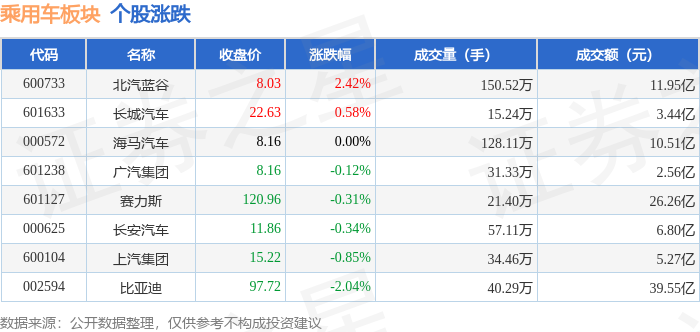
Group 1 - The passenger car sector experienced a decline of 0.74% on December 31, with BYD leading the drop [1] - The Shanghai Composite Index closed at 3968.84, up 0.09%, while the Shenzhen Component Index closed at 13525.02, down 0.58% [1] - Major stocks in the passenger car sector showed mixed performance, with notable declines in BYD and SAIC Motor [1] Group 2 - The passenger car sector saw a net outflow of 747 million yuan from institutional investors, while retail investors contributed a net inflow of 568 million yuan [1] - Specific stock performances included a 2.04% drop for BYD, closing at 97.72 yuan, and a 13.79% net outflow from institutional investors [1] - The trading volume for major stocks varied, with BAIC Blue Valley achieving a closing price of 8.03 yuan and a 2.42% increase [1]
2025年,他帮296位长沙市民圆了新能源车梦
Chang Sha Wan Bao· 2025-12-31 08:23
Core Insights - The article highlights the successful transition of a sales manager, Tang Wentao, from traditional fuel vehicles to the booming electric vehicle (EV) market, showcasing the impact of government subsidies and consumer demand for EVs [3][4][7]. Group 1: Company Performance - Tang Wentao, as the used car business manager at BYD Zhonghe Vision 4S store, facilitated the purchase of 296 electric vehicles for customers in Changsha through trade-in programs in 2025 [1][4]. - The store's performance is bolstered by attractive national and provincial subsidies for EV purchases, with new policies set to take effect on January 1, 2026, generating increased customer inquiries [4][8]. Group 2: Industry Trends - The penetration rate of new energy vehicles in Changsha reached nearly 60% in November 2025, with 17,624 out of 29,684 new cars insured being electric, marking an increase of over 11% from the previous month [7]. - The article emphasizes the strategic development of Changsha as a hub for the new energy vehicle industry, supported by local manufacturing facilities like BYD and GAC Aion, and the establishment of a national intelligent connected vehicle testing area [7][8]. Group 3: Consumer Behavior - Customers are increasingly opting for electric vehicles due to lower operational costs, with Tang Wentao noting a significant reduction in monthly expenses from fuel to electricity, enhancing the quality of life for families [7]. - The article illustrates a growing trend among consumers to embrace electric vehicles, as evidenced by Tang's personal decision to purchase an EV, reflecting broader market sentiments [7][9].