
EVE(300014)

Search documents
储能持续超预期,AI+新能源进入关键期 | 投研报告
Zhong Guo Neng Yuan Wang· 2025-09-16 07:00
Core Insights - The report highlights the significant growth in the energy storage sector, with domestic energy storage bidding scale exceeding 210 GWh from January to August 2025, representing a year-on-year increase of 150% [1][3] - The integration of AI in the energy sector is entering a critical phase, with government initiatives aiming for the application of over five specialized large models by 2027 and striving for international leadership in AI technology within the energy field by 2030 [1][5] Energy Storage Sector - The demand for energy storage cells has exceeded expectations, benefiting companies like CATL and Yiwei Lithium Energy due to improved utilization rates and economic viability in new markets such as Saudi Arabia and Chile [3] - CATL has developed the world's first sodium-ion battery, which has passed new national standards for energy storage [3] - The solid-state battery market is also seeing unexpected growth, with companies like Xiamen Tungsten and Shanghai Xiba benefiting from advancements in this technology [3] Photovoltaic and Energy Storage Industry - Companies like Tesla and Sungrow are expected to benefit from new market expansions in energy storage [4] - Tesla has launched two new energy storage products, the Megapack 3 and Megablock, with plans to produce Megapack 3 in Houston by the end of 2026 [4] - Sige新能源 has submitted an IPO application in Hong Kong, focusing on distributed energy storage systems, projecting a revenue growth of 22.8 times from 2023 to 2024 [4] AI and New Energy Sector - The AI+ new energy sector is anticipated to accelerate, with companies like Haibo Sichuang and Xingyun Co. expected to benefit from government initiatives promoting AI integration in energy [5] - The recent launch of Tesla's official AI account indicates a strategic shift towards AI and robotics, aligning with their broader vision [6] Wind Power Sector - Companies like Dajin Heavy Industry and Yunda Co. are expected to benefit from new market opportunities in offshore wind power [6] - Dajin Heavy Industry has signed a long-term supply contract for offshore wind foundations, with a total contract value of approximately 1.25 billion yuan, scheduled for delivery in 2026 [6]



政策、技术、全球景气三重叠加,智能汽车板块走强,智能车ETF泰康(159720)冲击4连涨
Xin Lang Cai Jing· 2025-09-16 06:17
Core Viewpoint - The smart vehicle ETF, TaiKang (159720), is experiencing a significant upward trend driven by policy, technology, and global market conditions, indicating a shift from "electrification" to "intelligentization" in the automotive sector [1][5]. Short-term Driving Logic - Policy expectations have been fulfilled with clear guidelines on L3 access trials and energy storage targets, reducing market uncertainty and enhancing sector valuations [2]. - Accelerated technological iterations, such as breakthroughs in solid-state batteries and AI models for vehicles, validate industry growth potential and open long-term opportunities [3]. - Global benchmarks, including Tesla's Robotaxi progress and large orders from Hesai, confirm the commercial viability of smart vehicles and strengthen the global supply chain position [4]. Medium to Long-term Trends - The competitive focus is shifting from battery range to intelligent driving experiences, with software-defined vehicles becoming a core barrier to entry [5]. - The deepening of domestic substitution in critical areas like semiconductors and lidar, along with accelerated overseas expansion (e.g., localized production in Europe), is building global competitiveness [5]. Profit Model Reconstruction - Automotive companies are transitioning from "hardware sales" to "software services" (e.g., subscription-based intelligent driving), with future gross margins expected to continue rising [6]. Related Products - The smart vehicle ETF, TaiKang (159720), employs a full replication investment strategy closely tracking the CSI Smart Electric Vehicle Index, achieving a recent scale of 59.69 million yuan, a six-month high [1][7]. - The ETF's top ten holdings include leading companies in electric and smart vehicle sectors, with a combined weight of 55.33%, indicating strong alignment with the electrification and intelligentization trends [7][8]. - The ETF is positioned to benefit from the positive cycle of "technological breakthroughs - commercial implementation - scale expansion," particularly as Robotaxi operations grow and intelligent driving hardware costs decrease [7][8]. - The CSI Smart Electric Vehicle Index reflects the overall performance of listed companies in the smart electric vehicle industry, with key players like CATL and BYD establishing competitive advantages in battery technology and smart cockpit areas [9].




二线动力电池厂对比(财务数据)
数说新能源· 2025-09-16 03:35
Core Viewpoint - The article analyzes the financial performance of three companies in the lithium battery industry: EVE Energy, Guoxuan High-Tech, and Sunwoda, highlighting their revenue similarities but significant differences in net profit due to variations in profitability, cost control, business structure, and asset efficiency [1]. Group 1: Revenue and Profit Comparison - EVE Energy reported a revenue of 486.15 billion CNY, a slight decrease of 0.35%, with a net profit of 40.76 billion CNY, down 0.63% [1]. - Guoxuan High-Tech achieved a revenue of 353.92 billion CNY, an increase of 11.98%, but its net profit fell by 28.56% to 12.07 billion CNY [1]. - Sunwoda had the highest revenue at 560.21 billion CNY, up 17.05%, but its net profit decreased by 36.43% to 14.68 billion CNY [1]. Group 2: Gross Margin and Product Structure - EVE Energy excels in high-margin businesses, focusing on large cylindrical batteries and energy storage cells, with a gross margin of 28.87% for energy storage systems, up 7.55 percentage points year-on-year [2]. - Guoxuan High-Tech's business structure is dominated by power batteries (73% of revenue), with energy storage growing but starting from a low base, resulting in a gross margin of only 23.87% [3]. - Sunwoda's consumer battery segment, which constitutes 54% of its revenue, suffers from low margins (10%-15%) due to intense competition, while its power battery segment has not yet realized profitability [4]. Group 3: R&D and Management Efficiency - EVE Energy invests approximately 35 billion CNY in R&D, accounting for 7.2% of its revenue, with a high average salary for R&D staff, leading to efficient conversion of research outcomes into high-margin products [5]. - Guoxuan High-Tech faces increased management costs due to overseas expansion, with a 25% rise in management expenses and a financial cost rate of 3.5%, impacting profitability [5]. - Sunwoda's R&D spending exceeds 40 billion CNY (7.1% of revenue), but its dispersed business model dilutes R&D effectiveness, resulting in a lack of competitive advantage [5]. Group 4: Scale Effect and Per Capita Efficiency - EVE Energy achieves a per capita profit of 140,000 CNY, significantly higher than Guoxuan High-Tech's 46,000 CNY and Sunwoda's 27,000 CNY, due to efficient production and lower costs [6]. - EVE Energy's effective production capacity is 100 GWh with a utilization rate of 70%, while Guoxuan High-Tech has 60 GWh (55% utilization) and Sunwoda 50 GWh (50% utilization), highlighting the impact of scale on fixed cost distribution [6]. - The differences in net profit among the companies are primarily driven by high-margin business focus, cost control, and asset efficiency [6].



创业板新能源ETF(159261)红盘向上,奔驰EQS固态测试车跑出1205公里续航
Xin Lang Cai Jing· 2025-09-16 02:48
Group 1 - The core viewpoint highlights the mixed performance of the ChiNext New Energy Index, with notable gains from companies like Zhenyu Technology and Feirongda, while Jinli Permanent Magnet led the declines [1] - The ChiNext New Energy ETF has shown a slight increase of 0.14%, with the latest price at 1.45 yuan, indicating a stable market interest in new energy stocks [1] - The recent milestone of the Mercedes EQS solid-state test vehicle achieving a range of 1205 kilometers signifies significant advancements in the global new energy vehicle industry, with China's Ministry of Industry and Information Technology approaching a project review deadline [1] Group 2 - As of August 29, 2025, the top ten weighted stocks in the ChiNext New Energy Index account for 64.15% of the index, with companies like CATL and Sungrow leading the list [2] - The ChiNext New Energy ETF closely tracks the performance of the ChiNext New Energy Index, reflecting the operational characteristics of listed companies in the new energy sector on the Shenzhen Stock Exchange [2]




亿纬锂能赴港上市需补充材料
Sou Hu Cai Jing· 2025-09-15 23:14
Core Viewpoint - EVE Energy Co., Ltd. is making progress in its application for a listing on the Hong Kong Stock Exchange, following a request from the China Securities Regulatory Commission for additional materials related to the company's history, stock pledges, and shareholder information [1][2]. Group 1: Listing Progress - EVE Energy submitted its prospectus to the Hong Kong Stock Exchange on June 30, aiming for a main board listing, with CITIC Securities as the sponsor [2]. - If successful, EVE Energy will become the second lithium battery company to achieve A+H share listings, following CATL [2]. Group 2: Regulatory Requirements - The China Securities Regulatory Commission has requested EVE Energy to provide supplementary materials covering six specific areas, including the company's historical evolution and compliance of past equity changes [1]. - The company must clarify the impact of stock pledges on the status of controlling shareholders and actual controllers, including the reasons for stock pledges and the debt repayment capabilities of relevant parties [1]. - EVE Energy is required to disclose the basic information of existing shareholders and their relationships, as well as the operational scope of its subsidiaries and branches in relation to foreign investment restrictions [1]. - A comparative analysis of the company's shareholding structure before and after the issuance, including the effects of over-allotment options, must be provided [1]. - The company must confirm whether it is subject to any prohibitive conditions as outlined in the relevant regulatory guidelines for overseas securities issuance and listing [1].
龙头26年初步排产指引超预期,继续看好锂电周期向上!
2025-09-15 14:57
Summary of Conference Call Notes Industry Overview - The conference call primarily discusses the lithium battery industry and its related sectors, including energy storage and electric vehicles [1][2][3]. Key Points and Arguments 1. **Domestic Energy Storage Demand**: The impact of Document 136 on domestic energy storage demand was less than expected, with independent energy storage demand being driven by local policies and project rush installations. The forecast for domestic energy storage demand growth has been revised upward to 10-20% for next year [1][5]. 2. **Global Electric Vehicle Market Growth**: The global electric vehicle market is expected to grow by approximately 20% year-on-year next year, with specific growth rates of 10-20% for China's passenger car retail, 25-30% in Europe, and over 30% for commercial vehicles [1][6]. 3. **Battery Installation Demand**: By 2026, the demand for power batteries is projected to reach around 1.5 TWh, representing a year-on-year growth of over 25% [1][6]. 4. **Global Energy Storage Battery Shipment**: The global shipment of energy storage batteries is expected to be revised upward to 500-550 GWh this year, with projections for 2026 at 600-650 GWh, indicating a nearly 30% year-on-year growth [1][7]. 5. **C Company Production Guidance**: C Company has provided a production guidance for 2026 that exceeds expectations, reaching TWh levels with a year-on-year growth of approximately 40% [1][8]. 6. **Market Dynamics**: The effective production capacity of major battery manufacturers is expected to grow by 25-30% year-on-year, aligning with demand growth. The industry concentration is anticipated to increase, with limited material release leading to potential price volatility [1][9]. 7. **Profitability Projections**: - Ningde Times is expected to achieve a profit of over 90 billion yuan in 2026, with a market value target of 1.8-2 trillion yuan, indicating a potential upside of 20-30% [3][10]. - Yiwei Lithium Energy is projected to have a total profit of over 9 billion yuan in 2026, with a market value target of 200 billion yuan, also showing close to 30% upside potential [3][11]. 8. **Electrolyte Industry Trends**: The processing fees for lithium hexafluorophosphate are expected to rise, with Tianqi Materials forecasting an optimistic total profit of 2.5-3 billion yuan [3][12]. 9. **Separator Industry Developments**: The separator industry is experiencing price increases due to the full production status of leading companies, which is expected to enhance profitability [3][13]. 10. **Iron Lithium Battery Market**: The iron lithium battery market shows a favorable supply-demand structure with ongoing price increase expectations [3][17]. 11. **Yuneng Company Outlook**: Yuneng is expected to grow by 30% next year, with a target profit of over 2 billion yuan [3][18]. 12. **Overseas Business Performance**: Companies like Longpan and Wanrun are expected to achieve significant profits from their overseas operations, with Longpan projecting a net profit of 500 million yuan [3][19]. 13. **Negative Material Market**: The negative material market is currently stable, but there are risks of price declines due to structural issues [3][20]. 14. **Future Profit Projections**: A company is expected to achieve a profit of 1.3 billion yuan in 2026, with a valuation of around 15-16 times [3][21]. 15. **Purtai's Incentive Goals**: Purtai has set a profit target of 3 billion yuan for 2026, with potential for exceeding expectations based on negative material performance [3][22]. 16. **Lithium Battery Sector Outlook**: The lithium battery sector is expected to have a favorable future with high cost-effectiveness and safety margins, making it a worthwhile area for investor attention [3][23]. Other Important but Overlooked Content - The call highlighted the importance of local policies and market dynamics in shaping the future of the lithium battery industry, emphasizing the need for continuous monitoring of these factors [1][4][5]. - The potential for new product launches and expansions in production capacity, particularly in emerging markets, was noted as a significant driver for future growth [3][22][23].



399批公告:四家电池配套零跑Lafa5,亿纬独供小鹏G7增程
高工锂电· 2025-09-15 10:58
Core Insights - The article highlights the accelerating trend of battery supplier diversification among automotive manufacturers in China, with multiple suppliers being utilized for new vehicle models [4][5][6]. Group 1: Battery Supplier Landscape - The latest vehicle declaration list from the Ministry of Industry and Information Technology includes 22 battery suppliers, indicating a shift towards a more diversified supply chain [4]. - CATL remains the leading supplier with 41 models, but faces increasing competition as several models now feature multiple battery suppliers [7][8]. - Other notable suppliers like EVE Energy, Zhongxin Innovation, and Honeycomb Energy are rapidly expanding their market presence by securing new orders from various automakers [5][6][7]. Group 2: Vehicle Manufacturer Strategies - Leap Motor's new model LAFA5 utilizes four different battery suppliers, showcasing a strategy to enhance supply chain flexibility [5]. - Geely's Zeekr X employs both self-produced and externally sourced batteries, reflecting a hybrid approach to battery sourcing [5]. - The shift in strategy is also evident as companies like Xiaopeng Motors and BAIC's Arcfox are now introducing range-extended electric vehicles to address consumer range anxiety, creating new opportunities for battery suppliers [6][9]. Group 3: Technological Developments - Lithium iron phosphate (LFP) batteries are solidifying their position in the market, with applications extending to high-end models, as seen with BYD's Fudi battery supplying the Tengshi N9 [6][9]. - Sodium-ion batteries are making their commercial debut in the commercial vehicle sector, as demonstrated by a model from King Long equipped with sodium-ion technology, indicating a potential shift in future battery technology trends [9].

亿纬锂能(300014) - 关于控股股东部分股份解除质押的公告
2025-09-15 10:28
证券代码:300014 证券简称:亿纬锂能 公告编号:2025-117 惠州亿纬锂能股份有限公司 关于控股股东部分股份解除质押的公告 公司及董事会全体成员保证信息披露的内容真实、准确、完整,没有虚假记载、误导性陈述 或重大遗漏。 惠州亿纬锂能股份有限公司(以下简称"公司")于近日接到控股股东西藏亿纬控股有限公司 (以下简称"亿纬控股")的通知,获悉亿纬控股将其所持有的公司部分股份进行了解除质押业务。 具体情况公告如下: 一、股东股份解除质押的基本情况 2、股东股份累计被质押的情况 截至本公告披露日,公司控股股东、实际控制人及其一致行动人累计质押股份数量为391,320,000 注:亿纬控股和骆锦红女士所持限售股份性质为首发后限售股,刘金成先生所持限售股份性质为首发后限售 股、高管锁定股。 二、备查文件 1 / 2 1、股东部分股份解除质押的基本情况 股东名称 是否为控股股东 或第一大股东及 其一致行动人 本次解除质押 数量(股) 占其所持 股份比例 占公司总 股本比例 质押开始日 解除质押日 质权人 亿纬控股 是 6,000,000 0.92% 0.29% 2023年9月4日 2025年9月12日 平安银行股 ...
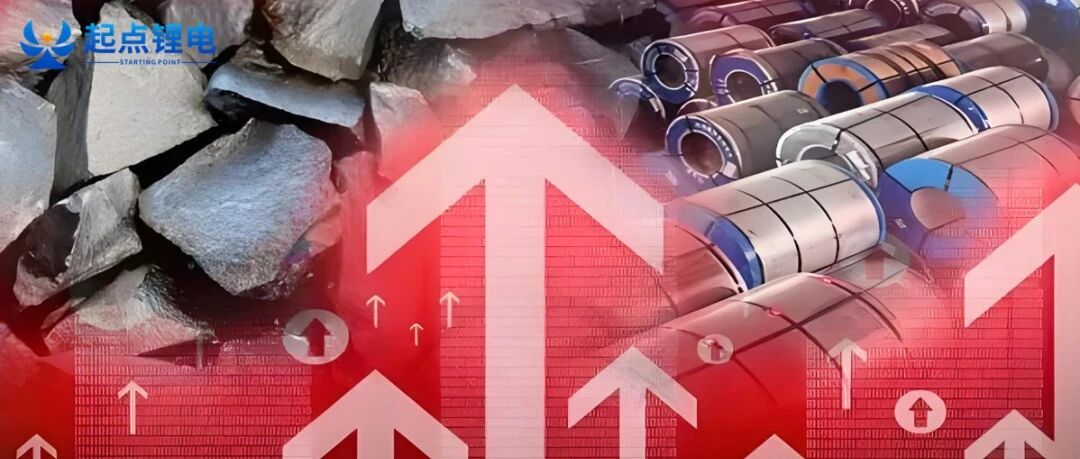
61家锂电上市公司财报分析:下游需求暴涨/上游分化加剧 进入新一轮增长周期
起点锂电· 2025-09-15 10:09
Core Viewpoint - The lithium battery industry in 2025 is characterized by a mix of strong demand and challenges such as structural overcapacity and declining net profits for many companies [3][4][6]. Group 1: Industry Performance - In the first half of 2025, China's total lithium battery production reached 480 GWh, a year-on-year increase of 20% [4]. - The export value of lithium-ion batteries from China reached $34.102 billion (approximately 245 billion RMB), marking a year-on-year growth of 25.14% [4]. - Major companies like CATL and EVE Energy have capacity utilization rates close to 90%, while second-tier companies generally operate at 60%-70% [5][10]. Group 2: Company Performance - Over half of the battery companies reported both revenue and profit growth, but significant performance disparities exist, with the "Matthew Effect" intensifying [8]. - For instance, companies like CATL and Zhongxin Innovation saw substantial revenue increases, while others like EVE Energy experienced a decline in net profit [9][11]. Group 3: Market Trends - The demand for energy storage batteries surged, with global shipments reaching 240 GWh, a year-on-year increase of 106% [11]. - The market is shifting from policy-driven demand to profit-driven demand, leading to a shortage of quality energy storage products [11][12]. Group 4: Phosphate Lithium Sector - The phosphate lithium sector is facing a situation of revenue growth without profit, with a total production of 163.2 million tons in the first half of 2025, a year-on-year increase of 66.6% [17]. - Despite increased production, many companies in this sector are struggling with low profit margins due to overcapacity and price competition [19][20]. Group 5: Lithium Carbonate Prices - Lithium carbonate prices have remained low, impacting the revenue and profits of lithium mining and salt companies [30][33]. - For example, Ganfeng Lithium reported a net loss of 531 million RMB, while Tianqi Lithium achieved a net profit of 84.41 million RMB, largely due to improved pricing mechanisms [35][36]. Group 6: Separator and Electrolyte Markets - The separator industry is experiencing a decline in profit margins, with many companies reporting losses despite increased sales volumes [41][43]. - The electrolyte market is also facing challenges, with overcapacity leading to price wars and financial difficulties for some companies [46][49]. Group 7: Equipment Sector - The demand for lithium battery equipment is recovering, with leading companies like Xianlead Intelligent and Hanke Technology reporting revenue growth [52][54]. - Solid-state battery equipment is emerging as a new growth point, with significant orders being placed by various companies [56][57].
亿纬锂能(300014):动力大圆柱开始量产出货,储能领域增势较好
Huachuang Securities· 2025-09-15 09:41
证 券 研 究 报 告 亿纬锂能(300014)2025 年中报点评 强推(维持) 动力大圆柱开始量产出货,储能领域增势较好 事项: 评论: [ReportFinancialIndex] 主要财务指标 | | 2024A | 2025E | 2026E | 2027E | | --- | --- | --- | --- | --- | | 营业总收入(百万) | 48,615 | 65,950 | 82,581 | 108,436 | | 同比增速(%) | -0.3% | 35.7% | 25.2% | 31.3% | | 归母净利润(百万) | 4,076 | 4,573 | 6,433 | 8,152 | | 同比增速(%) | 0.6% | 12.2% | 40.7% | 26.7% | | 每股盈利(元) | 1.99 | 2.24 | 3.14 | 3.98 | | 市盈率(倍) | 37 | 33 | 23 | 19 | | 市净率(倍) | 4.0 | 3.7 | 3.3 | 2.9 | 资料来源:公司公告,华创证券预测 注:股价为 2025 年 9 月 12 日收盘价 公司研究 锂电池 20 ...