
CATL(300750)

Search documents
总投资55亿,宁德时代与长安汽车重庆签约,新能源汽车产业链协同再添重磅布局!
Xin Lang Cai Jing· 2026-01-15 03:33
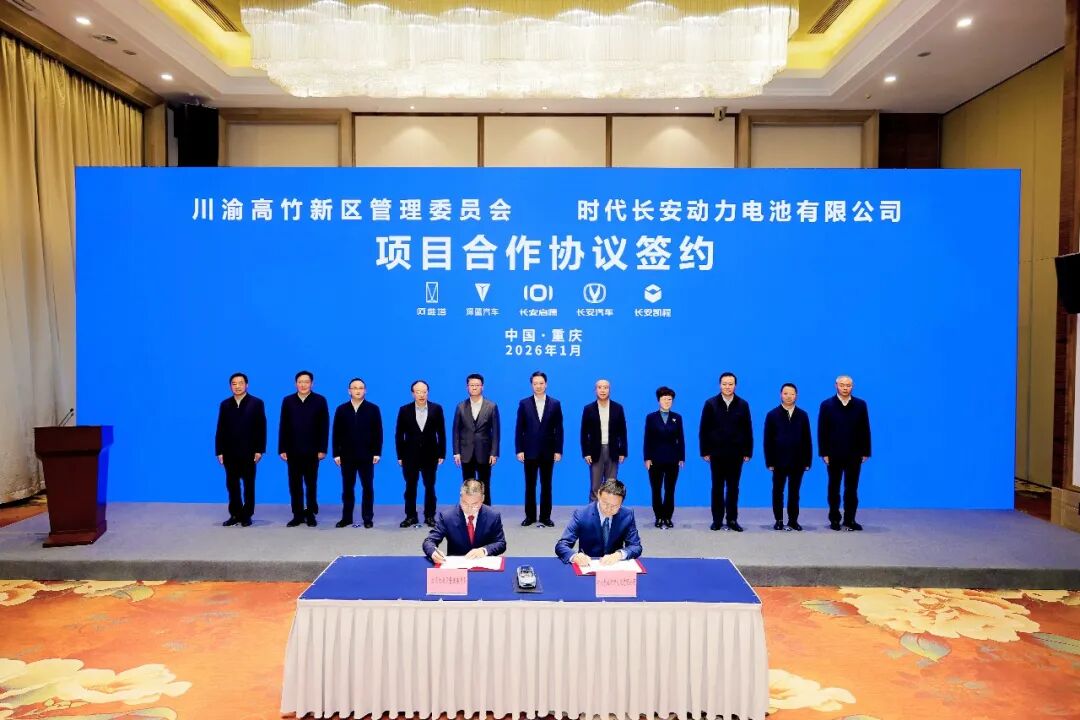
Core Insights - The collaboration between CATL and Changan Automobile marks a significant strategic move in the new energy vehicle (NEV) industry, with a total investment of 5.5 billion yuan for a battery production base in Chongqing [1][6] - This project aims to enhance the production capacity of core components for NEVs in the Chengdu-Chongqing region, injecting new momentum into cross-provincial industrial cooperation [1][6] Project Overview - The joint venture, named Times Changan Power Battery Co., Ltd., will establish a 25GWh battery production base on approximately 1,000 acres in the Chongqing High Bamboo New District [3][8] - The project is designed to be a leading technology base for NEV battery supply, incorporating CATL's latest battery manufacturing processes to meet the needs of Changan's core NEV brands [3][8] Economic Impact - The site preparation is complete, with construction expected to start in Q1 2026 and production anticipated to begin in the second half of 2027, reaching full capacity within three years [3][8] - Once fully operational, the project is projected to generate an annual output value of approximately 10 billion yuan, contribute 300 million yuan in annual tax revenue, and create around 2,500 direct jobs, while also stimulating the upstream and downstream supply chain [3][8] Regional Significance - The High Bamboo New District is the only cross-provincial co-built new area in China, serving as a vital platform for industrial collaboration [4][9] - The project will leverage Chongqing's logistics, market, and industrial cluster advantages to enhance the local NEV supply chain, contributing to Chongqing's goal of becoming a globally influential hub for smart and connected NEVs [4][9] Strategic Integration - The establishment of the new company and the signing of the project indicate CATL's commitment to deeply integrate into the Chengdu-Chongqing NEV industry chain through both capital and physical projects [4][9]



1200亿!宁德时代砸下巨单,容百科技遭连夜问询:一场豪赌还是战略突围?
Xin Lang Cai Jing· 2026-01-15 03:28
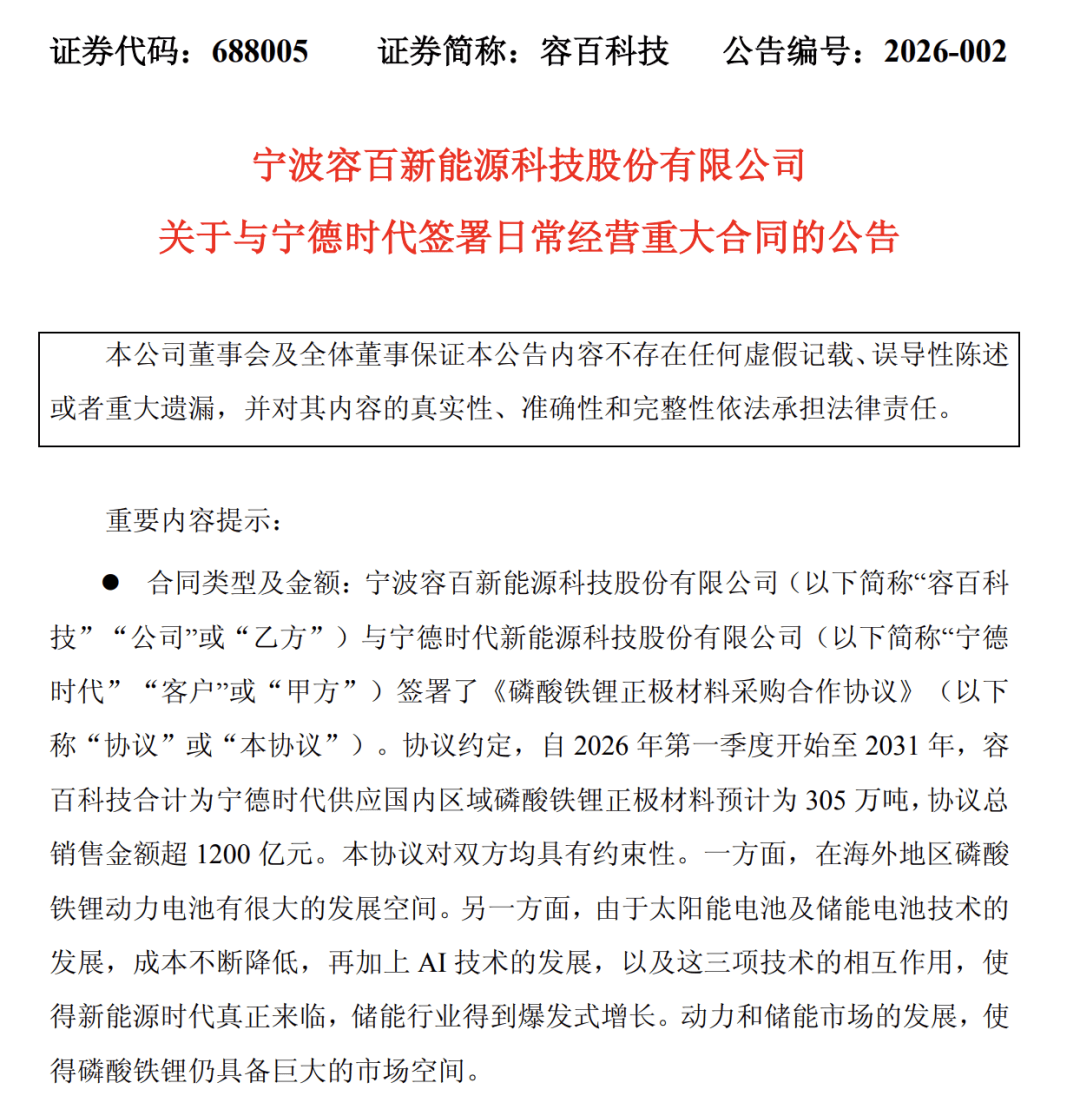
相当于容百科技"再造一个自己" 这是一笔巨额的订单。根据公告,该协议覆盖5年供货期(实际执行至2031年),年均供应量达61万吨,年均合同金额约240亿元。 (来源:荷马财经) 新能源产业链再现"史诗级"长单。 1月13日晚间,正极材料龙头容百科技(688005.SH)公告,与宁德时代(300750.SZ)签署《磷酸铁锂正极材料采购合作协议》,约定在2026年1月1日至 2030年12月31日期间,向后者供应约305万吨磷酸铁锂正极材料,合同总金额预计超1200亿元。 消息一出,上交所于当晚火速下发问询函,要求公司就履约能力、产能规划及价格机制等核心问题作出说明,并宣布容百科技股票自1月14日起停牌一 天。 这不仅是近年来全球新能源材料领域金额最高的单一采购协议,背后则是动力电池技术路线加速调整,上游材料企业面临转型压力的真实写照。 订单规模空前 对比容百科技自身体量: 这意味着,仅靠这一份订单,容百科技未来五年年均收入将跃升至当前水平的1.6倍以上,堪称"脱胎换骨"式转型。 但问题随之而来:如此庞大的交付量,从何而来? 截至2025年12月,容百科技通过收购贵州新仁新能源,仅拥有6万吨/年的磷酸铁锂已建成产 ...

借大额合同进行股价炒作的动机?容百科技1200亿大单遭问询
Sou Hu Cai Jing· 2026-01-15 02:48
1月13日晚间,容百科技公告称,与宁德时代签署了《磷酸铁锂正极材料采购合作协议》。协议约定,自2026年第一季度开始至2031年,容百科技合计为 宁德时代供应国内区域磷酸铁锂正极材料预计为305万吨,协议总销售金额超1200亿元。 规模创下近年锂电材料领域长单纪录。 然而,公告仅披露仅数小时,监管层紧急下发问询函,要求容百科技核实并补充披露的事项包含信息披露准确性,同时公司股票于1月14日紧急停牌。 问询函显示,根据容百科技提交的公告及备查文件,《合作协议》未对总销售金额进行约定,容百科技也未公告销售金额的确定依据。 同时,容百科技已经披露拥有的建成磷酸铁锂产能,与《合作协议》预计供应的产量相差甚远。 内幕交易防控方面,上交所要求公司就本次协议签订事项进行内幕信息知情人登记备案及有无存在内幕交易情况自查,并将自查结果对外披露,同时提交 内幕知情人名单备查。 上交所要求容百科技补充披露,《合作协议》中关于每年产能的具体约定,并结合容百科技拟建和在建产能、协议期内产能收购计划、资金储备和战略规 划等事项,以及明确说明是否具备履约能力。 协议内容方面,公告显示,在满足对方技术、成本、质量、交付需求的前提下,对方给予 ...
“十五五”开好局起好步丨冰面上的“热引擎” 新能源汽车高寒测试持续升温
Yang Shi Xin Wen· 2026-01-15 01:58
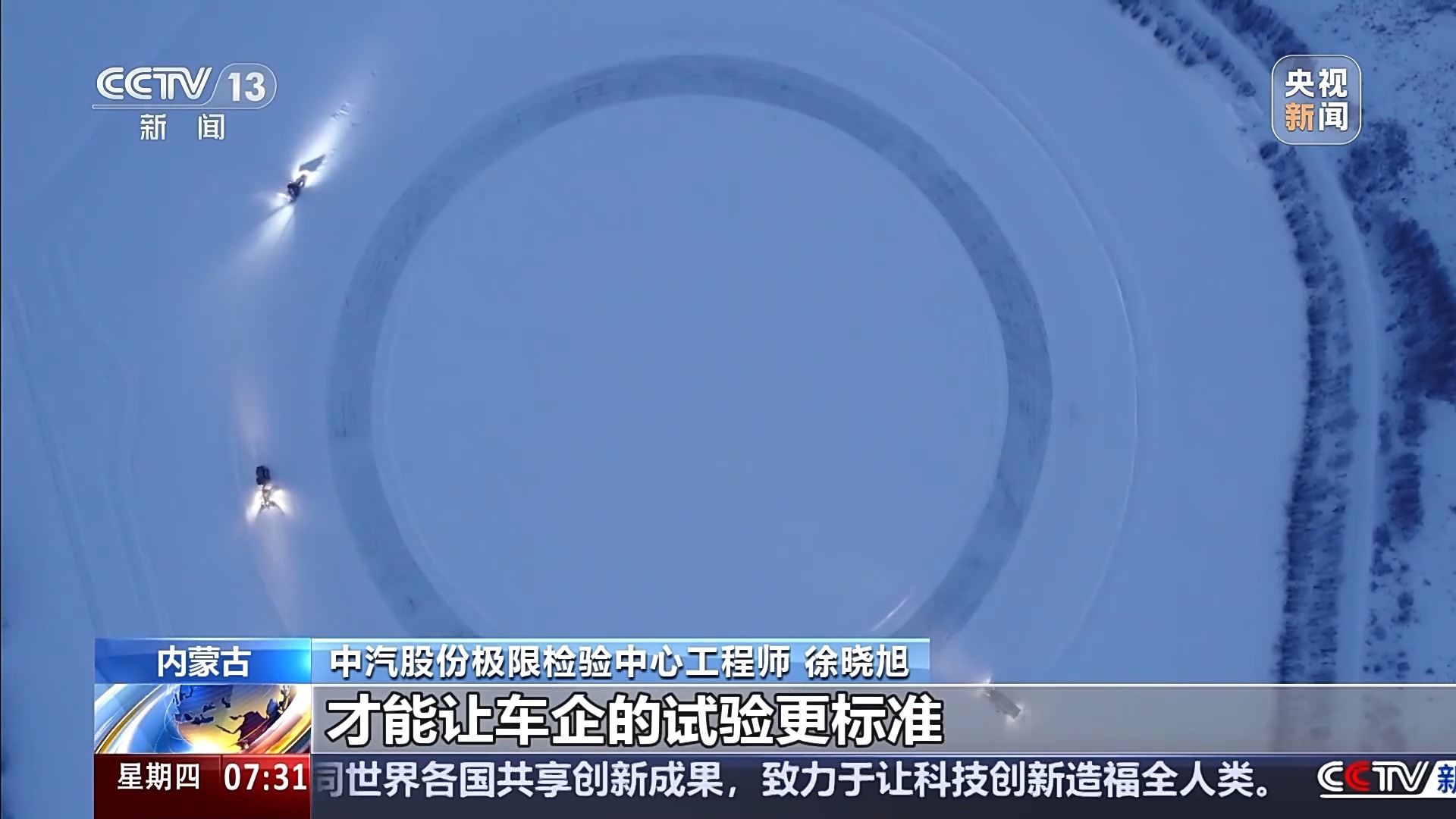
Core Viewpoint - The article highlights the increasing importance of cold weather testing for electric vehicles in China, particularly in Inner Mongolia, as the country aims to enhance the quality and sustainability of its new energy vehicle industry. Group 1: Industry Development - The "15th Five-Year Plan" will introduce a development plan for the intelligent connected new energy vehicle industry to promote high-quality and sustainable growth [1] - The cold weather testing has become a crucial step before new vehicle launches, with significant activity observed in Inner Mongolia [1][9] - The testing area has expanded to 1.7 million square meters this year due to the rising number of vehicles undergoing winter tests [5] Group 2: Testing Procedures and Innovations - The testing includes various performance evaluations such as low-temperature endurance, cabin heating, and charging/discharging capabilities [8] - New testing projects have been added to focus on the performance of new energy vehicles on icy roads, ensuring safety and stability [14][17] - The average annual growth rate of new energy vehicle testing at the China Automotive Technology and Research Center has exceeded 50% during the "14th Five-Year Plan" [11] Group 3: Economic Impact - The cold weather testing industry in Yakeshi has seen a market share increase from less than 10% to over 40% in the past five years, with stable annual revenue growth of 20% [29] - The local service industry has benefited significantly, with hotels often fully booked during the testing season, and the restaurant sector experiencing growth due to increased demand [31][33] - The testing activities have also led to the emergence of new tourism experiences related to ice and snow driving [35] Group 4: Future Prospects - The Yakeshi testing center plans to invest an additional 1.2 billion yuan to create a year-round ice and snow testing base for intelligent connected vehicles [13] - The region aims to continue leveraging its cold resources to drive economic growth while ensuring ecological protection [37] - The number of vehicles tested is expected to grow by approximately 40% in the 2025-2026 testing season compared to the previous season [38]
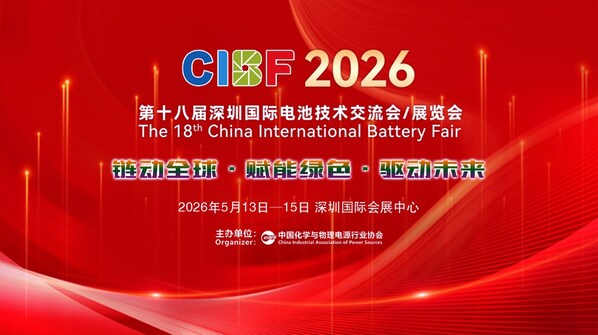
汇聚全球产业链,CIBF2026助推动力储能电池行业转向“价值竞争”
Zhong Guo Jin Rong Xin Xi Wang· 2026-01-15 01:55
Core Viewpoint - The 18th Shenzhen International Battery Technology Exchange Conference/Exhibition (CIBF2026) will be held from May 13 to 15, 2026, focusing on global collaboration and high-quality development in the battery industry [1][3]. Industry Overview - CIBF2026 is expected to attract over 3,000 exhibitors and cover an exhibition area of 280,000 square meters, featuring leading companies such as CATL, BYD, and others [3]. - The event aims to shift the industry focus from scale competition to value competition, promoting high-quality development [1][3]. Forum and Activities - High-level forums will be held during the event, including discussions on advanced battery technologies and next-generation battery technologies for electric aviation, attracting over 2,000 industry experts and representatives [5]. - The forums will facilitate sharing of successful experiences and guide resources towards high-value areas, addressing the issue of low-price competition [5]. Technological Innovations - CIBF2026 will showcase cutting-edge technologies such as solid-state batteries, sodium-ion batteries, and lithium-metal batteries, along with key materials and automated production equipment [7]. - The exhibition will present a comprehensive view of the entire industry chain, from material research to recycling, accelerating the transition of technologies from laboratory to large-scale industrialization [7]. Global Market and Compliance - The event aims to create a collaborative ecosystem across the entire industry chain, serving as a connector for international cooperation, with an expected attendance of over 350,000 professional visitors from more than 50 countries [9][10]. - Special international exhibition areas will address compliance challenges posed by new regulations in the EU and the US, facilitating the entry of Chinese brands into international markets [10]. Industry Growth and Challenges - In the first 11 months of 2025, China's power and other battery production and sales reached 1,468.8 GWh and 1,412.5 GWh, respectively, with year-on-year growth exceeding 50% [10]. - The battery export volume reached 260.3 GWh, a 44.2% increase, while the export of Chinese brand new energy vehicles grew by 139%, indicating strong global demand for Chinese new energy products [11]. Strategic Importance - CIBF2026 is viewed as a barometer and accelerator for the global new energy industry, exploring the vast market potential brought by national strategies for large-scale development of new energy storage [11]. - The event is expected to enhance industry concentration and resource utilization efficiency in the short term, while promoting a healthy and sustainable new industry pattern in the long term [11].




电力设备及新能源周报20260111:广州加速布局商业航天,1-11月全球动力电池同比增长33%-20260115
Guolian Minsheng Securities· 2026-01-15 01:13
Investment Rating - The report maintains a "Buy" rating for key companies in the electric equipment and new energy sectors, including CATL, Keda, and others, indicating a positive outlook for their performance [6][7]. Core Insights - The global power battery installation volume reached 1,046 GWh from January to November 2025, marking a year-on-year growth of 32.60%, with CATL leading the market with a share of 38.2% [2][15][19]. - The cancellation of export tax rebates for photovoltaic products starting April 1, 2026, is expected to increase direct costs for companies and reduce price competitiveness in the global market [3][34][37]. - The Chinese government aims to establish a new type of power grid by 2030, enhancing resource allocation capabilities and supporting a renewable energy generation share of around 30% [4][52][53]. Summary by Sections 1. New Energy Vehicles - The global power battery installation volume reached 1,046 GWh from January to November 2025, with a year-on-year growth of 32.60% [2][15]. - CATL leads the market with 400 GWh, followed by BYD with 175.2 GWh, and LG Energy with 96.9 GWh [16][19]. - The market concentration is high, with the top ten companies holding nearly 90% of the market share, and Chinese companies occupying six spots in the top ten [15][16]. 2. New Energy Generation - The cancellation of export tax rebates for photovoltaic products will lead to increased costs for companies and a decrease in price competitiveness [3][34]. - The expected impact includes a rise in global photovoltaic component prices and a potential clearing of outdated production capacity [35][37]. 3. Electric Equipment and Automation - The Chinese government plans to build a new type of power grid by 2030, which will significantly enhance resource allocation capabilities [4][52]. - The "West-East Power Transmission" project is expected to exceed 420 million kilowatts, supporting a renewable energy generation share of about 30% [52][53]. 4. Commercial Aerospace - China has submitted an application for an additional 203,000 satellites, which is expected to stimulate demand for rockets and satellites [5]. 5. Weekly Sector Performance - The electric equipment and new energy sector rose by 5.02% this week, outperforming the Shanghai Composite Index [1].
2025汽车供应链十大年度热点 | 精进2025——汽车行业10个十大年度盘点
Jing Ji Guan Cha Wang· 2026-01-15 00:31
Core Insights - The automotive industry in 2025 has experienced significant growth driven by proactive policies that enhance consumption, stimulate internal growth, and improve the competitive environment [2] - The industry is undergoing a transformation characterized by electric and intelligent vehicle development, geopolitical challenges, and supply chain restructuring [4] Group 1: Supply Chain Developments - The takeover of Nexperia by the Dutch government has disrupted the global automotive chip supply chain, leading to production halts and capacity adjustments among major automakers [5][6] - The introduction of a 60-day payment term for suppliers aims to alleviate financial pressures on small and medium-sized enterprises, fostering a healthier supply chain ecosystem [7][8] - Chinese automotive supply chain companies are increasingly focusing on overseas markets, with significant investments in Southeast Asia, North America, and Europe to enhance local production capabilities [11][12] Group 2: Financing and Market Trends - A surge in Chinese automotive technology companies listing in Hong Kong reflects a growing trend towards capitalizing on the smart vehicle sector, with several firms successfully raising funds for technological advancements [9][10] - The automotive supply chain is witnessing a wave of mergers and acquisitions, with companies seeking to enhance their market positions and technological capabilities [13][14] Group 3: Technological Innovations - The automotive industry is moving towards an "oil-electric intelligence" model, with advancements in technology enabling the integration of intelligent features into traditional fuel vehicles [15][17] - The battery industry is experiencing rapid advancements, particularly in solid-state battery technology, which is crucial for the future of electric vehicles [20][21] - The proliferation of L2+ level advanced driver-assistance systems (ADAS) is reshaping the automotive supply chain, emphasizing the importance of safety and compliance [22][23] Group 4: Industry Challenges and Opportunities - A wave of bankruptcies among European and American automotive suppliers highlights the challenges faced during the transition to electric vehicles, revealing vulnerabilities in traditional supply chains [18][19] - The 2025 China Automotive Supply Chain Conference has set the stage for future developments, focusing on internationalization and innovation within the industry [24][26]

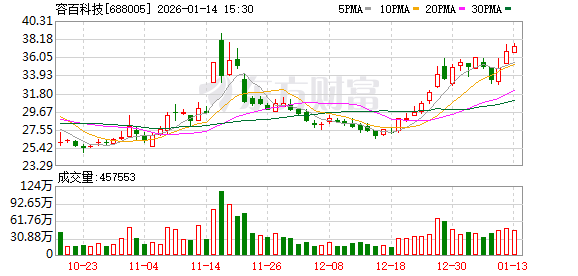
宁德时代反击受挫?容百科技超1200亿元大单受问询 磷酸铁锂“大博弈”走向何方
Mei Ri Jing Ji Xin Wen· 2026-01-14 16:16
Core Viewpoint - The lithium battery industry, particularly the lithium iron phosphate (LFP) sector, is experiencing a significant "game" between upstream manufacturers and downstream battery producers, with intense price negotiations and potential supply chain disruptions [2][3]. Group 1: Market Dynamics - Upstream LFP manufacturers have faced nearly three years of losses and are eager to raise prices, while downstream battery manufacturers are seeing prices decline [2]. - A procurement agreement between Rongbai Technology and CATL worth over 120 billion yuan has sparked market discussions, potentially marking the largest order in the LFP industry [2][5]. - The Shanghai Stock Exchange has requested a comprehensive self-examination from Rongbai Technology regarding the procurement agreement, focusing on its ability to fulfill the contract [2][6]. Group 2: Production and Supply Challenges - Major LFP manufacturers, including Hunan Youneng and Wanrun New Energy, have announced production halts for maintenance, which is seen as a collective effort to pressure battery manufacturers for higher processing fees [4]. - In early 2026, it was reported that most clients accepted a processing fee increase of 1,000 yuan per ton, indicating some success in the manufacturers' strategy [4]. - Rongbai Technology is expected to supply 3.05 million tons of LFP materials to CATL over six years, averaging over 500,000 tons annually, despite currently having only 60,000 tons of production capacity [5][7]. Group 3: Technological Developments - Rongbai Technology claims its LFP products utilize a revolutionary process that reduces production steps from 15 to 6, lowering investment costs by approximately 40% and energy consumption by about 30% [8]. - The new "RB one-step process" developed by Rongbai Technology is based on first principles and aims to simplify production, although it is currently only at the pilot stage [9]. - Other companies, such as GCL-Poly, are also exploring one-step production methods, which are reported to have lower investment costs compared to traditional methods [10]. Group 4: Industry Concerns - There are concerns regarding Rongbai Technology's ability to meet the supply commitments outlined in the agreement with CATL, as their current production capacity is significantly lower than required [6][8]. - Industry experts have expressed skepticism about the feasibility of Rongbai Technology's new production technology, citing challenges in impurity removal and the potential for aggregation issues [11].
中国长安汽车与宁德时代全面深化战略伙伴关系
Zheng Quan Shi Bao Wang· 2026-01-14 15:28
Core Viewpoint - China Changan Automobile Group Co., Ltd. has signed a memorandum of strategic partnership with Contemporary Amperex Technology Co., Limited (CATL) to enhance collaboration in the electric vehicle market [1] Group 1: Strategic Partnership - The partnership will focus on joint branding, cutting-edge technology, terminal promotion, overseas markets, high-quality supply assurance, and joint ventures [1] - This collaboration aims to jointly explore the new energy vehicle market [1] Group 2: Battery Project - A signing ceremony for the Times Changan Power Battery Project was held, which is a key strategic initiative for Changan Automobile [1] - The project is located in the North Beibei area of the Chuan-Yu High Bamboo New District and will primarily supply advanced new energy vehicle batteries for brands such as Avita, Deep Blue, and Changan Qiyuan [1] - The establishment of this project is expected to accelerate the development of the intelligent connected new energy vehicle industry in the Chengdu-Chongqing region [1]
公司互动丨这些公司披露在商业航天等方面最新情况
Di Yi Cai Jing· 2026-01-14 15:25
Commercial Aerospace - Lichong Group supplies high-end aluminum-based functional intermediate alloys for the commercial aerospace sector [1] Humanoid Robots - Shiyun Circuit has secured a new generation humanoid robot project [1] AI Applications - Longkun Technology's AI biopharmaceutical project is currently in the pre-clinical stage [1] - Bona Film Group has officially launched AI tools "Bole One-Click AI Short Drama" and "Bole Round Table" [1] Other Developments - CATL is advancing high energy density battery technologies, including condensed and solid-state batteries, for aviation applications [1] - Haixiang Pharmaceutical's invested Yuxin Fund holds a 1.352% stake in Tianbing Technology [1] - Zhejiang Fu Holdings reports that rising commodity prices have a positive impact on the company's performance [1] - Meiansen has no collaboration with the European Dorgerberg Steel Plant [1] - Zhite New Materials has no business or revenue related to AI applications, quantum technology, or artificial intelligence [1] - Woge Optoelectronics has completed small batch sample delivery of 1.6T optical module glass-based substrates [1]


