Mindray(300760)

Search documents
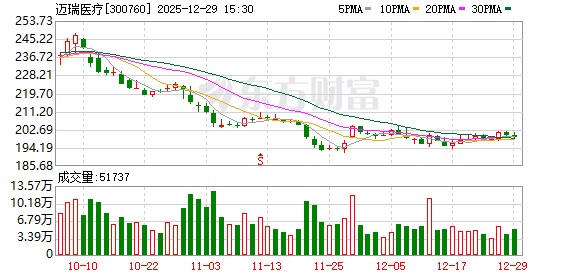
迈瑞医疗跌2.01%,成交额10.96亿元,主力资金净流出1.80亿元
Xin Lang Cai Jing· 2025-12-31 03:14
Group 1 - The core viewpoint of the news is that Mindray Medical has experienced a significant decline in stock price and financial performance, indicating potential challenges ahead for the company [1][2]. - As of December 31, Mindray Medical's stock price dropped by 2.01% to 191.66 CNY per share, with a total market capitalization of 232.38 billion CNY [1]. - The company has seen a year-to-date stock price decrease of 23.45%, with a 3.27% drop over the last five trading days and a 21.56% decline over the last 60 days [1]. Group 2 - Mindray Medical's main business segments include in vitro diagnostic products (38.37%), life information and support products (32.73%), medical imaging products (19.78%), electrophysiology and vascular intervention products (7.25%), and other products (1.56%) [1]. - For the period from January to September 2025, Mindray Medical reported a revenue of 25.83 billion CNY, a year-on-year decrease of 12.38%, and a net profit attributable to shareholders of 7.57 billion CNY, down 28.83% year-on-year [2]. - The company has distributed a total of 35.34 billion CNY in dividends since its A-share listing, with 25.03 billion CNY distributed in the last three years [3]. Group 3 - As of September 30, 2025, the number of shareholders for Mindray Medical increased by 18.86% to 108,800, while the average circulating shares per person decreased by 15.87% to 11,139 shares [2]. - The top ten circulating shareholders include Hong Kong Central Clearing Limited, which holds 117 million shares, a decrease of 14.74 million shares from the previous period [3]. - Other notable shareholders include E Fund's various ETFs, which have also seen reductions in their holdings, indicating a potential shift in institutional investment [3].

券商2025年调研路线图揭晓三大板块最受青睐
Zhong Guo Zheng Quan Bao· 2025-12-30 21:11
Group 1 - The core viewpoint of the articles highlights the significant interest from brokerages in A-share listed companies, with over 2800 companies receiving brokerage research in 2025, indicating that more than half of the market's listed companies have been under brokerage attention [1][2] - The mechanical equipment, electronics, and pharmaceutical biotechnology sectors are identified as the most favored by brokerages, with over 290 companies in each sector receiving research attention [1][2] - The mechanical equipment sector is particularly noted for investment opportunities in the humanoid robot industry chain, while the electronics sector is advised to focus on new technologies and demands driven by the AI innovation cycle [3][4] Group 2 - Crystal Optoelectronics, a company in the electronics sector, has been the most favored by brokerages, receiving 175 research visits, and is part of a sector that has seen a significant price increase of nearly 42% in 2025 [1][2] - The electronics sector has over 320 companies receiving brokerage research, with notable companies like Huaqin Technology and Luxshare Precision receiving more than 140 research visits each [2] - The pharmaceutical biotechnology sector has 296 companies under brokerage research, with a cumulative increase of only 12.44% in 2025, indicating a relative underperformance compared to other sectors [3][4] Group 3 - Investment opportunities in the humanoid robot sector are expected to grow, with a focus on companies entering the Tesla supply chain and those involved in core supply chain and standardization [3] - The electronics sector is anticipated to benefit from the AI-driven demand for high-performance storage and semiconductor testing equipment, suggesting a favorable outlook for related companies [4] - The pharmaceutical sector is expected to continue focusing on innovative drug companies, supported by favorable policies and increasing international market presence, which will attract more investor attention [4]





医药生物周报(25年第51周):吉因加招股书梳理,关注国内外基因检测行业的发展-20251230
Guoxin Securities· 2025-12-30 14:30
Investment Rating - The report maintains an "Outperform" rating for the pharmaceutical and biotechnology sector [5] Core Insights - The report highlights the development of the domestic and international gene testing industry, particularly focusing on the company GenePlus, which is a leading precision medicine company in gene testing [2][11] - The gene testing market is expected to grow significantly, with a compound annual growth rate (CAGR) of 14.8% from 2019 to 2024, reaching a market size of approximately 464 billion yuan by 2024 [22] - GenePlus has established a comprehensive capability from biomarker discovery to commercialization, leveraging its proprietary multi-omics platform and AI technology [2][11] Summary by Sections Market Performance - The pharmaceutical sector underperformed the overall market, with a slight decline of 0.18% in the biopharmaceutical sector, while the A-share market rose by 2.17% [1] Company Overview - GenePlus was founded in 2015 and has raised approximately 1.25 billion yuan through multiple financing rounds, with a post-investment valuation of 4.3 billion yuan after the latest round in November 2025 [2][16] - The company has developed several products, including a gene mutation detection kit for lung cancer, which received regulatory approval in 2019 [28] Financial Performance - In the first half of 2025, GenePlus achieved a revenue of 285 million yuan, representing a year-on-year growth of 12.7%, although it reported a net loss of 414 million yuan [36] - The company's gross margin improved from 42% to 68.5% due to economies of scale in clinical laboratory services [37] Product Pipeline - GenePlus offers three main solutions: precision diagnosis, drug development empowerment, and clinical research and transformation, covering various applications including tumor detection and organ transplant monitoring [18][20] - The company is developing a non-invasive monitoring product for kidney transplant damage, expected to launch in 2025, which shows high sensitivity and specificity [30] Market Trends - The report notes significant international activity in the cancer diagnostics market, with major acquisitions and partnerships indicating a growing interest in gene testing technologies [42] - Regulatory advancements in China for tumor gene testing are anticipated to align more closely with international standards, potentially accelerating product development and approval processes [41]


医药行业2026年投资策略:创新药板块进入精选个股行情,关注出海、脑机接口、AI医疗三大方向
Southwest Securities· 2025-12-30 11:50
Core Insights - The report indicates that the innovative drug sector is entering a phase of selective stock picking in 2026, following a beta market in 2025. The A-share pharmaceutical industry has risen by 15.9% since the beginning of 2025, underperforming the CSI 300 index by 0.65 percentage points, ranking 17th among industries [2][14]. - The report highlights three key investment directions for 2026: overseas expansion of pharmaceuticals, brain-computer interfaces, and AI in healthcare [2]. Investment Strategy Overview - The innovative drug sector is expected to shift from a broad market rally to a focus on selective stocks in 2026. The average increase for 75 innovative drug sample indices in A-shares reached 54.8%, with Hong Kong's indices doubling [2]. - The report notes that as of December 5, 2025, there were 166 overseas business development (BD) projects, a significant increase from the previous year, with upfront payments reaching $6.3 billion, a growth of over 199% compared to 2024 [2]. Key Investment Directions Overseas Expansion - The report emphasizes the acceleration of Chinese innovative drugs entering international markets, with ADCs and bispecific antibodies being hot topics. The potential for GLP-1R target new drugs remains strong in areas such as long-acting formulations and oral medications [2]. Brain-Computer Interfaces - The report outlines the government's strategic push for brain-computer interfaces as a new economic growth point, with applications in medical rehabilitation for conditions like stroke and spinal cord injuries [2]. AI in Healthcare - The report discusses the establishment of clear short-term and long-term goals for AI in healthcare, covering various applications such as AI health management and clinical decision support systems [2]. Recommended Stocks - The report recommends several companies for investment, including Heng Rui Medicine (600276), BeiGene (688235), Mindray Medical (300760), and others, indicating a diversified approach across the innovative drug and medical device sectors [2].


医疗彩超行业:临床诊断的基石与智能化升级核心
Sou Hu Cai Jing· 2025-12-30 04:45
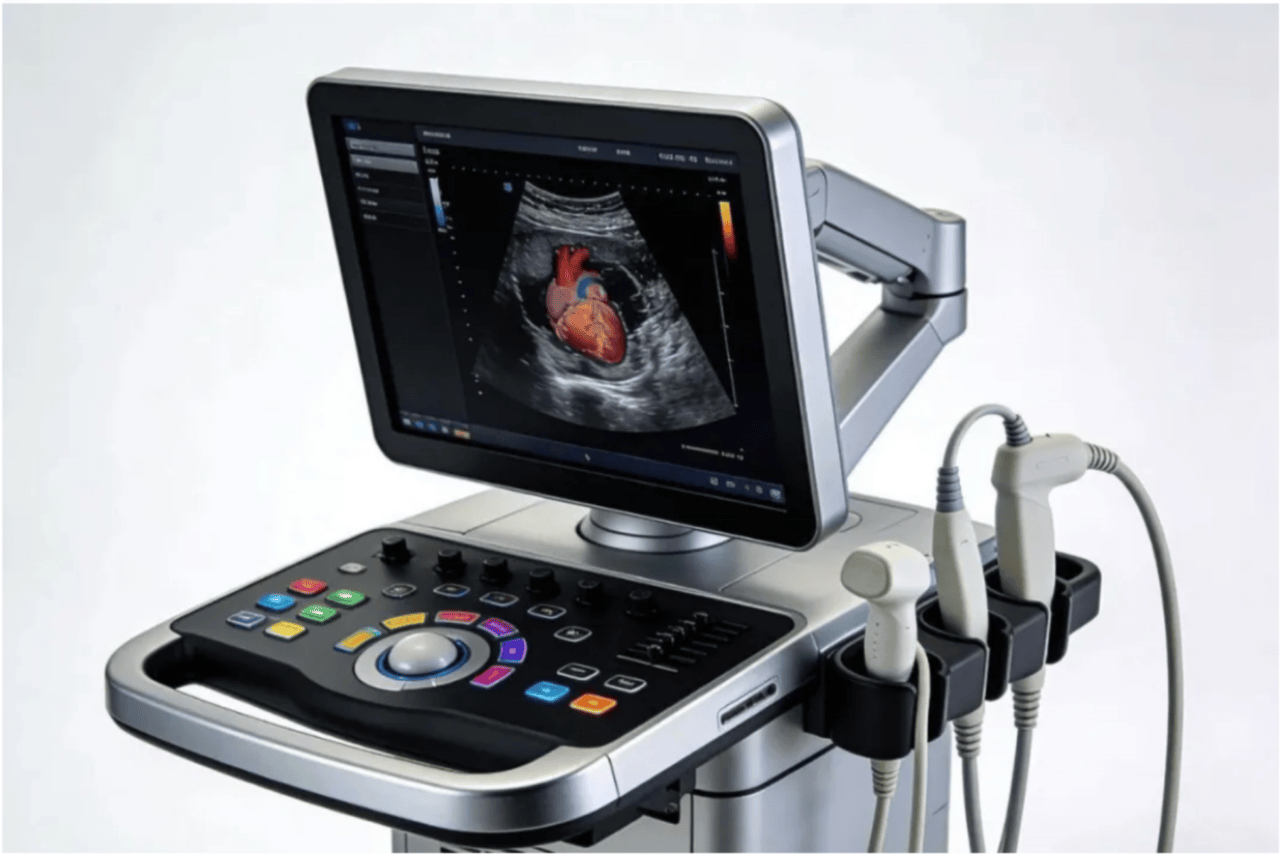
Core Insights - The medical color Doppler ultrasound equipment is a crucial imaging device used for various examinations in fields such as abdominal, cardiac, vascular, and obstetrics and gynecology [2] Market Overview - The color Doppler ultrasound category dominates the procurement of ultrasound imaging diagnostic devices, with a procurement quantity of 9,490 units from January to August 2025, accounting for 80.49% of the total quantity and 85.31% of the total value [3] - The domestic color ultrasound market is characterized by a "dual leader" pattern, with Mindray Medical and Kaidi Medical leading the domestic sector, while high-end fields remain dominated by imported brands like GE and Philips [3][11] - The domestic ultrasound market is expected to grow to 17.1 billion yuan by 2026, with a compound annual growth rate of 10.5% from 2021 to 2026 [7] Competitive Landscape - Mindray Medical holds the largest market share at approximately 25.49% for color Doppler ultrasound diagnostic devices, while Kaidi Medical has a market share of about 7.11% [11] - Imported brands still dominate high-end specialized ultrasound fields, but domestic brands are gaining ground in portable and mid-to-low-end markets [11] - The procurement of ultrasound devices in tertiary and above medical institutions accounted for 40.51% of the total quantity and 52.49% of the total value, with a median price of 1.0838 million yuan [7] Technological Trends - The development of ultrasound technology is moving towards 3D/4D imaging, AI-assisted diagnosis, and portability, expanding application scenarios from traditional departments to emergency, grassroots, and mobile medical fields [3] - Future ultrasound devices will integrate AI technology for automatic identification of lesions, quantitative data analysis, and intelligent diagnostic suggestions, enhancing diagnostic efficiency and accuracy [17] - The trend towards portable and wearable ultrasound devices is expected to facilitate quick examinations in emergency and grassroots medical settings [18] Policy and Economic Drivers - The development of medical ultrasound is influenced by various policies and macroeconomic factors, including significant support for equipment updates and grassroots popularization [4] - Recent capital market activities show a trend of leading companies going public and capital focusing on specialized investments, with notable events such as the successful IPO of Super Research Co. and significant funding rounds for other key players [4][6] Industry Chain - The upstream of the medical ultrasound equipment industry consists of mature markets for electronic components, ceramics, and structural parts, with high-end components like imaging chips primarily imported [13] - Midstream companies include large domestic and multinational manufacturers, while downstream users have diverse needs based on the level of medical institutions, with a focus on reliability, ease of use, and after-sales service [13][16]

迈瑞医疗大宗交易成交3.00万股 成交额480.00万元
Zheng Quan Shi Bao Wang· 2025-12-29 09:20
Group 1 - The core transaction on December 29 involved 30,000 shares of Mindray Medical, with a transaction amount of 4.8 million yuan and a transaction price of 160.00 yuan, representing a discount of 19.60% compared to the closing price of the day [2][3] - In the last three months, Mindray Medical has recorded a total of 12 block trades, with a cumulative transaction amount of 154 million yuan [2] - The closing price of Mindray Medical on the day of the transaction was 199.00 yuan, reflecting a decrease of 0.50%, with a daily turnover rate of 0.43% and a total transaction amount of 1.034 billion yuan [2] Group 2 - The latest margin financing balance for Mindray Medical is 3.74 billion yuan, which has decreased by 45.4375 million yuan over the past five days, representing a decline of 1.20% [3] - Mindray Medical was established on January 25, 1999, with a registered capital of 1.212441394 billion yuan [3]
医药行业周报(25/12/22-25/12/26):2026年行业催化密集,重点关注脑机接口机会-20251229
Hua Yuan Zheng Quan· 2025-12-29 06:00
Investment Rating - The investment rating for the pharmaceutical industry is "Positive" (maintained) [4] Core Insights - The report emphasizes the potential of brain-computer interface (BCI) technology and AI medical applications, predicting significant developments in 2026. It suggests focusing on innovative drug stocks and medical technology themes, particularly in the context of an aging population and the recovery of consumer spending in healthcare [3][5][42]. Summary by Sections 1. Policy Catalysts and BCI Application Potential - The brain-computer interface (BCI) technology is highlighted as a key area of growth, with the market expected to reach approximately $2.62 billion by 2024 and grow to $12.4 billion by 2034, reflecting a compound annual growth rate (CAGR) of 17.4% from 2025 to 2034 [12][18]. - The medical sector is projected to account for about 46% of the BCI application market in 2024, focusing on areas such as neurological rehabilitation and sensory diagnostics [13][18]. 2. Industry Perspective: Innovation and Global Expansion - The pharmaceutical index has shown a decline of 0.18% from December 22 to December 26, 2025, with a year-to-date increase of 14.29%. The report notes a significant number of stocks experiencing both gains and losses during this period [25][30]. - The report identifies key stocks to watch, including innovative drug companies and those involved in the BCI and AI medical sectors, suggesting a focus on companies like Heng Rui Medicine, Zai Lab, and others [42][45]. 3. Investment Opportunities - The report suggests that the pharmaceutical industry has completed a transition from old to new growth drivers, with innovative drugs leading the way. It highlights the increasing global competitiveness of Chinese pharmaceutical companies and their growing capabilities in international markets [41][42]. - Specific recommendations include focusing on innovative drugs, medical devices, and companies involved in the BCI sector, with a particular emphasis on those with strong fundamentals and potential for recovery in 2026 [42][44].


2025年度产业经济十大热点事件: “科技叙事”重塑投资逻辑 “反内卷”再造产业生态
Zheng Quan Shi Bao· 2025-12-28 22:23
Group 1: AI and Technology Developments - The launch of DeepSeek-R1 in January 2025 has become a core investment theme, driving significant capital market momentum and shifting the focus from performance competition to cost, efficiency, and commercialization capabilities in the AI sector [2] - The AI industry has seen a concentration of funds towards leading companies, with notable stock performances such as the "Yi Zhong Tian" combination, which saw gains exceeding 450% [2] - The human-robotics sector has entered a commercialized phase, with over 46 billion yuan in total orders and more than 20,000 units sold, indicating a shift from conceptual collaborations to practical applications [4][5] Group 2: Film and Entertainment Industry - The film "Nezha 2" achieved a record-breaking box office of 15.4 billion yuan, marking a significant milestone for the Chinese animation industry and contributing to a total annual box office of over 50 billion yuan, a 75 billion yuan increase from 2024 [3] - The success of "Nezha 2" and other animated films reflects the growing market potential for domestic animation, providing a reference for future creative and investment strategies in the film industry [3] Group 3: Market Dynamics and Competition - The intense competition in the food delivery industry, initiated by JD's entry with a no-commission model, has led to significant market disruptions and a series of subsidy wars among major platforms, resulting in a 141 billion yuan loss for Meituan's core local business despite record user numbers [7] - Regulatory bodies have intervened to address the chaotic competition, leading to commitments from major platforms to improve service quality and return to rational development [7] Group 4: Capital Market Trends - The A-share market has seen a record high in cash dividends, totaling 2.61 trillion yuan, reflecting an increase in companies' willingness to return profits to shareholders and enhancing market resilience [11] - The emergence of "GPU dual heroes" in the capital market, with multiple domestic GPU companies going public, signifies a milestone for the domestic AI chip industry and a shift towards self-sufficiency [10] Group 5: Industry Regulation and Quality Improvement - The lithium battery supply chain has experienced a price recovery due to regulatory efforts to combat "involution" competition, with lithium carbonate futures seeing significant price increases [12] - The charging battery industry is transitioning to a more orderly development phase following regulatory changes and recalls by major brands, addressing issues of safety and compliance [13]





年内调研近万次!外资巨头盯上这些标的
Shang Hai Zheng Quan Bao· 2025-12-27 10:18
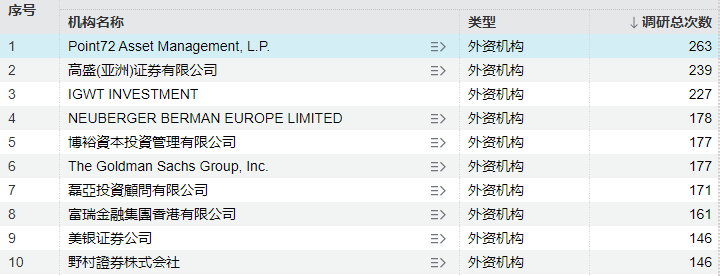
Group 1 - Nearly 800 foreign institutions have conducted approximately 9,308 research visits to A-share listed companies since 2025, with Point 72 Asset Management leading with 263 visits [1][2] - Major international banks such as Goldman Sachs and Bank of America have also conducted over 100 research visits this year [2][3] - The primary focus of foreign institutions is on the technology and pharmaceutical sectors, indicating strong interest in these areas [3][5] Group 2 - The top three companies receiving the most foreign institution research visits are Huichuan Technology (733 visits), Mindray Medical (404 visits), and Optoelectronics (331 visits) [3][4] - The technology sector, particularly AI, is expected to drive significant growth in corporate profits, with an estimated annual increase of 3% over the next decade due to cost savings and productivity improvements [5] - The pharmaceutical sector in China is gaining international recognition, with local innovative drug companies entering the global first tier in terms of research pipeline quantity [6]



《医疗器械出口销售证明管理规定》发布,医疗器械指数ETF(159898)午后走强涨1.29%,赛诺医疗大涨超14%
2 1 Shi Ji Jing Ji Bao Dao· 2025-12-25 06:59
Group 1 - The core viewpoint of the articles highlights a significant upward movement in the medical device sector, driven by policy changes and market dynamics, with a particular focus on the launch of the sixth batch of high-value medical consumables procurement [1][2] - The medical device index ETF (159898) saw a 1.29% increase, with substantial purchases of 36 million units during trading, indicating strong investor interest [1] - Key stocks within the sector, such as SINO Medical and Mailland, experienced notable gains, with increases exceeding 14% and 11% respectively, reflecting positive market sentiment [1] Group 2 - The sixth batch of national high-value medical consumables procurement is set to begin on January 13, 2026, introducing new mechanisms to prevent malicious low pricing, including the concept of anchor pricing and a multi-revival mechanism [1] - The National Medical Products Administration has released new regulations to support medical device exports, which will take effect on May 1, 2026, aimed at optimizing the process for obtaining export sales certificates [1] - Northeast Securities predicts that 2026 will be a year of value reconstruction for the Chinese medical device sector, driven by improved cash flow in hospitals and expectations of policy optimization [2]