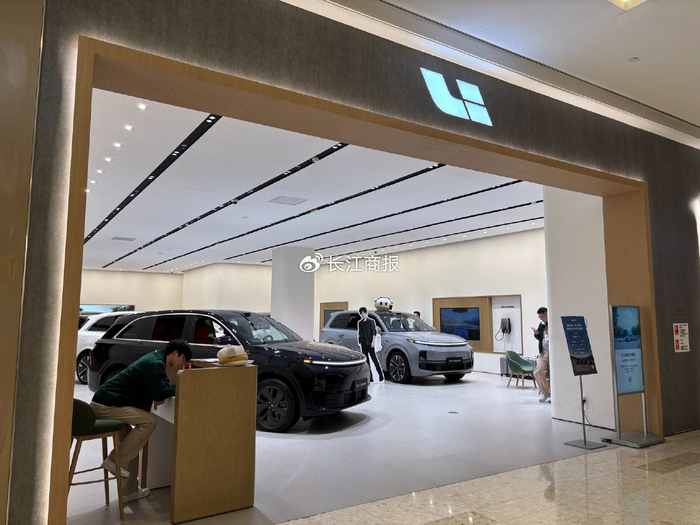
LI AUTO(LI)

Search documents
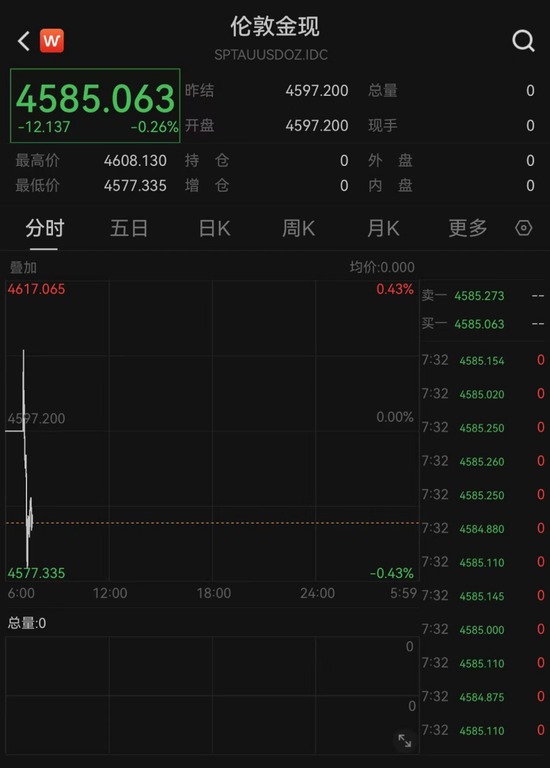
金银,开盘直线跳水
Xin Lang Cai Jing· 2026-01-13 00:20
Group 1: Precious Metals Market - The precious metals market experienced significant volatility, with gold prices dropping below $4580 per ounce and silver prices falling below $84 per ounce on January 13 [1][2][14] - On January 12, both gold and silver prices reached historical highs, with gold peaking at $4630.24 per ounce and silver rising over 6% to $86.237 per ounce [5][17] - Analysts suggest that the recent price movements in precious metals are influenced by increased criticism of the Federal Reserve by the Trump administration, leading to reduced investment in U.S. assets [5][17] Group 2: U.S. Stock Market Performance - The U.S. stock market saw all three major indices close higher on January 12, with the Dow Jones Industrial Average and S&P 500 reaching new highs [6][19] - The Dow Jones rose by 86.13 points (0.17%) to close at 49,590.20 points, while the Nasdaq increased by 62.56 points (0.26%) to 23,733.90 points, and the S&P 500 gained 10.99 points (0.16%) to finish at 6,977.27 points [7][19] - Notable gains were observed in popular Chinese stocks, with the Nasdaq China Golden Dragon Index rising by 4.26%, and Alibaba's stock increasing by over 10%, marking its largest single-day gain since August 29, 2025 [1][21] Group 3: Federal Reserve and Economic Outlook - Market expectations are leaning towards the Federal Reserve maintaining interest rates in January, with a 95% probability of no change and only a 5% chance of a 25 basis point cut [21] - The potential for a 25 basis point cut by March is estimated at 26%, while the probability of maintaining rates is 72.8% [21] - Trump is set to interview Rick Riedel for the position of Federal Reserve Chair, indicating ongoing political influence over monetary policy [22]




乘用车2026 | 2025政策促需 2026高端发力+智能平权+出海提速
汽车琰究· 2026-01-13 00:05
Group 1 - The core viewpoint of the article emphasizes that the demand for automobiles is driven by the continuation of the trade-in policy, leading to an unexpected penetration of new energy vehicles (NEVs) and improved profitability through high-end products and overseas expansion [3][4][5][6][7][8] Group 2 - In 2025, the cumulative wholesale sales of passenger cars reached 24.119 million units, a year-on-year increase of 12.6%, with NEVs growing by 30.7% [3][8] - The penetration rate of NEVs in wholesale sales was 50.4%, up by 7.0 percentage points year-on-year, while the penetration rate for insurance reached 53.3%, an increase of 6.6 percentage points [3][46] - The share of domestic passenger cars in wholesale sales reached 69.3%, a year-on-year increase of 4.9 percentage points, with brands like Geely, Xiaomi, and Leap Motor showing significant growth [3][50] Group 3 - Looking ahead to 2026, the trade-in policy is expected to continue, supporting demand, with projected insurance sales of 22.32 million units, a decrease of 5.0% year-on-year, and wholesale sales of 30.10 million units, an increase of 1.0% [4][5] - The NEV insurance sales are expected to reach 13.8 million units, a year-on-year increase of 6.2%, while wholesale sales are projected to be 17.3 million units, up by 13.4% [4][15] Group 4 - The competitive landscape is shifting, with joint ventures declining and domestic brands accelerating their rise in the mid-to-high-end market [5][10] - In the 5-15 million price range, price-sensitive consumers are expected to drive competition, while brands like Geely, BYD, and Leap Motor are anticipated to gain higher sales growth due to their advantages in intelligence and cost-effectiveness [5][10] Group 5 - The article highlights the acceleration of intelligent driving technology, with major players like Huawei and BYD pushing for the democratization of advanced driving features [6][10] - The L3 commercial deployment is expected to gain momentum in 2026-2027, with various automakers launching new high-level driving systems and models [6][10] Group 6 - The export of passenger cars is projected to reach 6.64 million units in 2026, a year-on-year increase of 15.5%, driven by the technological advantages of domestic NEVs and the expansion of overseas manufacturing [7][11] - Companies like BYD and Geely are expected to increase their export efforts, with BYD establishing overseas factories and Geely accelerating NEV exports [7][11]




汽车行业周报:如何展望2025Q4业绩?-20260112
Changjiang Securities· 2026-01-12 11:22
Investment Rating - The investment rating for the automotive industry is "Positive" and maintained [9] Core Insights - The wholesale sales of passenger vehicles in Q4 2025 are expected to be approximately 8.76 million units, a year-on-year decrease of 1% but a quarter-on-quarter increase of 14%. The profitability in Q4 may show differentiation compared to the same period last year, with expectations for a quarter-on-quarter improvement [2][5] - The revenue from automotive parts is anticipated to grow steadily quarter-on-quarter, but profitability may face pressure due to factors such as raw material costs and exchange rates [2][5] - The wholesale sales of heavy trucks are projected to be 314,000 units in Q4 2025, representing a year-on-year increase of 43.6% and a quarter-on-quarter increase of 11.5% [2][5] - The overall sales of buses are expected to see a significant quarter-on-quarter increase during the peak season, with sales of large and medium buses reaching 44,000 units, a year-on-year increase of 8.8% and a quarter-on-quarter increase of 42.2% [2][5] - The total sales of motorcycles are estimated to be around 4.73 million units in Q4 2025, reflecting a year-on-year increase of 11.0% but a quarter-on-quarter decrease of 6.2% [2][6] Summary by Sections Passenger Vehicles - Q4 2025 wholesale sales are expected to be about 8.76 million units, down 1% year-on-year but up 14% quarter-on-quarter. New energy vehicle sales are projected at 4.84 million units, up 13% year-on-year and 21% quarter-on-quarter [5] Automotive Parts - Revenue is expected to grow steadily quarter-on-quarter, but profitability may be pressured by raw material and exchange rate factors [5] Heavy Trucks - Q4 2025 wholesale sales are projected at 314,000 units, with a year-on-year increase of 43.6% and a quarter-on-quarter increase of 11.5% [5] Buses - Large and medium bus sales are expected to reach 44,000 units in Q4 2025, with a year-on-year increase of 8.8% and a quarter-on-quarter increase of 42.2% [5] Motorcycles - Total motorcycle sales are estimated at 4.73 million units in Q4 2025, reflecting an 11.0% year-on-year increase but a 6.2% quarter-on-quarter decrease [6]

年终盘点2025汽车市场的“龙门一跃”:油退电进,全球登顶
3 6 Ke· 2026-01-12 10:37
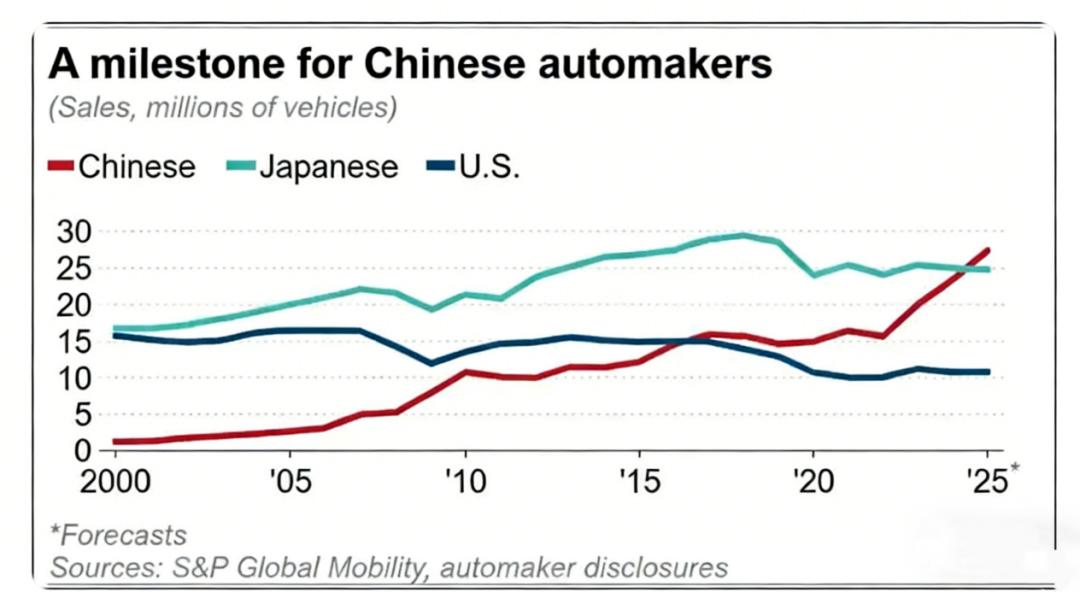
Core Insights - The penetration rate of new energy vehicles (NEVs) in China has surpassed 50%, marking a significant shift in the automotive market dynamics, transitioning from a "policy-driven" to a "product-driven" model [1][10] - The year 2025 is seen as a pivotal moment for the Chinese automotive industry, with the market experiencing a fundamental transformation akin to a "Nokia moment" [1] - The competition is evolving from price wars to value wars, emphasizing technology and product quality over mere volume [11] Industry Overview - In 2025, China's automotive manufacturers are projected to achieve global sales of 27 million vehicles, securing the top position in the global new car sales rankings for the first time [2] - China has overtaken Japan to become the world's largest automobile exporter, with NEVs accounting for a significant portion of this growth [4] - The domestic market's NEV sales are nearing 60%, reflecting a structural change in consumer preferences [4] Sales and Market Penetration - By November 2025, the retail penetration rate of NEVs reached 53.6%, with projections for the full year estimating a rate of 54.0% [6] - The rapid increase in NEV penetration is attributed to a combination of policy support, technological advancements, infrastructure development, and market demand [7] Policy and Technological Developments - The exit of purchase subsidies in 2023 has been offset by continued tax exemptions and various local incentives, which have helped maintain consumer interest in NEVs [7] - 2025 is expected to be a year of technological breakthroughs in NEVs, with advancements in high-voltage platforms, solid-state batteries, and smart driving technologies [8] Infrastructure and Consumer Experience - The expansion of charging infrastructure is crucial for alleviating consumer concerns about range anxiety, with projections of 20 million charging stations by the end of 2025 [9] - The cost advantages of NEVs are becoming increasingly apparent, with electric vehicles offering significantly lower operating costs compared to traditional fuel vehicles [9] Competitive Landscape - The shift from price competition to value competition is reshaping the industry, with companies focusing on technological innovation and profitability [11] - Some companies, like Leap Motor, have emerged as strong competitors, achieving significant sales growth and profitability [13] Global Expansion - In 2025, China's automotive exports are expected to exceed 7 million units, with NEV exports alone projected to reach 2.315 million units, marking a 102.9% increase [21] - Chinese automakers are transitioning to a "global + local" model, emphasizing localized production and R&D to better penetrate international markets [22] Challenges and Future Outlook - Despite rapid growth, challenges such as trade protectionism and compliance costs remain significant hurdles for Chinese automakers in global markets [24] - The automotive industry is expected to continue evolving, with a focus on sustainable growth and value creation as it navigates the transition from a subsidy-driven to a market-driven environment [25]


理想汽车入选“2025中国企业ESG百强”榜单
Xin Lang Cai Jing· 2026-01-12 10:06
Core Insights - The article emphasizes the growing importance of ESG (Environmental, Social, and Governance) as a key metric for high-quality corporate development and a vital link between corporate value and social value [1][11][12] - The "2025 China ESG Top 100" list was released by Sina Finance, evaluating over 5,000 A-share listed companies and mainland companies listed in Hong Kong using 18 industry-specific ESG evaluation models and over 150 ESG indicators [1][12] - The list serves as a benchmark for industry development and provides valuable decision-making references for investors [1][12] Industry Overview - The ESG ecosystem in China is rapidly improving, with tightening regulatory policies and increasing market focus on ESG performance, making sustainable development capabilities a core competitive advantage for companies [1][11] - The release of the ESG Top 100 list is seen as a recognition of the sustainable development practices of the listed companies and aims to promote the core values of ESG across the industry [2][12] Company Highlights - Li Auto was recognized for its significant contributions in the ESG domain, ranking 7th on the "2025 China ESG Top 100" list, showcasing its commitment to sustainable practices [2][12] - The article calls for more companies to follow the example of the top-ranked firms, integrating ESG principles into their strategic planning, operations, and supply chain collaboration to achieve a symbiotic relationship between commercial and social value [2][12]


遭遇成长“阵痛”理想汽车向内“动刀”
Zhong Guo Jing Ying Bao· 2026-01-12 08:24
Core Viewpoint - Li Auto is undergoing significant changes in management and product strategy due to declining sales and operational challenges, shifting from a professional management model back to a startup management approach to enhance agility and responsiveness to market changes [2][3][4]. Management Strategy - The company has decided to abandon the professional management model, which is seen as too rigid and slow, in favor of a startup model that emphasizes innovation, agility, and rapid iteration [3][5]. - Li Auto's CEO, Li Xiang, believes that the previous management approach led to longer decision-making chains and slower product iterations, which hindered the company's competitiveness [4][5]. - The new management strategy focuses on deep dialogue for decision-making, user value, efficiency improvement, and identifying key issues rather than creating information asymmetry [6]. Product Line Adjustment - In early 2026, Li Auto will restructure its product lines from three to two, aiming to simplify operations and improve supply chain efficiency [6][7]. - The company plans to return to a simplified SKU model for its L series products, addressing previous issues with complex configurations that led to customer dissatisfaction [7]. - The i8 model's initial product strategy highlighted the necessity for SKU simplification, as its complex options led to negative user feedback [7]. Sales Performance - In 2025, Li Auto's total vehicle deliveries are projected to be 406,300, representing an 18.81% year-over-year decline, falling short of the target of 640,000 units [2]. - The company reported a net loss of 624 million yuan in Q3 2025, attributed to the costs associated with the recall of the Li Auto MEGA [2]. - The L series products faced significant sales pressure in 2025, with internal competition from the newly launched i series and external competition from rivals in the extended-range vehicle market [9][10]. Future Outlook - Analysts suggest that revitalizing the L series is crucial for Li Auto to overcome current challenges and improve sales performance in 2026 [8][10]. - The company aims to enhance the product strength of the L9 model, which has been on the market for over three years and requires significant upgrades to remain competitive [10].
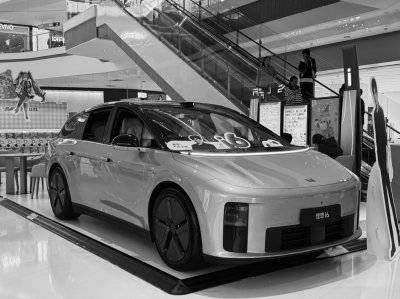
新能源车企,扎堆拥抱经销商
投中网· 2026-01-12 07:05
Core Viewpoint - The article discusses the shift in the sales model of new energy vehicle (NEV) companies from direct sales to a mixed model involving dealerships, driven by high operational costs and market pressures [6][7][9]. Group 1: Operational Costs and Challenges - In first-tier cities, the operational costs for a direct sales showroom can reach up to 5-6 million yuan annually, with total investments for 200 stores potentially exceeding 1 billion yuan [6]. - The direct sales model, initially seen as innovative, is now under pressure, leading many companies to adopt a mixed model of direct sales and dealerships to alleviate costs [7][9]. Group 2: Market Dynamics and Channel Transformation - By Q4 2025, significant changes in sales channels are expected, with companies like Tengshi and Hongmeng Zhixing closing or transferring direct stores to dealerships in key markets [8][16]. - The shift towards a mixed sales model is reshaping the industry landscape, as companies seek to adapt to market competition and cost pressures [9][21]. Group 3: Pricing and Profitability Issues - The average price of NEVs is declining, with projections showing a drop from 184,000 yuan in 2023 to 169,000 yuan in 2025, which is squeezing profit margins [12]. - The sales profit margin for the automotive industry fell to 4.4% in 2025, marking a significant low, making the direct sales model's profit advantages less viable [12]. Group 4: Downstream Market Opportunities - The lower-tier cities are emerging as new growth engines, with sales in five-tier cities increasing by 14.6%, significantly outpacing first-tier cities [19]. - Companies are increasingly focusing on penetrating non-first-tier markets to tap into a vast pool of potential customers, making channel expansion crucial [20][22]. Group 5: Dealer Network and Competitive Landscape - As more companies open up to dealership models, the competition for channel authority is intensifying, with dealers often able to offer lower prices and additional benefits compared to direct sales [23]. - Despite the advantages of dealership models, many dealers face profitability challenges, with only 42.9% reporting profits and 34.4% operating at a loss [24][25]. Group 6: Future Strategies and Industry Trends - The mixed model of "direct sales + dealership" is expected to become mainstream, but companies must also focus on refined operations and quality customer service to remain competitive [26][27].


理想汽车12月销量解读 | 喜忧参半
数说新能源· 2026-01-12 06:13
Group 1 - The sales of i6 reached 16,000 units, showing significant improvement in production capacity, although the ramp-up was below expectations [1] - The i8 model faced disappointing sales, with only 2,700 units sold in December, totaling 23,000 units, indicating a failure to convert small orders into significant sales [1] - The L6 model sold nearly 13,000 units, with a month-on-month increase of 3,000 units, demonstrating strong product performance and pricing power [1] - The combined sales of L7, L8, and L9 reached approximately 12,000 units, with a month-on-month growth of about 2,300 units, indicating a stable sales base [1] - The mega model experienced a pleasant surprise with a month-on-month increase of 260 units, although returning to the previous high of over 3,000 units is not expected in the short term [1] Group 2 - The i8 model has introduced a three-year interest-free offer, which will be closely monitored [1] - Anticipation is building for the upcoming facelift of the Ideal L series in the first half of the year [1]

2026,卖车更难了
创业邦· 2026-01-12 03:27
Core Viewpoint - The automotive market in 2025 is characterized by intense competition, price wars, and a shift in consumer behavior towards value-driven purchases, leading to significant challenges for manufacturers [5][39]. Group 1: Market Dynamics - BYD, Geely, and Tesla dominated the sales rankings, with BYD maintaining a significant lead in the new energy vehicle sector, selling 4.545 million vehicles in 2025 [7][12]. - The overall sales of new energy vehicles in China reached 14.78 million units, a year-on-year increase of 31.2%, but BYD's growth rate was only 11% [11][12]. - Consumers are increasingly price-sensitive, often comparing prices across cities, which has benefited brands that offer high value for lower prices [7][10]. Group 2: Competitive Landscape - Geely has adopted aggressive pricing strategies, successfully positioning its models against BYD's offerings, resulting in a total of 1.687 million new energy vehicles sold in 2025 [13][14]. - New entrants like Leap Motor have carved out a niche in the budget segment, achieving sales of 596,600 units, and have become profitable, contrasting with many competitors still struggling [16][17]. - Xiaomi's foray into the automotive market has been successful, with its vehicles achieving significant sales and profitability, highlighting the potential for tech companies to disrupt traditional automotive players [21][22]. Group 3: Challenges and Future Outlook - The automotive industry is facing a bottleneck, with many companies struggling to innovate and maintain profitability amid ongoing price wars [39][40]. - The market is expected to become more challenging in 2026, with changes in tax policies and increased competition from established players like Xiaomi and Tesla [45][46]. - Companies are focusing on cost control and operational efficiency as key strategies to survive in a tightening market [41][39].



理想汽车失销冠交付量仅完成目标63% 单季归母净利亏6.2亿
Chang Jiang Shang Bao· 2026-01-12 02:47
Core Viewpoint - Li Auto has experienced a significant decline in sales and profitability, leading to a restructuring of its product lines and management approach to regain market competitiveness [2][5][8]. Sales Performance - In 2025, Li Auto delivered a total of 406,300 vehicles, representing an 18.81% year-on-year decline, and only achieved approximately 63% of its revised sales target of 640,000 vehicles [7]. - The company has fallen from the top position in the new energy vehicle sector to fifth place, trailing behind competitors such as Leap Motor, Hongmeng Zhixing, Xiaomi Auto, and XPeng [7]. Financial Performance - In Q3 2025, Li Auto reported a net loss of 624 million yuan, ending a streak of 11 consecutive profitable quarters [8]. - The company's revenue for Q3 2025 was 27.365 billion yuan, a 36.2% decrease compared to the same period last year [8]. Organizational Restructuring - Li Auto is restructuring its product lines into two main categories: the first line, led by Tang Jing, will cover models MEGA, L9, L8, and L7; the second line, led by Li Xinyang, will focus on the i series and L6 [3]. - The restructuring is a response to declining sales and aims to return to a startup management model to enhance value creation and better meet user needs [4][6]. Market Challenges - The company has faced challenges including a recall of 11,411 vehicles due to safety concerns related to cooling system failures, which has negatively impacted consumer confidence [10]. - A recent fire incident involving a Li Auto MEGA vehicle has further raised concerns among consumers and the media [10]. Future Outlook - Despite current challenges, the CEO remains optimistic, highlighting milestones such as surpassing 1.5 million cumulative deliveries and expanding into new international markets [11].