LI AUTO(LI)

Search documents
超2700只个股下跌
第一财经· 2026-01-07 03:51
Market Overview - The Shanghai Composite Index rose by 0.29%, approaching 4100 points, while the Shenzhen Component increased by 0.35%, and the ChiNext Index gained 0.41% [3] - The total trading volume in the Shanghai and Shenzhen markets reached 1.84 trillion yuan, an increase of 538 billion yuan compared to the previous trading day, with over 2700 stocks declining [3] Sector Performance - The coal sector showed strength, with major stocks like Antai Group hitting the daily limit, and other companies such as Baotailong and Shanxi Coking rising alongside [5] - The futures contract for coking coal hit the daily limit with a rise of 7.98%, priced at 1164 yuan per ton [6] - The semiconductor industry chain performed strongly, with significant gains in sectors like photolithography and storage chips [7] - The photolithography sector saw a rise of 6.66%, with stocks like Yake Technology hitting the daily limit [4] - The rare earth permanent magnet sector also experienced a rise of 3.37%, with companies like Zhongcai Rare Earth and Jiuling Technology seeing gains [9] Individual Stock Highlights - Shangfeng Cement opened over 3% higher after announcing a plan to invest 90 million yuan to establish a semiconductor industry fund [16] - Times New Material opened 3.38% higher following the signing of a 3.32 billion yuan wind turbine blade sales contract [18] - The stock of Puhua Technology surged over 10% as it reached a new historical high [12] International Market Influence - The Hang Seng Index opened down 0.41%, with notable declines in stocks like Alibaba and NIO, while companies like Huahong Semiconductor and SMIC showed strength [19] - The central bank conducted a reverse repurchase operation of 28.6 billion yuan at an interest rate of 1.40% [18]





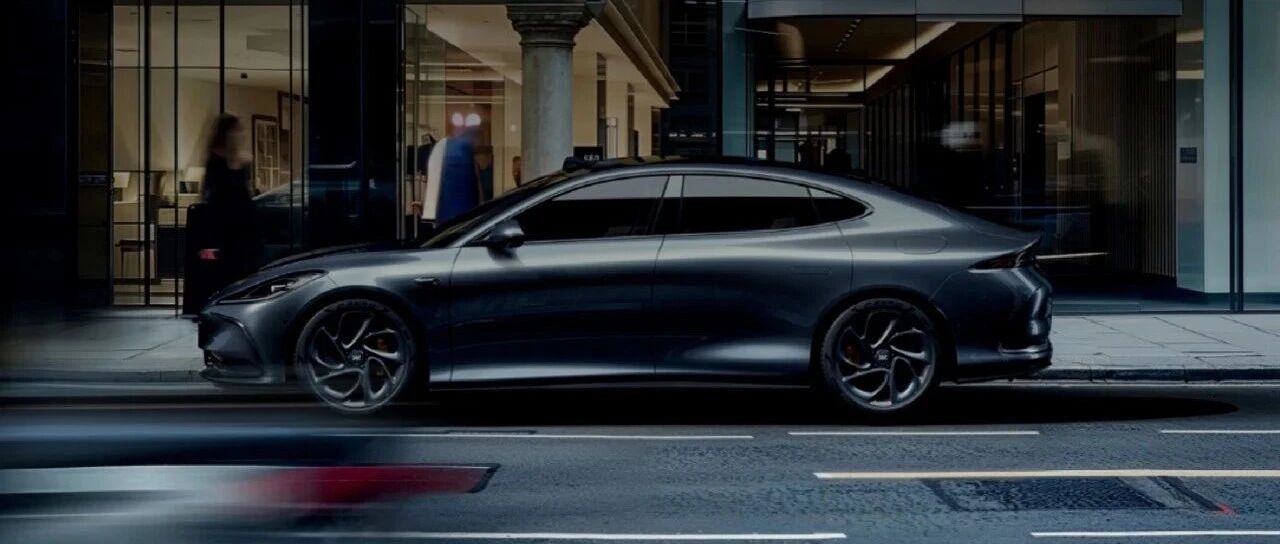
评论理想第一产品线负责MEGA/L789, 第二产品线负责i系列和L6
理想TOP2· 2026-01-06 16:46
Core Viewpoint - The restructuring of Li Auto's product lines aims to enhance decision-making efficiency and product consistency by shifting from a matrix organization to a more streamlined approach, with clear accountability for product lines [1][2]. Group 1: Product Line Adjustments - Li Auto will reorganize its product lines into two main categories: one led by "Old Tang" for MEGA, L9, L8, and L7, and another led by Li Xinyang for the i series and L6 [1]. - The transition from Huawei's IPD model to Toyota's CE model is intended to address issues of resource allocation and decision-making speed within the automotive industry [1][2]. - The i8 series will continue to be iterated upon and will not be discontinued, with a focus on adjusting models priced between 300,000 to 400,000 and potentially introducing a model above 500,000 [1]. Group 2: Leadership and Responsibility - There has been a significant imbalance in the responsibilities and powers of product line leaders, with the expectation that they will now have more authority to influence their respective product lines [2]. - The current restructuring does not appear to designate a single individual as the overall responsible party for value delivery across the brand, sales, and product departments [2]. - The division of responsibilities between Old Tang and Li Xinyang is seen as a move towards balancing their roles, with Old Tang focusing on higher-priced models and Li Xinyang on lower-priced models [5][7]. Group 3: Market Positioning and Strategy - The new product line structure reflects a strategic alignment with market demographics, where Old Tang is perceived to better understand older consumers and Li Xinyang is more attuned to younger buyers [4][6]. - The division aims to minimize internal competition while ensuring that both leaders have overlapping responsibilities that foster collaboration rather than conflict [7].

告别2025!业内头部公司2025年硬核工作总结(地平线/理想/英伟达等)
自动驾驶之心· 2026-01-06 09:17
Core Insights - The article discusses the evolution of autonomous driving technology in 2025, marking a transition from research to practical implementation, with significant advancements in various technical areas [2][3]. Group 1: Industry Trends - The year 2025 is characterized as a turning point for autonomous driving, with technologies like BEV perception, multi-sensor fusion, and trajectory prediction reaching maturity [2]. - The competition in the smart electric vehicle sector is intensifying, with companies like Horizon, Xiaomi, and Li Auto making notable advancements [4][22]. Group 2: Company Highlights - Horizon has made significant strides with its HSD technology, showcasing high potential in end-to-end solutions and innovative approaches like GoalFlow and ResAD [9]. - Xiaomi's autonomous driving development has rapidly progressed, with a team exceeding 1000 members and a series of iterative improvements leading to the release of HAD enhanced version [10][11]. - Li Auto has established itself in the domestic autonomous driving tier, although it faces challenges in transitioning from range-extended to pure electric vehicles [13]. - Xiaopeng Motors experienced a rebound in sales, doubling its volume to nearly 430,000 units in 2025, driven by the successful launch of VLA 2.0 technology [14]. - Bosch is actively investing in both research and production lines, focusing on end-to-end solutions and enhancing its engineering capabilities [16]. Group 3: Future Outlook - The competition in the smart electric vehicle market is expected to become more fierce in 2026, with a shift towards L3 and L4 autonomous driving technologies gaining traction [22][23].


【新能源周报】新能源汽车行业信息周报(2025年12月29日-2026年1月4日)
乘联分会· 2026-01-06 09:07
Industry Information - CATL plans to apply sodium batteries on a large scale in fields such as battery swapping, passenger cars, commercial vehicles, and energy storage by 2026, indicating a new trend of "sodium-lithium dual star shining" [9] - The National Bureau of Statistics reported that profits in the equipment manufacturing industry increased by 7.7% year-on-year from January to November 2025, significantly contributing to overall industrial profit growth [9] - Gansu's 14th Five-Year Plan emphasizes the cultivation of new consumption types, including digital, green, and intelligent consumption, to stimulate economic growth [10] - NIO's battery swapping network has expanded significantly, with over 1,000 new battery swapping stations established within a year [12] - The Chinese automotive market is seeing a surge in electric vehicle sales, with a market share of 79.2% for pure electric models in Israel, led by the Chery Jetour 7 [16][17] Policy Information - The Ministry of Industry and Information Technology has initiated a carbon footprint declaration for automotive power batteries, aiming to establish a management system by the end of 2026 [26] - The 2026 "old-for-new" vehicle subsidy policy will adjust to a percentage of the vehicle price, with a maximum subsidy of 20,000 yuan for new energy vehicles [26][27] - The State Council's guidelines promote high-quality development of the power grid, supporting the construction of charging infrastructure and optimizing the connection process for charging facilities [39] - The implementation of the "Beautiful China Pilot Zone" action plan aims to establish a multi-modal green transportation system and enhance the charging infrastructure for electric vehicles [23] - The Guangdong Shenzhen District has issued management measures for new energy vehicle charging and swapping facilities, mandating a minimum installation ratio for charging facilities in new buildings [32][33]





快讯:恒指高开0.59% 科指涨0.79% 科网股活跃 锂电池股高开
Xin Lang Cai Jing· 2026-01-06 01:23
客户端 美股周一大幅向好,科技股展现强势,道指再创历史新高,三大指数均录得升幅收市。美元反复偏软, 美国十年期债息回落至4.16厘水平,金价大幅走高,油价表现亦向上。 今日港股三大指数集体高开,恒指开盘涨0.59%,报26502.40点,恒科指涨0.79%,国企指数涨0.48%。 盘面上,科网股涨多跌少,百度、网易、快手、哔哩哔哩、京东涨超1%,阿里巴巴跌超1%;电力设备 股高开,亿华通涨超4%;锂电池股活跃,天齐锂业涨超3%;保险股延续涨势,友邦保险涨超2%;汽车 股多数上涨,理想汽车涨超1%。 | 名称 | 最新价 | 涨跌幅 √ | | --- | --- | --- | | 但生科技指数 | 5787.01 | +0.79% | | 800700 | | | | 恒生指数 | 26502.40 | +0.59% | | 800000 | | | | 国企指数 | 9192.41 | +0.48% | | 800100 | | | 责任编辑:郝欣煜 美股周一大幅向好,科技股展现强势,道指再创历史新高,三大指数均录得升幅收市。美元反复偏软, 美国十年期债息回落至4.16厘水平,金价大幅走高,油价表现亦向上 ...


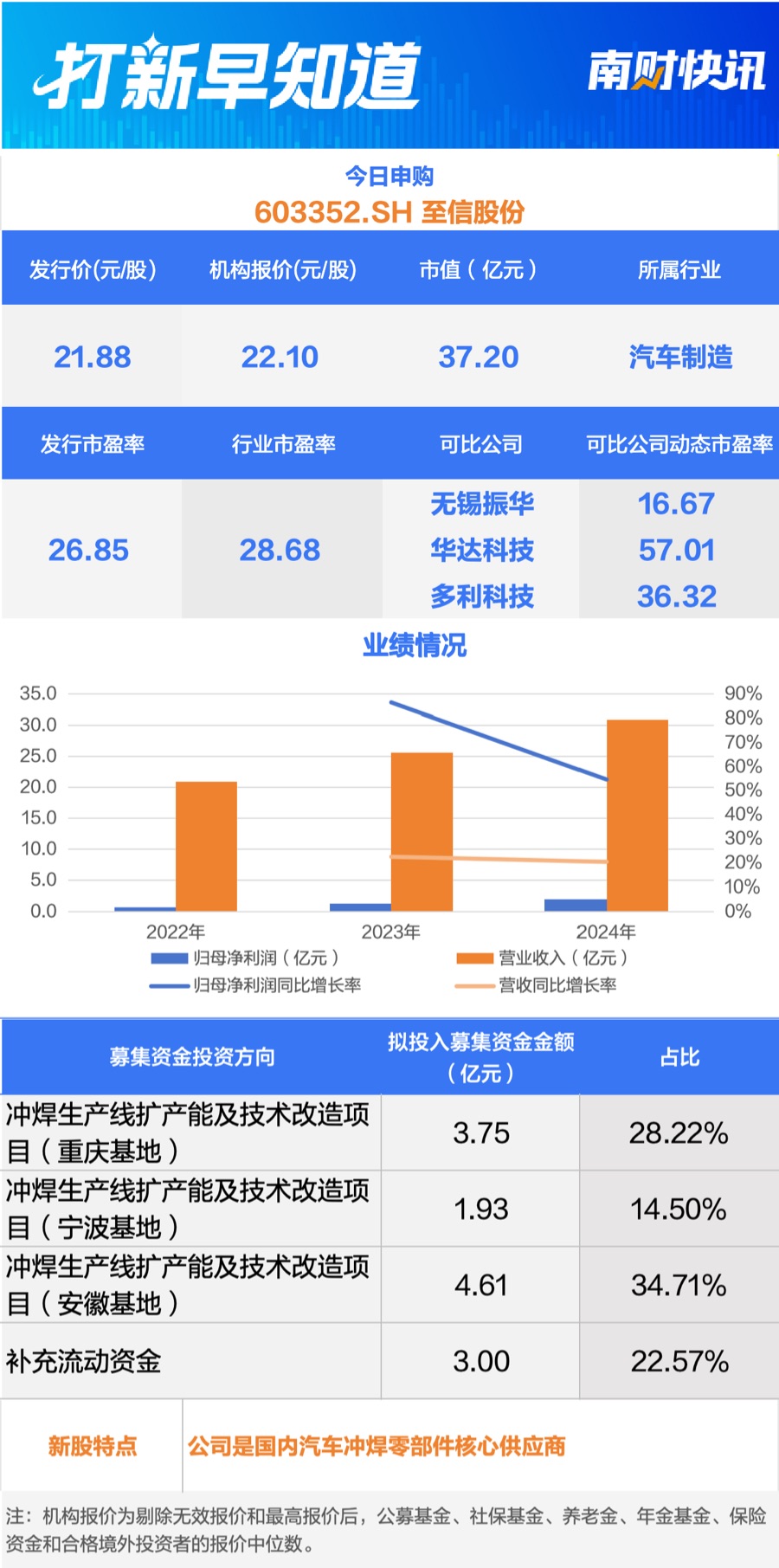
新年第一批新股!理想汽车“小伙伴”、“马字辈”小巨人今日申购 | 打新早知道
2 1 Shi Ji Jing Ji Bao Dao· 2026-01-05 23:03
Group 1 - The core viewpoint of the news is the IPO of Zhixin Co., Ltd. (603352.SH) and Kema Materials (920086.BJ), highlighting their business focus and market positioning in the automotive parts industry [1][5]. - Zhixin Co., Ltd. specializes in the development, processing, production, and sales of automotive stamping parts and related molds, with major products including cold stamping parts, hot-formed parts, and welding assemblies [1][5]. - Kema Materials focuses on the research, production, and sales of dry clutch friction plates and wet paper-based friction plates, aiming to develop new friction materials [5][12]. Group 2 - Zhixin Co., Ltd. has established itself as a significant player in the automotive parts sector in Southwest China, with a projected market share of 6.21% for cabin products, 4.85% for side wall products, and 4.59% for floor products by mid-2025 [5]. - The company has been actively expanding its business in the new energy vehicle sector, collaborating with major automotive manufacturers such as Changan Automobile and Geely, and has seen a continuous increase in new energy vehicle projects from 17 in 2022 to 15 in the first half of 2025 [5]. - Kema Materials is recognized as a leader in the domestic dry friction plate industry, participating in the formulation of national and industry standards, and has established a strong customer base including major domestic clutch manufacturers [12][13]. Group 3 - Zhixin Co., Ltd. plans to use the raised funds for expanding production capacity and technological upgrades across its bases in Chongqing, Ningbo, and Anhui, with a total investment of 10.29 billion yuan allocated for these projects [3]. - Kema Materials intends to invest 1.51 billion yuan in environmentally friendly dry clutch friction materials and 0.55 billion yuan in upgrading its research and development center [10]. - The company faces risks related to customer concentration, with sales to its top five customers accounting for over 68% of its revenue in recent years [6].
理想获100亿债务融资工具注册额度
理想TOP2· 2026-01-05 15:43
Core Viewpoint - The document outlines the approval of Li Auto's debt financing tools registration, allowing the company to issue up to 10 billion yuan in various debt instruments over a two-year period [2][3]. Group 1: Registration Details - The registered amount for Li Auto's debt financing tools is 10 billion yuan, valid for two years from the date of the notification [2]. - The joint lead underwriters for this issuance are Bank of China and China International Capital Corporation [2]. Group 2: Issuance Guidelines - Li Auto can issue various types of debt instruments, including super short-term financing bonds, short-term financing bonds, medium-term notes, perpetual notes, asset-backed notes, and green debt financing tools [3]. - Each issuance must specify the lead underwriter, product type, issuance scale, and duration [3]. Group 3: Compliance and Management - The company must adhere to the guidelines for issuing non-financial corporate debt financing tools and comply with self-regulatory management rules set by the China Interbank Market Dealers Association [3][4]. - Li Auto is required to disclose the use of raised funds according to the prospectus and must notify any changes in fund usage [3]. Group 4: Operational Conduct - The company must conduct its operations in compliance with national industrial policies and ensure healthy business development [3]. - In the event of significant events affecting debt repayment capability, Li Auto must follow investor protection mechanisms to safeguard investors' rights [3].
The Zacks Analyst Blog NIO, XPeng and Li Auto
ZACKS· 2026-01-05 14:40
Core Insights - NIO, XPeng, and Li Auto, major players in the China-based smart electric vehicle market, reported their delivery figures for December 2025 and Q4 2025, showcasing significant growth in vehicle deliveries [2][3][4][5]. Group 1: NIO Performance - NIO achieved a record 48,135 vehicle deliveries in December 2025, reflecting a 54.6% year-over-year increase [3]. - The fourth-quarter deliveries reached a new high of 124,807 vehicles, up 71.7% from the previous year [3]. - For the full year 2025, NIO delivered 326,028 vehicles, marking a 46.9% increase year-over-year, with cumulative deliveries totaling 997,592 units as of December 31, 2025 [3]. Group 2: XPeng Performance - XPeng delivered 37,508 vehicles in December 2025, representing a modest 2% year-over-year increase [4]. - Total deliveries for 2025 surged to 429,445 units, more than doubling from the previous year with a 126% increase [4]. - Overseas deliveries for XPeng totaled 45,008 vehicles in 2025, up 96% year-over-year, as the company expanded operations to 60 countries and regions by year-end [4]. Group 3: Li Auto Performance - Li Auto delivered 44,246 vehicles in December 2025, a decrease from 58,513 units in December 2024 [5]. - Fourth-quarter deliveries amounted to 109,194 vehicles, bringing cumulative deliveries to 1,540,215 units as of December 31, 2025 [5]. - Li Auto expanded its international presence by launching new models in Egypt, Kazakhstan, and Azerbaijan, and operated 548 retail stores in 159 cities by year-end [6]. Group 4: Stock Performance - Over the past year, shares of NIO and XPeng have increased by 10.2% and 73.2%, respectively, while shares of Li Auto have decreased by 31.6% [7]. Group 5: Zacks Rank - NIO, XPeng, and Li Auto currently hold a Zacks Rank of 3 (Hold) [8].
汽车行业年度策略报告:汽车行业2026年十大趋势及投资策略-20260105
Guoyuan Securities· 2026-01-05 13:43
Core Insights - The report highlights that the Chinese automotive industry is entering the mid-to-late stage of the electric and intelligent transformation, characterized by the coexistence of traditional fuel vehicles, electric intelligent vehicles, and future industries represented by autonomous driving. This necessitates a layered and structured investment approach based on the different stages of these industry curves [2][3]. Trend Summaries Trend 1: Scrap Gap Provides Long-term Space, Trade-in Policies Expected to Normalize - The Chinese automotive market has stabilized at an annual sales level of 31 million units, with a substantial vehicle ownership base of 350 million units, laying the groundwork for future updates. The annual scrappage volume is still significantly lower than new car sales, leading to an expanding replacement gap. The "trade-in" policy is expected to evolve from a temporary stimulus to a normalized tool, enhancing the precision of policies to support domestic demand and industrial production [2][13][27]. Trend 2: New Forces Drive China's Automotive Exports to a New Structural Upgrade Stage - China's automotive exports have entered a high-growth phase, achieving several-fold growth over four years. The export structure has undergone profound changes, with a significant increase in the penetration of new energy vehicles. New force car manufacturers are enhancing China's brand premium and technological image in the global market through high-value product exports [2][30][34]. Trend 3: "Mass Market Pure Electric + High-end Range Extender" Trend Continues to Deepen - With the penetration rate of new energy vehicles surpassing 50%, market demand is showing structural differentiation. In the mass market under 200,000 yuan, the 800V high-voltage platform significantly improves charging efficiency, driving pure electric growth to outpace plug-in hybrids and range extenders. In the high-end market above 300,000 yuan, the "large battery long-range range extender" remains the mainstream solution for full-size SUVs/MPVs [2][3]. Trend 4: The "Late Mass Market" Phase Will Continue to Strengthen the Matthew Effect - The industry is transitioning from the "early mass market" to the "late mass market" phase, where consumers prioritize brand endorsement, after-sales support, and residual value certainty. This pragmatic user base favors mature brands and ecosystem capabilities, leading to a concentration of market resources towards leading technology firms [2][3]. Trend 5: Focus on State-owned Enterprises for Opportunities Around "Certainty + Cost-effectiveness" - Regulatory bodies are intensifying the separate assessment and market value management of state-owned enterprises' new energy businesses, driving resources towards electric intelligence. Major automotive groups are restructuring to shorten development cycles, accelerating the integration of intelligent configurations into mainstream price segments [2][3]. Trend 6: Growth of New Energy Heavy and Light Trucks Enters Acceleration Phase - The electrification of commercial vehicles has crossed a critical point, entering a self-driven growth phase. The total cost of ownership (TCO) for heavy trucks has dropped to a recovery period of 1.5-2 years, accelerating the replacement of fuel vehicles. The light truck sector is also maturing, with urban delivery electrification fully established [3][6]. Trend 7: High-perception Intelligent Cockpit Configurations Will Reshape Purchase Decisions - Intelligent cockpits have become a default configuration in new energy vehicles, with the importance of intelligent features in purchase decisions rising to the forefront. Consumers are focusing on visual and perceptible components, making HUDs, large LCD screens, and intelligent seating core differentiation battlegrounds [3][6]. Trend 8: Intelligent Driving Accelerates Along "End-to-End" and "Equal Rights" Paths - The intelligent driving architecture is transitioning to an "end-to-end" model, enhancing efficiency across the perception and decision-making chain. The continued acceleration of L3 policies provides opportunities for leading manufacturers to compete and iterate rapidly in high-level intelligent driving [3][6]. Trend 9: Three Major Autonomous Driving Commercialization Scenarios Approaching Explosive Growth - Robotaxi, mining autonomous driving, and unmanned logistics vehicles are moving from pilot projects to mass production. The cost advantages of unmanned logistics vehicles are becoming increasingly evident, with sales curves showing signs of exponential growth [3][6]. Trend 10: Embodied Intelligence Enters Pre-production Phase, Releasing a Second Growth Curve for the Automotive Manufacturing Industry - Humanoid robots are transitioning from hardware-driven to intelligent dual-core driven, with the automotive supply chain naturally adapting to this field. The synergy between embodied intelligence and the automotive industry is expected to create dual dividends in performance and valuation [3][6].

【整车主线周报】2026年以旧换新政策落地,景气度向上
东吴汽车黄细里团队· 2026-01-05 13:30
Investment Highlights - The automotive industry is expected to see a recovery in passenger vehicle demand in Q1 2026 due to the implementation of subsidy policies, with a focus on high-end electric vehicles and established export-oriented companies [3][4][5][34] - The heavy truck sector benefits from a new policy that maintains subsidy levels, with expectations of 800,000 to 850,000 units sold domestically in 2026, reflecting a 3% year-on-year increase [4][29][38] - The bus sector anticipates a slight increase in sales to 40,000 units in 2026, supported by the continuation of subsidy policies [4][28][38] - The motorcycle market is projected to grow, with total industry sales expected to reach 19.38 million units in 2026, a 14% increase year-on-year, driven by strong export growth [5][35] Passenger Vehicle Sector - The implementation of subsidy policies is expected to convert pent-up demand into sales, with a focus on companies less sensitive to policy changes, such as Jianghuai Automobile and high-end brands like Geely and Great Wall [3][34] - The domestic market is expected to prioritize stability, while exports will focus on companies with proven execution capabilities, such as BYD and Changan [3][34] Heavy Truck Sector - The new policy for heavy trucks has exceeded expectations, maintaining subsidy levels from 2025, which is anticipated to accelerate the rollout compared to previous years [4][29][38] - The domestic sales forecast for heavy trucks in 2026 is optimistic, with expectations of 80,000 to 85,000 units sold, reflecting a 3% increase year-on-year [4][29][38] Bus Sector - The bus sector's subsidy policy has also exceeded expectations, with sales projected to reach 40,000 units in 2026, a 5% increase year-on-year [4][28][38] - The market anticipates a continued push for electric buses, supported by government incentives [28][38] Motorcycle Sector - The motorcycle market is expected to see significant growth, particularly in the large-displacement segment, with total sales projected at 1.26 million units in 2026, a 31% increase year-on-year [5][35] - Exports are expected to rise significantly, with a forecast of 830,000 units in 2026, reflecting a 50% increase [5][35] Overall Market Outlook - The overall automotive market is projected to grow, with total industry sales expected to reach 19.38 million units in 2026, a 14% increase year-on-year [5][35] - The heavy truck and motorcycle sectors are particularly well-positioned for growth due to favorable policy environments and increasing export opportunities [4][5][35]