海尔智家

Search documents
海外年轻中产钟爱海尔三筒洗衣机
Jin Tou Wang· 2026-01-04 03:25
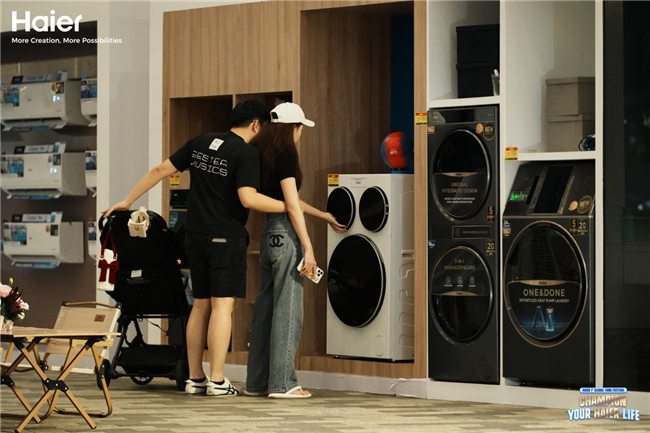
Core Insights - The article highlights the shift in consumer behavior among young middle-class individuals, who are increasingly willing to pay for products that enhance their quality of life, such as smart appliances and health-focused services [1][3]. Group 1: Product Features - The Haier three-tub washing machine addresses health concerns by offering a revolutionary design that allows for simultaneous washing of different types of clothing, thus preventing cross-contamination [3]. - It incorporates advanced sterilization technologies, including UV disinfection and high-temperature washing, to ensure comprehensive hygiene protection for families [3]. - The washing machine saves 50% of washing time compared to traditional models, making it a time-efficient solution for busy young professionals [5]. Group 2: Consumer Appeal - The product's design is aesthetically pleasing and functional, allowing it to blend seamlessly into various home environments, thus appealing to the aesthetic sensibilities of young consumers [7]. - The installation process is simplified, requiring only basic connections, which addresses common concerns about the complexity of high-end appliance setups [7]. - The combination of health protection, efficiency, and aesthetic appeal positions the Haier three-tub washing machine as a desirable choice for modern living, even at a premium price point [7].


采访团走进德州看“数字种子”如何开花结果
Qi Lu Wan Bao· 2026-01-04 02:21
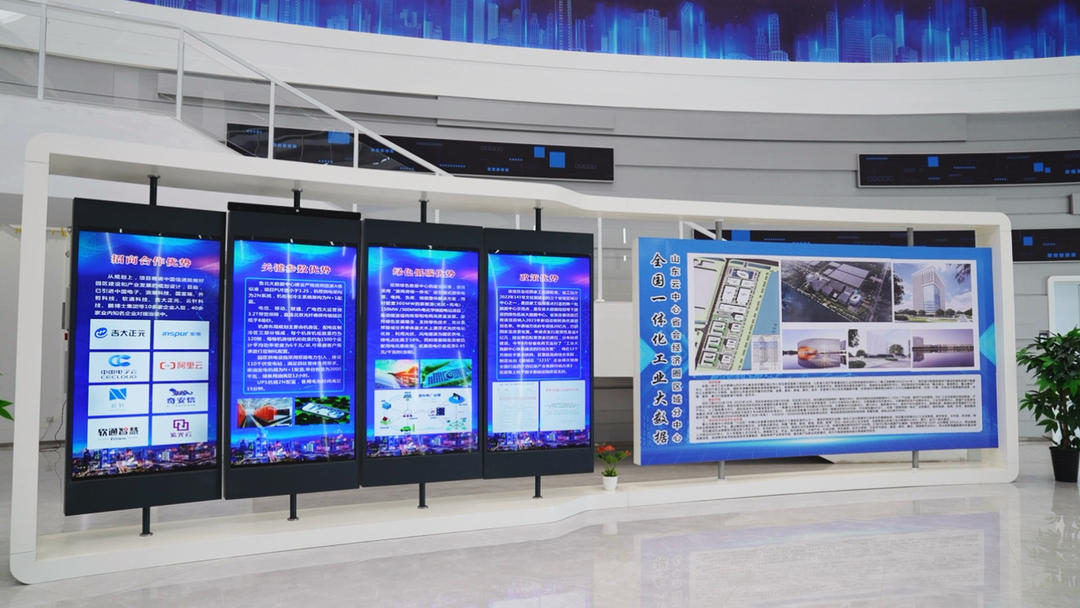
Group 1: Digital Economy Development - The introduction of the "Shandong Province Digital Economy Promotion Regulations" solidifies the legal foundation for digital economy development in Shandong, with the digital economy now accounting for over 49% of the province's GDP [1] - The "Intelligent Leadership Qilu Digital Benchmark" media event highlights the practical applications of digital initiatives in cities like Dezhou, showcasing the integration of digital practices in various sectors [1] Group 2: Green Data Centers - The Lu Bei Data Center is a modern data center cluster under construction in Dezhou, recognized as a national strategic layout, with plans for completion by September 2025 [3] - The center employs a "data center + source-network-load-storage" integrated model to address high energy consumption issues, aiming to become a "zero-carbon data center" [3] Group 3: Intelligent Computing Center - The "Dezhi Future" Intelligent Computing Center, set to be operational by the end of 2024, will have a planned computing power of 510P, utilizing single-phase immersion liquid cooling technology [5] - The project aims for an annual PUE (Power Usage Effectiveness) value of ≤1.05, achieving over 35% energy savings compared to traditional cooling methods, and will recycle cooling liquid to save approximately 120,000 tons of water annually [5] Group 4: Global Business Intelligence - Shandong Guomao Tong Big Data Co., Ltd. focuses on digital upgrades in foreign trade, offering the BTDataS7.0 system that integrates big data, AI, and business intelligence to assist foreign trade enterprises [6][8] - The system has served over 100,000 foreign trade and related enterprises, including major companies like Sinopec and Haier, enhancing decision-making efficiency in a complex international trade environment [8] Group 5: Smart Community Services - The Chahe community in Dezhou has implemented a smart community platform that connects various municipal data services, improving efficiency in managing services for elderly residents [9] - The community has launched data governance scenarios that have automated over 4,100 data interface calls, significantly reducing the need for residents to visit multiple departments [9] Group 6: Overall Impact of Digital Economy - Dezhou exemplifies how digital economy initiatives translate into tangible productivity and improved quality of life, contributing to the broader development of digital economy in Shandong and nationwide [10]
淘宝天猫开启 2026 年国补:家电数码补贴 15%、广东 / 浙江 / 江苏 / 福建多地可领
Xin Lang Cai Jing· 2026-01-04 01:29
Core Insights - The 2026 national subsidy program covers 10 categories including refrigerators, washing machines, televisions, air conditioners, computers, water heaters, mobile phones, tablets, smartwatches, and smart glasses, with smart glasses being a new addition for 2026 [3][15] - The subsidy rate is standardized at 15%, with a maximum subsidy of 1500 yuan for energy/water-efficient home appliances and a maximum of 500 yuan for digital and smart products priced under 6000 yuan [3][15] Subsidy Program Details - The "National Subsidy Renewal Season" event is launched in collaboration with brands like Haier, Midea, Huawei, and Siemens, offering consumers an additional 950 yuan coupon on top of the national subsidy, allowing home appliances to be discounted up to 50% [4][15] - The government subsidy for digital home appliances continues in 2026, with mobile phones, tablets, and 3C digital products eligible for an 8.5% discount, with a maximum reduction of 500 yuan for products priced under 6000 yuan [4][15] - Six categories of home appliances are eligible for an 8.5% government subsidy, with a maximum subsidy of 1500 yuan per item [5][15]
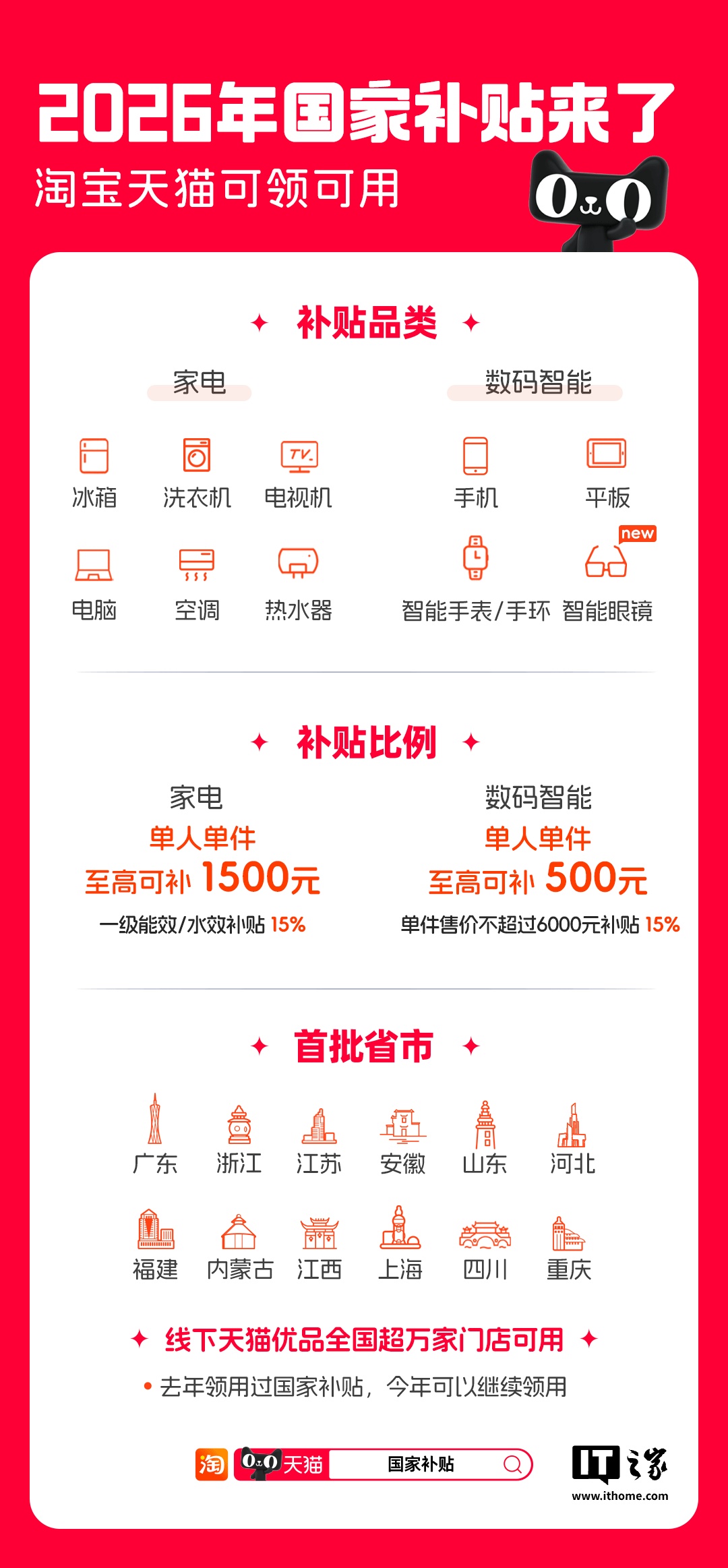
瞄准5万亿美元市场:跨界布局机器人,时代的新共识
3 6 Ke· 2026-01-04 00:26
Core Insights - The Chinese robotics industry is poised for significant growth by the end of 2025, with humanoid robots transitioning from experimental concepts to practical applications, achieving over 50% growth and indicating a trillion-yuan industry on the horizon [1] - The entry of major players from various sectors such as automotive, electronics, and the internet into the robotics field marks a shift from niche exploration to widespread competition, creating a unique trend of "cross-industry integration" [1] Group 1: Market Dynamics - In the first eight months of 2025, the primary market financing in the robotics sector reached 38.624 billion yuan, 1.8 times the total for 2024, highlighting the blue ocean effect attracting significant investment [2] - The global industrial robot sales are projected to reach 542,000 units in 2024, with China accounting for 295,000 units, representing 54% of the global market [2] - By 2025, the Chinese robotics market is expected to exceed 150 billion yuan, capturing 35% of the global market share, with predictions suggesting the market for embodied intelligence could reach 400 billion yuan by 2030 and over a trillion yuan by 2035 [2] Group 2: Industry Trends - At least 20 automotive companies have entered the humanoid robot market by the end of 2025, with notable developments including Chery's humanoid robot Mocha and BYD's production line for core robot components [3] - The automotive industry's supply chain overlaps significantly with robotics, with a 60% compatibility rate, driving car manufacturers to invest in robotics as they view vehicles as "mobile intelligent robots" [3] - Home appliance manufacturers are transitioning from traditional manufacturing to smart ecosystems, with companies like Midea establishing dedicated innovation centers for humanoid robots and developing comprehensive R&D systems [7] Group 3: Strategic Shifts - The automotive sector is seen as a key player in the transition to robotics, with companies like Geely planning to invest 5 billion yuan over three years to develop critical components and establish an ecosystem covering all robotics applications [6] - Internet giants are leveraging their technological and capital advantages to enter the robotics space, with ByteDance and Huawei making significant investments in developing advanced robotic models and systems [8] - The competition in the robotics sector is viewed as a strategic restructuring driven by technological advancements, with companies aiming to activate existing technological capabilities and build new ecosystems [9] Group 4: Challenges Ahead - Despite the enthusiasm for entering the robotics market, cross-industry players face challenges such as adapting core competencies to the robotics field, where technology paths are still being defined [10] - The high precision and stability required for industrial applications pose significant challenges for companies transitioning from other sectors, as they may struggle to meet the diverse demands of various operational environments [11] - Cost remains a critical issue, with companies like BYD and GAC aiming to reduce the production cost of humanoid robots to below 200,000 yuan, which requires overcoming substantial supply chain and process optimization challenges [11]





政策惠 场景火 市场活
Xin Lang Cai Jing· 2026-01-03 19:17
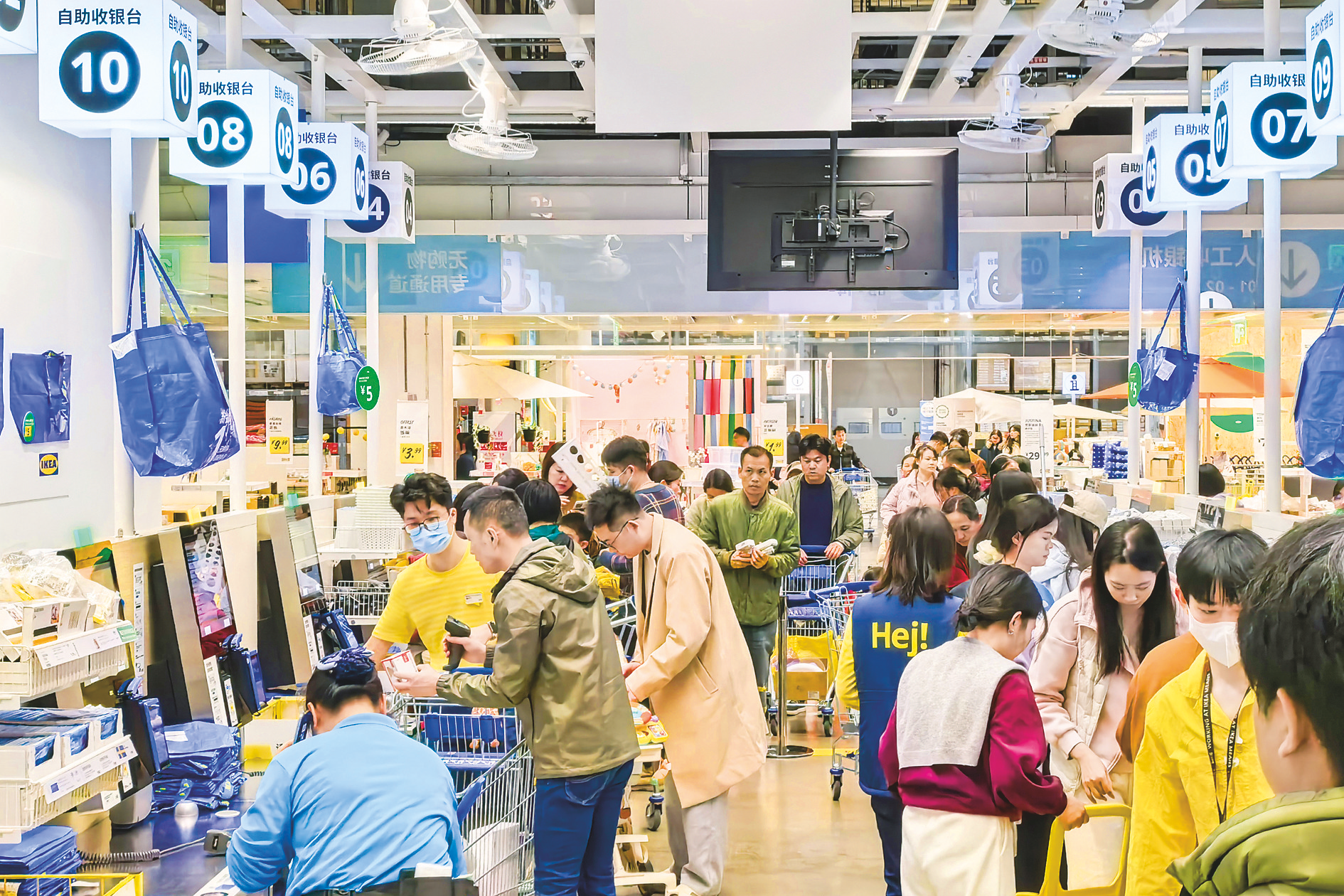
Core Viewpoint - The New Year's holiday in Guangxi has seen a significant boost in consumer activity, driven by a new round of trade-in policies and collaborative efforts among local governments, banks, and businesses, particularly in Nanning, which has emerged as a leading market for holiday consumption [1][4]. Group 1: Consumer Activity and Trends - Nanning has innovatively created diverse consumption scenarios during the holiday, including immersive performances and smart home experiences, which have attracted significant foot traffic and consumer engagement [2][3]. - Key shopping districts in Nanning reported a 21% increase in daily foot traffic and a 16% rise in sales during the holiday period, with some shopping centers experiencing over a 30% increase in visitor numbers [4]. - The introduction of various promotional activities, such as cultural events and themed exhibitions, has further stimulated consumer interest and spending [2][4]. Group 2: Cross-Industry Collaboration - The integration of commerce, culture, and tourism has been highlighted through events like concerts, which have significantly increased hotel bookings and travel to Nanning, with hotel reservations up 17 times compared to the previous year [5]. - Over 400 cultural and tourism activities were organized across the region, enhancing the overall consumer experience and driving economic activity [5][6]. Group 3: Trade-In Policies and Sales Performance - The launch of a trade-in program for home appliances and smart products has led to a doubling of sales for certain energy-efficient appliances, with government subsidies further incentivizing purchases [7]. - Within just two days of the trade-in policy's implementation, over 1 million yuan in subsidies were claimed, resulting in sales exceeding 4,125 million yuan [7]. - Sales of home appliances and communication devices during the holiday period saw year-on-year increases of 4.2% and 5.0%, respectively [7]. Group 4: Price Stability and Market Monitoring - The overall price of essential goods remained stable during the holiday, with minor fluctuations in certain categories, ensuring a well-functioning market without significant disruptions [8].
家电数码补贴15% 点燃跨年焕新热
Sou Hu Cai Jing· 2026-01-03 07:16
Core Viewpoint - The government subsidy program launched in Nanning for home appliances and digital products during the New Year holiday has significantly boosted consumer spending, with discounts reaching up to 60% and a 15% government subsidy on eligible products [6][11]. Group 1: Government Subsidy Program - The "National Subsidy" program offers a 15% subsidy on home appliances and digital products, with a maximum subsidy of 1500 yuan for appliances and 500 yuan for digital items [11]. - The program includes six categories of home appliances (refrigerators, washing machines, TVs, air conditioners, computers, and water heaters) and four categories of digital products (mobile phones, tablets, smartwatches, and smart glasses) [11]. - The subsidy program is set to last until December 31, with monthly funding limits that may pause the program if exhausted [11]. Group 2: Consumer Response and Sales Impact - The promotional activities during the New Year saw a doubling of customer traffic in participating stores, with sales of energy-efficient appliances increasing by 100% on January 2 alone [7][11]. - Consumers are taking advantage of the combined government subsidies and store promotions, leading to significant savings, with some reporting nearly 50% off their purchases [6][7]. - The program has particularly resonated with younger consumers, who are drawn to the high cost-performance ratio of subsidized digital products [10]. Group 3: Retailer Strategies and Services - Retailers are enhancing customer service by offering lifetime free maintenance for large appliances and free health checks for returning customers [8][12]. - Stores have optimized delivery processes, promising delivery within three days for large appliances and prioritizing service for loyal customers [12]. - Retailers are well-stocked with subsidized products to meet the increased demand during this peak shopping season [11].

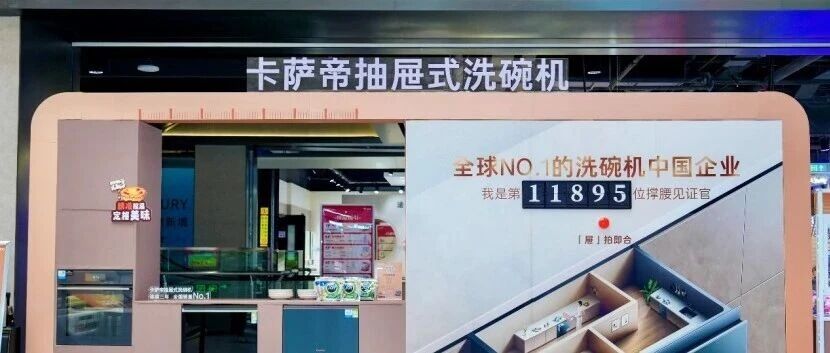
告别弯腰与拥挤:卡萨帝厨电×宝洁JOY洗碗凝珠发起一场针对中国厨房的舒适革命
凤凰网财经· 2026-01-02 13:42
Core Insights - The event "New Kitchen Standard in China" highlights the collaboration between Casarte kitchen appliances and Procter & Gamble's JOY dishwashing pods, focusing on creating an immersive experience that addresses modern kitchen challenges [1][3][19] Group 1: Kitchen Space and Ergonomics - The average kitchen size in China is only 6.1 square meters, with over 70% of households being small to medium-sized, leading to ergonomic challenges with traditional dishwashers [4] - Users of traditional dishwashers may bend over more than 7,300 times a year, accumulating a weight burden of 1,022 tons, highlighting the "invisible fatigue" in kitchen tasks [4] - The Casarte drawer-style dishwasher is designed to optimize space and reduce bending, allowing for a more comfortable user experience [3][16] Group 2: User Experience and Feedback - Participants in the event experienced a "no-bend" challenge, demonstrating the efficiency and comfort differences between traditional and drawer-style dishwashers, with high user satisfaction reported [4][11] - A young mother noted that the drawer-style design allows for standing operation, significantly reducing strain on the back and knees, showcasing the human-centered design approach [4][16] Group 3: Space Optimization and Product Innovation - The drawer-style design can save nearly 30% of front operation space, providing more room for storage and movement in small kitchens [6] - Procter & Gamble's JOY dishwashing pods combine four essential components into one, simplifying storage and reducing the need for multiple products, making it ideal for small kitchens [9][10] Group 4: Systematic Solutions and Health Considerations - The collaboration between Casarte and JOY aims to create a complete kitchen ecosystem that emphasizes both space efficiency and cleanliness, with a focus on user health and comfort [11][14] - The design philosophy shifts from making users adapt to machines to creating machines that accommodate human needs, as evidenced by a 98.2% user satisfaction rate for the "no-bend" experience [14][16] Group 5: Future Trends in Kitchen Design - The event illustrates a broader trend of reimagining the kitchen as a space that enhances quality of life, moving away from mundane chores to a more emotionally supportive environment [17][19] - The initiative aims to redefine kitchen roles in Chinese households, promoting a lifestyle that values comfort and efficiency through innovative design [19][20]
智通港股解盘 | 科技引领港股开门红 商业火箭第一股申请上市推波助澜
Zhi Tong Cai Jing· 2026-01-02 12:56
Market Overview - The Hong Kong stock market opened positively in 2026, with the index breaking through the 26,000-point mark and closing up by 2.76% [1] - The offshore RMB strengthened, surpassing 6.97 against the USD, reaching a new high since May 2023 [1] - Aluminum prices hit $3,000, the highest since 2022, driven by supply tightening and long-term demand expectations [1] Technology Sector - Baidu announced that Kunlun Chip has submitted a listing application to the Hong Kong Stock Exchange, aiming for a valuation between $3 billion and $11 billion for Baidu's 59% stake [2] - Baidu's stock rose over 9%, positively impacting other tech giants like Alibaba and Tencent, which also saw gains of over 4% [2] Semiconductor Industry - Wall Street's first GPU stock, Birun Technology, saw a subscription rate of 1,583.50 times, with an opening price of HKD 35.7, reflecting an 82% premium [3] - Semiconductor stocks like TSMC and Hua Hong Semiconductor also experienced gains, with Hua Hong's stock rising over 9% [3] Aerospace Sector - The commercial aerospace sector saw a surge, with Blue Arrow Aerospace's IPO application accepted, leading to a stock price increase of over 20% for Goldwind Technology [4] Satellite Industry - SpaceX announced a reduction in the orbital height of thousands of Starlink satellites to mitigate collision risks, leading to significant stock increases for Chinese satellite companies [5] - Companies like China Technology Group and Asia Pacific Satellite saw stock increases of nearly 43% and over 34%, respectively [5] Renewable Energy - Skyworth Group's stock rose over 10% following the signing of a 10MW distributed solar power project in Italy, marking significant progress in the European market [6] - The Chinese government is enhancing regulatory measures in the solar industry to ensure fair competition and sustainable development [6] Consumer Electronics - The home appliance sector saw a boost, with major companies like Midea and Haier rising over 4% due to positive market sentiment [7] Automotive Industry - Chinese brands captured a record 12.8% market share in the European electric vehicle market, with significant sales growth reported by companies like BYD and Geely [8] - New energy vehicle sales in Europe doubled compared to the previous year, indicating strong demand for Chinese automotive brands [8] Aluminum Industry - China Aluminum's stock is expected to benefit from rising aluminum prices, which have reached a new high, with a projected revenue increase due to strong demand from the electric vehicle and solar sectors [10][11] - The company reported a 90.31% year-on-year increase in net profit for Q3 2025, driven by cost control and resource optimization [11]




美的、海尔、海信、TCL,一场决定未来十年命运的战争
虎嗅APP· 2026-01-02 09:36
Core Viewpoint - The Chinese home appliance industry is at a critical juncture, with the focus shifting towards international expansion as domestic markets reach saturation. The theme for 2026 is "going abroad," which represents a significant opportunity for companies like Haier, Midea, Hisense, and TCL to explore new markets and alleviate overcapacity issues [7]. Group 1: Overseas Market Potential - The global home appliance market is valued at nearly 4.5 trillion yuan, indicating substantial overseas market potential. In 2024, Midea and Haier are projected to generate approximately 270 billion yuan each in appliance revenue, translating to a global market share of only about 6% [9]. - Domestic brands have low market shares in most overseas regions, with Midea and Haier struggling to exceed 10% in many markets. In contrast, their competitors like Samsung and LG dominate the market [11]. - The growth strategy for domestic brands hinges on increasing their market share abroad, transitioning from competing with regional brands to facing established global giants [13]. Group 2: Challenges of Past Success - Historically, Chinese home appliance companies have relied on capacity expansion and brand acquisitions for international growth. However, this simplistic growth model is becoming unsustainable, as evidenced by the significant gap between global manufacturing share (over 45%) and retail share (less than 20%) [17]. - The stagnation in overseas revenue for leading companies like Haier and Midea, which has remained around 50% and 42% respectively for the past five years, highlights the need for a shift in strategy [18]. Group 3: Brand and Channel Development - The success of domestic brands in China was due to a strong competitive edge in product, brand, and channel management. However, these strengths have not yet translated effectively to international markets, where brand recognition and channel control remain challenges [23]. - Building brand recognition in mature markets is particularly difficult, as Chinese brands face trust issues despite offering lower prices compared to Japanese and Korean brands [25]. - The reliance on traditional retail channels in overseas markets poses significant barriers, as these channels are often fragmented and dominated by established players [30]. Group 4: Opportunities for Breakthrough - Technological innovation is seen as a key pathway to overcoming brand premium challenges and building core competitiveness. Chinese companies have increased R&D investments, achieving breakthroughs in areas like robotic vacuum navigation technology [33]. - Emerging markets such as Southeast Asia and Latin America present significant growth opportunities due to low penetration rates and a favorable demographic profile. These markets are less saturated, allowing for greater brand establishment potential [43]. - The rise of e-commerce in overseas markets offers a new avenue for brand penetration, enabling companies to reach consumers without the need for extensive physical retail investments [45].


港股收盘|科技指数涨超4%迎“开门红” 硬科技与政策消费双轮驱动
Xin Lang Cai Jing· 2026-01-02 08:41
Core Viewpoint - The Hong Kong stock market started 2026 with a strong performance, indicating a continuation of the structural bull market from 2025, with a clear investment focus on hard technology sectors like semiconductors, AI, and smart hardware, as well as policy-driven consumption sectors like home appliances and automobiles [1][5]. Market Performance - The Hang Seng Index rose by 2.76% to close at 26,338.47 points, while the Hang Seng Technology Index surged by over 4% to 5,736.44 points, and the Hang Seng China Enterprises Index increased by 2.86% to 9,168.99 points [1]. Semiconductor Sector - The semiconductor sector saw significant gains, driven by mergers and acquisitions as well as domestic production initiatives. Notable stock performances included Huahong Semiconductor (up 9.42%), SMIC (up 5.11%), and Jingmen Semiconductor (up 3.53%) [5][6]. - Huahong Semiconductor announced a major asset restructuring plan to acquire a 97.5% stake in Huali Micro for a transaction price of 8.268 billion yuan, alongside plans to raise up to 7.556 billion yuan for technology upgrades [6][7]. Internet Technology Sector - Internet technology stocks rebounded strongly, with Baidu Group rising by 9.53%, NetEase by 6.62%, and Alibaba by 4.34%. A key catalyst was Baidu's announcement of its AI chip subsidiary Kunlun's application for a mainboard listing [9][10]. - Kunlun's expected revenue for 2025 is around 5 billion yuan, with a potential valuation of 3 to 11 billion USD for Baidu's stake in the company [11]. Home Appliances Sector - Home appliance stocks benefited from favorable policies, with Skyworth Group rising by 10.45%, Midea Group by 5.12%, and Haier Smart Home by 4.20%. The National Development and Reform Commission and the Ministry of Finance announced a new policy to support large-scale equipment updates and trade-in programs [11][12]. - The new policy is expected to alleviate sales pressure in the short term and benefit leading companies with R&D and brand advantages in the long term [13]. Automotive Sector - Several automotive stocks gained, including Li Auto (up 4.93%) and BYD (up 3.57%), supported by the implementation of the "old-for-new" vehicle trade-in policy [14][16]. - The policy allows consumers to receive subsidies for trading in eligible old vehicles for new ones, which is expected to stimulate market confidence [16]. Solar Energy Sector - Solar energy stocks saw gains, with GCL-Poly Energy rising by 20.99% and GCL-Technology by 4.72%. The market regulator is enhancing compliance guidance for price competition in the solar industry [17]. Commercial Aerospace Sector - Commercial aerospace stocks performed well, with Asia Pacific Satellite rising by 34.53% and Aerospace Holdings by 18.33%. Blue Arrow Aerospace's IPO application was accepted, marking a significant milestone in the sector [18][19]. Individual Stock Movements - Delin Holdings rose by 11.76% following the conditional approval of its subsidiary to provide virtual asset trading services [21]. - Meitu Inc. increased by 6.14% after issuing $250 million in convertible bonds to Alibaba, which could make Alibaba the third-largest shareholder in Meitu [22].