牧原股份

Search documents
泰森关厂冲击波,美国牛肉75年危机,如何波及中国餐桌?
Sou Hu Cai Jing· 2025-12-09 08:37
Core Insights - Tyson Foods announced the closure of its beef processing plant in Lexington, Nebraska, and significant capacity reductions in Texas, resulting in approximately 1,700 job losses and a 4.8% decrease in U.S. beef slaughter volume [1][3] Industry Challenges - Tyson's beef segment has faced increasing losses, with a reported loss of $648 million in FY2023 and projected losses of $291 million in FY2024 and $426 million in FY2025 [3] - The U.S. cattle herd has declined to its lowest level since 1950, with over 100,000 family farms disappearing in the past decade, complicating the beef supply situation [3][5] - The outbreak of screw-worm fly in Mexico has further impacted cattle survival rates, exacerbating the supply issues [5] - Rising costs for live cattle, feed, and agricultural equipment have compressed profit margins across the industry, affecting not only Tyson but also other major players like JBS and Cargill [5] Tyson's Position in China - Tyson has established a strong presence in China since 2001, with significant investments in production facilities and a comprehensive supply chain from cattle farming to processing [7] - The company operates four R&D centers and numerous farms in China, producing 12,000 tons of beef patties annually and maintaining a herd of 30,000 cattle [7] - Tyson's sales strategy includes B2B partnerships with major brands like Haidilao and Starbucks, as well as retail sales through large supermarkets, generating annual e-commerce sales of 1.5 billion yuan [7] Impact of U.S. Plant Closures on China - The closure of Tyson's U.S. plants is not expected to significantly impact the Chinese market, as 85% of the beef sold in China is locally produced, with only 12% coming from U.S. imports [11] - China's beef imports from the U.S. have historically been low, accounting for just 3.2% of total imports in the first eight months of 2025, with Brazil and Argentina being the primary suppliers [11] China's Beef Industry Landscape - China's beef consumption is projected to reach 9.8 million tons by 2024, but domestic production only meets 70% of demand, leading to reliance on imports [14] - Rising prices for imported beef have resulted in increased retail prices domestically, with high-end beef products primarily sourced from Australia and Japan [14] - The Chinese government is investing 5 billion yuan in initiatives to increase beef production and improve breeding efficiency through advanced technologies [14][16] Strategic Responses - Chinese companies are investing in processing facilities in Brazil and Argentina to secure supply chains and mitigate import risks [16] - The introduction of beef futures on the Dalian Commodity Exchange allows companies to hedge against price volatility [16] - Efforts to improve domestic beef quality include the introduction of Australian Angus cattle, resulting in a 30% improvement in the quality of domestic snowflake beef [16] Conclusion - Tyson's plant closures reflect broader cyclical adjustments in the global beef industry influenced by geopolitical factors, highlighting the need for China to develop a balanced beef supply system that combines imports, self-sufficiency, and technological control [16]


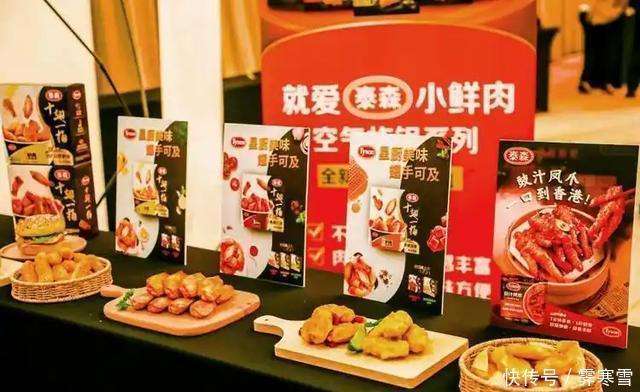
食品饮料ETF天弘(159736)近60日累计“吸金”超4.3亿元,食品饮料成A股“股东回馈活动”主力行业之一
2 1 Shi Ji Jing Ji Bao Dao· 2025-12-09 01:28
Market Performance - The market opened high and continued to rise, with the Shenzhen Component Index increasing by over 1% and the ChiNext Index rising by over 2% [1] ETF Highlights - The Tianhong Food and Beverage ETF (159736) had a total trading volume of 11.99 million yuan, with a closing premium rate of 0.13% [1] - Over the past 60 trading days, the Tianhong Food and Beverage ETF has attracted over 430 million yuan in capital [1] - The Tianhong Agriculture ETF (512620) tracking the CSI Agriculture Theme Index rose by 0.18%, marking two consecutive days of gains [1] ETF Composition - The Tianhong Food and Beverage ETF tracks the CSI Food and Beverage Index, focusing on leading stocks in high-end and mid-range liquor, as well as key players in beverages, dairy, condiments, and beer [1] - Major holdings include "Moutai, Wuliangye, Luzhou Laojiao, Yanghe, Yili, and Haitian" [1] - The Tianhong Agriculture ETF closely follows the CSI Agriculture Theme Index, covering sectors such as breeding and agricultural chemicals, with key stocks including Muyuan Foods, Wens Foodstuff Group, and Haida Group [1] Shareholder Return Activities - Since 2025, over 30 A-share companies, including Emei Shan A, Qianwei Yangchun, and Jiahe Foods, have announced voluntary shareholder return activities, a nearly 90% increase compared to 18 companies in 2024 [2] - The main sectors initiating these activities are food and beverage, and tourism services, which directly target individual consumers [2] Market Trends in Traditional Chinese Medicine - Prices for certain traditional Chinese medicinal materials like Angelica and Codonopsis have decreased, while others such as Ophiopogon, Rhizoma Polygonati, and Rose have remained stable [2] - The market for "food and medicine homology" is expected to reach 370 billion yuan this year, with significant growth in related health products and functional foods [2] Agricultural Sector Developments - On December 5, Muyuan Foods announced that the Hong Kong Stock Exchange has reviewed its application for issuance and listing, but this does not constitute formal approval [2] - Current valuations in the food and beverage sector are at historical lows, with signs of relative returns as market styles shift [2] - It is advised to focus on opportunities for recovery and valuation repair after fundamental pressures ease, as well as innovations in categories, channels, and consumption scenarios [2]


国信证券晨会纪要-20251209
Guoxin Securities· 2025-12-09 01:01
Macro and Strategy - The Federal Open Market Committee (FOMC) is facing a personnel change that will influence future policy direction and independence boundaries, with a key focus on the upcoming 2026 board member replacements [7][8] - The current structure of the FOMC, with a mix of "core dependent" and "institutional defense" members, will determine the continuation of its independence, with potential shifts in policy power dynamics anticipated [8] - The report predicts that the Federal Reserve is likely to enter a phase of "political rate cuts," with increased uncertainty in decision-making frameworks [9] Industry and Company Agriculture, Forestry, Animal Husbandry, and Fishery - The investment strategy for December 2025 highlights an expected reversal in the livestock cycle, recommending key stocks in the dairy farming sector such as Yuran Agriculture and Modern Farming [13] - The report emphasizes the potential for a rebound in meat and milk prices, driven by a synchronized recovery in the livestock sector, with leading companies expected to experience significant earnings recovery [13][14] - Recommendations include leading companies in various segments: livestock (Yuran Agriculture, Modern Farming), pork (Hua Tong, De Kang), and pet food (Guaibao Pet) [15][17] Food and Beverage - The food and beverage sector has seen a decline of 1.80% recently, with A-share food and beverage indices underperforming the broader market [18][19] - The report identifies a divergence in performance across categories, with alcoholic beverages facing supply-demand imbalances, while dairy products are expected to see gradual recovery [19][20] - Investment recommendations focus on high-potential companies in the beverage sector, such as Nongfu Spring and East Peak Beverage, as well as premium liquor brands like Luzhou Laojiao and Moutai [19][20] Real Estate - The real estate market is experiencing significant pressure, with a 9.6% year-on-year decline in sales volume and a 6.8% drop in sales area from January to October 2025 [25][26] - The report notes that while non-popular cities are seeing population outflows, local residents still have improvement-driven housing demands, which could stabilize the market [26][28] - Recommendations include focusing on companies that are well-positioned in non-popular cities, such as China Overseas Land & Investment, which can leverage local demand for housing improvements [28] Internet and AI - The report highlights advancements in AI technology, with significant product launches from companies like OpenAI and Tencent, indicating a growing trend in AI applications across various sectors [29][30] - Investment strategies suggest focusing on internet giants that are leveraging AI for growth, with recommendations for Alibaba and Tencent as key players benefiting from AI integration [30] - The report also notes the potential for AI to enhance advertising and cloud service revenues for these companies, suggesting a positive outlook for their financial performance [30]
生猪:如何看当下疫病情况
2025-12-08 15:36
Summary of Livestock Industry Conference Call Industry Overview - The conference call focuses on the livestock industry, specifically the pig farming sector, and discusses the current market conditions and future trends related to pig prices and supply dynamics [1][2][3]. Key Points and Arguments Current Market Conditions - The pig market is experiencing fluctuations due to seasonal factors, with prices for fat pigs higher than standard pigs post-Chinese New Year, but a significant drop in prices observed from June to August 2025 due to supply mismatches [1][2]. - In September and October, slaughter data showed a month-on-month increase of 7% and 3% respectively, indicating potential unmonitored small pigs entering the market [1][3]. - The impact of local rainfall on piglet mortality rates has been noted, affecting the concentration of fat pig sales [1][3]. Supply and Demand Dynamics - October wholesale volumes increased by 4.6%, and November saw a 12% increase, likely driven by rising demand for cured meat [1][4]. - If slaughter volumes in November significantly increase, it may alleviate supply pressures in December and January [4]. - The supply peak may shift to November, reducing pressure in the following months [4]. Price Trends and Forecasts - Despite current supply pressures, prices are in a weak rebound phase, with uncertainty surrounding post-holiday price predictions due to potential supply increases [5]. - The futures market indicates significant price increases for January and March 2025 contracts, influenced by ongoing epidemic impacts [5]. Impact of Epidemics - The epidemic has led to panic selling, but larger enterprises like Muyuan have achieved survival rates above 90%, indicating effective disease control measures [6]. - Smaller enterprises may not have seen similar improvements, highlighting a disparity in epidemic management capabilities [6]. Future Supply Predictions - The supply-demand relationship is expected to normalize in the coming months, with a peak in piglet numbers around September 2025, leading to potential supply adjustments in December [7]. - Large enterprises are reducing sow inventories in response to national policies, which will affect future fat pig supplies [7][8]. Policy and Capacity Reduction - Companies are responding positively to capacity reduction policies, with significant decreases in sow inventories noted in November [8][9]. - The execution of these policies among smallholders and mid-sized enterprises remains to be observed, as they play a crucial role in overall market supply [8][9]. Cost Structures and Profitability - Large enterprises have a complete cost of approximately 12.5 to 13 yuan per kilogram, while smaller farms face higher costs due to weaker epidemic control [10]. - The industry is cautious about future market conditions, with many companies hesitant to hedge significantly due to fears of unexpected capacity reductions [11]. Market Sentiment and Future Expectations - The sentiment within the industry is neither overly optimistic nor pessimistic, with cautious attitudes towards price levels around 14 yuan being considered high [11]. - The current market for piglets shows slight recovery, with prices expected to stabilize above 11 yuan in the future [15]. Inventory and Demand for Processed Products - Frozen product inventories have increased, but sales are hindered by low fresh meat prices, with significant slaughter volumes in October contributing to stockpiling [16]. - Demand for cured meat products is anticipated to rise as production ramps up in December and January [17]. Long-term Price Expectations - Expectations for the second half of 2026 suggest that product prices may exceed 14 yuan, but uncertainties remain regarding capacity adjustments and other influencing factors [18]. Overall Industry Outlook - The livestock industry is currently in a phase of capacity adjustment, with short-term price fluctuations expected to continue until around March or April 2026 [19]. - The overall industry fundamentals are improving, supported by ongoing government policies and market adjustments [19].
——农林牧渔行业周报:去产能迎来加速阶段,布局生猪底部-20251208
Guohai Securities· 2025-12-08 14:31
Investment Rating - The report maintains a "Recommended" rating for the agriculture, forestry, animal husbandry, and fishery industry [1] Core Viewpoints - The swine industry is entering an accelerated phase of capacity reduction, presenting opportunities for investment at the bottom of the market [3][4] - The poultry sector's fundamentals are expected to improve, with a focus on marginal changes in the cycle [4][5] - The animal health sector is closely monitoring the progress of African swine fever vaccine clinical trials, which could enhance the industry's competitive landscape [6][7] - The pet economy is thriving, with domestic brands rapidly emerging and improving profitability [9][10] Summary by Sections Swine Industry - The average price of live pigs in November was 11.69 yuan/kg, with a month-on-month change of 0 yuan/kg [15] - The number of breeding sows as of the end of October was 39.9 million, a decrease of 1.1% month-on-month and 2.1% year-on-year [15][16] - Investment suggestions include leading companies such as Muyuan Foods and Wens Foodstuffs, with a focus on low-cost performance and dividend increases [16] Poultry Industry - The price of white feather broiler parent stock chicks was 41 yuan/set, down 6 yuan from the previous week [31] - The poultry sector is seeing a gradual recovery, with a recommendation for companies like Shennong Development and Lihua Stock [32] Animal Health - The profitability of self-breeding pigs has been negative for over two months, impacting the animal health sector [40] - Companies like Bio-Pharmaceuticals and Keqian Bio are recommended due to their strong business layouts and customer resources [6][40] Planting Industry - The price of corn was 2229 yuan/ton, with a month-on-month increase of 0.5% and a year-on-year increase of 8% [45] - Companies with early reserves in genetically modified seeds are recommended, including Suqian Agricultural Development and Longping High-Tech [50] Feed Industry - The price of feed for fattening pigs was 3.32 yuan/kg, with a month-on-month decrease of 20 yuan/ton [51] - The feed industry is expected to see increased concentration, with recommendations for Haida Group and He Feng Stock [52] Pet Industry - The pet consumption market in urban China is projected to reach 300.2 billion yuan in 2024, with a year-on-year growth of 7.5% [58] - Recommended companies in the pet food sector include Guibao Pet and Zhongchong Stock, with a focus on the pet medical sector as well [59]



生猪年报:供应前高后低磨底寻转机
Chang Jiang Qi Huo· 2025-12-08 12:55
1. Report Industry Investment Rating - Not provided in the content 2. Core Views of the Report - The year 2026 is expected to be in the bottom - grinding stage of the downward cycle, and the industry needs thorough capacity clearance to enter the upward cycle [1][12][55] - Supply in 2026 will be high in the first half and low in the second half, with significant pressure in the first quarter. The high average weight of live pigs and concentrated pre - holiday slaughtering will suppress price increases during the peak season [2][54][56] - In 2026, as the "14th Five - Year Plan" begins, the warming macro - economy and improved pork cost - effectiveness will drive a moderate increase in pork demand, but the increase is restricted by the macro - economic recovery and consumer confidence [2][40][56] - Feed costs will continue to fluctuate at a low level in 2026, and the industry will continue to reduce costs and increase efficiency, with the expected full cost dropping to around 12 yuan/kg [3][49][56] - Policies will continue to guide the orderly exit of production capacity and stabilize prices. If the pig price drops sharply below 5:1 in 2026, policy support measures such as state reserves will be implemented [3][51][57] 3. Summary by Relevant Catalogs 3.1 Market Review - In 2025, the pig market price was under pressure due to over - supply. The national live pig slaughter price fluctuated between 10.81 yuan/kg and 16.23 yuan/kg, and the futures showed a pattern of limited rebound and downward oscillation [7] - From January to February, the price fluctuated and declined. After the Spring Festival in February, the spot price quickly dropped to 14.5 yuan/kg, and then stopped falling and oscillated. The futures were relatively strong [7] - From March to June, the price fluctuated within a narrow range. After the festivals in April, the price decreased due to strong supply and weak demand. In June, it stopped falling and rebounded [8] - From July to December, the price trended downward. In September, the pig - grain ratio fell below 6:1. On December 5, the price dropped to 11.1 yuan/ton, a 31.6% decline from the beginning - of - year high [9] 3.2 Fundamental Analysis 3.2.1 Pig Cycle - Since 2006, China has experienced about four complete pig cycles. The fifth cycle lasted about 23 months. If 2024 March is the starting point of a new cycle, as of November 2025, the decline stage has reached 15 months [12] - Compared with the fifth cycle, the current cycle's loss time and amplitude in the breeding sector are still insufficient. The industry needs more losses to drive thorough capacity clearance, and 2026 is expected to be in the bottom - grinding stage of the downward cycle [12][55] 3.2.2 Supply Side - **Accelerated culling of sows but still above the normal level**: Before September 2025, the culling of sows was slow. After September, under policy pressure and losses, the culling accelerated. As of October, the official sow inventory was 3990 million, still 2.31% above the normal level [17][19] - **Optimized sow inventory structure and improved production performance**: The proportion of binary sows has increased to 95%. In 2025, the industry's production performance continued to improve. The increase in production performance will offset some of the impact of capacity culling and increase potential supply in 2026 [25][26] - **Increasing number of piglets and high supply pressure in Q1 2026**: Since February 2025, the number of new - born piglets has increased. Based on piglet and feed data, the supply pressure from December 2025 to Q1 2026 is high [30] - **Higher average slaughter weight and short - term pressure to be released**: In 2025, the influence of secondary fattening decreased. The high average weight of live pigs reflects high supply pressure. Before the Spring Festival, the concentrated slaughter of large - scale farms and big pigs may form a "double pressure" [33][34] 3.2.3 Demand Side - **Steady growth in demand driven by macro - economic recovery and cost - effectiveness**: In 2025, the macro - economy had a weak recovery, consumer confidence was low, and pig demand was weak. In 2026, the improvement of the macro - economy and the cost - effectiveness of pork will drive the growth of pork consumption, but the increase is restricted by the macro - economic recovery and consumer confidence [40][41][56] - **Seasonal demand still exists but with milder fluctuations**: In 2025, the seasonal demand boost was short - lived and weak. In 2026, the Spring Festival is postponed, and the change in the industrial pattern will further weaken the peak - season characteristics [42] - **High frozen - product inventory and limited support for consumption**: The current high frozen - product inventory will suppress supply before and after the peak season [2][56] 3.2.4 Cost Side - In 2025, the feed price was low, and the average full cost of listed companies in September/October dropped to 12.69 yuan/kg [49] - In 2026, the feed cost will continue to fluctuate at a low level, and the industry is expected to reduce the full cost to around 12 yuan/kg [50][56] 3.2.5 Policy Side - In 2025, multi - dimensional anti - involution policies were introduced to control production capacity, weight, secondary fattening, and strengthen environmental protection, aiming to guide the industry towards high - quality development [51][52] - The policy requires the reduction of sow inventory to below 3900 million by the end of January 2026, which can control the supply of live pigs in 2026 from the source [51] - In the future, policies will continue to guide the orderly exit of production capacity and stabilize prices. If the pig price drops sharply below 5:1 in 2026, policy support such as state reserves will be provided [52][57] 3.3 Outlook - Before the first half of 2026, supply will remain high, and the price during the peak season is not optimistic. The price in the first half of the year will be under pressure, and it may be relatively strong in the second half, but caution is needed due to cost reduction [57] - In terms of strategies, under supply pressure, short - term contracts should be shorted on rebounds, and long - term contracts should be cautiously bullish. The industry can hedge on rallies before effective capacity reduction [57]
共同发声·价值发现:2025同花顺上市公司年度评选开始报名了!
Xin Lang Cai Jing· 2025-12-08 12:25
Group 1 - The "Voice Together · Value Discovery: 2025 Annual Selection of Listed Companies" event organized by Tonghuashun has officially launched, aiming to enhance interaction between listed companies and investors [1][3] - The event seeks to identify outstanding company secretaries and investor relations teams, making it easier to discover the value of listed companies and promoting the standardization of market value management systems [3][10] - Over 2,000 listed companies have joined the Tonghuashun Enterprise Number platform by the end of 2025, including well-known firms such as Sinopec, Ping An, and Tencent [1][8] Group 2 - The selection will feature awards such as "Most Popular Company Secretary," "Most Popular Listed Company," and "Institutional Favorite Listed Company," determined by votes from investors and professional institutions [3][10] - The evaluation will also include awards for "Best Investor Relations Award," "Investor Relations Innovation Award," "Best Investor Relations Award for Hong Kong and US Stocks," and "Outstanding PR Award for Hong Kong and US Stocks," based on data from the Tonghuashun platform [3][10] - The final list of winners will be announced on December 26, 2025 [4][11] Group 3 - Registration for participation in the awards will be open from December 1 to December 10, 2025, through a designated link [5][12] - Voting will take place from December 11, 2025, to December 18, 2025, with specific voting rules for different categories [6][14] - The evaluation criteria for the awards will include voting data from investors and various metrics from the Tonghuashun Enterprise Number platform [14]

牧原股份:公司积极多渠道扩充粮源,保障原粮稳定供应
Zheng Quan Ri Bao Zhi Sheng· 2025-12-08 12:13
Core Viewpoint - The company is actively ensuring stable supply and quality of raw materials through partnerships with major grain merchants and adjusting feed formulations based on market trends [1] Group 1: Procurement Strategy - The company has established business partnerships with domestic and international major grain merchants to expand grain sources [1] - The company is focused on multi-channel procurement to ensure stable supply of raw materials [1] Group 2: Quality Management - The company emphasizes quality testing and management to ensure that product quality meets standards and requirements [1] Group 3: Feed Formulation - The company adjusts feed formulations in response to changes in grain market trends, allowing for the substitution of different raw materials [1] - The adjustments in feed formulations aim to lower feed costs while meeting the nutritional needs of the pig population [1]
三方能繁延续去化,供应压力猪价调整
CAITONG SECURITIES· 2025-12-08 11:12
Core Insights - The report maintains a positive outlook on the agricultural sector, particularly in the livestock and pet industries, while highlighting ongoing challenges in pig farming due to supply pressures and price adjustments [2][5][9]. Livestock Industry Overview - Pig farming is experiencing downward price adjustments due to increased supply from smallholders and insufficient demand for cured products, leading to a supply-demand struggle [9][18]. - The number of breeding sows decreased by 0.38% in November, indicating a potential acceleration in capacity reduction [21][9]. - As of December 4, the average price for market pigs was 11.30 CNY/kg, reflecting a week-on-week decline of 1.57% [32][33]. - The profitability of pig farming remains negative, with losses of 167.69 CNY per head for self-bred pigs and 259.39 CNY per head for purchased piglets reported [39][42]. Poultry Industry Insights - The poultry sector is seeing a rise in white chicken prices, with an average price of 7.27 CNY/kg as of December 5, up 1.11% week-on-week [40][44]. - The ongoing outbreaks of avian influenza in overseas markets are expected to benefit the white feather chicken industry in the medium to long term [40][41]. Animal Health Sector - The animal health industry is under pressure due to a decline in demand linked to the overall losses in pig farming, with significant year-on-year decreases in vaccine approvals [50]. - However, the development of new vaccines, including progress in African swine fever vaccine trials, may provide a boost to the sector [50]. Seed Industry Trends - The prices of key agricultural commodities such as wheat, corn, and soybean have shown slight increases, with wheat prices at 2515 CNY/ton, corn at 2357 CNY/ton, and soybean meal at 3111 CNY/ton as of December 5 [53][55]. - The USDA's November report indicates a decrease in global corn and soybean stocks, which may impact future pricing and availability [54][57]. Pet Industry Developments - The pet food export market faced a decline, with October exports amounting to 772 million CNY, down 15.9% year-on-year [58][60]. - Domestic sales of pet food are growing rapidly, with e-commerce sales in October increasing by 19% year-on-year, driven by strong performances from local brands [61][62]. - The Double Eleven shopping festival saw significant sales growth for domestic pet brands, indicating a shift towards local products in the market [62].

秦英林:社会价值是企业发展的着力点,是构建新范式的原点
Xin Lang Cai Jing· 2025-12-08 09:59
Core Viewpoint - The core viewpoint emphasizes that social demand is the fundamental reason for a company's existence, and that social value is the focal point for development in the new business paradigm [3][18]. Group 1: Business Philosophy - Social demand is the fundamental reason for a company's existence; without it, technology and management lose their significance [3][18]. - The essence of business is service, providing products and services to the market; the highest realm of business is love, discovering market needs through compassion [3][18]. - The new paradigm does not distinguish between old and new; the core is the enhancement of cognition, focusing on social value and promoting openness and shared creation [3][18]. Group 2: Value Creation - Social value is defined by the unity of economic, ecological, and social benefits, reflected in resource efficiency, green development, and win-win growth [4][19]. - Companies must focus on technological innovation to lower costs and achieve cost leadership; failing to do so indicates insufficient capability [4][19]. - The essence of social benefit is co-creation and shared growth, emphasizing the importance of sharing technology, platforms, and talent [4][19]. Group 3: Economic Efficiency - Economic efficiency prioritizes efficiency, which represents value for money and is a constant theme in market economics; achieving lower prices while maintaining quality is essential [9][24]. - Companies must innovate to create more value for customers, ensuring that they can offer better products at competitive prices [10][25]. - Achieving cost leadership through technological innovation is crucial for survival in the industry [10][25]. Group 4: Ecological Development - The company is committed to "low-carbon pig farming," with a target of 0.905 kg CO₂e per kilogram of pork by 2024, significantly lower than international averages [11][26]. - Efforts to reduce carbon emissions span all production stages, contributing to both ecological responsibility and business opportunities [11][26]. - The company has implemented air purification systems in pig farms, achieving a 99.9% sterilization rate and significantly improving air quality [12][27]. Group 5: Social Impact - The essence of social benefit is co-creation and shared growth, with a focus on enabling others to succeed and creating unlimited business opportunities [13][28]. - The company has invested 24.8 billion in building an intelligent veterinary platform, enhancing service capabilities for surrounding farmers [13][28]. - By fostering collaboration with over 12,700 specialized farmers, the company aims to transform China's pig farming industry from a major producer to a strong competitor [13][28].