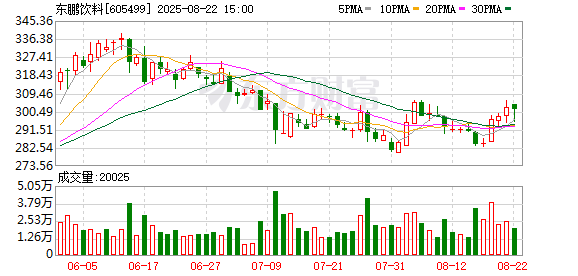
东鹏饮料

Search documents
半年营收破百亿后,东鹏饮料再掏13亿分红
Guo Ji Jin Rong Bao· 2025-08-22 14:48
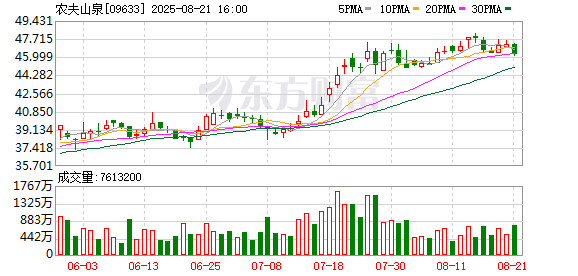
Core Viewpoint - Dongpeng Beverage reported record high revenue and net profit for the first half of 2025, indicating strong financial performance and growth potential in the beverage industry [2] Financial Performance - The company achieved revenue of 10.737 billion yuan, a year-on-year increase of 36.37% [2] - The net profit attributable to shareholders reached 2.375 billion yuan, up 37.22% year-on-year [2] - Dongpeng Beverage's profitability ranks second in the industry, only behind Nongfu Spring [2] Product Dependency and Growth - Dongpeng Beverage's performance is heavily reliant on its flagship product, Dongpeng Special Drink, which accounts for approximately 77.91% of total revenue in the first half of 2025, down from around 90% previously [5] - The energy drink segment generated revenue of 8.36 billion yuan, reflecting a year-on-year growth of 21.9%, but this growth rate has slowed compared to previous years [5] - The company is diversifying its product line with new offerings such as electrolyte water "Dongpeng Water", unsweetened tea "Oolong Tea", and coffee products "Dongpeng Coffee" [5] Marketing and Investment - Dongpeng Beverage increased its marketing expenses to 1.682 billion yuan, a rise of 37.27% year-on-year, with channel promotion costs up by 61.20% [7] - The company is focusing on multi-channel marketing strategies, including sports event sponsorships and advertising [7] Dividend Policy - Dongpeng Beverage announced a cash dividend of 2.5 yuan per share, totaling 1.3 billion yuan for shareholders [9] - Since its IPO in 2021, the company has distributed cash dividends totaling 6.6 billion yuan, with a dividend payout ratio of 63.62% [10] Ownership Structure - The ownership of Dongpeng Beverage is highly concentrated, with the founder Lin Muqin and his family holding 62.91% of the shares [12] - Lin Muqin's family is expected to receive approximately 818 million yuan from the recent dividend distribution [12]


东鹏饮料:在广东市场将从产品、营销、渠道多维度发力保持稳定增长
Bei Jing Shang Bao· 2025-08-22 11:33
Core Viewpoint - Dongpeng Beverage aims to maintain stable growth in the Guangdong market through multi-dimensional efforts in product development, marketing, and channel expansion [1] Product Strategy - The company plans to enhance existing product growth while expanding into new categories such as electrolyte drinks, tea beverages, coffee drinks, and local specialty health products like oil olive and dried tangerine peel [1] Marketing Approach - Dongpeng Beverage will leverage big data for precise advertising placements and sponsor local sports events and folk activities to boost brand visibility [1] Channel Development - The company intends to strengthen traditional channel partnerships, improve product distribution and display quality, and expand its online sales channels [1]
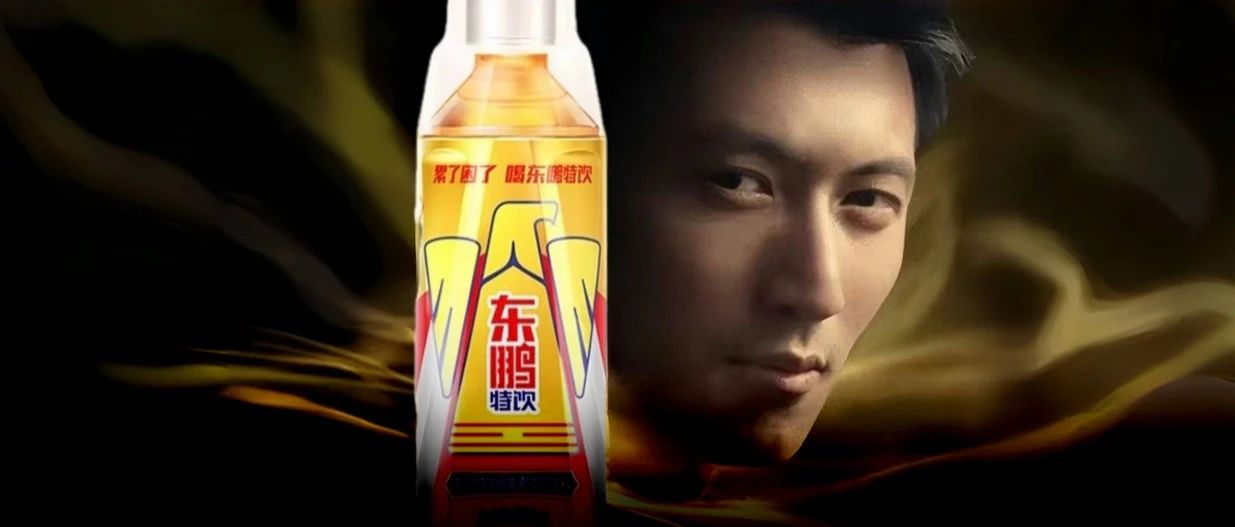
东鹏特饮,00后捧上神坛
盐财经· 2025-08-22 10:28
Core Insights - The beverage market is witnessing a shift from sugar-free tea drinks to functional beverages, with functional drinks becoming the fastest-growing category in China, projected to reach a market size of nearly 1.4 trillion yuan by 2024, approximately double that of sugar-free tea drinks [2][5][8]. Industry Overview - The energy drink segment, represented by brands like Dongpeng, has seen a significant increase in per capita consumption, rising from less than 1 liter in 2015 to 2.79 liters in 2024 [2]. - The overall functional beverage market in China is expected to grow from 111.9 billion yuan in 2019 to 166.5 billion yuan in 2024, marking a nearly 50% increase over five years [8]. Consumer Behavior - The rise in functional beverage consumption is closely linked to changing work and lifestyle habits among consumers, particularly young people who often work late hours and require energy-boosting drinks [9][10]. - The top consumption scenarios for energy drinks include sports, late-night work, studying, and gaming, with the latter three closely associated with late-night activities [9]. Company Performance - Dongpeng Beverage has experienced remarkable growth, with a projected revenue of over 20 billion yuan by 2026, positioning it as a potential new super brand alongside Coca-Cola and Red Bull [3]. - In the first half of 2025, Dongpeng reported a revenue of 10.737 billion yuan, a year-on-year increase of 36.37%, with net profit rising by 37.22% [16][20]. Competitive Landscape - Dongpeng has overtaken Red Bull in sales since 2021, benefiting from Red Bull's internal challenges and the overall growth of the functional beverage category [17][19]. - The competitive dynamics have shifted, with Dongpeng capitalizing on Red Bull's slowed growth due to legal disputes and market disruptions [18][19]. Market Strategy - Dongpeng's marketing strategy includes aggressive promotion and distribution efforts, such as the "free freezer plan" to ensure product visibility in retail locations [37]. - The company has invested significantly in channel partnerships, offering higher profit margins to distributors compared to competitors, which has helped establish a strong market presence [38][40].
食品饮料行业2025年个股复盘:仙乐健康:年内定价逻辑如何演绎?
Xin Lang Cai Jing· 2025-08-22 06:44
Core Viewpoint - The stock price of Xianle Health has increased by 20.1% since early 2025, outperforming the health products index (12.8%) and the food and beverage sector (-2.8%) [1] - The pricing logic of Xianle Health is shifting from a manufacturing company to a consumer goods company, with a strong correlation to the new consumption index since May [1] - The market capitalization increase is primarily driven by valuation uplift, with the forecasted PE ratio rising from 13.4x to 18.3x, while net profit expectations for 2025 are projected to decline [1] Domestic Market Outlook - Xianle Health is accelerating the expansion of new channel customers, which is expected to lead to rapid revenue growth [2] - The domestic health product market is experiencing significant channel differentiation, with online channels thriving while offline continues to decline [2] - The customer structure of Xianle Health is shifting from major clients to mid-tail clients, indicating a need to enhance sales capabilities in new channels [2] Overseas Market Outlook - Short-term profitability improvement is anticipated for the BF subsidiary, with long-term market expansion in the US and Southeast Asia [2] - The BF subsidiary is expected to turn profitable due to personnel adjustments, management reforms, and supply chain efficiency improvements [2] Investment Recommendations - In the liquor sector, the industry is expected to enter a mid-cycle buying point in 2025, with a focus on companies like Shanxi Fenjiu and Moutai [3] - In the consumer goods sector, companies need to adapt to changing consumer preferences for value and health, with strong product capabilities likely to benefit [3] - Xianle Health is highlighted as a core recommendation in the consumer goods sector due to its strong product positioning [3]
软饮料行业深度:后来居上,中国软饮料巨头的平台化之路-东吴证券
Sou Hu Cai Jing· 2025-08-22 02:34
Industry Overview - The report focuses on the development of the Chinese soft drink industry, outlining its history, current status, and future trends, while providing investment recommendations [1]. - The industry has gone through three stages: the carbonated beverage-dominated phase before the mid-1990s, the diversified growth phase from 1995 to 2014, and the structural growth phase from 2015 to the present [1][18]. Current Market Dynamics - The current competition in the industry is intense, with traditional leaders showing significant advantages while new entrants are also making breakthroughs [1]. - Leaders in the market are building competitive moats through "big product iteration + penetration into segmented scenarios," with billion-yuan products being a crucial threshold for leading players in niche markets [1][37]. - The growth rates for bottled water, tea beverages, and energy drinks are strong, with varying levels of market concentration across different segments [1][6]. Future Trends - The future trend in the industry is towards health and functionality, with bottled water's packaging rate expected to rise from 14.4% in 2023 to 18.9% by 2028, indicating a clear long-term growth logic [6][49]. - The penetration rate for sugar-free tea products has significant room for improvement, with the billion-yuan product "Oriental Leaf" leading the charge [6][49]. - Energy drinks, particularly "Dongpeng Special Drink," are experiencing domestic growth and plan to expand into Southeast Asia, while electrolyte water is expected to see increased market opportunities in lower-tier cities [6][49]. - Emerging categories such as coconut water and sparkling water are gaining popularity, driven by their natural health attributes and innovative differentiation [6][49]. Investment Recommendations - The report recommends investing in Dongpeng Beverage and Nongfu Spring, while also suggesting attention to China Resources Beverage and IFBH [7]. - The main investment theme is to focus on high-growth segments and leaders with strong billion-yuan product capabilities, as the industry continues to evolve towards health and functionality [7].



东吴证券晨会纪要-20250822
Soochow Securities· 2025-08-22 02:22
Macro Strategy - The core viewpoint is that the "innovation bull market" in 2025 is a positive cycle driven by policy guidance, capital pricing, and industrial implementation, with macro policies anchoring industrial direction and capital markets facilitating value discovery [1][30] - The market liquidity and valuation have improved, with A-share trading volume exceeding 2 trillion yuan, indicating a positive trading structure and sentiment cycle [1][30] - The initial phase of the "innovation bull" is likely to extend towards financial sectors and technology industries, particularly in areas like robotics, computing power, and innovative pharmaceuticals [1][30] Industry Insights - In the soft drink industry, companies with strong single-product capabilities are positioned as leaders, with high growth potential in bottled water, sugar-free tea, energy drinks, and electrolyte water [5] - The AI chip market is dominated by Nvidia, with its NVLink technology allowing for high-speed communication between GPUs, while competitors face challenges in matching this technology [6] - The food and beverage sector is seeing a shift towards health-oriented and functional products, with companies like Dongpeng Beverage and Nongfu Spring being highlighted for their strong market positions [5] Company Analysis - JD Group's Q2 performance exceeded expectations, leading to an adjustment in EPS forecasts for 2025-2027, maintaining a "buy" rating [7] - Xiaomi Group is expected to benefit from high-end product positioning and global expansion, with a maintained "buy" rating based on its automotive and AIoT business growth [8] - The newly launched "Dazhen" product from Zhenjiu Li Du aims to capture market demand with a competitive price point, indicating a strategic move to enhance market presence [9] - Xpeng Motors' cautious revenue forecast reflects increased R&D costs, yet the company maintains a "buy" rating due to improving gross margins and competitive AI capabilities [10] - Huazhu Group's Q2 results show strong revenue growth driven by a light-asset model, with an upward revision of profit forecasts for 2025-2027 [21]
东吴证券:软饮料业百亿大单品迭出 健康化、功能化成发展共识
Zhi Tong Cai Jing· 2025-08-22 01:48
Core Insights - The Chinese soft drink industry has undergone three major development stages: dominance of carbonated drinks, diversified growth, and structural growth [1][2] - The current competitive landscape is intense, with traditional leaders maintaining advantages while emerging segments are also making significant breakthroughs [2][3] - Future trends indicate a shift towards health-oriented and functional products, with high growth potential in bottled water, sugar-free tea, and energy drinks [3][4] Historical Overview - The industry initially saw the dominance of carbonated drinks until the mid-1990s, led by international giants like Coca-Cola and Pepsi [1] - From 1995 to 2014, the market diversified with local brands emerging and consumer demand for various categories increasing [1] - Since 2015, the rise of the middle class has led to differentiated consumption demands, with bottled water and functional drinks continuing to grow [1] Current Landscape - Major players are leveraging "big product iteration and scene penetration" to build competitive advantages, with significant single products emerging in various segments [2] - Key players in bottled water include Nongfu Spring and Master Kong, with respective market sizes of 16 billion and 12.1 billion [2] - The energy drink segment is led by brands like Red Bull and Dongpeng, with market sizes of 20 billion and 13.3 billion respectively [2] Future Trends - The bottled water packaging rate in China is expected to rise from 14.4% in 2023 to 18.9% by 2028, indicating a clear long-term growth trajectory [3] - The sugar-free tea segment is seeing significant growth, with brands like Dongfang Shuye achieving over 10 billion in market size [3] - Energy drinks are expanding into Southeast Asia, with local partnerships being crucial for market penetration [3] Investment Recommendations - Companies like Dongpeng Beverage and Nongfu Spring are recommended for their strong positions in high-growth segments [4] - The focus is on companies that can adapt to health and functional trends while maintaining strong single product capabilities [4] - Attention is also drawn to potential investments in China Resources Beverage and IFBH due to their emerging market presence [4]
软饮料行业深度:后来居上,中国软饮料巨头的平台化之路
Soochow Securities· 2025-08-21 15:34
Investment Rating - The report maintains an "Add" rating for the soft drink industry [1] Core Insights - The Chinese soft drink industry has evolved through three main stages: the dominance of carbonated drinks, diversified growth, and structural growth driven by the rise of the middle class and differentiated consumer demands [11][23] - Leading companies in the soft drink sector are innovating and creating billion-yuan products, establishing competitive advantages through product iteration and market penetration strategies [30][33] - The future of the industry is expected to focus on health and functionality, with high growth potential in categories such as bottled water, sugar-free tea, energy drinks, and emerging segments like electrolyte water and coconut water [36][41] Summary by Sections Historical Overview - The soft drink industry in China has transitioned from a carbonated drink-dominated phase (before the mid-1990s) to a diversified growth phase (1995-2014), and currently to a structural growth phase (2015-present) [11][23] - The market saw significant growth in various segments, with carbonated drinks holding over 50% market share until the mid-1990s, followed by a surge in demand for juices, tea drinks, bottled water, and plant-based beverages [11][18] Current Landscape - The competition in the soft drink industry is intense, with traditional leaders maintaining advantages while new entrants are breaking through in emerging segments [30] - Key segments such as bottled water, tea drinks, and energy drinks are expected to sustain good growth rates, with the top three companies in each segment holding significant market shares [32][33] Future Outlook - The report identifies health and functionality as the main trends driving the industry forward, with specific growth opportunities in bottled water, sugar-free tea, energy drinks, and new categories like electrolyte water and coconut water [36][41] - The bottled water segment is projected to see an increase in packaging rates from 14.4% in 2023 to 18.9% by 2028, indicating a long-term growth trajectory [41][60] - The sugar-free tea segment is expected to grow significantly, with current penetration rates still low compared to markets like Japan [66][70] Investment Recommendations - The report recommends investing in companies like Dongpeng Beverage and Nongfu Spring, while also keeping an eye on China Resources Beverage and IFBH, as they are well-positioned in high-growth segments [1][36]
东鹏饮料20250821
2025-08-21 15:05
Summary of Dongpeng Beverage Conference Call Industry Overview - The Southeast Asian energy drink market benefits from demographic dividends and rising disposable incomes, with Vietnam's market size reaching 10.8 billion RMB and a CAGR of 12% from 2014 to 2024, outpacing China's growth rate [2][3] - The energy drink market in Southeast Asia is highly concentrated, with a CR3 of 83.3%, dominated by Red Bull (42.3%), while local brand Number One is gaining market share through differentiated packaging and cost-effectiveness [2][6] - Indonesia has the largest soft drink market (73.9 billion RMB), but the energy drink market is developing slowly (1.84 billion RMB) due to cultural influences and low caffeine demand [2][10] - Cambodia is one of the fastest-growing countries for energy drinks in Southeast Asia, with a CAGR of 9.3% from 2014 to 2024, driven by the Steam brand's low-price strategy and esports sponsorships [2][13] - The Southeast Asian sports drink market is valued at 1.49 billion USD (approximately 10.9 billion RMB), with a low CAGR of 0.6% over the past decade, but Vietnam, the Philippines, and Thailand show faster growth [2][14] Key Insights and Arguments - The Southeast Asian energy drink market has significant growth potential due to a young population, rising disposable incomes, and changing consumption habits [3] - Vietnam's energy drink market is the largest in Southeast Asia, with a labor force participation rate of 56.9%, providing a solid consumer base [6] - Dongpeng Beverage aims to penetrate the Southeast Asian market, particularly in Vietnam, through sports sponsorships, trade shows, and partnerships with distributors, with plans to invest in a factory in Indonesia [4][16] - The company targets a long-term revenue goal of over 20 billion RMB for its specialty drinks, with expectations of reaching 8 to 10 billion RMB in revenue from its hydration products [4][18] Competitive Landscape - In Vietnam, the energy drink market is changing, with Pepsi's Steam and local brand Number One gaining significant market shares, while Red Bull's share increased by 13 percentage points from 2015 to 2024 [9] - Indonesia's energy drink market is small and stagnant, with a CR3 of 53.5%, where Red Bull's share is declining, and local brands are gaining traction [10][11] - Thailand's energy drink market is stable, with a CR3 of 84%, and leading brands are expanding into other Southeast Asian countries [12] Opportunities and Challenges - Dongpeng Beverage has ample growth opportunities in Southeast Asia, particularly among the young labor force and through local retail channels [5] - The company plans to leverage its high cost-performance products and localized supply chains to achieve breakthroughs in the market [4][16] - The competitive landscape is not fully established, with local brands lacking strong financial backing, providing an opportunity for Chinese brands to gain market share [17] Financial Outlook - Dongpeng Beverage's net profit margin is currently at 21%, with potential for improvement as new products scale up [19] - The company aims for a long-term market capitalization of 190 to 210 billion RMB, supported by a projected revenue scale of at least 40 billion RMB [19]
与可口可乐、农夫山泉同榜 六个核桃再次入选《2025全球软饮料品牌价值50强》
Zhong Guo Xin Wen Wang· 2025-08-21 11:34
Group 1 - Brand Finance has released the "2025 Global Food Brand Value List," where Six Walnut, a brand under Yangyuan Beverage, ranks among the top 50 global soft drink brands, alongside Coca-Cola and Pepsi [2] - Analyst Zhu Danpeng highlights that Six Walnut's significant rise in international rankings reflects its strong ability to navigate market cycles and contributes to the global recognition of Chinese beverage brands [2][3] - The global soft drink market is undergoing profound changes, with health and functionality becoming core drivers of brand value growth, as evidenced by the projected growth of China's plant protein beverage market to over 200 billion RMB by 2025, with an annual growth rate exceeding 20% [3] Group 2 - Six Walnut has established procurement bases in Xinjiang, Yunnan, and Taihang Mountain, implementing strict selection standards to ensure product quality, creating a stable supply chain [4] - The brand has innovated by launching low-sugar and sugar-free walnut milk products, catering to health-conscious consumers, and has developed various product lines to cover diverse consumer scenarios [4][5] - Six Walnut's long-term strategy focuses on quality control, supply chain collaboration, product innovation, and extending consumption scenarios, which enhances its competitive advantage in the plant protein beverage market [5][6] Group 3 - Six Walnut has consistently maintained a leading market share in the walnut milk beverage sector, establishing itself as a top producer in China, with significant barriers to competition [6][7] - The brand's recognition in the "2025 Global Soft Drink Brand Value List" signifies the growing strength and competitiveness of Chinese soft drink brands in the global market [6] - Six Walnut has received multiple accolades for brand value, including being the first Chinese soft drink brand to enter the Brand Finance list in 2022, showcasing the strength of Chinese beverages on the international stage [6][7]