
小米

Search documents
中国扫地机的越南“生意经”
经济观察报· 2025-10-01 04:30
Core Viewpoint - The competition landscape for Chinese cleaning appliance manufacturers has shifted from online traffic and technology iteration in the domestic market to channel coverage and service capabilities in overseas markets like Vietnam [1][14]. Group 1: Market Dynamics in Vietnam - In Vietnam, the sales strategy for cleaning appliances, particularly robotic vacuums, relies heavily on offline channels, with approximately 70% of sales coming from physical stores [6][10]. - The local market is characterized by a trust network built on specific locations and personal relationships, making face-to-face service crucial for consumer confidence [9][12]. - The penetration rate of robotic vacuums in Vietnam is currently below 10%, indicating significant growth potential as the market matures [16][18]. Group 2: Competitive Landscape - Chinese brands like Ecovacs, Roborock, and others have captured over 80% of the Southeast Asian robotic vacuum market, with Ecovacs holding a market share exceeding 40% in Vietnam [6][13]. - The competitive pressure from traditional brands like iRobot has diminished in the robotic vacuum segment, allowing Chinese companies to dominate [13][14]. Group 3: Sales and Distribution Strategy - Ecovacs employs a "single country single agent" model in Vietnam, partnering with a local distributor to manage marketing, sales, and after-sales service, which allows for a more localized approach [11][12]. - The company has established over 1,000 sales points in Vietnam, primarily through small family-run stores, enhancing community engagement and trust [10][12]. Group 4: Future Outlook - The cleaning appliance industry is expected to experience intense competition for the next three to five years, with opportunities for growth in overseas markets as domestic markets stabilize [16][17]. - The average income in Vietnam allows consumers to invest in cleaning appliances, with a willingness to spend on products that enhance their lifestyle [13][16].


“坚持用‘小米’做高端,雷军这次赌对了”
Guan Cha Zhe Wang· 2025-10-01 01:36
Core Insights - Xiaomi has undergone a significant transformation over the past five years, successfully establishing itself in the high-end market, as evidenced by the record sales of the Xiaomi 17 series [1][3][19] - The company has shifted from merely benchmarking against Apple to achieving innovative breakthroughs in technology and product design, showcasing its capabilities in various sectors including smartphones, automobiles, and home appliances [4][5][18] Group 1: High-End Market Positioning - The launch of the Xiaomi 17 series marked a milestone in the company's high-end strategy, with the Xiaomi 17 Pro Max achieving over 50% of the series' sales, indicating strong consumer support for premium products [1][4] - Xiaomi's commitment to high-end positioning is reflected in its decision to maintain the Xiaomi brand for premium products, demonstrating confidence in its ability to compete with established players like Apple and Samsung [16][19] Group 2: Innovation and Technology - The introduction of features like the "Miao Xiang Back Screen" and advancements in battery technology, such as the 16% silicon content in the Xiaomi Jinsha River battery, highlight Xiaomi's focus on innovation and user experience [5][7][18] - The company has made substantial investments in R&D, with plans to increase its annual investment to 200 billion, emphasizing the importance of self-developed technologies in sustaining its high-end strategy [12][23] Group 3: Overcoming Challenges - Xiaomi faced significant challenges during its high-end transition, including initial setbacks with the Xiaomi 11 Ultra, which led to a period of self-reflection and strategic reassessment [9][13] - The company's leadership, particularly Lei Jun, emphasized the need for a cultural shift towards a technology-driven mindset, which has been crucial in overcoming external skepticism and internal doubts [10][15] Group 4: Future Outlook - Looking ahead, Xiaomi aims to expand its high-end offerings across multiple categories, including smart home appliances and electric vehicles, with a clear goal of becoming a leading brand in these sectors by 2030 [19][23] - The company's strategy includes a focus on global expansion, particularly in Europe for its electric vehicles, indicating a shift from product export to a more integrated business model [21][23]
虹桥机场提醒:这些充电宝可能上不了飞机,快来查
Huan Qiu Wang· 2025-09-30 23:57
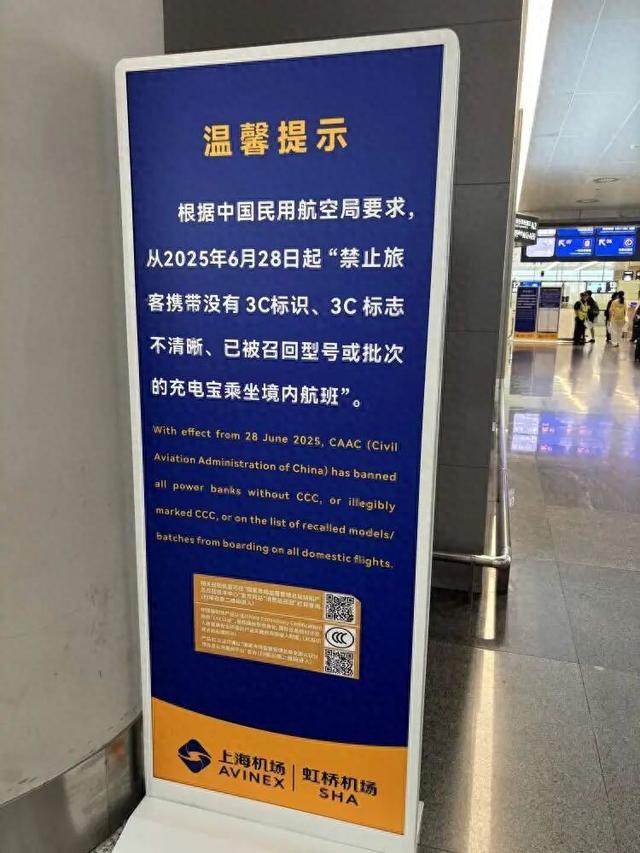
来源:新闻晨报 近日,记者走访上海机场、致电联系机场安检客服,了解目前充电宝携带登机情况,要国庆乘飞机出去 的,快来看。 目前,除了安克、罗马仕,小米、酷石也有召回充电宝,此外,倍思、宜家、belkin等部分型号的充电 宝也不能携带登机。 准备行李时,可以使用上海机场官方充电宝核查小程序,查一查你的充电宝能否带上飞机。不过该小程 序只能做参考,要以现场查验结果为准,实际安检中更精确、灵活度更高。但建议条件允许的情况下, 出行还是首选小程序认定可登机的充电宝,以免耽误行程,影响出行好心情。 小米、酷石充电宝也有被召回, 还有这些也不能登机 在虹桥机场内出发大厅,可以看到不少地方都有充电宝登机规定的标识。 从2025年6月28日起,"禁止旅客携带没有3C标识、3C标志不清晰、已被召回型号或批次的充电宝乘坐 境内航班"。并且附上了3C标识图例、以及国家市场监管总局网站的二维码,以供查询召回信息。 此外,携带登机的充电宝还需要在手提行李或随身携带,严禁在托运行李中携带;充电宝额定能量不超 过100Wh,无需航空公司批准;额定能量超过100Wh但不超过160Wh,经航空公司批准后方可携带,但 每名旅客不得携带超过两个充 ...
【具身智能产业动态】傅利叶第三代机器人首次亮相,跨维智能发布升级版视频学习框架
GUOTAI HAITONG SECURITIES· 2025-09-30 11:12
Investment Rating - The report does not explicitly state an investment rating for the industry Core Insights - The embodied intelligence industry is primarily represented by embodied robots and smart vehicles, which are mutually reinforcing in their development [7] - Recent advancements include the unveiling of Fourier's third-generation humanoid robot GR-3C and the establishment of the largest humanoid robot training center in China [10][11] - Significant investment activities have been observed in the embodied intelligence sector, with multiple companies securing funding to enhance their technological capabilities and market presence [24] Summary by Sections 1. Embodied Robot and Smart Vehicle Dynamics - Fourier's third-generation humanoid robot GR-3C was showcased at the Industrial Expo, featuring 55 degrees of freedom and advanced interaction capabilities [10] - A new humanoid robot training center in Beijing can produce over 6 million data points annually, enhancing the practical application of humanoid robots [11] - Cross-dimensional intelligence released an upgraded video learning framework that allows rapid task adaptation across different robot bodies [12] - DeepMind introduced the Gemini Robotics 1.5 series, enhancing robots' capabilities in visual and language processing [13] - A strategic partnership between Lingyi Robotics and AIRS aims to integrate hardware and algorithms for humanoid robot development [15] - Kepler has initiated mass production of the world's first commercially available hybrid humanoid robot, K2 "Bumblebee," with significant pre-orders [16] 2. Smart Vehicle Dynamics - The sales ranking for new energy vehicles in the third week of September shows Leap Motor leading with 12,900 units sold, followed by Xiaomi and Aion [17][18] - A new autonomous driving test base was established in Jinan by Lingong Heavy Machinery and Huawei, focusing on comprehensive testing of autonomous mining vehicles [19] - ZF signed an investment agreement to expand its smart chassis localization efforts in Zhangjiagang [20] - NineSight signed a strategic agreement with Dubai's Roads and Transport Authority to launch an autonomous driving demonstration zone [21] - New Stone Technology delivered its 10,000th unmanned vehicle, marking a significant milestone in the commercialization of unmanned delivery [23] 3. Investment and Financing Events - A total of 9 financing events related to embodied intelligence were recorded from September 22 to 28, 2025, with notable investments in companies like LeXiang Technology and LuoBo Intelligent [24][34] - LeXiang Technology completed a 200 million RMB angel round led by Zhongding Capital, focusing on core component development and product scaling [24] - LuoBo Intelligent raised several million RMB in a round led by Sequoia China, targeting AI emotional companionship hardware [25] - Other companies like HeShan Technology and ShouZhi Innovation also secured funding to advance their respective technologies in humanoid robots and core components [26][27]
构建世界级商圈,深圳的密码不止于消费
2 1 Shi Ji Jing Ji Bao Dao· 2025-09-30 10:24
Core Insights - Shenzhen is rapidly enhancing its offline consumption landscape with the opening of new commercial complexes and flagship stores, positioning itself as an international consumption center [1][2][3] Group 1: New Commercial Developments - The opening of Shenzhen Bay MixC Phase II and the first JD MALL in Nanshan marks the introduction of four new commercial complexes in the Houhai-Shenzhen Bay business district this year [1][2] - Shenzhen Bay MixC Phase II spans 167,000 square meters and features over 300 international brands, including more than 50 luxury and designer labels [2] - The Shenzhen Municipal Bureau of Commerce has identified the Houhai-Shenzhen Bay area as a "world-class business district" with significant long-term potential [1] Group 2: International Brand Integration - Shenzhen is attracting a variety of world-class brands, enhancing the shopping experience and creating a unique consumer environment [2][3] - The introduction of high-end brands and Michelin-starred restaurants in new complexes is diversifying Shenzhen's luxury consumption landscape [2] Group 3: International Consumption Environment - Shenzhen has seen 130 million inbound and outbound travelers in the first half of the year, highlighting the city's potential to convert tourist foot traffic into consumer spending [3] - The establishment of multiple tax refund points and "immediate refund" stores in the Nanshan District is improving the international shopping experience [3] Group 4: Technology-Driven Consumption - The launch of flagship stores for tech brands like Honor and Tuo Zhu in Shenzhen Bay MixC Phase II emphasizes the city's focus on technology-enhanced shopping experiences [4][6] - The integration of cutting-edge technology in retail, such as AI and 3D printing, is positioning Shenzhen as a leader in innovative consumer experiences [6][7] Group 5: Youth and Trend-Driven Consumption - The emergence of popular cultural icons and experiential marketing strategies is attracting younger consumers and enhancing the shopping atmosphere in Shenzhen [9][10] - Projects like K11 ECOAST and Taizi Bay VILLA are creating unique retail experiences that cater to high-end and tech-savvy consumers [9][10]
有销售陪顾客试驾到深夜,5分钟大定1万辆的理想i6卖爆了?第三产品线总裁:今年的产能依然够
Mei Ri Jing Ji Xin Wen· 2025-09-30 09:37
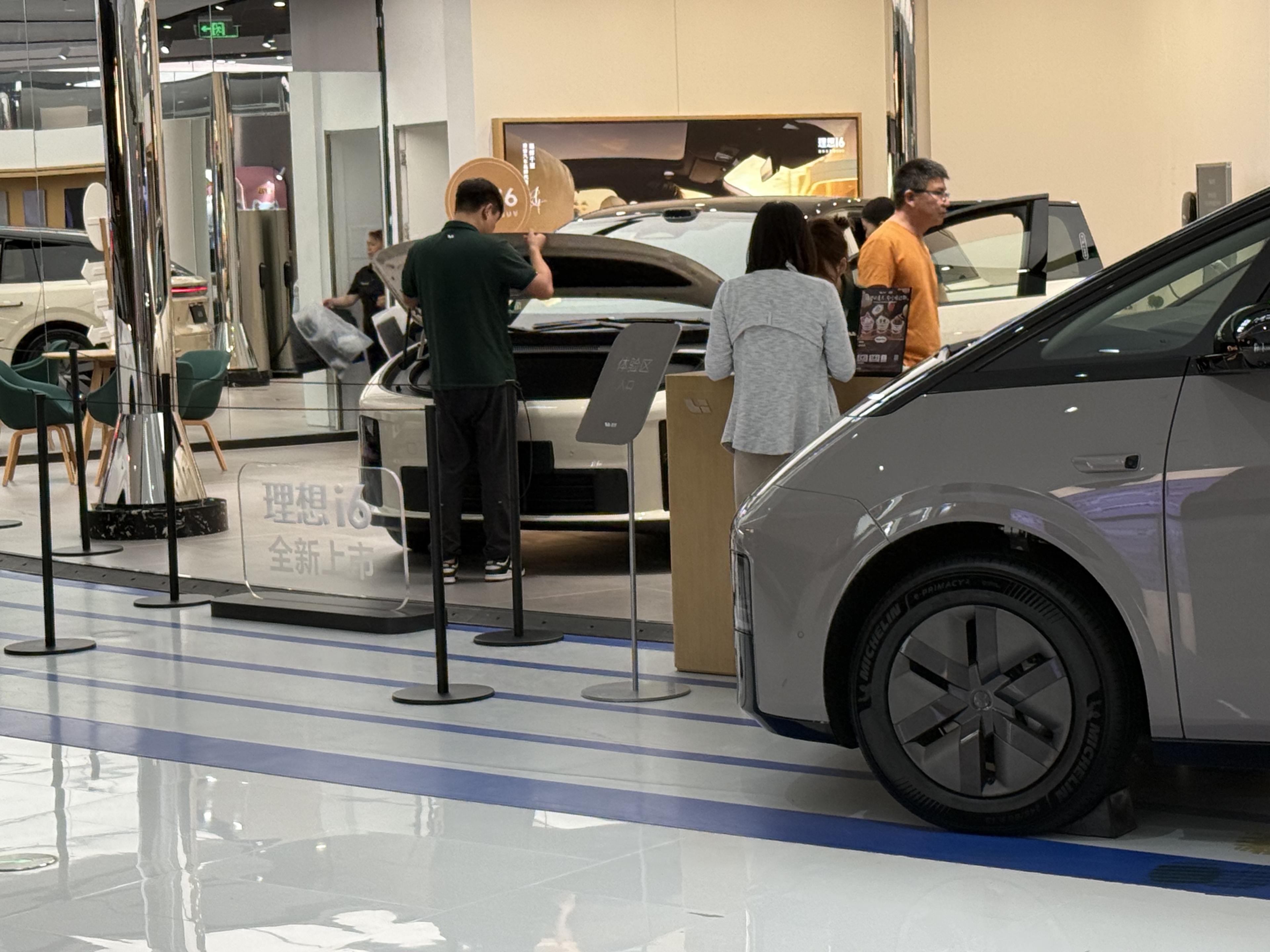
Core Insights - The launch of Li Auto's second pure electric SUV, the Li Xiang i6, has generated significant consumer interest, with over 10,000 pre-orders within the first five minutes of its release [3][11] - The i6 is priced at 249,800 yuan and is positioned as a premium offering, not following a low-price strategy, yet it has attracted a diverse customer base, particularly among young individuals and families without children [3][7] Group 1: Sales Performance - The i6 has seen a high level of engagement, with sales personnel reporting an average of 15 to 16 locked orders per salesperson [3][9] - The vehicle's launch has been well-prepared, with a higher availability of test drive vehicles compared to previous models, leading to a more efficient sales process [5][9] - The i6's consumer demographic has shifted, with a notable increase in single individuals and families without children, indicating a broader appeal [7] Group 2: Competitive Positioning - The i6 offers significant value in the 200,000 to 300,000 yuan price range, with competitive features and pricing compared to rivals like Tesla's Model Y and Xiaomi's Yu7 [8] - Promotional offers, such as a 10,000 yuan discount for orders placed by October 31, enhance the attractiveness of the i6 [8][9] Group 3: Production and Delivery - Li Auto has indicated that production capacity for the i6 is sufficient, with plans to increase monthly production to 25,000 units by December, aiming for an annual capacity of 45,000 to 50,000 units [10][11] - The expected delivery timeline for the i6 is currently between 11 to 13 weeks, with efforts in place to prioritize orders based on the locking date [9][10]

雷军的敌人正在变多
商业洞察· 2025-09-30 09:25
Core Viewpoint - The article discusses Xiaomi's recent developments in the electric vehicle sector, highlighting both the successes and challenges faced by the company, particularly in terms of production capacity and product quality [5][10][29]. Group 1: Xiaomi's Automotive Business Performance - Xiaomi's automotive revenue reached 213 billion yuan in Q2 2025, marking a 234% year-on-year increase [15][18]. - The number of new vehicle deliveries in Q2 2025 was 81,302, a significant rise from 27,307 in the same period last year, representing a growth of 197.7% [16][19]. - The average selling price (ASP) of Xiaomi vehicles increased from 228,644 yuan to 253,662 yuan, attributed to the launch of the higher-priced SU7 Ultra [18][20]. - Xiaomi's gross margin for its automotive segment rose to 26.4% in Q2 2025, indicating improvements in cost control and product competitiveness [20][21]. Group 2: Production Capacity Challenges - Despite positive financial indicators, Xiaomi faces significant challenges in production capacity, with delivery times for the SU7 and YU7 models extending to 35-48 weeks [25][26]. - The long delivery times may lead to potential customers reconsidering their purchase decisions, especially as competitors offer quicker delivery options [25][26]. - Analysts suggest that Xiaomi's production issues stem from rapid expansion and the need for further optimization of its new manufacturing facilities [26][28]. Group 3: Quality Concerns and Recalls - Xiaomi initiated a recall of over 110,000 SU7 vehicles due to software issues that could increase collision risks, highlighting ongoing quality control challenges [29][30]. - Customer complaints regarding product quality, including reports of vehicles being sold as "test cars," have raised concerns about Xiaomi's manufacturing standards [30][33]. - The article notes that while Xiaomi's marketing efforts have been effective, they must ensure that product quality aligns with consumer expectations to maintain brand reputation [39].

港股9月收官 | 恒科指大涨13.95%刷新阶段新高,半导体股、黄金股多数个股持续新高
Ge Long Hui· 2025-09-30 08:55
Market Performance - The Hong Kong stock market closed September with a bullish trend, with the three major indices showing a fluctuating upward pattern and reaching new highs [1] - The Hang Seng Technology Index surged by 13.95% during the month, hitting a peak of 6475.92 points on the last trading day [1] - The Hang Seng Index increased by 7.09%, briefly surpassing the 27,000-point mark, while the National Enterprises Index rose by 6.79%, crossing the 9,500-point threshold [1] Sector Performance - Semiconductor stocks led the gains, with notable increases such as Hua Hong Semiconductor up by 48.7% and SMIC up by 31.5%, both reaching historical highs [1] - Gold, copper, wind power, lithium battery, and photovoltaic sectors also saw significant gains, with Lingbao Gold up by 31.69%, Zhaojin Mining up by 29.71%, and Zijin Mining up by 28.66%, among others, all achieving historical price highs [1] - Wind power leader Goldwind Technology experienced a remarkable increase of 58.55% [1] Major Technology Stocks - Major technology stocks performed strongly, with Alibaba rising by 52.98%, Baidu by 48.99%, JD.com by 17.57%, and NetEase by 11.49%, all reaching new highs [1] - Other notable increases included Kuaishou up by 12.97%, Tencent by 11.15%, Xiaomi by 2.18%, and Meituan by 1.75% [1]
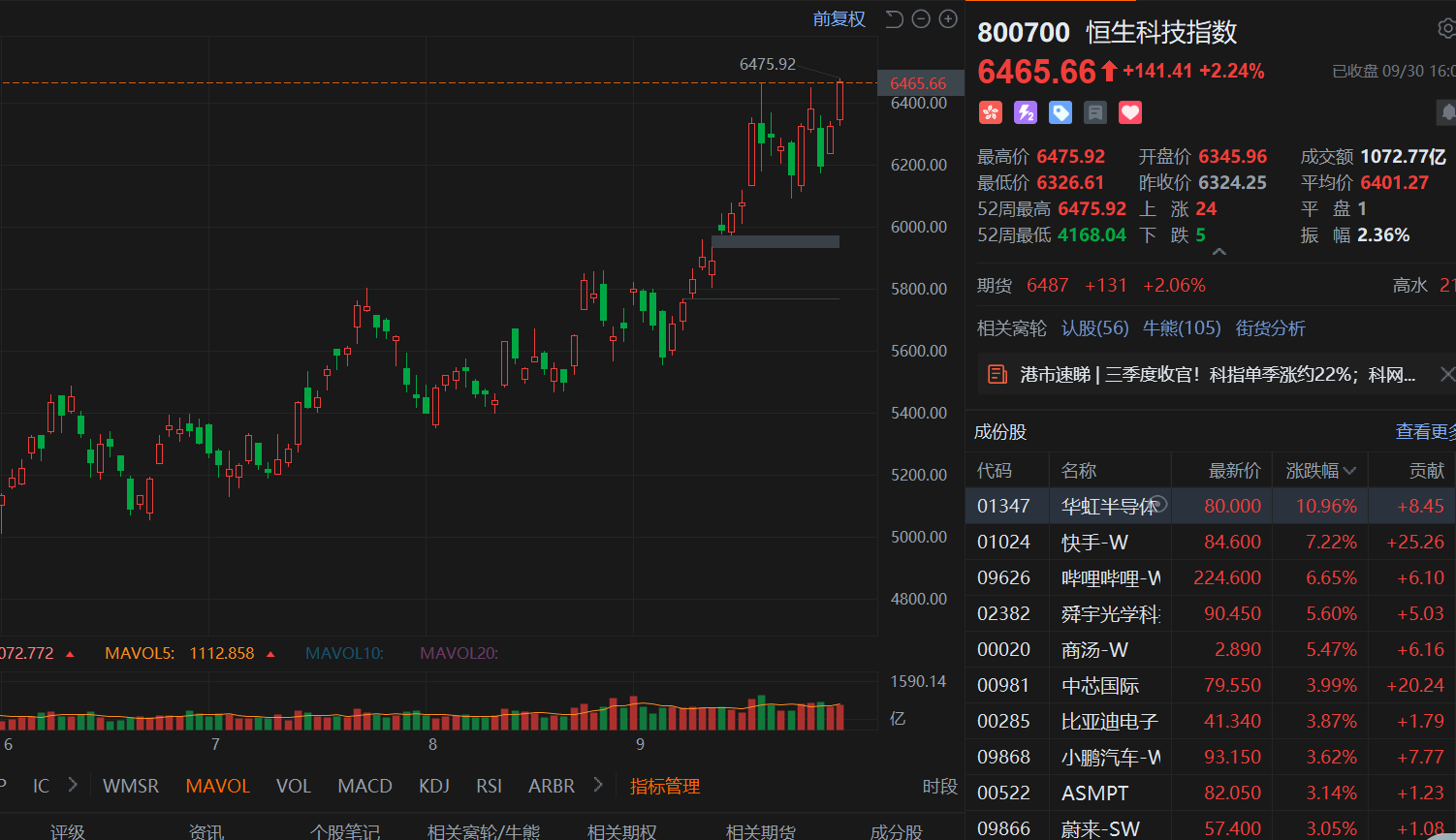
港股收评:恒科指大涨2.24%,半导体、苹果概念强势,三桶油全天低迷
Ge Long Hui· 2025-09-30 08:29
Market Performance - The Hong Kong stock market indices experienced significant gains, with the Hang Seng Tech Index rising by 2.24%, reaching a new high for the period [1] - In September, the Hang Seng Tech Index accumulated a nearly 14% increase, while the Hang Seng Index and the National Enterprises Index rose by 7.09% and 6.79%, respectively [1][2] Sector Highlights - Major technology stocks saw collective gains, with Kuaishou leading with a rise of over 7%, followed by Alibaba and NetEase with increases of 2% [2][4] - Semiconductor stocks remained strong, with Huahong Semiconductor surging nearly 11% to set a new high [2][8] - Apple-related stocks also saw gains as Apple reportedly notified its supply chain to increase production capacity [2][9] Gold and Copper Stocks - Gold stocks rallied, with Zijin Mining International soaring over 68%, and other gold-related companies also showing strong performance [6] - Copper stocks followed suit, with China Molybdenum rising by 11.84% and Jiangxi Copper gaining over 8% [7] Biopharmaceutical Sector - The biopharmaceutical sector showed positive movement, with WuXi AppTec increasing by over 8% and other companies like Zai Lab and BeiGene also experiencing gains [12][13] Airline Industry - Airline stocks generally rose, with China Eastern Airlines up by 6.73% and both China Southern Airlines and Air China increasing by over 4% [11] - Citic Securities noted strong demand for air travel during the upcoming holidays, suggesting potential for positive performance in the sector [11] Oil and Gas Sector - Oil stocks collectively declined, with China Petroleum falling by 2.75% and other major oil companies also experiencing losses [14] - Reports indicated that OPEC+ plans to increase oil production in November, contributing to the downward pressure on oil prices [14] Gaming and Telecom Stocks - Casino and gaming stocks mostly fell, with Sands China down by 2.25% and other major gaming companies following suit [15] - Telecom stocks also saw declines, with China Telecom and China Mobile both experiencing slight drops [17] Capital Inflows - Southbound capital saw a net inflow of HKD 15.48 billion, indicating strong investor interest in the Hong Kong market [19] Future Outlook - Everbright Securities highlighted the strong overall profitability of Hong Kong stocks, particularly in sectors like internet, new consumption, and innovative pharmaceuticals, suggesting that despite recent gains, valuations remain low and long-term investment potential is high [19]




小米服务焕新升级,全心守护新品体验
Zhong Guo Zhi Liang Xin Wen Wang· 2025-09-30 08:04
Group 1 - Xiaomi launched a series of service upgrades alongside the release of the Xiaomi 17 series, focusing on enhancing user experience and service commitments [1] - Users purchasing the Xiaomi 17 series during the initial sales period will receive exclusive service benefits, including a value of 898 yuan for the standard model and 1397 yuan for the Pro models, which include screen protection and repair services [1] - The MiCare worry-free version upgrade is available at a 50% discount for early buyers, offering comprehensive protection including multiple screen repairs and extended warranty [1] Group 2 - Xiaomi's home appliance services have been upgraded, with a focus on long-term user assurance, including a 10-year free warranty for air conditioning products installed after January 1, 2025 [1] - The smart service system for Mi Air Conditioners has achieved remote diagnosis and proactive alerts for common issues, assisting over 900,000 users with self-maintenance through the Mi Home App [2] - Xiaomi service emphasizes a user-centric approach, aiming to build long-term trust and continuously improve service offerings throughout the product lifecycle [2]