吉利汽车

Search documents
DeepSeek V4大模型被曝春节前后发布:AI编程能力超Claude;“死了么”APP引争议,开发者回应;演员闫学晶多个平台账号被禁止关注丨邦早报
创业邦· 2026-01-11 01:07
Core Insights - The article discusses significant developments in the AI and technology sectors, highlighting investments, new product launches, and market competition dynamics. Investment and Funding - OpenAI and SoftBank announced a joint investment of $1 billion in SB Energy, with each contributing $500 million, aimed at supporting the construction of a 1.2GW data center in Texas [2] - Coastal Financial acquired the GreenFi brand from Mission Financial Partners, enhancing its control over climate-friendly financial services [13] - XREAL completed a new funding round of $100 million, achieving a valuation exceeding $1 billion, focusing on augmented and mixed reality technologies [14] AI Model Developments - DeepSeek plans to release its V4 model around mid-February, which is expected to surpass existing models like Claude and GPT in programming capabilities [2] - Tencent's new chief scientist, Yao Shunyu, emphasized that the productivity gains from AI models are just beginning, with current opportunities being less than 1% utilized [3] - Kimi's CEO, Yang Zhilin, stated that future models will incorporate new mechanisms to enhance performance and will aim to set industry standards [3] Automotive Industry Insights - Lei Jun highlighted that the SU7 is the only electric sedan to surpass the Tesla Model 3 in sales, indicating competitive strength in the EV market [9] - NIO's new ES8 achieved retail sales of 22,258 units in December 2025, becoming the best-selling large SUV and outperforming competitors [10] - Xiaomi announced that the next generation of SU7 will feature the self-developed V6s Plus super motor, aimed at improving production efficiency [15] Market Performance - The total box office for January 2026 surpassed 1 billion yuan, with "Zootopia 2" leading the monthly box office at 25.5% share [16][19] - The average ticket price was reported at 39.5 yuan, with a total of 2,529 million tickets sold [18]



贾可吴伯凡吴声张晓亮,4万字2025-2026跨年对谈全文(上)
汽车商业评论· 2026-01-10 23:05
Core Viewpoint - The article discusses the evolution and current state of the Chinese automotive industry, highlighting the significance of achieving global sales leadership for domestic brands and the need for industry maturity and strategic resource consolidation [5][31][44]. Group 1: Achievements in the Automotive Industry - In 2025, Chinese domestic brands achieved global sales leadership, with total sales expected to reach 27 million units, surpassing Japanese brands by approximately 2 million units [13][20]. - The domestic market is projected to exceed 34 million units, marking a growth of about 3 million units from the previous year [13][20]. - The automotive industry contributes over 10% to China's GDP, emphasizing its critical role in the national economy [18][25]. Group 2: Industry Challenges and Maturity - The industry faces challenges such as declining profit margins, with the average profit rate rising slightly from 4.3% to 4.4% [35][25]. - There is a need for the industry to transition from aggressive competition to value-based competition, as highlighted by government interventions aimed at curbing price wars and promoting sustainable practices [31][36]. - The government has implemented measures to address industry chaos, including guidelines to prevent arbitrary price reductions and improve supply chain management [34][31]. Group 3: Resource Consolidation and Strategic Adjustments - Traditional automakers are increasingly consolidating resources and streamlining operations to enhance efficiency and competitiveness [45][47]. - Companies like Geely and Dongfeng are integrating their brands to strengthen their market position and improve operational effectiveness [45][47]. - The article emphasizes the importance of strategic focus and resource allocation in navigating the evolving automotive landscape, with companies needing to adapt to new market realities [51][53].

陆家嘴财经早餐2026年1月11日星期日
Wind万得· 2026-01-10 22:15
1、 市场监管总局修订发布《市场监督管理投诉举报处理办法》 ,新增6个条款,修改22个条款,包括强化权益保护、优化投诉管辖、优化举报程 序、规制恶意索赔四方面重点,明确不得滥用投诉举报权利牟取不正当利益,对敲诈勒索、骗取赔偿等违法索赔终止调解并移送公安机关处理。 1、QDII基金再迎政策利好。 多家基金公司接到通知,在鼓励发展普惠金融的大背景下,QDII额度要更多地使用在公募产品上 。业内人士透露,基 金公司需对QDII额度在公募产品和专户产品的使用比例上进行调整,并要求在2027年底之前将用于专户的QDII额度占比调整至20%之内,2026年 底之前至少完成一半的调整任务。 2、 全球太空资源竞争正在加速。据国际电信联盟(ITU)官网显示, 2 025年最后一周,我国向ITU申报了多个卫星星座计划,申报总规模超20万 颗 。本次卫星频谱轨申报运营主体全面扩容,涉及中国星网、上海垣信等多家公司机构。其中,规模最大的两个星座为无线电创新院CTC-1和CTC-2,卫 星规模均为96714颗。由于卫星频谱与轨道资源具有稀缺性,依据"先到先、得"原则分配,且有阶段性投放要求,因此进一步加速了全球太空资源竞争 2、 国 ...
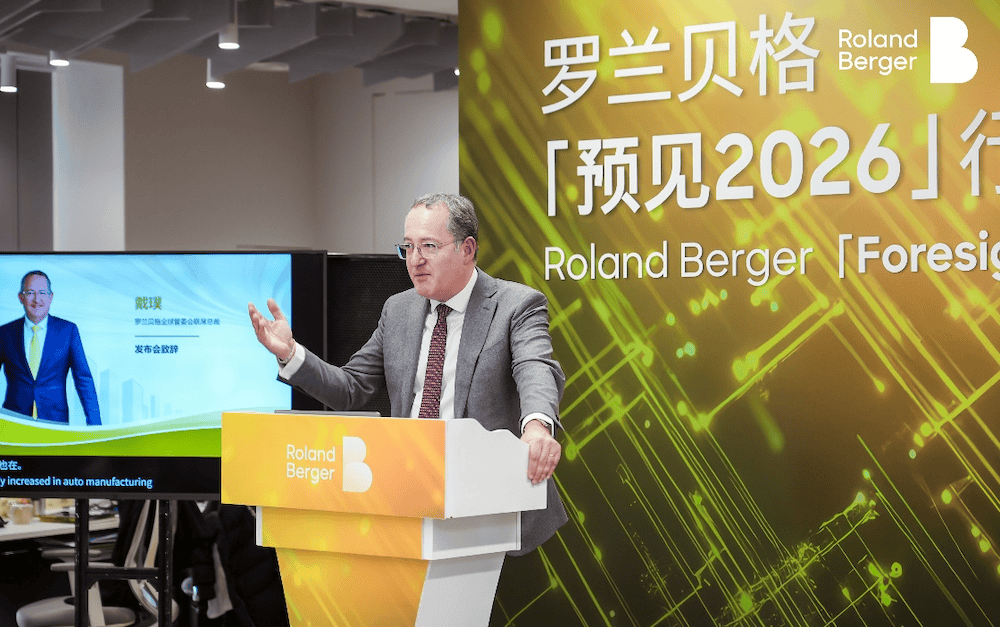
罗兰贝格郑赟:中国车企出海会迎来一两年平台期,需要设定阶段性目标
Sou Hu Cai Jing· 2026-01-10 14:54
Core Insights - The report "Forecast 2026: China Industry Trends" by Roland Berger highlights the strategic transformation of China towards high-quality development and sustainable modernization, emphasizing the need for persistent efforts and a comprehensive strategy to enhance productivity and consumer confidence [1][3]. Group 1: Automotive Industry Trends - The Chinese automotive industry is undergoing significant transformation, with total sales expected to reach approximately 34 million units in 2025, including around 7 million exports, and a monthly average of 3 million passenger vehicles [4][5]. - The penetration rate of new energy vehicles (NEVs) has surpassed 60% by December 2025, indicating a rapid transition from traditional fuel vehicles to electric vehicles within five years [4][5]. - Despite the growth in volume, the automotive industry's profit margin remains low at about 4.4%, with over 50% of dealers experiencing losses and an average vehicle price declining by approximately 9% year-on-year [4][5]. Group 2: Key Transformation Lines - Six key transformation lines are identified as critical for industry competition in 2026: elimination race, deepening transformation, internationalization, technology competition, capital race, and AI competition [6][7]. - The "elimination race" suggests a market structure where a few leading companies dominate, while the "deepening transformation" indicates a shift from traditional vehicles to smart mobility devices integrated with advanced technologies [6][7]. - The automotive industry is expected to further localize operations globally, enhancing service to consumers through localized employment and product adaptation [6][7]. Group 3: Global Expansion of Chinese Automakers - Chinese automotive exports are projected to enter a "platform period" over the next one to two years, with an optimistic long-term outlook despite facing local protectionism and compliance challenges [10][12]. - By 2030, the export volume of Chinese vehicles is anticipated to reach between 8 million and 10 million units, transitioning from rapid growth to a focus on quality, profitability, and brand development [12][16]. - The main challenge for Chinese automakers abroad is adapting to local markets, necessitating coordination between headquarters and local operations, as well as building local supply chains [14][15].
周观点 | 商业航天开启万亿蓝海市场 关注汽车相关标的【国联民生汽车 崔琰团队】
汽车琰究· 2026-01-10 14:42
Market Performance - The automotive sector in A-shares rose by 2.7% from January 5 to January 11, outperforming the Shanghai and Shenzhen 300 index, which increased by 0.2% [3] - Sub-sectors such as automotive services, auto parts, motorcycles and others, commercial vehicles, and passenger cars saw increases of 5.3%, 3.8%, 2.4%, 1.4%, and 0.6% respectively, while commercial passenger vehicles decreased by 0.3% [3] Investment Recommendations - Recommended core stocks include Geely Automobile, Xpeng Motors, BYD, Berteli, Top Group, New Spring Co., Hu Guang Co., and Chunfeng Power [4] - For passenger vehicles, Geely, Xpeng, and BYD are recommended, with Jianghuai Automobile suggested for attention [7] - In the auto parts sector, recommendations include Berteli and Horizon Robotics for intelligent driving, and Jifeng Co. for intelligent cockpits [7] - For the motorcycle segment, Chunfeng Power and Longxin General are recommended as leading companies in the large-displacement motorcycle market [8] - In the tire industry, Sailer Tire and Senqilin are recommended [9] - For commercial vehicles, Weichai Power and China National Heavy Duty Truck are recommended for heavy trucks, while Yutong Bus is suggested for passenger vehicles [10] Robotics Sector - The Chinese robotics exhibition at CES 2026 showcased over 30 companies, indicating a strong presence in the humanoid robotics sector [5] - The focus is on Tesla's production progress and technological iterations, with domestic robot manufacturers like Yushu Technology expected to enter the IPO phase soon, serving as catalysts for the sector [5] - Recommended stocks in the robotics sector include Top Group, Berteli, Yinlun Co., and Junsheng Electronics, among others [7][35] Commercial Aerospace - The commercial aerospace sector is viewed as a core strategic area with significant long-term growth potential, currently transitioning from technology validation to large-scale commercial application [6] - The industry is supported by strong policy backing and increasing demand from national satellite internet projects, which may drive private rocket launch frequency and success rates [6] - Companies like Haoneng Co., Longsheng Technology, and Xusheng Group are highlighted as key players in this sector [6][12] Policy Impact on Automotive Sector - The new national subsidy policy for 2026 aims to stimulate demand by providing vehicle replacement subsidies based on vehicle price, with electric vehicles receiving 12% of the price (up to 20,000 yuan) and fuel vehicles 10% (up to 15,000 yuan) [22][23] - The transition from fixed subsidies to percentage-based subsidies is expected to improve the structure of subsidized vehicles and activate demand for mid-to-high-end models [28][29] - The overall automotive market is anticipated to benefit from these policies, with a focus on intelligent and globalized growth among quality domestic brands [30][31]

自动驾驶激战CES:黄仁勋硬刚马斯克,中国军团已默默量产破局
Sou Hu Cai Jing· 2026-01-10 13:41
Core Insights - The autonomous driving industry is experiencing a pivotal moment at CES 2026 after years of volatility, with significant technological advancements and a shift towards practical applications [2][54] - The competition is intensifying among major players, including Nvidia, Tesla, Qualcomm, Mobileye, and various Chinese companies, each pursuing different technological and business strategies [4][10][18] Group 1: Nvidia's Role - Nvidia's CEO Jensen Huang introduced the open-source autonomous driving model Alpamayo, which is described as a "ChatGPT moment for physical AI," emphasizing the importance of sensor fusion in autonomous driving [4][7] - The competition between Nvidia and Tesla highlights a broader industry debate between vision-based and sensor-based approaches to autonomous driving [7][8] Group 2: Competitive Landscape - Qualcomm is collaborating with Leap Motor to create an integrated solution that combines cockpit, driving assistance, and vehicle control systems, showcasing a shift towards multi-domain control [10][14] - Mobileye is advancing its L3 solutions in partnership with Audi and is testing a prototype that allows drivers to close their eyes while driving, indicating significant progress in autonomous technology [16] Group 3: Chinese Companies' Innovations - Great Wall Motors is showcasing its ASL architecture, which aims to integrate AI capabilities into vehicles, with plans for ASL 1.0 to be implemented in the first half of the year [18][21] - Geely has announced its upgraded AI 2.0 technology system, which integrates driving, cockpit, and chassis systems, with plans to roll out L3 and L4 functionalities by the end of 2026 [27] Group 4: Market Trends and Business Models - The CES 2026 event indicates a lowering of entry barriers for new players in the autonomous driving sector, with a clear divergence in business models emerging [45][46] - Two primary paths are identified: one focusing on vertical market breakthroughs for profitability in closed environments, and the other targeting the Robotaxi market for broader expansion [51][54] Group 5: Future Outlook - The industry is moving beyond technical validation into commercial viability, with various applications like RoboBus and autonomous delivery vehicles beginning to emerge [51][54] - The next 12 months are critical for the autonomous driving sector, as it transitions into a phase where practical implementations will be tested and scaled [54]



车企组团出逃俄罗斯,304亿直接打水漂?
虎嗅APP· 2026-01-10 13:26
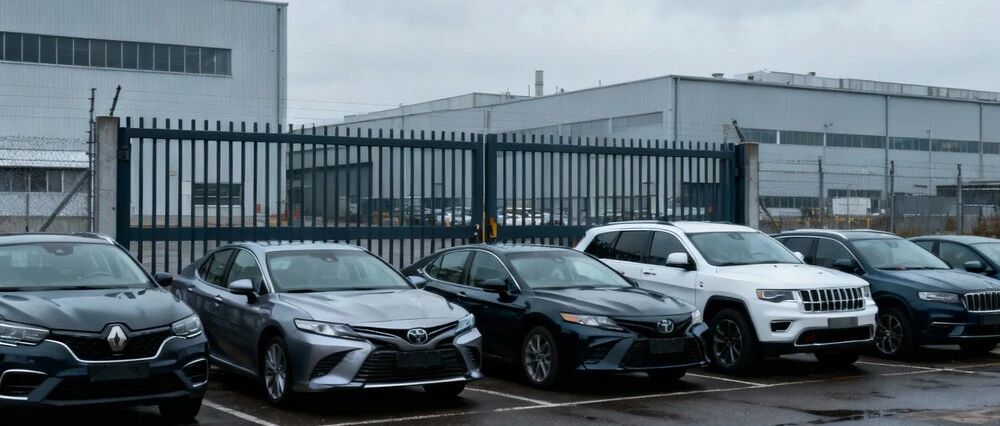
Core Viewpoint - International car manufacturers that exited the Russian market two years ago are now facing significant challenges in potentially returning, with substantial investments at stake and geopolitical instability persisting [5][7]. Group 1: International Car Manufacturers' Exit - Many international car manufacturers, including Hyundai, voluntarily exited the Russian market in response to Western sanctions, selling their assets at symbolic prices while retaining buyback rights [5][10]. - The urgency of the situation has left companies like Hyundai grappling with the dilemma of either investing heavily to restore operations or losing significant investments made in local facilities [7][11]. - Mazda has opted not to exercise its buyback rights after selling its stake in a Russian joint venture, indicating that the decision to abandon the investment was relatively straightforward due to the lower production capacity of its facility compared to others [12][13]. Group 2: Buyback Rights and Future Decisions - Several international car manufacturers, including Renault, Ford, Nissan, and Mercedes-Benz, have retained buyback rights for their Russian assets, with expiration dates ranging from 2027 to 2029 [15][16]. - The geopolitical crisis has caught these companies off guard, as they initially viewed their exit as temporary, expecting to return once stability was restored [17][18]. - Renault's attempt to exercise its buyback rights was met with a demand for a substantial compensation of 112.5 billion rubles (approximately 9.7 billion RMB), highlighting the financial implications of re-entering the market [21][22]. Group 3: Rise of Chinese Car Manufacturers - The exit of major international brands has created a vacuum in the Russian automotive market, which has been seized by Chinese car manufacturers, leading to a significant increase in their market share from 9% in 2022 to 49% in 2023, and projected to reach 62% in 2024 [24][27]. - Chinese automotive exports to Russia are expected to grow significantly, with projected figures of 16.3 million units in 2022, 55.3 million in 2023, and 128 million in 2024 [28]. - By 2024, Chinese brands are anticipated to dominate the top sales rankings in Russia, with several brands like Haval, Chery, Geely, and Changan leading the market [29][30]. Group 4: Challenges Ahead for Chinese Manufacturers - Despite the initial success, Chinese car manufacturers face increasing challenges in Russia, including new tax regulations and negative media portrayals that could impact their market position [34][36]. - The Russian government has implemented higher taxes on imported vehicles, which could significantly reduce profit margins for Chinese manufacturers [37][38]. - Concerns regarding the reliability and quality of Chinese vehicles have been raised in Russian media, potentially affecting consumer perceptions and sales [39][40]. Group 5: Future Outlook - The future of the automotive market in Russia remains uncertain, with two potential trends emerging: international manufacturers may either reclaim their assets and re-enter the market, or they may abandon their investments, leaving Chinese brands to navigate a challenging environment [45][46]. - The complexity of the situation necessitates careful consideration from all manufacturers looking to establish a foothold in the Russian market, as they must prepare for various potential outcomes [42][46].
稳固国家能源安全的“液态阳光”,醇氢动力或改写运输行业!
第一商用车网· 2026-01-10 13:23
Core Viewpoint - The article emphasizes the strategic importance of methanol as a clean, low-carbon energy source, transitioning from a supplementary to a primary energy role in China's energy landscape, particularly in achieving energy security and supporting the "dual carbon" goals [2][4]. Group 1: Methanol as a Strategic Energy Source - Methanol is recognized as a key player in the new energy system, with its production methods utilizing diverse raw materials, including fossil fuels and carbon dioxide, enabling the creation of "zero-carbon methanol" [2][4]. - The forum highlighted a collective initiative to promote liquid renewable energy development, underscoring methanol's critical position in future energy systems [2][4]. Group 2: Advantages of Methanol in Transportation - Methanol's characteristics, such as high energy density and quick refueling capabilities, make it particularly suitable for commercial vehicles, outperforming pure electric vehicles in long-haul and low-temperature scenarios [5][7]. - The methanol-powered vehicles demonstrate significant environmental benefits, with PM pollutant emissions reduced by 98% and fuel costs lowered by 32%-52% compared to diesel [7][8]. Group 3: Economic Viability and Cost Efficiency - Methanol's production and application across the entire supply chain exhibit notable cost advantages, positioning it as an economic engine for large-scale renewable energy adoption [10][12]. - The potential for utilizing a significant portion of China's annual carbon dioxide emissions for methanol production presents a substantial opportunity for resource utilization [10][12]. Group 4: Future Prospects and Industry Growth - The establishment of a robust methanol infrastructure, alongside ongoing technological advancements and expanding application scenarios, is expected to create a trillion-dollar green methanol industry ecosystem [13]. - The successful hosting of the second Green Methanol Energy Industry Development Forum signifies a pivotal moment for the industry, aligning with national strategies for energy independence and zero-carbon futures [13].

2025年汽车以旧换新超1150万辆,全年乘用车零售2374.4万辆
Xinda Securities· 2026-01-10 11:06
Investment Rating - The industry investment rating is "Positive" [2] Core Insights - The report highlights that in 2025, over 11.5 million vehicles will be replaced under the vehicle trade-in program, leading to a total retail of 23.744 million passenger cars, with approximately 54% being new energy vehicles [20][3] - The report indicates a projected growth in the automotive market, with a U-shaped sales trend expected for passenger vehicles in 2026, maintaining overall sales levels similar to 2025 [20] - Key companies to watch include BYD, Geely, Great Wall Motors, and others in the passenger vehicle sector, as well as major players in commercial vehicles and auto parts [3][20] Industry Performance - The A-share automotive sector underperformed the market, with a weekly increase of 2.53% compared to the 2.79% rise in the CSI 300 index, ranking 24th among A-share industries [3][9] - The report notes that the passenger vehicle segment saw a 3.8% year-on-year increase in retail sales, while new energy vehicles experienced a 17.6% growth [20] Key Industry News - The Ministry of Commerce announced that the vehicle trade-in program will exceed 11.5 million vehicles in 2025, contributing to over 1.6 trillion yuan in new car sales [20] - Geely received the largest L3 autonomous driving test license in China, covering an area of 9,224 square kilometers [20] - Baidu's autonomous driving platform, "萝卜快跑," obtained the first full unmanned testing license in Dubai, paving the way for commercial operations [20] Upstream Data Tracking - The report includes tracking of key material prices such as steel, aluminum, and lithium carbonate, which are crucial for automotive manufacturing [23][24]





消息称吉利正考虑进入美国市场,极氪和领克等品牌或是首选;北汽集团启动L3车型规模化上路通行试点运营,二季度向个人开放丨汽车交通日报
创业邦· 2026-01-10 10:38
Group 1 - Geely is considering expanding into the US market, with brands like Zeekr and Lynk & Co as potential candidates for entry [2] - Geely's global communications director indicated that an announcement regarding the US expansion could come within the next 24 to 36 months, with the main concern being the timing and locations for entry [2] - Geely has not yet sought a production base in the US but suggested that Volvo's assembly plant in South Carolina could be an ideal location [2] Group 2 - Lei Jun stated that Tesla is not invincible, highlighting that the SU7 is the only electric sedan to have beaten the Model 3 in sales [2] - Lei Jun expressed pride in the SU7's product quality and performance, which contributed to its sales success [2] - He also mentioned that the YU7, launched six months ago, has a sales gap compared to the Model Y, but he believes it will compete effectively in the future [2] Group 3 - BAIC Group has launched a pilot operation for L3 vehicles, with plans to gradually open it to individual users by the second quarter of 2026 [2] - The pilot will initially focus on B-end operations to ensure safety, with the first vehicles set to operate in designated areas of major highways [2] Group 4 - The new generation of the SU7 will be equipped with Xiaomi's Super Electric Motor V6s Plus, which will enhance production efficiency and shorten delivery times [2] - The motor will be supplied by a collaboration between "United Microelectronics" and "Huichuan," with plans to introduce self-developed motors in the future [2]