
长安汽车

Search documents
驶入日系车“后花园”泰国:中国新能源如何“超车”
2 1 Shi Ji Jing Ji Bao Dao· 2025-12-23 04:05
Core Insights - Thailand is the 10th largest automobile producer globally and the largest in Southeast Asia, known as the "Detroit of the East" [6] - Japanese cars dominate the market with a market share of around 70% in 2024, down from a peak of 90% [6] - Chinese automakers are rapidly entering the Thai market, particularly in the electric vehicle (EV) sector, with a market share increase from 5% to approximately 20% [6][12] Electric Vehicle Market Dynamics - As of October 2023, Thailand's EV penetration rate reached 20%, with sales outpacing Denmark, a leader in EV adoption [5] - The number of EVs in Thailand is close to 300,000, with a ratio of over 20 vehicles per charging station, indicating a need for more charging infrastructure [3][5] - The Thai government has implemented various subsidies and tax incentives to promote EV adoption, significantly boosting sales [11][12] Competitive Landscape - Chinese brands, including BYD, GAC, and Changan, have established a strong presence in Thailand, with over 70% market share in the EV segment [6][7] - The Thai automotive market is experiencing a shift, with local brands like BYD rising in rankings, while traditional Japanese brands face challenges [7][8] - The competition is intensifying as more players enter the EV market, leading to a more complex landscape [23] Local Production and Policy Impact - The Thai government has set production requirements for imported EVs, mandating local production to qualify for subsidies [12][13] - BYD's factory in Thailand is a significant investment, with a production capacity of 150,000 vehicles and a local production rate of about 50% [13] - The government is adjusting policies to alleviate pressure on automakers, allowing exported vehicles to count towards local production requirements [16] Future Opportunities - There is potential for growth in the pickup and commercial vehicle segments, where Chinese brands currently have minimal presence [26] - The high-income demographic in Thailand presents opportunities for luxury EV models, as the market for high-end vehicles remains robust [27] - The establishment of a complete ecosystem around EVs, including services and financing, is crucial for long-term success in the Thai market [21][28]



国泰海通晨报-20251223
GUOTAI HAITONG SECURITIES· 2025-12-23 02:54
Group 1: Strategy Research - Global asset performance shows significant divergence, with developed European equities rising while emerging Asian equities decline. COMEX silver saw a weekly increase of 9.4%, with an annual increase exceeding 120%. The Federal Reserve has brought forward its interest rate cut expectations for 2026 [3][4][5] Group 2: Food and Beverage Research - Wuliangye held its 29th conference, emphasizing a pragmatic attitude and commitment to reform. The company aims to anchor its market share goals for 2026, maintaining a balance between volume and price, and focusing on product and channel collaboration to solidify its industry-leading position [3][8][9] Group 3: Oil and Chemical Research - Since Q4 2025, crude oil prices have been on a downward trend, with Brent crude closing at $59.68 per barrel as of December 18, 2025, a decrease of 12.43% since early September. Upstream oil and gas extraction companies are expected to face profit pressure, while refining businesses may see improved profitability due to expanded price differentials [3][11][12][14] Group 4: Automotive Research - The draft "Automotive Industry Price Behavior Compliance Guidelines" is expected to advance the anti-involution process in the automotive sector. This guideline aims to regulate pricing behaviors of automotive manufacturers and dealers, potentially alleviating price wars and improving profit margins for dealers [3][15][16][17]
沪指四连阳重返3900点【情绪监控】
量化藏经阁· 2025-12-23 00:08
Market Performance - Most indices showed an upward trend on December 22, 2025, with the CSI 500 index performing well, increasing by 1.20%. The Shanghai Composite Index rose by 0.69%, and the Shenzhen Composite Index increased by 1.13% [6][10] - The ChiNext Index had a notable performance, rising by 2.23%, while the CSI 500 Growth Index also performed well, increasing by 1.62% [6][10] - The communication, non-ferrous metals, electronics, consumer services, and comprehensive finance sectors performed well, with returns of 4.24%, 2.53%, 2.52%, 2.41%, and 2.17% respectively. In contrast, the media, banking, textile and apparel, light industry manufacturing, and electric utility sectors showed poor performance, with returns of -0.55%, -0.54%, -0.51%, -0.42%, and -0.28% respectively [10] Market Sentiment - Market sentiment was high on December 22, 2025, with 104 stocks hitting the daily limit up and 8 stocks hitting the limit down. The limit-up stocks had a closing return of 2.28%, while the limit-down stocks had a return of 1.06% [2][14][16] - The sealing rate was 71%, a decrease of 2% from the previous day, and the consecutive limit-up rate was 25%, also down by 2% [18] Market Capital Flow - As of December 19, 2025, the margin trading balance was 25,038 billion yuan, with a financing balance of 24,871 billion yuan and a securities lending balance of 167 billion yuan. The margin trading balance accounted for 2.6% of the circulating market value, and margin trading accounted for 10.1% of the market transaction volume [3][21][24] Premium and Discount - On December 19, 2025, the ETF with the highest premium was the Southern Sci-Tech Growth ETF, with a premium of 1.49%. The ETF with the highest discount was the Industrial Bank's CSI 50 ETF, with a discount of 0.51% [4][26] - The average discount rate for block trades over the past six months was 6.63%, with a discount rate of 5.21% on December 19, 2025 [28] Institutional Attention and Rankings - In the past week, the stocks with the most institutional research were Chang'an Automobile, Boying Welding, Shenkong Co., and others, with Chang'an Automobile being researched by 214 institutions [5][34] - On December 22, 2025, the top ten stocks with net inflow from institutional special seats included Shennong Agriculture, Xue Ren Group, and others, while the top ten stocks with net outflow included Tongyu Communication, Jingzhida, and others [38][39]

车圈俩月换了6个CEO,29家企业327名高管变动,掀起年终人事巨变
3 6 Ke· 2025-12-22 23:18
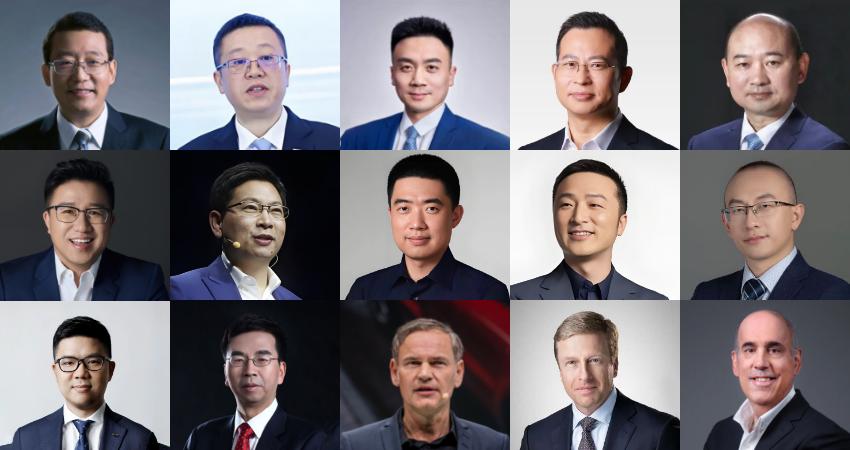
Core Insights - The automotive industry is experiencing a significant wave of executive changes, with over 327 high-level personnel adjustments reported in the last two months, including six CEOs [2][3][4] - The restructuring reflects a strategic shift among companies as they prepare for intensified competition in 2026, focusing on leadership renewal, efficiency, and core business enhancement [4][5][6] Group 1: Executive Changes in State-Owned Enterprises - Major state-owned automotive groups such as Dongfeng, Changan, GAC, and BAIC have undergone frequent personnel changes, aiming for younger and more professional decision-making teams [5][6][7] - GAC has appointed its first "post-70s" general manager, indicating a move towards clearer internal responsibilities and optimized decision-making [7] - Dongfeng has brought in external talent to drive its smart transformation, while Changan has filled its long-vacant president position, reflecting a commitment to leadership stability [11][13][15] Group 2: Executive Departures in Private Enterprises - Private automakers like BYD, Geely, and Great Wall have seen significant executive turnover, with key figures leaving amid fierce market competition [17][19] - Chery has emerged as an active talent poacher, recruiting from competitors to enhance its marketing and technology capabilities [19][21] Group 3: New Forces in the Automotive Sector - New energy vehicle companies are making urgent personnel adjustments to tackle pressing challenges, with Li Xiang of Li Auto taking direct control of human resources to streamline operations [22][24] - Xiaomi's automotive division is focusing on sales growth, with top executives taking on additional responsibilities to drive performance [26][28] - XPeng Motors is enhancing its technical capabilities by hiring AI experts, indicating a strategic focus on core technology development [29] Group 4: Changes in Foreign and Joint Venture Brands - Major foreign automotive companies, including GM and Tesla, are undergoing significant executive changes, with GM's software and AI teams experiencing notable turnover [32][34][36] - German luxury brands are also reshuffling their leadership, with key executives transitioning to new roles to align with future strategic goals [38][40][42] Group 5: Supply Chain and Component Manufacturers - The supply chain sector is also witnessing high-frequency personnel changes, with Huawei's Yu Chengdong taking on additional leadership roles to strengthen its market position [46][49] - Traditional component manufacturers like Continental and ZF are focusing on efficiency and business concentration through their leadership adjustments [51][52] Conclusion - The recent wave of personnel changes in the automotive industry signifies a critical reassessment of survival strategies amid the ongoing transition towards electrification and intelligence [53]




本月超470家上市公司获机构调研
2 1 Shi Ji Jing Ji Bao Dao· 2025-12-22 23:12
Core Viewpoint - The A-share market is experiencing increased volatility as the year-end approaches, but institutional research activity remains strong, focusing on companies with performance certainty and technological iteration potential [1][5]. Group 1: Institutional Research Activity - As of December 21, at least 472 A-share listed companies have undergone institutional research in December, with a focus on sectors such as computer equipment, integrated circuits, automotive manufacturing, and pharmaceuticals [1]. - The top five companies attracting the most institutional attention include Zhongke Shuguang, Haiguang Information, Changan Automobile, Jereh Group, and Boying Tehan, each receiving over 200 institutional visits [2]. - Companies like Aobi Zhongguang-UW and Weicai Technology also received significant attention, with institutional visits ranging from 73 to 77 [3]. Group 2: Industry Focus and Trends - The companies under research predominantly belong to high-tech sectors, including integrated circuits, computer equipment, and aerospace, aligning with the Wind New Quality Productivity Index [3]. - Institutions are particularly interested in companies with core patents and independent innovation capabilities in fields such as semiconductors, AI computing power, humanoid robots, and high-end medical technology [3][4]. - Recent policy initiatives encourage investment in hard technology sectors, with a focus on integrating technological and industrial innovation [4]. Group 3: Investment Strategies and Future Outlook - Institutions are adjusting their strategies for the upcoming year, focusing on companies with clear performance paths and technological barriers, particularly in hard technology sectors [4][7]. - The research activities reflect institutions' expectations for structural market opportunities in 2026, emphasizing technology innovation and traditional industry upgrades [7]. - Key investment areas identified for 2026 include domestic chips, artificial intelligence, humanoid robots, and the lithium battery supply chain, which align with national policies favoring hard technology [8].




国泰海通:维持计算机板块“增持”评级 AI大模型资本化进程加速
智通财经网· 2025-12-22 22:45
Group 1 - The domestic AI large model industry is experiencing a critical phase of accelerated technological productization and deepening capitalization processes [2] - Volcano Engine released the Doubao Model 1.8 and Seedance 1.5 Pro, achieving significant technological breakthroughs and reducing enterprise usage costs through innovative business models [2] - The daily token processing volume has surpassed 50 trillion, indicating robust operational capacity in the AI sector [2] Group 2 - The issuance of L3-level autonomous driving vehicle permits marks a transition to conditional commercialization in China, with specific models from Chang'an and BAIC gaining approval for limited road use [3] - The vehicles are subject to speed limits and the responsibility for vehicle operation lies with manufacturers during normal system operation, reflecting a cautious regulatory approach [3] - This development will provide essential practical evidence for improving technical standards, legal regulations, and insurance systems in the autonomous driving industry [3] Group 3 - Domestic GPU companies are actively pursuing capital market listings to support intensive R&D and market expansion, with Tensu Zhixin planning to raise $300 to $400 million through the Hong Kong Stock Exchange [4] - Other companies like Birran Technology and Kunlun Chip Technology are also advancing their listing processes, indicating a significant shift towards capital market-driven growth in China's semiconductor industry [4] - This trend highlights the acceleration of the self-sufficiency process in key design aspects of the semiconductor sector [4]

阿维塔总经理陈卓:在不确定的产业周期中走一条确定性更强的智能电动之路
Zheng Quan Ri Bao Zhi Sheng· 2025-12-22 16:40
本报记者 刘钊 在中国新能源汽车产业由"高速增长"迈入"深度竞争"的关键阶段,几乎所有新品牌都面对同一个问题: 如何在红海中建立长期竞争力。 12月10日,阿维塔科技(重庆)股份有限公司(以下简称"阿维塔")正式向港交所递交上市申请,这一 动作被外界视为其迈向新阶段的重要节点。围绕上市选择、股东结构、技术路线以及未来增长逻辑,阿 维塔总经理陈卓在近日接受《证券日报》记者专访时进行了系统阐述。在他看来,阿维塔的核心并不只 是"卖车",而是要在高度不确定的产业周期中,构建一条兼具技术上限与经营安全感的"确定性路径"。 进一步完善 公司治理结构 在市场普遍的认知中,新能源车企选择IPO往往与融资压力直接相关。但陈卓在采访中强调,阿维塔此 番赴港上市,并非简单意义上的"补血"。 "对阿维塔来说,融资并不是最重要的目的,我们的现金流状况是健康的。"陈卓表示,相比短期资金补 充,港股IPO更重要的意义在于两点:一是通过国际资本市场的规则体系,进一步完善公司治理结构; 二是使企业建立更加市场化、多元化的激励机制,为长期竞争储备关键人才。 从财务数据来看,招股书显示,公司营业收入从2022年的2834万元快速增长至2023年 ...
虹软科技20251222
2025-12-22 15:47
Summary of Conference Call for Hongsoft Technology Industry and Company Overview - The conference call primarily discusses the developments in the **automotive industry**, particularly focusing on **Hongsoft Technology** and its collaboration with **Changan Automobile** regarding **L3 autonomous driving technology** [2][4]. Key Points and Arguments - **L3 License Acquisition**: Changan Automobile has obtained the first L3 autonomous driving license, marking a significant shift from demonstration to practical application in the autonomous driving sector. This creates new compliance thresholds for automakers and accelerates the iteration of system reliability and takeover mechanisms [2][4]. - **Collaboration with Changan**: Hongsoft Technology has a deepening partnership with Changan, which is expected to play a crucial role in Changan's smart driving projects. Specific details of the collaboration are restricted due to confidentiality agreements [2][5]. - **Market Position**: Since entering the automotive sector in 2018, Hongsoft has captured over **80%** of the domestic market share in the smart cockpit chip market. The company has rapidly launched ADAS products such as AEB, LCC, and ACC [2][6]. - **Cost Efficiency**: Hongsoft's core competitive advantage lies in reducing costs for automakers. Their pure vision solutions lower hardware costs, especially on low-computing power platforms, making L2+ level products popular in the market [2][7]. - **Product Launch Timeline**: Hongsoft's ADAS solutions are set to begin mass production and delivery in the first quarter of **2026**, with capabilities for full autonomous driving and having passed EU NCAP safety certification [2][9]. Additional Important Insights - **Strategic Market Expansion**: Starting in **2023**, Hongsoft has begun expanding into overseas markets, establishing partnerships with brands like Jaguar, Land Rover, and Mercedes-Benz. The strategy involves collaborating with automakers or their designated top suppliers to penetrate the market [3][10]. - **Regulatory Impact**: The issuance of the L3 license is seen as a pivotal moment that shifts the focus from technology validation to the ability to implement autonomous driving in real-world scenarios. This change is expected to influence future service charges and operational scenarios for automakers [4]. - **Cost Reduction Strategies**: Hongsoft optimizes hardware configurations through software visual algorithms, allowing for significant cost reductions in high, mid, and low-end vehicle models. For instance, they can eliminate one laser radar in high-end models and reduce the number of sensors in mid-range vehicles [8]. - **Future Outlook**: Despite challenges in the first quarter of the year due to policy impacts, Hongsoft anticipates achieving **70% to 100%** of its revenue targets for the year. The specific goals for the next year will be determined in late December or early January [14]. - **Potential for Commercial Vehicle Market**: Currently, Hongsoft focuses on passenger vehicles but does not rule out the possibility of expanding into the commercial vehicle market in the future [11]. - **AI Glasses Market**: Hongsoft holds over **95%** of the market share in AI glasses, which are seen as a significant AI interaction entry point, validating market demand for their technology [12]. This summary encapsulates the critical insights and developments discussed in the conference call, highlighting Hongsoft Technology's strategic positioning and future prospects in the automotive industry.

如何看L3自动驾驶及Robotaxi投资机会?
2025-12-22 15:47
Summary of Key Points from Conference Call Records Industry Overview - The records discuss the advancements in the autonomous driving industry, particularly focusing on Level 3 (L3) autonomous driving and Robotaxi developments in China and Tesla's initiatives abroad [1][2][4]. Core Insights and Arguments - **L3 Autonomous Driving License Issuance**: China has issued L3 autonomous driving licenses for the first time, allowing preliminary commercial testing, indicating strong governmental support for the autonomous driving industry. Previously, only Germany permitted L3 testing under specific conditions [1][2]. - **Tesla's Robotaxi Testing**: Tesla has advanced its Robotaxi testing overseas, demonstrating instances of fully autonomous driving, suggesting that its technology is reaching a mature evaluation stage, which may accelerate the commercialization process of Robotaxi [1][2][6]. - **Human-Machine Collaboration**: L3 represents a critical phase of human-machine collaboration, where vehicles handle issues and alert drivers, who must take over if not done within a specified time (usually 8 seconds). This makes L3 more suitable for consumer users, especially in stable driving conditions [3][4]. - **Market Potential for L3 Development**: The development of L3 will enhance algorithms and computing power. Key systems like steer-by-wire are crucial for freeing up driver time, indicating a broad market potential. Additional redundancy in actuators, such as brake-by-wire, is also necessary [5]. Industry Beneficiaries - **Nexteer Automotive**: As a leading domestic player, Nexteer is expected to benefit from the steer-by-wire trend and has already secured numerous customer orders [5]. - **China Automotive Technology & Research Center (CATARC)**: As a top enterprise, CATARC is poised to gain from the increased testing business volume and value brought by the upgrade in autonomous driving technologies [5]. Additional Important Insights - **CyberCab Hardware**: Tesla's CyberCab, designed specifically for Robotaxi, is a significant development, and related hardware manufacturers are worth monitoring from an investment perspective [6][7]. - **Supply Chain Opportunities**: The supply chain associated with CyberCab and applications in steer-by-wire technology are highlighted as important areas for investment consideration [7]. This summary encapsulates the key developments and insights from the conference call records, focusing on the advancements in L3 autonomous driving and the implications for the industry and potential investment opportunities.

2026年汽车出海展望
2025-12-22 15:47
Summary of Key Points from the Conference Call Records Industry Overview - The records focus on the **Chinese automotive industry**, particularly the overseas expansion of Chinese car manufacturers and their strategies for entering various international markets [1][2][3][5][7][8]. Core Insights and Arguments 1. **Profitability Disparity**: Chinese automakers show varied profitability in overseas markets, with an average gross margin of **20.7%** for passenger cars in 2024, compared to **15%** domestically. Companies like BYD, Changan, and Chery maintain high margins through premium and multi-brand strategies, while SAIC and Great Wall face profit declines due to policy impacts [1][13]. 2. **Regional Growth Drivers**: - **Southeast Asia**: Benefiting from ASEAN zero tariffs and subsidies, it is a major growth area. Local production is ramping up with factories established by BYD and Geely in Thailand and Vietnam [1][2][7]. - **Middle East**: High purchasing power and supportive policies for new energy vehicles (NEVs) drive demand for high-end SUVs from Chinese brands [1][2][7]. - **Russia**: The exit of Western brands and government subsidies create significant opportunities for companies like Chery and Great Wall, which are establishing local production [1][2][7]. - **Europe**: Expected to remain a high-margin market, especially for PHEV and BEV segments, with favorable regulatory changes [2][3][5]. 3. **Sales Targets**: - BYD aims for **1.5 to 1.6 million** overseas sales by 2026, focusing on Europe, the Middle East, Latin America, and Southeast Asia [4]. - Chery targets **1.5 to 1.8 million** sales, with a gradual exit from the Russian market [4]. - Great Wall anticipates **800,000** sales, emphasizing high-end and NEV strategies [5]. - Geely aims for **600,000** sales, focusing on Europe and Southeast Asia [5]. - SAIC plans for **1 million** sales, with new factories in Morocco [5]. 4. **Strategic Approaches**: - **Chery**: Implements an embedded localization strategy, adapting products to local regulations and competition [2][11]. - **BYD**: Focuses on vertical integration and local production to address charging infrastructure issues [4][12]. - **Geely**: Utilizes acquisitions to enter international markets while maintaining brand identities [9][11]. - **Great Wall**: Adopts a multi-brand strategy to cater to different regional markets [12]. 5. **Risks and Challenges**: - Regulatory barriers and the need for continuous investment in high-demand regions like Europe and the Middle East [6]. - Competition from Japanese brands in Southeast Asia and potential tariff adjustments [6][8]. - Low penetration rates in South America and the need for market cultivation [6][8]. Other Important Insights - **Chery's Competitive Edge**: Chery has over **3,000** channels and has maintained its position as the top Chinese brand exporter for **22 consecutive years**, with cumulative exports exceeding **5.7 million** vehicles [1][15]. - **Technological Leadership**: Chinese NEV products lead the market by **20%-30%** in hybrid, electric, and smart cockpit technologies compared to European and American counterparts [9]. - **Market Penetration Strategies**: Different companies adopt various strategies based on market conditions, such as Chery's balanced development approach and BYD's focus on high localization rates [11][12]. This summary encapsulates the key points from the conference call records, highlighting the dynamics of the Chinese automotive industry's overseas expansion and the strategies employed by various companies.


