问界

Search documents
汽车大奖+首店经济+票根密码,系列举措持续带火消费,长沙今年社零增长明显
Chang Sha Wan Bao· 2025-11-25 12:25
Core Insights - Changsha's consumer market is experiencing significant growth due to targeted promotional measures, with a retail sales total of 4,775.98 billion yuan from January to October, reflecting a year-on-year increase of 5.1% [1][3] Group 1: Automotive Sector - The automotive consumption market in Changsha saw a surge in activity, with 3,870 consumers winning cash prizes in a promotional lottery for purchasing new vehicles [1] - Major car manufacturers launched new models, contributing to a vibrant market environment, with significant sales reported during the October auto consumption promotion [3] - The Mango International Auto Show generated over 20 billion yuan in transaction value and more than 10,000 vehicle orders within just five days [3] Group 2: Retail and Commercial Developments - The "first store economy" is a notable highlight, with over 130 new stores opening, enhancing consumer experiences and driving sales [4][9] - New commercial projects, including flagship stores and duty-free shops, are reshaping the retail landscape in Changsha, providing diverse shopping options [5][7] - The city has implemented a million-yuan "first store consumption coupon" initiative to stimulate spending in new retail locations [9] Group 3: Event-Driven Consumption - The "ticket root economy" is emerging as a new consumption driver, linking sports events and concerts to retail opportunities, enhancing consumer engagement [10][11] - The "Xiangchao" league and popular concerts have created a vibrant atmosphere, with ticket stubs offering discounts across various services, boosting local commerce [11] - Changsha's promotional activities have effectively integrated policy support, innovative scenarios, and digital enhancements to foster sustainable consumption growth [11]

广州车展新趋势:新能源大六座排队登场 纯电车企回手拥抱油箱
Nan Fang Du Shi Bao· 2025-11-24 23:16
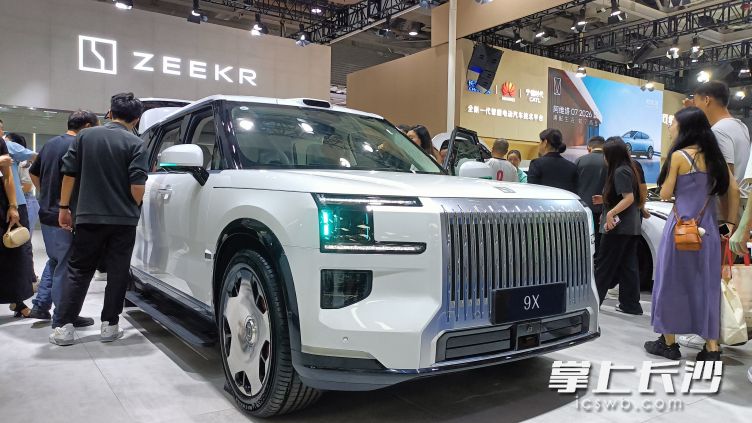
Core Viewpoint - The 2025 Guangzhou Auto Show highlights a surge in the launch of large six-seat SUVs by various automakers, reflecting both market demand and a potential lack of innovation in the industry [2][3][7]. Group 1: Large Six-Seat SUVs - Numerous automakers are introducing large six-seat SUVs at the Guangzhou Auto Show, indicating a competitive market segment with varying price points and features [3][4]. - The entry price for these SUVs is below 300,000 yuan, with models like the Geely Galaxy M9 starting at 180,000 yuan and offering advanced features such as the new generation Raytheon electric hybrid system [4]. - Higher-end models above 300,000 yuan include the Zhiji LS9 priced at 322,800 yuan, showcasing futuristic designs and advanced technology [5][6]. Group 2: Market Dynamics and Concerns - Industry insiders express skepticism about the practicality of large six-seat SUVs, suggesting that many features may not align with consumer needs, leading to potential forced consumption [7][8]. - The competitive landscape is described as "overheated," with automakers rushing to enter the large six-seat SUV market to avoid missing out on perceived opportunities [8]. Group 3: Return of Traditional Fuel Vehicles - A noticeable trend at the auto show is the return of traditional fuel vehicles, with many brands that previously focused on electric vehicles now introducing hybrid and fuel models [9][11]. - The market is expected to see a coexistence of electric and hybrid vehicles, with predictions indicating that internal combustion engine vehicles will still account for about one-third of new car sales by 2040 [10][15]. - Companies like Chery and Geely emphasize their commitment to maintaining a strong presence in the fuel vehicle market, even as they expand their electric offerings [12][14]. Group 4: Consumer Preferences and Market Viability - The rise of hybrid and extended-range vehicles is seen as a response to consumer concerns over range anxiety and charging infrastructure, particularly in regions where electric vehicle adoption is slower [13]. - The profitability of hybrid models is highlighted, with companies like Li Auto achieving financial success through their hybrid offerings [13][14]. - The automotive industry is expected to maintain a diverse energy mix, with both electric and hybrid vehicles playing significant roles in the market [16][17].



预售的双刃剑
Zhong Guo Qi Che Bao Wang· 2025-11-24 06:40
Core Insights - The pre-sale model is becoming a standard practice in the automotive industry, serving as a crucial strategy for companies to achieve annual sales targets as new car launches surge towards the end of the year [2] - While the pre-sale model offers significant advantages, it also poses risks that can disrupt market order and damage brand reputation, highlighting its "double-edged sword" effect in an increasingly competitive environment [2][6] Group 1: Advantages of Pre-sale Model - The pre-sale model empowers both companies and consumers, acting as a bridge between market demand and production supply, allowing for more precise production planning based on locked-in order data [3] - Marketing strategies such as limited-time discounts and priority delivery during the pre-sale phase can rapidly increase market attention and brand awareness, as demonstrated by NIO's Firefly brand, which saw a 20% price reduction leading to a surge in orders [3][4] - Pre-sale data provides critical insights for product strategy adjustments, enabling companies to optimize pricing and configurations based on market feedback before official delivery [4] Group 2: Risks Associated with Pre-sale Model - The industry has seen issues such as data inflation, where companies misrepresent refundable deposits as actual orders, leading to a significant discrepancy between order totals and actual sales [6] - Delivery delays and discrepancies between advertised and actual vehicle specifications have become major consumer complaints, exacerbated by supply chain issues and production capacity constraints [6][7] - Over-marketing and price wars have intensified irrational competition, with companies focusing on short-term gains rather than product quality, which can harm brand image and long-term sustainability [7] Group 3: Regulatory and Strategic Recommendations - The industry needs to establish a robust regulatory framework to enhance transparency and accountability in pre-sale activities, including penalties for misleading practices [9] - Companies should adopt differentiated pre-sale strategies that emphasize unique features and customer satisfaction rather than solely competing on price, as seen with NIO's focus on safety and personalized services [9] - Improving fulfillment capabilities and service quality is essential for the long-term success of the pre-sale model, requiring companies to assess production and supply chain risks adequately [9][10]


车展新趋势:新能源大六座排队登场!车企为何扎堆造大车?
Nan Fang Du Shi Bao· 2025-11-24 02:52
Core Viewpoint - The Guangzhou Auto Show 2025 showcased a surge in new energy large six-seat SUVs from various automakers, reflecting market demand but raising concerns about the sustainability of this trend for the automotive industry's healthy development [2][9]. Group 1: Market Trends - Numerous automakers are launching large six-seat SUVs, indicating a competitive market environment, with models priced below 300,000 yuan from brands like Geely and Chery [3][5]. - Geely's Galaxy M9 starts at under 180,000 yuan, offering spacious seating and advanced technology, while Chery's Fengyun T11 aims to provide luxury features at a competitive price of 189,900 yuan [3]. - Higher-end models, such as the Zhiji LS9 and Li Auto L8, are priced above 300,000 yuan, showcasing advanced technology and design [8]. Group 2: Industry Insights - Industry insiders express skepticism about the practicality of large six-seat SUVs, suggesting that many features may not align with consumer needs and could lead to forced consumption [9][10]. - The rush to enter the large six-seat SUV market is driven by potential profit margins and the competitive landscape, where companies fear falling behind if they do not adapt quickly [9]. - Concerns about product quality and differentiation arise, as many new models exhibit similar designs and features, leading to consumer fatigue in choice [10].



老登审美
投资界· 2025-11-23 08:04
Core Viewpoint - The article discusses the evolving landscape of the luxury electric vehicle (EV) market in China, highlighting how traditional luxury car aesthetics and configurations are being adopted by new energy vehicle manufacturers to attract consumers who value both performance and design [6][10][22]. Group 1: Market Trends - The penetration rate of new energy vehicles in China has surged from 5% to nearly 50% over the past five years, driven by policy subsidies and improved electric infrastructure [7]. - The luxury segment of the EV market, priced above 400,000 yuan, remains largely dominated by traditional fuel vehicles, indicating a significant opportunity for new entrants [12][22]. Group 2: Design and Aesthetics - Many new energy vehicles are adopting classic luxury design elements from traditional fuel vehicles, such as chrome accents and high-quality materials, to appeal to consumers' nostalgia and desire for luxury [6][19]. - The trend of "aesthetic retro" is evident as new energy vehicles incorporate design features that resonate with older consumers, often referred to as "old money" aesthetics [6][10]. Group 3: Competitive Landscape - Traditional luxury car brands like BBA (Benz, BMW, Audi) face challenges in adapting to the new market dynamics, as they have not fully embraced the trend of lowering power costs and enhancing configurations [10][22]. - New energy vehicle manufacturers are leveraging lower power costs and competitive pricing to offer superior configurations, effectively disrupting the established luxury vehicle hierarchy [9][10]. Group 4: Consumer Behavior - The target demographic for luxury vehicles is shifting, with a focus on middle-aged consumers who have significant purchasing power, making it essential for brands to align their offerings with this group's preferences [18][19]. - Emotional value and brand identity are becoming increasingly important in the luxury vehicle market, as consumers seek vehicles that reflect their status and lifestyle [21][22].

第二十三届广州国际车展为行业提供“中国方案”
Zhong Guo Jing Ji Wang· 2025-11-21 00:31
数据显示,2024年中国汽车产量和销量均超过3000万辆,其中新能源汽车产销量首次突破1000万辆,新 能源汽车保有量较2020年增长5.4倍;今年上半年,新能源汽车渗透率已攀升至50.2%,远超《新能源汽 车产业发展规划(2021—2035年)》提出的"2025年新能源汽车占比20%"的目标。在技术创新领域,中 国已经构建起自主可控的核心产业链,全球最大规模充电网络初步建成。截至今年6月底,中国电动汽 车充电基础设施(枪)总数已达到1610万个。 本届广州国际车展共展出首发新车93台,展车总数1085台,其中新能源车629台。以电动化和智能化为 特点的首发新车集中展出,汇聚成一股强大的新质生产力,正以澎湃的动力推动着全球汽车工业发生新 变革。 主流品牌汇聚羊城 全球车企同台竞技 本届广州国际车展吸引全球主流车企携最新产品高规格参展。包括BMW及MINI、梅赛德斯-奔驰、大 众汽车品牌(大众安徽、一汽-大众、上汽大众)、一汽奥迪、上汽奥迪、福特汽车、上汽通用汽车 (别克、凯迪拉克)、林肯、沃尔沃、一汽丰田、广汽丰田、雷克萨斯、东风本田、广汽本田、东风日 产、长安马自达、起亚等国际主流汽车品牌集中亮相。 转自: ...
“得用户者得天下”
Mei Ri Jing Ji Xin Wen· 2025-11-20 13:04
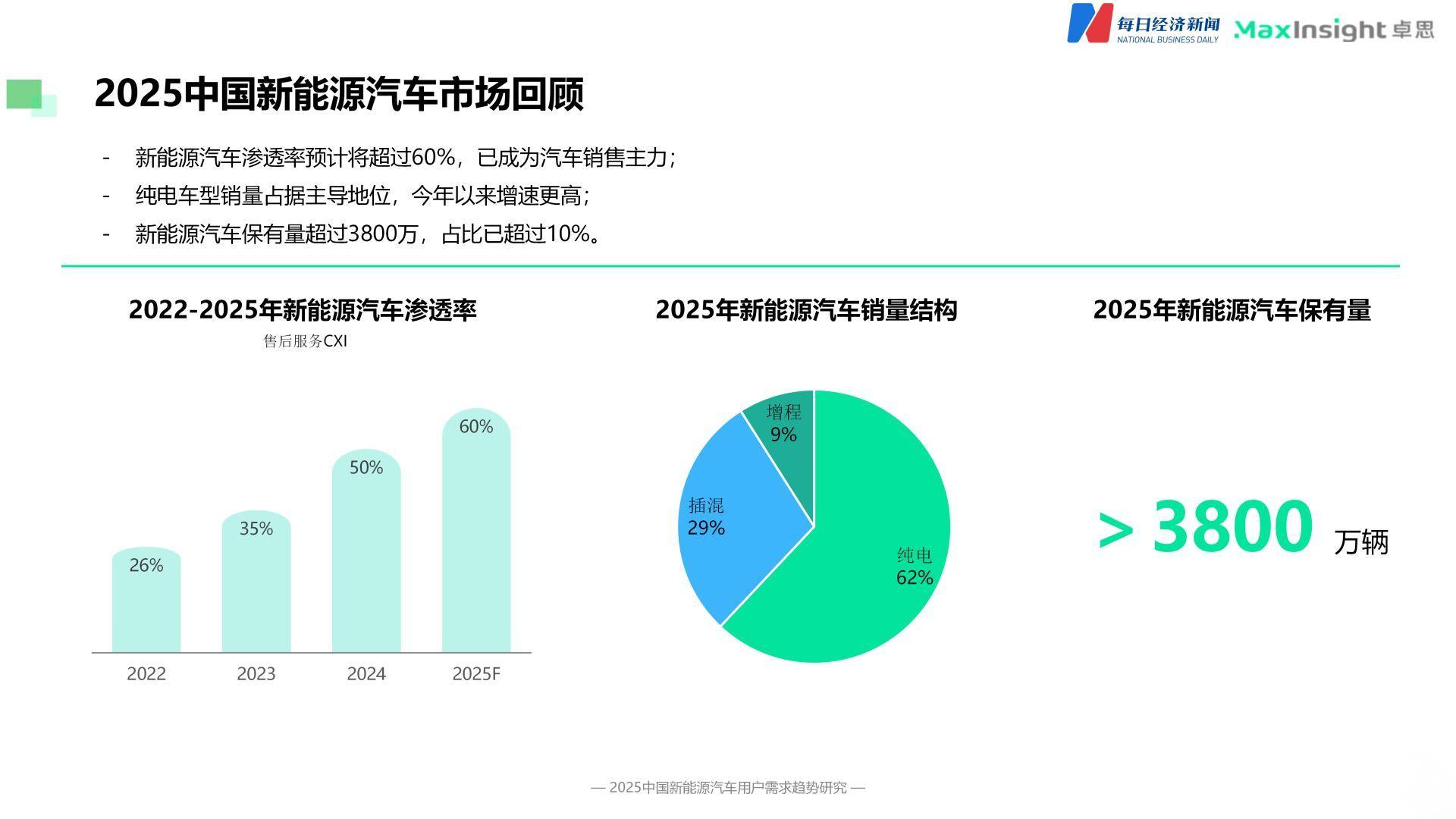
Core Insights - In 2025, China's new energy vehicle (NEV) ownership is expected to exceed 38 million, accounting for over 10% of total vehicle ownership, with a market penetration rate projected to surpass 60% [1] - The shift in consumer purchasing motivations indicates a transition from reliance on policies and technology to a focus on user experience and comprehensive product value [1][4] User Decision-Making Changes - The core purchasing motivation has shifted from "policy" to "product," with driving experience, comfort, and smart features becoming the primary drivers [2] - The average number of factors considered by consumers during the purchasing process has increased from 4.2 to 5.9, with a heightened focus on vehicle safety and smart configurations [2] Competitive Landscape - The competitive landscape is evolving, with consumers comparing models like the Li Auto L6 against a range of pure electric and smart vehicles, indicating a shift to "cross-brand electric comparisons" [3] - The average range of pure electric vehicles has improved from 450 km in 2022 to 530 km in 2025, alleviating previous concerns about range anxiety [3] Industry Transformation - The industry is moving away from a policy-driven phase to a user-value-driven phase, as financial subsidies decline and market competition intensifies [4] - Key consumer demands include high cost-performance ratio, absolute safety, and advanced smart features, which are essential for purchasing decisions [5][6] Smart Features as a Market Differentiator - Smart features are becoming critical for high-end models, with excellent smart experiences helping products stand out, while mid-range models are rapidly evolving in this area [7] - The evolution of smart features is now a significant factor influencing user experience and attracting traditional fuel vehicle users to NEVs [7] Future Market Outlook - The automotive market is expected to become more competitive by 2026, facing challenges such as reduced subsidies and increased product homogeneity [8] - The implementation of new safety standards for electric vehicle batteries will raise safety benchmarks, while ongoing technological advancements will drive the industry towards a healthier value return phase [8]
“得用户者得天下”!2025年新能源车渗透率或超60%,智能出行是未来3至5年竞争高地
Mei Ri Jing Ji Xin Wen· 2025-11-20 04:28
Core Insights - In 2025, China's new energy vehicle (NEV) ownership is expected to exceed 38 million, accounting for over 10% of total vehicle ownership, with a market penetration rate projected to surpass 60% [1][5] - The shift in consumer decision-making reflects a transition from policy-driven motivations to a focus on user experience, with driving experience, comfort, and intelligent features becoming the primary drivers of purchase decisions [5][6] Market Trends - The average number of factors considered by consumers during the car-buying process has increased from 4.2 to 5.9, with a heightened focus on vehicle safety and intelligent configurations [6] - The competitive landscape is evolving, with consumers increasingly comparing electric models against each other rather than against traditional fuel vehicles [11] User Preferences - Users are moving from "basic anxiety" regarding range to a pursuit of quality, as the average range of pure electric vehicles has improved from 450 km in 2022 to 530 km in 2025 [12] - Key consumer demands include high cost-performance ratio, absolute safety, and advanced intelligent features, which are now essential for market competitiveness [12][21] Future Outlook - The market is expected to face intensified competition by 2026, with challenges such as reduced subsidies and increased product homogeneity, yet opportunities exist for products that genuinely meet consumer needs [22] - The implementation of new safety standards for electric vehicle batteries in July 2026 will raise safety requirements, pushing the industry towards healthier value recovery [22]

理想汽车战略会
数说新能源· 2025-11-20 02:09
Group 1: Product and Technology - The company acknowledges its efficiency lag and plans to accelerate product development, shifting from a four-year iteration cycle to a two-year cycle to keep pace with industry standards [1][2] - Sales of the L series have declined from over 50,000 units to around 20,000 units per month, while the i8 faces strong competition from NIO's ES8 and AITO's M8, and the i6 is challenged by Xiaomi's SU7 [1] - The company is moving away from a "configuration stacking" approach to focus on refining single configurations, enhancing design differentiation among new models [2] Group 2: Overseas Strategy - The company made a significant error by relying on parallel exports, particularly to Russia and the Middle East, which has seen a drastic drop in volume due to tightening policies [4] - The company is now focusing on key markets such as the Middle East, Central Asia, and Europe, establishing R&D centers in Germany and the U.S., and retail centers in Uzbekistan and Kazakhstan [5] Group 3: AI and Chip Development - The company has increased its strategic focus on computing power, investing over 100 million yuan monthly, with current reserves of 10 EFLOPS for training and 3 EFLOPS for inference [6] - Breakthroughs in self-developed chips are expected, with the first generation set for deployment in flagship models by early 2025, and the second generation emphasizing inference capabilities [7] - The company aims to evolve beyond just "automotive AI" by exploring smart glasses and other terminal hardware, aspiring to become a comprehensive enterprise in the AGI era [8]

“电池荒”又来了?
3 6 Ke· 2025-11-19 08:25
Core Viewpoint - The current "battery shortage" is driven by a combination of policy changes, unexpected market growth, industry cycle mismatches, and the explosive demand in the energy storage sector [1][2][5][10]. Group 1: Policy Impact - The countdown to the reduction of the new energy vehicle purchase tax by the end of 2025 is a significant catalyst, leading consumers to rush to buy electric vehicles before the tax benefits decrease [2]. Group 2: Market Growth - In the first three quarters of 2025, China's new energy vehicle sales reached 11.228 million units, a year-on-year increase of 34.9%, with October marking the first time that new energy vehicles accounted for over 50% of total new car sales [3]. - The demand for batteries is particularly high for pure electric vehicles, which saw a growth rate of 44.7%, outpacing the 20.4% growth in plug-in hybrid and range-extended vehicles [3]. Group 3: Industry Cycle Mismatch - The battery industry previously expanded too aggressively, leading to oversupply and price wars, which caused manufacturers to become cautious and delay new production plans [5]. - The rapid market recovery has filled existing capacities, while new production lines take at least 18 months to become operational, creating a supply bottleneck [5]. Group 4: Energy Storage Demand - In the first three quarters of 2025, China's energy storage lithium battery shipments reached 430 GWh, exceeding 30% of the total expected for 2024 [5]. - The shift of some manufacturers' investments towards energy storage has further squeezed the capacity available for power batteries [7]. Group 5: Company Performance - CATL reported a revenue of 104.186 billion yuan for Q3 2025, a year-on-year increase of 12.9%, with a net profit of 18.549 billion yuan, up 41.21% [8][9]. - The overall revenue of lithium battery companies in China increased by 14.95% in the first half of 2025, contrasting with a 20.21% decline in the same period last year [10]. Group 6: Supply Chain Strategies - The current battery shortage is not unique to CATL but is a widespread issue across the industry, with many battery companies experiencing high demand [10]. - Automakers are adopting various strategies to secure battery supplies, including self-research, joint ventures, and acquisitions of battery manufacturers [15][18].