
零跑

Search documents
【具身智能产业动态】傅利叶第三代机器人首次亮相,跨维智能发布升级版视频学习框架
GUOTAI HAITONG SECURITIES· 2025-09-30 11:12
Investment Rating - The report does not explicitly state an investment rating for the industry Core Insights - The embodied intelligence industry is primarily represented by embodied robots and smart vehicles, which are mutually reinforcing in their development [7] - Recent advancements include the unveiling of Fourier's third-generation humanoid robot GR-3C and the establishment of the largest humanoid robot training center in China [10][11] - Significant investment activities have been observed in the embodied intelligence sector, with multiple companies securing funding to enhance their technological capabilities and market presence [24] Summary by Sections 1. Embodied Robot and Smart Vehicle Dynamics - Fourier's third-generation humanoid robot GR-3C was showcased at the Industrial Expo, featuring 55 degrees of freedom and advanced interaction capabilities [10] - A new humanoid robot training center in Beijing can produce over 6 million data points annually, enhancing the practical application of humanoid robots [11] - Cross-dimensional intelligence released an upgraded video learning framework that allows rapid task adaptation across different robot bodies [12] - DeepMind introduced the Gemini Robotics 1.5 series, enhancing robots' capabilities in visual and language processing [13] - A strategic partnership between Lingyi Robotics and AIRS aims to integrate hardware and algorithms for humanoid robot development [15] - Kepler has initiated mass production of the world's first commercially available hybrid humanoid robot, K2 "Bumblebee," with significant pre-orders [16] 2. Smart Vehicle Dynamics - The sales ranking for new energy vehicles in the third week of September shows Leap Motor leading with 12,900 units sold, followed by Xiaomi and Aion [17][18] - A new autonomous driving test base was established in Jinan by Lingong Heavy Machinery and Huawei, focusing on comprehensive testing of autonomous mining vehicles [19] - ZF signed an investment agreement to expand its smart chassis localization efforts in Zhangjiagang [20] - NineSight signed a strategic agreement with Dubai's Roads and Transport Authority to launch an autonomous driving demonstration zone [21] - New Stone Technology delivered its 10,000th unmanned vehicle, marking a significant milestone in the commercialization of unmanned delivery [23] 3. Investment and Financing Events - A total of 9 financing events related to embodied intelligence were recorded from September 22 to 28, 2025, with notable investments in companies like LeXiang Technology and LuoBo Intelligent [24][34] - LeXiang Technology completed a 200 million RMB angel round led by Zhongding Capital, focusing on core component development and product scaling [24] - LuoBo Intelligent raised several million RMB in a round led by Sequoia China, targeting AI emotional companionship hardware [25] - Other companies like HeShan Technology and ShouZhi Innovation also secured funding to advance their respective technologies in humanoid robots and core components [26][27]
新能源汽车-电池产业链
数说新能源· 2025-09-29 07:09
Battery - The domestic lithium battery market prices are generally stable, with a strong demand for stocking during the peak season of September to October, and a projected battery production growth of within 5% in October. Global battery production is expected to reach 2150 GWh this year, significantly exceeding initial expectations due to the successful delivery of popular models and the growth in commercial vehicles and energy storage demand [2] New Energy Vehicles - In the last week, 508,000 passenger cars were sold, a year-on-year increase of 10.30% and a month-on-month increase of 10.72%. New energy vehicles accounted for 298,000 units, with a year-on-year increase of 28.25% and a month-on-month increase of 9.60%. The weekly penetration rate of new energy vehicles reached 58.66%, an increase of 8.21 percentage points compared to the same period last year, while the cumulative penetration rate for the year is 52.18%, up by 7.62 percentage points [3] - In terms of weekly deliveries, Leap Motor delivered 12,900 units, Xiaomi 10,800 units, AITO 10,200 units, XPeng 9,200 units, and Li Auto 8,600 units. Chery Automobile has been listed in Hong Kong, and NIO announced the completion of a $1.16 billion financing round. Automakers are competing for both orders and delivery capabilities, with over 30 new models launched this week [3] Energy Storage - The energy storage cell market prices are generally stable, although some leading companies plan to raise cell prices. The energy storage technology is transitioning from "scale expansion" to "quality improvement," with large-capacity cells becoming the focus of competition. Major manufacturers have begun mass production and delivery of 587Ah energy storage cells, but uncertainties remain regarding yield, consistency, and insufficient production capacity. BYD launched its new generation energy storage system "Haohan" and the 2710Ah energy storage blade battery, which has set a global record, improving capacity by over 300% compared to conventional energy storage batteries and achieving a breakthrough in energy density [4]



信达国际控股港股晨报-20250929
Xin Da Guo Ji Kong Gu· 2025-09-29 01:44
Market Overview - The Hang Seng Index faces resistance at 27,000 points, influenced by the extension of the US-China tariff truce and a weaker US job market, which has raised expectations for interest rate cuts [2] - The US Federal Reserve's recent hawkish stance on interest rate cuts suggests limited room for reductions next year, impacting the upward potential of Hong Kong stocks [2] Economic Indicators - The People's Bank of China emphasizes the need for a moderately loose monetary policy to support high-quality economic development, utilizing various financial tools to enhance policy effectiveness [4][9] - China's industrial profits for August saw a significant year-on-year increase of 20.4%, reversing a previous decline, indicating improved economic conditions [5][9] Company News - Ubiquiti (9880) secured a large order for humanoid robots worth approximately 430 million, indicating strong demand in the robotics sector [5] - BYD (1211) revised its vehicle sales targets to ensure healthier growth, anticipating a new wave of production and sales increases in the coming months [5] - New World (0017) reported a net loss of 16.3 billion, with total debt around 146.1 billion, highlighting financial challenges [5] Sector Focus - AI concept stocks are gaining traction as mainland China accelerates the application of "AI+" technologies, with breakthroughs in chip development [8] - The tourism sector is expected to see robust demand as the Golden Week approaches, indicating a potential boost in travel-related stocks [8] International Market Trends - The US Federal Reserve's recent interest rate cut of 0.25% aligns with market expectations, with projections for two more cuts this year [5] - The US PCE inflation data for August met expectations, suggesting stable consumer spending despite inflationary pressures [10][11] Regulatory Developments - The State-owned Assets Supervision and Administration Commission (SASAC) is urging state-owned enterprises to resist "involution" competition, focusing on sustainable and high-quality development [5][9] - The National Market Supervision Administration is enhancing regulatory oversight in the online food delivery sector to promote rational competition and ensure food safety [5][9]
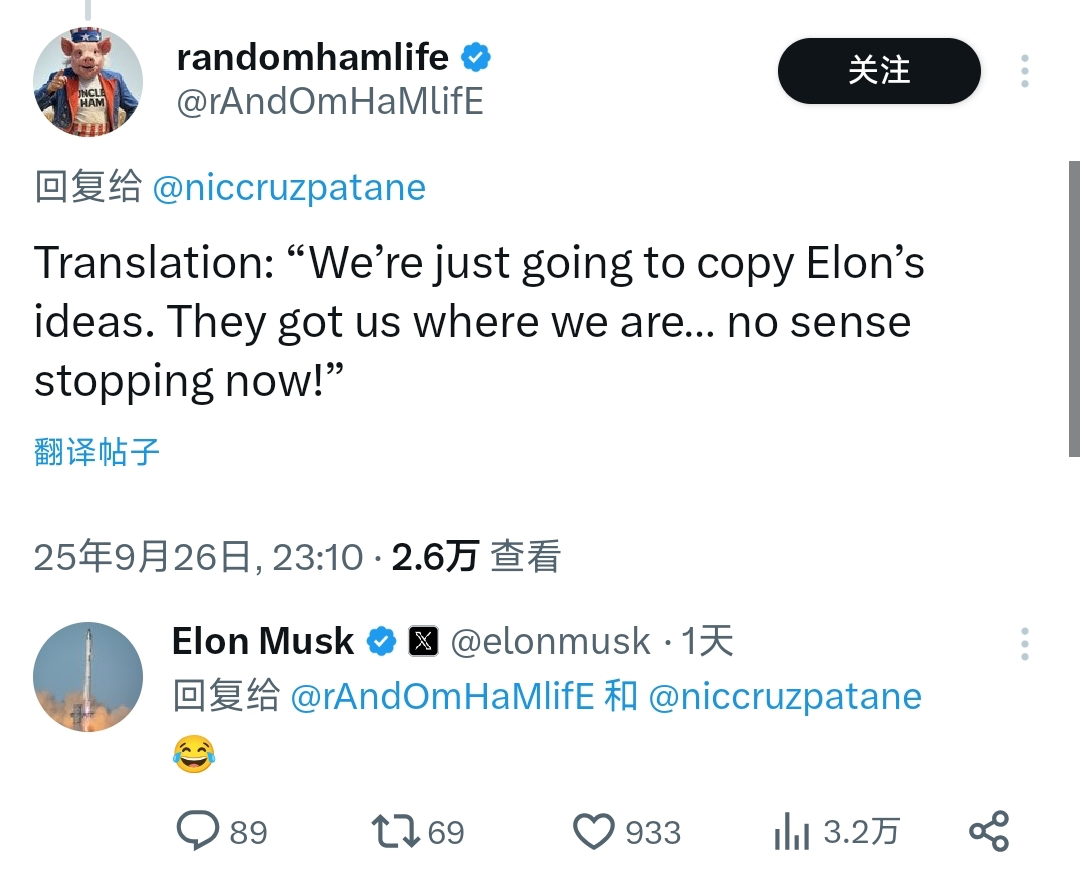
小鹏让马斯克哭笑不得,没了激光雷达,系统吸收数据更快?
3 6 Ke· 2025-09-28 23:58
Core Viewpoint - The automotive industry is witnessing a significant shift from LiDAR-based systems to pure vision-based systems for autonomous driving, with companies like Xpeng leading this transition, which has drawn attention from industry leaders like Elon Musk [1][4][5]. Group 1: Transition from LiDAR to Vision - Xpeng is currently the only major automaker transitioning from LiDAR to a pure vision approach, which is a notable reason for Musk's humorous response [5]. - The decision to remove LiDAR from Xpeng's vehicles is based on the belief that advanced AI systems can operate effectively using only visual data, as LiDAR data cannot be integrated into their new AI models [7][15]. - Xpeng's AI Eagle Eye system has demonstrated significant computational power, with models like the G7 achieving 2200 TOPS, which supports complex tasks necessary for autonomous driving [11][32]. Group 2: Computational Power and AI - The computational requirements for pure vision systems are substantial, as they must process large volumes of data from cameras to perform tasks like lane keeping and object recognition [11][12]. - The evolution of AI algorithms, from CNN to Transformer models, necessitates high computational power to ensure smooth operation of advanced driving systems [11][15]. - Xpeng's previous use of LiDAR was primarily to compensate for earlier computational limitations, but advancements have allowed them to confidently move to a vision-only approach [12][32]. Group 3: Industry Perspectives on LiDAR - Many domestic brands continue to favor LiDAR due to its superior performance in challenging lighting conditions, which enhances safety and reliability in autonomous driving [18][19]. - The integration of LiDAR has been shown to reduce accident rates significantly, reinforcing its value in safety-critical applications [20]. - Despite the trend towards vision systems, the automotive industry is likely to see a coexistence of both LiDAR and vision technologies, as each has its unique advantages [32]. Group 4: Market Dynamics and Consumer Preferences - Consumers prioritize the overall driving experience and safety features over the specific technologies used, indicating that the market will reward effective solutions regardless of the underlying technology [31]. - The ongoing competition between LiDAR and vision-based systems reflects a broader technological evolution, with the ultimate goal of providing the best consumer experience [32].


超两亿元罚款突袭!中国车企海外遭遇维修数据开放危机
Huan Qiu Wang· 2025-09-26 01:17
Core Viewpoint - The Australian Automotive Service and Repair Regulatory Authority (AASRA) has issued compliance warnings to five Chinese car manufacturers, including BYD and Xpeng, for allegedly violating the Motor Vehicle Service and Repair Information Scheme (MVIS), which could result in fines of up to AUD 10 million (approximately CNY 47 million) for each company [1][2] Group 1: Compliance Issues - The AASRA's compliance review report identifies three types of violations by the Chinese car manufacturers: delays in diagnostic software updates, incomplete disclosure of key technical parameters, and subscription service pricing above industry benchmarks [2] - The MVIS mandates that car manufacturers upload complete diagnostic systems, technical parameters, and repair manuals to the AASRA platform on the first day of a model's launch, along with flexible subscription options [2] Group 2: Global Regulatory Trends - There is a global trend towards mandatory disclosure of repair data, with the EU and several U.S. states implementing regulations to ensure fair competition in the automotive repair market [3] - The systemic costs of repair monopolies have prompted regulators worldwide to shift from reactive measures to proactively building a fair competitive ecosystem [3] Group 3: Economic Impact of Repair Monopolies - Repair monopolies lead to increased lifecycle costs for vehicles, suppressing consumer spending potential and hindering innovation in the repair industry [3] - Data from the EU and the U.S. indicates that after mandatory disclosure of repair information, repair costs typically decrease by 15% to 30%, and consumer satisfaction improves by approximately 25% to 40% [4] Group 4: Challenges for Chinese Car Manufacturers - The compliance crisis faced by Chinese car manufacturers abroad highlights the clash between domestic business models and international regulatory frameworks [5] - The profit structure of Chinese car manufacturers heavily relies on after-sales services, which account for 54% of their gross profit, making them resistant to data openness [6] Group 5: Transition from Product to Ecosystem Output - The controversy over repair data openness underscores the urgent need for Chinese car manufacturers to transition from a "product output" model to an "ecosystem output" model, as global competition evolves [8] - The Australian regulatory actions serve as a strategic warning for Chinese car manufacturers, emphasizing the need for transparency and user rights protection in after-sales services [9]
中金 | 乘用车出海洞察#5:全球格局再重构,中国汽车深受益
中金点睛· 2025-09-25 23:57
Core Viewpoint - The global automotive industry is undergoing a restructuring phase, with China expected to lead in electric vehicle (EV) penetration and export growth by 2025, achieving over 50% penetration in new energy vehicles (NEVs) [2][4][25]. Group 1: China's NEV Market - By 2025, China's NEV penetration rate is projected to exceed 50%, with a significant increase in sales volume, reaching 1,077,000 units in 2024, a 68% year-on-year growth [4][25]. - As of August 2025, the market share of Chinese brands in the NEV sector is 89%, indicating strong domestic performance [4][8]. - The export of NEVs from China is on the rise, with a 14.5% year-on-year increase in total passenger car exports, and NEVs accounting for 41% of total exports by August 2024 [8][20]. Group 2: Global NEV Trends - Global consumer awareness of electric and intelligent technologies has been established, leading to accelerated product launches by European, American, and Japanese automakers, with significant growth expected in NEV penetration rates in non-Chinese markets [3][24]. - The EU's NEV penetration rate is expected to rise to 27% by 2025, driven by regulatory pressures and increased model availability from automakers [28][29]. - Emerging markets, particularly in Southeast Asia and Latin America, are witnessing rapid growth in NEV sales, with Vietnam and Thailand showing significant increases in penetration rates [17][20]. Group 3: Competitive Landscape - Chinese automakers are expected to continue gaining market share in international markets, with projections indicating that by 2030, Chinese brands could achieve nearly 30 million units in global production, including over 5.5 million NEVs [2][39]. - In the EU, traditional automakers still dominate, but Chinese brands like BYD are increasing their market share, reaching 3.7% in the NEV segment by mid-2025 [12][19]. - The Latin American market is primarily led by traditional automakers, but Chinese brands are steadily increasing their presence, with BYD's market share in the NEV segment rising from 60% to 77% [23][20].
新车上市 | 尚界H5
数说新能源· 2025-09-24 02:46
Configuration Aspects - The pricing starts at 159,800 yuan for the range-extended version and 165,800 yuan for the pure electric version, which is 10,000 yuan lower than the pre-sale price, aligning with expectations [1] - The vehicle dimensions are 4780*1910*1664 mm with a wheelbase of 2840 mm, positioning it as a mid-size SUV. It features a family-style rounded design with a closed front face and slender headlight groups, equipped with mechanical door handles suitable for complex climates [1] - The range-extended version has a CLTC pure electric range of 235 km and a comprehensive range of 1360 km; the pure electric version offers range options of 525-655 km [1] - The interior layout is a 5-seat configuration with rear legroom and headroom exceeding 1 meter, and seats that support 27°/32° backrest angle adjustments. The trunk has a regular volume of 601 L, with an additional 124 L front trunk for the pure electric version [1] - It is equipped with Harmony cockpit and Star Ring scattering sound system, with voice interaction supported by large model empowerment [1] - The Max version comes standard with HUAWEI ADS 4.0 advanced driving assistance, including 1 192-line LiDAR and 3 4D millimeter-wave radars, supporting over 30 scenarios such as city NOA and full-scene parking; the Pro version features basic driving assistance [1] Competitive Comparison - The pricing is approximately 10,000 yuan higher than the Leapmotor C11, with a slightly smaller wheelbase [2] - Huawei's driving and cockpit functions are extended to below 200,000 yuan, with the Max version equipped with the same 192-line LiDAR as the AITO M9, along with 11 cameras, 3 4D millimeter-wave radars, and 12 ultrasonic radars, supporting highway/city navigation assistance, intelligent parking, and omnidirectional collision avoidance systems [2] - The Pro version adopts a visual solution ADS SE, equipped with 25 sensors to meet basic driving assistance needs, showcasing significantly better driving capabilities than competitors [2] Order Tracking - Before the launch, there were 160,000 small deposits and 10,000 large deposits within 1 hour [3]

9月新车快报|纯电“布加迪”,居然用扫地机马达?
Hu Xiu· 2025-09-19 09:06
Core Viewpoint - The emergence of new electric vehicles (EVs) in September, including models from companies like Chasing and Leap Motor, showcases a competitive landscape where each vehicle aims to outperform the others in performance and design [1] Group 1 - Chasing is developing a vehicle that aims to rival the Bugatti in terms of performance and luxury [1] - Leap Motor is working on a model that aspires to match the performance of the LaFerrari, indicating a trend towards high-performance EVs [1] - iCAR is also entering the market with a unique design, referred to as a "box," which suggests innovation in vehicle aesthetics and functionality [1]
鑫椤锂电一周观察 |2025年8月ICC鑫椤资讯全球锂电数据出炉
鑫椤锂电· 2025-09-19 01:23
Core Viewpoint - The article highlights significant growth in the global lithium battery and related materials market, with various segments showing substantial year-on-year increases in production and sales, driven by rising demand for electric vehicles and energy storage solutions. Group 1: Global Battery Production Statistics - In August 2025, global battery production reached 198.42 GWh, a year-on-year increase of 50.31% [1] - From January to August 2025, global lithium battery production totaled 1373.53 GWh, reflecting a year-on-year growth of 48.86% [1] - Global energy storage battery production in August 2025 was 54.45 GWh, up 64.5% year-on-year, with a cumulative production of 345.73 GWh from January to August, marking an 81.75% increase [1] Group 2: Material Production Statistics - Global lithium iron phosphate production in August 2025 was 33.85 million tons, a year-on-year increase of 61.72%, with a cumulative production of 230.45 million tons from January to August, up 65.69% [2] - Global ternary material production in August 2025 was 9.61 million tons, a year-on-year increase of 16.48%, but cumulative production from January to August decreased by 0.23% to 63.76 million tons [3] - Global anode material production in August 2025 was 26.3 million tons, a year-on-year increase of 45.7%, with a cumulative production of 180.74 million tons from January to August, up 35.76% [4] - Global electrolyte production in August 2025 was 20.4 million tons, a year-on-year increase of 38.77%, with a cumulative production of 139.07 million tons from January to August, reflecting a 43% increase [5] - Global separator production in August 2025 was 2.774 billion square meters, a year-on-year increase of 36.65%, with a cumulative production of 19.734 billion square meters from January to August, up 36.64% [5] Group 3: Automotive Industry Growth Plans - The Ministry of Industry and Information Technology and eight other departments issued a plan aiming for approximately 32.3 million vehicle sales in 2025, a year-on-year growth of about 3%, with new energy vehicle sales projected at around 15.5 million, up 20% [1] Group 4: Market Conditions for Lithium Battery Materials - The domestic lithium carbonate market price fluctuated between 72,000 to 74,000 yuan per ton, with procurement activity increasing due to pre-holiday stockpiling [8] - The ternary material market price remained stable, with recent uncertainties in raw material supply affecting prices [9] - The domestic phosphoric iron lithium market price remained stable, with significant agreements signed for future supply [10] - The anode material market is experiencing strong demand, with potential price increases anticipated [11] - The separator market price is stable, with leading companies maintaining high production levels [13] - The electrolyte market is also stable, with expectations of price increases due to tight supply [15] Group 5: Demand in Lithium Battery Downstream Markets - The lithium battery market is maintaining high operating rates, with production expected to peak around late October [16] - New energy vehicle sales reached 268,000 units last week, with a penetration rate of 59.6% [18] - The energy storage market is projected to reach 140 GW of installed capacity this year, closely approaching the target of 180 GW [19]

旭升集团深耕新能源汽车主业并加快储能和机器人等新业务发展
Zheng Quan Ri Bao Wang· 2025-09-18 11:16
Core Viewpoint - The company, Ningbo Xusheng Group, is expanding its business in emerging fields such as energy storage and robotics while maintaining a strong position in the automotive sector, supported by recent production capabilities in Mexico and Thailand [1][2][4]. Group 1: Business Development - The company has successfully launched its factory in Mexico, which provides localized supply capabilities to serve North American customers [1]. - The Thai factory commenced operations in July 2025, aiming to implement mature processes to cater to Southeast Asia and surrounding markets [1]. - In the first half of 2025, the company achieved a revenue of 2.096 billion yuan, with a second-quarter revenue of 1.050 billion yuan, reflecting a year-on-year growth of 3.89% despite industry competition [2]. Group 2: Emerging Markets - The energy storage business generated approximately 300 million yuan in revenue during the first half of 2025, indicating explosive growth [2]. - The company has developed core components for energy storage systems, including battery enclosures and thermal modules, which meet high safety and reliability standards [2][3]. - The company is actively expanding its presence in the energy storage market by collaborating with several global energy storage system integrators [3]. Group 3: Client Relationships - The company has established partnerships with leading automotive brands, including Rivian, Lucid, and domestic brands like Li Auto and Zeekr, enhancing its market competitiveness [3]. - Long-term collaborations have been formed with major suppliers and battery leaders, such as CATL and EVE Energy, which strengthen the company's position in the supply chain [3]. - The company focuses on providing high-value services, creating a competitive moat based on technology, service, and responsiveness [3]. Group 4: Future Outlook - The company plans to continue deepening its core business in new energy vehicles while accelerating the development of energy storage and robotics [4]. - Future strategies include leveraging new materials, processes, and products to upgrade lightweight solutions towards systematization and integration [4]. - The company expresses confidence in maintaining steady growth through global layout and localized operations amidst industry competition [4].
