
泸州老窖

Search documents
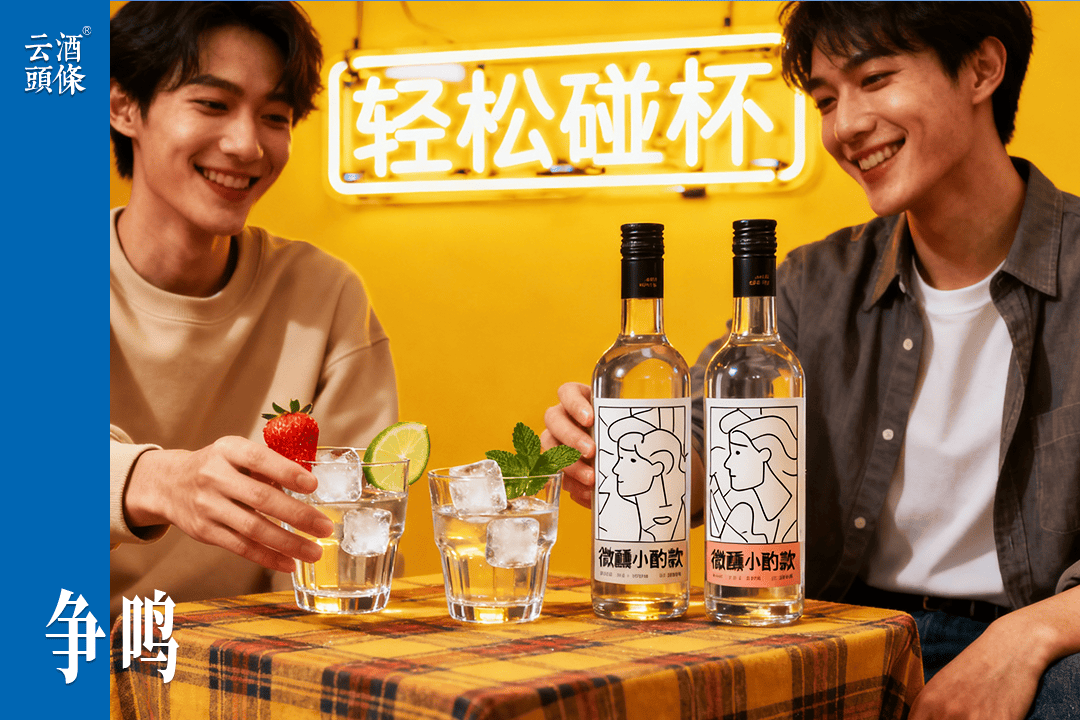
低度白酒是趋势,但不是风口
Sou Hu Cai Jing· 2025-10-13 05:54
Core Viewpoint - The emergence of low-alcohol liquor is a long-term trend in the industry, but it is not expected to rapidly become a mainstream market segment [2][4][22]. Demand Matching - Low-alcohol liquor faces challenges in matching consumer preferences, particularly in the low-end market where consumers prefer higher alcohol content, typically above 40 degrees [3][5]. - The mid-range market, targeting middle-class consumers, struggles to meet quality-price ratios, as low-alcohol options often fail to match established quality benchmarks [7]. Market Constraints - The high-end market has shrunk due to anti-corruption measures, limiting the consumption scenarios for low-alcohol liquor, which requires strong brand leadership to penetrate this segment [8][12]. - Technical barriers exist in producing low-alcohol liquor that maintains desirable flavor profiles and stability, which hinders rapid market growth [9][10]. Market Maturity Timeline - The transition to low-alcohol liquor as a mainstream choice will take 3-5 years, requiring significant industry investment in consumer education and brand development [12][22]. - Competition from other low-alcohol beverages poses a challenge, necessitating differentiation in flavor and style [12]. Lack of Market Leadership - The absence of strong benchmark brands in the low-alcohol segment limits its growth potential, as seen in previous successful market trends [13][15]. Consumer Perception Issues - Misconceptions equating low alcohol content with low value hinder the market's growth, necessitating a shift in consumer perception [15][22]. - The marketing of low-alcohol liquor is challenged by the decline of traditional retail channels, requiring direct engagement with consumers [15][22]. Industry Resistance - Internal resistance within companies to shift focus from high-alcohol to low-alcohol products complicates market entry and expansion [19][22]. - Regulatory standards regarding alcohol content restrict the development of low-alcohol products, impacting market dynamics [19]. Strategic Recommendations - Companies should focus on steady development rather than chasing fleeting trends, ensuring alignment with consumer maturity and market conditions [22][24]. - Targeting the mid-range market (100-300 yuan) is crucial for breaking into the low-alcohol segment, with strategies to gradually expand into higher and lower markets [23]. - Collaboration with light bottle liquor can enhance market competitiveness and broaden consumer appeal across different segments [25].




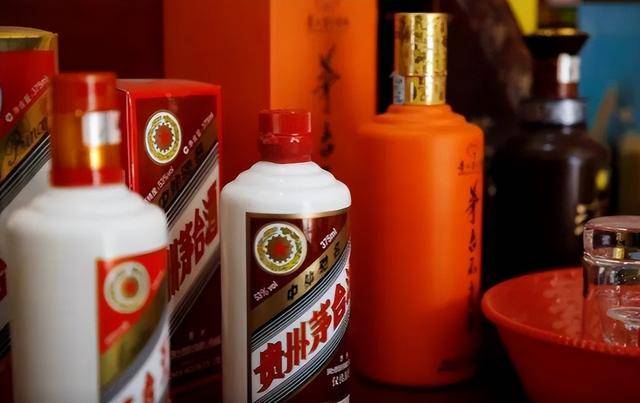
中秋旺季也没救起来!茅台跌破1800元,白酒为啥割不动年轻人了?
Sou Hu Cai Jing· 2025-10-13 05:31
Core Viewpoint - The white liquor industry, particularly Moutai, is experiencing a significant downturn, with prices dropping and sales declining, primarily due to changing consumer preferences among younger demographics [1][5][39] Group 1: Price and Sales Trends - Moutai's wholesale price has fallen to 1770 yuan, breaking the psychological barrier of 1800 yuan, marking the lowest price in years [1][3] - The overall white liquor industry is facing a decline, with profits of major companies down by 10.93% in the first half of 2025, and 13 out of 19 listed companies reporting revenue decreases [5][18] - In August, the monthly production of white liquor decreased by 18.2% compared to the same period last year, leading to increased inventory levels [5][18] Group 2: Challenges for Smaller Enterprises - Smaller liquor companies are struggling, with Yanghe's revenue and profit dropping over 30% in Q1, and Kuozi's revenue halving in Q2 [7][18] - More than half of liquor companies are reportedly selling at a loss, with many retailers experiencing stagnant sales [7][18] Group 3: Changing Consumer Preferences - Younger consumers, aged 18 to 30, represent a potential market of 490 million but only account for 18% of white liquor consumption among the post-95 generation [9][11] - A significant 83% of young drinkers prefer beverages with an alcohol content below 20 degrees, indicating a shift away from traditional high-alcohol white liquor [9][11] - The traditional drinking culture associated with white liquor, often linked to formal occasions and social pressures, is seen as unappealing by younger consumers [11][13] Group 4: Industry Overproduction and Distribution Issues - The white liquor industry has overproduced, with Moutai's production increasing from 39,300 tons in 2016 to 56,300 tons in 2024, leading to excess inventory [18][20] - The rise of direct sales channels and online platforms has disrupted traditional distribution methods, making it difficult for distributors to maintain profitability [20][23] Group 5: Industry Adaptation and Future Outlook - In response to market challenges, companies are developing low-alcohol products, with the low-alcohol market projected to grow significantly [27][39] - The industry is also shifting towards online sales and instant retail, with 34.9% of companies prioritizing these channels [33] - The upcoming national standards for liquor production aim to stabilize quality and adapt to changing consumer demands, potentially revitalizing the industry [31][39]

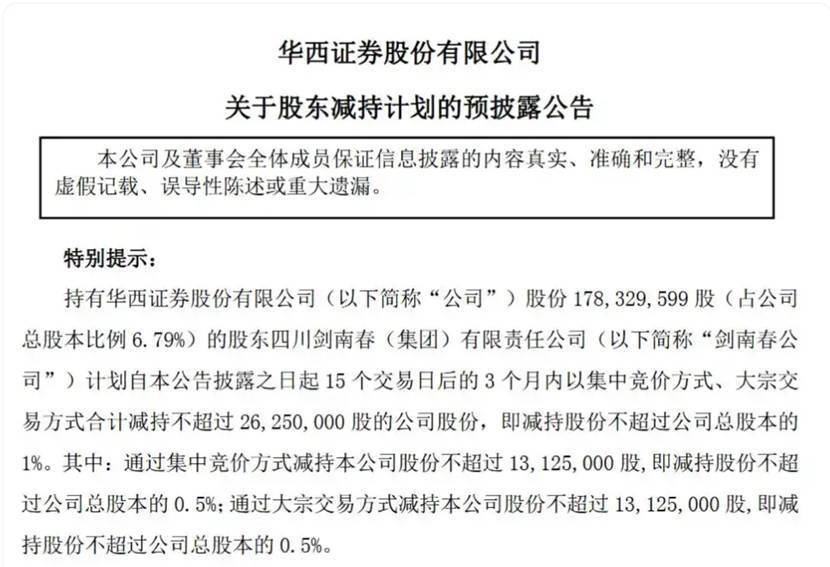
剑南春减持华西证券背后:水晶剑“失锋”,营收增速不足4%
Sou Hu Cai Jing· 2025-10-13 04:01
Core Viewpoint - Jian Nan Chun's recent capital action, involving a plan to reduce its stake in Huaxi Securities, signals potential financial strain amid a backdrop of cash flow pressures and ambitious expansion plans [1][4][5]. Financial Actions - Jian Nan Chun plans to reduce its holdings by up to 26.25 million shares, translating to approximately 255 million yuan at a closing price of 9.71 yuan per share, decreasing its stake from 6.79% to 5.79% [1][5]. - The reduction comes at a time when Huaxi Securities is experiencing a significant profit increase, with a net profit growth of 1195.02% expected in the first half of 2025 [5]. Historical Context - Jian Nan Chun has held its stake in Huaxi Securities since 2000 without any reductions, even during financial crises, making this recent move particularly noteworthy [5]. - The company’s financial challenges are compounded by a recent legal issue involving its former chairman, who was sentenced to prison and fined 400 million yuan, which may impact cash flow [7]. Expansion and Investment - Jian Nan Chun is investing heavily in capacity expansion, with a 1.667 billion yuan project set to begin production in July 2025, requiring approximately 1 billion yuan in self-funding [7][8]. - The company has also increased its distribution network by adding 217 new dealers since 2024, incurring significant marketing and advertising costs [8]. Market Position and Challenges - Jian Nan Chun's revenue growth has slowed, with a projected 3.74% increase in 2024, significantly below the industry average of 5.3% [9][10]. - The company's reliance on its core product, "Crystal Sword," which contributes over 80% of its revenue, is problematic as it faces pricing challenges, with market prices falling below the factory price [9][10]. Strategic Moves - The introduction of state-owned capital into Jian Nan Chun, with a recent investment of 137 million yuan for a 14.51% stake, is seen as a strategic move to enhance governance and restore brand credibility [8]. - Analysts suggest that while the reduction in financial assets addresses short-term liquidity needs, the involvement of state capital is crucial for long-term strategic positioning [10].

白酒巨头竞相“上车”即时零售,千亿风口下的效率革命与渠道博弈
Qi Lu Wan Bao· 2025-10-13 02:46
Group 1 - Instant retail is significantly transforming the consumption landscape of liquor, particularly in the white liquor segment, with a competitive landscape formed by various models including comprehensive e-commerce platforms and niche platforms [1] - Major e-commerce giants dominate the market, with Meituan's flash purchase achieving a phenomenal performance during the "618" shopping festival, where the transaction volume of white liquor surged over 90 times within 20 hours, and daily order peaks exceeded 150 million [1] - JD's liquor platform has achieved "29-minute delivery" across its logistics network, while new player Taobao Flash Purchase has seen rapid growth, with white liquor sales increasing by 172% since its launch in May [1] Group 2 - 2025 is projected to be a pivotal year for white liquor companies as they transition from passive cooperation to actively engaging in instant retail, with industry leader Kweichow Moutai initiating deep collaborations with Taobao Flash Purchase and launching over 1,000 official stores offering "30-minute delivery" [2] - Other brands like Guotai Liquor and Nuodai Shede have also announced strategic partnerships with instant retail platforms, while Meituan Flash Purchase has launched the industry's first "full-chain authenticity system" in collaboration with major brands to address online trust issues [2] - Companies like Luzhou Laojiao are also launching their own instant retail services or deepening partnerships with platforms [2] Group 3 - The rapid channel revolution poses multiple risks, primarily the collapse of the pricing system, as e-commerce platforms use premium liquor as loss leaders, leading to significant price cuts that pressure traditional distribution channels [3] - Mid-range brands face even greater pressure, and traditional distributors are concerned about becoming mere "delivery tools" for platforms, with high platform fees and complex traffic rules squeezing their profits [3] - Trust and experience remain shortcomings in online channels, as the social, tasting, and collectible attributes of high-end liquor cannot be fully satisfied online, and counterfeit risks are a major concern for consumers [3] - Industry analysis suggests that while instant retail is a necessary response to changing consumer behavior, the ultimate goal should not be a zero-sum game between platforms and traditional channels, but rather finding a balance that protects pricing integrity and distributor interests [3]
白酒的黄金时代,结束了
Sou Hu Cai Jing· 2025-10-13 02:29
Core Insights - The price of Feitian Moutai has dropped below 2000 yuan, halving from its peak in 2021, indicating a significant revaluation of the brand previously regarded as "China's gold" [2] - A large number of liquor distributors are exiting the market, with some reporting near-zero sales, highlighting a critical turning point for the industry [2][4] - The current inventory of Feitian Moutai in circulation exceeds the total of the past three years, exacerbated by low-price dumping on e-commerce platforms [2][4] Industry Transformation - The introduction of the revised "Regulations on Strict Economy and Opposition to Waste" in May 2025, which restricts alcohol at official receptions, is seen as a significant blow to the industry [3] - Despite the policy's limited impact on Moutai's overall consumption, the market sentiment has shifted dramatically, leading to a sustained decline in stock prices across major liquor brands [4] - The average inventory turnover days in the industry have reached 900 days, a 10% increase year-on-year, with inventory levels rising by 25% [6] Consumer Behavior Changes - Consumers are becoming more rational, moving away from the blind pursuit of high-end liquor as an investment [5] - The traditional consumer base of business and management professionals, which once accounted for 85.1% of liquor consumption, is being replaced by younger demographics [8] - The share of white liquor in business banquets has dropped below 50% for the first time, with lighter social beverages like coffee and tea gaining popularity [11] Market Dynamics - The market for mid-range liquor priced between 300-800 yuan is growing rapidly, now accounting for 35% of the market [4] - The low-end liquor market is projected to exceed 200 billion yuan by 2025, with high-line low-alcohol products experiencing growth rates over 40% [6] - The competition in the low-alcohol segment is intensifying, with established brands and new entrants vying for market share [16] Strategic Shifts - Liquor companies are actively seeking new directions, focusing on low-alcohol and bottled liquor as key growth areas [15] - A significant portion of companies (64.9%) are concentrating resources on core products, while 33.3% are developing new products [18] - The industry is entering a new phase characterized by policy adjustments, structural transformations, and intensified competition [19]
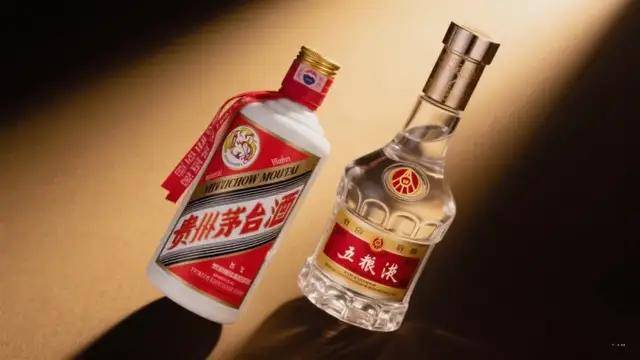
美团闪购发布酒水国庆中秋假期战报
Qi Lu Wan Bao· 2025-10-13 02:27
Core Insights - The premium liquor market has seen significant growth during the National Day and Mid-Autumn Festival holiday period, with major brands leading the consumption surge [1] Sales Performance - Moutai's sales increased nearly 10 times year-on-year - Wuliangye's sales grew nearly 3 times year-on-year - Luzhou Laojiao's sales surged over 11 times year-on-year - Jinshiyuan's sales rose over 5 times year-on-year - Honghualang 15's sales increased nearly 7 times year-on-year - Baiyunbian 15-year aged liquor's sales grew nearly 6 times year-on-year [1] Market Trends - Instant retail is emerging as a new growth driver for major liquor brands and regional leaders, facilitating exponential sales growth - The strong sales performance of top brands like Moutai and Luzhou Laojiao highlights their strong pricing power in the instant retail channel - Regional leaders are leveraging instant retail to overcome geographical limitations and reach a broader consumer base [1] Consumer Behavior - The demand for "30-minute delivery" has led to a surge in scenario-based consumption, indicating a shift in consumer preferences [1] Future Outlook - The ability to balance channel efficiency with value competition will be crucial for liquor companies navigating the industry's adjustment period [1]


持仓秉承“万物皆消费” 多只消费主题基金逆市闪耀
Zheng Quan Shi Bao· 2025-10-12 18:36
Core Insights - The traditional consumption sector continues to face adjustments, while new consumption themes are also experiencing similar trends, although some thematic funds have achieved significant excess returns [1][2] - The performance disparity among consumption-themed funds is largely attributed to their stock holdings and the interpretation of "consumption" [2][3] Fund Performance - In 2023, the Hai Fu Tong Consumption Preferred Fund led the performance among active equity funds with a return of 82.25%, while several other funds also exceeded a 50% increase [2] - Conversely, funds like Xin Yuan Consumption Selection and Changxin Consumption Quantitative have underperformed, primarily due to their focus on traditional consumption stocks like liquor, which have not shown improvement after years of adjustment [3] Stock Holdings and Strategies - The Hai Fu Tong Consumption Preferred Fund has heavily invested in jewelry stocks, such as Zhuo Hong Ji, which has seen a year-to-date increase of over 150% [2] - The Yongying Emerging Consumption Intelligent Selection Fund has focused on new consumption stocks like Pop Mart, which has risen over 70% since the first quarter [2][3] - Funds that have adopted a broader definition of "consumption," including technology stocks, have outperformed traditional consumption-focused funds [4][5] Market Trends - The traditional consumption sector, represented by liquor stocks, has seen a decline, with the China Securities Liquor Index down approximately 8% year-to-date [3] - Despite the overall market challenges, there are signs of potential recovery in the consumption sector, particularly for liquor stocks, which may see a turnaround after four years of decline [7] New Consumption Focus - Fund managers remain optimistic about the new consumption sector, which is characterized by structural opportunities and is expected to benefit from macroeconomic factors such as policy support and liquidity [6] - The new consumption market is increasingly appealing to younger consumers, with trends in personalized and emotional consumption driving growth [6]
食品饮料行业周报:板块轮动拉升消费,餐饮链催化延续-20251012
Huaxin Securities· 2025-10-12 15:34
Investment Rating - The report maintains a "Recommended" investment rating for the food and beverage sector [9][58]. Core Insights - The report highlights that the white liquor sector is experiencing marginal improvements in sales during the double festival period, although it remains under pressure year-on-year. Channel inventory has slightly decreased but is still at a relatively high level, leading to anticipated pressure on wholesale prices as companies focus on controlling volume to maintain prices [6][56]. - The consumer sector is rebounding, driven by capital switching and favorable data from the National Day holiday. The report notes a significant increase in cross-regional mobility, with an estimated 2.432 billion people traveling during the holiday, a historical high [7][57]. - The beverage sector is performing strongly, with a focus on new consumption opportunities amid retail channel transformations. The report suggests monitoring companies like Heytea, Cha Bai Dao, and others in the tea beverage segment [8][58]. Summary by Sections Industry News - In September, Douyin's liquor sales increased by 58% month-on-month, and JD Seven Fresh reported a 109% year-on-year increase in liquor sales during the double festival period [5][18]. - The report mentions the official release of the twelve fragrance standard sample and various company developments, including Guizhou Moutai's focus on integrating tourism and liquor sales [5][18]. Company Feedback - The report provides insights into the performance of key companies, noting that the white liquor sector is under pressure but suggests focusing on high-dividend leaders like Guizhou Moutai and Wuliangye, as well as more elastic stocks like Jiu Gui Jiu and She De Jiu Ye [6][9]. - The report also emphasizes the importance of the tea beverage sector, particularly during the National Day holiday, and suggests monitoring companies like Mi Xue and Gu Ming [7][58]. Key Company and Profit Forecasts - The report includes a table of key companies with their stock prices, earnings per share (EPS), and price-to-earnings (PE) ratios, recommending a "Buy" rating for all listed companies, including Guizhou Moutai, Wuliangye, and others [59].


行业继续筑底关注高股息品种
Shenwan Hongyuan Securities· 2025-10-12 13:46
Investment Rating - The report maintains a cautious outlook on the food and beverage industry, suggesting that the industry is still in a bottoming phase and requires patience for recovery [5][6]. Core Insights - The food and beverage sector is advised to focus on structural opportunities, particularly in leading companies that offer high dividends and have long-term investment value, such as high-end liquor brands and major dairy companies [5][6]. - The liquor industry is expected to face continued pressure, with inventory levels high and demand weak, particularly in the context of the upcoming Spring Festival [6][7]. - The report highlights the importance of new consumption trends and structural growth opportunities in the consumer goods sector, recommending companies that align with these trends [5][7]. Summary by Sections 1. Weekly Perspective on Food and Beverage - The food and beverage sector saw a slight decline of 0.15% last week, with liquor down 1.17%, underperforming the broader market [4]. - The top-performing stocks included Zhuangyuan Pasture and Yangyuan Beverage, while the worst performers included Huanlejia and Gujing Gongjiu [4]. 2. Market Performance of Food and Beverage Segments - The food and beverage industry outperformed the Shenwan A index by 0.27 percentage points, with beverage and dairy sectors showing the strongest performance [28]. 3. Liquor Sector Insights - The report indicates that the average price for Moutai is 1765 RMB per bottle, down 35 RMB from the previous period, while Wuliangye is priced at approximately 830 RMB, also showing a decline [6][11]. - Overall demand for liquor is projected to decrease by 20-30% year-on-year during the Mid-Autumn Festival and National Day period, with inventory levels expected to rise by 10-20% [6][7]. 4. Consumer Goods Sector Insights - The report expresses optimism regarding the dairy sector due to declining costs and improving supply-demand dynamics, recommending companies like Yili and New Dairy [7]. - The snack and beverage segments are highlighted for their structural growth potential, with recommendations for companies like Unified Enterprises and Weilong [7].


食品饮料行业周报:Q3业绩期临近,关注景气赛道估值切换-20251012
CMS· 2025-10-12 13:32
Investment Rating - The report maintains a recommendation for the food and beverage industry, indicating a positive outlook for the sector [4]. Core Insights - The report highlights the upcoming Q3 performance period and suggests a focus on valuation shifts in thriving sectors such as beverages, snacks, and pet products [13][14]. - It notes that the consumption sector has shown relative weakness, but low valuations may attract investment [13]. - The report emphasizes the stable growth of key companies like Shanxi Fenjiu and Wuliangye, with the latter's major shareholder completing a significant share buyback, reflecting confidence in the company [2][3]. Summary by Sections Core Company Tracking - Shanxi Fenjiu's "Glass Fen" series is experiencing steady growth, with plans to expand into markets with weaker consumption atmospheres [10]. - Wuliangye's major shareholder has completed a buyback of shares worth over 800 million yuan, increasing their stake to 55.1% [3]. - Chongqing Beer is expected to continue gaining market share in China, with a current market share of 9%, up from 6% in 2017 [11]. - Qiaqia Foods has seen improved sales in September, with expectations of a slight recovery in gross margin for Q3 [12]. Investment Recommendations - The report recommends focusing on growth stocks in the snack sector, particularly Ximai Foods and Wei Long [14]. - It continues to recommend leading companies in the Hong Kong market such as Nongfu Spring and H&H International Holdings, while suggesting attention to Haitian Flavoring [14]. - In the new consumption sector, it highlights Zhongchong Co., Guibao Pet, and Bairun Co., with additional recommendations for Yuanfei Pet and Petty Co. [14]. - Traditional consumption is entering a configuration phase, with a focus on leading liquor brands like Shanxi Fenjiu, Luzhou Laojiao, and Guizhou Moutai [14].

