贵州茅台

Search documents
节后要暴涨9大题材梳理:全上热搜!涉及人形机器人、算力、6G
Sou Hu Cai Jing· 2026-02-23 16:20
兄弟们!春节9天长假即将过去,马年A股即将迎来首个交易日。马年A股首个交易日会怎么走?是涨是跌? 首先来看,海外市场表现。港股在春节期间震荡震荡上行,涨幅近1%;富时A50震荡上行,涨幅1.6%。美股三大指数也整体呈现震荡上行的走势。 其次,春节期间,人形机器人、AI大模型、贵金属等大热点均有重磅利好,有望对市场形成强有力的支撑。 因此,总体情况来看,A股马年首个交易日在海外和六大重磅题材合力加持下迎来高开。若维持小幅低开折呈现震荡上行的走势,若是高开太多则存在高开 低走的风险。 值得注意的是,除夕当晚10点,京东也上架了包括"春晚同款"机器人在内的多款机器人。在活动上线几分钟内,包括魔法原子、宇树科技、松延动力等品牌 的机器人即被抢购一空。其中,两台价值近63万元的GALBOT通用机器人G1,同样瞬间被抢购一空。 现在把春节9天长假6六大资金重点青睐的题材梳理出来,供大家参考。 事件1:人形机器人—四大机器人集体亮相春晚,完成全球首次全自主集群表演,利好四大人形机器人产业链。 魔法原子:2026春晚首家亮相的机器人企业,在开场歌舞《智造未来》中登场,MagicBot 系列完成精准团体舞步,Magic Dog ...



透视贵州双龙航空港经济区春节保供战
Mei Ri Jing Ji Xin Wen· 2026-02-23 11:52
Core Viewpoint - The article highlights the significant increase in demand for Moutai liquor during the upcoming Spring Festival, driven by both B-end (distributors and self-operated stores) and C-end (individual consumers) orders, leading to challenges in supply chain management and logistics [1][3]. Group 1: Market Demand and Supply - The demand for Moutai liquor has surged, with many distributors reporting that they have sold out their January and February quotas before the Spring Festival, even prepaying for part of the March quota [1]. - The average wholesale price for the 2026 version of Moutai is reported to be stable, with prices around 1,700 RMB per bottle for boxed versions and between 1,660 to 1,690 RMB for loose bottles, indicating a price increase compared to previous years [1]. Group 2: Warehouse and Logistics Operations - The "Moutai Shuanglong Warehouse" in Guizhou covers approximately 155 acres and has a total construction area of 108,000 square meters, with a storage capacity of 32,000 tons of finished liquor and over 10.6 million boxes [2]. - The warehouse has seen a doubling of workload compared to previous years, shifting from bulk shipments to handling a large volume of small, immediate orders [3]. - The warehouse employs an automated system for inventory management, utilizing barcode scanning and real-time tracking to ensure efficient sorting and dispatching of products [3][7]. Group 3: Staffing and Operational Adjustments - To cope with the increased workload, the warehouse has expanded its workforce, adding 30 to 40 personnel for B-end orders and over 70 for C-end orders daily [4]. - New shipping warehouses in Nanjing and Beijing have been established to facilitate faster delivery for C-end consumers, significantly reducing delivery times [4]. Group 4: Collaboration with Logistics Partners - Moutai logistics collaborates with JD and SF Express for distribution, with each partner focusing on specific delivery tasks to enhance efficiency [6]. - SF Express has developed customized packaging solutions to prevent damage during transport and has implemented a "consolidation" delivery method for small orders to improve safety and efficiency [6]. Group 5: Retail Experience and Consumer Interaction - The increase in online orders has transformed Moutai's retail stores into crucial points connecting online purchases with offline experiences, leading to a three to fourfold increase in customer traffic [9]. - Retail staff have been adjusted to manage the increased customer volume, with extended operational hours to accommodate the demand [9].

从“提前买”到“马上要”即买即送成春节酒桌新主张
Mei Ri Jing Ji Xin Wen· 2026-02-23 11:47
Core Insights - The article highlights the increasing trend of instant retail in the white liquor market during the Chinese New Year, driven by consumer demand for immediate purchases and gifting [1][2][5] Group 1: Market Trends - Instant retail has become the new mainstream for white liquor consumption during the Spring Festival, with platforms like Meituan and Taobao promoting "春节不打烊" (Spring Festival does not close) to capture consumer attention [2][7] - There is a noticeable shift in consumer behavior from "buying in advance" to "immediate needs," indicating a growing demand for quick purchases during festive occasions [5][6] Group 2: Sales Performance - The flagship store of 1919 has experienced a slight increase in sales compared to previous years, with specific brands like Honghua Lang performing particularly well among casual customers [6][7] - Major liquor companies, including Guizhou Moutai and Shanxi Fenjiu, are actively collaborating with retail platforms to leverage the instant retail trend, which has shown significant growth in sales figures [7] Group 3: Consumer Behavior - Customers are increasingly making urgent purchases during meals, with delivery times often within 30 minutes, reflecting the demand for convenience [6] - The store's location in a commercial area has led to a higher demand for white liquor, particularly for business gatherings and gifting [6]


2026白酒春节渠道反馈:价格筑底,分化加剧,头部反转
Shenwan Hongyuan Securities· 2026-02-23 07:50
Investment Rating - The report maintains a positive outlook on the liquor industry, particularly on high-end brands, indicating a strategic buy recommendation for major players like Guizhou Moutai, Luzhou Laojiao, Shanxi Fenjiu, and Wuliangye [3][7]. Core Insights - The overall sales volume for the liquor industry during the 2026 Spring Festival is expected to decline by 10%-20% year-on-year, which is slightly better than market expectations prior to the festival [3][6]. - A significant characteristic of the 2026 Spring Festival sales is the increasing differentiation and concentration among top brands, with high-end liquor performing exceptionally well. Moutai is projected to see a sales increase of over 30% year-on-year, while Wuliangye is expected to grow by 5%-10% [3][6]. - The industry is entering a notable destocking phase, with inventory levels for first-tier brands significantly lower than the same period last year [3][6]. - Prices for first-tier brands are stabilizing, with Moutai's price currently above 1700 yuan, expected to stabilize above 1600 yuan post-festival [3][6]. Summary by Sections Brand Performance - High-end liquor brands are outperforming expectations, with Moutai showing the best performance. Wuliangye is leveraging price adjustments to increase volume, while Guojiao 1573 is maintaining price stability [8][6]. - Moutai's sales are expected to grow by over 30%, with inventory levels at distributors being nearly zero [8][6]. - Wuliangye's sales are projected to increase by 5%-10%, with inventory levels at distributors around 10%-15% lower than last year [8][6]. - Guojiao 1573 is expected to see a sales decline of 15%-20%, while its low-end variant remains stable [8][6]. Regional Feedback - Feedback from various regions indicates a mixed performance, with high-end brands like Moutai and Wuliangye showing resilience, while mid-tier and local brands face challenges [19][21]. - In North China, overall sales are down by about 15%, with high-end brands benefiting from increased consumer interest [12][21]. - In Jiangsu, the overall sales volume is expected to decline by 10%-15%, with Moutai maintaining stable performance [19][21]. Future Outlook - The report anticipates that the second half of 2026 will see a turning point for top brands in terms of sales and financial performance, with a potential dual boost in valuation and earnings by the end of the year [7][3]. - The industry trend is shifting towards consolidation, with larger companies absorbing smaller ones, leading to inevitable differentiation among listed companies [7][3].


白酒老登的新能源春天
Sou Hu Cai Jing· 2026-02-23 05:46
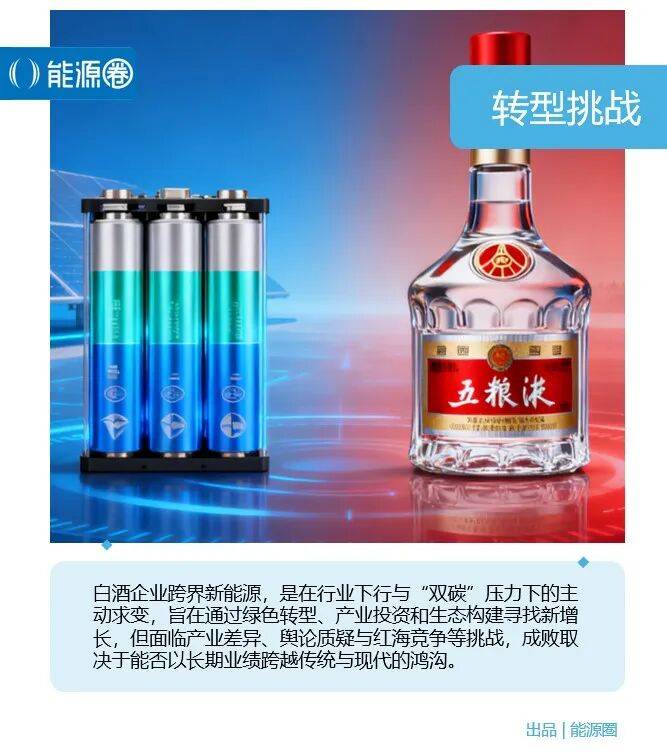
Core Viewpoint - The traditional perception of the liquor industry and the new energy sector as distant is changing, with major liquor companies increasingly venturing into new energy initiatives to seek growth opportunities amid declining liquor sales [4][10]. Group 1: Industry Trends - Major liquor companies like Moutai and Wuliangye are investing heavily in new energy, with Moutai establishing a 10 billion yuan new energy fund and Wuliangye focusing on solar, energy storage, and hydrogen energy [4][6]. - The liquor industry is facing significant challenges, with national liquor production expected to decline for the eighth consecutive year, showing an 11.5% drop in the first ten months of the year [6][10]. - Internal pressures from new regulations and external pressures from carbon reduction strategies are pushing liquor companies to explore new growth avenues [7][10]. Group 2: Strategic Initiatives - Wuliangye is actively participating in the regional industrial transformation of Yibin, which is transitioning from a liquor hub to a new energy hub, with over 110 new energy projects attracting investments exceeding 270 billion yuan [7][8]. - Companies are taking steps to address their energy consumption issues by building green factories and utilizing renewable energy sources, such as Wuliangye's commitment to using 100% green electricity by 2025 [8][9]. - Leading liquor companies are beginning to define industry standards by creating comprehensive "zero-carbon solutions" and influencing their supply chains to adopt sustainable practices [9]. Group 3: Challenges and Market Dynamics - The transition from liquor to new energy is fraught with challenges due to the fundamental differences between the two industries, with liquor relying on brand culture and consumer demand, while new energy is driven by technology and capital [10][11]. - There are concerns regarding the motivations behind liquor companies' investments in new energy, with skepticism about whether these moves are genuine or merely opportunistic [10][11]. - The new energy sector is becoming increasingly competitive, with profit margins tightening, making it difficult for liquor companies to replicate their traditional high-profit models in this new landscape [11][12].
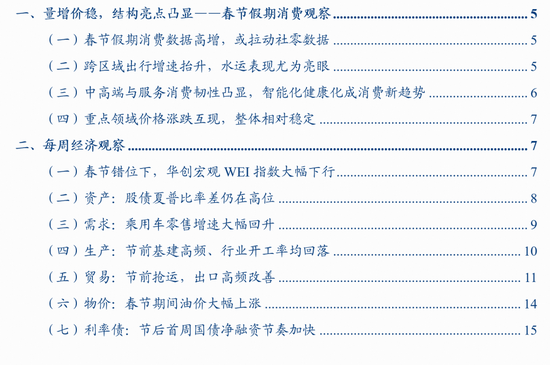
张瑜:量增价稳,结构亮点凸显——春节假期消费观察
Xin Lang Cai Jing· 2026-02-23 02:54
Group 1 - The core viewpoint of the article highlights a significant increase in retail and catering data during the Spring Festival holiday, with a year-on-year growth of 8.6% in the first four days, which is expected to boost the social retail data for the first two months of the year [1][2][52] - The increase in cross-regional travel during the holiday period saw an 8.7% rise compared to the previous year, with water transport showing remarkable growth of 28.5%, influenced by tourism demand and the reopening of Hainan [3][12][54] - Price stability was observed in key sectors, with high-end liquor and hotel prices in popular small cities increasing, while prices in first-tier cities and movie ticket prices saw declines [4][16][55] Group 2 - Structural highlights in consumption include a strong performance in mid-to-high-end products like gold and duty-free items, with gold consumption remaining robust and duty-free sales in Hainan increasing by 20.9% [5][14][56] - Domestic and cross-border travel maintained momentum, with hotel accommodation transaction values rising by 32.7% and a predicted double-digit growth in daily inbound and outbound travelers at national ports [5][14][57] - The trend towards smart and health-oriented consumption was evident, with significant sales growth in smart wearable devices and organic foods during the holiday period [5][14][57] Group 3 - Weekly economic observations indicate a rebound in durable goods consumption, with passenger car retail sales increasing by 54% year-on-year in early February, contrasting with a decline of 13.9% in January [6][24] - Real estate sales showed improvement, with a 5% year-on-year increase in residential sales area in 27 cities as of mid-February, compared to a decline of 16% in January [6][25] - Export activities showed signs of recovery, with a 32.3% increase in the number of outbound port calls compared to the previous year, indicating a positive trend in trade [6][30]
国金证券:中国高端消费筑底效应展现 重点推荐免税、黄金珠宝行业
智通财经网· 2026-02-23 02:19
智通财经APP获悉,国金证券发布研报称,奢侈品、高端香化、高端零售业绩修复加速,高净值人群消 费恢复或是高端消费改善的主要原因。该行认为,当前中国高端消费筑底效应已经展现,短期内高端消 费修复需依靠高净值人群的财富效应与针对中产的政策刺激。中长期看,需关注收入和就业的系统性改 善、房地产的企稳回升,以及财富效应从高净值人群向中产的扩散节奏。高端消费实际需求改善+供给 相对稀缺+政策效果强,重点推荐免税、黄金珠宝行业。 国金证券主要观点如下: 免税:低基数,强政策红利,高端消费修复,有望带动免税行业重回增长 免税是进口化妆品、奢侈品等高档消费品流通的重要渠道,将极大受益于高端消费恢复。海南自由贸易 港正式启动封关,有望对海南本地以及全国的免税业务产生明显的影响,叠加高端消费复苏趋势持续演 绎,影响逻辑有望超预期。此外,日本旅游热度下滑后,海南成为新热门目的地。去哪儿旅行、携程等 平台数据显示,截至2月初,春节假期目的地为海南的日均机票订单量同比增长超45%。 中国中免:公司基本面回暖,从内需看,高端消费的恢复是免税行业复苏的基础,免税行业存在整体性 机会;从外需看,入境游客的消费潜力,并未被市场充分认识,预期中 ...

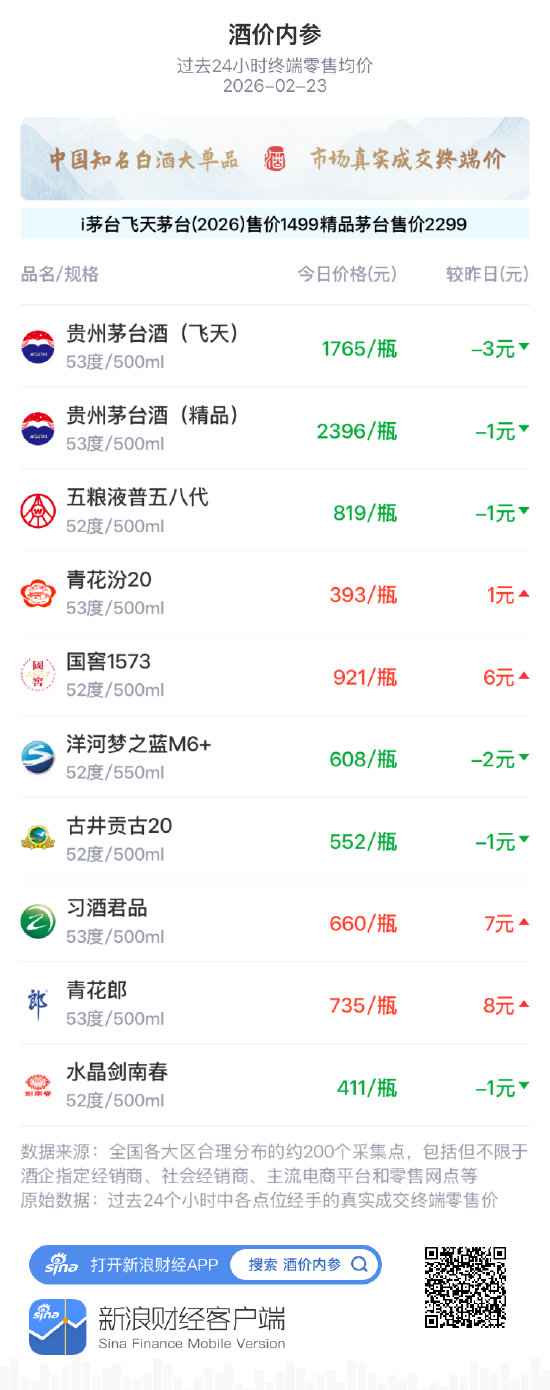
酒价内参2月23日价格发布 高弹性品种普涨总价再创三个月新高
Xin Lang Cai Jing· 2026-02-23 01:06
新浪财经"酒价内参"重磅上线 知名白酒真实市场价尽在掌握 新浪财经"酒价内参"过去24小时收集的数据显示,中国白酒市场十大单品的终端零售均价在2月23日呈 结构性上行态势。如果十大单品各取一瓶整体打包售卖,今日总售价为9260元,较昨日上涨14元,再创 三个月新高。今日涨幅集中于高弹性品种,其单日贡献度明显,其他多数单品小幅回调。 今日十大单品价格六跌四涨。上涨端,青花郎领涨8元/瓶,实现七连阳,价格重心持续抬升,七天累计 涨幅达到5.3%;习酒君品上涨7元/瓶,延续强势表现;国窖1573上涨6元/瓶,引领高价板块表现整体稳 健;青花汾20微涨1元/瓶,维持窄幅上行。下跌方面,飞天茅台下跌3元/瓶,延续高位小幅整理;洋河 梦之蓝M6+下跌2元/瓶,涨后动能趋缓;水晶剑南春、古井贡古20、五粮液普五八代、精品茅台均微跌 1元/瓶。 | 中国知名白酒大单品 肥 | 市场真实成交终端价 | | | --- | --- | --- | | | i茅台飞天茅台(2026)售价1499精品茅台售价2299 | | | 品名/规格 | 今日价格(元) | 较昨日(元) | | 贵州茅台酒(飞天) 53度/500ml | 1 ...
食品饮料行业跟踪周报从“历史经典产业”到“传统优势民生产业”新五年酿酒产业提质发展
Soochow Securities· 2026-02-23 00:30
证券研究报告·行业跟踪周报·食品饮料 食品饮料行业跟踪周报 从"历史经典产业"到"传统优势民生产业" , 新五年酿酒产业提质发展 增持(维持) [Table_Tag] [投资要点 Table_Summary] 2026 年 02 月 22 日 证券分析师 苏铖 执业证书:S0600524120010 such@dwzq.com.cn 证券分析师 孙瑜 执业证书:S0600523120002 suny@dwzq.com.cn 行业走势 -10% -7% -4% -1% 2% 5% 8% 11% 14% 17% 20% 2025/2/24 2025/6/22 2025/10/18 2026/2/13 食品饮料 沪深300 相关研究 《AI 营销:新风口剑指千亿,服务商 乘势而进》 2026-02-11 《渠道变革大时代,优质连锁零售业 态蓬勃发展》 2026-02-10 东吴证券研究所 1 / 9 请务必阅读正文之后的免责声明部分 ◼ 从"历史经典"到"优势民生"产业,再度定调酿酒产业重要地位,鼓 励高质量发展。继 2025 年 10 月工信部发布《关于推动历史经典产业高 质量发展的指导意见(2026—2030 ...
茅台一边说没货一边狂降价?背后是渠道与库存的生死博弈
Sou Hu Cai Jing· 2026-02-22 08:50
Core Viewpoint - The article highlights the complex dynamics of the Chinese high-end liquor market, particularly focusing on Kweichow Moutai, which is experiencing a paradox of both "shortage" and "oversupply" amid significant market adjustments. Group 1: Supply and Demand Imbalance - Kweichow Moutai distributors are facing inventory shortages, with some regions selling out of quotas for January and February ahead of time, leading to pre-orders for March supplies [1] - In Shenzhen, the price of a single bottle of Moutai has exceeded 1800 yuan, with daily price increases surpassing 100 yuan, as distributors report a lack of stock [1] - The surge in demand is attributed to a structural change in distribution channels, with online platforms processing over 1.43 million transactions in January, creating pressure from both consumer demand and traditional B2B shipments [1] Group 2: High Inventory and Price Discrepancies - In stark contrast to the "shortage" claims, there is a significant social inventory of over 10 million bottles accumulated in distribution channels [3] - By the end of 2025, the wholesale price of Moutai fell below the official guidance price of 1499 yuan, marking a historical low, while actual costs for distributors reached 1700-1800 yuan per bottle, leading to losses of 200 yuan per bottle sold [3] - Panic selling by scalpers and e-commerce platform subsidies have exacerbated the situation, creating a vicious cycle of declining prices [3] Group 3: Channel Revolution and Traditional Profit Chain Disruption - In 2026, Moutai initiated a channel restructuring by eliminating traditional distribution rights, increasing direct sales from 43% to over 60% [3] - The i Moutai app has adopted a model of daily limited purchases at 1499 yuan with frequent restocking, which reduces the profit margins for scalpers but forces distributors to sell at a loss to recover funds [3] - The deeper conflict arises as Moutai aims to reclaim a profit margin of 330 yuan per bottle through direct sales, while distributors struggle to survive on a mere 30% retail margin [3] Group 4: Consumption Decline and Demand Reversion - The industry is facing a downturn due to a shrinking core consumer base, with a significant reduction in business banquets related to government and real estate sectors, and younger consumers moving away from traditional drinking culture [4] - Actual annual consumption of Moutai is around 40 million bottles, while annual production capacity exceeds 100 million bottles, leading to a social inventory backlog of 80 million bottles [4] - Distributors indicate that a bottle opening rate of 45% would signify a healthy industry [4] Group 5: Transformation Challenges and Future Pathways - In response to the challenges, Moutai is implementing "surgical" adjustments, including halting December shipments and reducing non-standard product quotas by 30%-50%, aiming to raise wholesale prices from 1499 yuan to 1580 yuan [5] - Long-term reforms focus on three main areas: de-financialization to reduce speculative hoarding, channel integration encouraging distributors to become "cultural connoisseurs," and consumer reconstruction by introducing low-alcohol sparkling wines to appeal to younger demographics [5] - The simultaneous existence of "shortage" and "oversupply" reflects the necessary transition of the high-end liquor industry in China from a resource-driven to a value-driven model, aiming to return to the essence of quality liquor [5]