古茗

Search documents
食品饮料行业周报:春节备货启动,肉奶周期共振
Donghai Securities· 2026-01-19 12:24
Investment Rating - The industry investment rating is "Overweight" indicating a positive outlook for the sector in the next six months [1]. Core Insights - The food and beverage industry is expected to benefit from the extended Chinese New Year stocking period, which may lead to improved performance in Q1 2026 [5]. - The raw milk price has been stabilizing at a low level, with the average price at 3.02 CNY/kg as of January 8, 2026, indicating a potential turning point in supply and demand dynamics [5]. - The secondary market performance showed a decline of 2.10% in the food and beverage sector, underperforming the CSI 300 index by 1.53 percentage points [10]. Summary by Sections 1. Secondary Market Performance - The food and beverage sector ranked 25th among 31 sectors, with all sub-sectors under pressure, particularly health products which saw a smaller decline of 0.72% [10]. - The top five performing stocks included CITIC Nia, Good Idea, and others, with gains ranging from 5.05% to 8.85% [10]. 2. Major Consumer Goods and Raw Material Prices - As of January 9, 2026, the retail price of fresh milk was 12.18 CNY/liter, and yogurt was 15.88 CNY/kg, showing slight weekly increases [26]. - The price of live pigs was 12.78 CNY/kg, with a weekly increase of 1.19% but a year-on-year decrease of 18.91% [26]. 3. Industry Dynamics - Yuanji Food Group and Jinxing Beer have submitted applications for listing on the Hong Kong Stock Exchange, with projected revenues of 2.026 billion CNY and 3.56 billion CNY respectively for 2023 [53]. - The dairy farming sector in Shandong is experiencing a recovery in raw milk prices, with a reported average cost of 3.34 CNY/kg for dairy farming [54].
港股评级汇总:招商证券(香港)维持药明合联买入评级
Xin Lang Cai Jing· 2026-01-19 07:21
Group 1 - The core viewpoint of the reports is that various companies are expected to show significant growth in revenue and profitability, with specific targets set by different securities firms [1][2][3][4][5][6][7][8][9] Group 2 - WuXi AppTec (药明合联) is projected to achieve a 45% revenue growth and a 38% net profit growth by 2025, with a record of 70 new integrated projects and a 125% increase in contracts at the PPQ stage [1] - Alibaba (阿里巴巴-SW) is enhancing its ecosystem with the integration of the Q&A app into various platforms, aiming to capture AI-driven traffic and commercial opportunities [1] - Budweiser APAC (百威亚太) is expected to face pressure in China but maintain competitive advantages in Korea and strong sales in high-end products in India, with a mild recovery anticipated in 2026 [2] - Gu Ming (古茗) plans to expand into northern regions and is optimistic about same-store sales, with successful product launches in coffee and breakfast items [3] - Haidilao (海底捞) is focusing on operational efficiency and service quality improvements through new brand incubations and innovative business models [4] - China Resources Beverage (华润饮料) is expected to recover by 2026 after a period of channel reform, with a stable market share in packaged water [5] - J&T Express (极兔速递-W) is enhancing its logistics capabilities through a partnership with SF Express, which will improve cross-border delivery and local fulfillment [6] - Li Ning (李宁) is seeing a narrowing decline in revenue and is expected to improve brand strength through increased marketing investments in the Olympic year [7] - 361 Degrees (361度) is achieving a 10% year-on-year growth in offline sales and exceeding its store opening targets, with a focus on enhancing brand image [8] - Luk Fook Holdings (六福集团) reported a 26% year-on-year increase in retail value, with a 15% increase in same-store sales, benefiting from product structure optimization and favorable tax policies [9]

休闲旅游需求持续释放叠加体验式消费需求兴起,聚焦消费板块布局机遇
Mei Ri Jing Ji Xin Wen· 2026-01-19 06:39
Group 1 - The Hong Kong consumer sector is experiencing slight fluctuations, with the Hong Kong Stock Connect Consumer ETF (Hua Xia, 513230) rising approximately 0.2% [1] - Notable gainers in the holdings include TCL Electronics, KANAT Optical, Lao Pu Gold, Mengniu Dairy, and Li Ning, while major decliners include China Resources Beer, Jiuxing Holdings, Giant Bio, Yum China, and Blucor [1] - According to the National Bureau of Statistics, service retail sales are projected to grow by 5.5% in 2025, outpacing goods retail sales growth by 1.7 percentage points, indicating an increasing share of service retail in overall retail [1] Group 2 - The tourism market is expected to grow by over 10% in 2025, driven by sustained demand for leisure travel and experiential consumption, supported by government initiatives to boost domestic demand and service consumption [2] - The fourth quarter of 2025 is anticipated to see continued high growth rates of 15% to 20% for brands like Guming and Shanghai Auntie, despite a slight decrease in delivery subsidies [2] - The travel sector, including OTA, hotels, and scenic spots, is likely to benefit from favorable policies aimed at enhancing service consumption [2] Group 3 - Relevant ETFs include the Tourism ETF (562510) benefiting from holiday catalysts and the ice and snow economy, and the Food and Beverage ETF (515170) focusing on boosting domestic demand in undervalued sectors [3] - The Hong Kong Stock Connect Consumer ETF (Hua Xia, 513230) is highlighted for its focus on e-commerce leaders and new consumption trends [3]
现饮市场争夺加速:“价格之战”变“资本之战”
Zhong Guo Jing Ying Bao· 2026-01-19 06:03
Group 1 - The year 2025 is significant for China's ready-to-drink tea industry, with many new tea brands planning to go public and the coffee sector experiencing mergers and acquisitions [1][2] - The coffee market is characterized by four core features: market expansion, price stratification, rapid store openings, and the rise of local brands, with international brands like Starbucks seeking local partnerships [1][2] - New tea brands are shifting from rapid expansion to focusing on quality and customer loyalty, especially in overseas markets like North America [1][2] Group 2 - Several new tea brands, including Gu Ming and Mi Xue Group, are preparing for IPOs in 2025, contributing to a wave of capital influx in the industry [2] - In the coffee sector, Starbucks China is collaborating with Boyu Capital to expand its store count to 20,000, marking a significant strategic shift [2][3] - Luckin Coffee has become a dominant player with 29,214 stores globally, surpassing Starbucks in terms of store count and revenue [4][5] Group 3 - The competition in the coffee market is intensifying, with brands like Luckin Coffee and Manner Coffee adopting aggressive expansion strategies [5][6] - The focus is shifting towards high-traffic locations in first and second-tier cities, while brands are also investing in premium coffee segments [6] - The entry of Boyu Capital is expected to enhance Starbucks' market presence, particularly in smaller cities and emerging regions [6] Group 4 - The new tea drink sector is facing challenges, including a wave of store closures, with a reported net decrease of 16,000 tea shops in the past year [8] - Brands are competing aggressively in the low-price segment, with many products priced below 10 yuan [8][9] - New tea brands are also exploring international markets, particularly in North America and Latin America, to find new growth opportunities [9][10]
招商证券:促消费政策频发&休闲需求稳中向好 关注出行链布局机会
Zhi Tong Cai Jing· 2026-01-19 06:01
Group 1: Tourism Industry - The tourism market is expected to grow by over 10% in 2025, driven by the continuous release of leisure travel demand and the rise of experiential consumption [1] - Domestic tourism revenue and visitor numbers are projected to increase by 12% and 18% year-on-year in Q1-Q3 2025, respectively [1] - Recommended stocks in the tourism industry include China Duty Free Group, Jin Jiang Hotels, ShouLai Hotels, Tongcheng Travel, and Trip.com Group [1] Group 2: Restaurant Industry - Offline consumption is gradually recovering, with domestic restaurant revenue reaching 519.9 billion and 605.7 billion yuan in October and November 2025, showing year-on-year growth of 4.99% and 4.40% [2] - The recovery of leading restaurant companies is faster than the industry average, with a focus on stocks like Green Tea Group and Haidilao [2] Group 3: Tea Beverage Industry - Since Q4 2025, same-store sales for leading tea brands like Gu Ming and Hu Shang A Yi have continued to grow at a high rate of 15-20%, aided by delivery subsidies and brand expansion into coffee and breakfast categories [3] - Despite a slight decrease in delivery subsidies, leading brands are accelerating their expansion, highlighting the advantages of top brands [3] Group 4: Online Travel Agency (OTA) Industry - The recovery of travel demand is ongoing, with OTA performance improving due to increased domestic leisure travel demand, hotel supply growth, and rising online penetration [4] - The performance of OTAs is expected to remain stable with long-term growth potential, particularly with the high growth in outbound travel [4] - Recommended stocks in the OTA sector include Trip.com Group and Tongcheng Travel [4] Group 5: Hotel Industry - In Q4 2025, hotel room supply is expected to grow by 6-8% year-on-year, with RevPAR remaining stable compared to 2024, benefiting from increased holiday traffic and low base effects [5] - Leading hotel companies are expected to have significant earnings elasticity in a cyclical environment, with recommendations for Jin Jiang Hotels and ShouLai Hotels [5]

社会服务板块2025年四季度前瞻:促消费政策频发、休闲需求稳中向好,关注出行链布局机会
CMS· 2026-01-19 05:07
Investment Rating - The report maintains a positive investment rating for the industry, highlighting a favorable outlook for the tourism and leisure sectors due to government policies aimed at boosting domestic consumption and service spending [1][35]. Core Insights - The report emphasizes the recovery of domestic tourism, with expected growth rates of 12% in revenue and 18% in visitor numbers for Q1-Q3 2025, driven by sustained leisure travel demand and the rise of experiential consumption [1][35]. - The overall tourism market is projected to grow by over 10% for the year, supported by government initiatives such as promoting spring and autumn travel and issuing cultural tourism consumption vouchers [1][35]. - Key companies recommended for investment include China Duty Free Group, Jin Jiang Hotels, Shouqi Group, Tongcheng Travel, and Ctrip Group, alongside high-growth tea beverage stocks like Gu Ming and low-valuation restaurant growth stocks like Green Tea Group [1][35]. Summary by Sections 1. Restaurant Sector - Offline consumption is gradually recovering, with Q4 restaurant revenue showing steady growth, achieving 519.9 billion and 605.7 billion yuan in October and November 2025, respectively, with year-on-year growth of 4.99% and 4.40% [7][10]. - Leading restaurant companies are recovering faster than the industry average, with significant revenue increases noted for major players [10][14]. 2. Tea Beverage Sector - The tea beverage sector has seen a surge in same-store sales growth due to delivery subsidies, with leading brands like Gu Ming and Hu Shang A Yi maintaining high growth rates of 15-20% [7][10][14]. - The number of new store openings has doubled compared to 2024, indicating aggressive expansion strategies among top brands [16]. 3. OTA (Online Travel Agency) - The recovery of outbound travel demand is evident, with strong performance in Southeast Asia routes and a notable increase in visitor numbers to Japan and South Korea [20][24]. - The report highlights the long-term profit potential of leading OTA companies like Ctrip and Tongcheng Travel, driven by the ongoing recovery in leisure travel demand and improved commission rates [24][25]. 4. Hotel Sector - The hotel industry is expected to see a stable RevPAR (Revenue per Available Room) in Q4, with a year-on-year growth of 6-8% in room supply [29][30]. - Major hotel chains like Shouqi and Jin Jiang are projected to maintain or improve their performance, benefiting from cost reductions and increased guest traffic during holiday periods [29][30][31]. 5. Investment Recommendations - The report suggests focusing on the travel sector, particularly companies involved in OTA, hotels, and scenic spots, as they are likely to benefit from favorable government policies [1][35]. - Additionally, it recommends investing in high-growth tea beverage stocks and undervalued restaurant growth stocks, indicating a diversified approach to capitalizing on the recovery in consumer spending [1][35].



光大证券晨会速递-20260119
EBSCN· 2026-01-19 00:46
Group 1: Market Overview - The report indicates that recent economic policies, including structural interest rate cuts, are expected to support economic recovery in the first quarter of 2026, with a likelihood of steady improvement in economic data [1] - The financial market policies have played a role in regulating previously overheated sectors, suggesting that the market may not sustain its previous rapid upward trend and could transition into a more volatile phase [1] Group 2: Bond Market Insights - The report highlights that the issuance of credit bonds increased, with a total of 342 bonds issued amounting to 3318.01 billion, reflecting a 6.25% week-on-week increase [4] - The report notes that the secondary market prices for publicly listed REITs have slightly declined, with the China REITs index closing at 790.22, resulting in a weekly return of -0.36% [3] - The convertible bond market experienced an uptick, driven by strong underlying stock performance, suggesting potential upward valuation space [5] Group 3: Industry-Specific Recommendations - In the consumer services sector, the report recommends investing in high-value mass catering leaders like Xiaocaiyuan (H) and fast-growing fresh convenience store operators like Guming (H) [9] - The education sector is advised to focus on national leaders such as New Oriental-S (H) and high school one-on-one leader Xueda Education [9] - In the tourism sector, the report suggests investing in OTA companies like Tongcheng Travel and Ctrip Group-S, as well as scenic spots like Emei Mountain and Changbai Mountain [9] Group 4: Financial Data and Policies - The report notes that M2 growth has risen to 8.5%, indicating a supportive monetary policy environment aimed at promoting high-quality economic development [10] - The People's Bank of China has announced a reduction in various structural monetary policy tool rates, which is expected to further support the real estate market and stabilize market expectations [11] Group 5: Company-Specific Developments - The report discusses China National Offshore Oil Corporation's (CNOOC) strategic focus on building a world-class energy group with distinct marine characteristics, recommending attention to CNOOC and its subsidiaries [12] - Newhan New Materials is set to acquire a 51% stake in Hairete, with no immediate impact on earnings expected, maintaining profit forecasts for 2025-2027 [15] - Zhuozhao Point Glue is highlighted for its advanced precision glue dispensing equipment and strategic acquisitions to enhance competitive advantages, with profit forecasts for 2025-2027 provided [16]
行业周报:赤子城科技Dramabite成短剧黑马,关注AKK菌布局企业-20260118
KAIYUAN SECURITIES· 2026-01-18 14:44
Investment Rating - Investment rating: Positive (maintained) [1] Core Insights - The luxury goods retail revenue in China is showing signs of recovery, with high-end brands like LVMH, Hermès, and Prada experiencing positive growth since Q2 2025 [15][16] - The global network literature market is witnessing rapid growth, particularly in Latin America, with WebNovel reaching nearly 400 million cumulative users by October 2025 [34][35] - The micro-drama and comic-drama market in China is projected to exceed 100 billion yuan in 2025, significantly surpassing the film box office revenue [37][38] - The probiotic market is expanding, with a focus on next-generation probiotics (NGPs) like AKK bacteria, which show significant potential in health applications [55][63] Summary by Sections 1. Duty-Free Shopping - Post-New Year duty-free shopping in Hainan shows strong growth, with sales reaching 3.89 billion yuan and a 49.6% year-on-year increase in shopping amount [31][33] - The high net worth individuals are expected to drive luxury consumption, with a notable increase in spending on preservation-type luxury goods [15][16] 2. Network Literature - The Chinese network literature market reached 49.55 billion yuan in 2024, with a 29.37% year-on-year growth, while the overseas market grew by 10.68% [34] - WebNovel has cultivated nearly 530,000 authors and over 820,000 original works, with a significant increase in user engagement [34][35] 3. Micro-Drama - The micro-drama and comic-drama market in China is expected to reach 100 billion yuan in 2025, with a 98% year-on-year growth [37][38] - The user base for micro-dramas is approaching 700 million, with a strong preference among female viewers [40][42] 4. Probiotics - The global probiotic market is projected to grow at a CAGR of 8.7%, reaching 93.49 billion USD by 2028, with China's market expected to reach 134.89 billion yuan by 2024 [55][63] - Next-generation probiotics like AKK bacteria are gaining traction, with significant potential in health management and consumer interest [55][63]



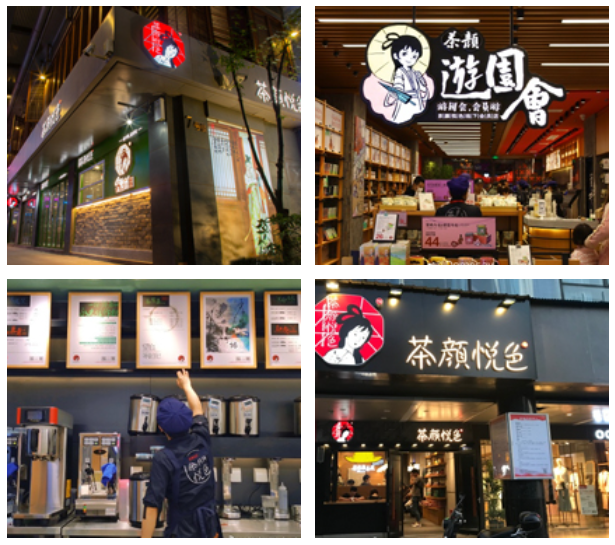
月薪2万-7万,茶颜悦色在北上深密集招人,公司回应“外拓”传闻:常规人员储备
Xin Lang Cai Jing· 2026-01-18 14:14
Core Viewpoint - The recent recruitment activities by the parent company of Cha Yan Yue Se in Beijing, Shenzhen, and Shanghai have sparked speculation about potential market expansion into North China, South China, and East China, although the company claims this is part of routine personnel reserves [1][14][16]. Group 1: Recruitment and Market Expansion - Cha Yan Yue Se is hiring for various positions in Beijing, Shenzhen, and Shanghai, with salaries ranging from 15,000 to 75,000 yuan, indicating a focus on brand, content, market, and technical roles [3][6][18]. - The company has stated that any new store opening plans will be communicated through its official channels, emphasizing that current hiring is for routine personnel reserves [1][14][20]. - There is speculation about a new creative studio being established in Shanghai, aimed at attracting professional talent and gathering creative inspiration, rather than immediate store openings [20][22]. Group 2: Company Growth and Competition - Established in 2013, Cha Yan Yue Se has only expanded to four provinces with approximately 758 stores, while competitors like Bawang Tea and Mixue Ice City have rapidly expanded to over 7,000 and 10,000 stores respectively [8][21][24]. - The company has been cautious in its expansion strategy, with a history of slow growth due to its direct sales model and concerns over product quality and supply chain management [9][21][22]. - Recent reports indicate that several investment firms have exited their stakes in Cha Yan Yue Se, returning control to the founding team, which may impact future growth and expansion plans [10][22][24]. Group 3: Industry Landscape - The new tea beverage market has undergone significant changes, with many competitors adopting franchise models for rapid expansion, while Cha Yan Yue Se has maintained a direct sales approach [12][24]. - Major competitors have successfully gone public and leveraged capital for global expansion, contrasting with Cha Yan Yue Se's more cautious approach to growth and potential IPO plans [12][22][24]. - The company is exploring new growth avenues, including retail and product diversification, but these efforts are currently limited to the Changsha area [11][23].

【转|太平洋食饮-26年度策略】底部向阳,寻找结构性亮点
远峰电子· 2026-01-18 11:38
Overall Sector Review - The food and beverage sector significantly underperformed the market, with a year-to-date decline of -0.62%, lagging behind the Shanghai Composite Index by 15.0 percentage points [2] - The sector experienced a deep correction after an initial rebound driven by expectations of consumption recovery and supportive policies, but the actual recovery rate was lower than anticipated, leading to a consensus on weak domestic demand [2] Subsector Performance - The snack sector outperformed with a year-to-date increase of 28.88%, driven by channel expansion and a revenue growth rate of 30.97% in the first three quarters [4] - Soft drinks also showed resilience with a 10.11% stock price increase, benefiting from strong travel demand and low-cost, high-frequency consumption [4] - The restaurant chain sector saw a rebound with gains of approximately 10.34% and 10.29% for pre-processed and baked goods, respectively [4] - The liquor sector, particularly high-end liquor, faced challenges with weaker sales and declining prices, while beer performance was supported but affected by high-end market constraints [4] Investment Insights - The sector is under pressure from deflationary trends and a weak recovery, with consumer confidence remaining low, indicating a shift to a "new normal" of low growth [8] - High-end consumption has shown slight recovery due to stock market wealth effects, but sustainability remains a concern [9] - The food and beverage sector's valuation is at historical lows, with a current PE (TTM) of 21.9X, indicating potential investment opportunities in undervalued segments [12] Fund Holdings - As of Q3 2025, the food and beverage sector's fund holdings decreased to 6.38%, nearing levels seen in 2016, with the liquor segment comprising 5.52% of this [14] - Fund holdings in the liquor sector increased for certain subsectors, including white liquor and seasoning products, while others saw declines [16] Long-term Trends - The liquor industry is undergoing its longest adjustment period since 2003, with significant price corrections and a potential bottoming out of valuations [21] - The white liquor sector has underperformed the market with a year-to-date return of -4.87%, reflecting weak demand and a divergence from broader market trends [24] - The third quarter of 2025 saw a significant decline in revenue and net profit for the white liquor sector, indicating a deep adjustment phase [27] Pricing Dynamics - The white liquor market is experiencing a general decline in prices, particularly in high-end segments, while lower price segments show resilience [29] - The average price of high-end products like Moutai has dropped significantly, while mid-range and lower-range products have maintained stability or slight increases [31] Investment Recommendations - The white liquor sector is advised to focus on inventory reduction and demand recovery, with a preference for leading brands that can maintain pricing power and product stability [32]