
吉利

Search documents
申万宏源:2026年汽车行业换道拥抱科技浪潮 电动化与AI智能化双重变革
智通财经网· 2025-11-19 03:21
Group 1: Overall Industry Outlook - The automotive industry is entering a new growth phase driven by mid-to-high-end vehicle replacements and overseas expansion, with limited impact from policy changes expected next year [1] - The demand for vehicles is anticipated to recover significantly, particularly in the mid-to-high-end segments, due to changes in consumer habits, capabilities, and product competitiveness compared to eight years ago [1] - The global sales of Chinese smart electric vehicles are expected to approach 10 million units in five years, indicating a strong international market potential [1] Group 2: Automotive Components - Automotive components represent a typical example of China's "high-end manufacturing," characterized by scale effects, cost advantages, and technological superiority [2] - New applications such as robotics and low-altitude economy are becoming essential areas for component manufacturers, with a significant focus on companies like Tesla and Zhiyuan [2] - The globalization strategy is seen as a long-term growth path for leading automotive component companies, particularly with an emphasis on European markets by 2026 [2] Group 3: AI Integration - The automotive industry is undergoing dual transformations of electrification and AI integration, with AI expected to play a crucial role in the physical world [3] - AICar is projected to become a super intelligent entity by integrating four major intelligent systems: driving, cabin, chassis, and power [3] - The future will likely see technology spillover from smart vehicles to robotics, low-altitude economy, and deep-sea technology [3]

跨国车企中国“调兵遣将”背后
Zhong Guo Qi Che Bao Wang· 2025-11-19 01:49
Core Viewpoint - The recent wave of executive changes among multinational automotive companies in China reflects a broader transformation in the industry, driven by the urgency to improve performance, strategic shifts, and the need for deeper localization in response to evolving market dynamics [3][7][11]. Group 1: Executive Changes - A significant number of multinational automotive companies, including General Motors, Hyundai, and Volkswagen, have recently announced high-level executive changes in China, indicating a widespread trend across the industry [3][4][5]. - General Motors appointed John Roth as the new head of its China operations, succeeding Steve Hill, who will take on a global role [4][10]. - Ferrari and Volkswagen also made notable leadership changes, with Ferrari appointing Jan Hendrik Voss as the new president for Greater China [4][5]. Group 2: Market Dynamics - The Chinese automotive market has shifted from a phase of rapid growth to intense competition, with domestic brands like BYD and NIO gaining significant market share, leading to pressure on multinational companies [7][8]. - In 2024, sales of Chinese brand passenger vehicles reached 17.97 million, a 23.1% increase year-on-year, while joint venture brands saw their sales drop below 10 million for the first time [7][8]. Group 3: Strategic Shifts - The ongoing executive changes are a response to the need for strategic adjustments in the face of declining sales and increased competition from local brands [7][11]. - Multinational companies are focusing on electric vehicle (EV) transitions, with Volkswagen increasing its investment in local EV production and development to enhance competitiveness in the Chinese market [12][13]. - The trend of appointing local talent to leadership positions is becoming more pronounced, as companies recognize the importance of understanding local consumer preferences and market conditions [14][15]. Group 4: Performance Challenges - General Motors' retail sales in China fell to 1.8 million in 2024, less than half of its peak in 2017, highlighting the challenges faced by multinational companies in maintaining market share [10]. - Nissan's sales in China have also declined significantly, with 2024 figures dropping to 696,600 units from a peak of 1.564 million in 2018 [9][13]. - Ferrari's sales in China have seen a continuous decline, with a 22% drop in 2024, marking it as the worst-performing region globally for the brand [9][10]. Group 5: Localization Efforts - The push for localization is evident as companies like Toyota and Hyundai are transferring more decision-making power to local teams, aiming to better align with the unique characteristics of the Chinese market [15][17]. - The establishment of local engineering teams and the introduction of the "China Chief Engineer" system by Toyota are steps towards enhancing local product development capabilities [15][16]. - The trend of appointing executives with extensive experience in the Chinese market is expected to facilitate better integration of global strategies with local needs [16][17].


英威腾:新能源汽车业务已与东风、吉利、陕重汽等多家品牌厂商建立合作关系
Mei Ri Jing Ji Xin Wen· 2025-11-19 01:01
英威腾(002334.SZ)11月19日在投资者互动平台表示,公司车载充电电源产品中包含充电机设备,车 载充电电源产品销售在公司主营业务占比较低。公司新能源汽车业务已与东风、吉利、陕重汽等多家品 牌厂商建立合作关系。 每经AI快讯,有投资者在投资者互动平台提问:董秘您好!咨询三个关于公司车载充电电源业务的问 题:一是公司车载充电电源产品中是否包含高压快充相关设备?二是该类产品当下销售是否呈现上升趋 势?三是目前已与哪些车企建立相关合作关系? (记者 胡玲) ...

前三季度成都经开区实现整车产量62.8万辆 同比增长28.6%
Xin Hua Cai Jing· 2025-11-18 09:14
Group 1 - The Chengdu Economic and Technological Development Zone (Longquanyi District) achieved a vehicle production of 628,000 units in the first three quarters of this year, representing a year-on-year increase of 28.6%. Among these, the production of new energy vehicles reached 165,400 units, a significant increase of 248.95% [1] - The production of new energy vehicles by Sichuan Lynk & Co. reached 146,900 units, marking a staggering year-on-year growth of 626%. The Lynk Z20, the brand's first pure electric SUV, surpassed 10,000 units in delivery within two months of its launch [1] - A cooperation agreement was signed between FAW-Volkswagen Chengdu and the Chengdu Economic and Technological Development Zone to promote the company's transition to electrification, with plans for the Jetta brand to launch five new products by 2028, including four new energy models [1] Group 2 - In 2025, the Chengdu Economic and Technological Development Zone plans to produce over 200,000 new energy vehicles, supported by a million-unit production platform that includes various vehicle types such as A and B class sedans, medium SUVs, pure electric light trucks, and hydrogen fuel cell buses [1] - The Chengdu Economic and Technological Development Zone has seen continuous industrial upgrades this year, with 17 major projects signed, totaling an investment of 13.35 billion yuan, covering cutting-edge fields such as new energy vehicle batteries, intelligent cockpits, and autonomous driving [2] - The zone currently hosts nine major vehicle manufacturers, including FAW-Volkswagen, FAW Toyota, Geely, and Dongfeng, along with over 500 key component suppliers, establishing a robust production platform for vehicles [2]
向新向智,中拉合作跑出加速度(环球热点)
Ren Min Ri Bao Hai Wai Ban· 2025-11-17 23:11
Core Insights - The article highlights the growing trade and investment cooperation between China and Latin America, emphasizing the shift towards more diverse sectors beyond traditional commodities [4][5][6][7][9]. Group 1: Trade Developments - Shandong Port Yantai has opened multiple shipping routes to Latin America, enhancing direct maritime connections with countries like Guyana, Ecuador, Cuba, and Suriname, aligning with their infrastructure and livelihood needs [2]. - The trade volume between China and Latin America has been rapidly increasing, with a notable shift from energy resources to advanced manufacturing, electronics, and green industries [4][5]. - In 2024, the trade volume is projected to reach $518.47 billion, marking a historical high, with China importing $241.47 billion and exporting $277 billion to Latin America, maintaining a balanced trade relationship [7]. Group 2: Investment Initiatives - China's direct investment in Latin America has exceeded $600 billion, accounting for 20% of its total foreign direct investment, covering sectors such as energy, mining, manufacturing, and digital economy [7]. - Chinese companies are actively involved in infrastructure projects in Latin America, with over $300 billion in signed engineering contracts, contributing to local economic development and energy transition [7][8]. - The construction of the Chancay Port in Peru, a significant investment project, is expected to generate $4.5 billion in annual revenue and create over 8,000 direct jobs, enhancing maritime service options for the region [8]. Group 3: Emerging Trends and Challenges - The cooperation between China and Latin America is characterized by mutual benefits, equality, and openness, with a focus on expanding into new areas such as green technology and digital cooperation [6][9]. - Despite the positive outlook, challenges remain, including global economic uncertainties, external pressures from the U.S., and political changes in some Latin American countries that may affect cooperation [10][11]. - Experts emphasize the importance of leveraging the current favorable conditions for cooperation, particularly in trade, investment, and technological innovation, to build a resilient and mutually beneficial partnership [9][10].


新质生产力六大主线巡礼
Guoxin Securities· 2025-11-17 08:33
Investment Rating - The report maintains an "Outperform" rating for the industry [1] Core Insights - The report highlights six main lines of new productive forces, emphasizing the importance of innovation and advanced technologies in enhancing combat capabilities and operational efficiency [3][6][8] - It anticipates that 2026 will be a pivotal year for the mass production of humanoid robots and the practical implementation of Level 3 autonomous driving [3][43] - The commercial space sector is identified as a strategic emerging industry with significant growth potential, driven by technological advancements and policy support [24][32] Summary by Relevant Sections New Quality Combat Power - New quality combat power is characterized by innovation-driven advancements, moving away from traditional methods of enhancing combat capabilities [6][8] - Key features include the integration of emerging technologies such as AI, big data, and quantum information into military applications [7][8] Unmanned Equipment - Unmanned combat equipment is seen as a core component of new quality combat power, utilizing AI and advanced manufacturing technologies for various military tasks [15][19] - The report predicts that 2026 will be a critical year for the large-scale application of unmanned equipment, driven by new procurement paradigms and practical experiences from recent conflicts [19][20] Commercial Space - The commercial space industry is projected to experience rapid growth, with the global satellite industry revenue reaching approximately $285.3 billion in 2023, reflecting a significant increase [32][31] - The report emphasizes the role of policy support and technological breakthroughs in accelerating the development of the commercial space sector [32] Controlled Nuclear Fusion - Controlled nuclear fusion is highlighted as a key pathway for achieving clean and nearly limitless energy, with the potential to reshape global energy dynamics [35][38] - The report identifies 2026 as a crucial year for the development of controlled nuclear fusion, with multiple international projects reaching significant milestones [38] Intelligent Driving - The report forecasts that the market for Level 3 autonomous driving will exceed 50 billion yuan in 2025, with a long-term potential nearing 300 billion yuan [43] - It notes that 2026 is expected to be the year when Level 3 autonomous driving becomes commercially viable, supported by regulatory advancements [43][46]

万马科技(300698) - 300698万马科技投资者关系管理信息20251114
2025-11-14 11:02
Group 1: Company Overview - Wanma Technology Co., Ltd. was established in 1997 and listed on the Shenzhen Stock Exchange's Growth Enterprise Market on August 31, 2017 [3] - The company focuses on the R&D, production, and sales of communication equipment and industrial control products, and has recently entered the vehicle networking sector [3] - Wanma's communication products include cabinets and enclosures, widely used in data centers and digital communication rooms [3] Group 2: Financial Performance - In the first half of 2025, revenue from communication cabinets and enclosures reached CNY 103 million, a year-on-year increase of 85.89% [4] - Revenue from industrial control products was CNY 39 million, growing by 40.14% year-on-year [4] - The company expects continued growth in the third quarter of 2025 [4] Group 3: Vehicle Networking Business - Wanma's vehicle networking business has connected over 16 million vehicles globally, with significant partnerships with major automotive manufacturers like Geely and Li Auto [3] - The company offers a global vehicle networking ONE SIM solution, providing services such as connection management and compliance management [6] - The vehicle networking solutions are designed to optimize network communication quality and enhance user experience [6] Group 4: Strategic Partnerships - Wanma's subsidiary, Youka Technology, has formed a strategic partnership with Baidu's Apollo to advance the commercialization of Robotaxi services [5] - The collaboration focuses on providing integrated hardware and software solutions for Robotaxi, enhancing operational efficiency and safety [5] Group 5: Market Expansion and Challenges - The company is expanding into overseas markets and new business scenarios, which has led to an increase in sales expenses [11] - Wanma is transitioning from a traditional communication equipment provider to a player in the intelligent data center market [11] - The company has established six core data centers globally to meet local data storage compliance requirements [11]

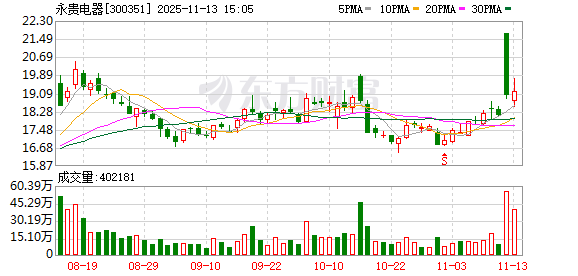
牵手智元机器人 永贵电器跨界入局人形机器人赛道引关注
Zhong Guo Jing Ying Bao· 2025-11-13 07:04
Core Viewpoint - Zhejiang Yonggui Electric Co., Ltd. (hereinafter referred to as "Yonggui Electric") has announced a strategic cooperation with Zhiyuan Innovation (Shanghai) Technology Co., Ltd. (hereinafter referred to as "Zhiyuan Robot") to explore the application of connectors and harnesses in humanoid robots and vice versa [2][3] Group 1: Strategic Cooperation Details - The framework cooperation agreement aims to leverage the core strengths of both parties for resource sharing and complementary advantages, focusing on the commercial application of humanoid robots in connector intelligent manufacturing [2][3] - Specific cooperation will include the application of humanoid robots in connector manufacturing and collaboration on core components of humanoid robots, with plans to establish project teams for related component development [3] Group 2: Company Background and Financial Performance - Yonggui Electric is headquartered in Tiantai County, Zhejiang Province, with core businesses covering the research, manufacturing, and sales of electrical connectors, connector components, and precision intelligent products [3] - In the first three quarters of this year, Yonggui Electric achieved operating revenue of 1.586 billion yuan, a year-on-year increase of 15.68% [3] - The company has entered the supply chains of leading automotive companies such as BYD, Geely, Great Wall, and Honda, with an annual production project of 9.12 million vehicle-mounted connectors having received an intended order of 1.944 billion yuan [3]


从标准制定到全球出海 联想液冷:被低估的核心玩家
Zhi Tong Cai Jing· 2025-11-13 07:01
Core Viewpoint - The liquid cooling server sector in the A-share market has experienced a significant surge, driven by increasing demand for computing power and supportive policies, highlighting the competitive advantages of Lenovo Group in this field [1][2]. Group 1: Market Dynamics - The explosion of the liquid cooling server sector is a result of the exponential increase in computing power demand and policy support, particularly due to the rise of generative AI and large model training [2]. - Traditional air cooling technology is inadequate for high-density computing clusters, with AI servers consuming 10-20 times the power of standard servers, necessitating a shift to liquid cooling technology [2]. - The Chinese government has included "efficient cooling technology" in its list of key low-carbon technologies, aiming for a significant increase in liquid cooling penetration from 15% to 38% by 2025 [2]. Group 2: Lenovo's Competitive Edge - Lenovo Group has developed a comprehensive "full-stack" liquid cooling capability, covering core technology research, complete solution design, and lifecycle services, making it a pioneer in the liquid cooling sector since 2006 [3]. - Lenovo's Neptune liquid cooling system has become an industry benchmark, with over 80,000 units deployed globally across various critical sectors, including AI, supercomputing, and finance [3][4]. - The company has established long-term strategic partnerships with leading chip manufacturers like NVIDIA and AMD, enhancing its competitive position in the liquid cooling market [4]. Group 3: Financial Performance and Growth Outlook - Lenovo's liquid cooling business reported a 68% year-on-year revenue growth in Q1 2025, reflecting strong market demand [5]. - The global server cooling market is projected to grow significantly, with estimates of 111%, 77%, and 26% annual growth from 2025 to 2027, reaching $17.6 billion by 2027 [5]. - Lenovo is well-positioned to increase its market share in this expanding market due to its technological leadership, rich case studies, and robust ecosystem [5].

中国—西班牙商务论坛在川举行,与会各方有一个共识——“中西双方正处于历史上最佳的一段合作期”
Si Chuan Ri Bao· 2025-11-13 00:29
Group 1: Trade and Investment Overview - Numerous Chinese companies are actively investing in Spain across various sectors, including advanced technology, advanced materials, new energy vehicles, agriculture, tourism, and cosmetics [1][3] - The bilateral trade volume between China and Spain is projected to exceed €52 billion in 2024, with a record trade volume of $41.3 billion in the first nine months of this year, marking a year-on-year growth of 10.3% [1][5] - China has become Spain's largest trading partner outside the EU [5] Group 2: Key Partnerships and Collaborations - The launch of the innovative EBRO vehicle by Chery Automobile in Spain is highlighted as a benchmark project for cooperation between the two countries [1] - CATL has chosen Sichuan as its largest production base outside Ningde, with Spain being one of its major investment locations in Europe [1] - The partnership between Antolin Group and Chinese automakers, including Geely and Chery, has significantly increased market share in both China and Spain [4] Group 3: Economic and Cultural Ties - The visit of Spanish King Felipe VI to China, particularly to Sichuan, underscores the strong emotional and economic ties between Spain and Sichuan, which has established multiple sister city relationships since 1994 [2] - Chengdu High-tech Zone has signed a cooperation memorandum with Barcelona Technology Park to enhance innovation and product collaboration in the biopharmaceutical industry [2] - The import of Spanish olive seeds to Chengdu has resulted in a geographical indication product, producing over 10,000 tons of fresh fruit annually [2] Group 4: Future Prospects - The Spanish Minister of Economy and Business, Reyes Maroto, expressed optimism about attracting more Chinese companies to Spain, aiming to enhance employment and knowledge transfer [5] - There is a strong expectation for further cooperation in sectors such as automotive manufacturing, life sciences, and finance [5]
