
九识智能

Search documents
北京杀出73亿超级独角兽:全国第一,揭示无人驾驶3大机会
3 6 Ke· 2025-06-13 12:27
Group 1 - The core viewpoint of the article highlights the emergence of Yushi Technology as a significant player in the L4 autonomous driving sector, with a valuation of approximately 7.3 billion yuan prior to its IPO submission to the Hong Kong Stock Exchange [1] - Yushi Technology has achieved a dominant market share of 91.7% in the Greater China region for L4 autonomous driving solutions, particularly in airport applications [19] - Despite a fourfold increase in revenue over three years, Yushi Technology faces substantial losses, indicating a challenging path to profitability in the autonomous driving industry [2][7] Group 2 - The autonomous driving industry is on the brink of explosive growth, with the global market size reaching 446.115 billion yuan in 2023 and projected to soar to 1,223.378 billion yuan by 2029, reflecting a compound annual growth rate of 18% [9] - The logistics sector is a primary demand driver for autonomous vehicles, with last-mile delivery costs constituting over 30% of total logistics costs, and companies like SF Express utilizing autonomous vehicles to enhance efficiency and reduce costs [3][12] - Autonomous driving technology can significantly reduce operational costs in ports and mining sectors, with Yushi Technology demonstrating a 60% cost reduction in operations at Hong Kong Airport [4][11] Group 3 - Yushi Technology's revenue is primarily derived from autonomous vehicle solutions, which accounted for 55.2% of its income in 2024, focusing on applications in airports and factories [6] - The company has experienced a dramatic increase in revenue, from 65.483 million yuan in 2022 to an expected 265.496 million yuan in 2024, despite ongoing losses [7][8] - The autonomous driving sector is characterized by intense competition and a lack of clear market leaders, with many companies vying for market share in various niches [14][17] Group 4 - Emerging opportunities in the autonomous driving market include applications in rural areas, ports, and mines, with companies like Jiushi Intelligent successfully deploying autonomous vehicles in remote regions [21][27] - The demand for autonomous vehicles in smart mining is expected to grow at an annual rate of 20% over the next five years, driven by labor shortages and the need for efficiency [26] - New players in the market can capitalize on the need for customized solutions tailored to the specific logistics and transportation needs of rural and less developed areas [28]

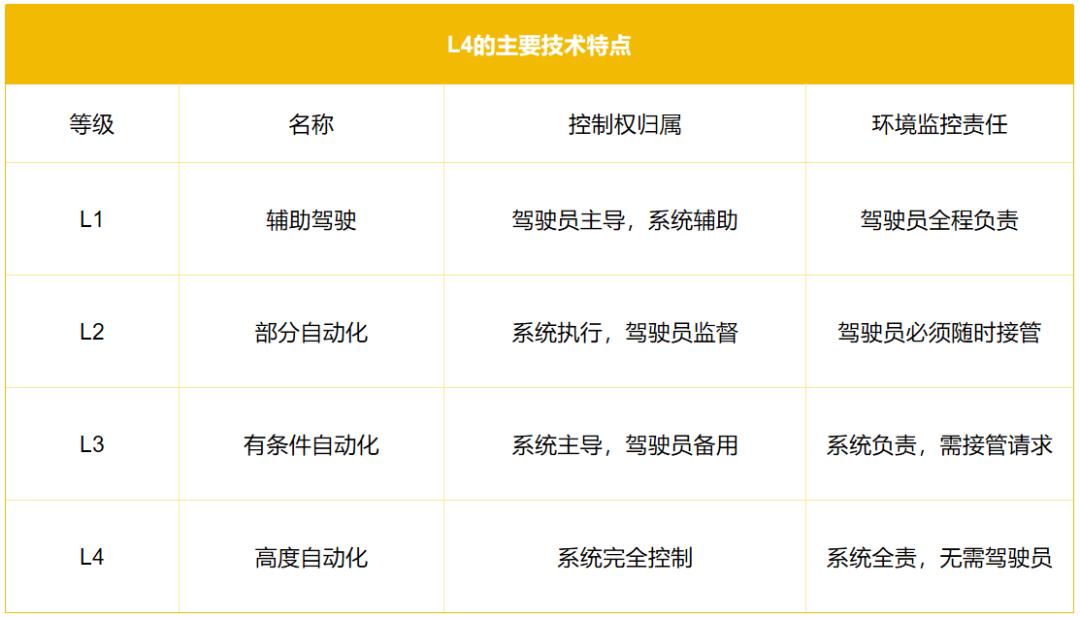
计算机行业研究:激光雷达系列深度之五:AEBS新规催化标配预期,割草机+无人城配快速放量
SINOLINK SECURITIES· 2025-06-11 11:37
Investment Rating - The report recommends key global lidar leaders such as SUTENG and Hesai in the context of the accelerating release of non-automotive lidar applications [4] Core Viewpoints - The report emphasizes that lidar is not only the "eye of intelligent driving" but also a "next-generation universal sensor" that is expected to cover all broad robotic scenarios in the future [5] - The intelligent lawn mower market is witnessing significant orders, and the robovan market is rapidly scaling from 1 to 10, validating the report's logic [5] - The report highlights that the automotive lidar market is accelerating upward due to cost reduction and policy catalysis, with L3/L4 advanced intelligent driving expected to create a "value inflation engine" for vehicles [5] Summary by Sections Automotive Market - The new AEBS regulations are expected to promote the standardization of lidar in vehicles, leading to both down-market and high-end growth [7] - For L2 and below models, the AEBS regulations may push for lidar to become standard in M1 and N1 vehicle types [11] - For L3 models, high-performance lidar and multi-lidar setups are becoming essential for domestic L3 vehicles [5][24] - The L4 market is seeing significant breakthroughs with major manufacturers deploying 7-10 lidar units in their fleets [5][31] Lawn Mower Market - The trend towards 3D perception is clear, with lidar becoming a necessary sensing solution for smart lawn mowers [5] - The report estimates that the total addressable market (TAM) for lawn mower lidar could reach 6.4 billion yuan [5] - Leading lidar manufacturers are signing contracts with smart lawn mower clients, with order volumes exceeding one million units [5][7] Robovan Market - The report identifies robovans as a new market for ADAS lidar, with significant cost reductions in logistics [5] - The TAM for robovan lidar is projected to reach 40 billion yuan, indicating a substantial market opportunity [5] - Major lidar manufacturers are forming partnerships with leading robovan manufacturers, focusing on cost control and compliance with automotive-grade standards [5][31]

无人驾驶深度之一:无人物流专题:万事具备,爆发元年
Soochow Securities· 2025-06-10 15:14
Investment Rating - The report indicates a strong investment outlook for the unmanned logistics industry, highlighting a significant growth potential in the coming years [4]. Core Insights - The unmanned logistics sector is poised for explosive growth in 2025, driven by favorable policies, technological advancements, and economic viability. The market is expected to see sales surpassing 30,000 units in 2025, with a penetration rate exceeding 1.2% [4][41]. - The industry is characterized by a dual revenue model of vehicle sales and operational services, with a projected market size of 245 billion yuan for vehicle sales and 413.4 billion yuan for operational services by 2030 [4]. - Key players in the market include Jiushi and New Stone, which together hold over 80% market share and are expanding their operations both domestically and internationally [4]. Summary by Sections Part 1: Market Readiness - The unmanned logistics market is ready for a breakthrough, with applications primarily in short-distance transportation (3-100 km) within urban areas, potentially replacing 2.1 million light commercial vehicles [4]. - The report emphasizes that the combination of policy support, mature L4 autonomous driving technology, and reduced costs makes 2025 a pivotal year for sales growth [4]. Part 2: Focus on Unmanned Logistics Companies - The operational profit margins for unmanned logistics companies are substantial, with a projected sales volume of over 30,000 units in 2025 and a growth rate of 207% expected in 2026 [4]. - The report identifies Jiushi and New Stone as industry leaders, with Jiushi's new model priced at 19,800 yuan, significantly disrupting the market [4]. Part 3: Mainstream Companies Driving Growth - The report highlights the strong momentum of mainstream companies that are leveraging both vehicle sales and operational services to drive growth [4]. - Jiushi and New Stone are leading the charge, with extensive coverage across over 200 cities and plans for significant international expansion [4]. Part 4: Investment Recommendations - The report recommends focusing on unmanned logistics companies such as Wenyan Zhixing and Jinlong Automobile, as well as potential IPO candidates like Jiushi and New Stone [4]. - Additionally, it suggests looking into companies benefiting from autonomous driving technologies, including Sutech, Hesai Technology, and Desay SV [4].
合肥模式启示录——解码“最牛风投城市”的实践
母基金研究中心· 2025-06-10 08:57
Core Viewpoint - Hefei has established itself as a leading venture capital city through government-led industrial investments, evolving from a focus on infrastructure to becoming an ecosystem builder for industries, particularly in the context of the Fengxi County's development [1][3][17]. Group 1: Transformation of State-owned Capital Platforms - Hefei's state-owned capital platforms have transitioned from "urban infrastructure service providers" to "industrial ecosystem builders," showcasing a successful model of government-led investment [1][3]. - The Fengxi Industrial City Group has transformed into a comprehensive operator for industrial development, integrating capital into the county's key industries, including new energy and smart vehicles [3][6]. - The group has successfully launched local enterprises like Kobalt on the Beijing Stock Exchange, demonstrating the vitality of Hefei's venture capital gene in county-level economies [1][3]. Group 2: Financial Innovations and Achievements - The Fengxi Industrial City Group recently achieved a "Double AAA" credit rating, facilitating a shift from land-based finance to equity-based finance for local governments [4][6]. - The group issued a non-public bond of 1 billion yuan with a record-low interest rate of 2.1%, marking a significant achievement in the capital market [4][6]. - As of June 2025, the group has established 33 cooperative funds with a total scale of nearly 400 billion yuan, leveraging state-owned capital to attract over five times the amount in social capital [6][12]. Group 3: Investment Strategies and Ecosystem Development - The Fengxi Industrial City Group employs a "1+3+X" fund matrix strategy to effectively allocate limited capital towards industries aligned with local strengths [6][7]. - The group focuses on a comprehensive service model that includes project selection, equity/fund investment, and operational support, creating a full-cycle service capability [7][8]. - The investment logic emphasizes a "point-to-surface" approach, fostering a chain reaction in the local economy through strategic investments in key projects [8][10]. Group 4: Talent and Infrastructure Development - The group integrates talent services with industrial development, establishing partnerships with local universities to attract high-level talent and promote research outcomes [15][16]. - It has created a talent housing initiative, providing over 1,226 rental apartments to support talent retention and local employment [15][16]. - The group has developed 38 industrial parks covering approximately 2.3 million square meters, enhancing the local infrastructure to support industrial growth [14][16]. Group 5: Future Outlook and Strategic Insights - The Fengxi Industrial City Group ranks 44th in total revenue and 38th in total assets among county-level state-owned platforms, highlighting its strong potential for growth [16]. - Key strategic insights include maintaining a focus on local industrial strengths, innovating mechanisms for market-oriented assessments, and embedding projects within the industrial chain to maximize collaborative value [16][17]. - The group's approach serves as a replicable model for county-level economic transformation, emphasizing the importance of a collaborative ecosystem involving government, industry, and community [17].

汽车行业专题研究:Robovan-省钱且安全,助力无人物流加速落地
Tianfeng Securities· 2025-06-09 08:03
Industry Investment Rating - The industry investment rating is maintained at "Outperform the Market" [1] Core Insights - Robovan, or unmanned logistics vehicles, supports L4 level (highly automated driving) technology and aims to address three major logistics pain points: unmanned transportation, unloading, and handling [2][7] - The unmanned delivery market is primarily focused on the scenario from sorting centers to delivery stations, with e-commerce only accounting for 20% of the unmanned delivery market [2][10] - Companies using Robovan have reported significant economic benefits, such as a 30% reduction in per-package costs for Jitu and an increase in delivery efficiency for SF Express [2][16] Summary by Sections Robovan Overview - Robovan is designed to solve logistics challenges, particularly in unmanned transportation and unloading [2][7] - The focus areas include fresh produce, medical supplies, and fast-moving consumer goods [10] Key Manufacturers - **Xinshiqi**: Has full-stack self-research capabilities and modular design for various applications, collaborating with major express companies [3][21] - **Jiushi Intelligent**: Offers multiple products for low-speed transport and delivery, enhancing revenue through software algorithm fees [4][22] - **White Rhino**: Collaborates with major logistics and retail companies to reduce costs through advanced driving technologies [5][26] Market Potential - The logistics and retail sectors have established numerous partnerships with Robovan companies, leading to increased efficiency and reduced costs [29][32] - The potential market for Robovan is estimated at 5 million vehicles based on current application scenarios [32]

Robovan:省钱且安全,助力无人物流加速落地
Tianfeng Securities· 2025-06-09 06:45
Industry Investment Rating - The industry investment rating is maintained at "Outperform the Market" [1] Core Insights - Robovan, or unmanned logistics vehicles, supports L4 level (highly automated driving) technology and aims to address three major logistics pain points: unmanned transportation, unloading, and handling [2][7] - The unmanned delivery market is primarily focused on the segment from sorting centers to delivery stations, with e-commerce only accounting for 20% of the unmanned delivery market [2][10] - Companies utilizing Robovan have reported significant economic benefits, such as a 30% reduction in per-package costs for Jitu and an increase in delivery efficiency for SF Express [2][16] Summary by Sections Robovan Overview - Robovan is designed to solve logistics challenges, particularly in unmanned transportation and unloading, with a focus on sectors like fresh produce, medical supplies, and fast-moving consumer goods [2][10] Key Manufacturers - **Xinshiqi**: Possesses full-stack self-research capabilities and modular design for various applications, collaborating with major express companies [3][21] - **Jiushi Intelligent**: Offers multiple products for low-speed transport and delivery, enhancing revenue through software algorithm fees [4][22] - **White Rhino**: Collaborates with major logistics and retail companies, leveraging passenger vehicle technology to reduce costs [5][26] Market Potential - The logistics and retail sectors have established numerous partnerships with Robovan companies, leading to increased efficiency and reduced costs [29][32] - The potential market for Robovan is estimated at 5 million vehicles based on current application scenarios [32]
概念股澄清难掩产业热,无人物流车正在驶入商业化“快车道”
2 1 Shi Ji Jing Ji Bao Dao· 2025-06-04 11:45
Core Viewpoint - The recent surge in the "unmanned logistics vehicle" concept has sparked significant interest in the capital market, with companies like Jiushi Intelligent and New Stone Technology leading the charge, despite some companies clarifying their lack of actual involvement in this sector [1][2][3]. Group 1: Market Activity - Jiushi Intelligent launched its new E-series unmanned logistics vehicle platform and the E6 model, priced at 19,800 yuan [1]. - Debon Logistics (603056.SH) experienced a stock price increase of 72.16% from May 26 to June 3, achieving a five-day consecutive limit-up [2]. - Other logistics stocks such as New Ning Logistics (300013.SZ) and Tongda Electric (603390.SH) also showed active performance during this period [1]. Group 2: Company Clarifications - Debon Logistics clarified that it has no actual application of unmanned logistics vehicles despite the stock price surge [2][3]. - Tongda Electric announced that it has no business revenue related to unmanned logistics vehicles or autonomous driving [3]. - Wantong Technology (002331.SZ) also stated that its products do not involve unmanned logistics vehicles [4]. Group 3: Demand for Unmanned Logistics Vehicles - The demand for unmanned logistics vehicles is real, with significant market interest driven by cost reduction and efficiency improvements [5]. - New Stone Technology's CEO reported that the unmanned delivery vehicle industry is growing at ten times the rate of the previous year, with monthly deliveries exceeding 1,000 units [5]. - The logistics sector is experiencing a surge in demand for unmanned vehicles, particularly from rural areas, as companies innovate delivery methods to enhance efficiency [5]. Group 4: Market Drivers - The commercialization of unmanned logistics vehicles is supported by decreasing costs of core components like lidar, chips, and batteries, bringing manufacturing costs down to the tens of thousands of yuan [6]. - The rapid application of large models in autonomous driving is reducing the time and cost of road data collection, facilitating quicker deliveries and better management [6]. - The logistics industry is under pressure to reduce costs, particularly in the competitive express delivery sector, making unmanned vehicles a viable solution [7]. Group 5: Regulatory Environment - The growth of unmanned logistics vehicles is currently hindered by regulatory challenges, including the need for testing licenses and the absence of unified standards [8]. - The majority of unmanned vehicles are limited to low-speed operations, primarily for last-mile delivery, with limited involvement in long-distance logistics [8]. - However, the regulatory environment is improving, with pilot programs allowing for broader applications of intelligent connected vehicles in various cities [8].


政策产业共振,“RoboX”迎来新成长
HTSC· 2025-06-03 08:10
Investment Rating - The report maintains an "Overweight" rating for the automotive and electronics sectors [6] Core Insights - The Robo X industry, represented by Robotaxi and Robovan, is experiencing accelerated commercialization driven by policy and industry resonance, with significant market attention due to multiple catalysts [10][11] - The global and China L4 autonomous driving market is projected to reach USD 15.35 trillion and USD 581 billion respectively by 2030, with a CAGR of 104% and 105% from 2025 to 2030 [10] - The report suggests focusing on core operational platforms, high-growth hardware suppliers, and innovative application scenario developers as investment opportunities [44] Summary by Sections Robotaxi - The commercialization of Robotaxi is accelerating, with leading companies like Pony.ai, WeRide, and Loongrun expanding fleet sizes and increasing order volumes [2][12] - Pony.ai's Robotaxi service revenue grew by 200% year-on-year in Q1 2025, while WeRide's revenue contribution reached 22.3%, up 10.4 percentage points year-on-year [2][19] - The policy environment is improving, with major cities expanding operational areas and refining license management, which lowers operational costs for companies [12][19] Robovan - Robovan is showing significant potential in logistics, with a positive cycle of "cost reduction-application validation-scale expansion" forming [3][23] - The hardware costs have drastically decreased, with models like the New Stone X3 dropping from CNY 200,000 to CNY 70,000, and the Jiushi Intelligent E6 model priced at CNY 19,800, a 91% reduction [3][23] - Major players are accelerating financing and production expansion, with Jiushi Intelligent targeting the delivery of 10,000 units in 2025 [3][24] Broader Applications - The Robo X concept extends beyond Robotaxi and Robovan to include applications like Robosweeper and Robotruck, which are also seeing accelerated commercialization [4][14] - Robosweeper has been deployed in multiple cities, reducing labor costs and improving operational efficiency [4][40] - Drone logistics is emerging as a key area, with significant potential in last-mile delivery and complex terrain transport, supported by favorable policies [41][42] Investment Opportunities - The report recommends focusing on core operational platforms that have achieved scalable operations and possess clear cost reduction paths, such as Pony.ai [44] - High-growth component suppliers in critical areas like lidar and high-performance chips are also highlighted as potential beneficiaries of the autonomous vehicle rollout [44] - Companies that integrate autonomous driving technology with specific industry applications, such as smart warehousing and last-mile delivery robots, are identified as innovative scenario developers [44]



8分钟,跌停到涨停!无人物流车概念股“地天板”,机构看好商业化1-10阶段
Ge Long Hui· 2025-06-03 05:16
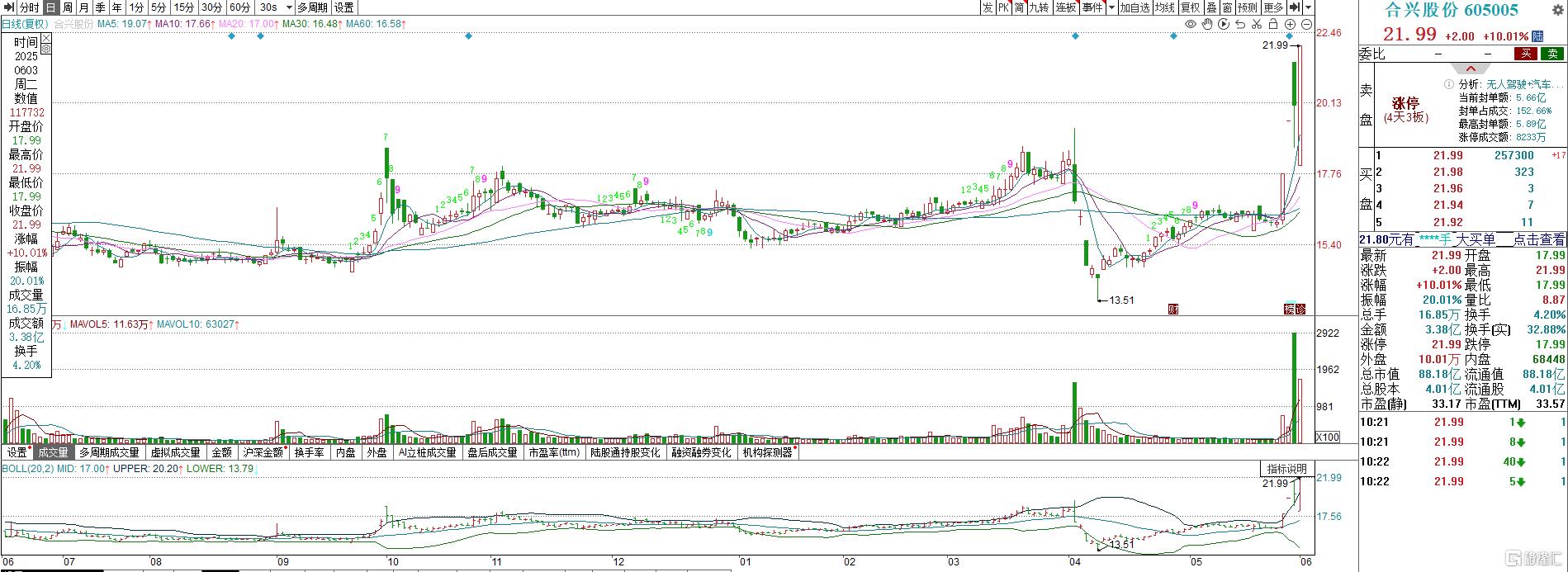
Group 1: Market Performance - The stock price of Hexing Co., Ltd. experienced a dramatic shift from a limit down to a limit up within 8 minutes, closing at 21.99 yuan per share with a total market value of 8.818 billion yuan, marking a cumulative increase of nearly 41% since April 9 [1][5] - Other companies in the unmanned logistics vehicle sector also saw significant stock performance, with Debon Logistics achieving five consecutive trading limits and Tongda Electric reaching six limits in seven days [3] Group 2: Financing Activities - L4-level autonomous driving companies have been actively securing funding, with Jiushi Intelligent completing a $100 million Series B3 financing, New Stone Technology raising 1 billion yuan in Series C+ financing, and White Rhino securing 200 million yuan in Series B financing [4][6] Group 3: Industry Development - The unmanned logistics vehicle industry is transitioning from "technically feasible" to "commercialization," with companies like Jiushi launching new models and pricing strategies aimed at reducing costs [7][8] - The pricing of unmanned logistics vehicles is now lower than that of traditional trucks, with subscription services for fully autonomous driving significantly cheaper than driver wages [8] Group 4: Company Clarifications - Hexing Co., Ltd. clarified that it is not involved in the unmanned logistics vehicle business, and the current market hype will not impact its performance [11] - Other companies, including Tongda Electric and Debon Logistics, also stated they do not have revenue from unmanned logistics vehicles and highlighted the potential for irrational market speculation due to their small external circulation [16][17] Group 5: Future Outlook - Analysts suggest that unmanned logistics vehicles could lead the rapid commercialization of L4 autonomous driving, with significant growth expected in order volumes for leading manufacturers [19] - Investment opportunities are recommended in logistics operations, component suppliers, and algorithm platform companies, with specific companies highlighted for their potential in these areas [19]
未知机构:中信证券交运物流周观点无人车加速布局末端重视航司盈利拐点无人车采-20250603
未知机构· 2025-06-03 01:45
Summary of Conference Call Notes Industry Overview - The focus is on the logistics and transportation industry, particularly the integration of unmanned vehicles and the profitability of airlines [1][2]. Key Points on Unmanned Vehicles - Unmanned vehicle procurement is expected to more than double, leading to cost reductions in the last-mile delivery segment [1]. - Forecasted unmanned vehicle scales for 2024 are as follows: - SF Express: 800 units - ZTO Express: over 1000 units - YTO Express: 500 units - Shentong Express: 200-300 units - By 2025, leading express companies are anticipated to see unmanned vehicle scales double [1]. - The price of the E-series unmanned logistics vehicle from Jiushi Intelligent has dropped to 19,800 yuan, with a monthly subscription service for FSD starting at 1,800 yuan [1]. - Different procurement strategies are being adopted by express companies: - SF Express is utilizing a leasing model for quicker deployment. - The Tongda system is supporting franchisees in procuring unmanned vehicles to reduce costs [1]. - There is an expectation for further opening of road rights, which would enhance cost reductions in last-mile delivery through unmanned vehicles [1]. Key Points on Airline Profitability - The domestic airline revenue management strategy has begun to show effects, with domestic ticket prices experiencing year-on-year growth [3]. - It is projected that the year-on-year decline in seat revenue for listed airlines in Q2 will narrow to 3%-4% [3]. - Due to OPEC+ continuing to increase production unexpectedly from May to July, it is anticipated that airline unit fuel costs will decrease by approximately 18% year-on-year by Q2 2025 [3]. - The correlation between ticket prices and fuel costs suggests that the three major airlines are likely to achieve positive profits in Q2, with private airlines also expected to show year-on-year growth [3]. - There may be a decline in volume and price data following the exam period and the Dragon Boat Festival, which could present a reverse layout opportunity [3]. - Recommendations include: - Juneyao Airlines - Huaxia Airlines - Spring Airlines - Air China H - China Southern Airlines H [3]. Additional Insights - The report emphasizes the importance of monitoring the profitability turning point for airlines and the potential for unmanned vehicles to significantly impact cost structures in logistics [1][3].


