
黑芝麻智能

Search documents
从路演舌战到同场敲钟 自动驾驶双子星港股“一笑泯恩仇”
Xin Jing Bao· 2025-11-06 13:29
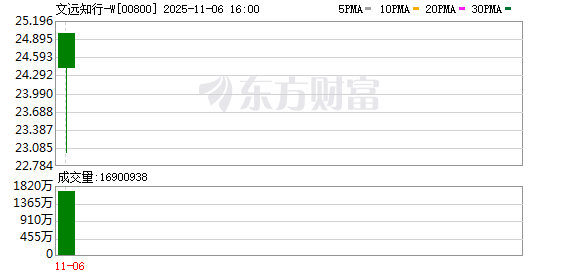
Core Viewpoint - The recent dual listing of autonomous driving companies, WeRide and Pony.ai, on the Hong Kong Stock Exchange marks a significant milestone in the commercialization of Robotaxi services, amidst a competitive landscape and public disputes over operational claims [2][3][4]. Group 1: Company Overview - WeRide and Pony.ai are both autonomous driving unicorns that have recently gone public, with WeRide founded in 2017 and Pony.ai established in 2016 [5]. - Both companies have a strong connection to Baidu, with their founders having held key positions within Baidu's autonomous driving division [5]. - The companies are now part of a growing trend of Robotaxi enterprises listing on the Hong Kong Stock Exchange, alongside others like Xiaoqi Mobility and Hezhong Technology [2][11]. Group 2: Financial Performance - From 2022 to 2024, Pony.ai reported total revenue of 1.527 billion RMB with a net loss of 3.878 billion RMB, while WeRide had total revenue of 1.291 billion RMB and a net loss of 5.764 billion RMB [7]. - In the second quarter of 2025, Pony.ai achieved revenue of 154 million RMB, a 75.9% year-on-year increase, while WeRide reported revenue of 127 million RMB, a 60.8% increase [9]. - The net losses for both companies remain significant, with WeRide's losses being higher than those of Pony.ai [9]. Group 3: Market Dynamics - The competition in the Robotaxi sector is intensifying, with multiple players entering the market and the technology requirements for fully autonomous vehicles being high [12][13]. - The current environment is characterized by a shift from technology validation to large-scale commercialization, with significant policy support and infrastructure development [13]. - The Hong Kong market is particularly sensitive to local policies, which enhances growth expectations for these companies [10]. Group 4: IPO Details and Fund Allocation - WeRide raised approximately 2.932 billion HKD in its IPO, with 40% allocated for the development of autonomous driving technology and another 40% for the commercialization of L4-level fleets [9]. - Pony.ai raised about 7.194 billion HKD, with 50% earmarked for market entry strategies and the large-scale commercialization of L4 autonomous driving technology [9].

黑芝麻智能(02533) - 截至2025年10月31日止月份股份发行人的证券变动月报表
2025-11-06 10:09
股份發行人及根據《上市規則》第十九B章上市的香港預託證券發行人的證券變動月報表 截至月份: 2025年10月31日 狀態: 新提交 致:香港交易及結算所有限公司 公司名稱: 黑芝麻智能國際控股有限公司 呈交日期: 2025年11月6日 I. 法定/註冊股本變動 | 1. 股份分類 | 普通股 | 股份類別 | 不適用 | | 於香港聯交所上市 (註1) | | 是 | | | --- | --- | --- | --- | --- | --- | --- | --- | --- | | 證券代號 (如上市) | 02533 | 說明 | 普通股 | | | | | | | | | 法定/註冊股份數目 | | | 面值 | | 法定/註冊股本 | | | 上月底結存 | | | 1,000,000,000 | USD | | 0.0001 USD | | 100,000 | | 增加 / 減少 (-) | | | 0 | | | USD | | 0 | | 本月底結存 | | | 1,000,000,000 | USD | | 0.0001 USD | | 100,000 | 本月底法定/註冊股本總額: USD ...
对话黑芝麻CMO杨宇欣:智驾留不下太多玩家,我们要培育机器人生态
雷峰网· 2025-11-04 10:06
Core Viewpoint - The article discusses the evolution and strategic positioning of Hezhima Intelligent in the AI chip industry, particularly focusing on its A1000 and A2000 series chips for autonomous driving applications, emphasizing the importance of collaboration with automotive manufacturers and the need for a comprehensive solution to drive adoption [2][3][4]. Group 1: Product Development and Market Positioning - Hezhima Intelligent was established in 2016, and its A1000 chip, launched in 2020, was the first domestic 16nm AI chip with over 50 TOPS of computing power, marking a significant milestone in the industry [2][3]. - The A1000 began mass production in 2022, with Hezhima adopting a "joint development" approach with automotive companies to ensure successful integration and application of its technology [2][3]. - The A2000 series, set to launch by the end of 2025, will feature a self-developed NPU architecture and will cater to various applications, including Robotaxi and general reasoning computing [3][4]. Group 2: Strategic Collaborations - Early collaborations with companies like Geely and FAW were crucial for Hezhima's development, allowing for rapid iteration and deployment of autonomous driving solutions [3][10]. - The partnership with Wuhan University aims to enhance the capabilities of humanoid robots using Hezhima's chips, showcasing the company's commitment to expanding its technological applications [4]. Group 3: Industry Challenges and Trends - The autonomous driving sector has faced challenges, including the need for significant investment and the slow adoption of new technologies by automotive manufacturers [9][10]. - The article highlights the importance of balancing chip performance and cost, as the industry moves towards more cost-effective solutions while maintaining high computational capabilities [6][15]. - The demand for higher computing power in autonomous driving is expected to evolve, with projections indicating that the necessary computing power for city NOA could converge to below 300 TOPS in the next three years [36]. Group 4: Future Directions and Innovations - Hezhima Intelligent is focusing on the integration of driving and cabin technologies, with its products designed to meet the needs of entry-level vehicles while maintaining cost efficiency [39][43]. - The company is also exploring the potential of embodied intelligence and robotics, indicating a strategic move towards diversifying its product offerings beyond automotive applications [48][54].

恒生互联网ETF(513330)盘中跌超2%,长期布局窗口打开
Mei Ri Jing Ji Xin Wen· 2025-11-04 06:53
Group 1 - The Hong Kong internet sector is experiencing downward pressure, with several popular stocks, including Hezhima Intelligent, Meitu, Suton Ju Chuang, and Kingsoft Cloud, showing significant adjustments, leading to a drop of over 2% in the Hang Seng Internet ETF (513330) during intraday trading [1] - By the first half of 2025, the market size of China's AI infrastructure service is expected to reach 19.87 billion yuan, representing a substantial year-on-year growth of 122.4%, with generative AI infrastructure accounting for over 80% of the market, becoming the core driving force [1] - Alibaba Cloud ranks first in both the overall and segmented markets, holding approximately 25% market share, with its Aegaeon GPU pooling system significantly enhancing resource utilization efficiency by serving seven models simultaneously on a single GPU [1] - Tencent's "Honor of Kings" has achieved a global monthly active user count of over 260 million, setting a new industry record and demonstrating China's dual breakthroughs in AI infrastructure and content application [1] - OpenAI's annual revenue is nearing 20 billion USD, and it has initiated the process for an IPO, indicating a continued acceleration in AI commercialization [1] - The narrowing performance gap between Chinese and American models, along with the open-source path promoting the development of a domestic ecosystem, suggests that capital investment and commercialization progress in the AI industry are consistently exceeding expectations, positioning leading Hong Kong internet companies for new development opportunities driven by technological evolution and capital aggregation [1] Group 2 - The long-term growth logic of the Hang Seng Internet sector is clear, driven by the widespread adoption of artificial intelligence technology, the improvement of the digital ecosystem, and continuous policy support [2] - The Hang Seng Internet ETF (513330) closely tracks the Hang Seng Internet Technology Index, providing comprehensive coverage of leading companies in the Hong Kong internet technology sector, serving as an efficient tool for capitalizing on the benefits of digital economy development and technological iteration [2]
汽车行业2025年三季报总结:乘用车边际体现反内卷成效,零部件受益于持续成长的规模效应
Huachuang Securities· 2025-11-04 04:15
Investment Rating - The report maintains a "Buy" rating for the automotive industry, highlighting the benefits of sustained growth and scale effects in the sector [1]. Core Views - The automotive industry has shown resilience with a continuous two-digit growth in sales for three consecutive quarters, driven by policy support and the "old-for-new" vehicle replacement program [11]. - The report indicates that while price competition remains significant in the passenger car segment, there are signs of improvement in margins, reflecting a reversal of the previous "involution" trend [8]. - The report emphasizes the growth in the new energy vehicle (NEV) segment, with a penetration rate exceeding 52% and a year-on-year increase in sales [14]. Summary by Sections Industry Overview - The automotive sector consists of 258 listed companies with a total market capitalization of approximately 5.09 trillion yuan, accounting for 4.2% of the total A-share market [8]. - In Q3 2025, total automotive wholesale sales reached 8.68 million units, representing a year-on-year increase of 15% [11]. Passenger Vehicles - In Q3 2025, passenger vehicle sales reached 7.69 million units, up 15% year-on-year and 8% quarter-on-quarter [16]. - Revenue for passenger vehicle manufacturers (excluding SAIC) was 380.7 billion yuan, reflecting a 4% year-on-year increase [46]. - The gross margin for passenger vehicle manufacturers (excluding SAIC) was 17.4%, down 2.3 percentage points year-on-year but up 1.0 percentage point quarter-on-quarter [51]. Auto Parts - The auto parts sector experienced a revenue growth of 11% year-on-year and 7% quarter-on-quarter in Q3 2025, benefiting from the continuous growth of scale effects [4]. - The gross margin for the auto parts sector was 19.5%, showing a slight decline of 0.5 percentage points year-on-year [42]. Commercial Vehicles - Commercial vehicle sales in Q3 2025 totaled 990,000 units, marking a 20% year-on-year increase [16]. - The report notes that the profitability of both buses and trucks has increased year-on-year [5]. Investment Recommendations - The report suggests focusing on high-risk, high-reward areas for investment opportunities in Q4, particularly in passenger vehicles and heavy trucks [4]. - Recommended stocks include Geely Automobile, BYD, and Jianghuai Automobile for passenger vehicles, and China National Heavy Duty Truck Group and Weichai Power for heavy trucks [4].

地平线机器人-W(09660):ZF合作验证J6P系统级竞争力,全球Tier-1双锚定加速估值重估
Haitong Securities International· 2025-11-04 01:45
Investment Rating - The report maintains an "Outperform" rating for Horizon Robotics with a target price of HK$12.50, up from a previous target of HK$12.30 [2][16]. Core Insights - The partnership with ZF Group validates the system-level competitiveness of Horizon Robotics' J6P chip, enhancing its commercial viability and expanding its market reach [3][5][16]. - The J6P platform has been recognized for meeting international Tier-1 integration standards, indicating its advanced performance and efficiency [4][14]. - Horizon Robotics is positioned to leverage ZF's extensive global network to accelerate overseas customer acquisition, with expectations of overseas revenue reaching approximately 10% by FY27E [5][15][16]. Financial Summary - Revenue projections for Horizon Robotics are estimated at RMB3.48 billion, RMB5.91 billion, and RMB8.89 billion for FY25, FY26, and FY27 respectively, reflecting year-on-year growth rates of 67.5%, 61.8%, and 57.9% [2][16]. - The gross profit margin is expected to decline from 77.3% in FY24 to 57.2% by FY27, indicating a shift in product mix and pricing strategy [11]. - The company anticipates a net profit of RMB -7.05 billion in FY25, with a gradual improvement expected in subsequent years [10][11].
汽车智能化月报系列(二十九):小马智行和文远知行冲击港股上市,均胜电子再获50亿元汽车智能化全球订单-20251103
Guoxin Securities· 2025-11-03 13:19
Investment Rating - The report maintains an "Outperform" rating for the automotive intelligence sector [4][6]. Core Insights - The automotive intelligence industry is experiencing significant advancements, with companies like Xiaopeng Motors and Leap Motor being recommended for investment. For L4 level autonomous driving, Pony.ai and WeRide are highlighted as key players. In the component sector, Hesai Technology is recommended for data acquisition, while Horizon Robotics and other companies are suggested for data processing and application [4][5]. Industry News - Tesla's Robotaxi service is set to expand to 8 to 10 regions by the end of the year [1]. - Xiaopeng Motors and WeRide have initiated their IPO process, aiming for a Hong Kong listing on November 6 [1]. - Stellantis is collaborating with Nvidia, Uber, and Foxconn to accelerate its Robotaxi deployment [1]. - Hesai Technology has secured a 5 billion yuan global order in automotive intelligence [1]. - Yujia Innovation's unmanned vehicle has begun operations in Huaqiangbei, marking a new phase in smart logistics [1]. - Jiusi Intelligent has completed a $100 million Series B4 financing led by Ant Group [1]. High-Frequency Core Data Updates - The penetration rate of 8 million pixel cameras in passenger vehicles reached 43.8% in August 2025, up 27 percentage points year-on-year [2]. - Nvidia's chip penetration in passenger vehicle driving domains increased to 57.2%, a year-on-year increase of 27 percentage points [2]. - The penetration rate of lidar in passenger vehicles reached 10.4%, with Huawei holding a 40% market share among lidar suppliers [2]. Smart Driving Insights - The penetration rate of passenger vehicles with L2 and above functions reached 33.3% in August 2025, an increase of 18 percentage points year-on-year [3]. - The penetration rates for front-view cameras, forward millimeter-wave radar, and lidar were 67.8%, 57.5%, and 10.4%, respectively [3]. - The penetration rate of driving domain controllers reached 33.2%, up 17.5 percentage points year-on-year [3]. Investment Recommendations - Recommended companies include Xiaopeng Motors, Leap Motor, and Geely for complete vehicles. For L4 autonomous driving, Pony.ai and WeRide are suggested. In the components sector, Hesai Technology is recommended for data acquisition, while Horizon Robotics, Black Sesame Technologies, and others are recommended for data processing [4][5].



Q3财报汽零温和增长,看好明年汽车板块预期修复:汽车行业周报(20251027-20251102)-20251102
Huachuang Securities· 2025-11-02 12:51
Investment Rating - The report maintains a positive investment recommendation for the automotive sector, anticipating a recovery in 2025 [1][2]. Core Insights - The automotive industry experienced moderate growth in Q3, with weak performance from car manufacturers and overall mild growth in automotive parts. The report highlights potential catalysts for recovery in 2025, including better-than-expected retail sales post-Spring Festival, improved export performance, and favorable policies [1][5]. Data Tracking - In late October, the discount rate for vehicles increased by 9.6%, with a slight month-on-month rise of 0.1 percentage points. The average discount amount was 21,782 yuan, showing a month-on-month increase of 398 yuan [3][4]. - The report tracks various automotive raw material prices, noting significant changes in lithium carbonate, aluminum, copper, palladium, and rhodium prices [6][28]. Market Performance - The automotive sector saw a weekly increase of 0.69%, ranking 15th out of 29 sectors. The report details the performance of various indices, with the automotive parts sector rising by 1.13% and commercial vehicles by 4.41% [8][31]. Industry News - Key developments include the call for a phased exit of vehicle purchase tax reductions, the cessation of vehicle replacement subsidies in Shenzhen, and the launch of new models by various manufacturers [29][30].



黑芝麻智20251030
2025-10-30 15:21
Summary of Black Sesame Intelligence Conference Call Company Overview - Black Sesame Intelligence focuses on AI hardware chips and has a strong understanding of chip technology from its founder, who is committed to a hardware-centric approach. The company collaborates with Bosch and has entered the automotive sector, successfully mass-producing multiple vehicle models, including Lynk & Co, Dongfeng series, and BYD export models [2][5]. Key Developments and Achievements - 2022 marked a pivotal year for Black Sesame Intelligence, with the launch of the Huashan A2000 chip, which significantly enhanced computing power, making it comparable to high-end automotive chips. The Wudang C1,200 chip family is applied in high-speed NOA and light procedure NOA, receiving validation from major clients, solidifying its leading position in the domestic AI hardware sector [2][5]. - The company has established deep collaborations with major automotive manufacturers such as Geely, Dongfeng, FAW, and BYD, and has successfully mass-produced various models [5]. Market Position and Competitive Landscape - Black Sesame is currently in a position similar to Horizon a year ago, with the potential to gain validation from leading new energy vehicle manufacturers through the C1,200 chip and achieve mass production [2][6]. - Horizon focuses on software system iterations, while Black Sesame emphasizes hardware expansion. The increasing policy requirements for domestic substitution present opportunities for both companies [2][6]. Investment Opportunities - The investment outlook for Black Sesame Intelligence is promising, particularly with the anticipated advancements in L4 level autonomous driving technology expected by 2026, which provides significant growth potential. The company’s AI chip products are rare, and there is a notable valuation gap compared to Horizon, suggesting substantial room for valuation recovery [3][4]. - Short-term market capitalization is projected to reach 30 billion RMB, corresponding to approximately 1.4 billion RMB in revenue by 2026. Long-term potential in L4 autonomous driving and robotics could lead to a market cap exceeding 50 billion RMB [3][4]. Algorithm Development and Partnerships - Black Sesame acknowledges its algorithmic shortcomings as a hardware-focused company. To address this, it collaborates with algorithm solution providers like Numa and International Intelligent Network, while also developing its own algorithm team. This multi-faceted strategy enhances its overall solution capabilities and market competitiveness [7]. Expansion into Non-Automotive Sectors - The company is actively diversifying into non-automotive AI applications, such as robotics and robotic dogs. Collaborations with Wuhan University and Yunshenchu are aimed at enhancing robotic cognition and applying chips in robotic products for various scenarios, including ship inspections. These initiatives are expected to contribute to revenue growth in the coming years [4][8].

月起停止缩减资产负债表,其后鲍威尔在记者会上并未就12月是否减息给出明确方向,拖累美股三大指数应声由升转
ZHONGTAI INTERNATIONAL SECURITIES· 2025-10-30 01:52
Market Overview - On October 28, Hong Kong stocks opened lower and fluctuated downwards, with the Hang Seng Index closing down 87 points (0.44%) at 26,346 points[1] - The Hang Seng Tech Index fell by 77 points, ending at 6,093 points, with total market turnover at HKD 242.7 billion[1] - The Hong Kong Stock Connect recorded a total turnover of HKD 104.64 billion, with a net inflow of HKD 2.26 billion[1] Global Market Dynamics - The U.S. Federal Reserve lowered the federal funds rate target range by 0.25% to 3.75%-4.00%, marking the second rate cut of the year, aligning with market expectations[2] - Following the announcement, U.S. stock indices initially rose but then turned negative, with the Dow Jones closing down 74 points at 47,632 points, while the Nasdaq rose 131 points to a new high of 23,958 points[2] - Nvidia's stock price surpassed USD 200, with a market capitalization exceeding USD 5 trillion, following advancements in AI and partnerships with 17 quantum computing companies[2] Macroeconomic Trends - The "14th Five-Year Plan" emphasizes building a manufacturing powerhouse and advancing AI initiatives, aiming to enhance infrastructure and promote new economic growth points such as quantum technology and hydrogen energy[3] Industry Insights - In the smart driving sector, Pony.ai (2026 HK) and WeRide (800 HK) are set to raise approximately HKD 7.2 billion and HKD 3 billion, respectively, with listings on November 6[4] - In the renewable energy sector, Xinyi Solar (968 HK) and Flat Glass Group (6865 HK) saw stock increases of 4.3% and 12.3%, respectively, following better-than-expected quarterly results[4] - Yuehai Investment (270 HK) reported a 13.2% year-on-year profit increase in the first three quarters, attributed to savings in financial and administrative expenses[4]