
珀莱雅

Search documents
量化大势研判:继续增配低估值质量类资产
Guolian Minsheng Securities· 2025-12-03 07:16
Quantitative Models and Construction Methods 1. Model Name: Quantitative Market Trend Judgment Framework - **Model Construction Idea**: The model aims to address the systematic rotation of market styles by identifying the dominant asset characteristics that represent the future mainstream market style. It evaluates assets based on the priority of "g > ROE > D" to determine whether there are good assets and whether they are overvalued[5][8][12] - **Model Construction Process**: 1. Define five style stages based on the industry lifecycle: external growth, quality growth, quality dividend, value dividend, and bankruptcy value[8] 2. Use the "g > ROE > D" priority to compare assets, focusing on growth (g), profitability (ROE), and dividend yield (D)[5][8] 3. Incorporate factors such as expected growth (gf), actual growth (g), profitability (ROE), and valuation metrics (PB, DP, BP) to classify and evaluate assets[9][12] 4. Apply the framework to select industries and allocate them equally within each strategy[19] - **Model Evaluation**: The framework has demonstrated strong explanatory power for A-share market style rotation since 2009, achieving an annualized return of 27.06%[19] --- Model Backtesting Results Quantitative Market Trend Judgment Framework - **Annualized Return**: 27.06% since 2009[19] - **Excess Returns by Year**: - 2017: 27% - 2020: 44% - 2022: 62% - 2024: 52% - 2025 (YTD): 8%[22] --- Quantitative Factors and Construction Methods 1. Factor Name: Expected Growth (gf) - **Factor Construction Idea**: Measures the expected growth rate of industries based on analysts' forecasts, regardless of the lifecycle stage[9] - **Factor Construction Process**: 1. Calculate the expected growth rate (gf) for each industry 2. Rank industries based on the highest expected growth rates 3. Select top-performing industries for allocation[9][38] - **Factor Evaluation**: The factor has shown significant excess returns since 2019, with notable performance in 2014-2015 and 2025[38] 2. Factor Name: Actual Growth (g) - **Factor Construction Idea**: Focuses on industries with the highest earnings momentum (△g), particularly during transition and growth phases[9] - **Factor Construction Process**: 1. Use △g to represent earnings momentum 2. Rank industries based on △g and select the top-performing ones 3. Incorporate additional factors such as SUE, SUR, and JOR for refinement[40] - **Factor Evaluation**: The factor has consistently delivered significant excess returns, especially in growth-dominant environments[40] 3. Factor Name: Profitability (ROE) - **Factor Construction Idea**: Targets industries with high ROE and low valuation under the PB-ROE framework, focusing on mature stages[9] - **Factor Construction Process**: 1. Calculate PB-ROE residuals for each industry 2. Rank industries based on residuals and select the top-performing ones[43] - **Factor Evaluation**: The factor performed strongly from 2016 to 2020 but has weakened since 2021[43] 4. Factor Name: Quality Dividend (DP + ROE) - **Factor Construction Idea**: Combines dividend yield (DP) and ROE to identify industries with the highest scores, focusing on mature stages[9] - **Factor Construction Process**: 1. Calculate DP and ROE for each industry 2. Combine the two metrics into a composite score 3. Rank industries and select the top-performing ones[46] - **Factor Evaluation**: The factor has shown significant excess returns in 2016, 2017, and 2023[46] 5. Factor Name: Value Dividend (DP + BP) - **Factor Construction Idea**: Combines dividend yield (DP) and book-to-price ratio (BP) to identify undervalued industries, focusing on mature stages[9] - **Factor Construction Process**: 1. Calculate DP and BP for each industry 2. Combine the two metrics into a composite score 3. Rank industries and select the top-performing ones[49] - **Factor Evaluation**: The factor has delivered significant excess returns in 2009, 2017, and 2021-2023[49] 6. Factor Name: Bankruptcy Value (PB + SIZE) - **Factor Construction Idea**: Targets industries with the lowest PB and SIZE scores, focusing on stagnation and recession stages[9] - **Factor Construction Process**: 1. Calculate PB and SIZE for each industry 2. Combine the two metrics into a composite score 3. Rank industries and select the lowest-scoring ones[52] - **Factor Evaluation**: The factor has shown significant excess returns in 2015-2016 and 2021-2023[52] --- Factor Backtesting Results Expected Growth (gf) - **Recent Performance**: - Lithium: +51.15% (3 months) - Frozen Food: +14.08% (3 months)[38] Actual Growth (g) - **Recent Performance**: - Lithium Chemicals: +51.88% (3 months) - Other Home Appliances: +14.93% (3 months)[41] Profitability (ROE) - **Recent Performance**: - Network Equipment: +12.18% (3 months) - Buses: +10.46% (3 months)[43] Quality Dividend (DP + ROE) - **Recent Performance**: - Timber Processing: +145.24% (3 months) - Lithium Equipment: +21.95% (3 months)[46] Value Dividend (DP + BP) - **Recent Performance**: - Network Equipment: +12.18% (3 months) - Security: -2.24% (3 months)[49] Bankruptcy Value (PB + SIZE) - **Recent Performance**: - Gas: +15.88% (3 months) - Building Renovation: +16.42% (3 months)[52]
珀莱雅毛戈平们,海南淘金
3 6 Ke· 2025-12-03 01:04
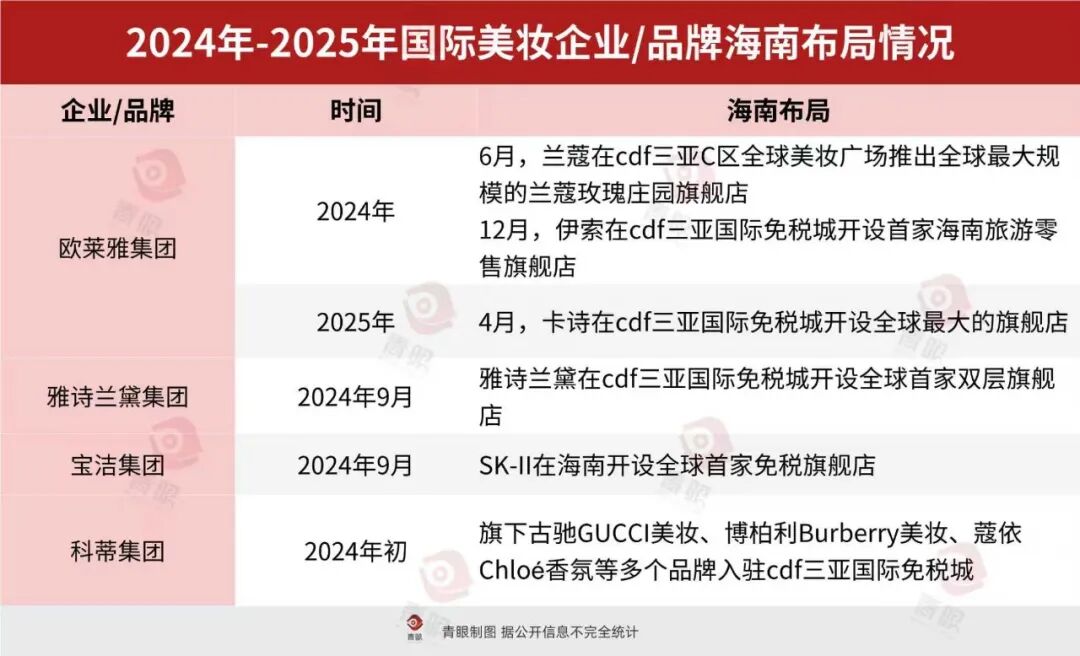
Core Insights - Hainan is emerging as a key variable in reshaping the global beauty industry landscape [1] - The upcoming full island closure in Hainan, along with supportive policies for the cosmetics industry, presents unprecedented development opportunities for beauty brands [2][3] Policy Developments - Hainan will implement a new customs management system characterized by "one line open, two lines controlled, and free flow within the island" starting December 18, 2025 [3][4] - The new policies include zero tariff on imported goods, relaxed trade management measures, and efficient regulatory models, significantly reducing import costs for beauty companies [4][5] Market Opportunities - The zero tariff policy will expand the list of duty-free products from 1,900 to approximately 6,600 items, covering about 74% of all product categories, which is a 53% increase from before the closure [4][5] - Beauty products such as skincare, perfumes, and shampoos will see their import tariffs eliminated, directly lowering costs for companies [5] Industry Trends - International beauty giants like L'Oréal and Estée Lauder are increasing their presence in Hainan, with flagship stores and new brand introductions [6][7][8] - Domestic brands are also leveraging Hainan as a strategic platform for international expansion, benefiting from the favorable policies [9][10] Economic Impact - Hainan's unique duty-free ecosystem is attracting a large international customer base, making it an ideal testing ground for domestic brands aiming for global markets [10][11] - The influx of new cosmetic companies in Hainan reflects strong industry consensus on the region's potential, with 41,826 new registrations in the past six months [13] Supportive Measures - Hainan has introduced direct financial incentives for innovative cosmetic products, including one-time rewards for newly approved special cosmetics and raw materials [14][15] - The coordinated effect of these policies and the upcoming closure is expected to attract more beauty companies to Hainan, transforming it into a hub for cosmetic innovation [15][17]


估值处于历史底部的优质股曝光(名单)
Zheng Quan Shi Bao Wang· 2025-12-03 00:50
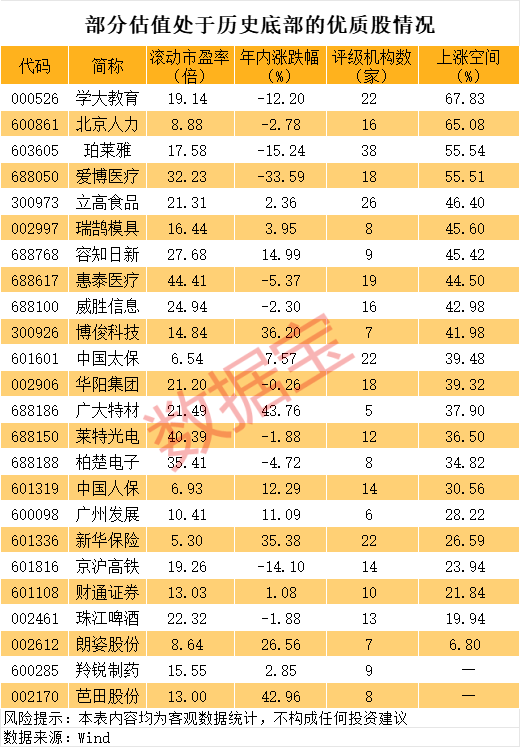
Core Insights - The A-share market has shown enthusiasm for undervalued sectors, with significant gains in indices for communication, oil and petrochemicals, banking, light manufacturing, textiles, and home appliances as of December 2 [1] - A list of quality stocks with valuations at historical lows has been identified, with 24 stocks receiving ratings from five or more institutions, indicating potential for future outperformance [1][2] - The insurance sector is highlighted as a favorable investment choice due to low valuations and expected growth in liabilities, with several insurance stocks having rolling P/E ratios below 7 times [2] Group 1: Market Performance and Valuation - As of December 2, indices for sectors like oil and petrochemicals, banking, textiles, and home appliances are at low valuation levels, with some individual stocks reaching historical highs [1] - Notable stocks with low valuations include New China Life Insurance, China Pacific Insurance, and China Life Insurance, all with P/E ratios below 7, and New China Life Insurance at less than 6 [2][4] - Stocks like Langzi Co. and Beijing Human Resources also have P/E ratios below 10, while others like Guangzhou Development and Batian Co. have P/E ratios under 15 [2] Group 2: Growth Potential and Institutional Ratings - Some stocks are experiencing significant price declines, such as Aibo Medical and Polaroid, with year-to-date declines exceeding 10% [3] - Conversely, stocks like Guangda Special Materials have seen a price increase of 43.76% this year, resulting in a P/E ratio of 21.49, attributed to a substantial profit increase of nearly 214% in the first three quarters [3] - Institutions predict substantial upside potential for several stocks, with targets indicating over 50% upside for companies like Xueda Education and Beijing Human Resources [3][4] Group 3: Recent Negative Developments - ST Yuanzhi (002689) faced a significant drop, closing at 4.33 yuan per share with a 5.04% decline and over 133,000 sell orders, following an announcement of administrative penalties from the Liaoning Securities Regulatory Bureau [5]

申万宏源证券晨会报告-20251203
Shenwan Hongyuan Securities· 2025-12-03 00:13
Group 1: Economic Policy Outlook - The fiscal policy for 2025 is characterized by increased intensity, advanced timing, and enhanced flexibility, reflecting a strong intent to support the economy. The fiscal financing scale is expected to reach a historical high of 14.36 trillion yuan, accounting for 10.2% of GDP [2][8] - In the first three quarters of 2025, broad fiscal expenditure is projected to grow by 7.9% year-on-year, indicating a high level of spending intensity [2][8] - The monetary policy is expected to return to a "moderately loose" tone, focusing on guiding expectations and improving transmission channels, with a cautious approach to interest rate cuts compared to 2024 [8] Group 2: Cosmetics and Aesthetic Medicine Industry - The international cosmetics and aesthetic medicine companies are experiencing a strategic adjustment in China, with signs of recovery in the market. The third quarter of 2025 shows a positive revenue growth trend in China, driven by promotional events [3][11] - Key recommendations for the cosmetics sector include companies with strong channel and brand matrices such as Maogeping, Shangmei, and Proya, while companies like Marubi and Huaxi Biological are expected to see marginal improvements in growth [3][11] - In the aesthetic medicine sector, companies with high R&D barriers and strong profitability are favored, with a focus on major product drivers and extensive product pipelines [3][11] Group 3: Kweichow Moutai (贵州茅台) - Kweichow Moutai maintains a buy rating with profit forecasts for 2025-2027 at 90.47 billion, 95.02 billion, and 101.53 billion yuan respectively, with corresponding PE ratios of 20x, 19x, and 18x [12][10] - The company emphasizes its strong brand barrier and excellent business model, which contribute to stable long-term profitability and high cash flow quality [12][10] - Moutai's strategy includes a focus on sustainable development and a commitment to not sacrificing long-term growth for short-term gains, with expectations for stable growth during the 14th Five-Year Plan period [13][10]

国潮崛起(下)
Jing Ji Ri Bao· 2025-12-02 22:22
Core Insights - The rise of "Guochao" (national trend) reflects the improvement in Chinese consumer spending power and cultural confidence, showcasing the ascent of Chinese manufacturing and brands [1][11] - The transformation of Chinese manufacturing from low-end to high-quality production is a fundamental aspect of the Guochao phenomenon [3][11] Group 1: Manufacturing Evolution - Chinese manufacturing has evolved from "unable to produce" to "able to produce" and now to "able to produce well," marking a significant upgrade in quality and capability [1][3] - The diversification of product offerings and improvement in quality are key foundations for the rise of Guochao, meeting the personalized and experiential consumption needs of younger consumers [2][8] Group 2: Brand Development - The shift from OEM (Original Equipment Manufacturer) to creating independent brands is crucial for enhancing the emotional and cultural value of products, allowing consumers to connect with the brand on a deeper level [5][8] - The establishment of "China Brand Day" and the recognition of Guochao as a cultural movement have contributed to the growth of brand value and market presence for Chinese companies [6][8] Group 3: Quality and Design - The focus on high-quality manufacturing and innovative design has allowed Chinese brands to compete effectively with international counterparts, providing products that are not only functional but also aesthetically appealing [4][5] - The integration of traditional cultural elements with modern aesthetics has transformed products from being merely functional to being culturally resonant and visually attractive [5][6] Group 4: International Standards and Globalization - Participation in the formulation of international standards is a critical step for Chinese brands to gain global recognition and assert their influence in the global market [9][10] - The ability to set and adhere to international standards enhances the competitiveness of Chinese manufacturing, facilitating smoother entry into global markets [10][11] Group 5: Market Dynamics - The collaboration between manufacturing enterprises and e-commerce platforms has created a robust ecosystem for promoting Guochao brands, enabling them to reach younger consumers effectively [7][8] - The emphasis on quality and innovation, combined with effective storytelling, has allowed Chinese brands to resonate with consumers and establish a strong market presence [8][11]
2025年东方美谷中国化妆品行业趋势洞察蓝皮书
Sou Hu Cai Jing· 2025-12-02 18:15
Group 1: Global Market Trends - The global cosmetics market is expected to exceed $600 billion by 2025 and reach $720 billion by 2030, driven by emerging markets, middle-class expansion, and digitalization, with a notable 77% year-on-year growth in beauty GMV on platforms like Douyin and TikTok Shop [10][11][12] - The competition landscape is evolving towards a multi-polar structure, with a shift in the value chain focus towards upstream raw material technology and offline experiences [15] - The Asia-Pacific region is projected to be the global growth engine, with a CAGR of approximately 6% from 2023 to 2025, while Latin America is expected to grow at around 19% during the same period [16] Group 2: Chinese Market Development - The Chinese cosmetics market is showing signs of moderate recovery, with retail sales of cosmetics in the first three quarters of 2025 reaching 328.82 billion yuan, a year-on-year increase of 3.9%, and is expected to exceed 450 billion yuan for the entire year [18][19] - Online channels accounted for 54.13% of sales in the first nine months of 2025, with a year-on-year growth of 12.34%, indicating a significant shift towards e-commerce [22][27] - Domestic brands are gaining market share, with over 56% of the market in the first nine months of 2025, and their sales growth rate is 2.46 times that of foreign brands [33][34] Group 3: Consumer Demand Changes - The primary consumer demographic is women aged 25-35 in first and second-tier cities, but there is a notable increase in demand from men (35.74% share, up over 20% from 2022) and the elderly (84% increase in the 45+ age group) [18] - Consumers are increasingly making small, frequent purchases, focusing on ingredient efficacy (51.63% attention) and cost-effectiveness, with a shift from basic skincare to efficacy-driven products [18][35] - Personalized skincare needs are becoming more prominent, with a growing demand for multifunctional products and specific scenarios such as post-night shift recovery and outdoor skincare [35] Group 4: Industry Innovations and Regulations - The report highlights the importance of innovation in raw materials and regulatory frameworks, with a focus on enhancing safety standards and supporting new ingredient innovations [40][41] - The regulatory environment is becoming stricter, aligning with international standards, and emphasizing the integration of ESG principles into the industry [40][41] - The future of the industry will focus on deepening efficacy, segmenting scenarios, and cultural empowerment, with technological advancements in biotechnology and digital technologies [40][41]

画梅退网、朱瓜瓜惹争议,美妆主播又到“至暗时刻”?
FBeauty未来迹· 2025-12-02 13:26
Core Viewpoint - The beauty live-streaming industry is undergoing a significant trust crisis, with issues related to product quality and exaggerated claims becoming increasingly prominent, leading to a need for rebuilding consumer trust [5][20][21] Group 1: Industry Challenges - Recent controversies involving beauty influencers, such as Huamei pausing beauty content updates and Zhu Guagua facing backlash over product quality, highlight the industry's struggles [3][5] - The beauty live-streaming sector is entering a deep adjustment period, marked by a decline in consumer trust and increasing scrutiny over product claims [5][20] - Zhu Guagua's promotion of Maystar shampoo has led to numerous consumer complaints regarding its effectiveness, with users reporting issues like scalp irritation and oiliness [7][9] Group 2: Consumer Concerns - Consumers have raised two main concerns: the poor quality of products and the potential exaggeration of product efficacy claims, revealing flaws in the influencer's product selection process [10][11] - There is a growing skepticism towards influencers' narratives, particularly when discrepancies arise between their claims and the actual product information [10][11] - The backlash against Zhu Guagua's promotional tactics reflects a broader consumer fatigue with scripted and exaggerated marketing strategies [12][20] Group 3: Market Dynamics - The beauty live-streaming market has seen a significant increase in scale, growing from 19.64 billion to 491.68 billion from 2017 to 2023, but the growth rate has slowed to 8.31% last year [18] - The competitive landscape is shifting, with major brands like Han Shu and Estée Lauder increasing their self-broadcasting efforts, thereby squeezing the space for individual influencers [14][22] - New influencers continue to emerge, indicating opportunities for differentiation in a crowded market, but many struggle to maintain consistent rankings in sales [13][14] Group 4: Future Trends - The industry is moving towards a phase where professional expertise and transparent communication will be more valued than emotional manipulation and scripted narratives [21][22] - Innovative approaches, such as emphasizing scientific skincare and transparent pricing, are being adopted to enhance consumer trust and engagement [22][23] - The need for a more rigorous and systematic product selection process, along with clear communication of product efficacy, is becoming essential for influencers to maintain credibility [23]

国际化妆品医美公司25Q3业绩跟踪报告:战略调整在华初见成效,全球业绩仍承压
Shenwan Hongyuan Securities· 2025-12-02 09:57
Investment Rating - The report maintains a positive outlook on the international cosmetics and medical beauty industry, indicating a recovery trend in the Chinese market and a cautious approach towards North America due to economic factors [2][3]. Core Insights - The global beauty market is projected to grow at a rate of 4.5% in 2024, a decline from the 8% growth seen in 2023, with significant regional disparities in performance [3][13]. - The Chinese market showed signs of recovery in Q3 2025, with major international brands reporting positive revenue growth after a period of decline [3][19]. - Companies like L'Oréal and Estée Lauder are adjusting their strategies to enhance their market presence in China, with Estée Lauder reporting an 8.6% revenue growth in Q3 2025 [3][47]. Summary by Sections Global Market Overview - The global beauty market is experiencing a slowdown, with North America showing signs of weakness while Europe outperforms other regions with a 7.5% growth [3][13]. - The North Asia market, particularly China, has faced a decline of 2%, marking it as the weakest among major beauty markets [3][13]. L'Oréal - L'Oréal's revenue growth for the first three quarters of 2025 is 1.2%, with a slight improvement in Q3 2025, indicating a recovery from previous declines [3][27]. - The company is focusing on acquisitions and enhancing its brand portfolio, particularly in the Chinese market, where it aims to leverage online channels [3][24]. Estée Lauder - Estée Lauder's Q3 2025 revenue growth reached 8.6%, marking a significant turnaround after four consecutive quarters of decline [3][47]. - The company is implementing a strategic overhaul to address previous challenges, including inventory issues and competition from local brands [3][47]. Shiseido - Shiseido reported an 8% revenue growth in the Chinese market for Q3 2025, although it continues to face macroeconomic challenges [3][19]. - The company is experiencing a K-shaped recovery, with its premium brands performing better than its main brand [3][19]. Investment Recommendations - The report recommends focusing on companies with strong channel and brand matrices, such as Mao Ge Ping and Shanghai Jahwa, as well as those expected to see marginal improvements in growth, like Marubi and Betaini [4][5]. - In the medical beauty sector, companies with high R&D barriers and strong profitability, such as Ai Meike, are highlighted as key investment opportunities [4][5].
植物医生冲击深主板,开4300多家门店!上市前突击分红
Ge Long Hui· 2025-12-02 09:21
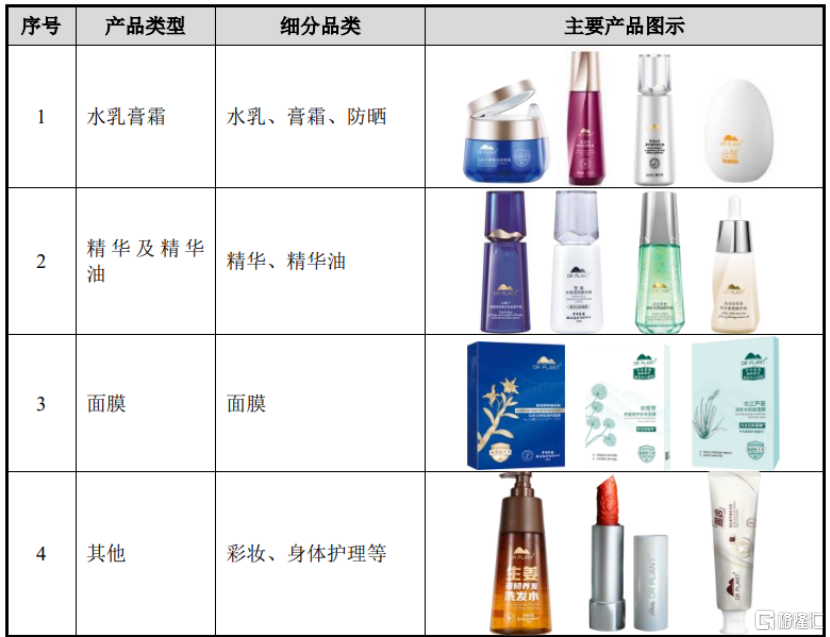
Core Insights - The skincare and cosmetics market in China is rapidly growing, becoming the second largest globally, with significant potential for future growth due to increasing consumer spending and beauty care habits [1][12] - Beijing Plant Doctor Cosmetics Co., Ltd. is preparing for an IPO, focusing on high-altitude plant skincare products, with projected revenue exceeding 2.1 billion yuan in 2024 [1][20] Industry Overview - The cosmetics industry is segmented into various categories, with skincare products accounting for 50.49% of the total market, projected to reach 271.2 billion yuan in 2024 [4] - The market is characterized by intense competition, with both international brands like L'Oréal and domestic brands like Proya and Pechoin vying for market share [12][17] Company Profile - Plant Doctor specializes in skincare, offering products derived from high-altitude plants, with a diverse product range including creams, serums, and masks [4][5] - The company has established a research center in collaboration with the Kunming Institute of Botany and has multiple R&D bases across China and Japan [5] Financial Performance - Plant Doctor's revenue has shown slow growth, with figures of approximately 2.12 billion yuan in 2022, 2.15 billion yuan in 2023, and 2.16 billion yuan in 2024 [14] - The company's gross profit margin has fluctuated, with rates of 55.22% in 2022, 60.34% in 2023, and 58.9% in 2024, which is lower than some competitors [14][15] Sales and Distribution - The company employs a mixed sales model, with 64% of revenue from distribution and 36% from direct sales, indicating a reliance on distributors [6][10] - Despite the growth of e-commerce in the cosmetics sector, Plant Doctor still derives over 70% of its revenue from offline sales [10] Management and Ownership - The company was founded in 2016 and has undergone structural changes, with key management holding significant shares and control over the company [21][22] - Recent cash dividends have primarily benefited major shareholders, raising questions about the allocation of funds [22] Future Outlook - The IPO aims to raise approximately 999.8 million yuan for marketing, brand development, and production upgrades, indicating a strategic focus on enhancing market presence and operational efficiency [20]
商社美护行业周报:六部门印发促消费实施方案,周大福、六福集团10-11月同店数据亮眼-20251202
Guoyuan Securities· 2025-12-02 09:11
Investment Rating - The industry maintains a "Recommended" rating, focusing on new consumption sectors such as beauty care, IP derivatives, and gold jewelry [5][27]. Core Insights - The report highlights a significant increase in retail performance, with major sectors like retail, social services, and beauty care showing positive growth rates of +3.45%, +3.92%, and +0.50% respectively during the week of November 24-28, 2025 [14][22]. - The implementation plan by six departments aims to enhance the adaptability of supply and demand in consumer goods, targeting the formation of three trillion-level consumption fields and ten hundred-billion-level consumption hotspots by 2027 [3][22]. - Key companies such as Chow Tai Fook and Luk Fook have reported impressive same-store sales growth, with Chow Tai Fook's same-store sales in mainland China increasing by 38.8% from October 1 to November 18, 2025 [4][22]. Summary by Sections Market Performance - The report indicates that the retail, social services, and beauty care sectors ranked 9th, 6th, and 26th among 31 primary industries, with the Shanghai Composite Index rising by 1.40% and the Shenzhen Component Index by 3.56% during the same period [14][18]. Key Industry Events and Information - The report discusses various industry developments, including the registration of a new medical device by Jinbo Bio in the Philippines and the performance of travel company Tongcheng Travel, which reported a revenue of 5.509 billion yuan in Q3 2025, up 10.4% year-on-year [3][22]. - The release of "Zootopia 2" on November 26, 2025, achieved a record box office of 228 million yuan on its first day, indicating strong demand for related merchandise [3][22]. Investment Recommendations - The report recommends focusing on companies such as Shangmei Co., Ltd., Juzhi Bio, Marubi Biotechnology, Runben Co., Ltd., Proya, Chao Hong Ji, and Furuida, which are positioned well within the beauty care and new consumption sectors [5][27].