蜜雪冰城

Search documents
郑州胖东来再迎新进展!山姆、永辉慌不慌?
3 6 Ke· 2025-12-04 02:29
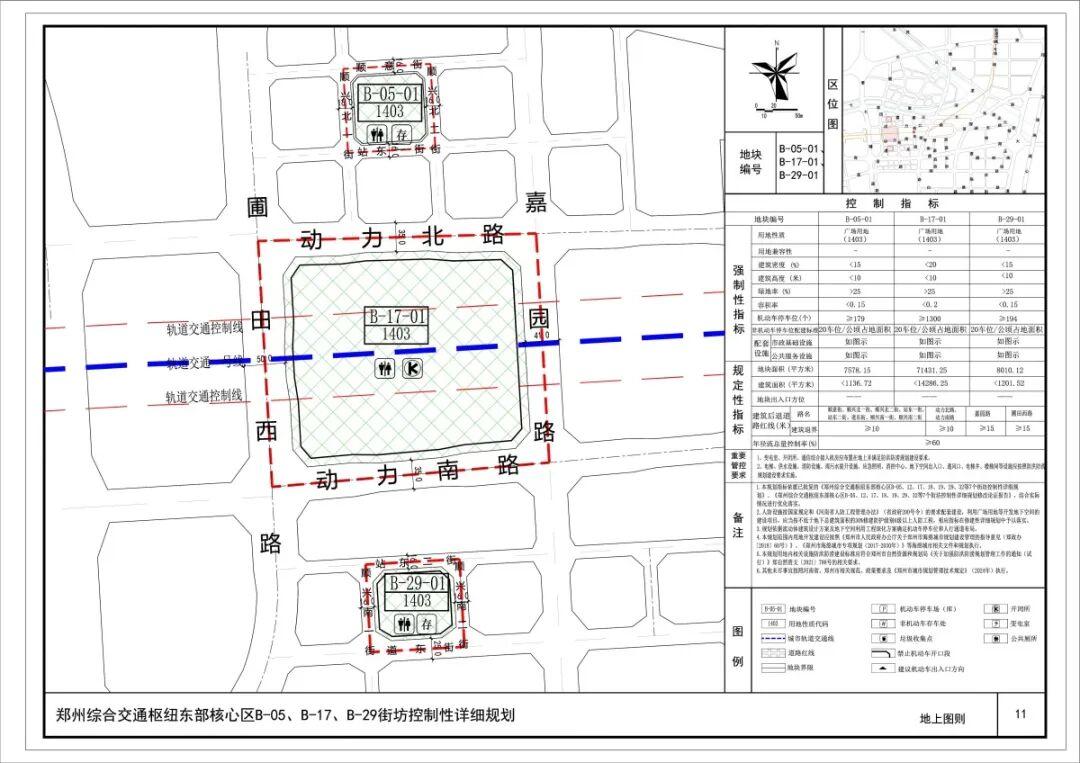
Core Insights - The news highlights the upcoming opening of the first "Fat Donglai" store in Zhengzhou, with significant planning developments for the site [1][7]. Group 1: Site and Planning Details - The B-17-01 plot, where the Fat Donglai store will be located, covers approximately 107 acres (71,431.25 square meters) and is designated as a public square with strict construction guidelines [2][4]. - The above-ground construction is limited to a height of 10 meters, with a building density of no more than 20% and a green space coverage of at least 25% [2][4]. - The underground space will be developed up to three levels, allowing for a maximum depth of 20 meters, with a total building area not exceeding 205,130.34 square meters [4][6]. Group 2: Business Model and Strategy - Fat Donglai's core operational area will be located on the first underground level, with an estimated commercial area of 30,000 to 40,000 square meters, significantly larger than its existing stores in Xuchang and Xinxiang [6][9]. - The company emphasizes a strong service culture, offering full refunds without proof for unsatisfactory products, and plans to distribute 1.5 billion yuan in net profits to employees in 2025 [7][9]. - Fat Donglai's procurement and operations are closely integrated, allowing for rapid adjustments based on consumer demand, enhancing efficiency [7][9]. Group 3: Competitive Landscape - The retail market in Henan is set for a significant transformation, with Fat Donglai projected to achieve sales of 16.964 billion yuan in 2024, while Sam's Club has surpassed 100 billion yuan in sales [9][10]. - The consumer market in Henan shows robust growth, with a retail sales total of 2.76 trillion yuan in 2024, reflecting a 6.1% increase [10][11]. - Local retailers are adapting strategies in response to the competition, with plans to enhance product offerings and service quality to meet evolving consumer preferences [11].

雪王的鲜啤全面放开加盟了
Hua Er Jie Jian Wen· 2025-12-03 13:10
Group 1 - The core point of the article is that Mixue Ice City is accelerating its fresh beer business through the brand "Xianpi Fulu Jia," which has opened its franchise opportunities to all potential investors and introduced incentive policies for new franchisees [1][3]. - The brand "Fulu Jia" was established in 2021 as an independent project under Mixue Ice City and was acquired by the listed company for 297 million, gaining control and consolidation into the financial statements [2][3]. - By August 2025, "Fulu Jia" is projected to have 1,200 stores, with a significant concentration in Henan, where Mixue Ice City is based [3]. Group 2 - The pricing strategy for "Fulu Jia" includes a low entry price for fresh beer, with the cheapest option at 5.9 yuan for 500ml, and the average customer spending is only 17 yuan, which is less than half of similar brands [5]. - The fresh beer business targets nighttime consumption, which has lower competition and higher standardization compared to tea and coffee, allowing for a streamlined ordering process [6][7]. - Mixue Ice City has established a large-scale brewery in Jiaozuo, Henan, and utilizes its extensive cold chain logistics system to support nationwide distribution, leveraging its existing franchisee trust and supply chain advantages for future expansion into first-tier cities [7].
“投资古茗账面盈利50亿元 最终可能赚到100亿元”
Zhong Guo Ji Jin Bao· 2025-12-03 12:17
Core Insights - The founder partner of Meituan Longzhu, Zhu Yonghua, predicts that the ready-to-drink beverage industry will see six new listed companies in the next five years, including Heytea and Chayan Yuese [1][4]. Industry Overview - The Chinese coffee and tea beverage market is expected to reach a trillion yuan scale in the next 5 to 10 years, with significant growth potential [4]. - The third quarter of this year saw the tea beverage market's overall revenue grow by 16.5% year-on-year, while the coffee market's revenue increased by 27.3% year-on-year [6]. Market Dynamics - The tea beverage market experienced a 4% year-on-year decline in the total number of stores, totaling 408,000, while the coffee market saw a 12.8% increase, reaching 193,000 stores [6]. - An "M-shaped" ecological structure is forming in the beverage industry, with leading brands expanding significantly while new brands emerge rapidly [7]. Competitive Landscape - The industry is transitioning from homogeneous expansion to value competition, focusing on differentiation, brand premium, and operational efficiency [7]. - The coffee market has produced three brands with over 10,000 stores: Luckin Coffee, Kudi Coffee, and Lucky Coffee, with the latter experiencing rapid growth under the support of the Mixue Group [7]. Regional Brand Strategy - Local brands are leveraging unique regional flavors and emotional connections to secure their market space amidst fierce competition [9]. - The example of Mo Mo Nan Lu, a local brand from Shandong with only 200 stores, illustrates the importance of focusing on local market cultivation and product differentiation through local ingredients [9][11].

幸运咖破万店 5.9元咖啡的逆袭与隐忧
Xin Lang Cai Jing· 2025-12-03 07:21
Core Insights - Luckin Coffee has achieved a significant milestone by surpassing 10,000 stores globally, becoming the third domestic coffee chain to join the "10,000-store club" after Luckin and Kudi [1][8] - The rapid expansion from approximately 4,600 stores at the beginning of the year to over 10,000 in just 10 months indicates an average of more than 16 new stores opening daily, showcasing an impressive growth rate [1][8] Expansion Strategy - The journey to 10,000 stores is attributed to a well-calculated business strategy and market opportunities, with a pivotal shift occurring in 2020 when the brand clarified its "high-quality and affordable" positioning, targeting the lower-tier market and student demographics [2][9] - Leveraging the supply chain of its parent company, Mixue Ice Cream, Luckin Coffee benefits from significantly lower core raw material costs, with coffee beans sold to franchisees at no more than 70 yuan per kilogram, compared to the industry average of over 120 yuan per kilogram, representing a nearly 40% discount [2][9] - In May 2025, Mixue Group signed a 4 billion yuan procurement agreement for agricultural products, primarily coffee beans, further enhancing cost control and risk management capabilities [2][9] Franchise Model - The lightweight franchise model is a key driver of Luckin Coffee's rapid expansion, with a "no revenue sharing" policy for single-store franchises, significantly reducing management costs for franchisees [3][10] - The initial investment for a single store is approximately 127,000 yuan, which is lower than Kudi's 220,000 yuan and higher thresholds set by Luckin [3][10] - In 2025, Luckin Coffee introduced support policies in major cities, allowing for total reductions of up to 34,000 yuan per store, further lowering the entry barrier for franchisees [3][11] Product Strategy - Luckin Coffee has effectively captured the tastes of young consumers, with the "Coconut Latte" launched in March 2022 becoming a core bestseller, generating over 1 billion yuan in sales and exceeding 100 million cups sold by October 2025 [3][11] - The company launched 47 new products in 2025, continuously enriching its product line to meet diverse consumer demands [3][11] Challenges and Concerns - Despite the rapid expansion, Luckin Coffee faces unprecedented profitability pressures and operational challenges, particularly in first-tier cities where high rental costs are eroding franchisee profit margins [4][12] - The average daily sales required for breakeven in first-tier city stores is around 300 cups, significantly higher than the industry average, with many franchisees reporting unsatisfactory operating conditions [4][12] - Product quality and brand perception are identified as weaknesses, with younger consumers expressing dissatisfaction with the taste of Luckin's coffee compared to competitors like Luckin and Kudi [4][12] Supply Chain and Market Dynamics - Fluctuations in supply chain costs pose a threat to Luckin Coffee's low-price model, with Arabica coffee futures prices rising by 118.57% over the past year [5][13] - The reduction of delivery subsidies since July 2025 has intensified profitability pressures, particularly for brands reliant on online traffic [5][13] - Franchisees have raised concerns about inadequate regional protection policies, leading to internal competition and customer base dilution [5][13] Market Outlook - The coffee market's competitive landscape will not favor a single model but will require a dynamic balance between price, quality, scale, profitability, expansion, and sustainability [6][14]
大消费组十二月消费金股:寻找最具弹性的消费方向
CMS· 2025-12-03 02:03
Investment Rating - The report maintains a "Recommendation" rating for the industry, indicating a positive outlook for the sector's fundamentals and expected performance exceeding the benchmark index [2]. Core Insights - The report emphasizes the resilience of consumer sectors, highlighting various sub-sectors such as food and beverage, textiles, home appliances, retail, pharmaceuticals, and agriculture, each with specific growth opportunities and market dynamics [5][7][13][16][21]. Summary by Relevant Sections Food and Beverage - Moutai is focusing on high-quality development despite industry pressures, with a positive outlook for structural growth in the food sector [5]. - Companies like Ximai Foods are expanding their product lines and channels, with a strong growth forecast for Q4 [6]. Textiles - The U.S. apparel market is showing growth, with retail sales increasing by 5% year-on-year in the first nine months of 2025, while wholesale sales have declined [7]. - Low inventory levels in the U.S. suggest a potential inventory replenishment phase starting soon [8]. Home Appliances - The report highlights key catalysts for companies like XGIMI, including supply-side improvements and new product launches expected to drive significant revenue growth [13][14]. Retail - The retail sector is experiencing improvements in same-store sales and profitability, with major chains expanding their store counts significantly [15]. Pharmaceuticals - The small nucleic acid industry is poised for breakthroughs, with a focus on innovative delivery platforms and competitive advantages for Chinese companies [16][17]. Agriculture - The report notes accelerated capacity reduction in the pig farming sector, with a recommendation for quality breeding stocks amid favorable price expectations [21]. - The planting sector is expected to benefit from intensified policy support for food security [21]. Commercial Services - The hospitality sector is seeing a recovery in demand, with improved revenue per available room (RevPAR) and recommendations for leading hotel brands [18].
福建发布12条惠台政策措施,食品饮料ETF天弘(159736)昨日成交额超1500万元,机构:食品饮料行业明年主线是底部回暖复苏
2 1 Shi Ji Jing Ji Bao Dao· 2025-12-03 01:24
Group 1 - The market experienced fluctuations on December 2, with all three major indices closing lower. The Tianhong Food and Beverage ETF (159736) saw a trading volume exceeding 150 million yuan, with several constituent stocks such as Xiwang Food, Babi Food, and Yanjing Beer rising [1] - The Tianhong Food and Beverage ETF tracks the CSI Food and Beverage Index, focusing on leading stocks in the high-end and sub-high-end liquor sectors, while also covering leading stocks in beverages, dairy, condiments, and beer. The top ten weighted stocks include Moutai, Wuliangye, and Yili [1] - Fujian Province has recently formulated policies to support cross-strait integration development, including measures to assist Taiwanese residents in opening Shaxian snack stores [1] Group 2 - In November, the food and beverage index continued to recover, achieving excess returns compared to the broader market, driven by a shift in market style and a positive CPI growth rate. Within the sector, pre-processed foods, baked goods, and dairy products saw the highest increases [2] - Looking ahead to 2026, the core view is that new consumption will remain sustainable but will experience internal rotation, while traditional consumption is expected to see bottom improvement [2] - Since early 2025, the food and beverage sector has significantly underperformed the broader market due to changes in the consumption environment and market style. However, the sector's fundamentals are at a low point, and the valuation has declined, indicating no need for pessimism. The expectation for 2026 is a recovery in the food and beverage industry, with hopes for resilient consumer spending and increased business activity [2]

产业兴 发展快——海南省定安县掠影
Jing Ji Ri Bao· 2025-12-02 22:05
Core Insights - Ding'an County is positioned as a key area within the Haikou Economic Circle, benefiting from its strategic location and supportive policies from the Hainan Free Trade Port [1] - The county has implemented a series of investment support policies aimed at various stages of industry project development, including operation and technological innovation [1] Industry Overview - Ding'an has established a food processing industry cluster led by Mixue Ice City, which accounts for over 50% of the national market for fresh coconut milk [1] - The green building industry cluster is spearheaded by companies like China Resources and Liansu Group, while the pharmaceutical and medical device sector is led by Baimaike [1] - Emerging industries such as pharmaceuticals, testing, biomanufacturing, and modern vocational education are being actively cultivated [1] Economic Performance - From January to September 2025, Ding'an County's GDP reached 10.67 billion yuan, reflecting a year-on-year growth of 4.0% [1] - The industrial added value for enterprises above designated size grew by 35%, while total goods import and export increased by 26.8% [1] - Service import and export saw a significant rise of 75.4% during the same period [1]
美团龙珠朱拥华:中国消费潜力超美国,奶咖赛道将催生新一批世界级公司
Guan Cha Zhe Wang· 2025-12-02 13:12
Core Insights - The conference "Kaimen 2026 Annual Conference" focused on the theme "Resilience Meets Future," gathering industry leaders to discuss the beverage sector's path through cycles and towards future growth [1] Group 1: Market Trends - The founder of Meituan Longzhu Fund, Zhu Yonghua, predicts that the tea and coffee sectors will see the emergence of approximately six new publicly listed companies in the next 5-10 years, with a combined market size potentially reaching one trillion yuan [1] - Zhu emphasizes that China's consumer capacity and potential surpass that of the United States, indicating a strong future for the domestic market [5] Group 2: Investment Insights - Zhu reflects on his investment journey, noting that the successful listing of Gu Ming has yielded significant returns, with an estimated profit of around 5 billion yuan for the fund [4] - The investment landscape has changed, with a notable decline in the number of projects being considered, dropping from around 1,000 annually to a much lower figure, attributed to decreased demand and cautious investor sentiment [5] Group 3: Recovery Signals - There are signs of recovery in the secondary market, which are beginning to influence the primary market, suggesting a potential resurgence in entrepreneurial confidence [6] - The long-term observation of the real estate market's recovery is seen as a key factor that could trigger a wave of economic benefits when combined with capital market strategies [7]


早餐套餐开卖,蜜雪冰城太想进步了
3 6 Ke· 2025-12-02 10:57
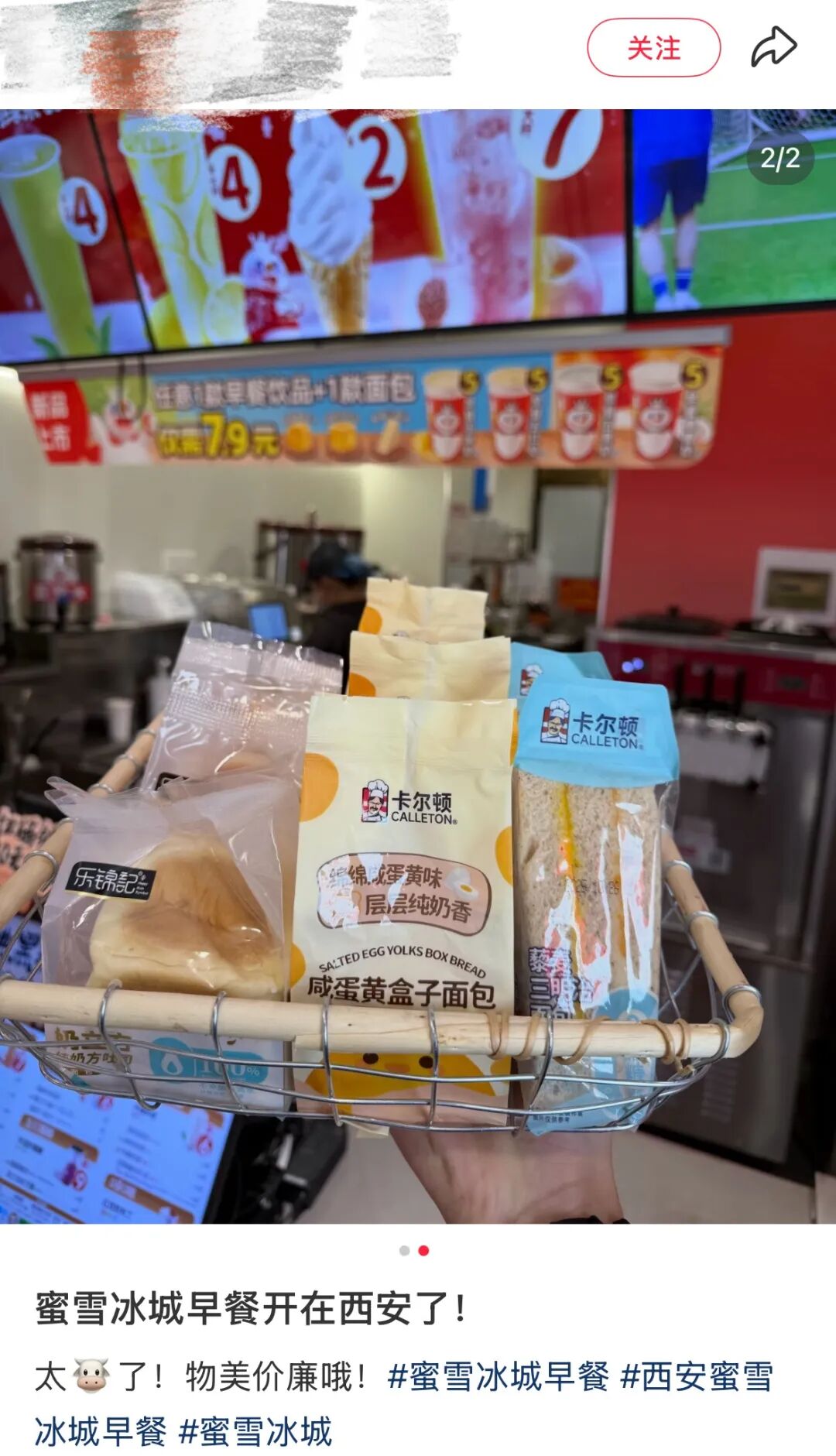
Core Insights - The entry of the chain restaurant brand into the breakfast market indicates that it is not yet saturated, as evidenced by the recent testing of breakfast items in various cities [1][10] - The breakfast offerings include a combination of drinks and staple foods, with prices set at competitive levels compared to other market players [5][8] Company Strategy - The company is conducting a broad survey and small-scale trials to assess consumer interest in breakfast items, indicating a formal launch of its breakfast plan [1][10] - The breakfast menu features a mix of familiar items, such as drinks priced at 5 yuan and staple foods at 2.9 yuan each, aiming to attract a wide customer base [5][6] Market Positioning - The breakfast products are designed to fill a market gap, providing a cleaner and more affordable option compared to street vendors while being cheaper than premium coffee shops [8][9] - The company aims to extend operational hours to maximize store utilization and maintain a presence in the high-frequency morning consumption period [9][10] Competitive Landscape - The breakfast segment is highly competitive, with established brands like KFC and McDonald's also expanding their breakfast offerings, highlighting the importance of this market [11] - The company’s strategy may involve testing the overall viability of breakfast sales to enhance store efficiency and stimulate sales, rather than focusing solely on specific product performance [10][12] Future Considerations - The success of the breakfast initiative will depend on the ability to provide suitable services in appropriate locations, as not all stores may be ideal for breakfast sales [11][12] - The company is exploring ways to increase sales volume and improve store efficiency, which is critical in a market where breakfast is often a low-margin business [12]
钟睒睒,杀入600亿新赛道
创业家· 2025-12-02 10:38
Core Viewpoint - Nongfu Spring is expanding its business into the edible ice market, investing 28.42 million yuan to build a production line with an annual capacity of 7,000 tons, capitalizing on the growing popularity of ice cups among consumers, particularly the younger demographic [6][8][15]. Group 1: Business Expansion - Nongfu Spring plans to invest 28.42 million yuan to expand its edible ice production capacity, utilizing existing facilities in Hangzhou [6][8]. - The new production line will focus on producing 160g ice cups, with an expected output of 5,600 tons, and 2kg bags of high-transparency ice, with an output of 1,400 tons [8]. - The ice cup category has seen a sales growth of over 300% for two consecutive years, indicating a strong market demand [6][13]. Group 2: Market Trends - The ice cup market is experiencing rapid growth, with a significant increase in orders for ice cup combinations with alcoholic and non-alcoholic beverages, showing year-on-year growth rates of 267% and 261% respectively [13][15]. - The edible ice market is projected to reach a sales scale of over 63 billion yuan by 2026, with an expected growth rate of 39% in the next three years [14]. Group 3: Competitive Landscape - Major players like Mengniu and Yili have entered the ice cup market, intensifying competition and potentially leading to price reductions [17][20]. - The production cost of ice cups is relatively low, but the profit margins are tight, with production costs around 0.6 to 0.7 yuan per cup and wholesale prices around 1 yuan [18][20]. - The entry of large beverage companies into the ice cup market may lead to a price war, with predictions of further price reductions in the coming years [21].