饿了么

Search documents
从价格战到价值博弈:基金经理如何应对汽车、新能源和外卖等行业的内卷?
Morningstar晨星· 2025-08-07 01:05
Core Viewpoint - The automotive and new energy industries are facing intense competition and price wars, leading to significant price reductions and potential oversupply issues, while the food delivery sector is also experiencing aggressive pricing strategies from major players [2][3][11]. Group 1: Automotive Industry - The total market capitalization of the A-share automotive industry index is approximately 5 trillion, accounting for 5% of the total A-share market [1]. - In May 2023, BYD initiated a "100 billion subsidy" campaign, resulting in collective price reductions across 22 smart driving models, with other major players like Chery and Geely following suit [2]. - The average price reduction for new passenger cars in the first half of 2025 is projected to be around 21,000 yuan, with a reduction rate of 11.4% [2]. - The automotive parts industry is seen as having significant entry barriers and competitive advantages, which may provide long-term growth opportunities despite short-term price pressures [6][7]. Group 2: New Energy Industry - The new energy sector is experiencing an imbalance between supply and demand, with production capacity expected to exceed 1100 GW by the end of 2024, while global demand is projected at only 600 GW in 2025 [2]. - Prices for silicon materials, silicon wafers, battery cells, and components are expected to decline year-on-year in the first half of 2025 due to oversupply [2][7]. - Fund managers are cautious about the new energy sector, with some reducing their exposure in anticipation of regulatory changes aimed at curbing excessive competition [7][8]. Group 3: Food Delivery Industry - The food delivery market is witnessing intensified price wars, with major players like JD.com entering the market and offering zero commission for merchants [2]. - Ele.me has announced significant platform subsidies, indicating a competitive landscape where companies are vying for market share through aggressive pricing strategies [2]. - Fund managers recognize the competitive pressures in the food delivery sector, leading to adjustments in their investment strategies, particularly concerning Meituan [6][8]. Group 4: Regulatory Response - Regulatory bodies have begun addressing the issue of excessive competition, with discussions held among industry leaders in the automotive, new energy, and food delivery sectors [3]. - A draft amendment to the Price Law aims to regulate low-price dumping and restore order in market pricing, indicating a shift towards more rational competition [3][11]. - Fund managers are closely monitoring these regulatory developments, as they may significantly impact industry dynamics and investment strategies moving forward [7][11].







21评论丨从“抢用户”到“扶持商家”,外卖平台竞争进入新阶段
2 1 Shi Ji Jing Ji Bao Dao· 2025-08-06 22:38
Group 1 - Meituan has launched a support plan for small and medium-sized merchants in the restaurant industry, providing cash and subsidies to help over 100,000 small restaurants achieve stable growth by the end of the year, with individual support up to 50,000 yuan [1] - Ele.me has also initiated the "优店腾跃计划," committing over 1 billion yuan to support merchants through fee discounts, special subsidies, exclusive traffic, digital operation services, and AI technology capabilities [1] - Regulatory bodies have engaged with major platforms like JD, Meituan, and Ele.me to promote fair competition and a win-win ecosystem in the industry [1][2] Group 2 - The recent merchant support policies are seen as a response to regulatory requirements and a necessary evolution in the market, aiming for healthy competition rather than escalating price wars [2] - The understanding of food delivery platforms has evolved; they are now recognized as entities that stimulate demand, enhance industry efficiency, and innovate business models, rather than merely converting offline demand to online [3][4] - Food delivery platforms have expanded market boundaries and created new demand by transforming household tasks into social divisions of labor, especially during adverse conditions like bad weather or pandemics [4] Group 3 - The industry is transitioning from demand-driven growth based on price competition to a focus on creating greater value for merchants, encouraging them to develop core competencies in products, branding, and operations [4] - This shift is expected to drive the restaurant industry towards modernization and data-driven operations, enhancing efficiency, service quality, and food safety, ultimately meeting higher consumer demands [4] - Merchants are encouraged to leverage the tools and opportunities provided by platforms to build their unique core value, while also recognizing the importance of emotional value in the dining experience [5][6]
从“抢用户”到“扶持商家”,外卖平台竞争进入新阶段
2 1 Shi Ji Jing Ji Bao Dao· 2025-08-06 22:15
Group 1 - Meituan has launched a support plan for small and medium-sized merchants in the restaurant industry, providing cash assistance to help over 100,000 small restaurants achieve stable growth by the end of the year, with individual support up to 50,000 yuan [1] - Ele.me has also initiated the "优店腾跃计划," committing over 1 billion yuan to support merchants through various means including fee discounts, special subsidies, and digital operation services, with an additional investment of over 1 billion yuan announced in June [1] - Regulatory bodies have engaged with major platforms like JD, Meituan, and Ele.me to promote fair competition and a win-win ecosystem in the industry [1][2] Group 2 - The recent merchant support policies are seen as a response to regulatory requirements and a necessary evolution in the market, aiming for healthy competition rather than escalating price wars [2] - The understanding of food delivery platforms has evolved; they are now recognized as entities that stimulate demand, enhance industry efficiency, and innovate business models, rather than merely converting offline demand to online [3][4] - Food delivery platforms have expanded market boundaries and created new demand by transforming household labor into social division of labor, especially during adverse conditions like bad weather or pandemics [4] Group 3 - The industry is transitioning from demand-driven growth based on price competition to a model focused on creating greater value for merchants, encouraging them to develop core competencies in products, branding, and operations [4] - This shift is expected to drive the restaurant industry towards modernization and data-driven operations, enhancing efficiency, service quality, and food safety, ultimately meeting higher consumer demands [4] - Merchants are encouraged to leverage the tools and opportunities provided by platforms to build their unique core value, while also recognizing the importance of emotional value in the dining experience [5][6]
盒马收缩,背后是中产萎缩
Hu Xiu· 2025-08-06 12:56
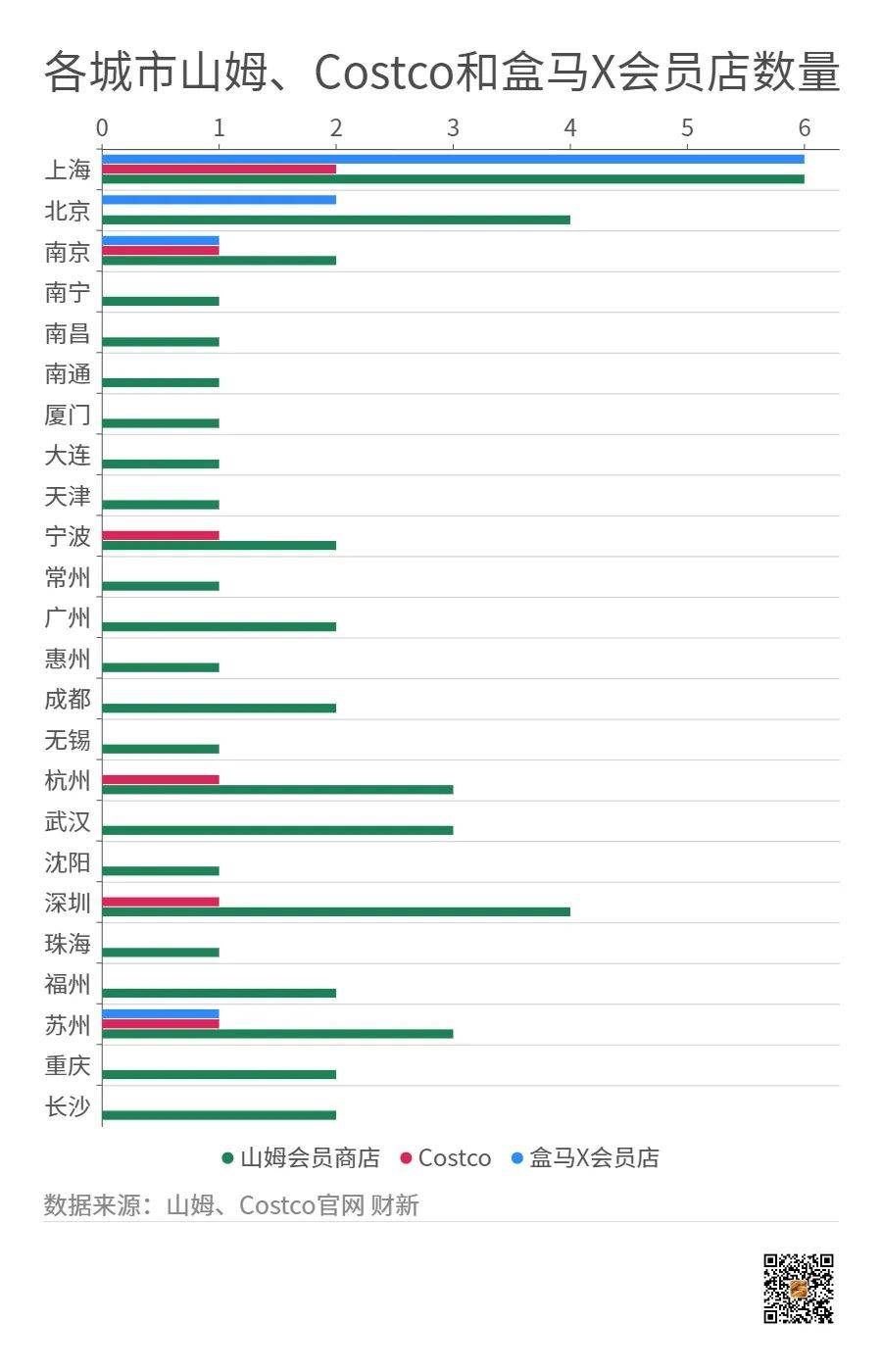
Core Viewpoint - The closure of Hema X membership stores signifies the end of an ambitious attempt by Hema to penetrate the membership store market, highlighting the challenges faced by domestic brands in competing with established foreign players like Sam's Club and Costco [2][10]. Group 1: Hema X Membership Store Challenges - Hema X membership stores are closing, with the last remaining store in Shanghai set to cease operations by the end of the month [1][2]. - The membership model, which requires a higher fee for access to curated products, has not gained sufficient traction among the middle class, indicating a need for further audience cultivation [3][4]. - The competitive landscape is tough, as foreign brands have already established strong positions in convenient locations, making it difficult for local brands to secure prime spots [6][10]. Group 2: Strategic Shifts in Alibaba's Business - Alibaba is divesting from non-core businesses, focusing on e-commerce and AI + cloud services, which includes selling off subsidiaries like Gaoxin Retail and Intime [13][14][16]. - Hema has experimented with various retail formats but is now concentrating on Hema Fresh and Hema NB, which are seen as more viable options moving forward [19][20]. - Hema NB targets the discount market with a focus on near-expiry products and private labels, expanding into cities in Jiangsu, Zhejiang, and Shanghai [21]. Group 3: Integration with Alibaba's Ecosystem - Hema aims to integrate more deeply into Alibaba's ecosystem, similar to how Ele.me has become essential for Alibaba's competitive positioning in the food delivery market [27][28]. - The connection between Hema membership and Taobao's 88VIP program creates a significant user base, allowing for easier member acquisition and retention [29][30]. - The closure of Hema X stores reflects a broader trend where many businesses enter emerging markets but only a few succeed by focusing on their core strengths rather than chasing trends [31].

北京多措并举治理非机动车乱象
Xin Hua She· 2025-08-06 12:28
新华财经北京8月6日电(记者鲁畅、张骁)最近,北京市交管部门持续加大非机动车交通乱象整治频次 和力度。在主要路口,逆行、闯红灯、驶入机动车道的电动自行车驾驶人受到警告或罚款;对多人并排 骑行、低速骑行等不文明骑行行为,交警现场作出安全提示……记者近日采访了解到,北京市合力打出 综合整治"组合拳",坚决对非机动车乱象说"不"。 ——全链条整治安全隐患。北京市市场监管部门介绍,今年上半年,累计检查电动自行车经营主体1.2 万家次,查处各类违法违规行为48起,曝光典型案例10起,会同公安部门查扣超标车辆347辆。同时, 线上线下一体监管,开展网络销售平台全天候监测,已累计下架、清除电动自行车解码器、改装配件、 超亮远光灯等违规销售链接和"解限速"违规教程视频8500余条。 因经济实惠、灵活便捷,电动自行车、自行车逐渐成为北京市民主要的短途出行方式。据统计,北京市 非机动车保有量超过700万辆,违法违规及不文明骑行带来突出安全隐患。 "非机动车事故亡人率呈现上升势头,占亡人事故总量的比例已超过三分之一。"北京市公安交管局事故 处处长于海涛介绍,从事故成因看,各类违法行为是"罪魁祸首"。"2023年以来,北京发生醉酒驾 ...
朱啸虎:我当年为什么那么早就投了小红书?
创业家· 2025-08-06 10:09
Core Viewpoint - The article emphasizes the importance of understanding consumer behavior and market dynamics in the context of Japan's evolving consumer landscape, which serves as a model for Chinese brands to adapt and innovate in a low-growth environment [19][20]. Group 1: Investment Insights - The early investment in Xiaohongshu occurred when the founder had not yet solidified a business model, showcasing the potential of visionary entrepreneurs [3][4]. - The initial products launched by Xiaohongshu were basic PDF guides, which received positive feedback despite their simplicity, indicating a strong market interest [8][10]. - The article reflects on the skepticism faced by early-stage companies like Xiaohongshu, Didi, and Ele.me, highlighting the common challenges in gaining investor confidence [10][11]. Group 2: Japanese Market Analysis - Japan's consumer market is characterized by a unique blend of low growth, aging population, and innovative business models, providing valuable lessons for Chinese entrepreneurs [19][20]. - The article outlines three core philosophies of enduring Japanese brands: supply chain-driven private brand (PB) products, continuous iteration of key products, and the ability to define lifestyles that resonate emotionally with consumers [21][23]. - Companies like Kobe Bussan and 7-11 exemplify successful supply chain strategies that meet latent consumer needs through data-driven product development [21][22]. Group 3: Learning Opportunities - The article promotes a learning trip to Japan, aimed at exploring the innovative practices of leading Japanese companies, which can inspire new business opportunities in China [15][16]. - The program includes insights from industry leaders and visits to successful brands, focusing on how they navigate market challenges and consumer expectations [24][30]. - Participants will gain firsthand experience in understanding the emotional and functional needs of consumers, which is crucial for developing competitive products in the current market landscape [30][31].

超10万家!最高5万元!美团官宣
Jing Ji Wang· 2025-08-06 07:39
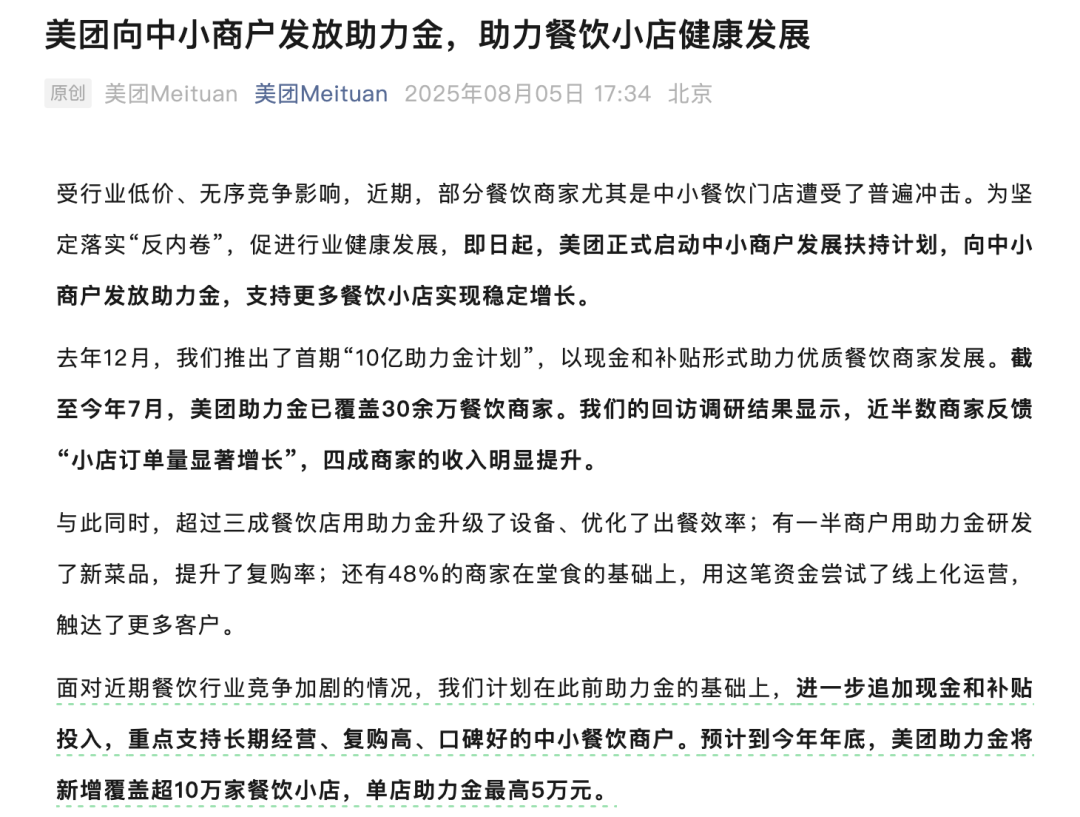
Group 1: Meituan's Support for Small Merchants - Meituan has launched a support plan for small merchants, providing financial assistance to help more small restaurants achieve stable growth [1] - By the end of this year, Meituan aims to cover over 100,000 small restaurants with its support funds, with a maximum assistance of 50,000 yuan per store [1] Group 2: Industry Competition and Regulation - Major food delivery platforms Meituan, Ele.me, and JD.com have announced a joint effort to resist "involution" competition and maintain a healthy industry ecosystem [3] - The platforms' statements align with recent regulatory requirements, emphasizing the need to standardize subsidy behaviors, oppose involution, and improve service quality [4] - The State Administration for Market Regulation has urged these platforms to comply with various laws and regulations, promoting a win-win ecosystem for consumers, merchants, delivery riders, and platform companies [4] Group 3: JD.com's Discount Supermarket Strategy - JD.com is set to open five discount supermarkets in Jiangsu and Hebei, utilizing its supply chain advantages to operate large stores with a wide range of SKUs [4] - The first store in Zhuozhou will cover an area of 5,000 square meters and offer over 5,000 high-quality daily goods at prices generally lower than market rates [6] - JD.com's discount supermarket model is distinct from existing small-format discount stores, focusing on large-scale operations and direct sourcing from producers [6] Group 4: Market Trends in Discount Supermarkets - The discount supermarket format is gaining traction, with various companies, including traditional supermarkets and snack brands, entering the market [6] - Research indicates that discount supermarkets are expanding rapidly, with both snack brands and regional retailers transforming traditional supermarkets into discount formats [7] - There is significant potential for optimization in the discount supermarket sector, as leading snack brands have already established a large number of stores and possess advantages in funding, talent, and supply chains [7]

外卖大战的“受益者”:高盛预测古茗今年多赚2亿,蜜雪多赚5000万
Hua Er Jie Jian Wen· 2025-08-06 02:08
Group 1 - Goldman Sachs raised the profit forecast for Gu Ming by 9% to 2.2 billion RMB for 2025, benefiting from the extended duration of delivery subsidies [1][10] - The profit forecast for Mi Xue Bing Cheng was increased by 1% to 5.4 billion RMB, translating to an additional 50 million RMB [1][10] - The competition among delivery platforms intensified after JD launched a 10 billion RMB subsidy plan, with total investments by the three major platforms reaching 25 billion RMB in Q2, leading to a 27% year-on-year increase in daily delivery orders [1][10] Group 2 - The new tea beverage sector is the biggest beneficiary of the current subsidy competition, with aggressive subsidy policies introduced in July [1][2] - The rapid expansion of new tea beverage stores has disrupted the industry consolidation trend, with brands like Gu Ming and Xing Yun Ka accelerating store openings [2][3] - Price competition has increased due to platform subsidies and new product launches, with Starbucks reducing non-coffee drink prices by 2-6 RMB [2] Group 3 - Goldman Sachs conducted a scenario analysis indicating that if delivery subsidies are completely withdrawn in 2026, Gu Ming's single-store GMV may decline by 5%, while Mi Xue's may drop by 1% [4][5] - Gu Ming's expansion into coffee and breakfast categories may mitigate some of the impacts from subsidy withdrawal, while Mi Xue is less affected due to its lower reliance on delivery [5][6] - Investor sentiment may be influenced by changes in delivery platform strategies, with Gu Ming's stock performance potentially limited by the end of the lock-up period and seasonal factors [6][7] Group 4 - The long-term outlook suggests that the normalization of subsidies could improve the competitive landscape, benefiting companies with core advantages [7] - Mi Xue's strong pricing power and supply chain capabilities support its long-term growth, while Gu Ming's investment in new product development and brand building will help it explore untapped markets [7] - The subsidy war presents an opportunity for leading new tea beverage brands to redistribute market share despite short-term volatility [7]

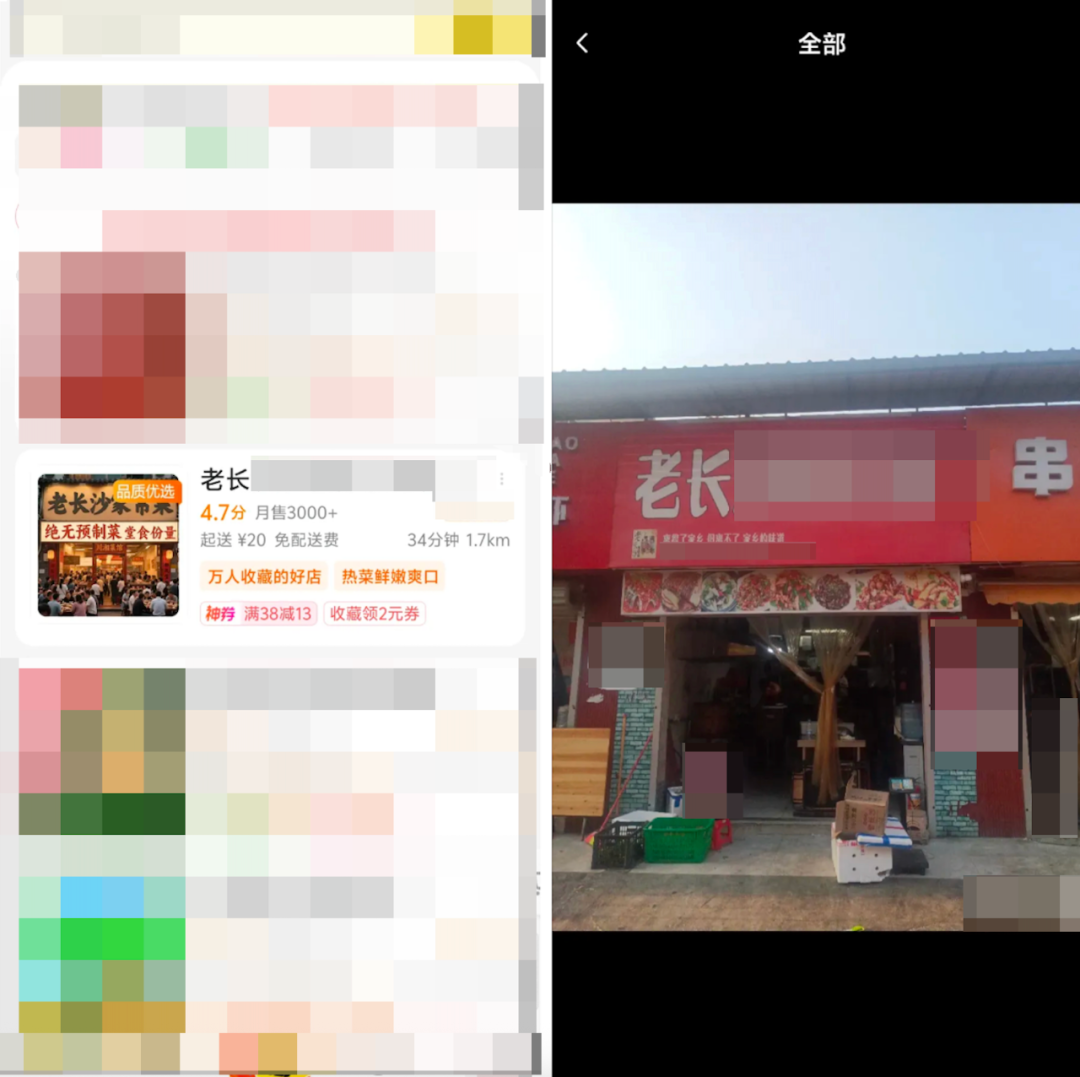
早报 | 免费学前教育要来了;“跑楼小孩”被叫停;浙大一青年博导被曝坠楼身亡;名古屋希望与友好城市南京恢复交流
虎嗅APP· 2025-08-06 00:40
Group 1 - The State Council of China has announced that from the autumn semester of 2025, public kindergartens will waive the childcare education fees for children in their final year [2][3] - The policy aims to promote free preschool education and will also apply to private kindergartens, which will reduce fees based on the standards set by local public kindergartens [2][3] - Financial support will be provided to kindergartens that experience a decrease in income due to the fee waiver, based on the number of children affected and local fee levels [2][3] Group 2 - Chery Automobile has initiated an internal directive to reduce meeting times and improve efficiency, aiming to cut company-level meetings by 30% and reduce attendees by 30% [22] - The chairman of Chery emphasized the need for leaders to minimize meeting times and focus on more effective communication [22] Group 3 - Alibaba's Taobao is set to launch a new membership system that integrates services from its subsidiaries like Ele.me, Fliggy, and Hema, enhancing user benefits across shopping, food delivery, and travel [23] - The new membership will offer comprehensive coverage of consumer needs, with promotional offers already appearing on Hema's app [23] Group 4 - Vanke has announced that the Shenzhen Metro Group will provide a loan of up to 1.681 billion yuan, marking the eighth loan agreement this year [24][25] - The announcement did not specify collateral for this loan, indicating a shift in the terms of their financial arrangements [24][25] Group 5 - Geely has confirmed an internal restructuring of its autonomous driving teams, merging various teams into a single entity to streamline operations [26] - The company plans to communicate further details about the restructuring at an appropriate time [26] Group 6 - Beiyinmei has responded to reports of price increases for its products, asserting that there have been no price hikes and emphasizing its commitment to maintaining affordable prices for consumers [27] - The company highlighted its adherence to a profit margin policy and its role in supporting families through national subsidy initiatives [27]

用AI生图的外卖店,我劝你别点
Hu Xiu· 2025-08-05 23:04
Core Viewpoint - The article discusses the increasing use of AI-generated images in food delivery services, highlighting the challenges consumers face in distinguishing between genuine and misleading representations of restaurants and their offerings [4][15][32]. Group 1: AI Image Usage in Food Delivery - Many restaurants are now using AI-generated images for their listings, which can appear appealing but may not accurately represent the actual dining experience [6][17][21]. - The rise of AI images is attributed to cost-saving measures, as hiring professional photographers can be expensive compared to generating images through AI [18][32]. - Consumers find it difficult to discern which images are real and which are AI-generated, leading to a lack of trust in food delivery platforms [15][32][38]. Group 2: Consumer Experience and Trust Issues - The article describes a personal experience where a consumer ordered food expecting freshly made dishes but received pre-packaged meals instead, raising concerns about transparency in food preparation [26][28]. - There is a growing trend of "ghost kitchens" that misrepresent their offerings, leading to poor hygiene and food safety standards [33][35]. - Consumers are increasingly relying on tips and tricks to identify potential red flags in food delivery services, such as the quality of images and packaging [37][38]. Group 3: Industry Response and Regulations - Major food delivery platforms are implementing measures to combat the misuse of AI images, including enhanced verification processes and stricter regulations for restaurant listings [30][43]. - Initiatives like "Million Bright Kitchen" by Meituan and high standards for merchant entry by JD and Ele.me aim to improve transparency and trust in the food delivery industry [42][43]. - Despite these efforts, the effectiveness of regulations is questioned due to the evolving nature of AI technology and the blurred lines between acceptable marketing and misleading practices [32][46].