
中金基金

Search documents
从这些关键词中寻找确定性:科技、长期主义、多元配置|2025雪球嘉年华
中国基金报· 2025-12-25 13:47
Core Insights - The 2025 Xueqiu Carnival held in Shanghai focused on macroeconomic outlook, industry investment opportunities, and asset allocation strategies, emphasizing "long-termism" and "asset allocation" as key themes for investors preparing for 2026 [2][4][11] Macroeconomic Trends - China's economic positioning and potential were highlighted, with ICBC International's chief economist Cheng Shi noting that China's economic advantages are systemic and comprehensive, acting as a "fast variable" and "stabilizer" in the global economy. He emphasized that Chinese assets are entering a value reassessment phase [4][6] - Cheng summarized two core viewpoints: the ongoing "East rises, West declines" trend in global asset allocation and the importance of integrating investments in both material and human capital to grasp future investment opportunities [4][6] Investment Strategies - Liu Gang from CICC pointed out that the Chinese market's excess liquidity continues to chase "scarce return assets." He noted that 2025 will exhibit many counterintuitive market characteristics, including diverse asset performance and significant asset rotation, particularly in Hong Kong stocks [6][11] - Liu suggested that credit expansion is a key explanatory factor for current market phenomena and provided guidance for 2026 investment directions, recommending alignment with credit expansion trends [6][11] Thematic Investments - The rise of quantitative strategies and index funds, especially ETFs, was emphasized as crucial for investors to build portfolios and achieve returns. The ETF market in China is expected to enter a golden development period over the next decade [11][33] - The focus on AI and dividend sectors for 2026 was recommended as a complementary strategy [7][11] Sector-Specific Insights - The technology and pharmaceutical sectors were highlighted as key areas of interest, with AI driving significant changes. The pharmaceutical industry is expected to see innovations, particularly in drug development processes [22][23][24] - The semiconductor industry remains a focal point, with ongoing demand driven by AI applications and the need for advanced chips. The investment logic in this sector is expected to continue evolving [28][30] Market Dynamics - The discussion around AI's impact on various sectors, including the potential for human-like robots to enter a critical industrialization phase by 2026, was prevalent. The anticipated growth in robot production and application scenarios was noted as a significant investment opportunity [30][31] - The importance of understanding market cycles and constructing risk-aware portfolios was emphasized, with strategies focusing on both undervalued assets and sectors with high certainty of returns [38][39]

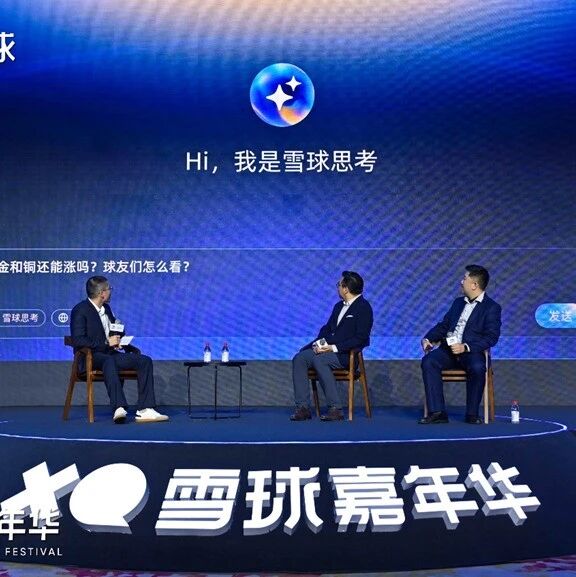
量化投资深度对话:拆解超额收益逻辑,展望行业未来趋势
雪球· 2025-12-25 08:04
Core Viewpoint - The article discusses the performance and future trends of quantitative investment strategies in 2025, highlighting the coexistence of differentiation and opportunities within the public quantitative fund industry [2][4][5]. Group 1: Differentiation in Quantitative Investment - The public quantitative industry in 2025 is characterized by product differentiation, with a wider variety of quantitative products available compared to previous years, including strategies covering 500, 1000, and 2000 indices [4]. - Alpha differentiation has expanded, with significant variations in excess returns among different models on the same platform, indicating a rare occurrence of divergence within the industry [4]. - There is a notable performance gap between public and private quantitative funds, with public funds being more conservative due to compliance constraints, while private funds have shown better performance in small-cap stocks [4]. Group 2: Opportunities in Quantitative Investment - 2025 is seen as a significant year for quantitative investment, with active market participation and substantial individual stock differentiation creating a favorable environment for excess returns [5]. - The year marks the implementation of high-quality development policies in public funds, promoting "constrained active management" as a mainstream approach, which opens new opportunities for quantitative methods across various investment processes [5]. - Quantitative investment is increasingly recognized as a valuable methodology for predicting returns, managing risks, optimizing portfolios, and executing trades, leading to broader application across the asset management industry [5]. Group 3: Trends and Future Outlook - The future of public quantitative investment is expected to be expansive, with an increasing number of listed companies and improved liquidity, providing ample opportunities for differentiation in quantitative strategies [10]. - The integration of AI into public quantitative investment is anticipated to enhance investment methodologies, emphasizing the need for precision and detail in research and development [10]. - The focus for 2026 will be on strengthening the alpha generation capabilities while ensuring robust risk management to maintain investor confidence during market volatility [11].

从这些关键词中寻找确定性:科技、长期主义、多元配置|2025雪球嘉年华
雪球· 2025-12-23 08:27
Core Insights - The 2025 Xueqiu Carnival highlighted "long-termism" and "asset allocation" as key themes, emphasizing the need for diverse and forward-looking strategies for investors in 2026 [1] - AI emerged as a central topic across discussions, indicating its pervasive influence on various sectors and investment strategies [1][17] Macroeconomic Trends - China's economic positioning is seen as a "fast variable" and "stabilizer" in the global economy, with a systematic comparative advantage that suggests a value reassessment of Chinese assets [3] - The ongoing "East rises, West declines" trend is expected to continue, with a focus on the integration of investment in both material and human capital as a core strategy for understanding Chinese modernization and future investment opportunities [3] Market Structure and Investment Strategies - The Chinese market is characterized by excess liquidity chasing "scarce return assets," with a notable divergence in asset performance despite a bullish market [5] - Credit expansion is identified as a key explanatory factor for market behaviors, influencing the relative performance of tech stocks and global asset flows, providing guidance for 2026 investment directions [5] - A recommendation for 2026 includes pairing AI investments with dividend-paying sectors to optimize returns [6] Diversified Investment Strategies - The rise of passive investment strategies, particularly ETFs, is emphasized as a crucial tool for investors, with China becoming the largest ETF market in Asia [9] - For aggressive investors, equity assets are expected to show significant advantages driven by corporate profit improvements and global liquidity, suggesting a "tech-first, then cyclical" market approach [9] - Conservative investors are advised to adopt a multi-asset, multi-strategy approach to smooth out volatility in their portfolios [9] AI and Technology Investments - AI is anticipated to drive significant changes across various industries, with a focus on long-term investment in companies that can define the future and possess strong competitive advantages [20] - The AI sector is viewed as being in the early to mid-stage of technological explosion, with high certainty for the next few quarters, although caution is advised regarding potential interest rate hikes impacting high-valuation sectors [21] Semiconductor and Robotics - The semiconductor industry is expected to continue benefiting from AI-driven demand, with investment logic not solely based on valuation but also on technological advancements and market dynamics [24] - The robotics sector is predicted to enter a critical industrialization phase, with significant investment opportunities arising from mass production and application scenarios [27] Thematic Investment Opportunities - Gold is highlighted as a long-term structural investment, influenced by monetary policy and geopolitical factors, with a recommendation for a balanced approach between safety and growth [30] - The consumer sector is undergoing industrialization, with opportunities emerging from new demand and international expansion strategies [30] - The healthcare sector, particularly innovative pharmaceuticals, is seen as a key area for investment, with a focus on companies that can leverage technological breakthroughs for growth [31]
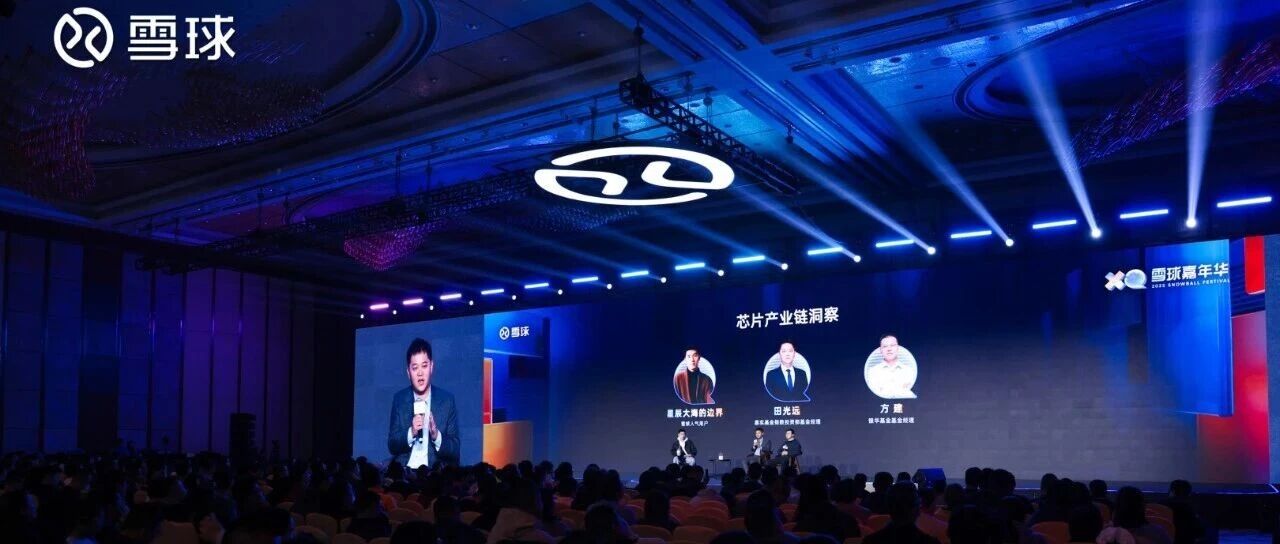
大部分基金公司都是陪跑
Xin Lang Cai Jing· 2025-12-23 01:44
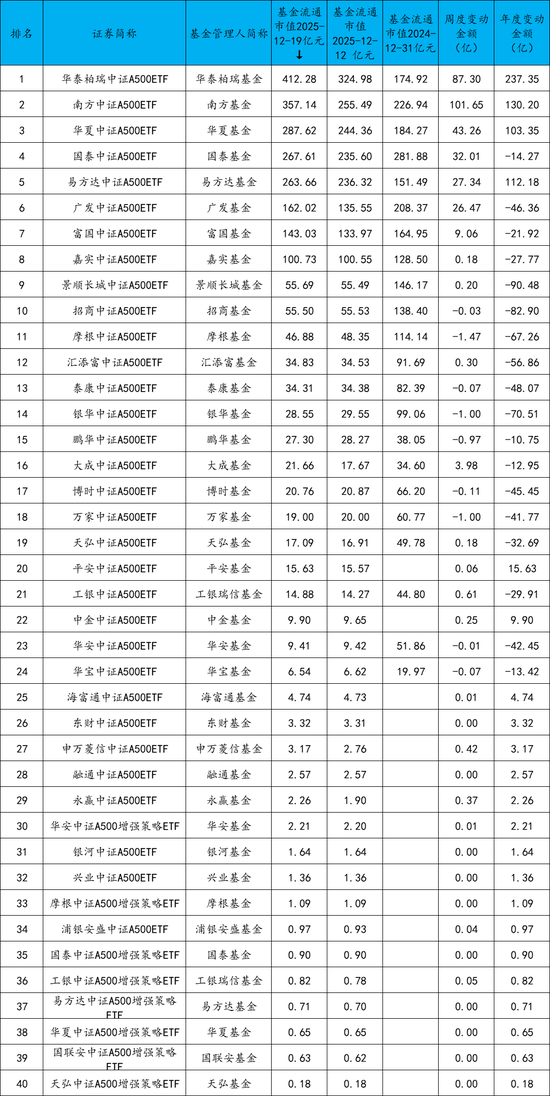
Core Viewpoint - The launch of the CSI A500 index has created a competitive landscape in the ETF market, where only a few major players dominate, while many smaller firms end up as "also-rans" [1][2][10]. Group 1: Market Dynamics - The CSI A500 index was launched in September 2024 and is considered a significant opportunity for public funds, leading to a rush of product submissions from various fund companies [2][17]. - By mid-December 2025, the total market size of A500 ETFs approached 250 billion yuan, indicating a rapid growth in this segment [2][17]. - The market has shown a clear "head effect," where a few leading funds capture the majority of the assets, leaving smaller firms struggling to compete [3][18]. Group 2: Fund Performance - The top five A500 ETFs, including Huatai-PB, Southern, and Huaxia, have assets ranging from 260 billion to 412 billion yuan, collectively dominating the market with nearly 1.6 trillion yuan [6][22]. - Recent inflows have been substantial, with Huatai-PB and Southern ETFs attracting 87.30 billion and 101.65 billion yuan, respectively, in just one week [7][22]. - The performance of smaller funds has been lackluster, with many experiencing significant redemptions and struggling to maintain their market presence [7][22]. Group 3: Challenges for Smaller Firms - Smaller public funds face significant challenges due to resource constraints, making it difficult to compete with larger firms that have established marketing and distribution channels [11][12]. - The cost of marketing and maintaining sales channels is high, with management fees for A500 ETFs around 0.15%, making it hard for smaller firms to achieve profitability without substantial scale [11][12]. - Some smaller firms have opted to withdraw from the competition, adopting a strategy of waiting rather than engaging in a costly race for market share [12][13]. Group 4: Future Outlook - The competitive landscape suggests that the development of index funds should be gradual, focusing on building differentiated competitive advantages rather than following trends blindly [13]. - Smaller firms may need to explore niche markets such as thematic, strategy-based, QDII, bond, or actively managed ETFs to find sustainable growth opportunities [13]. - The prevailing trend indicates that a few giants will continue to dominate the market, while many participants may remain on the sidelines [14].
基金早班车丨公募基金新发数量创近4年新高,QDII高溢价警报不断
Jin Rong Jie· 2025-12-23 00:45
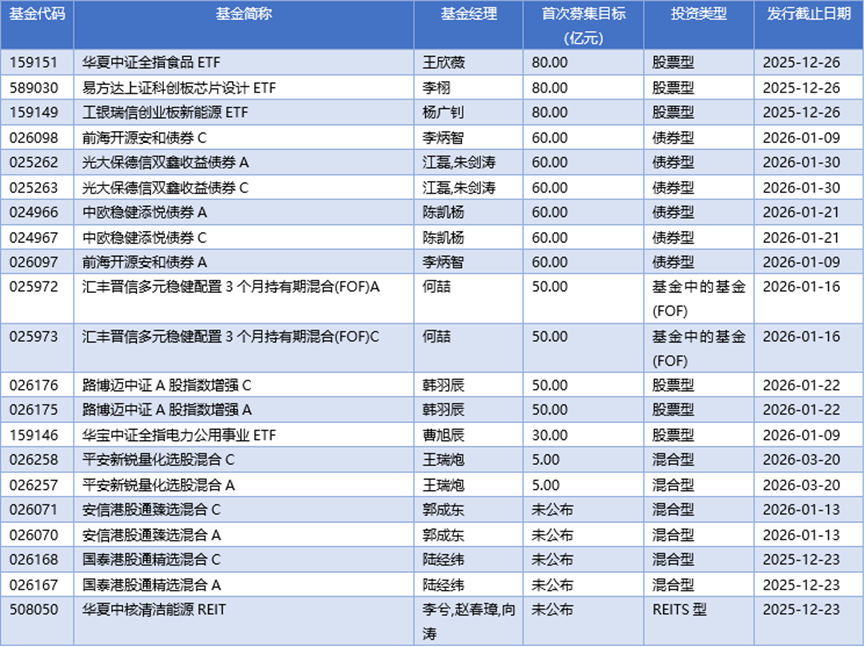
Group 1 - The core point of the article highlights a significant increase in the establishment of new public funds, with 1,468 funds launched in 2024, marking a 29.3% growth compared to the previous year, setting a record for the past four years [1] - The A-share market showed positive performance on December 22, with major indices rising: Shanghai Composite Index up 0.69% to 3,917.36 points, Shenzhen Component Index up 1.47% to 13,332.73 points, and ChiNext Index up 2.23% to 3,191.98 points, with total trading volume reaching 1.86 trillion yuan [1] - The tightening of QDII quotas has led to several products reducing the RMB subscription limit to 10 yuan, with some market premiums exceeding 20%, indicating potential risks for investors [1] Group 2 - On December 22, 21 new funds were launched, primarily focusing on bond and equity funds, with the Huaxia CSI All-Share Food ETF aiming to raise 8 billion yuan [2] - Public funds have invested a total of 34.088 billion yuan in 85 A-share companies in 2025, reflecting a year-on-year increase of over 14%, with the electronics sector being a key focus [2] - The public fund management scale is expected to reach new records in 2025, with a shift towards quality over quantity, driven by fee reforms and a diverse range of ETF offerings [2] Group 3 - A detailed list of new funds launched on December 22 includes various ETFs and bond funds, with several funds targeting 6 billion yuan or more [3] - The list of funds also includes specific details such as fund codes, managers, and investment types, indicating a broad range of investment strategies being employed [3] Group 4 - A summary of fund dividends on December 22 shows that 38 funds distributed dividends, with the highest payout being 3.1 yuan per 10 shares for the Huabao CSI 300 Index Enhanced Fund [4] - The dividend distribution reflects a growing trend in fund payouts, enhancing the perceived value for fund holders [4]
以信筑梁 公募改革回应“获得感”之问
Zhong Guo Zheng Quan Bao· 2025-12-22 20:19
Core Insights - The Chinese public fund management scale reached 36.96 trillion yuan by October 2025, highlighting the industry's global influence and the importance of investor trust as a foundation for development [1] - The China Securities Regulatory Commission (CSRC) introduced a comprehensive reform plan in May 2025 aimed at enhancing the quality of public funds, focusing on fee structures, performance benchmarks, long-term assessments, and sales ecosystems [1][2] - The industry is undergoing a transformation to ensure that investor trust translates into predictable and sustainable returns, with a focus on collaborative efforts across product, research, sales, and customer service [1][3] Investment Research Innovation - The reform emphasizes the need for stable performance metrics, with the CSRC's guidelines on performance benchmarks aiming to enhance the reliability of historical performance as a reference for future investments [2] - Fund managers are encouraged to anchor their strategies to performance benchmarks, ensuring style stability and clear product positioning to improve investor confidence [2][3] Research Methodology Transformation - The investment research approach is shifting from individualistic strategies to a more integrated, systematic framework, promoting a platform-based, multi-strategy research system [3] - The focus is on clarifying sources of returns and defining risk boundaries, which helps in rationalizing investor expectations and building long-term trust [3] Sales Transformation - The sales model is evolving from a traditional agent role to a guardian role, emphasizing the importance of investor experience and aligning sales practices with long-term investor interests [4][6] - The industry is adopting a floating fee structure linked to fund performance, which has led to a significant increase in the issuance of floating fee funds since the reform plan was announced [5][6] Assessment Mechanism Overhaul - The reform plan mandates the establishment of a performance-centric assessment system for fund companies, reducing the emphasis on scale and short-term metrics [6][7] - Long-term performance assessments are prioritized, with a requirement that at least 80% of the evaluation weight be based on three-year performance, promoting stability and precision in fund management [6][7] Investor Experience Focus - Companies are increasingly incorporating investor experience metrics into their assessment frameworks, aiming to enhance long-term investor engagement and satisfaction [7] - The industry recognizes the importance of creating value for clients, as the management of public funds directly impacts the financial well-being of countless households [7]
公募新发数量创近4年新高,股基赶超债基站上“C位”
Zheng Quan Shi Bao· 2025-12-22 00:24
Core Insights - The public fund issuance market has seen a significant shift since 2025, with equity funds taking center stage, marking a departure from the previously dominant bond funds [1][4][10] - A total of 1,468 new funds were established in 2025, the highest number in nearly four years, indicating a return of market vitality and a shift towards a more refined approach in fund management [2][3][10] Fund Issuance Trends - The total fundraising scale for new funds in 2025 reached 11,637.62 billion, remaining stable compared to previous years, reflecting a more rational and detailed market issuance rather than reliance on a few blockbuster products [3][10] - The number of new equity funds reached 807, with a fundraising scale of 4,083.62 billion, accounting for 35.96% of the total new fund issuance, the highest proportion in nearly a decade [4][5] Structural Changes in Fund Types - The proportion of bond funds has significantly decreased from 70.19% in 2024 to 41.22% in 2025, indicating a clear shift in market risk appetite [6][10] - Mixed funds saw an increase in issuance to 13.66% (1,551.03 billion), but still far from the peak of 56.58% in 2021, suggesting a preference for clearer investment styles among investors [7][10] Innovation in Fund Products - The market has seen a surge in innovative products, with FOFs (Fund of Funds) growing to 81 new funds and a scale of 810.68 billion, reflecting increasing demand for professional asset allocation [8][10] - Public REITs have also expanded, with 19 new products and 10.5 billion shares issued, providing new channels for investors to participate in physical assets [9][10] - QDII funds have shown a focus on strategy diversity, with recent products covering various international markets, indicating an active global investment approach [10] Future Outlook - The public fund industry is expected to play a more critical role in supporting the transformation of the real economy and meeting the wealth management needs of residents, driven by the clarity of equity investment and the development of diverse tools like FOFs, REITs, and QDIIs [11]
公募REITs周报(第46期):指数震荡下行,产权类表现更优-20251215
Guoxin Securities· 2025-12-15 02:21
Report Industry Investment Rating - Not provided in the given content Core Viewpoints - This week, the China Securities REITs Index fell 0.5% for the week, with the average weekly price changes of equity REITs and franchise REITs being +0.4% and -0.6% respectively. REITs underperformed major stock and bond indices. As of December 12, 2025, the dividend yield of equity REITs was 35BP lower than the average dividend yield of CSI Dividend stocks, and the spread between the average internal rate of return of franchise REITs and the 10-year Treasury yield was 295BP [1]. - The year-to-date price change of the China Securities REITs Index was 1.0%. In the past year, the return rate of the China Securities REITs Index was 2.0%, with a volatility of 7.4%. The total market value of REITs on December 12 was 217.6 billion yuan, a decrease of 200 million yuan from the previous week, and the average daily turnover rate for the week was 0.37%, unchanged from the previous week [2][9]. Summary by Relevant Catalogs Secondary Market Trends - Main Index Weekly Price Changes: CSI Convertible Bonds > CSI All-Bond Index > CSI 300 > China Securities REITs. As of December 12, 2025, the closing price of the China Securities REITs (Closing) Index was 797.54 points, with a weekly price change of -0.5%, underperforming the CSI Convertible Bonds Index (+0.2%), the CSI All-Bond Index (+0.18%), and the CSI 300 Index (-0.1%) [2][6]. - In terms of different project attributes, the average weekly price changes of equity REITs and franchise REITs were +0.4% and -0.6% respectively. In terms of different project types, most REIT sectors closed up, with municipal facilities, new infrastructure, and water conservancy facilities leading the gains. The top three REITs in terms of weekly price increase were Huatai Nanjing Jianye REIT (+7.33%), CICC Chongqing Liangjiang REIT (+5.07%), and GF Chengdu Gaotou Industrial Park REIT (+5.06%) [3][14][18]. - New infrastructure REITs had the highest trading activity, with an average daily turnover rate of 0.9%. Transportation infrastructure REITs had the highest trading volume this week, accounting for 25.8% of the total REIT trading volume. The top three REITs in terms of net inflow of main funds were Southern Runze Technology Data Center REIT (11.84 million yuan), China Merchants Shekou Rental Housing REIT (5.95 million yuan), and Hongtu Innovation Yantian Port REIT (5.66 million yuan) [3][20][21]. Primary Market Issuance - As of December 12, 2025, there were 3 REIT products in the exchange's "accepted" stage, 2 in the "declared" stage, 2 in the "inquired" stage, 4 in the "feedback" stage, 7 products that had passed and were waiting to be listed, and 13 first-issue products that had passed and were listed [23]. Valuation Tracking - REITs have both bond and equity characteristics. As of December 12, the average annualized cash distribution rate of public REITs was 6.13%. Different project types had different relative net value discount/premium rates, P/FFO, IRR, and annualized dividend rates [25][26]. - As of December 12, 2025, the dividend yield of equity REITs was 35BP lower than the average dividend yield of CSI Dividend stocks, and the spread between the average internal rate of return of franchise REITs and the 10-year Treasury yield was 295BP [1][28]. Industry News - Huaxia Zhonghe Clean Energy REIT was approved for registration on December 8, 2025. It is the first public REIT product under China National Nuclear Corporation, with the underlying asset being the Bobona Hydropower Station in Hotan, Xinjiang. Boshi Shandong TieTou Road & Bridge REIT has been officially declared to the Shanghai Stock Exchange, with the underlying asset being the Changqing Yellow River Bridge [4][34].
多元资产配置“助攻”FOF重焕生机规模有望创新高
Zheng Quan Shi Bao· 2025-12-14 22:24
Core Viewpoint - The trend of diversified asset allocation in public funds is becoming significant, with new investment options expanding beyond A-shares and domestic bonds to include Hong Kong stocks, commodity futures, public REITs, and overseas market products [1][2][5] Group 1: Expansion of FOF Investment Boundaries - Public funds are increasingly diversifying their asset allocation, moving away from a focus on A-shares and domestic bonds to include a wider range of options such as Hong Kong stocks, commodity futures, public REITs, and overseas products [2][3] - In 2023, 82 new FOF products were established, with over 40% incorporating gold indices as performance benchmarks, and 12 FOFs using mainstream overseas indices [2][3] - The proportion of alternative investment funds within FOF assets reached a historical high of 2.75%, indicating a strong trend towards diversified asset allocation [2][3] Group 2: Popularity of Gold and Overseas Assets - Gold has become a prominent choice in FOFs, with 34 out of 82 new FOFs this year using gold indices as benchmarks, reflecting a significant increase in interest [2][3] - FOFs are increasingly using overseas indices such as the MSCI World Index and S&P 500 as benchmarks, with 12 products adopting these indices [3][4] - Public REITs are emerging as a popular choice for FOFs, with several funds modifying contracts to include them in their investment scope [3][4] Group 3: Market Demand for Diversified Allocation - The demand for diversified asset allocation has intensified, with investors prioritizing absolute returns over short-term high yields due to increased market volatility [5][6] - In 2023, the new fundraising scale for FOFs exceeded 800 billion yuan, with significant contributions from several high-performing products [6][7] - The overall market size of FOFs is projected to surpass 2000 billion yuan, potentially setting a new record [6][7] Group 4: Changes in FOF Investment Logic - The investment logic of FOFs has shifted from merely selecting star fund managers to focusing on achieving investment goals through diversified asset allocation [8][9] - Many public funds are emphasizing diversified asset allocation as a core focus, with teams restructuring to enhance their investment research systems [9]
持有人专属增厚收益公募REITs扩募现创新案例
Zhong Guo Zheng Quan Bao· 2025-12-14 20:19
Core Viewpoint - The article discusses the innovative expansion case of public REITs, specifically focusing on the first public REIT that adopted a method of offering shares to existing holders, emphasizing the importance of participation to avoid asset dilution [1][2]. Group 1: Expansion Method and Implications - The 华夏基金华润有巢 REIT is the first public REIT to use the method of offering shares to existing holders, requiring them to either participate in the subscription or sell their original shares to avoid losses [1][2]. - The subscription price for the offering was set at 2.53 yuan per share, with a total of 5 billion shares available for subscription, allowing for 4.5 billion shares to be allocated at a ratio of 0.9 [1]. - The total amount raised from this offering is expected to be between 9.915 billion yuan and 11.400 billion yuan, with a potential total fundraising of 11.385 billion yuan if all existing holders fully subscribe [1]. Group 2: Investor Considerations - Existing holders who do not participate in the offering or do not participate sufficiently will face losses due to price adjustments post-offering, as the offering price is typically lower than the market price [2]. - Investors are advised to consider the quality of the assets being purchased, their financial situation, and the long-term value of the fund when deciding whether to participate in the offering or sell their existing shares [2]. Group 3: Characteristics of the Offering Method - The method of offering shares to existing holders is designed to protect their interests and ensure that their rights are not diluted, reflecting a recognition and reward for long-term holders [3]. - This approach provides tangible benefits for those who fully participate in the offering, as a higher abandonment rate by others increases the potential returns for those who do participate [3]. Group 4: Market Trends and Regulatory Support - The expansion of public REITs has accelerated since 2025, with a notable increase in directed offerings being the mainstream method [4]. - As of this year, six public REITs have completed expansions totaling 77.34 billion yuan, with a significant portion allocated to strategic investors and directed offerings [4]. - Recent regulatory support aims to simplify the process for new project acquisitions through expansions, encouraging existing REITs to raise funds for quality asset purchases [4].