
海信视像

Search documents
益普索:中国品牌全球净信任度较2024年提升12个百分点
Xin Lang Cai Jing· 2025-12-24 06:39
Core Insights - The report by Ipsos indicates that the global net trust index for Chinese brands reached 32% in 2025, a significant increase of 12 percentage points compared to 2024, reflecting a continuous rise in trust levels [1] Group 1: Trust Levels - In 2025, the proportion of respondents in developed markets who expressed strong or moderate trust in Chinese brands rose to 36%, with particularly strong performance in the UK and US markets [1] - The consumer electronics sector sees Lenovo, Huawei, and Xiaomi maintaining the top three positions in the trust rankings [1] - In the smart home appliance sector, brands such as Hisense, Haier, TCL, and Midea have seen their trust indices and rankings rise in tandem [1] Group 2: AI Industry Insights - The AI sector is identified as a core area of competition between China and the US, with emerging markets like Malaysia (57%) and Qatar (51%) showing a higher willingness to purchase/use Chinese AI products compared to the US [1]
中国品牌跨越信任临界线:2025全球信任指数报告解析
Jing Ji Guan Cha Bao· 2025-12-24 06:23
Core Insights - The global trade landscape is undergoing a structural upheaval due to a new wave of tariffs, reshaping international perceptions of different countries [1] - Chinese brands are at a critical turning point in their globalization process, transitioning from mere product exports to deepening brand value and achieving global trust [1] - The "2025 China Brand Global Trust Index" report by Ipsos reveals new pathways and core opportunities for Chinese brands to build global trust [1] Global Trust Landscape - A significant transformation in the global brand trust landscape is occurring, with European and American brands declining while brands from China, Japan, and South Korea are rising [2] - 49% of global respondents believe China has a positive impact on world affairs, a 10 percentage point increase from 2024, marking the first time this figure surpasses that of the U.S. [2] - China's global net trust level for brands reached 32%, a substantial increase of 12 percentage points from 2024, while U.S. brand trust declined from 68% in 2021 to 61% in 2025 [2] Developed Markets as Key Battlegrounds - In developed markets, the net trust in Chinese brands has turned positive for the first time, with 36% of respondents expressing trust, a 6 percentage point increase from 2024 [3] - Trust levels in the UK rose from 29% in 2021 to 49% in 2025, while the U.S. reached 48%, also a 6 percentage point increase [3] - In emerging markets, the net trust in Chinese brands soared to 51%, a 13 percentage point increase from 2024, with Nigeria and Egypt leading globally [3] Benchmark Brands Leading Trust Upgrade - Chinese benchmark brands are showing strong global trust performance, particularly in the consumer electronics sector, with Lenovo, Huawei, and Xiaomi leading the rankings [4] - The purchase intent for Chinese consumer electronics brands reached 40%, surpassing that of U.S. (38%) and South Korea (34%) [4] - Smart home appliance brands like Hisense and Haier are also seeing trust growth, bolstered by technological innovation and global expansion [4] Automotive and E-commerce Industry Insights - The automotive sector is significantly influenced by the country of origin effect, with Chinese brands' purchase intent at 30%, trailing behind Japanese and German brands [5] - E-commerce platforms are experiencing a decline in overall trust index due to tariff fluctuations, but Temu's recognition surged, moving from 29th to 20th place [5] - The AI sector is emerging as a competitive core area, with countries like Malaysia and Qatar showing higher purchase intent for Chinese AI products than the U.S. [5] Trust Drivers and Market Strategies - Trust drivers for Chinese brands have diversified, with "providing high-quality products/services" remaining the top factor at 10.9% [6] - In developed markets, relationship-oriented factors are prioritized, while emerging markets focus more on product and environmental dimensions [6] - Social media advertising is the primary channel for brand marketing, with a global reach of 59%, particularly effective in emerging markets [7] Conclusion - As the global trust landscape is restructured, Chinese brands are positioned at a new historical starting point, transitioning from product output to brand credibility [8] - The future success of Chinese brands hinges on long-term strategies, high-quality products, ESG practices, and localized approaches to deepen global trust [8]
格力称暂无“铝代铜”计划,董明珠曾称“在没有100%的把握前,格力空调绝不使用;此前美的、小米等品牌推动“铝代铜”标准落地引热议
Hang Zhou Ri Bao· 2025-12-24 04:51
Core Viewpoint - The air conditioning industry is actively exploring the use of aluminum as a substitute for copper, but significant technical challenges remain, particularly regarding the performance and reliability of aluminum compared to copper [1][2][3]. Group 1: Company Insights - Gree Electric stated that copper constitutes about 20% of air conditioning costs, and despite aluminum being cheaper, it currently lacks the performance and reliability of copper, leading to no immediate plans for aluminum substitution [1][2]. - Gree's Chairman, Dong Mingzhu, emphasized that while aluminum can technically replace copper, the company will not adopt it until it meets the same technical standards as copper [1][2]. - The rising copper prices, which have exceeded $10,000 per ton, have prompted discussions about aluminum substitution as a cost-reduction strategy in the industry [1][3]. Group 2: Industry Developments - The Chinese home appliance industry is accelerating the development of standards for aluminum substitution, with various companies participating in the formulation of guidelines and standards [2][4]. - A group of leading air conditioning companies, including Haier and Midea, has committed to a self-regulatory agreement to promote responsible communication regarding aluminum heat exchangers [2][4]. - The China Household Electrical Appliances Association has proposed five initiatives to guide the responsible application of aluminum in air conditioning, emphasizing quality assurance and consumer rights [4][5]. Group 3: Technical Challenges - The primary challenges in substituting aluminum for copper include aluminum's inferior thermal conductivity, corrosion resistance, and long-term reliability, which necessitate further technological advancements [2][8]. - The complexity of aluminum welding processes poses additional challenges for manufacturers, requiring enhanced capabilities and skills [2][8]. - Despite the challenges, the industry is making progress in developing aluminum technologies, with some companies achieving breakthroughs in specific applications [7][9]. Group 4: Market Dynamics - China is the largest producer and consumer of air conditioning units, with about 80% of its copper supply imported, while it controls 60% of global aluminum production, making aluminum a more stable resource option [1][8]. - The significant cost pressures from fluctuating copper prices have led the industry to consider aluminum as a viable alternative to maintain competitive pricing [9][10]. - The ongoing technological advancements in aluminum materials aim to enhance their performance, making them a more feasible option for air conditioning applications in the future [9][10].


豆包手机声量登顶,豆包家电缘何锦衣夜行?
3 6 Ke· 2025-12-24 03:13
Core Insights - Doubao Mobile's "AI Custody" feature has become a phenomenon in the market, showcasing the practical application of AI terminals [1] - The device can simulate human-like finger movements to complete complex tasks across multiple applications, significantly enhancing user convenience [2] - Despite the popularity of Doubao Mobile, the AI home appliance sector remains relatively stagnant, raising questions about the disparity between mobile and home appliance AI adoption [3][4] Industry Analysis - The AI home appliance market is facing challenges due to hardware compatibility issues, as many appliances are not designed for advanced AI interactions [6] - The practical application of AI in home appliances is limited by the need for effective user demand matching and value communication [7] - The commercial monetization of AI home appliances is indirect, with current revenue models primarily focused on hardware sales rather than AI service monetization [11] Company Strategies - Major players like Midea and TCL are investing heavily in AI technology, with Midea integrating its "Meiyan" model into various appliances, while TCL focuses on enhancing user interaction through AI [12][13] - Emerging brands like Tineco are innovating in specific segments, such as cleaning appliances, by combining improved hardware design with proprietary AI models [14][16] - The industry is moving towards a more interconnected AI ecosystem, with companies exploring cross-platform and cross-device integration to enhance user experience [18][20] Cost and Market Dynamics - The introduction of AI technology in home appliances significantly increases hardware costs, which poses a barrier to widespread adoption [21][23] - Companies are exploring strategies to balance the high costs of AI integration with the need for practical, user-friendly applications [24] - The future of AI home appliances hinges on achieving cost-effective solutions, establishing industry standards, and effectively communicating the value of AI features to consumers [25]
“两新”政策优化及延续,11月家用空调内外销数据出炉
Jianghai Securities· 2025-12-23 12:13
Investment Rating - The industry rating is "Overweight" (maintained) [6] Core Insights - The Central Economic Work Conference emphasized the implementation of consumption-boosting actions and the optimization of the "Two New" policy, which is expected to support domestic demand growth in the household appliance sector [6] - In November 2025, China's household air conditioner production reached 10.577 million units, a year-on-year decline of 36.7%, with sales at 10.492 million units, down 31.8% year-on-year [6] - The "old-for-new" policy has significantly boosted sales, with related product sales exceeding 2.5 trillion yuan from January to November 2025, benefiting over 360 million consumers [6] - The household air conditioner market is currently experiencing a downturn due to multiple factors, including weak terminal demand following the reduction of national subsidies and high inventory levels in overseas markets [6] Summary by Sections Industry Performance - The relative performance over the last 12 months shows a decline of 9.87% compared to the CSI 300 index, while absolute returns were positive at 7.54% [3] Market Dynamics - The report highlights that the household appliance industry is under pressure, particularly in the air conditioning segment, which is facing a phase of adjustment [6] - The future competition in the vacuum cleaner market is expected to shift towards ecosystem building and service capabilities, moving beyond just product offerings [6] Investment Recommendations - The report suggests focusing on leading white goods companies such as Midea Group, Gree Electric Appliances, and Hisense Home Appliances, as well as black goods exporters like TCL Electronics and Hisense Visual [6]
内销大盘符合预期,两轮车补库在即
Orient Securities· 2025-12-23 08:16
Investment Rating - The report maintains a "Positive" outlook for the home appliance industry, indicating a relative strength of over 5% compared to the market benchmark index [5]. Core Insights - The domestic sales performance aligns with expectations, with a gradual transition into a post-subsidy era in 2026. In November 2025, home appliance sales reached 10.49 million units, down 31.8%, with domestic sales at 4.05 million units, down 39.8%, and exports at 6.44 million units, down 25.6% [7]. - The new national standard for electric two-wheelers is being implemented, with a significant inventory replenishment expected in the first half of 2026. The new models are being introduced, and a concentrated restocking period is anticipated [7]. - Key players in the cleaning appliance sector are undergoing ownership changes, which may impact market dynamics. iRobot is undergoing bankruptcy restructuring, while the founder of追觅科技 is acquiring a controlling stake in 嘉美包装 [7]. Summary by Sections Domestic Market Performance - The domestic market is experiencing a decline, which was anticipated. The central economic work conference confirmed the continuation of national subsidy policies into 2026, with adjustments expected to enhance service consumption [3][7]. Electric Two-Wheelers - The implementation of the new national standard for electric two-wheelers began on September 1, 2025, leading to the cessation of production and sales of old standard models. A significant inventory depletion is expected by the end of December 2025, with new models set to launch soon [7]. Key Players and Market Changes - iRobot's bankruptcy restructuring is expected to maintain brand operations but may not significantly alter market dynamics. The acquisition of 嘉美包装 by 追觅科技's founder could lead to strategic shifts in the cleaning appliance sector [7].





第21届中国音视频产业大会(AVF)暨“科技创新奖”颁奖礼在京成功召开
Jin Tou Wang· 2025-12-23 08:04
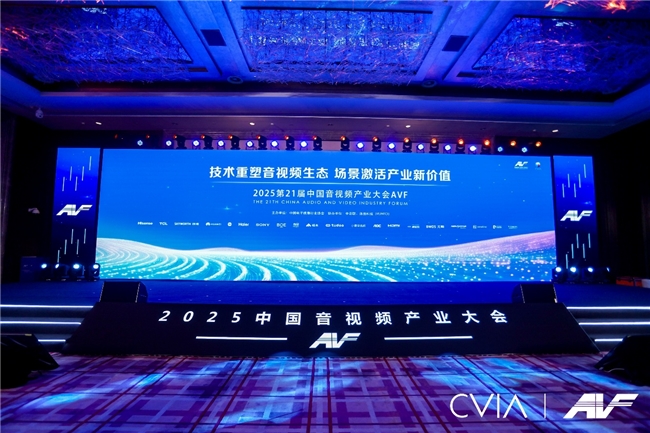
Core Insights - The 21st China Audio-Video Industry Conference was held with the theme "Technology Reshaping the Audio-Video Ecosystem, Activating New Value in the Industry" on December 19, 2025, in Beijing, highlighting the importance of technological innovation in the audio-video sector [1] Industry Overview - The audio-video industry in China has achieved significant milestones during the 14th Five-Year Plan, with the display industry scale surpassing 1 trillion yuan and the annual output value of the audio-video industry chain exceeding 6 trillion yuan, accounting for over 70% of global consumer electronics production [4] - The conference emphasized the need for the industry to strengthen four foundations: increasing R&D investment, enhancing supply chain security and resilience, building a robust domestic market, and expanding overseas markets [4] Key Achievements and Initiatives - Three major outcomes were announced: the "Mainstream Size Recommendation Standard for Living Room Flat Panel TVs," the "White Paper on Display Technology Revolution and Visual Health Development," and the "Initiative for Promoting Intelligent Upgrades in Smart Home Services" [2][29] - The "Technology Innovation Award" was presented to recognize significant technological achievements and leading figures in the audio-video field [32] Future Trends - The report on the development of the smart home appliance and consumer electronics industry predicts that by 2025, sales of key products will reach 900 million units, with over 85% of sales being energy-efficient products [8] - AI is identified as the most important internal driving force for the industry, with the smart hardware market expected to exceed 1 trillion yuan, leading to innovation in product categories and industry scenarios [8] Special Sessions - A special session titled "Salute to the 100 Years of Television" was held to commemorate the centenary of television, featuring discussions on the evolution of the industry and future development trends [20][22] - The conference also launched the "Hundred-Inch TV Renewal Action Plan," promoting the new standard for mainstream TV sizes [24] Health and Technology Integration - The "White Paper on Display Technology Revolution and Visual Health Development" aims to guide consumers on eye protection and assist in the development of industry standards [28] - The integration of AI technology with the audio-video and display industries is accelerating, addressing challenges such as device interoperability and service experience [29]
宋志平:2026,抵制内卷和重塑经营范式
Xin Lang Cai Jing· 2025-12-23 04:52
Core Viewpoint - The recent Central Economic Work Conference emphasizes the need for a shift in business paradigms to resist "involution" competition and focus on value creation and high-quality development [2][26]. Group 1: Transition from Scale to Quality - Chinese enterprises have achieved significant growth, with 130 companies entering the Fortune Global 500 this year, but now must transition from speed and scale to quality and efficiency [4][29]. - The criteria for measuring development quality include investment returns, market presence, profitability, employee income, government tax revenue, and environmental improvement [4][29]. - Companies like Midea are focusing on modern governance to ensure stable development, projecting a profit of 38.5 billion yuan in 2024 with a market value of 630 billion yuan [4][29]. Group 2: Focus on Core Competencies - Companies should prioritize strengthening their core business rather than blindly expanding into unrelated areas, as many issues arise from straying from core competencies [6][31]. - The principle of business core focus suggests eliminating non-core and loss-making operations to maintain clarity and efficiency [6][31]. - For instance, CATL focuses solely on its core business of power batteries, projecting a profit of 50.7 billion yuan in 2024 with a market value of 1.8 trillion yuan [6][31]. Group 3: Shift from Management to Strategic Operations - The current era requires businesses to focus on strategic operations rather than just management, emphasizing the importance of making the right business decisions to enhance profitability [7][32]. - Effective leadership involves setting strategic direction and resource acquisition while delegating management tasks to subordinates [7][32]. - The distinction between management and operations is crucial, with a focus on generating revenue and market engagement being paramount [7][32]. Group 4: Value-Driven Pricing Strategies - Companies must transition from cost-based pricing to value-based pricing, focusing on the value delivered to customers rather than merely production costs [13][40]. - The importance of understanding the relationship between price, volume, and cost is highlighted, with a focus on maintaining price stability in over-saturated markets [17][42]. - Successful brands like Pop Mart leverage emotional and social value in their products, achieving significant revenue growth and market capitalization [41]. Group 5: Moving Towards Cooperative Competition - The need for a shift from harmful competition to cooperative competition is emphasized, where companies focus on creating value rather than engaging in destructive price wars [18][43]. - The concept of "prisoner's dilemma" illustrates the need for industry players to prioritize collective industry benefits over individual gains [19][44]. - Promoting a cooperative ecosystem within industries can lead to sustainable growth and mutual benefits for all stakeholders involved [19][44].





惠科回复IPO首轮审核问询函
WitsView睿智显示· 2025-12-23 04:39
Core Viewpoint - Huike Co., Ltd. is undergoing its IPO process, with a focus on increasing revenue through major clients and new investment projects aimed at enhancing production capacity and technology [1][5]. Revenue and Clients - Huike's revenue is projected to grow from 26.965 billion yuan in 2022 to 40.282 billion yuan in 2025, indicating a continuous upward trend [3]. - Major clients include TCL Group, Hisense Group, and Xiaomi Group, with sales to these clients showing consistent growth over the years [3][4]. - Sales revenue from the top five clients accounted for approximately 38.37% to 42.86% of total revenue during the reporting period [4]. Investment Projects - The company plans to raise 8.5 billion yuan through its IPO to fund three key projects: - "Changsha New OLED R&D Upgrade Project" (total investment of 3 billion yuan) - "Changsha Oxide R&D and Industrialization Project" (total investment of 3 billion yuan) - "Mianyang Mini-LED Intelligent Manufacturing Project" (total investment of 2.5 billion yuan) [5]. - The Changsha Oxide project is expected to add a monthly capacity of 15,000 large panels, generating an estimated annual revenue of approximately 3.495 billion yuan upon full production [5]. Operating Costs and Suppliers - Direct materials accounted for 70.36% to 64.00% of Huike's main business costs over the reporting period, while manufacturing expenses showed a slight increase [6][8]. - The procurement prices for key raw materials such as polarizers and chips have generally decreased, contributing to a slight decline in the proportion of direct materials in total costs [7]. - The company’s top five suppliers accounted for approximately 27.34% to 28.87% of total raw material procurement costs during the reporting period [9][10].

国信证券晨会纪要-20251223
Guoxin Securities· 2025-12-23 01:20
Macro and Strategy - Silver prices have reached historical highs, driven by its dual industrial and financial attributes, with over 60% of silver used in industrial applications as of December 2025 [6][7] - The recent surge in silver prices was triggered by significant physical deliveries at the New York COMEX, with registered inventories dropping over 70% from their peak in 2020 [6] - Long-term demand for silver is expected to grow due to industrial applications in solar energy, AI, and electric vehicles, alongside continued global monetary easing [6] Industry and Company - The agricultural sector is witnessing a bullish trend in livestock prices, particularly for beef and milk, with expectations of a cyclical recovery in the meat and dairy markets [24][26] - The price of live pigs has increased to 11.57 CNY/kg, reflecting a week-on-week rise of 2.03%, while beef prices are also on an upward trajectory [24][26] - The media and internet industry has shown resilience, with a 0.54% increase in the sector, outperforming major indices, driven by upcoming IPOs and strong box office performances from films like "Avatar 3" [27][28] - The copper industry is facing a significant shift as long-term processing fees for copper concentrate have been set to zero, indicating a potential improvement in the industry structure [31] - The home appliance sector is experiencing a downturn, with retail sales down 19% year-on-year in November, although there are signs of recovery in exports for certain categories like refrigerators and washing machines [32][33]