
抖音

Search documents
强制跳转、流量劫持,市场监管总局向手机行业“三宗罪”亮剑
Bei Ke Cai Jing· 2025-11-27 14:32
Core Points - The article discusses the recent compliance guidance issued by the State Administration for Market Regulation in Shenzhen, focusing on unfair competition in the mobile phone and application platform sectors, highlighting the prevalence of irrational competition and the detrimental practices employed by some companies [1][4] Group 1: Unfair Competition Practices - The article identifies three main unfair competition practices in the mobile industry, referred to as the "three sins": traffic hijacking, forced redirection, and malicious incompatibility [1][8] - Traffic hijacking involves companies using technical means to mislead users into downloading apps from their own stores instead of third-party platforms, thereby infringing on user choice and harming competitors [2][6] - Forced redirection is characterized by misleading prompts and technical barriers that prevent users from accessing desired applications, which has been reported as a significant pain point for users [3][8] Group 2: Impact on Users and Market - These unfair practices not only disrupt user experience but also undermine the competitive order in the market, leading to long-term harm to the innovation vitality of the digital economy [4][11] - Users have reported experiencing complex and frustrating download processes due to misleading compatibility warnings and forced redirections, which ultimately benefit the manufacturers' own app stores [2][3] Group 3: Legal and Regulatory Responses - Legal experts indicate that these practices violate various laws, including the Anti-Unfair Competition Law and the Consumer Rights Protection Law, which protect user rights and fair competition [8][9] - The article mentions ongoing efforts by regulatory bodies to establish clearer standards and guidelines to combat these unfair practices, including the introduction of safety requirements for "shake to trigger" advertisements [10][11] Group 4: Industry Reactions and Future Directions - The article notes that major smartphone manufacturers and e-commerce platforms have not yet responded to inquiries regarding compliance with the new guidelines [9] - There is a call for a multi-faceted governance approach involving government enforcement, industry self-regulation, and public awareness to effectively address and mitigate unfair competition behaviors [11]
不止好味!「烟火榜」认证的小店味道还有这些故事
Sou Hu Wang· 2025-11-27 13:21
Core Insights - The rise of "human smoke" as a core attraction for urban consumption has led to small shops hidden in alleys becoming destinations for food lovers [1] - Douyin's Life Service launched the "Fireworks List" in 2025, covering 10 cities and featuring 360 unique small shops, helping traditional businesses attract new customers and achieve significant growth [1][8] Group 1: Success Stories of Small Shops - Chengdu's KuaiJia Spicy Hotpot has maintained its traditional flavor for 15 years and saw its revenue triple after leveraging Douyin's platform to reach a wider audience [1] - Zhu's Spicy Shrimp, a family-run shop, overcame competition from larger establishments by utilizing Douyin to showcase its shrimp selection and cooking process, resulting in over double its previous revenue [3] - Guangzhou's Yinzuo Restaurant, a 42-year-old establishment, adapted to attract younger customers by creating engaging content on Douyin, achieving 2.5 times its previous year's revenue [5][6] Group 2: Douyin's Impact on Small Business Growth - Over 4.58 million small shops have been active on Douyin in the first ten months of this year, with a 34% year-on-year increase in transaction volume [8] - Douyin Life Service has introduced several support measures, including zero-cost entry and a "Safe Guard" system, to assist small businesses in their operations and visibility [8]


新规则与旧算法:“电商税”如何改写数百万商家生存逻辑
3 6 Ke· 2025-11-27 09:57
Core Points - The article discusses the implementation of tax regulations for e-commerce platforms in China, marking a significant shift towards transparency and compliance in the industry [1][4][10] - The new tax requirements aim to eliminate the "gray area" of unregulated online sales, ensuring that e-commerce businesses pay taxes similar to traditional brick-and-mortar stores [1][11][12] Group 1: Regulatory Changes - Over 6,500 e-commerce platforms have reported sales data to tax authorities, with over 95% compliance by October 2025 [1][14] - The "e-commerce tax" is not a new tax but a requirement for online transactions to pay value-added tax and income tax [1][4] - The shift towards tax compliance has been a long time coming, with discussions about e-commerce taxation dating back to 2015 [5][6][12] Group 2: Impact on Small Businesses - Small and medium-sized enterprises (SMEs) face challenges due to past practices like "brushing" (fake transactions) that inflate taxable revenue [2][18] - Many SMEs struggle to obtain invoices from suppliers, which complicates tax deductions and increases operational costs [2][16][18] - The new regulations have created a sense of confusion and anxiety among SMEs, as they navigate compliance while managing costs [16][18][20] Group 3: E-commerce Platforms' Role - E-commerce platforms are caught between regulatory compliance and their business interests, as increased costs for merchants may affect their advertising and marketing expenditures [3][24] - Platforms have begun to shift their focus from transaction volume to user engagement and brand value, indicating a potential evolution in their business models [25][26] - Despite regulatory changes, the underlying algorithms that determine traffic distribution on platforms remain largely unchanged, creating a tension between compliance and profitability [26][27] Group 4: Future Considerations - The article suggests that the transition to a more regulated e-commerce environment is just the beginning of a longer-term adjustment process [28][29] - There are calls for more nuanced tax regulations that consider industry-specific profit margins rather than a one-size-fits-all approach [27][28] - The ultimate goal of these regulatory changes is to foster a fair and balanced competitive landscape in the digital economy [11][12][29]
“情满长安”双向奔赴!西安以“六大暖心服务”激活演赛经济增长极
Zhong Guo Jing Ji Wang· 2025-11-27 07:49
Core Insights - Xi'an is leveraging a series of events and concerts to boost cultural tourism and economic growth, showcasing a blend of its historical heritage and modern youth culture [1][10] - The "Qingman Chang'an" initiative includes six service categories aimed at enhancing visitor experience and extending their stay, thus driving overall consumption [3][10] Service Initiatives - The "Hui Xiang Chang'an" program collaborates with platforms like Ctrip and Douyin to offer exclusive packages for concert-goers, including discounts and extended public transport services [2] - "Le Xiang Chang'an" features 100 hotels that provide special amenities for concert attendees, enhancing their overall experience [2] - "Zun Xiang Chang'an" extends public transport hours and introduces dedicated shuttle services for concert-goers, promoting cultural engagement [2] - "Shang Wei Chang'an" partners with local restaurants to create themed dining experiences, further integrating food into the cultural tourism strategy [2] - "Tong Kuang Chang'an" promotes local cultural products, enhancing the visibility of Xi'an's heritage through collaborations with artists [2] - "Hai Chang Chang'an" focuses on interactive experiences at venues, transforming the audience's role from passive viewers to active participants [2][3] Economic Impact - As of November 22, 2023, Xi'an hosted 51 concerts with over 932,000 attendees, marking a 57.93% increase year-on-year, significantly benefiting local hospitality and service sectors [4][6] - The average spending per overnight visitor exceeds 2000 yuan, indicating a strong economic impact from the influx of tourists [4] - Hotel occupancy rates around the concert venues are consistently above 80%, reflecting high demand during events [6] Digital Engagement - The "Qingman Chang'an" initiative has successfully integrated online and offline experiences, generating over 10.3 billion yuan in online consumption and achieving significant engagement on social media platforms [6][10] Cultural Branding - The initiative has transformed Xi'an's image from merely a tourist destination to a vibrant cultural hub, fostering emotional connections with visitors through curated experiences [10]

电商“掼蛋局”,没有人愿意“下牌桌”
3 6 Ke· 2025-11-26 11:23
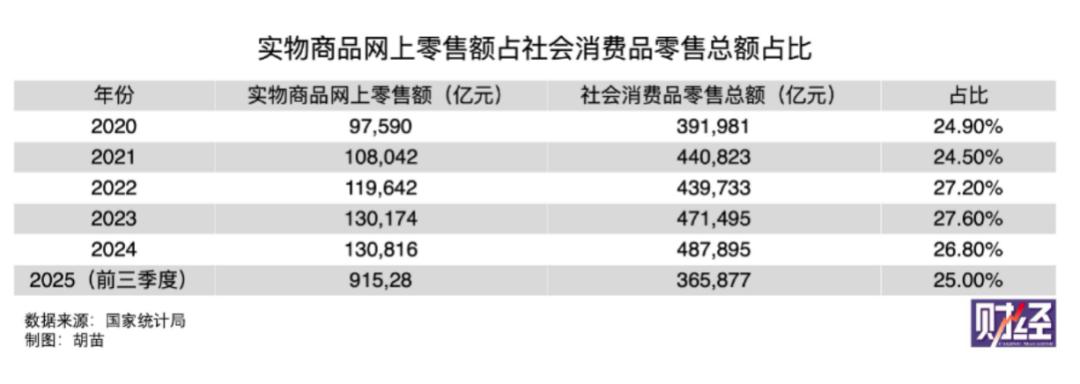
Core Insights - The e-commerce industry is undergoing a significant restructuring, moving from a phase of rapid growth to a deep adjustment, with traditional players facing increasing competition from new entrants like Douyin and Xiaohongshu [1][4][5] - Major e-commerce platforms are experiencing pressure on profitability despite revenue growth, indicating a shift in market dynamics [8][9][10] Financial Performance - Alibaba reported a revenue of 247.8 billion yuan for Q2 2026, a 5% year-on-year increase, but its adjusted net profit plummeted by 72% to 10.35 billion yuan [8] - JD.com achieved a revenue growth of 14.9% to 299.1 billion yuan in Q3 2025, but its net profit fell by 54.7% [9] - Pinduoduo's revenue growth slowed to 9%, marking a second consecutive quarter of deceleration [9] Market Dynamics - The e-commerce market is seeing a structural change, with the concentration ratio (CR2) dropping from 60% in 2022 to 57% by early 2025, while CR5 surged from 84% to 93% [4] - Online retail penetration has plateaued, with the share of online sales of physical goods stabilizing between 24-27% of total retail sales [5] Competitive Landscape - New players like Douyin and Xiaohongshu are intensifying competition, leading to price wars and increased reliance on traffic subsidies, which undermine long-term profitability [10] - Merchants are facing challenges with diminishing returns on advertising and promotional efforts, indicating a need for more sustainable growth strategies [10] Strategic Adjustments - E-commerce platforms are exploring new growth avenues, such as instant retail and leveraging AI technologies to enhance operational efficiency [12][15] - Alibaba is integrating its platforms and focusing on instant retail, while JD.com is expanding its food delivery services, both of which are impacting their profit margins [14][24] Future Outlook - The e-commerce market is projected to reach approximately $1.5 trillion globally by 2025, with a focus on quality improvement over mere scale expansion [19] - Companies are encouraged to prioritize technological innovation, supply chain optimization, and enhanced user experiences to thrive in the evolving landscape [19][25]



光模块强势拉升!云计算ETF(159890)午后盘中涨超4%,中际旭创、新易盛领涨
2 1 Shi Ji Jing Ji Bao Dao· 2025-11-26 06:24
Group 1 - The cloud computing ETF (159890) saw a significant increase, rising by 4.02% during trading, with major holdings like Zhongji Xuchuang and Xinyi Sheng gaining over 10% [1] - The AI application competition is entering a new phase, highlighted by recent launches from Alibaba and Ant Group, indicating a strong demand for AI capabilities [1] - Major internet companies in China, including Alibaba, Baidu, Douyin, and Tencent, have completed 182 model releases/updates from January to September 2025, reflecting robust AI development [1] Group 2 - Nvidia reported record revenue of $57 billion for Q3 of fiscal year 2026, a 62% year-over-year increase, with net profit reaching approximately $31.9 billion, up 65% year-over-year [2] - Google's launch of the Gemini 3 AI model, described as the "most intelligent" and "most factually accurate" AI system to date, further emphasizes the advancements in AI technology [2] - The outlook for the AI industry remains optimistic, with expectations of sustained growth driven by demand for computing power, particularly in AI hardware sectors [2]


漫剧市场激战正酣 腾讯携双小程序入局
Xi Niu Cai Jing· 2025-11-26 05:39
Group 1 - Tencent has officially entered the comic drama market by launching two mini-programs, "Mars Animation" and "Mars Animation Society," which are currently in a testing phase with limited content available [2] - Tencent's advertising division has introduced new policies for comic dramas, allowing content providers to earn up to 95% revenue share, with potential increases to 110%-160% for authorized content [2] - Other companies, including Hongguo Short Drama, iQIYI, and Bilibili, have also entered the comic drama space, each offering unique incentives and revenue-sharing models to attract creators [2] Group 2 - The comic drama market is projected to experience significant growth, with a monthly compound growth rate of 83% in supply and 92% in viewership by mid-2025, potentially exceeding 20 billion yuan in market size for the year [3] - Douyin is identified as the largest market for comic drama, with daily revenue increasing from approximately 1 million yuan in March to a peak of 1.2-1.3 million yuan in October, suggesting a total market size of around 5-6 billion yuan for the year [3] - The industry faces challenges such as content homogenization and increasing competition, necessitating a focus on diverse themes and refined content creation for sustainable growth [3]


北京全市建设5G基站近15万个,位居全国首位
Xin Jing Bao· 2025-11-26 04:06
Core Insights - The implementation of the "Beijing Digital Economy Promotion Regulations" has shown significant progress over the past three years, with a focus on building a global benchmark city for digital economy and new productivity development [1] Group 1: Digital Infrastructure and Smart City Development - Beijing has made steady progress in digital infrastructure and smart city construction, with nearly 150,000 5G base stations built, ranking first in the country [2] - The total computing power infrastructure has exceeded 42,000 P, and the city has enhanced its urban operation command platform capabilities [2] - The promotion of electronic seals for government services has improved convenience for citizens, with over 1,800 urban operation monitoring indicators integrated into the "Jingzhi" decision-making platform [2] Group 2: Data Resource Development and Utilization - Beijing has established a national data element comprehensive pilot zone and the first city-level blockchain "directory chain," with over 400,000 data items "on-chain" [3] - The Beijing International Big Data Exchange reported a trading volume in the first three quarters exceeding 1.64 times that of the previous year, with nearly 3,500 data products listed [3] - The financial public data zone has served over 60 financial institutions and 700,000 market entities, facilitating financing for small and micro enterprises [3] Group 3: Digital Industry Growth - The core AI industry in Beijing is projected to exceed 350 billion yuan in 2024, with over 2,400 enterprises in the sector [4] - Haidian District has been approved as the first national advanced manufacturing cluster in the AI field, with 162 large models registered, accounting for about one-third of the national total [4] - The city is implementing a three-year action plan for the digital transformation of the manufacturing industry, with over 1,700 digital finance enterprises and continuous digital achievements in education, culture, tourism, and healthcare [4] Group 4: Digital Economy Security - Beijing has enhanced its digital economy security capabilities by establishing a data security coordination mechanism and accelerating the implementation of data classification and management standards [4] - A negative list for data export in the pilot free trade zone has been published, and a compliance policy system for cross-border data flow has been improved [4] Group 5: Recommendations for Further Implementation - The report identifies issues such as the need for better planning of digital infrastructure and increased efforts in data resource development and sharing [5] - Suggestions include leveraging government public data for high-quality sharing, establishing a professional evaluation system for data rights, and improving financial policies to support data asset registration and financing [5][6] - The report also recommends promoting data sharing for smart city construction and utilizing the government cloud platform to streamline data reporting processes [6]
中经评论:平台企业缘何着迷“点评”业务
Jing Ji Ri Bao· 2025-11-26 00:08
Core Insights - The recent surge in interest from major internet companies in user reviews and ratings is driven by the need to find new growth avenues in the service consumption era, as traditional e-commerce growth has plateaued [1][2] - Platforms like JD.com and Gaode are expanding their roles beyond traditional functions to become influential in consumer decision-making, particularly in the restaurant and entertainment sectors [1] - The competition for consumer attention is intensifying, with platforms aiming to create high-frequency touchpoints through review content [1] Industry Dynamics - The service consumption market remains robust, with significant demand for experiences such as dining and entertainment, which are often subjectively evaluated [1] - The introduction of new review platforms is seen as a way for businesses to connect directly with consumers, especially in a high marketing cost environment [1] Consumer Behavior - Consumers are generally receptive to multiple review channels, appreciating the opportunity to discover new places and potential discounts [2] - There is a growing skepticism towards "water reviews," with consumers preferring authentic experiences over generic positive reviews [2] Trust and Credibility - Trust is fundamental to the review ecosystem, with users relying on genuine feedback to guide their choices, while platforms must maintain impartiality to build credibility [2][3] - The challenge lies in balancing the dual role of platforms as both arbiters of authenticity and profit-driven entities, which can lead to conflicts of interest [2] Future Considerations - New entrants in the review space must focus on rebuilding trust mechanisms rather than merely replicating existing functionalities [3] - The long-term success of review platforms hinges on their ability to foster genuine interactions and maintain consumer trust, as losing credibility can undermine even the most attractive data and interfaces [3]

本地生活服务展开“留量”之争
Jing Ji Ri Bao· 2025-11-25 22:02
Core Insights - The local lifestyle service sector, including food delivery and instant retail, has become a key battleground during this year's "Double 11" shopping festival, with platforms like Meituan and JD.com showing significant sales and user growth [1][2] - The competition has shifted from scale expansion to enhancing service quality and user experience, with AI empowerment and credit mechanism reconstruction becoming crucial strategies for platforms [1][2] Industry Competition Dynamics - As internet traffic growth slows, local lifestyle services are seen as critical growth areas for major platforms, leading to intensified competition [2] - Platforms are adopting differentiated strategies to reshape consumer habits and merchant operations, with initiatives like Gaode's "Street Ranking" and Douyin's support plans for small businesses [2][3] - The competition is expected to benefit consumers through more choices and better services, while also providing small merchants with increased exposure and support [2][3] Market Growth Projections - The local lifestyle service market in China is projected to grow to 35.3 trillion yuan by 2025, with a compound annual growth rate of 12.6% [3] - The penetration rate of online services is expected to reach 30.8% by 2025, indicating significant untapped potential in the "to-store" business segment [3] Financial Performance - Meituan's core local business segment reported revenue of 65.3 billion yuan in Q2 2025, a year-on-year increase of 7.7%, with strong growth in "to-store" business orders [4] AI and Trust Mechanisms - AI technology is becoming essential for platforms to optimize decision-making and improve efficiency, with various platforms launching AI-driven features to enhance user experience [5][6] - The shift towards a "trust economy" is evident as platforms work to build healthier commercial ecosystems and improve user trust through initiatives like Gaode's "Street Ranking" [6][7] Small Business Empowerment - The competitive landscape is lowering the digitalization barriers for small businesses, with initiatives like Gaode's waiver of the first-year store opening fee leading to a surge in new merchant registrations [8] - The focus is shifting from merely selling products to providing integrated lifestyle solutions, with platforms expected to support small merchants through digital tools and financial services [8][9] Future Trends - The industry is transitioning from scale expansion to quality improvement, with the core competition now centered on service excellence rather than subsidies [9][10] - Platforms are encouraged to provide effective digital tools to help small merchants enhance their operational capabilities and ensure a fair ranking system [9][10]