奈雪的茶

Search documents
体重管理带火瘦身经济
He Nan Ri Bao· 2025-08-04 23:41
Core Viewpoint - The rising awareness of health and weight management among the public has led to a booming "slimming economy," with significant growth in health-related consumption and fitness activities [1][4][23]. Group 1: Health Awareness and Consumption Trends - The term "weight management" gained popularity during the national two sessions, indicating a shift in public health focus [1]. - In the first five months of this year, fitness and leisure activities in the province saw a revenue increase of 49.6%, accelerating by 20.5 percentage points compared to the first quarter [1]. - The demand for healthy food options is increasing, with many well-known brands entering the health food and beverage market, indicating a broad development space in this sector [3][4]. Group 2: Fitness and Weight Management Services - The fitness consumption market in China is growing, with an expected 38.5% of the population regularly exercising by 2025 [4]. - The emergence of 24-hour self-service gyms caters to the busy lifestyles of urban workers, with nearly a hundred such gyms operating in Zhengzhou alone [6]. - Online fitness platforms are gaining popularity, offering personalized training plans and community engagement features [7]. Group 3: Medical and Traditional Approaches to Weight Management - Hospitals are increasingly opening weight management clinics, reflecting a growing demand for scientific weight loss solutions [12][14]. - Traditional Chinese medicine approaches, such as acupuncture and dietary adjustments, are being integrated into modern weight management practices [18][22]. - A comprehensive weight management system is being established, combining medical, nutritional, and psychological support for patients [13][24]. Group 4: Insurance and Health Management Integration - The insurance industry is recognizing the potential of the "slimming economy" and is developing personalized health management services that incentivize weight loss through rewards [21][22]. - Collaborative efforts between health management institutions and insurance companies are leading to innovative products that promote preventive health measures [22]. - The integration of health management services into insurance products is expected to reduce healthcare costs and improve overall health outcomes for employees [21][22].


奶茶的甜,盲盒的瘾:新茶饮品牌成潮玩隐形巨头?
3 6 Ke· 2025-08-04 09:13
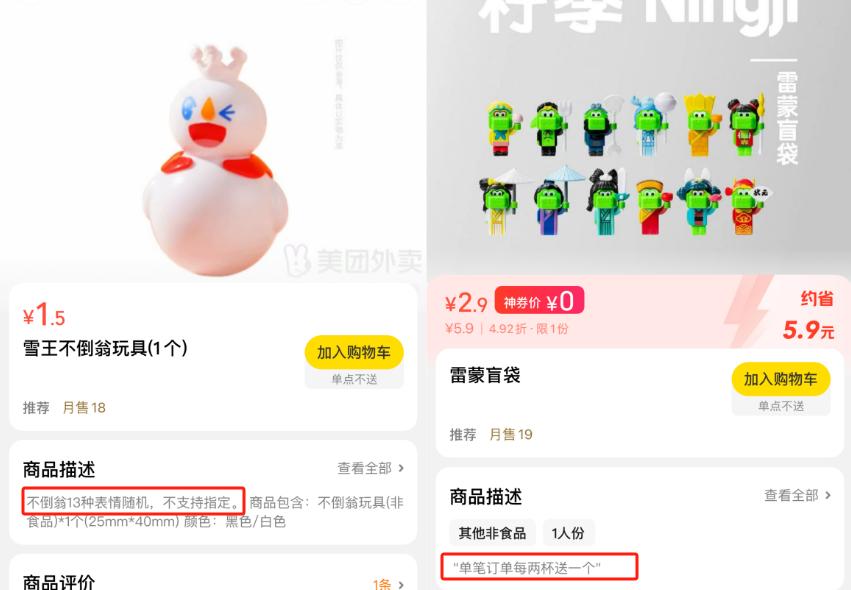
Core Insights - The new tea beverage industry is experiencing a shift towards the integration of blind box models, driven by brands like Mixue Ice City and their collaborations with popular IPs [1][3][22] - The industry has faced a decline, with approximately 40,000 tea beverage stores closing in the past year, indicating a phase of accelerated market consolidation [3][4] - The price war initiated by platforms like Alibaba and Meituan has intensified competition, leading to reduced brand loyalty and increased price sensitivity among consumers [4][5][19] Industry Trends - The blind box model is emerging as a new growth strategy for tea beverage brands, allowing them to engage with younger consumers and create unique marketing experiences [3][9][11] - Brands are transitioning from relying on external IP collaborations to developing their own IPs, enhancing their storytelling and emotional connection with consumers [7][17][22] - The success of blind boxes is evident in their ability to drive sales and customer engagement, with brands like Ningji reporting significant user growth during promotional events [9][13] Market Dynamics - The competitive landscape is shifting, with brands like Mixue Ice City maintaining high sales volumes through cost-effective pricing, while others like Nayuki are struggling with profitability due to their direct sales model [5][6] - The integration of blind boxes into the business model not only serves as a marketing tool but also represents a significant revenue stream for tea beverage brands [13][14] - The cultural narrative surrounding IPs is becoming increasingly important, as brands leverage their unique stories to differentiate themselves in a crowded market [17][20][22] Global Expansion - New tea beverage brands are exploring international markets, with a focus on building brand recognition and attracting local franchisees [20][21] - The cultural perception of Chinese tea beverages varies by region, presenting challenges for market entry, but successful IPs like Labubu provide inspiration for effective branding strategies [21][22] - The valuation of tea beverage brands is evolving, with a growing emphasis on the strength and potential of proprietary IPs as core assets rather than mere marketing tools [20][22]
宏发商业“五星优质合作伙伴榜单”首发布!“仟里食家”拓龙华新版图
Sou Hu Cai Jing· 2025-08-04 08:54
Core Insights - The article emphasizes the importance of building internal momentum in the consumer market amidst fierce competition and uncertainty, highlighting the need for companies to find their unique advantages for future success [2] Group 1: Event Overview - Hongfa Commercial held its first "Five-Star Quality Partner List" award ceremony on August 1, themed "Star Shine Together, Win Together" [4] - The event recognized 53 benchmark partners selected from thousands of brands, marking a significant milestone in Hongfa Commercial's five-year journey [6][10] Group 2: Strategic Goals - The "Five-Star" initiative aims to continuously motivate outstanding merchants and create an authoritative consumer list, with plans to regularly publish the "Five-Star Quality Partner List" starting in 2025 [6][12] - Hongfa Commercial's strategy focuses on "platform empowerment" and "dual growth" to break through in the competitive Shenzhen market [17] Group 3: Performance Metrics - The award-winning brands demonstrated exceptional revenue performance and nearly 100% positive reputation, aligning with Hongfa Commercial's "Three Good" philosophy [8] - For example, the "Yonghui Supermarket" opened with record sales of over 2.3 million in a single day, contributing to a 40% increase in foot traffic at the Baoan Daqianli project [19] Group 4: Future Developments - Hongfa Commercial announced the upcoming launch of the "Qianli Shijia" project in Longhua, which will focus on food and community experiences, set to open in December 2026 [24][26] - The new project will feature a large urban complex with a focus on dining and lifestyle, aiming to fill a gap in the local market and enhance the area's commercial landscape [23][24]

被茶饮做局了!“瘦瘦瓶”“纤体瓶”瘦的是瓶身 不是我
Zhong Guo Xin Wen Wang· 2025-08-04 06:22
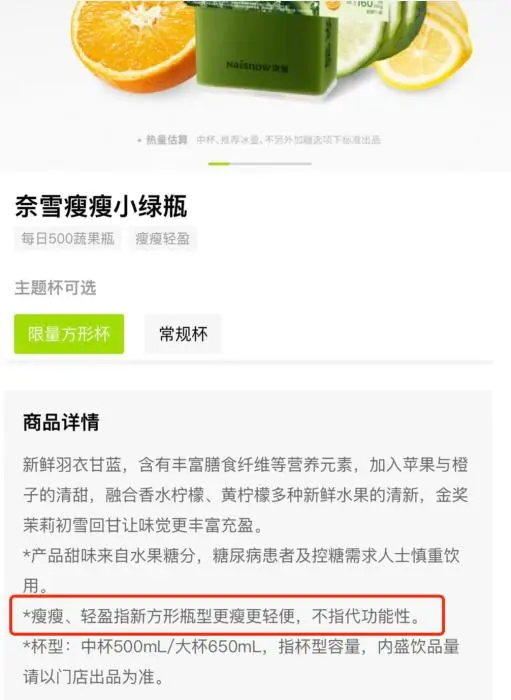
Core Viewpoint - The rise of kale-based beverages marketed as "slimming" or "light" by major tea brands in China is misleading, as these drinks do not provide direct weight loss benefits despite their marketing claims [1][3][14]. Group 1: Marketing Strategies - Major tea brands like Heytea and Nayuki are promoting kale drinks with terms like "slimming" and "light," creating a perception of health benefits [3][17]. - Disclaimers are often hidden in product details, clarifying that terms like "slimming" refer to the bottle design rather than the drink's effects [3][10]. - The use of terms such as "superfood" and "dietary fiber" is prevalent, but these claims are often not substantiated by scientific evidence [1][7][14]. Group 2: Nutritional Content - Despite being marketed as healthy, drinks like Nayuki's "Slimming Green Bottle" contain significant calories, with a 500ml serving having 183 calories, comparable to a bowl of rice [10][13]. - Many kale drinks are mixed with fruits and other ingredients to improve taste, which can increase sugar and calorie content [11][13]. - Experts indicate that kale itself does not directly contribute to weight loss, and the processing of kale into juice can lead to a loss of dietary fiber and minerals [13][18]. Group 3: Legal and Ethical Concerns - The use of suggestive language in marketing may mislead consumers into believing these drinks have weight loss properties, potentially violating advertising laws [14][15]. - Previous instances of misleading advertising have led to penalties for brands, highlighting the risks associated with such marketing practices [15]. - Legal experts emphasize the importance of transparency in labeling ingredients and nutritional information to protect consumer rights [14][18]. Group 4: Industry Trends - The popularity of kale drinks surged after successful product launches by brands like Heytea, prompting a wave of imitation across the industry [17][18]. - The low barriers to entry in the tea beverage market have led to a homogenization of products, with many brands offering similar kale-based drinks [17][18]. - The focus on health-related marketing strategies reflects a broader trend of brands leveraging consumer health anxieties for competitive advantage [18].
“逃离”外卖大战的商家
Hu Xiu· 2025-08-04 02:39
动辄千万量级的订单、百亿级真金白银的投入,一度将这个行业推向低价争夺战的怪圈。直到7月18日,市场监管总局约谈饿了么、美团、京东三家平台 企业。8月1日,三家平台同一天发布声明,表示将规范补贴行为、反对恶性竞争、共同维护行业生态。 持续三个多月的外卖大战,终于有了些缓和的迹象。 然而,在平台尚未彻底"刹车"之前,被裹挟其中的商家,早已疲惫不堪。 从南京到广州,从寿司店到糖水铺,再到街角的柠檬茶门店,从个体商家到品牌连锁,这场看似热闹的"外卖狂欢"背后,是一笔越来越难算的账:一边是 订单暴涨、忙不过来,另一边是在补贴分摊之下的利润下滑。有人被迫涨价,有人关闭线上渠道,有人放弃堂食大店重新租小档口All in外卖…… 本文试图回到这场战争中的"个体",从商家的讲述出发,通过真实账单、应对方法和犹豫挣扎,记录这场大战带来的冲击。 两难的商家,困在补贴里 "加入外卖大战,会死得慢一点。不加入,死得快。"不少餐饮商家在聊起外卖大战时,都这样感慨。 江苏的茶饮商家王渝,几个月前就察觉出异常。他在南京加盟了一家品牌茶饮,为了提高收入,顺带着自营了一家烘焙店。年后堂食基本每天都有五六十 单,但到了四月底,线上订单开始激增,堂 ...



我被做了局?花19元买了个“瘦瘦”的瓶子
Zhong Guo Xin Wen Wang· 2025-08-03 23:20
Core Viewpoint - The rise of kale-based beverages marketed as "slimming" or "light" by major tea brands in China is misleading, as these drinks do not have proven weight loss effects and often contain high calories [1][10][12] Group 1: Product Marketing and Consumer Perception - Major tea brands like Heytea and Nayuki are promoting kale drinks with terms like "slimming" and "light," creating a perception that these products aid in weight loss [2][13] - Despite the marketing, disclaimers on product pages clarify that terms like "slimming" refer to the bottle design rather than any functional benefits [2][10] - The actual calorie content of these drinks can be high; for instance, a 500ml kale drink from Nayuki contains 183 calories, comparable to a bowl of rice [9][10] Group 2: Industry Trends and Competition - The popularity of kale drinks surged after the launch of the "Kale Slimming Bottle" by Heytea, which sold over 3.5 million cups in its first month [13] - The tea industry is experiencing a trend of product homogeneity, with many brands quickly replicating successful products, leading to a saturated market [13][14] - The low technical barriers and mature supply chains in the tea industry facilitate rapid imitation of popular products, resulting in a competitive landscape focused on health claims [14] Group 3: Regulatory and Ethical Considerations - Legal experts highlight that the use of terms like "slimming" may mislead consumers into believing these drinks have weight loss benefits, potentially violating advertising laws [10][11] - Previous instances of misleading advertising in the industry have led to penalties, indicating a need for brands to ensure truthful marketing practices [12]
社服零售行业周报:国家育儿补贴政策出台,东方甄选FY25Q4利润率环比提升-20250803
HUAXI Securities· 2025-08-03 14:06
Investment Rating - Industry rating: Recommended [4] Core Insights - The introduction of the national childcare subsidy policy is expected to benefit the maternal and infant industry chain, with a subsidy of 3,600 yuan per child per year for families with children under three years old, potentially impacting over 20 million families annually [1][2] - New Oriental's FY2025Q4 performance shows a revenue of 150 million USD, a year-on-year decline of approximately 30%, but with a sequential improvement in operating profit margin from 3% in FY25Q3 to 7% in FY25Q4 [3] - The company is transitioning from a host-driven model to a product-driven model, with significant sales in sanitary products and self-branded items [3] Summary by Sections 1. Industry Overview - The report highlights the positive impact of the national childcare subsidy on birth rates, particularly in lower-tier markets, citing examples from cities like Panzhihua and Tianmen where similar policies led to increased birth rates [2] 2. Company Performance - New Oriental's recent performance indicates a recovery in profit margins despite a decline in revenue, with key products like sanitary napkins and self-branded food items performing well in sales [3] 3. Investment Recommendations - The report suggests five investment themes, including the continuous upgrade of AI technology, the emotional value consumers place on purchases, the recovery of cyclical sectors, the potential of domestic brands going global, and the revival of traditional retail formats [6]

营收吊打星巴克!瑞幸翻身了
Ge Long Hui· 2025-08-03 10:02
Core Viewpoint - Luckin Coffee has shown remarkable recovery and growth amidst the ongoing price war in the coffee and tea industry, achieving significant revenue and profit increases in the second quarter of 2024 [1][3]. Financial Performance - In Q2 2024, Luckin Coffee's total net revenue reached 12.359 billion yuan, a year-on-year increase of 47.1%, marking the highest growth rate in the past four quarters [1]. - Operating profit surged by 61.8% year-on-year to 1.7 billion yuan [1]. - The company's stock price has doubled over the past year and increased 30 times from its lowest point in 2020 [1]. Market Dynamics - The second quarter of 2024 saw a significant price war initiated by three major delivery platforms, leading to historically low beverage prices [3]. - Despite the price war, Luckin Coffee has emerged as a strong competitor, with a gross merchandise volume (GMV) growth of 46% to 14.2 billion yuan [5]. - Self-operated store revenue accounted for 74% of total net revenue, reaching 9.14 billion yuan, a 45.6% year-on-year increase [5]. Store Expansion - Luckin Coffee opened 2,109 new stores in Q2 2024, bringing the total number of stores to 26,206 [9]. - The company has opened nearly 4,000 new stores in the first half of 2024, compared to just over 2,000 in the second half of the previous year [9]. Competitive Landscape - Compared to Starbucks, which reported a net income of 5.68 billion yuan for the same period, Luckin's performance is notably superior [10]. - The coffee market in China has seen significant changes, with Luckin Coffee surpassing Starbucks in annual revenue for the first time in 2023 [19]. Industry Trends - The boundaries between coffee and tea markets are blurring, with brands like Luckin actively introducing tea-based products to attract a broader customer base [20]. - The industry is shifting from aggressive expansion to a focus on operational efficiency and brand differentiation, as evidenced by recent changes in branding among leading tea brands [29]. Cost Challenges - Operating costs, particularly rent, have surged, with a 65% year-on-year increase in 2024, reaching 8.541 billion yuan, which poses challenges to the sustainability of the low-price strategy [23]. - The company has faced pressures to control costs while maintaining competitive pricing amidst rising operational expenses [30].

2025年中国植脂末行业相关政策、产业链图谱、发展现状、竞争格局及发展趋势研判:高端品类将成为行业增长的主引擎[图]
Chan Ye Xin Xi Wang· 2025-08-03 01:34
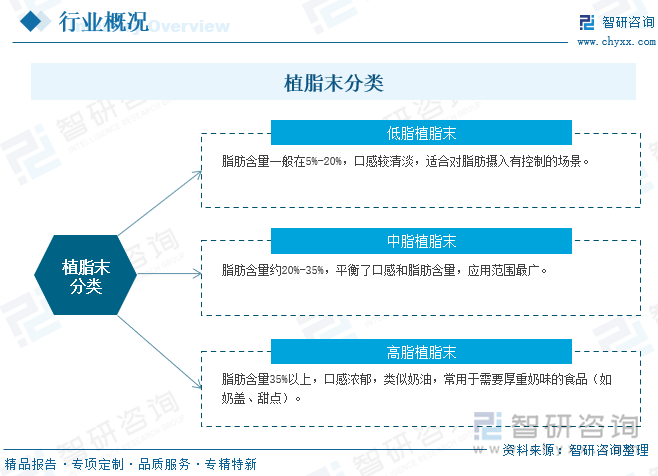
Overview - The demand for powdered fats, specifically plant-based creamers, is rapidly increasing in China due to the growth of downstream markets such as milk tea, coffee, and baked goods [1][11] - However, there is a notable decline in demand projected for 2024, with consumption expected to drop to 705,300 tons and market size to 7.406 billion yuan, driven by rising health consciousness among consumers [1][11] - High-end categories such as cold-soluble creamers, zero trans-fat products, and functional creamers are anticipated to become the main growth engines in the industry [1][11] Market Policy - The plant-based creamer industry is classified under the manufacturing sector, specifically in food manufacturing, and is subject to strict regulations to ensure food safety and quality [4][6] - Recent policies have focused on enhancing food safety supervision and promoting high-quality development within the industry [4][6] Industry Chain - The upstream of the plant-based creamer industry includes suppliers of raw materials like edible vegetable oils, glucose syrup, and milk powder, as well as suppliers of emulsifiers and stabilizers [7] - The midstream involves the production and manufacturing of creamers, while the downstream encompasses application markets including milk tea, coffee, and baked goods [7] Market Demand - Milk tea is the largest consumer market for plant-based creamers in China, accounting for over 50% of the market share [9] - The rapid growth of the ready-to-drink milk tea market has led to increased demand for creamers, which provide a smooth texture and rich flavor [9] - As health awareness rises, there is a shift towards low-sugar and low-fat options, prompting manufacturers to innovate and develop healthier products [9][11] Competitive Landscape - The market concentration has increased, with leading companies like Jiahe Food, Nestlé, and Super Group dominating the market [13][15] - Jiahe Food holds the largest market share, with its Jinghua brand being a well-known name in the plant-based creamer sector [13][16] - Nestlé leverages its international brand influence and extensive distribution channels to maintain a significant presence in the market [13][15] Development Trends - Future demand for low-sugar and low-fat plant-based creamers is expected to rise, leading companies to innovate and introduce products that meet these health requirements [20] - The integration of "Internet + plant-based creamers" is becoming a trend, with companies focusing on digital marketing and channel development to enhance consumer interaction [20] - The use of big data and artificial intelligence is anticipated to optimize production processes, improving efficiency and product quality [20]

喜茶爆单,抹茶“杀疯”,中国抹茶会是下一个Labubu吗?
创业邦· 2025-08-02 10:07
Core Viewpoint - The article discusses the recent surge in popularity of matcha products, particularly highlighting the impact of BLACKPINK member's social media post on HEYTEA's "Triple Thick Matcha," which led to a significant increase in global orders and sales [4][6][10]. Group 1: Market Trends - There has been a notable increase in matcha product launches across various brands, with HEYTEA introducing multiple matcha beverages and other brands like Nayuki and Cha Bai Dao also releasing popular matcha items [7][21]. - The Asia-Pacific region accounted for 57.76% of the global matcha market in 2023, with China and Japan recognized as historical centers for matcha production [9][33]. - Matcha's association with Japan persists, despite its origins in China, as consumers increasingly discover the historical roots of matcha in regions like Jing Mountain, Hangzhou [30][32]. Group 2: HEYTEA's Response - Following the social media post, HEYTEA's sales of the "Triple Thick Matcha" increased by over 500% in cities like Shanghai and Hangzhou within a day [12]. - HEYTEA's global stores quickly adapted by launching promotional activities, including a buy-one-get-one-free offer for matcha drinks, although this led to shortages in matcha supplies [16][20]. - The brand's marketing strategy included creating artist-customized versions of the matcha drink to attract fans and enhance engagement [16][14]. Group 3: Regional Production Insights - China has become the largest producer and consumer of matcha globally, with production concentrated in regions like Jing Mountain, Guizhou, and Hubei [33][40]. - Jing Mountain's matcha production is expected to exceed 5,000 tons by 2025, with significant investments in local tea development [34][36]. - Guizhou's matcha production surpassed 1,200 tons last year, and the region is recognized for its modern matcha processing facilities [40]. Group 4: Branding and Market Positioning - The article emphasizes the need for "Chinese matcha" to establish a stronger brand identity to compete with Japanese matcha products [48]. - Successful examples from other regions, such as the rapid growth of Liuzhou's snail noodles, illustrate the potential for local specialties to gain national recognition through effective branding and marketing strategies [51]. - The article suggests that enhancing product visibility, leveraging local heritage, and creating engaging marketing campaigns can help elevate the status of Chinese matcha in the global market [55].