长江存储

Search documents
决战混合键合
半导体行业观察· 2025-08-04 01:23
Core Viewpoint - Hybrid bonding technology is rapidly transitioning from laboratory to mass production, becoming a new pillar in storage chip manufacturing, particularly in the context of advanced packaging technologies like 3D NAND and HBM [2][3]. Group 1: Hybrid Bonding Technology - Hybrid bonding eliminates size limitations and parasitic effects associated with traditional bump structures, resulting in shorter signal transmission paths, lower power consumption, and higher speeds [3]. - In 3D NAND, hybrid bonding is expected to replace some existing structures, enabling stable manufacturing at higher stacking layers (e.g., over 300 layers) [3][7]. - Leading companies like Micron, SK Hynix, and Samsung are actively investing in hybrid bonding technology for HBM4 and next-generation CUBE architectures, highlighting its strategic importance [3][5]. Group 2: Samsung's Initiatives - Samsung has shown a strong commitment to hybrid bonding, recognizing its necessity for manufacturing 16-layer HBM [4][5]. - The company plans to produce HBM4 samples by 2025, with mass production expected in 2026, and has already tested a 16-layer HBM sample using hybrid bonding technology [5][6]. - Samsung is also preparing for a custom HBM business, responding to demand from major tech companies like Google and NVIDIA for tailored HBM products [6][7]. Group 3: SK Hynix's Developments - SK Hynix is also pursuing hybrid bonding technology, planning to mass-produce 16-layer HBM4 by 2026 and exploring the potential for over 20 layers [9][10]. - The company aims to implement hybrid bonding for its NAND products, targeting 400-layer NAND flash production by 2025 [10][11]. Group 4: Micron's Position - Micron has been relatively quiet about hybrid bonding but has begun delivering HBM4 samples, which feature a capacity of 36 GB and a bandwidth of up to 2 TB/s [13][14]. - The company is focusing on optimizing existing technologies and may adopt hybrid bonding later than its competitors [14]. Group 5: Equipment Manufacturers - Equipment manufacturers like BESI and Applied Materials are leading the hybrid bonding equipment market, with BESI having developed systems for high-precision bonding since 2019 [15][16]. - Applied Materials has integrated its hybrid bonding platform with wafer processing data, emphasizing system-level integration [16][17]. - Other companies, including ASMPT and Korean firms like Hanmi Semiconductor and Hanwha, are also entering the hybrid bonding equipment market, with various development stages and partnerships [18][19][20]. Group 6: Future Outlook - The semiconductor industry is increasingly focused on hybrid bonding as a key technology to overcome traditional packaging limitations and achieve higher performance integration [25]. - As Moore's Law slows, hybrid bonding is expected to play an irreplaceable role in advancing the industry towards greater integration and performance [25].

先进封装,高速发展
半导体行业观察· 2025-08-04 01:23
Core Insights - The advanced packaging market is projected to grow from $38 billion to $79 billion by 2030, driven by diverse demands and challenges while maintaining a continuous upward trend [2] - The advanced packaging supply chain is one of the most dynamic sub-sectors of the global semiconductor supply chain, influenced by various factors including capacity constraints, yield challenges, and geopolitical regulations [5] - High-end performance packaging is expected to reach $8 billion in 2024 and exceed $28 billion by 2030, with a compound annual growth rate (CAGR) of 23% [11] Market Growth and Trends - Advanced packaging is experiencing record breakthroughs and expanding its technology portfolio, including new versions of existing technologies like Intel's EMIB and Foveros [8] - The high-end packaging market's largest segment is telecommunications and infrastructure, generating over 67% of revenue in 2024, while the mobile and consumer market is the fastest-growing segment with a CAGR of 50% [11] - The adoption of hybrid bonding technology is increasing, making it more challenging for OSAT manufacturers, as only those with wafer fab capabilities can absorb significant yield losses [14] Supply Chain Dynamics - New alliances are forming to address supply chain challenges, with key advanced packaging technologies being licensed to support transitions to new business models [5] - Major memory manufacturers like Yangtze Memory Technologies, Samsung, SK Hynix, and Micron are expected to dominate the high-end packaging market, capturing 54% of the market share by 2024 [14] - Leading OSAT companies are focusing on high-end packaging solutions based on ultra-high-definition fan-out (UHD FO) and Mold interposer technologies [15] Technological Innovations - The main technological trend in high-end performance packaging is the reduction of interconnect spacing, which is crucial for integrating more complex chips and ensuring lower power consumption [16] - 3D SoC hybrid bonding is emerging as a key technology pillar for next-generation advanced packaging, allowing for smaller interconnect spacing and increased surface area [16] - Chipsets and heterogeneous integration are driving high-end performance packaging applications, with major players like Intel and AMD adopting these technologies in their products [17]


从“烧手机”到“利润暴跌”:三星电子遭遇56年来最严峻危机
凤凰网财经· 2025-08-02 08:49
Core Viewpoint - Samsung Group is facing one of its most severe challenges since its establishment, with a significant decline in semiconductor profits and a shrinking presence in the Chinese smartphone market, raising concerns about its future viability [2][5][18]. Group 1: Financial Performance - In Q2 2025, Samsung Electronics reported a 55% year-on-year drop in operating profit, with semiconductor business profits plummeting by 94% due to HBM chip shipment delays and U.S. export restrictions to China [2][6]. - The semiconductor division's operating profit fell to 400 billion KRW (approximately 290 million USD), marking a six-quarter low and highlighting a significant decline in profitability [6]. - Samsung's financial struggles are compounded by its lag in the lucrative AI chip market, where competitors like SK Hynix and TSMC are gaining ground [6][16]. Group 2: Market Presence in China - Samsung's market share in China's smartphone sector has drastically declined to 0.77% by Q1 2025, falling out of the top five brands, while local brands like Huawei and Xiaomi dominate with over 68% combined market share [11][19]. - The company's downfall in China can be traced back to the Galaxy Note7 crisis in 2016, which severely damaged consumer trust and allowed local competitors to capture market share [10][11]. - Samsung's decision to close its Chinese factories and shift production to Vietnam has led to increased costs and inefficiencies, further exacerbating its competitive disadvantage [12]. Group 3: Strategic Responses - In response to its challenges, Samsung's new leader, Lee Jae-Yong, is attempting to revive the company's fortunes through aggressive transformation strategies, including a $16.5 billion AI chip supply agreement with Tesla [16][19]. - Lee is also focusing on advanced 2nm process technology to compete with TSMC, indicating a shift towards innovation and adaptation in a rapidly changing market [16][18]. - Despite these efforts, Samsung faces significant hurdles, including geopolitical tensions and the need to restructure its complex conglomerate framework to foster innovation [18][19].

上半年GDP10强城市公布:重庆领先广州,苏州超1.3万亿,武汉第9
Sou Hu Cai Jing· 2025-08-02 01:56
Core Insights - The economic competition landscape among Chinese cities is undergoing a significant reshuffle, with a focus on high-quality development and structural transformation in growth dynamics [1] - Innovation has become the primary driver of economic growth, replacing mere scale expansion, indicating a deeper restructuring of the urban economic landscape in China [1] Economic Rankings - Shanghai leads the GDP rankings with 26,222.15 billion yuan, followed by Beijing at 25,029.2 billion yuan and Shenzhen at over 18,000 billion yuan [2][6] - Chongqing has surpassed Guangzhou, achieving a GDP of 15,929.58 billion yuan, attributed to its "smart manufacturing" strategy and growth in digital economy and new energy vehicles [2][4] Sector Performance - Chongqing's digital economy core industry value added exceeded 80 billion yuan, contributing to an 8.7% growth in industrial output [2] - The service sector in Chongqing saw a 12.3% increase, driven by the China-Singapore connectivity project [2] - Suzhou, as the only prefecture-level city in the top ten, reported a GDP of 13,002.35 billion yuan, with significant growth in biomedicine, nanotechnology, and AI sectors [4] Growth Rates - Seven of the top ten cities have nominal growth rates exceeding the national average, with Hangzhou leading at 11.5% [5] - Chengdu recorded an 8.57% growth rate, while Nanjing maintained its position with a GDP of 9,179.18 billion yuan [5][6] Investment and Innovation - Suzhou attracted 5.7 billion USD in new foreign investment, with 215 specialized enterprises contributing 38% of the city's industrial investment increment [4] - Wuhan's strategic emerging industries accounted for 67% of its GDP growth, with significant contributions from the semiconductor and display industries [4]

21评论丨政府投资基金要发挥“耐心钱”作用
2 1 Shi Ji Jing Ji Bao Dao· 2025-08-02 01:34
Group 1 - The core viewpoint of the news is the introduction of new guidelines by the National Development and Reform Commission (NDRC) aimed at enhancing the management and direction of government investment funds, marking a new phase in the precise management of the trillion-yuan government investment fund system in China [1][4] - The venture capital market in China has developed into the second largest market globally, following the United States, significantly contributing to the funding of small and medium-sized enterprises that cannot access traditional financial systems [1][2] - The government-guided fund model in China addresses market failures by providing long-term capital for high-risk areas that private capital often overlooks, particularly in foundational research and early-stage technology [2][3] Group 2 - The concept of "patient capital" introduced at the 20th National Congress emphasizes the need for sustained investment over 10-20 years to achieve core technological breakthroughs, contrasting with traditional short-term investment approaches [3][4] - As of June 2024, there are 2,126 government-guided funds in China, with a total management scale exceeding 12 trillion yuan, demonstrating the significant role of these funds in fostering key industries such as integrated circuits [3][4] - The recent guidelines aim to shift the focus of government investment funds from mere scale expansion to quality enhancement, promoting a more targeted and systematic approach to investment that integrates the entire innovation chain from research to commercialization [4]
政府投资基金要发挥“耐心钱”作用
2 1 Shi Ji Jing Ji Bao Dao· 2025-08-02 01:20
Core Insights - The National Development and Reform Commission has drafted guidelines for government investment funds, marking a new phase in the precise management of the trillion-yuan scale of these funds in China [1][3] - The venture capital market in China has become the second largest globally, following the U.S., significantly contributing to the funding of small and medium enterprises that cannot access traditional financial systems [1][2] Group 1: Government Investment Funds - The core logic of government-guided funds is to address market failures, particularly in areas with long recovery cycles that are often overlooked by private capital [2][3] - As of June 2024, there are 2,126 government-guided funds in China, managing over 12 trillion yuan, with significant contributions to the semiconductor industry through the National Integrated Circuit Industry Investment Fund [3][4] Group 2: Strategic Importance - The emphasis on "patient capital" reflects a strategic understanding of the need for long-term investment in core technologies, which often require 10-20 years of sustained funding [3][4] - The shift from scale expansion to quality enhancement in government investment funds aims to focus on targeted investments and optimize management mechanisms [4] Group 3: Future Directions - Government investment funds are expected to play a crucial role in the next wave of technological revolution and industrial transformation, supporting high-quality economic development in China [4]
光刻胶IPO遇冷,监管戳破真相:半导体材料之困与破局之道
材料汇· 2025-08-01 13:02
Core Viewpoint - The article discusses the challenges faced by semiconductor material companies, particularly in the context of IPO applications being delayed or halted, highlighting the tension between capital enthusiasm and the high technical barriers in the industry [2][3][4]. Group 1: Capital Frenzy and Semiconductor Material IPOs - The semiconductor materials sector is currently a hot spot for investment, with over 10 companies filing for IPOs in 2023, focusing on critical areas like photoresists and electronic specialty gases [4]. - Despite the vibrant market, regulatory scrutiny has intensified, with a clear focus on the authenticity of core technologies, production capabilities, and the feasibility of domestic substitution [4][5]. - Companies are facing challenges in transitioning from laboratory samples to mass production, with regulatory bodies questioning the economic viability and sustainability of their technologies [5][6]. Group 2: Photoresists as a Technical Dilemma - Photoresists play a crucial role in chip manufacturing, acting as the blueprint for circuit patterns, and their performance directly impacts chip yield and feature size [9][11]. - The technical complexity of photoresists is significant, with advancements tied closely to the evolution of chip manufacturing processes, creating steep technical curves [12][13]. - Domestic companies are struggling to achieve stable mass production of advanced photoresists, particularly in the ArF and EUV categories, where only a few have made progress [12][13][18]. Group 3: Technical Challenges and Capital Relations - The technical challenges faced by companies like 恒坤新材 are indicative of broader issues in the semiconductor materials industry, including long R&D cycles, high investment requirements, and significant technical barriers [29][30]. - The relationship between capital and technology is complex, with capital needing to shift from a short-term profit focus to a long-term investment perspective to support sustainable growth in the sector [32][33]. - Regulatory bodies are now demanding more substantial proof of technological capabilities and sustainable business models, moving away from mere narratives of domestic substitution [34][36]. Group 4: Path Forward for Semiconductor Materials - The semiconductor materials industry requires a collaborative ecosystem that integrates technology patience, capital foresight, and industry cooperation to overcome current challenges [38][39]. - Companies must embrace a long-term R&D philosophy, focusing on foundational materials science and rigorous quality control to ensure successful commercialization of advanced materials [40][41]. - Government support is essential in creating a favorable environment for the development of the semiconductor materials sector, including financial incentives and robust intellectual property protections [51][52].
中国芯片厂商打价格战,“害苦”了三星?利润暴跌94%
Sou Hu Cai Jing· 2025-08-01 06:05
Group 1 - Samsung reported its Q2 2025 financial performance, with total sales of 74.6 trillion KRW (approximately 384.2 billion RMB), a year-on-year increase of 0.7% but a quarter-on-quarter decline of 5.8% [1] - Operating profit fell sharply by 55%, dropping to 4.7 trillion KRW (approximately 24.2 billion RMB), marking a six-quarter low [1] - The decline in profit is primarily attributed to the semiconductor business, with the Device Solutions (DS) division experiencing a revenue drop of 2% year-on-year but an 11% quarter-on-quarter increase, totaling 27.9 trillion KRW (approximately 143.7 billion RMB) [3] Group 2 - The profit for the DS division plummeted by 93.8%, resulting in only 0.4 trillion KRW (approximately 2.06 billion RMB) [3] - The significant profit decline is linked to aggressive price cuts in products, which, while maintaining sales volume, severely impacted profit margins [5] - Samsung's semiconductor business is facing intense competition from Chinese companies, particularly in the NAND flash and DRAM markets, leading to price wars that have eroded profits [7] Group 3 - In the NAND flash segment, Samsung is struggling against competitors like Yangtze Memory Technologies, forcing it to lower prices to maintain market share [7] - The DRAM market is similarly challenged, with Samsung planning to exit the DDR4 market and facing competition in the DDR5 segment [7] - Samsung's foundry business is also under pressure, with its market share declining due to the rise of Chinese firms like SMIC, resulting in a record low lead of only 1.7% over SMIC in the global foundry market [9]

爱建智能制造周报:如何从水电站全建设期,看工程机械投资节奏?-20250730
Shanghai Aijian Securities· 2025-07-30 12:42
Investment Rating - The mechanical equipment sector is rated as "Outperform" compared to the market, with a weekly performance of +2.56% against the Shanghai Composite Index's +1.69% [2][12]. Core Insights - The mechanical equipment sector has shown strong performance, particularly in the engineering machinery segment, which increased by +5.91% [2][12]. - The Yarlung Zangbo River downstream hydropower project has commenced, with a planned capacity exceeding 60 million kilowatts and an estimated annual generation of 300 billion kilowatt-hours [26][27]. - The investment intensity of the Yarlung hydropower project is significantly higher than that of the Three Gorges project, indicating a greater demand for advanced equipment due to its complex construction requirements [27][28]. Summary by Sections Weekly Market Review - The mechanical equipment sector outperformed the Shanghai Composite Index with a weekly increase of +2.56% [12]. - The engineering machinery segment led the performance with a +5.91% increase [12][16]. Investment Recommendations - Focus on companies involved in specialized equipment for large-scale engineering projects, such as 铁建重工 (China Railway Construction Heavy Industry), 中铁工业 (China Railway Industry), and 山河智能 (Shanhe Intelligent) [5]. - The humanoid robot sector is recommended for investment due to its high cost-performance ratio and upcoming mid-year reporting period, with a focus on core companies like 拓普集团 (Top Group) and 震裕科技 (Zhenyu Technology) [5]. - Companies in high-end computing and storage chip production, such as 拓荆科技 (Tuojing Technology) and 盛美上海 (Shengmei Shanghai), are expected to benefit from the ongoing demand for key equipment [5]. Hydropower Project Analysis - The Yarlung hydropower project is the largest globally, with a total investment of 1.2 trillion yuan, indicating a high unit investment intensity of 0.28 million USD per megawatt, which is 2.3 times that of the Three Gorges project [27][28]. - The construction phases of traditional hydropower projects involve significant equipment demand, particularly during the peak construction phase [30][31]. Robotics and Automation - The humanoid robot market is accelerating, with companies like 宇树科技 (Unitree Technology) launching new products at competitive prices, indicating a trend towards cost reduction and increased market penetration [39][40]. - 优必选 (UBTECH) has secured a significant order for humanoid robots, highlighting the growing demand in industrial applications [39][40]. Semiconductor and Battery Equipment - Longjiang Storage is set to trial its first fully domestic production line, aiming to double its output and capture a larger market share in NAND flash memory [41]. - Companies like 孚能科技 (Fengneng Technology) and 豪鹏科技 (Haopeng Technology) are advancing in solid-state battery production, with significant improvements in energy density and safety features [42]. Nuclear Fusion - The establishment of the Fusion Energy Group, aimed at accelerating the commercialization of nuclear fusion technology, marks a significant development in the energy sector [43].
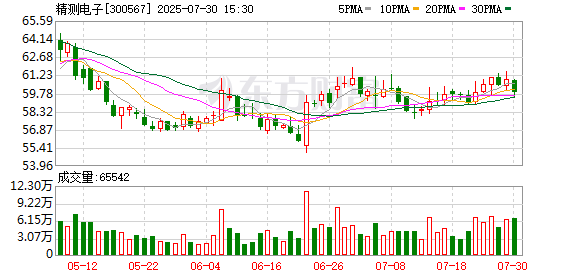
精测电子:长江存储是公司客户之一
Mei Ri Jing Ji Xin Wen· 2025-07-30 10:56
精测电子(300567.SZ)7月30日在投资者互动平台表示,长江存储是公司客户之一,有关公司产品、客 户及业务情况,请以公司披露的相关公告为准。 每经AI快讯,有投资者在投资者互动平台提问:媒体近日报道,长江存储在推动"全国产化"制造设备方 面取得了重大突破,首条全国产化的产线将于2025年下半年导入试产。请问公司与长江存储是否有合作 关系吗?公司是否属于长江存储的核心供应商?具体开展了哪些业务合作? (文章来源:每日经济新闻) ...