
海尔智家

Search documents
家电行业2026W03周报:地产利好政策频出,Meta计划提高智能眼镜产能
GUOTAI HAITONG SECURITIES· 2026-01-19 02:55
Investment Rating - The industry investment rating is "Overweight" [4][11]. Core Insights - The report highlights favorable real estate policies and Meta's plan to increase smart glasses production to 20 million units by the end of 2026, indicating a strong market demand [2][3]. - Several home appliance companies have released their performance forecasts for 2025, showing a mix of growth and decline in net profits [2][3]. Summary by Sections Investment Recommendations - The report suggests that national subsidies are expected to transition smoothly, with leading black and white appliance companies demonstrating stable operations and high dividends, making them cost-effective investments. Recommended companies include: - Midea Group (2025 PE: 13.2X) - Haier Smart Home (2025 PE: 11.4X) - TCL Electronics (2025 PE: 10.8X) - Hisense Visual (2025 PE: 12.0X) [4][5]. - The core driver for smart home appliances is overseas expansion, with recommendations for leading robot vacuum companies: - Roborock (2025 PE: 20.8X) - Ecovacs (2025 PE: 22.7X) [4][5]. - Companies with stable performance and upward potential include: - Ninebot (2025 PE: 19.1X) - Anfu Technology (2025 PE: 53.2X) - Hailong Cold Chain (2025 PE: 15.2X) - Beiding Co. (2025 PE: 31.2X) [4][5]. - Appliance companies are diversifying into new areas, with recommendations for: - Rongtai Health (2025 PE: 21.1X) - Wanlong Magnetic Plastic (2025 PE: 21.9X) [4][5]. Performance Forecasts - Stone Technology expects a net profit of no less than 1.34 billion, a 31% decline year-on-year for 2025. - Beiding Co. anticipates a revenue of 950 million, a 26% increase year-on-year, with a net profit of 111 million, up 59.1% year-on-year. - Dechang Co. forecasts a net profit between 160 to 200 million, a decline of 51% to 61% year-on-year, with a non-recurring net profit forecasted between 145 to 185 million, down 53% to 63% year-on-year [2][4].






西部证券晨会纪要-20260119
Western Securities· 2026-01-19 02:39
Group 1: Commercial Aerospace - The commercial aerospace sector is transitioning from "single satellite testing" to "constellation networking," with significant growth expected as China develops reusable rocket technology and increases satellite launches [5][6][7] - The "Zhuque-3" rocket has a launch capacity of 21.3 tons, surpassing the Falcon 9's initial recovery capacity, indicating a strong foundation for future satellite launches [6] - The market potential for domestic satellite launches is substantial, with an estimated annual demand for approximately 4,000 satellites, suggesting a significant growth trajectory for the industry [6][7] Group 2: Automotive Industry - Spring Power (603129.SH) is projected to achieve net profits of 1.907 billion, 2.371 billion, and 2.805 billion yuan from 2025 to 2027, with a target market capitalization of 49.8 billion yuan based on a 21x PE ratio for 2026 [2][13] - The company is positioned as a leader in all-terrain vehicles and large-displacement motorcycles, with competitive advantages in performance and cost-effectiveness compared to international competitors [13][14] - The electric two-wheeler segment is expected to contribute significantly to revenue growth, with sales reaching 250,500 units and revenue of 872 million yuan in the first half of 2025, reflecting a year-on-year increase of 652.06% [15] Group 3: Financial Sector - The introduction of the "Derivatives Trading Supervision Management Measures" aims to regulate the derivatives market, enhancing the legal framework and promoting the development of the derivatives business [32][33][34] - The measures emphasize the importance of derivatives in managing risks and supporting the real economy, indicating a growing focus on regulatory oversight in the financial sector [32][34] - Major securities firms are expected to benefit from the regulatory changes, particularly those with strengths in derivatives trading, as the market becomes more structured and opportunities for growth arise [34] Group 4: Macro Financial Data - In December, new loans totaled 910 billion yuan, with a year-on-year decrease compared to the previous year, while corporate loans showed signs of recovery [18][19] - The social financing growth rate slowed, primarily due to government financing constraints, indicating a need for policy adjustments to stimulate economic activity [19][20] - The central bank's recent rate cuts and liquidity measures suggest a continued effort to support economic growth and maintain stable financing conditions [20][40]
消费行业2026年春节机会
2026-01-19 02:29
Summary of Conference Call Records Industry Overview - **Consumer Industry**: The consumer industry is expected to see opportunities during the 2026 Spring Festival, particularly in the export chain and food sectors. Key companies like Jiangxin Home, Zhongxin Co., and Gongchuang Turf are projected to maintain steady growth in 2026 [1][2]. - **Agriculture Sector**: The 2026 Central Document No. 1 will focus on food security, poverty alleviation, and agricultural technology. Grain production has exceeded 1.4 trillion jin for two consecutive years, but supply and demand remain tight, necessitating improvements in yield [1][4]. - **Alcohol Industry**: The white liquor market is facing a pessimistic outlook for the Spring Festival, with expected sales declines of nearly double digits due to the impact of alcohol bans and high inventory levels from the previous year [1][7]. Key Companies and Their Performance - **Jiangxin Home**: Transitioning from OEM to OBM, with over 1,000 brand stores established. Stable performance is expected despite short-term stock price fluctuations due to currency changes [3]. - **Zhongxin Co.**: Anticipated profits exceeding 600 million yuan in 2026, with a current PE ratio of about 13 times. The company is performing well in Thailand's pulp molding production [3]. - **Gongchuang Turf**: Expected to maintain a 20% growth rate in 2026, with double-digit revenue growth continuing into the fourth quarter [3]. - **Anjixin Foods**: Projected revenue growth of nearly 20% in December, indicating a rebound in the food supply sector [1][9]. Investment Opportunities - **Export Chain**: Companies in the light industry are expected to perform well, with a positive outlook for Jiangxin Home, Zhongxin Co., and Gongchuang Turf [2]. - **Research Services**: Companies like Haoyuan Pharmaceutical, Baiaosaitu, and Nami Technology are well-positioned to benefit from the overseas expansion of innovative drugs [2][13]. - **AI in Home Appliances**: The potential for AI applications in home appliances is significant, with companies like Ugreen launching AI NAS to integrate localized computing power [2][14]. Agricultural Focus Areas - **High-Standard Farmland Construction**: Aiming to build 1.35 billion mu of high-standard farmland by 2030, with an investment of over 150 billion yuan annually [5]. - **Biotechnology**: Continued emphasis on the commercialization of genetically modified crops, with a focus on increasing planting areas and supporting regulations [5][6]. Consumer Behavior Insights - **White Liquor Sales**: The sales rhythm for white liquor during the Spring Festival is unclear, with expectations of a significant decline in sales due to changing consumer purchasing habits [7]. - **Non-Alcoholic Gifts**: Demand is shifting towards non-alcoholic gifts, including snacks and beverages, as consumers adapt to new purchasing trends [8]. Travel and Dining Sector - **Travel Industry**: Companies like Ctrip are expected to benefit from increased travel flow during the Spring Festival, with significant growth in hotel bookings and dining reservations [10][12]. - **Dining Sector**: Haidilao is highlighted as a key investment opportunity due to its improving turnover rates and potential for rapid expansion under new leadership [10][11]. Challenges and Innovations - **Smart Home Industry**: The smart home sector faces challenges such as high costs and the need for standardization across devices, but it remains a promising area for future growth [17][19]. - **Robotic Innovations**: Companies like Roborock are innovating in the robotic cleaning space, enhancing user interaction through AI capabilities [20]. This summary encapsulates the key insights and opportunities discussed in the conference call, providing a comprehensive overview of the consumer, agriculture, and technology sectors.
从工具平台到工业操作系统,谁能被长期调用?
3 6 Ke· 2026-01-19 02:19
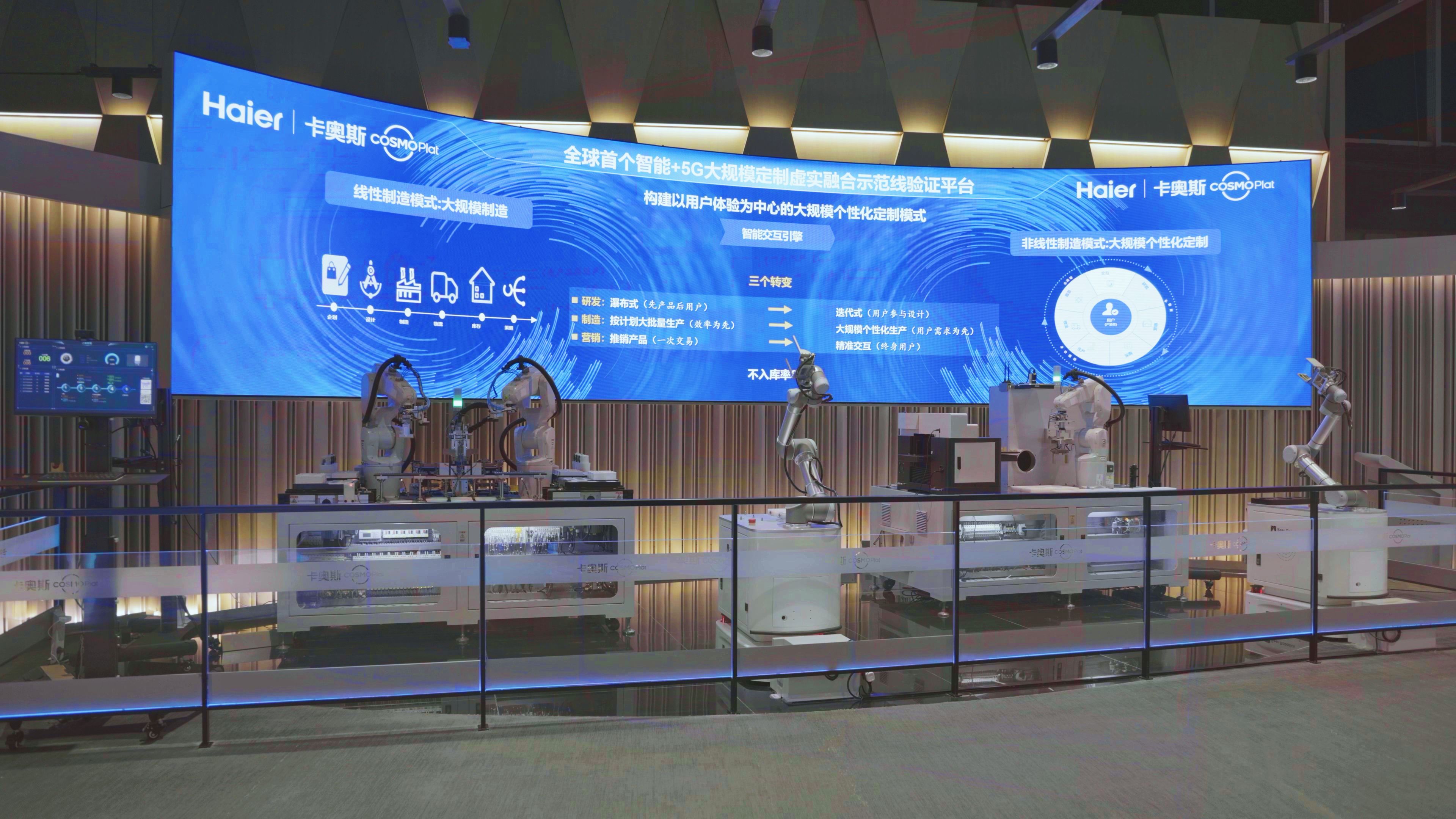
Core Insights - The article highlights the significant advancements in the industrial internet sector, particularly focusing on the Kaos COSMOPlat platform, which has achieved the highest "A" rating for seven consecutive years, indicating its leading position in the industry [1][6] - The industrial internet is evolving from a fragmented tool-based approach to a more integrated system-level operation, emphasizing the need for a comprehensive "operating system" that can facilitate cross-industry collaboration and scalability [3][8] Group 1: Industrial Internet Development - The industrial internet is forming a "digital neural network" that connects previously isolated production processes, enabling factories to evolve from mere automation to collaborative and optimized operations [1] - During the 14th Five-Year Plan, the industrial internet laid the groundwork for infrastructure, focusing on connectivity, cloud integration, and single-point intelligence, leading to a preliminary digital industrial system [1][2] - As the industry transitions into the 15th Five-Year Plan, the focus is shifting from exploration to large-scale replication of new industrialization practices [2] Group 2: Kaos COSMOPlat's Role - Kaos COSMOPlat is transitioning from being a platform provider to an "industrial intelligence infrastructure," with its brand value increasing by over 82% during the 14th Five-Year Plan, projected to reach 116.335 billion yuan by 2025 [6] - The platform's strategy has shifted from enhancing single capabilities to constructing a complete industrial intelligence operating system, aiming for systematic expansion rather than isolated breakthroughs [6][12] - The platform is designed to support a full-process industrial internet ecosystem, addressing the industry's need for a system-level operation rather than just a collection of tools [7] Group 3: Challenges and Solutions - The industrial internet faces challenges due to the fragmentation of industrial scenarios, where different industries have diverse equipment interfaces and data standards, complicating cross-scenario replication [8][9] - The need for a shift from tool-based thinking to system-based thinking is emphasized, as data silos and application isolation become systemic bottlenecks [8] - A truly scalable platform must function like an operating system, accommodating diverse industrial equipment and enabling replicable solutions across different scenarios [9][11] Group 4: ONE-COSMO Framework - The ONE-COSMO framework represents a shift from project-based products to a systematic capability, addressing the complexities of industrial internet implementation [13][14] - The framework aims to elevate the "capability baseline" of industrial internet platforms, focusing on standardization and modularization to facilitate scalability [15][17] - The framework includes both "lighthouse factories" for factory-level intelligence and "industrial cloud brains" for broader collaborative efficiency across industries [17][19] Group 5: Standards and Global Influence - The competition in the industrial operating system space extends beyond technical capabilities to include standards, rules, and global discourse, with Kaos COSMOPlat actively participating in the development of national and international standards [20][21] - The establishment of standards is crucial for defining how industrial intelligence systems are structured and utilized, positioning Kaos COSMOPlat as a key player in shaping the future of industrial internet [23][24] - The article concludes that the next phase of competition will focus on who can create a long-term, widely accepted industrial operating system, emphasizing the importance of standards and global collaboration [24][25]

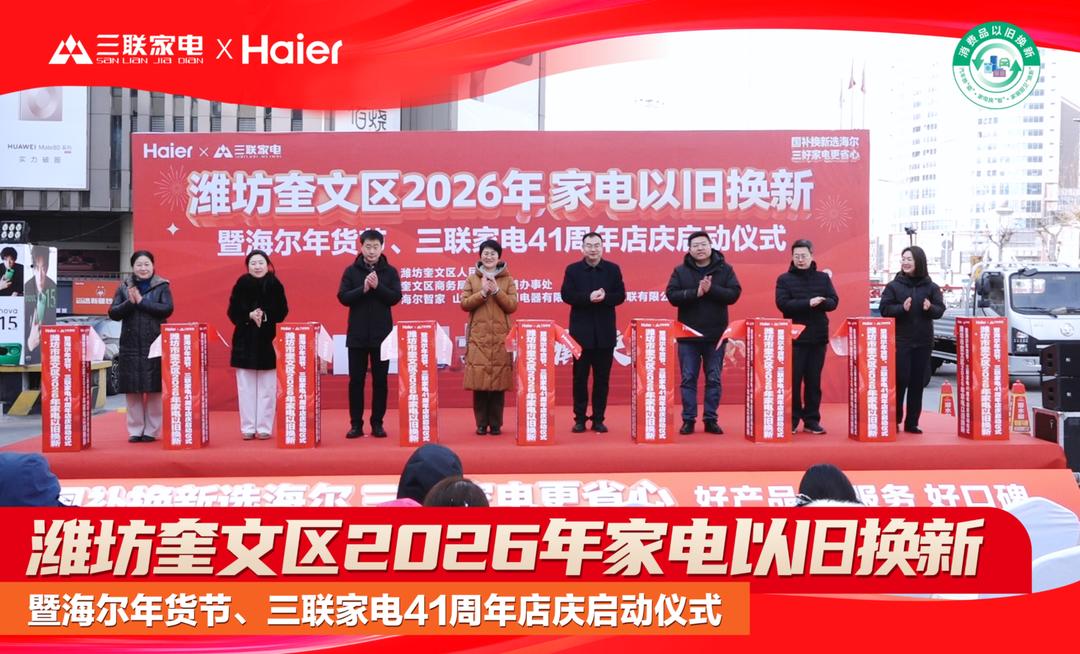
潍坊国补正式落地,三联家电41周年店庆点燃消费热情
Qi Lu Wan Bao· 2026-01-19 02:04
Group 1 - The event marks the official launch of the 2026 home appliance trade-in program in Weifang's Kuiwen District, supported by government subsidies and aimed at promoting consumer spending [1][3] - The Kuiwen District government highlighted the success of the 2025 consumer promotion initiatives, attributing achievements to the support of enterprises and citizen participation [3] - The 2026 program aims to create a "green consumption + smart upgrade" model, leveraging both online and offline channels to ensure that policy benefits reach consumers directly [3] Group 2 - Sanlian Appliances plays a crucial role as a leading retailer, leveraging its 41st anniversary to implement the trade-in policy effectively [5] - The trade-in program offers significant subsidies, with up to 1,500 yuan for six categories of energy-efficient home appliances and 500 yuan for four categories of digital products [6] - Sanlian Appliances collaborates with Haier Group to provide a triple discount scheme, enhancing consumer benefits and ensuring affordability [6] Group 3 - Haier Group, a global leader in home appliance manufacturing, supports the event with advanced products and technology, showcasing a range of smart and energy-efficient appliances [9] - The event atmosphere was lively, with a smart home experience area attracting many citizens, indicating strong community interest in the program [9] - The trade-in initiative is expected to stimulate regional consumption growth, promote green consumption concepts, and drive the transformation and upgrading of the home appliance industry [9]
别只盯着铜,铝时代可能要来了
阿尔法工场研究院· 2026-01-19 02:02
Core Viewpoint - The shift from copper to aluminum is not merely a cost-cutting tactic but a strategic response to global resource changes, geopolitical tensions, and technological advancements, fundamentally altering the supply-demand dynamics and long-term pricing logic of copper and aluminum [4][24]. Group 1: Supply Chain and Market Dynamics - Recent months have seen a dramatic surge in copper prices driven by a global supply chain crisis, with a current supply-demand gap of 500,000 tons in the copper market [5]. - The copper industry faces significant challenges, including a high dependency on foreign resources, with over 80% of copper ore being imported, which poses risks to supply chain security [9][10]. - In contrast, China dominates the aluminum sector, with projected electrolytic aluminum production reaching 44.0046 million tons in 2024, accounting for 58% of global output [12]. Group 2: Strategic Shift to Aluminum - The transition to aluminum from copper has evolved into a national strategy aimed at ensuring industrial security, as highlighted by government initiatives promoting aluminum consumption in various applications [13]. - The copper-aluminum price ratio has reached a 20-year high, with the current ratio at 4.21, significantly exceeding the traditional economic threshold of 3.5, making aluminum a more attractive alternative [17][20]. - The cost advantages of using aluminum over copper are substantial, with potential savings of 20%-25% in air conditioning and 30%-40% in electric vehicles [20][34]. Group 3: Technological Advancements - The evolution of aluminum as a substitute for copper has progressed through four key phases: from early exploration (2015-2018) to technological breakthroughs (2019-2022), followed by large-scale validation (2023-2025), and finally to widespread adoption in the future [25][28][30]. - Innovations in aluminum processing, such as the introduction of silicon-sulfur neutralization technology, are expected to significantly reduce China's reliance on imported bauxite from 90% to below 50% [21][22]. Group 4: Capital Market Implications - The disparity in price movements between copper and aluminum suggests that the aluminum sector is poised for growth, while copper may face a demand ceiling due to the rise of aluminum as a substitute [35][37]. - The shift towards aluminum is expected to attract more global capital, as the supply-demand balance for aluminum transitions from loose to tight, enhancing its financial attributes [38]. Group 5: Future Outlook - The transition from copper to aluminum reflects broader changes in global resource dynamics and energy transitions, with aluminum's lightweight and recyclable properties making it essential in green industries [39]. - The future landscape will likely see copper and aluminum coexisting, each serving distinct roles in high-performance and cost-sensitive applications, thereby reshaping the competitive dynamics of the manufacturing sector [39][40].
全球视野看家电:从三星电子看家电龙头产业升级之路
Changjiang Securities· 2026-01-18 14:25
Investment Rating - The report maintains a "Positive" investment rating for the home appliance industry [13] Core Insights - The report analyzes Samsung Electronics' successful transition from home appliances to semiconductor storage, display panels, and mobile phones, providing a reference for China's leading home appliance companies in their industrial upgrades [4] - Samsung Electronics has achieved an average annual compound growth rate of 19% in net profit from 1993 to 2024, making it the largest and fastest-growing home appliance company globally [7][34] - The report emphasizes the importance of proactive engagement with industry changes and policy opportunities during the growth phase of home appliances, highlighting Samsung's strategic investments and efficiency improvements [8][9] Summary by Sections Background and Timing - Samsung Electronics entered the semiconductor storage industry in 1983 when the penetration rate of home appliances in South Korea was rapidly increasing, supported by a strong GDP growth rate of over 10% [8][46] - The company capitalized on government support and market opportunities to navigate early losses and establish a profitable cycle in the semiconductor industry [8][46] Challenges and Strategies - Samsung leveraged its latecomer advantage and implemented a counter-cyclical investment strategy to quickly capture market share, achieving a 39% market share in the storage sector by 2024 [9] - The company focused on efficiency and cost advantages across various dimensions, including organizational structure and production strategies [9] Effects and Outcomes - By 2017, Samsung surpassed Intel to become the world's largest semiconductor manufacturer, with R&D investment increasing from 2% in 1980 to 12% in 2024 [10] - The company successfully expanded into display panels and mobile phones, creating a synergistic industrial system that enhanced its brand image and market position [10] Comparison with Midea Group - Midea Group is positioned to achieve significant industrial upgrades, with a projected 22% revenue contribution from non-home appliance sectors by 2024 and a growth rate of 15%-20% in recent years [11] - The report highlights Midea's advantages in cash flow stability and efficiency, suggesting a strong potential for industrial upgrades [11]
从 CES 看 2026 年科技家电新品趋势
Huafu Securities· 2026-01-18 13:31
Investment Rating - The report maintains an "Outperform" rating for the industry [7] Core Insights - The 2026 International Consumer Electronics Show (CES) showcased advancements in smart home appliances, with Chinese brands leading in categories such as robotic vacuum cleaners, garden robots, and NAS private cloud storage [3][4][14] - Key products include the G-Rover by Stone Technology, which is the world's first stair-cleaning robotic vacuum, and various innovative garden robots from Ninebot [3][4][14] - The report emphasizes the continuous improvement in product capabilities and the increasing penetration of these technologies, suggesting a focus on innovative companies like Stone Technology, Ecovacs, Ninebot, and Ugreen [3][4][14] Market Data - The home appliance sector saw a slight increase of 0.2% this week, with specific segments showing varied performance: white goods down by 2.0%, black goods up by 6.2%, small appliances up by 3.0%, and kitchen appliances up by 6.9% [5][40] - Raw material prices fluctuated, with LME copper increasing by 1.91% and LME aluminum decreasing by 1.04% compared to the previous week [5][40]
Leader召开用户共创会:以三筒洗衣机定义分区洗护新生活
Huan Qiu Wang· 2026-01-18 12:54
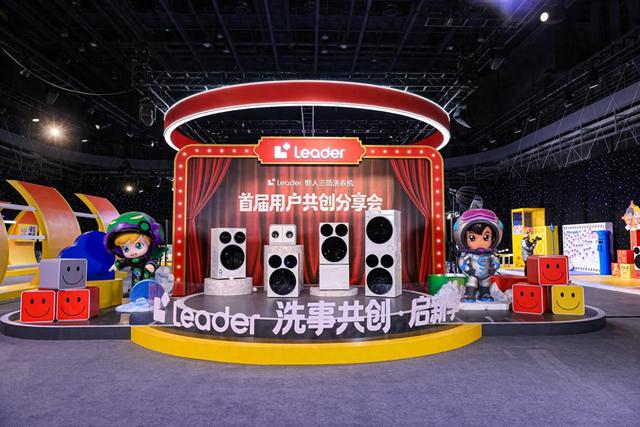
Core Insights - The event hosted by Leader focused on user stories and experiences with the three-tub washing machine, emphasizing the importance of user feedback in product innovation [1][3] - Leader aims to create a collaborative relationship with users, highlighting that the three-tub washing machine has positively impacted many households [3][7] User-Centric Innovation - In 2024, Leader's team discovered a common need for a versatile washing machine that caters to different family members' laundry requirements, leading to the design of the three-tub washing machine [5] - The product development process involved collecting over 12,000 user suggestions, which informed rapid iterations and the launch of the "Lazy Washing Family" series in August 2025 [5][11] Market Impact - By 2025, the three-tub washing machine achieved a total of 300,000 choices, indicating strong market acceptance and trust from consumers [7] - The event showcased various user experiences, illustrating how the washing machine has become an integral part of daily life, enhancing convenience and efficiency [9][11] Long-term Strategy - Leader's approach to user co-creation is part of a broader strategy to deepen relationships with consumers and ensure that product innovations are closely aligned with user needs [11][13] - The company believes that future product developments will continue to emerge from user insights and unmet expectations, reinforcing the collaborative nature of innovation [13]
家电零部件行业延续领涨,智能厨电行业快速发展
Xiangcai Securities· 2026-01-18 12:22
Investment Rating - The report maintains an "Overweight" rating for the home appliance industry [1][8]. Core Views - The home appliance industry has experienced a decline of 0.34% this week, with the home appliance components sub-industry leading the gains [3][10]. - The valuation of the home appliance industry is at a historical low, indicating potential for upward movement, with a current PE ratio of 15.63, ranking 25th among 31 industries [4][26]. - The smart kitchen appliance sector is rapidly developing, highlighted by Boss Electric's investment of 100 million RMB in Youte Smart Kitchen, focusing on the cooking robot market, which is projected to grow significantly [5][47]. Summary by Sections Industry Performance - The home appliance industry has shown a relative performance of -0.2% over the past month, +2.7% over three months, and -13.0% over the past year compared to the CSI 300 index [2][3]. Valuation Insights - The home appliance industry's PE ratio of 15.63 is higher than the CSI 300's 13.50, with a valuation percentile of 39.2%, indicating a more attractive investment opportunity compared to the broader market [4][26]. Smart Kitchen Appliances - The cooking robot market in China is expected to reach 3.7 billion RMB by 2025 and exceed 11.7 billion RMB by 2030, reflecting a significant growth trajectory [5][47]. Investment Recommendations - The report suggests focusing on three main lines for investment in 2026: 1. Companies with stable market positions and high dividend yields in the white goods sector [6][54]. 2. Companies innovating with new products and technologies in niche markets such as cleaning robots and smart home devices [6][54]. 3. Opportunities arising from the "trade-in" policy and advancements in AI and smart home technologies [6][54].